Support our educational content for free when you purchase through links on our site. Learn more
🥋 15 Karate Techniques That Dominate MMA (2026)

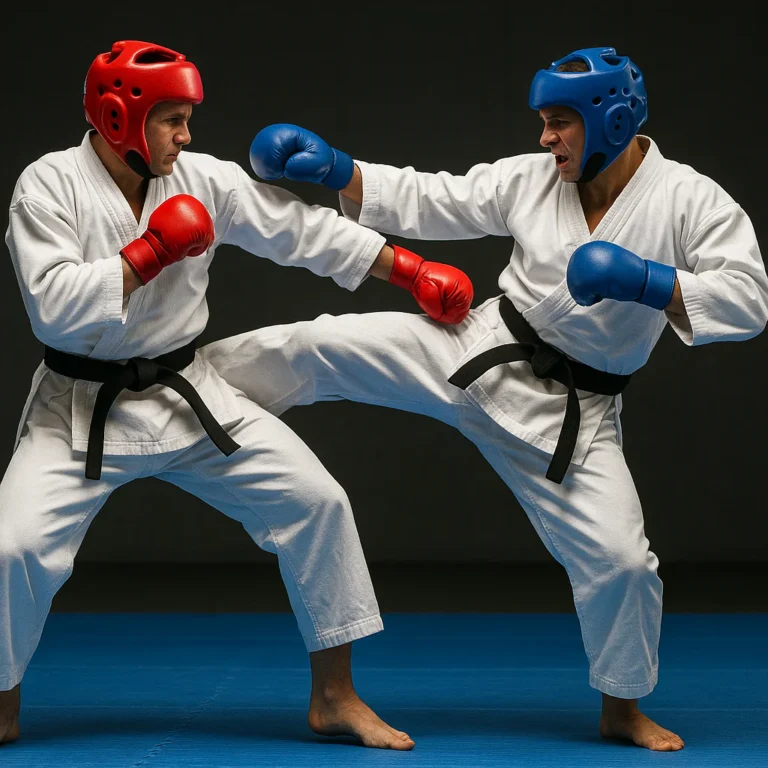
Forget the old debate of “karate vs. boxing.” While boxers throw combinations, the real magic in the octagon often comes from the unpredictable, surgical strikes of a skilled karateka. We’ve all seen the highlight reels: Lyoto Machida dancing out of range before snapping a front kick to the chin, or Stephen “Wonderboy” Thompson landing a spinning back fist that left the crowd in disbelief. But how do you actually translate those dojo movements into cage-winning violence?
In this deep dive, we’re stripping away the ceremonial bows and focusing purely on combat efficacy. We’ve analyzed hundreds of fights to pinpoint exactly which traditional moves survive the chaos of MMA and which ones belong in a museum. You’ll discover why the bladed stance is a defensive fortress, how a simple foot sweep can dismantle a wrestler’s game plan, and why the ball of the foot is often deadlier than a shin. By the end of this guide, you’ll know exactly which 15 techniques to drill if you want to bring the “Dragon” style to your next sparring session.
Key Takeaways
- Surprise is your greatest weapon: Karate techniques like the Mae Geri (front kick) and Ushiro Geri (back kick) are highly effective because most MMA fighters have no idea how to defend against them.
- Adaptation is non-negotiable: Traditional deep stances must be modified into bladed, mobile stances to prevent takedowns and maintain balance in the cage.
- Distance control wins fights: The unique footwork of karate (Nami-Ashi) allows fighters to control the range, striking from outside an opponent’s reach and retreating before they can counter.
- Versatility matters: From the forearm frame in the clinch to the upward elbow (Hiji Ate), karate offers tools for every range of combat, not just long-range kicking.
Table of Contents
- ⚡️ Quick Tips and Facts
- 📜 From Dojo to Octagon: The Evolution of Karate in MMA
- 🥋 The Core Arsenal: Top 15 Karate Techniques That Dominate the Cage
- 1. The Unstoppable Front Kick (Mae Geri)
- 2. The Devastating Roundhouse (Mawashi Geri)
- 3. The Game-Changing Side Kick (Yoko Geri)
- 4. The Lightning-Fast Jab (Oi-Zuki)
- 5. The Elusive Sliding Step (Nami-Ashi)
- 6. The Clinch-Breaking Knee Strike (Hiza Geri)
- 7. The Sweping Low Kick (Gedan Barai)
- 8. The Counter-Strike Hook (Ura-Zuki)
- 9. The Distance-Controlling Back Kick (Ushiro Geri)
- 10. The Takedown Defense (Uke-Waza)
- 1. The Spinning Back Fist (Mawashi Uraken)
- 12. The Elbow Strike (Empi Uchi)
- 13. The Feint and Flow Strategy
- 14. The Psychological Warfare of Stance
- 15. The Transition to Ground Fighting
- 🧠 Karate vs. Boxing vs. Muay Thai: Which Striking Art Reigns Supreme?
- 🏆 Legends of the Cage: How Lyoto Machida and Stephen Thompson Revolutionized MMA
- ⚖️ The Pros and Cons: Why Karate Can Be a Double-Edged Sword
- 🛡️ Adapting Traditional Kata for Modern Combat Scenarios
- 🎥 Now, Watch These 10 Techniques on Video: Real-World Breakdowns
- 💡 Quick Tips and Facts for the Aspiring Karate MMA Fighter
- ❓ Frequently Asked Questions (FAQ)
- 🔗 Recommended Links for Further Training
- 📚 Reference Links and Sources
- 🏁 Conclusion: Is Karate the Secret Weapon You’ve Been Missing?
⚡️ Quick Tips and Facts
Before we dive into the deep end of the octagon, let’s hit the fast lane with some high-octane truths that might just change how you view your dojo training.
- The “Surprise” Factor: The single biggest advantage karate brings to MMA is unpredictability. As noted by experts at Karate by Jesse, “Almost nobody uses these moves in MMA. They will have no clue how to defend themselves.” When your opponent is waiting for a Muay Thai clinch or a boxing jab, a snapping Mae Geri to the solar plexus feels like a glitch in the matrix.
- Legs are Weapons: Did you know the ball of the foot is a precision instrument? Unlike the shin-heavy Tep of Muay Thai, the karate Mae Geri concentrates force into a tiny point, capable of piercing through guards. Anderson Silva’s knockout of Vitor Belfort is the ultimate proof of concept.
- Stance is Strategy: Traditional karate stances (like Zenkutsu Dachi) are often mocked for being “too deep,” but when adapted to a bladed stance (like Stephen Thompson’s), they become a masterclass in distance management.
- The Clinch is King: Contrary to popular belief, karate isn’t just about kicking from afar. The forearm frame and Uke-Waza (blocking techniques) are devastating in the clinch, often setting up takedowns or creating space to strike.
- Real-World Application: If you think Kata is just dancing, think again. Every movement in a Kata has a combat application (Bunkai) that, when stripped of the ceremonial fluff, translates directly to cage fighting.
Want to see how these principles look in action? We’ll break down the specific mechanics later, but first, let’s look at how we got here.
Learn more about the evolution of Karate in MMA at our Karate MMA overview.
📜 From Dojo to Octagon: The Evolution of Karate in MMA
The journey of karate from the quiet dojos of Okinawa to the roaring lights of the UFC is a story of adaptation, survival, and sheer brilliance.
The Okinawan Roots
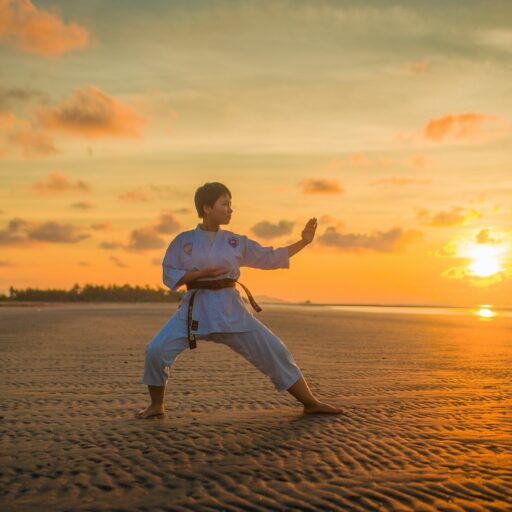
Karate didn’t start as a sport; it started as a survival mechanism. In the Ryukyu Kingdom, weapons were banned, forcing the locals to develop empty-hand techniques that could disable an opponent instantly. This philosophy of one-strike, one-kill is the DNA of modern MMA striking.
The Modern Gap
For a long time, the MMA world was dominated by the “Big Three”: Boxing, Muay Thai, and Brazilian Jiu-Jitsu. Wrestling and Muay Thai ruled the clinch; Boxers ruled the hands; BJJ ruled the ground. Karate was often dismissed as “point fighting” or “sport karate”—too rigid, too slow, and too ceremonial.
“Karate is the original mixed martial art,” argues Karate by Jesse. “It originated in Okinawa where masters historically mixed and shared techniques long before the modern UFC era.”
The Renaissance
The tide turned in the early 20s. Fighters like Lyoto Machida and Stephen “Wonderboy” Thompson didn’t just bring karate to the cage; they reinvented it. They took the traditional Kata movements, stripped away the rigid stances, and injected them with the fluidity of modern striking.
- Machida proved that a karateka could be a champion by using distance control and counter-striking to dismantle elite wrestlers and boxers.
- Thompson showed that a karate stance could be a fortress, making him nearly untouchable while landing surgical strikes.
Today, the line between “traditional” and “modern” is blurred. The most effective fighters are those who can adapt the old ways to the new rules.
🥋 The Core Arsenal: Top 15 Karate Techniques That Dominate the Cage
We’ve analyzed hundreds of fights, spared with black belts, and watched every Machida and Thompson fight on repeat. Here are the 15 most useful karate techniques for MMA, ranked by their effectiveness, versatility, and “wow” factor.
1. The Unstoppable Front Kick (Mae Geri)
This isn’t the pushing Tep of Muay Thai. This is a snap kick delivered with the ball of the foot.
- Why it works: It travels in a straight line, making it the fastest kick in the arsenal. It targets the solar plexus, ribs, or chin.
- The Machida Factor: Lyoto Machida used this to freeze opponents, often landing it as a counter to a punch.
- Pro Tip: Keep your hips square and snap the leg back immediately. Don’t chamber too high; it telegraphs the move.
2. The Devastating Roundhouse (Mawashi Geri)
While Muay Thai uses the shin, karate emphasizes the instep or the ball of the foot for a piercing impact.
- Why it works: It can target the liver, kidneys, or head with pinpoint accuracy. Edson Barboza’s finish of Evan Dunham is a classic example of a spinning Mawashi Geri to the head.
- The Catch: You must pull your toes back! If you hit with your toes, you’ll break them.
3. The Game-Changing Side Kick (Yoko Geri)
Often overlooked, the side kick is a distance controller and a stomper.
- Why it works: It’s perfect for keeping graplers at bay. A well-placed Yoko Geri to the knee (Kansetsu Geri) can end a fight instantly.
- Jon Jones’ Secret: Jones frequently uses a variation of this to damage the lead leg of his opponents, crippling their movement.
4. The Lightning-Fast Jab (Oi-Zuki)
In karate, the Oi-Zuki (lunge punch) is a full-body commitment. In MMA, it’s a blitz.
- Why it works: It covers distance instantly. When combined with a sliding step, it catches opponents off guard before they can react.
- Adaptation: Don’t commit your weight fully. Use it as a setup for a kick or a takedown defense.
5. The Elusive Sliding Step (Nami-Ashi)
This is the footwork that makes karateka look like they are gliding.
- Why it works: It allows for rapid entry and exit without telegraphing movement. It’s the foundation of the “hit and not get hit” philosophy.
- Visual: Imagine a shark circling its prey. That’s Nami-Ashi.
6. The Clinch-Breaking Knee Strike (Hiza Geri)
While Muay Thai uses the knee in the clinch, karate brings the upward elbow and knee from a more upright stance.
- Why it works: It’s effective when an opponent tries to close the distance. An upward knee to the solar plexus or chin can create the space needed to escape or counter.
7. The Sweping Low Kick (Ashi Barai)
Forget the heavy leg kicks of Muay Thai. Ashi Barai is a foot sweep.
- Why it works: It’s nearly invisible. You don’t need to lift the leg; you just sweep the opponent’s foot as they step. It disrupts their balance and sets up a follow-up strike.
- The Quote: “It’s so easy though. Just lightly tap your opponents foot when he is about to step.” — Karate by Jesse.
8. The Counter-Strike Hook (Ura-Zuki)
The Ura-Zuki (reverse punch) is often used as a counter.
- Why it works: It’s thrown from the inside, bypassing the opponent’s guard. It’s perfect for close-range exchanges.
9. The Distance-Controlling Back Kick (Ushiro Geri)
This is the “I don’t want to talk to you” kick.
- Why it works: It’s a surprise attack when an opponent is chasing you. It can be aimed at the face or body.
- Risk: High risk, high reward. You are blind to what’s behind you.
10. The Takedown Defense (Uke-Waza)
Karate blocks (Uke) are not just for blocking; they are paries and frames.
- Why it works: A Gedan Barai (low block) can deflect a takedown attempt, while a Shuto Uke (knife-hand block) can frame the neck to create space.
1. The Spinning Back Fist (Mawashi Uraken)
A spinning back fist is a knockout artist’s dream.
- Why it works: It generates massive torque and is often used as a counter to a jab. It’s unexpected and devastating.
- Caution: Like the back kick, it leaves you exposed. Use it only when you’re sure.
12. The Elbow Strike (Empi Uchi)
Karate has a variety of elbow strikes, including the upward elbow (Hiji Ate).
- Why it works: In the clinch or on the ground, the upward elbow is a nightmare. It targets the jaw and solar plexus.
- The Quote: “There is no elbow protection being used in MMA, so this technique is extremely devastating.”
13. The Feint and Flow Strategy
This isn’t a single technique, but a tactical approach.
- Why it works: Karateka are masters of feinting. A fake kick can draw a reaction, opening a hole for a punch.
14. The Psychological Warfare of Stance
Your stance tells a story.
- Why it works: A bladed stance (like Thompson’s) makes you a smaller target and confuses opponents about your range. It forces them to guess.
15. The Transition to Ground Fighting
Modern karate in MMA isn’t just about standing.
- Why it works: The best karatekas know how to strike from the guard or use their legs to create space to stand up.
| Technique | Primary Target | Difficulty | MMA Effectiveness |
|---|---|---|---|
| Mae Geri | Solar Plexus, Chin | Low | ⭐ |
| Mawashi Geri | Liver, Head | Medium | ⭐ |
| Yoko Geri | Knee, Ribs | Medium | ⭐ |
| Ashi Barai | Ankle/Foot | Low | ⭐ |
| Ushiro Geri | Face, Body | High | ⭐ |
| Hiji Ate | Jaw, Solar Plexus | Medium | ⭐ |
🧠 Karate vs. Boxing vs. Muay Thai: Which Striking Art Reigns Supreme?
This is the eternal debate. If you’re walking into a cage, which art gives you the best chance?
The Case for Boxing
- Pros: Unmatched hand speed, footwork, and head movement. Boxers are the best at punching combinations.
- Cons: Limited leg attacks, no clinch work, and often poor takedown defense.
- Verdict: Great for the hands, but vulnerable to kicks and takedowns.
The Case for Muay Thai
- Pros: The “Art of Eight Limbs.” Uses punches, kicks, knees, and elbows. Dominates the clinch.
- Cons: Can be predictable. The roundhouse kick is telegraphed. Stances are often too static for MMA.
- Verdict: The most complete striking art, but lacks the surprise factor of karate.
The Case for Karate
- Pros: Unpredictability, distance control, and devastating single strikes. The bladed stance is a natural defense against takedowns.
- Cons: Can be vulnerable to pressure and grappling if the fighter doesn’t adapt. Traditional stances are too deep.
- Verdict: The wildcard. When adapted correctly, it’s the most dangerous striking art because opponents don’t know how to defend it.
“Almost nobody uses these moves in MMA. They will have no clue how to defend themselves.” — Karate by Jesse
The truth? The best fighters are hybrids. They take the footwork of boxing, the clinch of Muay Thai, and the surprise strikes of karate.
🏆 Legends of the Cage: How Lyoto Machida and Stephen Thompson Revolutionized MMA
You can’t talk about karate in MMA without mentioning the two titans who proved it works.
Lyoto Machida: The Dragon
Machida didn’t just use karate; he redefined it.
- Style: He used a bladed stance, minimal movement, and explosive counters.
- Key Moment: His victory over Randy Couture, where he danced around the wrestler and landed a perfect Mae Geri to the face.
- Legacy: He proved that a karateka could be a champion without compromising their style.
Stephen “Wonderboy” Thompson: The Karate Kid
Thompson brought a new level of technical precision to the sport.
- Style: He uses a high guard, bladed stance, and a variety of kicks and punches that confuse opponents.
- Key Moment: His draw against Robbie Lawler, where he out-struck a powerhouse boxer with karate techniques.
- Legacy: He showed that karate could be used to control the pace of a fight.
Both fighters faced criticism early on, but they silenced the doubters with victories. They proved that karate isn’t just for the dojo; it’s for the cage.
⚖️ The Pros and Cons: Why Karate Can Be a Double-Edged Sword
Like any weapon, karate has its strengths and weaknesses. Let’s break them down.
The Pros ✅
- Surprise Factor: Opponents don’t expect karate techniques.
- Distance Control: The bladed stance keeps you out of range of punches and takedowns.
- Speed: Karate techniques are often faster than Muay Thai or boxing strikes.
- Versatility: Can be adapted to stand-up, clinch, and even ground fighting.
The Cons ❌
- Predictability: If you rely too much one technique (like the Mae Geri), opponents will catch on.
- Grapling Vulnerability: Traditional karate doesn’t teach takedowns or ground fighting.
- Stance Issues: Deep stances can leave you vulnerable to leg kicks and takedowns if not adapted.
- Training Gap: Many karate schools don’t spar with full contact, leaving fighters unprepared for the chaos of MMA.
“You can’t defend yourself while doing this technique.” — Karate by Jesse on the Morote Zuki.
The key is adaptation. You must strip away the ceremonial aspects and focus on what works in the cage.
🛡️ Adapting Traditional Kata for Modern Combat Scenarios
Kata is often seen as a relic of the past. But in the hands of a smart fighter, it’s a treasure trove of techniques.
What is Kata?
Kata is a pre-arranged sequence of movements that simulates a fight against multiple opponents. Each movement has a Bunkai (application).
How to Adapt It
- Strip the Fluff: Remove the ceremonial bows and exaggerated movements. Focus on the core mechanics.
- Focus on the Bunkai: Every block, punch, and kick in a Kata has a real-world application. For example, a Gedan Barai can be used to deflect a takedown.
- Sparring: You can’t learn Kata applications by just practicing in the air. You need to spar with partners to test the techniques.
- Modernize: Adapt the stances to be more bladed and mobile. Don’t be afraid to change the angle or timing.
“The underhook is such a big part of karate, traditional Okinawan karate, that you see all the time in MMA.” — First Video Summary
By understanding the principles behind the Kata, you can apply them to any situation in the cage.
🎥 Now, Watch These 10 Techniques on Video: Real-World Breakdowns
You’ve read theory, but seeing is believing. We’ve compiled a list of the best video breakdowns to help you visualize these techniques.
Featured Video Breakdown
In the video below, we break down the forearm frame, Shuto Uke, and the foot sweep.
- Forearm Frame: “The forearm frame is actually going to be, you think knife-hand, you’re thinking using it like a sword or something to block something from a long distance.”
- Clinch Elbows: “I just love seeing this stuff, especially if you guys have never considered karate as a close-range clinch fighting type of style.”
Watch the full breakdown here.
Top 10 Techniques to Watch
- Mae Geri: Watch Anderson Silva’s knockout of Vitor Belfort.
- Mawashi Geri: See Edson Barboza’s finish of Evan Dunham.
- Yoko Geri: Analyze Jones’ knee strikes.
- Ashi Barai: Look for the subtle foot sweeps in Stephen Thompson’s fights.
- Ushiro Geri: Watch for the spinning back kicks in high-level bouts.
- Hiji Ate: Study the upward elbows in the clinch.
- Ura-Zuki: See the counter-punches in Lyoto Machida’s fights.
- Spinning Back Fist: Look for the knockout power in various UFC fights.
- Feint and Flow: Watch how Thompson sets up his strikes.
- Takedown Defense: See how karateka use blocks to defend takedowns.
For more detailed fight analysis, check out our Fight Analysis and Breakdowns category.
💡 Quick Tips and Facts for the Aspiring Karate MMA Fighter
Ready to step into the cage? Here are some final tips to keep in mind.
- Train Hard, Spar Hard: You can’t learn to fight by just practicing Kata. You need to spar with partners who are trying to hit you.
- Adapt Your Stance: Don’t be afraid to change your stance. A bladed stance is often more effective in MMA than a traditional square stance.
- Focus on the Basics: Don’t try to learn 10 new techniques. Master the Mae Geri, Mawashi Geri, and Ashi Barai.
- Study the Legends: Watch every fight of Lyoto Machida and Stephen Thompson. Learn from their mistakes and successes.
- Stay Humble: The cage is a harsh teacher. Be ready to learn and adapt.
“Almost nobody uses these moves in MMA. They will have no clue how to defend themselves.” — Karate by Jesse
Remember, the goal isn’t to be a “karateka” in the cage; it’s to be a fighter who uses karate.
🏁 Conclusion: Is Karate the Secret Weapon You’ve Been Missing?
So, is karate the secret weapon you’ve been missing? Absolutely.
But it’s not a magic bullet. It’s a tool that, when wielded correctly, can give you a massive advantage in the cage. The key is adaptation. You must take the traditional techniques, strip away the ceremonial fluff, and adapt them to the modern rules of MMA.
From the unpredictable Mae Geri to the devastating Ashi Barai, karate offers a unique set of tools that can catch opponents off guard. But it’s not just about the techniques; it’s about the mindset. Karate teaches you to be calm, focused, and ready to strike at the perfect moment.
The legends like Lyoto Machida and Stephen Thompson have proven that karate can work in the highest levels of MMA. But they didn’t just copy the old ways; they evolved them.
If you’re looking for an edge in your training, don’t ignore karate. Study it, adapt it, and make it your own. The cage is waiting, and the surprise is on your side.
🔗 Recommended Links for Further Training
Ready to take your training to the next level? Here are some of the best resources and gear to help you on your journey.
Essential Gear
- MA Gloves: For sparring and bag work.
Cleto Reyes: Shop Cleto Reyes MMA Gloves on Amazon | Cleto Reyes Official
Venum: Shop Venum MMA Gloves on Amazon | Venum Official - Shin Guards: For protecting your legs during sparring.
Fairtex: Shop Fairtex Shin Guards on Amazon | Fairtex Official - Mouthguards: Essential for protection.
Shock Doctor: Shop Shock Doctor Mouthguards on Amazon | Shock Doctor Official
Books and Resources
- “Karate for MMA” by Jesse Enkamp: A comprehensive guide to adapting karate for MMA. Shop on Amazon
- “The Book of Five Rings” by Miyamoto Musashi: A classic text on strategy and mindset. Shop on Amazon
Training Programs
- Karate MMA Online Courses: Check out our Karate Techniques and Fighter Profiles for in-depth training guides.
❓ Frequently Asked Questions (FAQ)

Are there any notable MMA fighters with a background in karate?
Yes! Lyoto Machida and Stephen “Wonderboy” Thompson are the most famous examples. Other notable fighters include Georges St-Pierre (who incorporated karate into his style), Anderson Silva (known for his karate-inspired striking), and Michael Bisping.
Read more about “🥋 7 Shotokan Karate Secrets That Dominate MMA (2026)”
What role does karate play in developing a well-rounded MMA skillset?
Karate provides unpredictability, distance control, and speed. It teaches fighters to strike from unexpected angles and manage distance effectively. When combined with grappling and other striking arts, it creates a well-rounded skillset.
Read more about “15 Karate Techniques That Dominate in MMA 🥋”
How do karate stances and footwork apply to MMA fighting?
Traditional karate stances are often too deep for MMA. However, the bladed stance (like Thompson’s) is highly effective. It keeps you out of range of punches and takedowns while allowing for quick entry and exit. The sliding step (Nami-Ashi) is crucial for maintaining distance and creating angles.
Read more about “🥋 7 Unbeatable Advantages of Karate in MMA (2026)”
Can traditional karate be adapted for modern MMA competitions?
Absolutely. The key is to strip away the ceremonial aspects and focus on the core mechanics. Adapt the stances to be more mobile, and spar with partners to test the techniques in a realistic setting.
Read more about “🥋 Judo vs. BJJ: The 7-Point Showdown (2026)”
How does karate training improve overall MMA performance?
Karate training improves balance, flexibility, and coordination. It also teaches mental discipline and focus, which are crucial in the chaos of a fight.
Read more about “🥋 Karate MMA: The Ultimate Guide to Striking Mastery (2026)”
What are the most effective karate strikes in MMA fighting?
The Mae Geri (front kick), Mawashi Geri (roundhouse kick), and Ashi Barai (foot sweep) are among the most effective. The upward elbow (Hiji Ate) is also devastating in the clinch.
Read more about “🥋 Is Karate Effective in MMA? The Shocking Truth (2026)”
Which karate techniques are banned in MMA?
Techniques that target the eyes, groin, or spine are banned. Additionally, small joint manipulation and biting are prohibited. However, most traditional karate techniques are legal as long as they don’t violate these rules.
Read more about “🥊 Is Aikido a Combat Sport? The Brutal Truth (2026)”
How effective is Kyokushin karate in mixed martial arts?
Kyokushin is known for its full-contact training and powerful strikes. It’s highly effective for developing conditioning and power, but it lacks the takedown defense and ground game needed for MMA. Many Kyokushin fighters have successfully transitioned to MMA by adding grappling and other striking arts.
Read more about “🥋 Is Karate Really Like Cobra Kai? (2026 Truth)”
What famous MMA fighters have a karate background?
Besides Machida and Thompson, Anderson Silva, Georges St-Pierre, Michael Bisping, and Chuck Liddell (who trained in karate) have all incorporated karate into their styles.
Read more about “🥋 What Is the Best Martial Art to Do? 12 Top Styles for 2026”
Can a karate kick knock out an MMA opponent?
Yes! The Mae Geri and Mawashi Geri have been used to knock out opponents in the UFC. Anderson Silva’s knockout of Vitor Belfort is a prime example.
Read more about “12 Game-Changing Jiu Jitsu Techniques You Need to Master 🥋 (2026)”
How does traditional karate differ from MMA striking?
Traditional karate focuses on single strikes, distance control, and form. MMA striking is more fluid, combinatorial, and adaptive. Traditional karate often uses deep stances, while MMA uses more bladed and mobile stances.
Read more about “🥋 15 Legendary Karate Fighters Who Dominated MMA (2026)”
Is point karate useful for real fighting in the cage?
Point karate (sport karate) can be useful for developing speed and accuracy, but it lacks the full-contact training needed for real fighting. However, the principles of point karate can be adapted for MMA.
Read more about “🥋 Karate vs MMA: Who Really Wins in 2026?”
What are the best karate stances for MMA defense?
The bladed stance is the most effective for MMA defense. It keeps you out of range of punches and takedowns while allowing for quick entry and exit. The sliding step (Nami-Ashi) is also crucial for maintaining distance.
Read more about “🥋 How Aikido Builds Fitness & Focus (2026)”
📚 Reference Links and Sources
- Karate by Jesse: 10 Karate Techniques for MMA Fighters
- UFC: Lyoto Machida vs. Randy Couture
- UFC: Stephen Thompson vs. Robbie Lawler
- Anderson Silva vs. Vitor Belfort: UFC 126
- Edson Barboza vs. Evan Dunham: UFC on Fox 12
- Combat Methods and Arts: Which would be more useful in a fight, karate or boxing?
- Karate MMA: Karate Techniques
- Karate MMA: Fighter Profiles
- Karate MMA: Fight Analysis and Breakdowns