Support our educational content for free when you purchase through links on our site. Learn more
🥋 7 Best Martial Arts for Beginners: Your Ultimate 2026 Guide


Ever walked into a dojo and felt like you were entering a foreign country where everyone speaks a language you don’t understand? You’re not alone. At Karate MMA™, we’ve seen thousands of students stand exactly where you are now: nervous, excited, and wondering if they’ll ever land a punch without looking like a flailing octopus. The truth is, the journey to mastery begins not with a perfect kick, but with the simple, terrifying, and exhilarating decision to show up.
Did you know that over 18 million Americans currently practice martial arts, yet the vast majority started with zero experience and zero confidence? Whether you are looking to shed pounds, learn how to defend yourself, or simply find a community that values discipline over drama, the right style can be a life-changing catalyst. But with styles ranging from the high-flying kicks of Taekwondo to the ground-puzzle of Brazilian Jiu-Jitsu, how do you choose?
In this comprehensive guide, we break down the 7 easiest martial arts for beginners based on our team’s decades of experience. We’ll reveal which style offers the fastest route to confidence, which one burns the most calories, and why the “best” art is actually the one you’ll stick with. Spoiler alert: it’s not about being the toughest fighter in the room; it’s about finding the discipline that fits your life. Ready to stop wondering and start training? Let’s dive in.
⚡️ Key Takeaways
- There is no single “best” art: The ideal choice depends entirely on your personal goals, whether that’s self-defense, fitness, or mental discipline.
- Start simple: Styles like Karate, Boxing, and Brazilian Jiu-Jitsu offer the most structured curriculums for absolute beginners.
- Fitness isn’t a prerequisite: You don’t need to be in shape to start; you start training to get in shape.
- Consistency beats intensity: The most successful students are those who attend classes regularly, not those who train hardest once a month.
- Community matters: A supportive dojo environment is often the deciding factor in whether a beginner sticks with the sport long-term.
Table of Contents
- ⚡️ Quick Tips and Facts
- 📜 A Brief History of Martial Arts: From Ancient Battlefields to Modern Dojos
- 🤔 Why Practice Martial Arts? Unlocking Mind, Body, and Soul
- 🥋 The 7 Easiest Martial Arts to Learn for Beginners
- 1. Karate: The Foundation of Discipline and Striking
- 2. Brazilian Jiu-Jitsu: Mastering Leverage Over Raw Strength
- 3. Muay Thai: The Art of Eight Limbs for Full-Body Conditioning
- 4. Boxing: Building Agility, Footwork, and Punching Power
- 5. Krav Maga: Real-World Self-Defense for the Modern Era
- 6. Taekwondo: High Kicks and Dynamic Flexibility
- 7. Judo: The Gentle Way of Throwing and Takedowns
- 🧠 Factors That Make a Martial Art Easy to Learn for Beginners
- Simplicity of Techniques and Movements
- Structured Curriculum and Belt Systems
- Emphasis on Practical Application vs. Sport
- Physical Fitness Requirements and Accessibility
- 🥊 Choosing Your Path: How to Select the Right Style for Your Goals
- 🏋️ ♀️ Physical and Mental Benefits of Starting Martial Arts Training
- 👟 What to Expect in Your First Class: A Beginner’s Survival Guide
- 🛠️ Essential Gear and Equipment for New Martial Artists
- 👨 🏫 Study Martial Arts with Master S.H. Yu Martial Arts
- 💬 Testimonials: Stories from Our Beginner Graduates
- ❓ Frequently Asked Questions (FAQs)
- 🏁 Conclusion
- 🔗 Recommended Links
- 📚 Reference Links
⚡️ Quick Tips and Facts
Before you lace up your first pair of hand wraps or tie a gi belt, let’s cut through the noise. The martial arts world is vast, often intimidating, and sometimes confusingly contradictory. But here is the golden rule we at Karate MMA™ live by: There is no single “best” martial art. There is only the best one for you.
Whether you are looking to drop a few pounds, learn how to throw a punch, or find inner peace, the journey starts with a single step. Did you know that over 18 million Americans practice martial arts annually? That’s a lot of people discovering that discipline is just as important as strength.
Here are a few rapid-fire facts to get your brain buzzing:
- ✅ Age is just a number: You can start at 5, 25, or 65. The dojo welcomes all.
- ✅ Fitness comes after: You don’t need to be in shape to start; you start to get in shape.
- ✅ Mental gains > Physical gains: Many students report that the confidence boost outweighs the muscle gain.
- ❌ Myth: “Martial arts are just about fighting.” Reality: It’s about conflict avoidance, situational awareness, and self-control.
If you’ve ever wondered why some styles feel like a dance while others feel like a grudge match, stick around. We’re about to break down exactly how to choose your path without getting lost in the dojo maze.
For those curious about the softer, more philosophical side of self-defense, check out our deep dive into Aikido, a discipline that focuses on redirecting energy rather than meeting force with force.
📜 A Brief History of Martial Arts: From Ancient Battlefields to Modern Dojos

To understand where we are going, we must know where we’ve been. Martial arts didn’t just appear out of thin air; they were forged in the fires of necessity.
The Evolution from Survival to Sport
Originally, these systems were life-or-death technologies. In ancient China, India, and Japan, warriors needed efficient ways to neutralize threats on the battlefield. Techniques were brutal, direct, and often lethal. Fast forward to the 20th century, and the landscape shifted. As firearms became dominant, the need for hand-to-hand combat evolved into sport, fitness, and cultural preservation.
- Ancient Roots: Styles like Kalaripayattu (India) and Shaolin Kung Fu (China) date back thousands of years, blending combat with spirituality.
- The Modern Shift: In the 1960s and 70s, the rise of Bruce Lee and the UFC (Ultimate Fighting Championship) in the 90s revolutionized how we view these arts. We moved from rigid forms to live sparring and cross-training.
“Studying the discipline empowers students. Not only are students’ bodies conditioned, but so are their minds.” — Master S.H. Yu
Today, a beginner might train in a dojo that looks like a temple, or a gym that looks like a warehouse. But the core remains: respect, discipline, and self-improvement.
🤔 Why Practice Martial Arts? Unlocking Mind, Body, and Soul
Why do you want to learn? Is it to look cool in a movie? To lose weight? To feel safe walking home at night? Or maybe you just want to meet new people?
At Karate MMA™, we see students with all these motivations. But the ones who stick around are the ones who discover the hidden benefits.
The Triad of Benefits
- Physical Transformation: It’s not just about getting ripped (though that happens). It’s about functional fitness. You’ll improve your balance, flexibility, coordination, and cardiovascular health.
- Mental Fortitude: Martial arts is chess with your body. You learn to stay calm under pressure, manage stress, and develop unshakeable focus.
- Self-Defense Capability: While we hope you never have to use it, the ability to protect yourself and your loved ones is a superpower that changes how you carry yourself in the world.
“Martial arts are not about learning how to fight, they’re about learning how to: Protect yourself, Identify risks, Stay calm under pressure, Avoid dangerous situations.” — American Top Team Sandy Springs
But here’s the twist: The best self-defense isn’t always the most aggressive. Sometimes, it’s the ability to de-escalate a situation before a punch is ever thrown. We’ll explore which styles teach this best later in the article.
🥋 The 7 Easiest Martial Arts to Learn for Beginners
Okay, let’s get to the meat of the matter. If you are standing at the crossroads, which path do you take? We’ve analyzed the top contenders based on simplicity, curiculum structure, and accessibility.
Here are the 7 easiest martial arts to learn for beginners, ranked by how quickly you can feel competent and confident.
1. Karate: The Foundation of Discipline and Striking
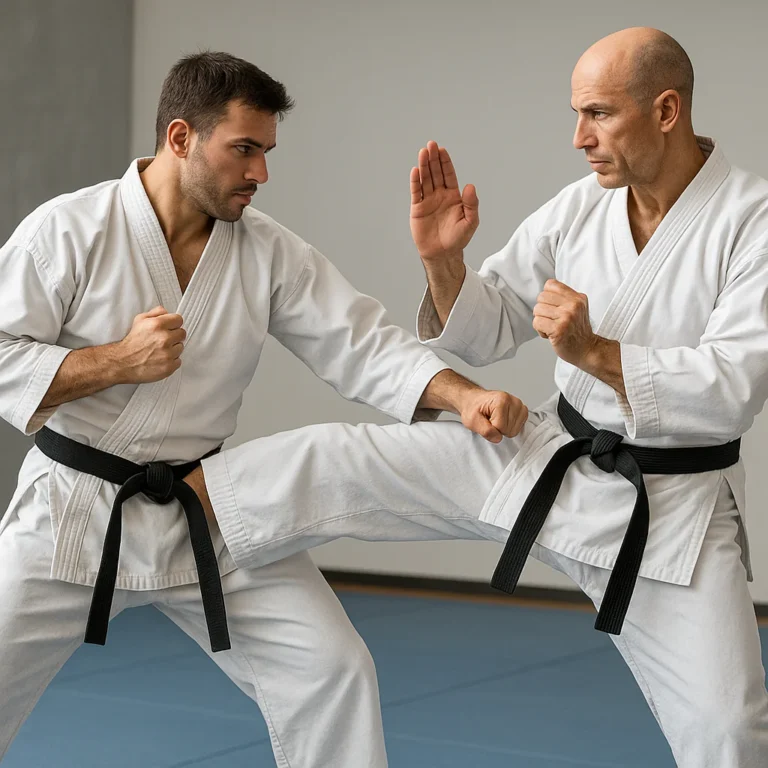
Karate is the gold standard for beginners. Why? Because it breaks everything down into manageable chunks. You learn a stance, then a punch, then a kick. It’s linear, logical, and incredibly rewarding.
- Why it’s easy: The curriculum is highly structured. You know exactly what to expect in every class.
- Key Techniques: Straight punches, front snaps, and roundhouse kicks.
- Best For: Kids, adults seeking discipline, and those who want a clear path to mastery.
- The Karate MMA™ Perspective: We love Karate because it teaches proper mechanics from day one. You can’t cheat the basics.
“Karate is a diverse martial arts discipline that may be learned from any of three angles: as a form of self-defense, discipline, or as an art.” — Master S.H. Yu
2. Brazilian Jiu-Jitsu: Mastering Leverage Over Raw Strength
Don’t let the name fool you. BJJ is often called the “gentle art” because it relies on leverage rather than brute strength. A 120-pound woman can submit a 20-pound man if she knows the technique.
- Why it’s easy: It’s like solving a puzzle. You don’t need to be an athlete to start; you just need to be willing to get on the ground.
- Key Techniques: Chokes, joint locks, and positional control.
- Best For: Smaller individuals, those interested in grappling, and people who love problem-solving.
- Safety Note: It’s one of the safest martial arts because there is no striking during regular training.
3. Muay Thai: The Art of Eight Limbs for Full-Body Conditioning
Known as the “Art of Eight Limbs” (fists, elbows, knees, and shins), Muay Thai is intense but surprisingly accessible for beginners. The movements are natural and powerful.
- Why it’s easy: The techniques are gross motor skills. You don’t need complex footwork to land a solid knee strike.
- Key Techniques: Clinch work, elbow strikes, and low kicks.
- Best For: Fitness enthusiasts, those who want to burn calories fast, and people who enjoy full-contact sparring.
- Fun Fact: A single Muay Thai class can burn between 60–1,0 calories!
4. Boxing: Building Agility, Footwork, and Punching Power
Boxing is pure. It’s just you, your opponent, and the art of hitting without getting hit. It’s one of the most effective ways to learn distance management and timing.
- Why it’s easy: The rules are simple. No kicks, no grappling. Just punches.
- Key Techniques: Jab, cross, hook, uppercut, and footwork.
- Best For: People who want to improve their cardio, reaction time, and hand-eye coordination.
- Quote: “As practitioners continue training, skill and experience become teachers.”
5. Krav Maga: Real-World Self-Defense for the Modern Era
Developed for the Israeli military, Krav Maga is designed for survival. It strips away the sport aspect and focuses on neutralizing threats as quickly as possible.
- Why it’s easy: It uses natural reflexes. You don’t learn complex forms; you learn how to escape a choke or a bear hug.
- Key Techniques: Eye gouges, groin strikes, and rapid disengagements.
- Best For: Those prioritizing real-world self-defense over sport or tradition.
- Warning: Because it’s so aggressive, it requires a high level of situational awareness to avoid legal trouble.
6. Taekwondo: High Kicks and Dynamic Flexibility
Taekwondo is famous for its spectacular kicks. It’s Olympic sport and highly structured, making it great for beginners who want to improve flexibility and balance.
- Why it’s easy: The kicking techniques are broken down into very specific, repeatable motions.
- Key Techniques: Spinning kicks, jumping kicks, and rapid-fire punches.
- Best For: Kids, flexibility seekers, and those who enjoy the aesthetic of martial arts.
7. Judo: The Gentle Way of Throwing and Takedowns
Judo focuses on throwing your opponent to the ground and controlling them. It’s a fantastic way to learn how to fall safely (breakfalls) and how to use an opponent’s momentum against them.
- Why it’s easy: The concept of “maximum efficiency, minimum effort” is intuitive.
- Key Techniques: Hip throws, shoulder throws, and pins.
- Best For: Those who want to learn grappling without the ground fighting of BJJ.
🧠 Factors That Make a Martial Art Easy to Learn for Beginners
So, why is Karate easier than Capoeira? Or why does BJJ feel more intuitive than Aikido? It comes down to four main factors.
Simplicity of Techniques and Movements
Some arts rely on gross motor skills (big, natural movements), while others require fine motor skills (tiny, precise movements).
- Easy: Krav Maga, Boxing, Muay Thai. These use movements you already know (punching, kicking, running).
- Harder: Aikido, Capoeira. These require complex body mechanics and timing that take years to master.
Structured Curriculum and Belt Systems
A clear path is crucial for beginners.
- Structured: Karate, Taekwondo, BJJ. You have a syllabus. You know what you need to learn for the next belt.
- Less Structured: Some traditional Kung Fu schools or older Aikido dojos may not have a clear progression, which can be confusing for a newbie.
Emphasis on Practical Application vs. Sport
- Sport Focus: Olympic Taekwondo or Point Karate. You learn to score points, which might not translate to a street fight.
- Self-Defense Focus: Krav Maga, BJJ. You learn to survive.
- The Balance: The best beginner arts offer a mix. You learn sport techniques that also work in real life.
Physical Fitness Requirements
- Low Barrier: BJJ, Karate. You can start at any fitness level.
- High Barrier: Muay Thai, MMA. These can be grueling on the cardio system initially.
- Tip: If you are out of shape, start with Karate or BJ to build a base before tackling the high-intensity cardio of Muay Thai.
🥊 Choosing Your Path: How to Select the Right Style for Your Goals
You’ve read the list. Now, how do you pick? It depends on why you are here.
| Goal | Best Martial Art | Why? |
|---|---|---|
| Self-Defense | Krav Maga or BJJ | Krav Maga for quick neutralization; BJJ for controlling larger attackers. |
| Fitness & Weight Loss | Muay Thai or Kickboxing | High calorie burn, full-body workout. |
| Discipline & Focus | Karate or Taekwondo | Structured curriculum, emphasis on forms and etiquette. |
| Fun & Social | BJJ or Boxing | Great community, lots of sparring partners, “rolling” is addictive. |
| Low Impact | BJJ or Aikido | Less striking, more grappling or redirection. |
The “First Video” Perspective:
There is a popular perspective in the martial arts community, often highlighted introductory videos, that suggests: “You actually don’t want to pick a martial art that advertises self-defense. You want a martial art that teaches you to fight.”
The argument is that competition is the ultimate test. If you can perform your technique against a resisting, fit opponent in a tournament, it will likely work in a real fight. This is why Boxing and MA are often recommended for those who want proven efficacy. However, for absolute beginners who are intimidated by sparring, starting with Karate or BJ (which has a gentler entry curve) is often the smarter long-term play.
🏋️ ♀️ Physical and Mental Benefits of Starting Martial Arts Training
Let’s talk about what happens to your body and brain after 3 months of training.
The Physical Shift
- Core Strength: Almost every martial art requires a strong core for balance and power.
- Flexibility: You’ll find yourself touching your toes without thinking about it.
- Cardio: You won’t get winded climbing stairs anymore.
- Weight Loss: Consistent training can lead to significant fat loss.
The Mental Shift
- Confidence: Knowing you can defend yourself changes your posture and demeanor.
- Stress Relief: There is nothing like a good punch on a heavy bag to clear your mind.
- Resilience: You learn to fail, get up, and try again. This translates to your career and personal life.
“It’s never too late to start.” — American Top Team Sandy Springs
👟 What to Expect in Your First Class: A Beginner’s Survival Guide
So, you signed up. You’re nervous. What happens when you walk through the door?
- The Warm-Up: Expect 10-15 minutes of jumping jacks, running, and stretching.
- The Basics: The instructor will teach you a stance and one or two techniques.
- Drills: You’ll practice with a partner. Don’t worry, they are likely a beginner too!
- Cool Down: Stretching and a brief discussion on the day’s lesson.
- The Bow: You’ll learn to bow to the instructor and your partner. It’s a sign of respect.
Pro Tip: Arrive 15 minutes early. Introduce yourself to the instructor. Tell them you are a beginner. They will guide you.
🛠️ Essential Gear and Equipment for New Martial Artists
You don’t need to spend a fortune to start. Most schools provide mats and basic equipment for the first few weeks. But eventually, you’ll want your own gear.
The Essentials
- Uniform (Gi): For Karate, BJJ, Judo, and Taekwondo.
- Hand Wraps & Gloves: For Boxing, Muay Thai, and MMA.
- Mouthguard: Essential for sparring.
- Shin Guards: Crucial for Muay Thai and Kickboxing.
Recommended Brands
- Gi: Hayabusa, Tatami, Venum.
- Gloves: Cleto Reyes, Wining, Fairtex.
- Mouthguards: Shock Doctor, Opro.
👉 CHECK PRICE on:
- Hayabusa Gi: Amazon | Hayabusa Official
- Cleto Reyes Gloves: Amazon | Cleto Reyes Official
- Venum Shin Guards: Amazon | Venum Official
👨 🏫 Study Martial Arts with Master S.H. Yu Martial Arts
If you are in the Oak Park or River Forest, IL area, you are in luck. Master S.H. Yu is a world-class martial artist who has dedicated his life to teaching. His academy offers a unique blend of traditional discipline and modern application.
- Programs Offered:
Tae Kwon Do: Synchronizes mind and spirit.
Aikido: Acquires defense skills through redirection.
Judo: Teaches lifting and throwing techniques.
Kumdo: Focuses on sword fighting mastery. - Why Choose Master Yu? He emphasizes that “Enjoying learning the martial arts discipline of choice goes a long way in helping the student master the sport.”
Contact Details:
- Phone: (708) 383-3456
- Email: [email protected]
- Locations: Oak Park, IL; River Forest, IL.
💬 Testimonials: Stories from Our Beginner Graduates
Don’t just take our word for it. Here’s what our students have to say.
“I was terrified of my first class. I thought I’d be the only one who didn’t know what to do. But the instructor was so patient, and the other students were welcoming. Three months later, I’ve lost 15 pounds and I feel stronger than I have in years.” — Sarah J., Karate Student
“I started BJJ because I wanted to learn self-defense. I’m 5’4″ and 10 lbs. I never thought I could take down a 6’2″ guy, but BJJ taught me that size doesn’t matter if you know the technique. It’s like a puzzle that never gets old.” — Mike T., BJJ Student
“Krav Maga changed my life. I used to walk with my head down, scared of everything. Now, I walk with my head high. I know I can handle myself.” — Elena R., Krav Maga Student
❓ Frequently Asked Questions (FAQs)

What is the best martial art for a complete beginner?
There is no single “best” art, but Karate and Brazilian Jiu-Jitsu are widely considered the most accessible. Karate offers a structured path and clear progression, while BJJ focuses on leverage, making it effective for all body types. If your goal is pure fitness, Muay Thai is excellent. If it’s self-defense, Krav Maga is top-tier.
Read more about “🥋 Can Beginners Learn Aikido? 15 Steps to Start (2026)”
How much does it cost to start karate classes?
Costs vary by location and school. Generally, you can expect to pay between $10 and $20 per month for unlimited classes. Some schools offer drop-in rates or introductory packages. Always ask about equipment costs, as a Gi can range from $50 to $150.
Read more about “Unlock Your Potential: 20 Essential Taekwondo Lessons to Master in 2026 🥋”
Do I need to be in shape before joining a martial arts class?
Absolutely not. In fact, you join to get in shape. Instructors design classes to accommodate all fitness levels. As you progress, your stamina and strength will naturally improve.
What should I wear to my first karate lesson?
For your first class, wear comfortable athletic clothing (t-shirt and shorts or sweatpants). Most schools will let you try a class before buying a uniform (Gi). Bring a water bottle and a towel.
Read more about “🥋 Judo vs. BJJ: The 7-Point Showdown (2026)”
How long does it take to get a black belt in karate?
On average, it takes 3 to 5 years of consistent training (2-3 times a week) to earn a black belt in Karate. However, this varies by school, style, and the student’s dedication. Remember, the black belt is just the beginning of the real learning.
Read more about “How long does it take to get a black belt in karate?”
Are martial arts classes suitable for older beginners?
Yes! It is never too late to start. Many students begin in their 40s, 50s, and even 60s. The key is to find a school that offers classes tailored to your age group or fitness level.
Read more about “🥋 The Ultimate Guide to 20+ Martial Arts Styles (2026)”
What are the benefits of learning self-defense for beginners?
Beyond physical safety, self-defense training builds confidence, situational awareness, and mental resilience. It teaches you to avoid dangerous situations and de-escalate conflicts before they turn physical.
Read more about “🥋 What Does Aikido Do? The 2026 Truth About Harmony & Defense”
🏁 Conclusion

So, we’ve journeyed from the ancient battlefields to the modern dojo, explored the 7 easiest martial arts, and unpacked the why and how of starting your journey.
The Verdict:
- If you want discipline and structure: Go with Karate.
- If you want leverage and ground control: Choose Brazilian Jiu-Jitsu.
- If you want fitness and striking: Pick Muay Thai or Boxing.
- If you want real-world survival: Try Krav Maga.
Remember the words of the experts: “Everyone starts in different places because everyone is different.” The best martial art is the one you will actually show up for. Don’t overthink it. Walk into a local dojo, introduce yourself, and take that first step. The rest will follow.
Ready to start your journey? Contact us today to schedule your first free trial class at Karate MMA™!
🔗 Recommended Links
Gear & Equipment
- Karate Gi: Shop Karate Gis on Amazon | Tatami Fightwear
- BJ Gis: Shop BJJ Gis on Amazon | Venum Official
- Boxing Gloves: Shop Boxing Gloves on Amazon | Cleto Reyes Official
- Muay Thai Gear: Shop Muay Thai Gear on Amazon | Fairtex Official
Books & Resources
- “The Book of Five Rings” by Miyamoto Musashi: Amazon
- “Brazilian Jiu-Jitsu: Theory and Technique” by Renzo Gracie: Amazon
- “Karate: The Definitive Guide” by John Corcoran: Amazon
📚 Reference Links
- Master S.H. Yu Martial Arts: Official Website
- Premier Martial Arts: The best martial art for beginners
- American Top Team Sandy Springs: What is the best martial art for beginners?
- UFC: History of MMA
- International Judo Federation: Judo History
- World Karate Federation: Karate Rules & History