Support our educational content for free when you purchase through links on our site. Learn more
🧘 ♂️ 7 Stages of Spiritual Growth in Aikido (2026)


Ever stepped onto the mat feeling like you were just learning to throw, only to realize you were actually learning to live? At Karate MMA™, we’ve seen countless students arrive seeking self-defense, only to discover that the true battle is against their own ego. While many martial arts focus on the “how” of fighting, Aikido demands you answer the “why.” But here is the twist: without the silent engine of meditation, even the most perfect technique is just a hollow dance.
In this deep dive, we unravel the 7 Stages of Spiritual Growth that transform a novice into a master of harmony. We’ll explore how Zazen (seated meditation) rewires your brain for faster reaction times, debunk the myth that Aikido is “too soft” for real life, and reveal how Ki flow isn’t magic—it’s neuroscience. From the boardroom to the dojo, discover why the ultimate goal isn’t to defeat an opponent, but to save them from their own aggression. Ready to find the peace hidden in the chaos? Let’s begin the journey.
Key Takeaways
- Meditation is the Engine: Spiritual growth isn’t a side effect; it is the primary fuel that powers effective Aikido technique and Ki flow.
- The 7-Stage Path: Every practitioner traverses a specific spiritual evolution, from Shoshin (Beginer’s Mind) to Shugyo (Lifelong Perfection).
- Science Mets Spirit: Modern research confirms that mindfulness practices like Zazen increase gray matter density, enhancing focus and emotional regulation.
- Beyond the Dojo: True mastery means applying Aiki principles—blending, centering, and non-resistance—to daily conflicts and business negotiations.
- Ego Dissolution: The core of Aikido is learning to let go of the need to “win,” replacing aggression with compassion and harmony.
Table of Contents
- ⚡️ Quick Tips and Facts
- 📜 The Roots of Harmony: A Brief History of Aikido and Its Spiritual Origins
- 🧘 ♂️ The Mind-Body Connection: How Meditation Fuels Aikido Technique
- 🌊 7 Stages of Spiritual Growth on the Aikido Path
- 1. The Beginner’s Mind (Shoshin): Embracing the Unknown
- 2. Leting Go of Ego: The Art of Non-Resistance
- 3. Developing Ki: Cultivating Internal Energy Flow
- 4. Zanshin: The State of Total Awareness
- 5. Musubi: Blending with the Universe
- 6. Aiki: The Alchemy of Conflict Resolution
- 7. Shugyo: The Lifelong Journey of Self-Perfection
- 🧠 Beyond the Dojo: Integrating Aikido Spirituality into Daily Life
- 🥋 Meditation Techniques Every Aikidoka Should Master
- 🤔 Common Myths About Aikido Spirituality Debunked
- 🏆 Business Lessons from the Tatami: How Aikido Principles Shape Entrepreneurship
- 📝 Letter from the Editor: The Future of Spiritual Martial Arts
- 🌱 A Path Towards Revitalizing Aikido: Modern Perspectives on Ancient Wisdom
- ❓ Frequently Asked Questions About Aikido and Meditation
- 🔗 Recommended Links for Deepening Your Practice
- 📚 Reference Links and Sources
- 💬 Conclusion: The Ultimate Goal is Peace
⚡️ Quick Tips and Facts
Before we dive into the deep end of the spiritual ocean that is Aikido, let’s hit the fast-forward button on the essentials. If you’re looking for a quick fix, Aikido might not be the place, but if you want a lifetime of transformation, you’re in the right dojo.
- Meditation isn’t optional; it’s the engine. While physical technique (Waza) is the car, meditation is the fuel. Without it, you’re just pushing a heavy vehicle uphill.
- The “Spiritual” doesn’t mean “Religious.” You don’t need to believe in a specific deity to experience the Ki (life energy) flow. It’s about mindfulness, presence, and ego dissolution.
- Time to see results? According to Bob Noha Sensei, a 54-year veteran, you can see significant shifts in your spiritual awareness in as little as six months if you prioritize it, just like you would for physical self-defense skills.
- It’s not just sitting still. Aikido meditation includes Zazen (seated), Kinoh (walking), and moving meditation during techniques.
- The “Third-Tier” Approach: Many modern dojos focus only on self-defense (Tier 1) and fitness (Tier 2). The missing link is the spiritual tier, which addresses the modern crisis of “lack of wholeness.”
For a broader look at how Aikido fits into the martial arts landscape, check out our deep dive into Aikido fundamentals right here at Karate MMA™.
📜 The Roots of Harmony: A Brief History of Aikido and Its Spiritual Origins

To understand where the spirit goes in Aikido, we have to look at where it started. Unlike many martial arts born purely from the battlefield, Aikido was forged in the fires of spiritual revelation.
Morihei Ueshiba, known affectionately as O-Sensei (Great Teacher), didn’t just learn to fight; he sought to understand the universe. After years of training in Daito-ryu Aiki-jujutsu and other styles, Ueshiba experienced a profound spiritual awakening in 1925. He realized that the true purpose of martial arts wasn’t to destroy an opponent, but to harmonize with them.
“The vast majority of people suffer more from a lack of wholeness and meaning in their lives than from the effects of violent attacks.” — Bob Noha Sensei
This shift from “killing” to “saving” is the bedrock of Aikido. The art is literally translated as “The Way of Unifying Life Energy” (Ai = harmony, Ki = energy, Do = way).
The Evolution of Spiritual Practice in Aikido
Historically, spiritual growth was implicit. You learned it by osmosis, watching the master. However, as Aikido spread globally, the nuance was often lost.
- The Early Days: Spiritual growth was a byproduct of intense physical training and strict adherence to the master’s way.
- The Modern Gap: As noted by Aikido Journal, many dojos today focus heavily on the “Manifest” (physical technique) while neglecting the “Hidden” (principles) and “Divine” (spiritual wholeness).
- The Revival: Modern instructors are now explicitly teaching meditation and spiritual philosophy to ensure the “Soul’s Journey” isn’t left behind.
If you’re curious about how this compares to the rigid discipline of Karate, explore our Fight Analysis and Breakdowns to see the philosophical divergences.
🧘 ♂️ The Mind-Body Connection: How Meditation Fuels Aikido Technique
You might be wondering, “How does sitting cross-legged help me throw a guy twice my size?” The answer lies in the neuroscience of movement.
The Science of Stillness in Motion
A study by Massachusetts General Hospital (cited in the Harvard Gazette) revealed that mindfulness meditation increases gray matter density in the hippocampus. For an Aikidoka, this means:
- Enhanced Memory: Remembering complex sequences of techniques (Kata) becomes easier.
- Emotional Regulation: You don’t panic when grabbed; you stay calm and execute the technique.
- Faster Reaction Time: A calm mind processes sensory input faster than a stressed one.
The Mechanics of Ki
In Aikido, we talk about Ki (or Chi/Qi). While skeptics call it “focus,” practitioners feel it as a tangible energy. Meditation is the primary tool to cultivate this.
- Centering (Hara): Meditation teaches you to drop your center of gravity to your Hara (lower abdomen). This makes you physically stable and mentally grounded.
- Breath Control (Kokyu): Deep, rhythmic breathing synchronizes your body and mind, allowing for fluid, circular movements rather than jerky, linear ones.
“Meditation is an invaluable element of Aikido practice, fostering mental clarity, emotional balance, and spiritual growth.” — Aikido Australia
Why Your Technique Fels “Stiff”
If your techniques feel robotic, it’s likely a lack of Zanshin (total awareness). Without meditation, your mind is cluttered with “Did I do that right?” or “What if I get hit?” Meditation clears the noise, allowing your body to move with Musubi (blending).
🌊 7 Stages of Spiritual Growth on the Aikido Path
Drawing from the “Spectrum of Consciousness” and the Shinto stages of the soul, we’ve mapped out the 7 Stages of Spiritual Growth every Aikidoka traverses. This isn’t a belt ranking system; it’s a map of your internal evolution.
1. The Beginner’s Mind (Shoshin): Embracing the Unknown
- The State: You are full of questions, eager to learn, but often frustrated by your lack of skill.
- The Spiritual Lesson: Humility. You realize you know nothing. This emptiness is the prerequisite for growth.
- The Trap: Trying to force techniques before understanding the principle.
2. Leting Go of Ego: The Art of Non-Resistance
- The State: You start to understand that “wining” isn’t about overpowering the opponent.
- The Spiritual Lesson: Non-Resistance. You stop fighting the energy and start blending with it. This is the first step toward Aiki.
- The Challenge: Your ego wants to “win” the throw. The spirit wants to “save” the opponent.
3. Developing Ki: Cultivating Internal Energy Flow
- The State: You begin to feel the connection between your breath and your movement.
- The Spiritual Lesson: Unity. You realize your energy is not separate from the universe’s energy.
- The Practice: Focused breathing exercises and Ki tests (unbalancing exercises).
4. Zanshin: The State of Total Awareness
- The State: You are aware of your partner, the room, and your own internal state simultaneously.
- The Spiritual Lesson: Presence. You are fully in the “now,” free from past regrets or future anxieties.
- The Benefit: You can anticipate attacks before they happen.
5. Musubi: Blending with the Universe
- The State: The distinction between “self” and “other” begins to blur. You move as one with your partner.
- The Spiritual Lesson: Interconnectedness. You see the opponent not as an enemy, but as a partner in a dance of energy.
- The Result: Techniques become effortless, flowing like water.
6. Aiki: The Alchemy of Conflict Resolution
- The State: You can neutralize aggression without violence. The conflict dissolves before it escalates.
- The Spiritual Lesson: Compassion. You protect the attacker from their own aggression.
- The Reality: This is the highest form of self-defense—preventing the fight entirely.
7. Shugyo: The Lifelong Journey of Self-Perfection
- The State: You realize there is no “finish line.” Every day is a new opportunity to refine your spirit.
- The Spiritual Lesson: Eternal Growth. The practice becomes a way of life, not just a hobby.
- The Goal: To embody the spirit of Aikido in every interaction, from the dojo to the grocery store.
“The soul’s journey to the divine is the very process of Aikido itself.” — The Integral Dojo
🧠 Beyond the Dojo: Integrating Aikido Spirituality into Daily Life
So, you’ve mastered the Ikyo throw. Great. But what happens when your boss yells at you? Or when you’re stuck in traffic? This is where the rubber meets the road.
The “Office Dojo”
Aikido principles are surprisingly effective in the corporate world.
- Blending: Instead of arguing with a difficult colleague, acknowledge their point (blend) and guide the conversation to a solution (redirect).
- Centering: When stress hits, drop your breath to your Hara. Don’t react impulsively.
- Non-Resistance: Don’t fight the problem; understand its energy and work with it.
Real-World Application: A Story from the Mat
One of our senior instructors at Karate MMA™, a former corporate executive, shared a story. He was in a heated negotiation where the other party was aggressive. Instead of matching their energy, he paused, breathed, and listened. The tension dissipated, and they found a win-win solution. He called it “applying Aiki in the boardroom.”
Mindfulness in Motion
You don’t need a cushion to meditate.
- Walking Meditation: Focus on the sensation of your feet touching the ground.
- Body Scans: While waiting in line, scan your body for tension and release it.
- Mindful Eating: Chew slowly, savoring the flavors, connecting with the energy of the food.
For more on how martial arts principles apply to modern life, check out our Fighter Profiles where we interview athletes who live these philosophies.
🥋 Meditation Techniques Every Aikidoka Should Master
Ready to get practical? Here are three specific meditation techniques you can start today. No fancy equipment required.
1. Seiza Zazen (Seated Meditation)
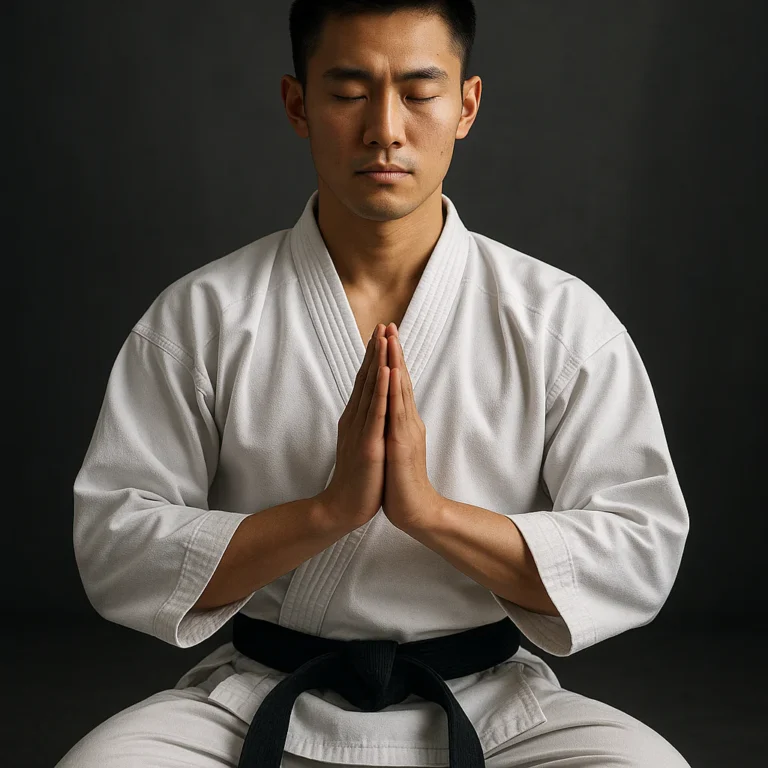
- The Setup: Sit in Seiza (kneling) or cross-legged on a cushion. Keep your spine straight, chin slightly tucked.
- The Breath: Inhale deeply through the nose, expanding the belly. Exhale slowly, visualizing tension leaving the body.
- The Focus: Focus on the Hara (lower abdomen). Imagine a ball of energy there.
- Duration: Start with 5 minutes. Gradually increase to 20.
2. Kinoh (Walking Meditation)
- The Setup: Walk slowly in a circle or a straight line.
- The Focus: Pay attention to the sensation of your feet lifting and placing.
- The Breath: Synchronize your steps with your breath. Step in on the inhale, step out on the exhale.
- The Goal: Maintain Zanshin (awareness) of your surroundings while staying centered.
3. Ki Breathing (Kokyu Ho)
- The Setup: Stand with feet shoulder-width apart, knees slightly bent.
- The Action: Inhale, raising your arms. Exhale, bringing your arms down and pushing your hands forward as if pushing away an invisible force.
- The Visualization: Imagine your Ki flowing from your Hara, through your arms, and out into the universe.
- The Benefit: This bridges the gap between static meditation and dynamic movement.
“Start with 5 to 10 minutes daily, gradually increasing as comfort grows.” — Aikido Australia
Recommended Gear for Meditation
While you don’t need much, a good cushion can make a world of difference.
- Zafu Cushions: Essential for proper posture.
- Meditation Benches: Great for those with knee issues.
- Timer Apps: To keep track of your sessions without checking your phone.
👉 Shop Meditation Gear on:
- Zafu Cushions: Amazon | Etsy | Manduka Official
- Meditation Benches: Amazon | Walmart | YogaOutlet Official
🤔 Common Myths About Aikido Spirituality Debunked
Let’s clear the air. There are a lot of misconceptions floating around about Aikido and its spiritual side.
Myth 1: “Aikido is too soft to be effective.”
Reality: Aikido is incredibly effective, but it requires a different mindset. It’s not about brute force; it’s about leverage and timing. The spiritual aspect enhances this by keeping you calm under pressure.
Myth 2: “You have to be religious to practice Aikido.”
Reality: Absolutely not. While O-Sensei was deeply spiritual, the practice is open to atheists, agnostics, and people of all faiths. The “spirituality” is about human connection and inner peace, not dogma.
Myth 3: “Meditation is just a waste of time.”
Reality: As the Johns Hopkins University meta-analysis showed, meditation reduces anxiety and depression. In Aikido, it’s the difference between a clumsy throw and a fluid one.
Myth 4: “Spiritual growth is only for advanced students.”
Reality: Bob Noha Sensei argues that spiritual growth should be a priority from day one. You don’t need to be a black belt to experience wholeness.
Myth 5: “Aikido is just a dance.”
Reality: While it looks graceful, Aikido is a martial art. The “dance” is a method of training to develop reflexes and awareness that work in real-life scenarios.
🏆 Business Lessons from the Tatami: How Aikido Principles Shape Entrepreneurship
You might think Aikido is just for the dojo, but the principles of Aiki are gold for entrepreneurs.
The Art of Negotiation
In business, you often face aggressive competitors or difficult clients.
- Blend: Listen to their concerns. Don’t argue.
- Redirect: Guide the conversation toward a solution that benefits both parties.
- Neutralize: Diffuse the tension before it becomes a conflict.
Leadership and Centering
A leader who is centered inspires confidence. When chaos strikes, the leader who panics loses control. The leader who breathes and stays calm guides the team through the storm.
Case Study: The “Aikido CEO”
Consider a CEO who faced a hostile takeover. Instead of fighting back with aggression, they listened to the shareholders’ concerns, blended their interests with the company’s vision, and redirected the narrative to a merger that benefited everyone. That’s Aiki in action.
For more on how martial arts mindset applies to business, read our Karate and MMA News section.
📝 Letter from the Editor: The Future of Spiritual Martial Arts
As we look to the future, the role of spirituality in martial arts is becoming more critical. In a world filled with division and stress, the Way of Harmony offered by Aikido is more relevant than ever.
However, we must be careful not to dilute the practice. We need to ensure that the spiritual aspects are taught explicitly, not just assumed. As Bob Noha Sensei suggests, we need a “Third-Tier” practice structure that prioritizes spiritual awakening alongside physical training.
The future of Aikido lies in its ability to adapt while staying true to its roots. It’s about creating a generation of practitioners who are not just skilled fighters, but wise human beings.
🌱 A Path Towards Revitalizing Aikido: Modern Perspectives on Ancient Wisdom
How do we keep Aikido alive and relevant? By embracing both the old and the new.
Integrating Science and Spirit
Modern science is finally catching up to what O-Sensei knew centuries ago. Studies on neuroplasticity, stress reduction, and mindfulness validate the ancient practices. By integrating these findings, we can make Aikido more accessible to the modern mind.
The Role of Technology
Technology can be a double-edged sword. On one hand, it can distract us. On the other, it can help us connect with teachers and resources from around the world. Online meditation sessions, virtual dojos, and digital libraries are making Aikido more accessible than ever.
The Need for Explicit Instruction
We can no longer rely on osmosis. Instructors must explicitly teach the spiritual aspects. This means dedicating time in class for meditation, discussing philosophy, and encouraging self-reflection.
“To be taken seriously, you have to deliver on your promise on the benefits the art offers.” — Bob Noha Sensei
❓ Frequently Asked Questions About Aikido and Meditation
How does meditation improve focus in aikido?
Meditation trains the brain to filter out distractions and maintain single-pointed focus. In Aikido, this allows you to react instantly to an opponent’s movement without hesitation. It enhances Zanshin, the state of total awareness where you are aware of everything in your environment.
What is the connection between spiritual growth and aikido techniques?
Spiritual growth is the foundation of effective technique. Without the inner calm and ego dissolution that comes from spiritual practice, techniques become stiff and mechanical. Spiritual growth allows you to blend with the opponent’s energy, making the technique fluid and effortless.
Can aikido be practiced as a form of moving meditation?
Absolutely. In fact, that’s the ideal. When you perform techniques with full awareness, focused breath, and a mind free of distraction, every movement becomes a meditation. This is the essence of Kinoh (walking meditation) and the flowing nature of Aikido.
How do aikido masters incorporate spiritual philosophy into training?
Masters often begin or end class with Zazen (seated meditation). They also weave philosophical concepts into their instruction, explaining the “why” behind the “how.” They encourage students to reflect on their behavior outside the dojo and apply Aikido principles to daily life.
What role does mindfulness play in aikido self-defense?
Mindfulness is the key to de-escalation. A mindful practitioner can sense the intent of an attacker before the attack begins and choose a non-violent resolution. If violence is unavoidable, mindfulness ensures that the response is precise and controlled, minimizing harm to both parties.
Is spiritual development a requirement for advanced aikido ranks?
While not always a formal requirement, true mastery of Aikido is impossible without spiritual development. The higher ranks (Dan levels) are expected to embody the principles of harmony and peace. Without this inner growth, a practitioner may have the techniques but lacks the spirit of Aikido.
How does aikido compare to karate in terms of spiritual emphasis?
Both arts have deep spiritual roots. Karate often emphasizes discipline, character development, and the “one strike, one kill” philosophy, which requires immense mental fortitude. Aikido emphasizes harmony, non-resistance, and blending. While Karate focuses on the “hard” aspect of the spirit (resilience), Aikido focuses on the “soft” aspect (adaptability). Both lead to the same goal: self-mastery.
💬 Conclusion: The Ultimate Goal is Peace

We started this journey by asking: What is the role of meditation and spiritual growth in Aikido practice? The answer is simple yet profound: Everything.
Meditation is not an add-on; it is the heart of Aikido. It transforms the art from a mere system of self-defense into a path of self-discovery. Through the 7 Stages of Spiritual Growth, we move from the ego-driven beginner to the harmonious master. We learn that the true opponent is not the person standing in front of us, but the fear and anger within ourselves.
As Bob Noha Sensei reminds us, “The vast majority of people suffer more from a lack of wholeness and meaning in their lives than from the effects of violent attacks.” Aikido offers a solution to this modern crisis. It offers a way to find peace in a chaotic world.
So, the next time you step onto the mat, remember: you are not just learning to throw. You are learning to live. You are on a journey of the soul, guided by the principles of harmony, non-resistance, and love.
Final Thought: Don’t settle for a “killer nikyo.” Aim for the divine.
🔗 Recommended Links for Deepening Your Practice
Ready to take your practice to the next level? Here are some resources we highly recommend.
Books
- The Spectrum of Consciousness by Ken Wilber: A deep dive into the states of consciousness discussed in Aikido.
- Amazon
- Aikido and the Harmony of Nature by Mitsugi Saotome: A classic text on the philosophy of Aikido.
- Amazon
- The Art of Peace by Morihei Ueshiba: The collected teachings of the founder.
- Amazon
Online Resources
- Aikido Journal: For articles on history, technique, and philosophy.
- Visit Aikido Journal
- The Integral Dojo: For deep dives into the spiritual aspects of Aikido.
- Visit The Integral Dojo
Products
- Meditation Cushions:
- Amazon | Etsy | Manduka Official
- Meditation Benches:
- Amazon | Walmart | YogaOutlet Official
📚 Reference Links and Sources
- Aikido Journal: “Aikido as an Art of Personal Development and Spiritual Growth” by Bob Noha. Read Article
- Aikido Australia: “The Role of Meditation in Aikido.” Read Article
- The Integral Dojo: “The Soul’s Journey Through Aikido.” Read Article
- Harvard Gazette: “Mindfulness Meditation Increases Gray Matter Density.” Read Study
- Johns Hopkins University: “Mindfulness Meditation for Anxiety and Depression.” Read Meta-Analysis
- Frontiers in Human Neuroscience: “Cardiovascular Health and Deep Breathing.” Read Study
- USA Today: “Police Officer Suicides Outnumber Line-of-Duty Deaths.” Read Report
🎥 Featured Video
For a visual guide to getting started with meditation, check out this short, guided session. It’s perfect for beginners and takes only 5-6 minutes.
Watch: Guided Meditation for Aikido Practitioners
“We want to propose you some meditation sessions guided meditation sessions short ones of 5-6 minutes something like that.”