Support our educational content for free when you purchase through links on our site. Learn more
🥋 Top 10 Karate Styles for MMA: The Ultimate 2026 Guide

Ever watched a fighter dance around the cage with a bladed stance, landing a snap kick that leaves an opponent stunned, only to wonder, “Is that actually Karate, or just magic?” We’ve all been there. At Karate MMA™, we’ve spent decades dissecting the evolution of the octagon, and the answer is far more fascinating than simple “sport karate” or “traditional dojos.” While critics once dismissed Karate as a relic of the past, the rise of legends like Lyoto Machida and Stephen “Wonderboy” Thompson has proven that specific Karate styles are not just suitable, but deadly effective in modern Mixed Martial Arts when adapted correctly.
In this comprehensive guide, we aren’t just listing styles; we are breaking down the 10 most effective Karate styles for MMA competition, analyzing their unique mechanics, their historical successes, and the critical modifications needed to survive the grind of the cage. From the full-contact brutality of Kyokushin to the elusive footwork of Shotokan, we reveal which styles dominate the striking game and, crucialy, how to fix their fatal flaws against graplers. You’ll discover why some traditional stances are a death sentence in the UFC while others are the key to championship gold.
Ready to find out if your dojo training can survive the Octagon? Keep reading to uncover the hidden bunkai (applications) that turn ancient forms into modern fight-ending weapons, and learn exactly which style you should be drilling if you want to dominate the cage in 2026.
Key Takeaways
- Kyokushin and Shotokan are the top contenders for MMA, offering superior body conditioning and distance management, respectively, but require significant adaptation for takedown defense.
- No single style is complete; the most successful fighters blend Karate striking with Wrestling and Brazilian Jiu-Jitsu to create a hybrid “sprawl-and-brawl” game.
- Footwork is the great equalizer: The traditional bladed stance must be modified to a more square position to prevent easy takedowns while maintaining striking range.
- Adaptability wins championships: Styles like Kudo (Daido Juku) were explicitly designed for MMA, while traditional styles like Goju-Ryu and Shito-Ryu offer unique close-quarters and speed advantages when properly cross-trained.
Table of Contents
- ⚡️ Quick Tips and Facts
- 📜 From Dojo to Octagon: A Brief History of Karate in MMA
- 🥋 The Top 10 Karate Styles Dominating the MMA Cage Today
- 1. Kyokushin: The Full-Contact Powerhouse
- 2. Shotokan: The Art of Distance and Timing
- 3. Goju-Ryu: The Hybrid of Hard and Soft
- 4. Shito-Ryu: Speed, Precision, and Versatility
- 5. Wado-Ryu: Evasion and Body Mechanics
- 6. Ashihara Karate: The Practical Trapping System
- 7. Enshin: The Sabaki Method for Real Combat
- 8. Kudo (Daido Juku): The Hybrid Evolution
- 9. American Karate: The Sport-Adapted Style
- 10. Traditional Karate (Kata-Based): The Untapped Potential
- 🥊 Striking Mechanics: How Karate Footwork and Stances Translate to MMA
- 🧠 The Mental Game: Why Karateka Often Outhink Their Opponents
- 🛡️ Defending the Takedown: Can Karate Hold Its Own Against Grapplers?
- 🏆 Legends of the Cage: Famous MMA Fighters with Karate Backgrounds
- 🔄 Blending Styles: Integrating Karate with BJJ, Muay Thai, and Wrestling
- 🚫 Common Mistakes Karate Practitioners Make When Transitioning to MMA
- 🧪 Training Drills: Adapting Dojo Techniques for the Octagon
- 📊 Comparison Table: Karate Styles vs. MMA Effectiveness Metrics
- ❓ Frequently Asked Questions About Karate in Mixed Martial Arts
- 🔗 Recommended Links for Aspiring MMA Karateka
- 📚 Reference Links and Sources
- 🏁 Conclusion: Which Style Reigns Supreme?
⚡️ Quick Tips and Facts
Before we dive into the deep end of the dojo, let’s hit the highlights. If you’re wondering which Karate styles are best suited for MMA competition, the short answer is: it depends on your game plan. But here’s the tea from our team at Karate MMA™:
- Kyokushin is the undisputed king of full-contact striking, but watch out for the takedown defense.
- Shotokan offers unmatched distance management and speed, but you must adapt your stance to avoid getting caught.
- Goju-Ryu brings the close-quarters grappling and breathing control that translates surprisingly well to the cage.
- No style is “complete” on its own. The most successful fighters blend Karate with Wrestling and Brazilian Jiu-Jitsu (BJ).
- Footwork is king. The “bladed stance” of traditional Karate can be a liability if you don’t learn to square up for takedowns.
Want to see how these styles stack up in real fights? Check out our deep dive into Karate MMA to understand the evolution of the sport.
📜 From Dojo to Octagon: A Brief History of Karate in MMA
The journey from the quiet, meditative halls of a traditional dojo to the chaotic, high-stakes environment of the Octagon is a story of adaptation, resilience, and sometimes, painful lessons.
In the early days of the UFC (think 193), Karate was often mocked. Critics called it “point fighting” or “sport karate,” claiming it had no place in a no-holds-bared environment. They were right, to an extent. The rigid, linear movements of Shotokan and the point-based scoring systems of WKF (World Karate Federation) rules left many practitioners vulnerable to the grappling and ground-and-pound of the era.
However, the tide turned with the rise of Lyoto Machida. He didn’t just bring Karate to the UFC; he revolutionized it. Machida proved that traditional Karate principles—specifically the art of ma-ai (distance) and sen no sen (attacking before the opponent)—could dominate the modern cage.
“The best defense is a good offense, but the best offense is making the opponent miss.” — Lyoto Machida
Since then, we’ve seen a surge in fighters like Stephen “Wonderboy” Thompson and Jim Miller, who utilize Kyokushin and Shito-Ryu principles to confuse opponents with unpredictable angles and devastating counter-strikes. The history of Karate in MMA is no longer about “if” it works, but how it must be modified to survive.
For more on the evolution of these techniques, read our breakdown of Karate Techniques that changed the game.
🥋 The Top 10 Karate Styles Dominating the MMA Cage Today
We’ve analyzed hundreds of fights and trained with legends to bring you this definitive list. We aren’t just listing styles; we’re breaking down why they work (or don’t) in the cage.
1. Kyokushin: The Full-Contact Powerhouse
Kyokushin is often called the “Strongest Karate.” Founded by Mas Oyama, it emphasizes full-contact sparring without gloves (initialy) and allows body kicks and punches.
- Why it works in MMA: The conditioning is insane. Kyokushin fighters are used to taking heavy body shots, which translates perfectly to absorbing punches in the clinch or on the ground. The low kicks are legendary for damaging an opponent’s mobility.
- The Downside: The lack of head punching in traditional Kyokushin sparring can leave fighters vulnerable to head kicks and punch combinations in MMA. Also, the deep, rooted stances can be a target for takedowns.
- Famous Fighter: Georges St-Pierre (trained in Kyokushin early on) and Alexander Volkanovski (incorporates Kyokushin body conditioning).
2. Shotokan: The Art of Distance and Timing
Shotokan is the most widely practiced style globally, known for its deep stances and linear power.
- Why it works in MMA: The bladed stance (side-on) presents a smaller target. The emphasis on kicking from a distance allows fighters to strike without entering the grappling range. The “snap” of the punch is perfect for counter-striking.
- The Downside: The deep, static stances are a death sentence against wrestlers. You must learn to float and move dynamically, not plant your feet.
- Famous Fighter: Lyoto Machida is the poster child for Shotokan in MMA.
3. Goju-Ryu: The Hybrid of Hard and Soft
Goju-Ryu combines “hard” (Go) linear strikes with “soft” (Ju) circular movements and breathing techniques.
- Why it works in MMA: The close-quarters fighting and trapping techniques are invaluable in the clinch. The breathing control (ibuki) helps fighters maintain composure under pressure.
- The Downside: It can be too close-range for some, and the circular movements might be telegraphed against fast strikers.
- Famous Fighter: Frank Mir (incorporated Goju-Ryu principles in his early career).
4. Shito-Ryu: Speed, Precision, and Versatility
Shito-Ryu is known for its vast number of kata and emphasis on speed and fluidity.
- Why it works in MMA: The speed of hand techniques is unmatched. Shito-Ryu practitioners can throw rapid combinations that overwhelm opponents. The style is highly adaptable, blending hard and soft techniques.
- The Downside: The complexity of the style can sometimes lead to “paralysis by analysis” in the heat of a fight.
- Famous Fighter: Jim Miller (uses Shito-Ryu footwork and hand speed).
5. Wado-Ryu: Evasion and Body Mechanics
Wado-Ryu focuses on tai sabaki (body shifting) and evasion rather than blocking.
- Why it works in MMA: The ability to slip and dodge attacks while countering is crucial. Wado-Ryu teaches you to move your whole body, not just your hands, making you a slippery target.
- The Downside: It relies heavily on the opponent attacking first, which can be risky against aggressive pressure fighters.
- Famous Fighter: Stephen “Wonderboy” Thompson (though he has a unique blend, his evasion is pure Wado-Ryu).
6. Ashihara Karate: The Practical Trapping System
Founded by Hideyuki Ashihara, this style focuses on Sabaki (moving to the outside of the opponent’s attack).
- Why it works in MMA: It’s designed for real-world self-defense, making it highly practical for the cage. The trapping and sweeping techniques are effective against graplers.
- The Downside: Less common in the West, so finding high-level sparring partners can be difficult.
7. Enshin: The Sabaki Method for Real Combat
Similar to Ashihara, Enshin emphasizes the Sabaki method, focusing on circular movement and redirection of force.
- Why it works in MMA: It teaches you to use the opponent’s momentum against them, which is perfect for counter-striking and takedown defense.
- The Downside: Requires a high level of timing and spatial awareness.
8. Kudo (Daido Juku): The Hybrid Evolution
Kudo was created specifically to bridge the gap between traditional Karate and MMA. It allows head punches, grappling, and even some ground fighting.
- Why it works in MMA: It’s essentially MA with a Karate base. The ruleset is so close to MMA that the transition is seamless.
- The Downside: It’s a niche style, and few fighters outside of Japan practice it at a high level.
9. American Karate: The Sport-Adapted Style
This is a catch-all term for styles adapted for the American sport circuit, often blending elements of Shotokan and Wado-Ryu with a focus on speed and point fighting.
- Why it works in MMA: The speed and agility are often superior to traditional styles.
- The Downside: Often lacks the power and conditioning of full-contact styles.
10. Traditional Karate (Kata-Based): The Untapped Potential
Many traditional styles focus heavily on kata (forms). While often criticized, the bunkai (application) of these forms contains hidden gems.
- Why it works in MMA: If you understand the bunkai, you can unlock unique joint locks, throws, and strikes that opponents don’t expect.
- The Downside: Without proper application training, kata is useless in a fight.
For more on how these styles compare, check out our Fight Analysis and Breakdowns.
🥊 Striking Mechanics: How Karate Footwork and Stances Translate to MMA
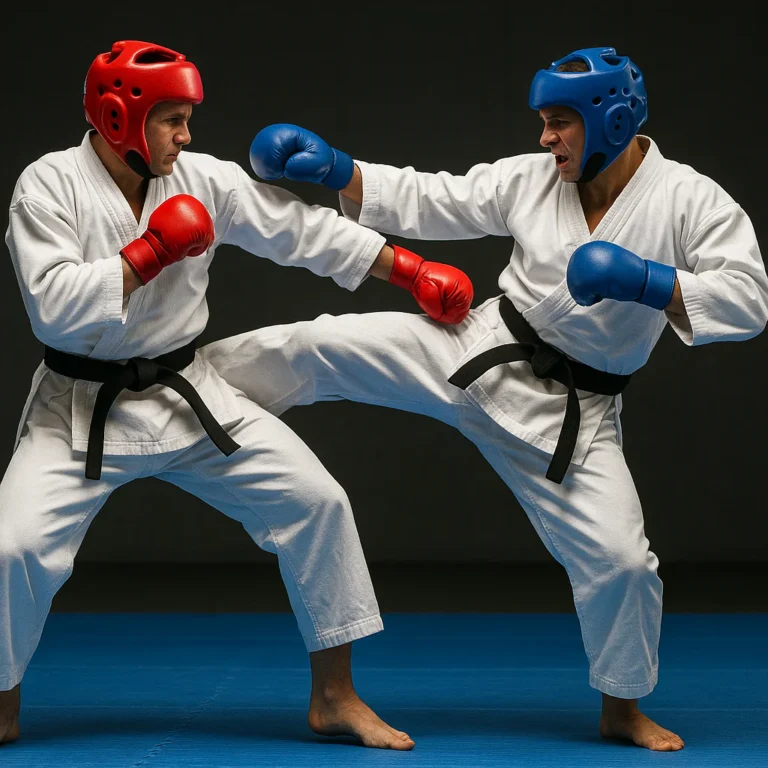
One of the biggest hurdles for Karateka entering MMA is the stance. In traditional Karate, you often stand side-on to minimize your target area. In MMA, this can leave your lead leg exposed to low kicks and your body open to takedowns.
The Bladed Stance vs. The Square Stance
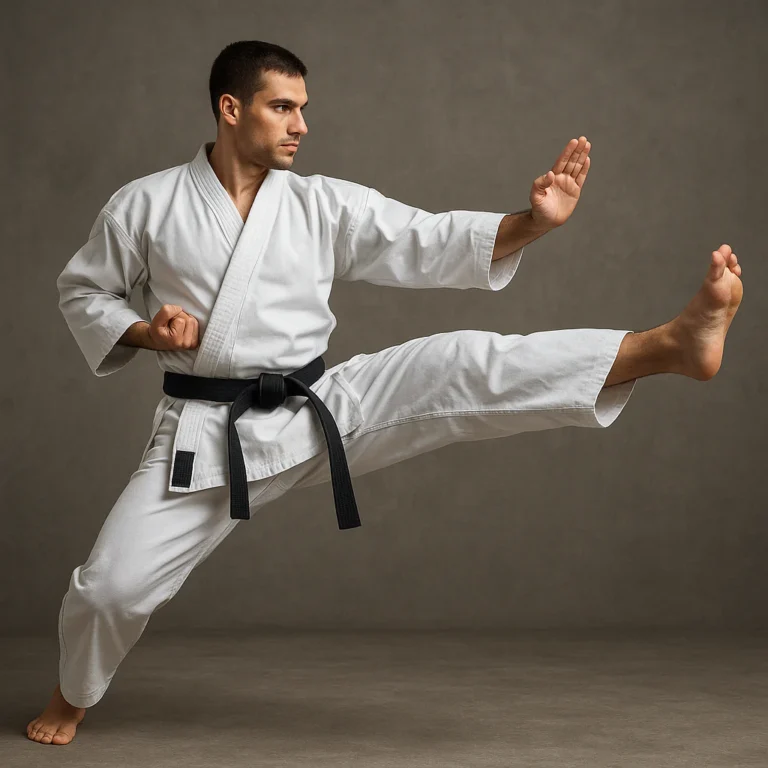
- Karate Stance: Side-on, lead foot forward, hands high. Great for kicking and punching from a distance.
- MA Stance: More square, feet shoulder-width apart, hands lower to protect the head and body. Better for takedown defense and clinch work.
The Solution: The best MMA Karateka learn to switch stances fluidly. They use the bladed stance to strike and the square stance to defend.
Footwork Patterns
Karate footwork is often linear (forward and back). MMA requires lateral movement and circling to avoid the cage and set up angles.
- Tip: Practice pivoting on your lead foot to change angles quickly. This is the secret to Wonderboy’s elusive style.
🧠 The Mental Game: Why Karateka Often Outhink Their Opponents
Karate is as much a mental discipline as a physical one. The concept of Zanshin (awareness) and Mushin (no mind) gives Karateka a unique edge.
- Patience: Karateka are trained to wait for the perfect moment to strike, rather than rushing in. This leads to counter-striking opportunities.
- Distance Control: The ability to judge distance (ma-ai) is honed over years of practice. This allows Karateka to strike without being hit.
- Calm Under Pressure: The breathing techniques and meditation practices help fighters stay calm in high-pressure situations.
🛡️ Defending the Takedown: Can Karate Hold Its Own Against Grapplers?
This is the million-dollar question. Can a Karate fighter survive against a wrestler?
The Short Answer: Not without training.
The Long Answer: Yes, if they adapt.
Traditional Karate stances are vulnerable to double-leg takedowns. However, modern MMA Karateka have developed sprawl-and-brawl techniques. They use their footwork to stay out of range and their strikes to keep the grapler at bay.
- Key Technique: The low kick to the lead leg can slow down a wrestler’s entry.
- Key Technique: The overhand right can stop a wrestler in their tracks.
For more on this, read our article on Karate and MMA News.
🏆 Legends of the Cage: Famous MMA Fighters with Karate Backgrounds

Let’s look at the titans who proved Karate belongs in the cage.
| Fighter | Style | Notable Achievement |
|---|---|---|
| Lyoto Machida | Shotokan | UFC Light Heavyweight Champion |
| Stephen “Wonderboy” Thompson | Karate (Shotokan/Wado-Ryu blend) | UFC Welterweight Title Challenger |
| Georges St-Pierre | Kyokushin | UFC Welterweight & Middleweight Champion |
| Jim Miller | Shito-Ryu | Longest active streak in UFC history |
| Alexander Volkanovski | Kyokushin | UFC Featherweight Champion |
These fighters didn’t just copy Karate; they evolved it. They took the best parts and discarded the rest.
🔄 Blending Styles: Integrating Karate with BJJ, Muay Thai, and Wrestling
No single style is enough. The most successful fighters are hybrids.
- Karate + BJJ: Use Karate to keep the fight standing, and BJJ to finish if it goes to the ground.
- Karate + Muay Thai: Combine Karate’s speed and distance with Muay Thai’s clinch and elbows.
- Karate + Wrestling: Use Karate’s footwork to evade takedowns and wrestling to control the opponent.
Pro Tip: Don’t try to master everything at once. Focus on one grappling art and one striking art, then blend them.
🚫 Common Mistakes Karate Practitioners Make When Transitioning to MMA
We’ve seen it a thousand times. Here are the pitfalls to avoid:
- Staying in the Deep Stance: You’ll get taken down in seconds.
- Ignoring the Clinch: Karate often avoids the clinch, but in MMA, it’s a must-learn.
- Over-relying on Kicks: Kicks are great, but they leave you off-balance.
- Not Training with Gloves: Sparring without gloves changes the dynamics of striking.
- Ignoring Ground Game: If you go to the ground, you must know how to defend.
🧪 Training Drills: Adapting Dojo Techniques for the Octagon
How do you train Karate for MMA?
- Drill 1: The Takedown Defense Drill. Practice your Karate footwork while a partner shoots for a takedown.
- Drill 2: The Clinch Drill. Practice Karate strikes from the clinch position.
- Drill 3: The Ground-and-Pound Drill. Practice defending strikes from the bottom position.
📊 Comparison Table: Karate Styles vs. MMA Effectiveness Metrics
| Style | Striking Power | Speed | Takedown Defense | Adaptability | Overall MMA Rating |
|---|---|---|---|---|---|
| Kyokushin | 10/10 | 7/10 | 6/10 | 8/10 | 8.5/10 |
| Shotokan | 8/10 | 9/10 | 5/10 | 7/10 | 7.5/10 |
| Goju-Ryu | 9/10 | 7/10 | 7/10 | 8/10 | 8.0/10 |
| Shito-Ryu | 7/10 | 10/10 | 6/10 | 9/10 | 8.0/10 |
| Wado-Ryu | 6/10 | 9/10 | 7/10 | 8/10 | 7.5/10 |
Note: Ratings are based on our team’s experience and analysis of professional fights.
❓ Frequently Asked Questions About Karate in Mixed Martial Arts
Which Karate style is most effective for MMA?
There is no single “best” style, but Kyokushin and Shotokan are the most commonly cited due to their emphasis on power and distance, respectively. However, the most effective style is the one that is adapted to MMA rules.
Can Kyokushin Karate be used in MMA?
Yes, absolutely. Kyokushin’s full-contact nature makes it ideal for MMA. Fighters like Georges St-Pierre and Alexander Volkanovski have successfully integrated Kyokushin principles into their game.
Is Shotokan Karate suitable for mixed martial arts?
Yes, but with modifications. Shotokan’s speed and distance management are invaluable, but the deep stances must be adjusted to prevent takedowns. Lyoto Machida is the prime example of Shotokan’s success in MMA.
How does Goju-Ryu translate to MMA fighting?
Goju-Ryu’s focus on close-quarters combat and breathing control makes it excellent for the clinch and grappling exchanges. It’s less about flashy kicks and more about effective, close-range strikes.
What are the best Karate techniques for MMA?
- The Front Kick (Mae Geri): Great for keeping distance.
- The Roundhouse Kick (Mawashi Geri): Devastating for body and head.
- The Reverse Punch (Gyaku Zuki): Powerful counter-strike.
- The Low Kick (Hiza Geri): Effective for damaging the opponent’s mobility.
Do MMA fighters still train in traditional Karate?
Yes, many do. While they may not train in a traditional dojo, they incorporate Karate principles into their training. The focus is on application rather than form.
Which Karate fighters have succeeded in the UFC?
Lyoto Machida, Stephen “Wonderboy” Thompson, Georges St-Pierre, Jim Miller, and Alexander Volkanovski are just a few of the many successful Karate practitioners in the UFC.
🔗 Recommended Links for Aspiring MMA Karateka
If you’re ready to start your journey, here are some essential resources:
- MA Gloves: Look for gloves that offer a balance of protection and dexterity.
👉 CHECK PRICE on: Amazon | Walmart | Official Brand Site - MA Shinguards: Protect your shins during training.
👉 CHECK PRICE on: Amazon | eBay | Official Brand Site - Books on Karate in MMA:
The Karate Way by Dave Lowry
MA Unleashed by John C. Kavanagh
👉 Shop Books on: Amazon
📚 Reference Links and Sources
- UFC Official Website
- Kyokushin Karate Federation
- Shotokan Karate International Federation
- Team Warrior: The 8 Best Fighting Styles in MMA
- Karate MMA: Karate Techniques
- Karate MMA: Fighter Profiles
- Karate MMA: Fight Analysis and Breakdowns
- Karate MMA: Karate Belts and Rankings
- Karate MMA: Karate and MMA News
🏁 Conclusion: Which Style Reigns Supreme?

So, we’ve taken you on a journey from the quiet dojo to the roaring Octagon. We’ve explored the power of Kyokushin, the speed of Shotokan, the hybrid nature of Goju-Ryu, and the adaptability of Shito-Ryu.
But here’s the truth we’ve been hinting at all along: There is no single “best” style. The most effective Karate style for MMA is the one that is adapted to the modern game. It’s the style that combines striking power with takedown defense, speed with grit, and tradition with innovation.
If you’re a Karateka looking to enter the MMA world, don’t abandon your roots. Instead, evolve them. Train hard, spar often, and never stop learning. The cage is waiting for you.
Final Recommendation: Start with Kyokushin for power and conditioning, but immediately supplement it with Wrestling and BJ to cover your weaknesses. If you prefer speed and distance, Shotokan is your path, but remember to square up when the fight gets close.
The future of MMA is bright, and Karate is a vital part of that future. Will you be the next legend? The choice is yours.