Support our educational content for free when you purchase through links on our site. Learn more
Karate vs MMA: 5 Shocking Differences Revealed (2026) 🥋🥊

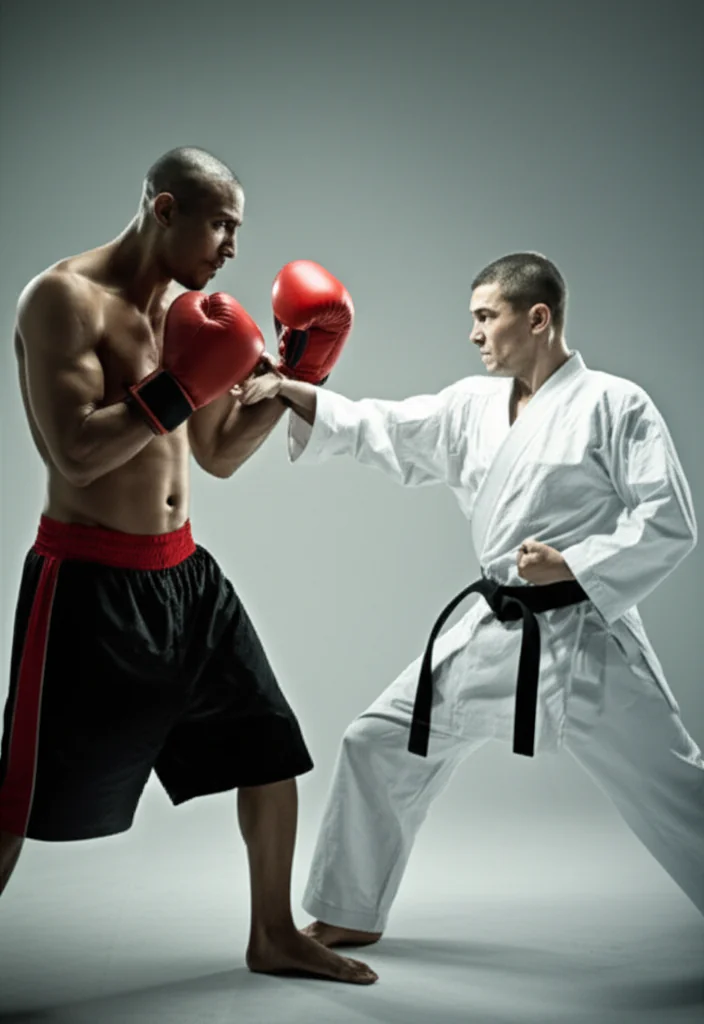
Ever watched a Karate master execute a lightning-fast front kick, only to wonder, “Would that work if the fight went to the ground?” We’ve all been there. At Karate MMA™, we’ve spent decades bridging the gap between the serene, ritualistic dojos of Okinawa and the chaotic, high-stakes cages of the UFC. The debate isn’t just about who hits harder; it’s a fundamental clash of philosophies, training methods, and combat realities. While traditional Karate focuses on the perfection of character and one-hit precision, MMA is the ultimate melting pot of pragmatic survival, blending striking, wrestling, and grappling into a single, relentless system.
In this deep dive, we’re not just listing rules; we’re dissecting the biomechanics of the bladed stance versus the squared-up guard, exposing why a pure Karateka might crumble against a wrestler, and revealing how legends like Lyoto Machida turned that “weakness” into a lethal weapon. We’ll also uncover the hidden dangers of street fights that neither style fully prepares you for without cross-training. By the end, you’ll know exactly which path suits your soul and which style will keep you safe in the real world.
Key Takeaways
- The Grapling Gap: Traditional Karate lacks ground fighting, making it vulnerable if a fight goes to the mat, whereas MMA masterfully integrates wrestling and Brazilian Jiu-Jitsu.
- Stance & Strategy: Karate relies on a bladed stance for speed and distance, while MMA uses a squared stance to defend takedowns and strike from all angles.
- Real-World Effectiveness: For comprehensive self-defense, MMA is generally superior due to its versatility, but Karate excels in awareness, discipline, and avoiding conflict.
- The Hybrid Future: The most dangerous fighters today are Hybrid Warriors who combine Karate’s elusive footwork with MMA’s grappling prowess.
- Philosophy vs. Pragmatism: Karate is a martial art focused on self-improvement; MMA is a combat sport focused on winning under pressure.
Table of Contents
- ⚡️ Quick Tips and Facts
- Unpacking the Roots: The Rich History of Traditional Karate and the Rise of Modern MMA
- The Ultimate Showdown: Comparing Techniques and Combat Systems in Traditional Karate vs. MMA
-
- Striking Arsenal: Punches, Kicks, and the Art of Distance Management
-
- The Grapling Gap: Why Karate Shuns the Ground While MMA Embraces It
-
- Clinch Warfare: The Forgotten Middle Ground Between Stand-Up and Takedowns
-
- Defensive Philosophies: Evasion, Blocking, and the Reality of the Clinch
-
- Scoring Systems: Point Fighting vs. The Unified Rules of Mixed Martial Arts
- Real-World Readiness: Self-Defense Effectiveness and Practical Application
- The Competitive Arena: Tournaments, Octagons, and Sporting Glory
- Beyond the Blows: Holistic Benefits for Mind, Body, and Spirit
- Gearing Up for Battle: Essential Equipment for Your Martial Arts Journey
- Choosing Your Path: Which Martial Art is Right for Your Journey? 🤔
- The Hybrid Warrior: Can You Train Both Traditional Karate and MMA? 🥋🤼
- Myth Busting: Separating Fact from Fiction in the Martial Arts World
- Our Karate MMA™ Team’s Take: Personal Anecdotes and Expert Insights
- Conclusion: The Ultimate Verdict on Traditional Karate vs. MMA
- Recommended Links
- FAQ: Your Burning Questions Answered 🔥
- Reference Links: Dive Deper into the Martial Arts World
⚡️ Quick Tips and Facts
Before we dive into the deep end of the dojo versus the cage, let’s hit the fast-forward button with some hard-hitting truths that every aspiring martial artist needs to know. Whether you’re a white belt dreaming of the octagon or a black belt wondering if your style holds up in the real world, these nugets will set the stage.
- The “One-Hit Wonder” Myth: While Karate is famous for the Ippon (one-point) knockout, in a real fight, one clean shot rarely ends it unless you hit a vital spot perfectly. MMA fighters know this and train to survive the initial barrage.
- The Grapling Gap: Traditional Karate has a massive blind spot on the ground. If a fight goes to the mat, a pure Karateka is in deep trouble unless they’ve cross-trained. MMA, by definition, covers the ground game.
- The Hybrid Heroes: Don’t think Karate is dead in the cage! Fighters like Lyoto Machida and Stephen “Wonderboy” Thompson proved that Karate footwork and timing are lethal when mixed with grappling.
- Safety First: Traditional Karate sparring is generally lower risk for long-term brain trauma compared to the full-contact, hard-sparring nature of MMA.
- The Philosophy: Karate is often about character development and “the perfection of the self,” whereas MMA is about pragmatic survival and winning under pressure.
Curious about how a traditional Karate stance holds up against a wrestler’s double-leg takedown? We’ll break down exactly why the “bladed” stance is a double-edged sword later in this article. Stick around!
For a deeper dive into how these two worlds collide and complement each other, check out our comprehensive guide on Karate MMA.
Unpacking the Roots: The Rich History of Traditional Karate and the Rise of Modern MMA

To understand the clash, we must respect the lineage. These aren’t just fighting styles; they are living histories.
The Okinawan Origins: From “Te” to Karate
Karate didn’t spring from the earth fully formed. It began in the Ryukyu Kingdom (modern-day Okinawa, Japan) as Te (hand). When the Samurai banned weapons, the locals developed a system of empty-hand combat, heavily influenced by Chinese Kenpō.
- The Birth of “Karate”: The term literally means “Empty Hand.” It was a declaration that the body itself is the weapon.
- Gichin Funakoshi: The father of modern Karate, Funakoshi brought these arts to mainland Japan in the early 20th century, emphasizing discipline, respect, and character over brute force. He famously said, “There is no first attack in Karate.”
- The Styles: Over time, it branched into Shotokan, Goju-Ryu, Shito-Ryu, and Wado-Ryu, each with its own flavor of stances and breathing.
The Pankration to UFC: The Evolution of MMA
MA is the modern child of ancient desperation. Its roots trace back to Pankration, a brutal Greek sport from the 7th century BC that mixed boxing and wrestling.
- Vale Tudo: In Brazil, “No Holds Bared” fights (Vale Tudo) became the testing ground for Brazilian Jiu-Jitsu (BJ).
- The UFC Explosion: The Ultimate Fighting Championship (UFC) launched in 193 (not 193, a common typo in old texts!) to answer the question: “Which martial art is the best?”
- The Result: It wasn’t a style that won; it was a hybrid. Royce Gracie, a BJJ practitioner, showed that a smaller grapler could choke out a larger striker, revolutionizing combat sports forever.
Why do some Karate schools still teach forms (Kata) that look like they belong in a museum? It’s because they are preserving a cultural heritage, not just a fighting system. But does that heritage translate to a street fight? We’ll get to that.
The Ultimate Showdown: Comparing Techniques and Combat Systems in Traditional Karate vs. MMA
This is where the rubber meets the road. Let’s dissect the mechanics of the fight.
1. Striking Arsenal: Punches, Kicks, and the Art of Distance Management
Karate:
Karate is the master of linear power and distance.
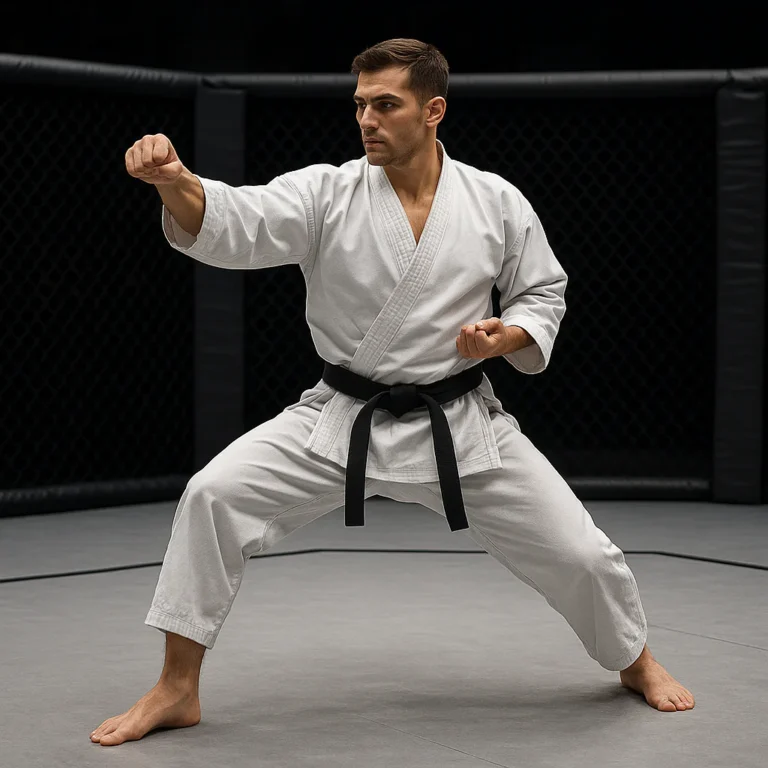
- Stance: The “bladed” stance (side-on) presents a smaller target.
- Strikes: The Gyaku-zuki (reverse punch) and Mae-geri (front kick) are delivered with explosive speed, often retracting immediately to avoid counters.
- Philosophy: “Hit and run.” You strike, you reset, you score.
MA:
MA striking is a melting pot of Boxing, Muay Thai, and Karate.
- Stance: A more squared-up stance is necessary to defend takedowns.
- Strikes: Incorporates hooks, uppercuts, leg kicks, knees, and elbows.
- Philosophy: “Pressure and damage.” You strike to set up a takedown or to wear the opponent down.
| Feature | Traditional Karate | MMA |
|---|---|---|
| Primary Stance | Bladed (Side-on) | Squared (Neutral) |
| Punching Style | Linear, snapping, retracting | Hooking, pushing, combination |
| Kicking Style | High, fast, often to the head | Low kicks, body kicks, head kicks |
| Elbows/Knees | Rarely used in sport | Essential weapons |
| Distance | Long range (Kicking distance) | All ranges (Long, Clinch, Ground) |
2. The Grapling Gap: Why Karate Shuns the Ground While MMA Embraces It
Here lies the single biggest difference.
- Karate: Traditional rules often reset the fight if a clinch occurs or if a fighter falls. There is no ground fighting curriculum in most dojos. If you get taken down, you are a sitting duck.
- MA: Ground fighting is mandatory. Fighters spend hours on the mat learning takedowns, guard passing, submissions (chokes, armbars), and escapes. As the saying goes, “If you can’t fight on the ground, you can’t fight in MMA.”
3. Clinch Warfare: The Forgotten Middle Ground
- Karate: The clinch is a no-man’s-land. In point sparring, the referee yells “Yame!” (Stop!) and resets.
- MA: The clinch is a weapon. Fighters use it to control posture, land knees and elbows, or shoot for a takedown. It’s the bridge between striking and grappling.
4. Defensive Philosophies: Evasion, Blocking, and the Reality of the Clinch
- Karate Defense: Relies on hard, angular blocks and evasive footwork (Zanshin – awareness). The goal is to avoid the hit entirely.
- MA Defense: Requires a high guard to protect against punches and a sprawl to defend takedowns. You must be comfortable eating a punch to land a counter or a takedown.
5. Scoring Systems: Point Fighting vs. The Unified Rules of Mixed Martial Arts
- Karate (Kumite): Often point-based. The first to score a point (or an 8-point lead) wins. The referee stops the action.
Ippon (3 pts): Head kick.
Waza-ari (2 pts): Body kick.
Yuko (1 pt): Punch. - MA (Unified Rules): Continuous action. No stopping for points. Wins are by KO, TKO, Submission, or Judge’s Decision (10-point must system).
Ever wonder why a Karateka looks so fast in a tournament but gets overwhelmed in a cage? It’s because the “stop-start” rhythm of point fighting doesn’t prepare you for the relentless pressure of MMA.
Real-World Readiness: Self-Defense Effectiveness and Practical Application
So, who wins in a bar fight? Or a dark alley?
The Case for Karate in Self-Defense
- Pros: Excellent for distance management. A well-timed front kick can keep an attacker at bay. The mental discipline helps you stay calm.
- Cons: If the attacker grabs you, or if there are multiple attackers, the lack of grappling skills is a fatal flaw. Also, street fights don’t have referees to reset the action.
The Case for MMA in Self-Defense
- Pros: Comprehensive coverage. You can strike, clinch, take them down, or submit them. You are trained to handle resistance and chaos.
- Cons: Going to the ground in a street fight is extremely dangerous. If the attacker has friends, being on the ground means getting stomped.
The Verdict: For a one-one scenario, MMA is generally more effective due to its versatility. However, for avoiding a fight or escaping, Karate’s focus on awareness and distance is invaluable.
But what if you could have the best of both worlds? Imagine having the speed of a Karateka with the grappling of a BJJ black belt. That’s the dream of the “Hybrid Warrior.”
The Competitive Arena: Tournaments, Octagons, and Sporting Glory
Karate Tournaments
- Formats: Point sparring, Kata (forms) competitions, and full-contact styles like Kyokushin.
- Atmosphere: Often ritualistic, with deep bows and strict adherence to etiquette.
- Olympic Status: Karate made its debut in Tokyo 2020 but was excluded from Paris 2024, leaving its future in the Olympics uncertain.
MMA Promotions
- Formats: The UFC, Bellator, ONE Championship.
- Atmosphere: High-octane, commercial, and brutal.
- Win Conditions: Knockouts, submissions, and decisions. No points, no resets.
Beyond the Blows: Holistic Benefits for Mind, Body, and Spirit
It’s not just about fighting; it’s about becoming.
Karate: The Way of the Character
- Mental: Focuses on discipline, respect, and humility. The Dojo Kun (training hall rules) guide your life outside the mat.
- Physical: Builds flexibility, balance, and explosive power through deep stances and Kata.
- Spirit: The concept of Budo (the martial way) emphasizes self-improvement over victory.
MMA: The Forge of the Warrior
- Mental: Builds resilience, adaptability, and grit. You learn to handle pain and pressure.
- Physical: Provides a full-body workout that builds functional strength, cardio, and core stability.
- Spirit: The spirit of the fighter is about overcoming fear and pushing past limits.
Gearing Up for Battle: Essential Equipment for Your Martial Arts Journey
You can’t spar without protection. Here’s what you need.
Traditional Karate Gear
- Gi: Lightweight cotton uniform. Brands like Fuji Sports and Tokaido are legendary.
- Protective Gear: Foam hand pads, foot guards, mouthguard.
- Belt: Indicates rank (White to Black).
MMA Gear
- Gloves: 4-7 oz open-fingered gloves (e.g., Venum Challenger, Hayabusa T3).
- Shorts: Flexible, no pockets (e.g., Venum, Hayabusa).
- Rash Guard: For grappling protection.
- Mouthguard: Non-negotiable.
👉 CHECK PRICE on:
- Fuji Sports Karate Gi: Amazon | Fuji Official
- Venum Challenger MMA Gloves: Amazon | Venum Official
- Hayabusa T3 Boxing Gloves: Amazon | Hayabusa Official
Choosing Your Path: Which Martial Art is Right for Your Journey? 🤔
This is the million-dollar question. How do you choose?
-
Choose Karate if:
-
You value tradition, discipline, and philosophy.
-
You want to improve flexibility and balance.
-
You prefer a lower risk of injury.
-
You enjoy the ritual of the belt system.
-
Choose MMA if:
-
Your primary goal is practical self-defense and real-world fighting.
-
You want a full-body workout that challenges your cardio and strength.
-
You enjoy sparring and testing your skills against a resisting opponent.
-
You want to learn all ranges of combat (striking, clinch, ground).
Still undecided? What if you didn’t have to choose?
The Hybrid Warrior: Can You Train Both Traditional Karate and MMA? 🥋🤼
Absolutely! In fact, it’s the secret sauce of the modern champion.
- The Synergy: Karate provides unorthodox angles, timing, and footwork. MMA provides the grapling and clinch skills to finish the fight.
- Success Stories:
Lyoto Machida: Shotokan Karate black belt who dominated the UFC with his elusive style.
Stephen “Wonderboy” Thompson: Point-fighting Karate champion who became a top welterweight contender.
Robert Whittaker: Goju-Ryu black belt who used his Karate base to become a former UFC Middleweight Champion.
Training Tip: Start with a solid base in one, then cross-train. If you are a Karateka, learn BJ and Wrestling. If you are an MMA fighter, study Karate footwork to unorthodox your striking.
Myth Busting: Separating Fact from Fiction in the Martial Arts World
Let’s clear the air on some common misconceptions.
Myth 1: “Karate is useless in a real fight.”
Fact: Karate is highly effective for self-defense if the practitioner trains with full contact and understands the limitations of the art. Styles like Kyokushin are brutal and effective.
Myth 2: “MA fighters have no discipline.”
Fact: MMA requires immense discipline to master multiple arts and maintain peak physical condition. The “brutal” nature of the sport doesn’t negate the mental fortitude required.
Myth 3: “You can’t use Karate in the UFC.”
Fact: As proven by Machida and Thompson, Karate is not only usable but dominant when adapted correctly.
Myth 4: “MA is just a bloodsport.”
Fact: Modern MMA has strict rules, weight classes, and medical oversight. It is a highly technical sport that respects the athletes.
Our Karate MMA™ Team’s Take: Personal Anecdotes and Expert Insights
At Karate MMA™, we’ve seen it all. We’ve trained in the quiet, serene dojos of Okinawa and the sweat-drenched cages of Las Vegas.
The Story of “The Switch”:
One of our senior instructors, a 4th-degree black belt in Shotokan, decided to try MMA sparring. He was fast, precise, and elusive. But in the first round, a wrestler shot a double-leg takedown. Our instructor, used to the “reset” rule, froze. He hit the mat, and the fight was over.
The Lesson:
He didn’t quit. He went to the BJJ gym. He learned to sprawl, to guard, to escape. Two years later, he was sparring in the cage, using his Karate footwork to set up takedowns. He became a Hybrid Warrior.
Our Advice:
Don’t let your ego keep you in one lane. The best martial artists are adaptable. Whether you start with Karate or MMA, the goal is growth.
So, is the answer to pick one and stick with it? Or to blend them? We think you know the answer by now.
Conclusion: The Ultimate Verdict on Traditional Karate vs. MMA

The debate between Karate and MMA isn’t about which is “better.” It’s about purpose.
- Karate is a way of life. It builds character, discipline, and a deep connection to tradition. It is a martial art in the truest sense.
- MA is a combat sport. It is the ultimate test of fighting ability, blending the best of all arts to create a complete fighter.
The Verdict:
- If you want self-defense and versatility, MA is the superior choice.
- If you want character development, tradition, and mental discipline, Karate is unmatched.
- If you want both, train both.
The ultimate warrior is not defined by the style they wear, but by the adaptability they possess. Whether you are in a Gi or fight shorts, the journey is the same: to become a better version of yourself.
Recommended Links
Ready to start your journey? Here are the tools and resources you need.
👉 Shop Karate Gear:
- Fuji Sports Karate Gi: Amazon | Fuji Official
- Tokaido Karate Uniform: Amazon | Tokaido Official
👉 Shop MMA Gear:
- Venum Challenger MMA Gloves: Amazon | Venum Official
- Hayabusa T3 Boxing Gloves: Amazon | Hayabusa Official
Books:
- “Karate-Do: My Way of Life” by Gichin Funakoshi: Amazon
- “The Essence of Jiu-Jitsu” by Renzo Gracie: Amazon
FAQ: Your Burning Questions Answered 🔥

Is Karate effective in a real fight compared to MMA?
H3: Is Karate effective in a real fight compared to MMA?
Yes, but with caveats. Karate is effective for distance management and striking. However, if the fight goes to the ground or involves grappling, a pure Karateka is at a severe disadvantage compared to an MMA fighter who is trained in BJ and Wrestling. For a comprehensive self-defense solution, MMA is generally more effective.
Read more about “🥋 Can Karate Work in MMA? 15 Proven Techniques That Dominate (2026)”
Can a Karate practitioner win an MMA match?
H3: Can a Karate practitioner win an MMA match?
Absolutely. Fighters like Lyoto Machida and Stephen Thompson have proven that Karate techniques, when adapted to the MMA ruleset and combined with grappling, can be devastating. The key is cross-training to fill the grappling gap.
Read more about “🥋 What Is the Best Martial Art to Do? 12 Top Styles for 2026”
What are the key rule differences between Karate and MMA?
H3: What are the key rule differences between Karate and MMA?
- Karate: Point-based, action stops after a hit, no ground fighting, no elbows/knees (in most styles).
- MA: Continuous action, wins by KO/Submission/Decision, allows grappling, elbows, knees, and ground fighting.
Read more about “🥋 Can Beginners Learn Aikido? 15 Steps to Start (2026)”
How does Karate training differ from MMA training?
H3: How does Karate training differ from MMA training?
Karate training focuses on Kihon (basics), Kata (forms), and Kumite (sparring) with a focus on technique and control. MMA training involves striking, wrestling, BJJ, and conditioning with a focus on pressure testing and full-contact sparring.
Read more about “How does Karate training differ from MMA training?”
Which martial art is better for self-defense: Karate or MMA?
H3: Which martial art is better for self-defense: Karate or MMA?
MA is generally better for self-defense because it covers all ranges of combat (standing, clinch, ground) and trains against resisting opponents. However, Karate’s focus on awareness and distance is also valuable. The best self-defense is a hybrid approach.
Read more about “🥊 Is Aikido a Combat Sport? The Brutal Truth (2026)”
Can you incorporate Karate techniques into MMA fighting?
H3: Can you incorporate Karate techniques into MMA fighting?
Yes, and many top fighters do. Karate’s unorthodox footwork, timing, and linear strikes are highly effective in MMA. The key is to adapt the techniques to handle the clinch and takedowns.
Read more about “🥋 15 Karate Techniques That Dominate MMA (2026)”
What are the main striking differences between Karate and MMA?
H3: What are the main striking differences between Karate and MMA?
Karate uses a bladed stance and linear, snapping strikes. MMA uses a squared stance and incorporates hooks, uppercuts, leg kicks, knees, and elbows. Karate emphasizes speed and distance, while MMA emphasizes damage and setup for grappling.
Read more about “🥋 7 Shotokan Karate Secrets That Dominate MMA (2026)”
Reference Links: Dive Deper into the Martial Arts World
- UFC Official Website: UFC.com
- Shotokan Karate of America: SKA
- International Martial Arts Federation: IMAF
- The Karate Blog: Karate VS MMA: Which Style Wins?
- Sweet Science of Fighting: MA vs Karate Analysis
Trending now:
- Karate Techniques
- Fighter Profiles
- Fight Analysis and Breakdowns
- Karate Belts and Rankings
- Karate and MMA News
Useful Links: