Support our educational content for free when you purchase through links on our site. Learn more
🥋 Aikido vs. Karate vs. Judo: The Ultimate Showdown (2026)


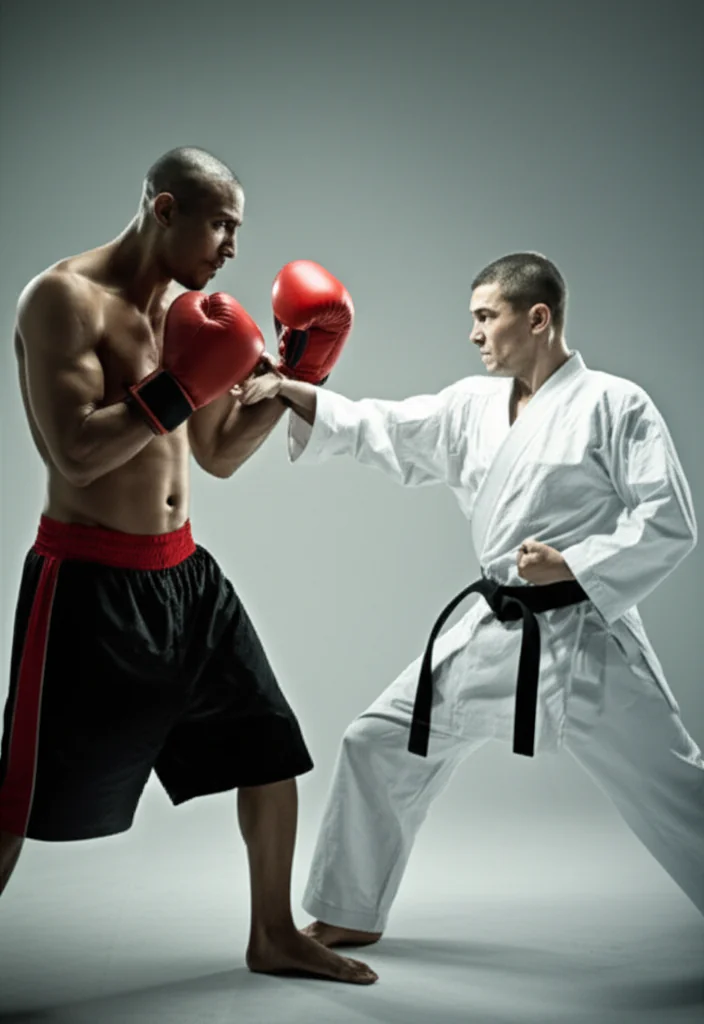
Ever walked into a dojo and felt like you’d stepped into a different universe? One minute you’re watching a Karateka shatter a brick with a single punch, the next you’re seeing an Aikido master spin a charging attacker into the floor without throwing a single strike, and then a Judoka lifts a 200-pound opponent like a ragdoll. It’s enough to make your head spin! But here’s the real kicker: Aikido isn’t just “soft” Karate, and Judo isn’t just “sport” grappling. While many critics dismiss Aikido as a “dance” and praise Judo for its “reality,” the truth is far more nuanced. In this deep dive, we’re peeling back the layers of history, philosophy, and raw mechanics to reveal exactly how these three giants differ—and which one actually fits your body and soul. Spoiler alert: by the end, you’ll understand why the “best” art is the one you can actually use when the chips are down.
Key Takeaways
- Core Mechanics: Karate relies on linear striking and overwhelming force; Judo masters off-balancing and throwing; Aikido focuses on blending with and redirecting an attacker’s momentum.
- Philosophy & Competition: Karate and Judo have robust competitive circuits (Olympics, World Championships), whereas Aikido is strictly non-competitive, prioritizing conflict resolution and personal growth over winning.
- Real-World Effectiveness: While Judo offers immediate, pressure-tested results for one-on-one fights, Aikido excels in multiple attacker scenarios and weapon defense if trained with realistic resistance.
- The Verdict: There is no single “best” art; the right choice depends on whether you seek sport, self-defense, or spiritual development.
Table of Contents
- ⚡️ Quick Tips and Facts
- 🥋 From Samurais to Senseis: The Epic Backstory of Aikido, Karate, and Judo
- 🧘 ♂️ Peace, Love, and Roundhouse Kicks: Philosophical Foundations
- 🌪️ The Human Hurricane: How Aikido Uses Your Momentum Against You
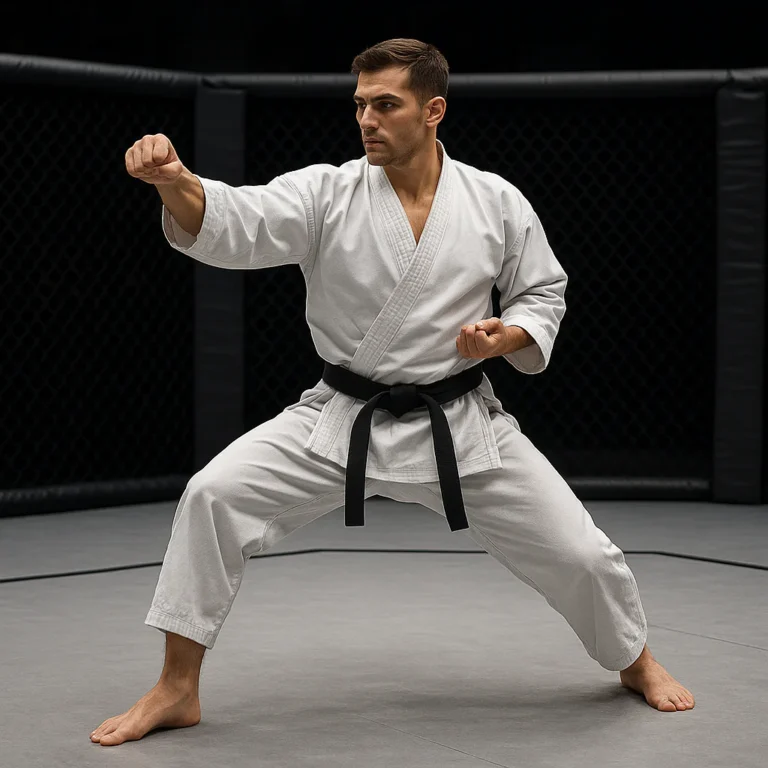
- 👊 Snap, Crackle, and Pop: The Striking Power of Traditional Karate
- 🥋 Gravity is a Grumpy Friend: The Art of the Judo Throw
- ⚔️ The Ultimate Showdown: Aikido vs. Karate vs. Judo Head-to-Head
- 1. Striking vs. Grappling vs. Blending
- 2. Competitive Sport vs. Non-Competitive Budo
- 3. Footwork and Stances: Linear vs. Circular
- 4. Joint Locks and Pressure Points
- 5. The Concept of Atemi: Striking to Distract
- 6. Falling and Rolling: The Art of Ukemi
- 7. Weaponry Integration: Jo, Bokken, and Tanto
- 🛡️ The Reality Check: Verifying Combat Effectiveness in the Real World
- 🥋 Gear Up: Uniforms, Hakamas, and Essential Equipment
- 🤔 Which Path Should You Walk? Choosing the Right Dojo
- Conclusion
- Recommended Links
- FAQ
- Reference Links
⚡️ Quick Tips and Facts
Before we dive into the dojo dust and sweat, let’s cut through the noise with some hard-hitting truths about Aikido, Karate, and Judo. If you’re looking for a quick cheat sheet to decide which path suits your soul (and your body), here is the lowdown from the Karate MMA™ team:
- The Core Philosophy: Aikido is about blending and redirecting force; Karate is about striking and breaking force; Judo is about throwing and controlling force.
- The “Sport” Factor: Judo and Karate have massive Olympic and World Championship circuits. Aikido is strictly a non-competitive art (no tournaments, no points, no winners).
- The Uniform: Karate and Judo wear the Gi (jacket and pants). Aikido practitioners often wear the Gi but add a Hakama (wide, pleated skirt-like trousers) once they reach a certain rank, giving them that legendary samurai look.
- The Reality Check: As noted by experts like Rory Miller and Ellis Amdur, the “reality” of any art depends entirely on the instructor’s intent. A watered-down Aikido class might feel like a dance, but high-level Aikido at the Aikikai Hombu can be terrifyingly effective. Conversely, a sport-focused Karateka might struggle in a street fight if they’ve never trained against a wild, uncooperative attacker.
- The Learning Curve: You can learn a basic Judo throw in a weekend. Mastering the subtle timing of an Aikido irimi (entering) technique can take a lifetime.
For a deeper dive into the specific mechanics of Aikido, check out our dedicated guide on Aikido Fundamentals.
🥋 From Samurais to Senseis: The Epic Backstory of Aikido, Karate, and Judo
To understand the differences, you have to understand the ancestors. These arts didn’t pop out of thin air; they were forged in the fires of history, war, and cultural evolution.
The Birth of Aikido: The Way of Harmony
Aikido is the youngest of the three, born in the early 20th century from the mind of Morihei Ueshiba (O-Sensei). Ueshiba was a master of Daito-ryu Aiki-jujutsu, a brutal art of joint locks and strikes used by samurai. However, after experiencing the horrors of war and a profound spiritual awakening, Ueshiba sought to create an art that would unify rather than destroy.
“Aikido is not a way to fight; it is a way to reconcile the world and make human beings one family.” — Morihei Ueshiba
Unlike its predecessors, Aikido was designed to neutralize aggression without necessarily causing permanent harm, focusing on the moral development of the practitioner.
The Evolution of Karate: The Empty Hand
Karate (literally “Empty Hand”) originated in Okinawa, where the local population was forbidden from carrying weapons by the ruling samurai class. They developed a system of striking using their hands, feet, elbows, and knees.
- Chinese Influence: It was heavily influenced by Chinese Kung Fu (specifically Fujian White Crane).
- Japanese Integration: In the early 1900s, Gichin Funakoshi brought Karate to mainland Japan, where it was systematized and stripped of some of its more lethal “dirty” tricks to make it suitable for school children and the masses.
- The Shift: While traditional Okinawan Karate retained close-quarter grappling and vital point strikes (Kyusho), modern Japanese Karate (like Shotokan) focused heavily on katas (forms) and kumite (sparring).
The Rise of Judo: The Gentle Way
Judo was founded in 1882 by Jigoro Kano, a scholar who wanted to preserve the best techniques of traditional jujutsu while removing the dangerous, life-ending moves. Kano created a safe system of throwing and grappling that could be practiced with full resistance.
- The Philosophy: Seiryoku Zenyo (Maximum Efficiency, Minimum Effort).
- The Sport: Kano was a visionary who introduced the concept of randori (free practice) and competition, which allowed Judo to become the first martial art to be included in the Olympic Games (1964).
🧘 ♂️ Peace, Love, and Roundhouse Kicks: Philosophical Foundations
Here is where the rubber meets the road. If you walk into a dojo, the first thing you’ll notice isn’t the punches or the throws; it’s the vibe.
Aikido: The Art of Non-Resistance
Aikido is often misunderstood as “passive.” It is not. It is active non-resistance.
- The Concept: Instead of meeting force with force (like a boxer blocking a punch), you move with the attacker’s energy, leading them off-balance.
- The Goal: To neutralize the threat while preserving the attacker’s dignity (and your own safety).
- The Mindset: Zanshin (awareness) is paramount. You must be aware of the attacker’s intent before they even throw a punch.
Karate: The Art of the Decisive Strike
Karate philosophy is rooted in discipline and focus.
- The Concept: One strike, one kill (Ikken Hissatsu). The goal is to end the confrontation as quickly as possible.
- The Mindset: Kime (focus). Every movement must be executed with maximum power and precision.
- The Spirit: Dojo Kun (Dojo Rules) often emphasize character development, but the core combat philosophy is about overwhelming force.
Judo: The Art of Balance and Control
Judo philosophy is about leverage and adaptability.
- The Concept: If you are small, use the opponent’s weight against them. If you are big, use your strength to dominate.
- The Mindset: Ju (softness/yielding). You yield to the force to redirect it.
- The Spirit: Jita Kyoei (Mutual Welfare and Benefit). You learn by falling and throwing, helping your partner improve.
🌪️ The Human Hurricane: How Aikido Uses Your Momentum Against You
Imagine you are swinging a sledgehammer at a wall. Now imagine the wall suddenly turns into a whirlwind that spins you around and drops you on your head. That is Aikido.
The Mechanics of Blending
Aikido relies on three core movements:
- Irimi (Entering): Moving into the attack, not away from it. This closes the distance and disrupts the attacker’s balance.
- Tenkan (Turning): Pivoting your body to redirect the force.
- Kokyu (Breath Power): Using your breath to generate power and timing.
The “Roundness” of the Throw
As noted in our research, the “roundness” of an Aikido throw is its secret weapon. Unlike a Judo throw which might be a straight lift and drop, an Aikido throw often involves a circular path that spirals the attacker to the ground.
- Why it works: It’s harder for an attacker to recover from a spiral fall than a straight fall.
- The Catch: It requires perfect timing. If you are a split second late, you get hit.
Real-World Application vs. The “Dance”
Critics often call Aikido a “dance” because of the cooperative nature of practice (uke and tori). However, as the article from Kimusubi Aikido points out, this is a pedagogical tool, not a reflection of the art’s potential.
“Aikido as a ‘la-di-dah’ touchy feely powder puff feel-good pastime? Nope. Aikido as a martial art? Scary effective.”
In a real scenario, the “cooperative” partner is replaced by a resisting attacker. The techniques are designed to work even if the attacker is pulling back or trying to grab you. The joint locks (kansetsu-waza) can be applied with lethal force if necessary, though most practitioners aim for control.
👊 Snap, Crackle, and Pop: The Striking Power of Traditional Karate
If Aikido is the whirlwind, Karate is the sledgehammer.
The Power of the Strike
Karate is built on the principle of generating maximum force in a minimum amount of time.
- Linear Movement: Most Karate techniques move in straight lines (e.g., the Gyaku-zuki reverse punch).
- Hip Rotation: Power comes from the hips, not just the arm.
- Targeting: Karate targets vital points: eyes, throat, groin, knees, and solar plexus.
The Role of Kata
Kata are pre-arranged sequences of movements.
- Myth: “Kata are useless for fighting.”
- Reality: Kata are a library of combat applications. A single movement in a Kata can have 5-10 different interpretations (block, strike, throw, lock).
- Training: Practitioners use Bunkai (analysis) to decode these movements for real combat.
Sport vs. Street
Modern Karate (like WKF style) often focuses on point sparring, where you touch the opponent and stop. This is great for competition but can be dangerous for self-defense if you don’t train full-contact or pressure testing.
- Kyokushin Karate: A full-contact style that allows body shots and kicks, bridging the gap between sport and reality.
- Traditional Shotokan: Focuses on form and distance, requiring more adaptation for street fights.
🥋 Gravity is a Grumpy Friend: The Art of the Judo Throw
Judo is the art of taking people off their feet. If you’ve ever seen a 200lb man fly through the air, that’s Judo.
The Mechanics of the Throw
Judo throws (Nage-waza) rely on breaking the opponent’s balance (Kuzushi) before executing the technique.
- Kuzushi: Off-balancing the opponent.
- Tsukuri: Fitting your body into the correct position.
- Kake: Executing the throw.
The Importance of the Grip
Unlike Aikido (where you might not touch the opponent until they attack) or Karate (where you keep distance), Judo is a grip-fighting art.
- The Gi: The uniform is designed to be grabbed.
- Strategy: You fight for control of the lapel and sleeve to dictate the opponent’s movement.
Ground Fighting (Ne-waza)
Once the opponent is on the ground, Judo transitions to pins, chokes, and armlocks.
- Osaekomi-waza: Holding the opponent down.
- Shime-waza: Chokeholds.
- Kansetsu-waza: Joint locks (mostly elbow).
The Sportification of Judo
Judo is a highly successful Olympic sport. This has led to rule changes that favor certain types of throws and discourage “passive” grappling. However, the core techniques remain incredibly effective for self-defense, especially in close quarters.
⚔️ The Ultimate Showdown: Aikido vs. Karate vs. Judo Head-to-Head
Let’s break this down into a clear comparison. We’ve seen the theories; now let’s look at the tactical realities.
1. Striking vs. Grappling vs. Blending
| Feature | Aikido | Karate | Judo |
|---|---|---|---|
| Primary Focus | Blending & Redirecting | Striking | Throwing & Ground Control |
| Distance | Close (Clinch) | Medium to Long | Close (Grappling) |
| Offense | Joint Locks, Throws | Punches, Kicks, Elbows | Throws, Pins, Chokes |
| Defense | Evasion, Redirection | Blocking, Countering | Off-balancing, Takedown |
| Ideal Scenario | Multiple attackers, weapons | Single attacker, distance | One-on-one, close quarters |
2. Competitive Sport vs. Non-Competitive Budo
- Judo: Heavily sport-oriented. You can test your skills in a tournament. This provides pressure testing but can lead to “sportification” (ignoring dangerous techniques).
- Karate: Mixed. Some styles (Kyokushin, Kudo) are full-contact. Others (WKF) are point-based.
- Aikido: No competition. You cannot “win” an Aikido match. This is a double-edged sword: it preserves the art’s purity but removes the ability to test effectiveness against a resisting opponent in a controlled environment.
3. Footwork and Stances: Linear vs. Circular
- Karate: Linear. You move forward and backward in a straight line to maximize power.
- Judo: Angular. You move to the side to break balance.
- Aikido: Circular. You move in arcs to blend with the attack.
4. Joint Locks and Pressure Points
- Aikido: The bread and butter. Almost every technique ends in a wrist lock or arm bar.
- Judo: Limited to the elbow joint.
- Karate: Used as a secondary option, often to set up a strike.
5. The Concept of Atemi: Striking to Distract
- Aikido: Atemi (strikes) are used to distract the attacker or break their balance, not necessarily to knock them out.
- Karate: Atemi is the main event.
- Judo: Rarely used, mostly as a distraction during a throw.
6. Falling and Rolling: The Art of Ukemi
- All Three: Falling is a critical skill.
- Aikido: Extensive training in Ukemi (breakfalls) because you are constantly throwing and being thrown.
- Judo: Heavy emphasis on falling safely.
- Karate: Less emphasis on falling, more on staying on your feet.
7. Weaponry Integration: Jo, Bokken, and Tanto
- Aikido: Heavily integrated. Uses the Jo (staff), Bokken (wooden sword), and Tanto (knife). The empty-hand techniques are often derived from weapon movements.
- Karate: Some styles (like Kobudo) use weapons (Bo, Sai, Nunchaku), but they are often separate from the hand-to-hand curriculum.
- Judo: Generally no weapon training in the standard curriculum.
🛡️ The Reality Check: Verifying Combat Effectiveness in the Real World
This is the million-dollar question: Which one works in a street fight?
The answer is not as simple as “Aikido is fake” or “Karate is king.” It depends on the context and the practitioner.
The “Monkey Dance” vs. The “Real Deal”
As Rory Miller explains, most street fights are “Monkey Dances”—ego-driven status fights.
- Karate excels here if you can land a clean strike.
- Judo excels if you can grab the opponent and slam them on the concrete.
- Aikido is often criticized here because it assumes a cooperative attacker. However, if the practitioner has trained with resistance and understands Zanshin, Aikido can be devastatingly effective against a single attacker.
The Danger of “Watered-Down” Training
The biggest risk isn’t the art itself; it’s the instructor.
- If your Aikido teacher only teaches you to throw a compliant partner, you will fail in a real fight.
- If your Karate teacher only teaches you to hit a moving target in a tournament, you might freeze when someone swings a wild haymaker.
The Verdict on “Reality-Based” Systems
Many modern “reality-based” systems (like Krav Maga) are excellent because they train against unpredictable attacks and in street clothes. However, they often lack the depth of traditional arts.
“Improper training with bad teachers is worse than innocuous; it will give you a false sense of security.”
Our Recommendation:
- If you want sport and competition: Go Judo or Karate.
- If you want self-defense against weapons and multiple attackers: Look for a high-level Aikido school that emphasizes Bunkai and resistance.
- If you want pure survival: Consider Krav Maga or MMA, but supplement with traditional arts for depth.
🥋 Gear Up: Uniforms, Hakamas, and Essential Equipment
You can’t start fighting without the right gear. Here is what you need to get started in each art.
Aikido Gear
- Gi: Standard white cotton jacket and pants.
- Hakama: The wide, pleated skirt. Usually worn by Yudansha (black belts) or advanced students.
- Weapons: Bokken (wooden sword), Jo (staff), Tanto (wooden knife).
- Recommended Brands:
- Matsuda: High-quality traditional Aikido gear.
- Tatami: Modern, durable Aikido uniforms.
👉 Shop Aikido Gear on:
- Amazon: Aikido Uniforms | Aikido Weapons
- Tatami Fightwear: Tatami Aikido Collection
Karate Gear
- Gi: Lightweight cotton or canvas.
- Belt: Color-coded by rank.
- Protective Gear: Gloves, shin guards, mouthguard (for sparring).
- Recommended Brands:
- Adidas: Famous for their Karate Gi.
- Yamato: Traditional Okinawan style.
👉 Shop Karate Gear on:
- Amazon: Karate Uniforms | Karate Sparring Gear
- Adidas: Adidas Karate
Judo Gear
- Judo Gi: Heavier and more durable than a Karate Gi to withstand gripping and throwing.
- Belt: White to Black.
- Recommended Brands:
- Mizuno: The gold standard for Judo Gis.
- Kano: Named after the founder, high-quality traditional gear.
👉 Shop Judo Gear on:
- Amazon: Judo Uniforms | Judo Mats
- Mizuno: Mizuno Judo
🤔 Which Path Should You Walk? Choosing the Right Dojo
So, you’re ready to commit. But how do you choose the right school?
Questions to Ask the Sensei
- “Do you pressure test your techniques?” (If they say no, be wary).
- “How do you handle resisting attackers?”
- “What is your philosophy on self-defense vs. sport?”
- “Can I watch a class before joining?”
The “Vibe” Check
- Aikido: Look for a dojo that emphasizes respect and humility. If it feels like a cult, run.
- Karate: Look for a balance of discipline and fun. If it’s too rigid, you might burn out.
- Judo: Look for a safe environment. Falling is part of the process, but injuries should be rare.
Personal Story: The Day I Tried Aikido
I remember walking into my first Aikido class, expecting to learn how to throw people like in the movies. Instead, I spent the first hour learning how to fall without breaking my nose. My Sensei told me, “You cannot throw someone if you cannot fall yourself.” It was a humbling experience, but it taught me that control is more important than power.
Final Thoughts Before You Step In
Whether you choose the striking power of Karate, the throwing mastery of Judo, or the blending art of Aikido, the most important thing is to start. The journey of a thousand miles begins with a single step (or a single Ukemi).
But wait… is there a way to combine these arts? Can you be a master of all three? We’ll explore the world of Mixed Martial Arts (MMA) and how these traditional arts fit into the modern cage in our next section. Stay tuned!
Conclusion

So, we’ve journeyed from the samurai’s sword to the dojo’s mat, dissecting the soul of Aikido, the power of Karate, and the leverage of Judo. You asked the big question: How does Aikido differ from other martial arts like Karate and Judo?
Here is the final verdict from the Karate MMA™ team:
- Karate is your sledgehammer. It is linear, aggressive, and designed to end a fight with a single, devastating strike. It excels in maintaining distance and delivering overwhelming force.
- Judo is your lever. It is a dynamic, grappling-heavy art that uses an opponent’s momentum to throw them to the ground, followed by pins or chokes. It is the king of one-on-one close-quarters combat and the most “sport-tested” of the three.
- Aikido is your whirlwind. It is circular, defensive, and focused on blending with an attacker’s energy to neutralize them without necessarily causing permanent harm. It is unique in its integration of weapons and its strict non-competitive philosophy.
The “Reality” Resolution
Earlier, we questioned whether Aikido is “real” or just a “dance.” The answer lies in the intent of the practitioner. As the article “Reality-based” Martial Arts Not So Reality-based? brilliantly argues, a watered-down Aikido class is indeed ineffective. However, a high-level Aikido school that emphasizes Zanshin (awareness), Bunkai (application analysis), and resistance training is a formidable self-defense system. The “unrealistic” nature of Aikido is often a pedagogical choice to teach sensitivity and timing, not a lack of combat capability.
Our Confident Recommendation
- Choose Karate if: You want to build explosive power, improve your striking mechanics, and compete in a structured sport environment.
- Choose Judo if: You want to learn how to fall safely, dominate in grappling scenarios, and test your skills in a competitive, high-pressure environment.
- Choose Aikido if: You are interested in the philosophical depth of martial arts, want to learn how to handle multiple attackers or weapons, and prefer a non-competitive path focused on personal growth and conflict resolution.
Can you learn all three? Absolutely! Many modern fighters cross-train. A Karateka with Judo takedowns and Aikido sensitivity is a dangerous opponent. But for a beginner, pick one and commit to it for at least two years. Depth beats breadth every time.
Recommended Links
Ready to gear up or deepen your knowledge? Here are our top picks for equipment and literature.
🛒 Essential Gear & Brands
- Aikido Uniforms & Weapons:
- 👉 Shop Aikido Gis: Amazon – Aikido Uniforms
- 👉 Shop Bokken & Jo: Amazon – Aikido Weapons
- Official Brand: Tatami Fightwear Aikido
- Karate Uniforms & Sparring Gear:
- 👉 Shop Karate Gis: Amazon – Karate Uniforms
- 👉 Shop Sparring Gear: Amazon – Karate Sparring Gear
- Official Brand: Adidas Karate
- Judo Uniforms & Mats:
- 👉 Shop Judo Gis: Amazon – Judo Uniforms
- 👉 Shop Judo Mats: Amazon – Judo Mats
- Official Brand: Mizuno Judo
📚 Must-Read Books
- “The Book of Five Rings” by Miyamoto Musashi: A classic text on strategy and philosophy.
- Find on Amazon
- “Meditations on Violence” by Rory Miller: Essential reading for understanding the psychology of real-world violence.
- Find on Amazon
- “Aikido and the Dynamic Sphere” by Westbrook and Ratti: A deep dive into the mechanics and philosophy of Aikido.
- Find on Amazon
- “Judo: A Complete Guide” by Jigoro Kano: The foundational text by the founder of Judo.
- Find on Amazon
FAQ

What are the main differences between aikido and karate techniques?
The primary difference lies in movement and intent. Karate techniques are linear and offensive, focusing on generating maximum power to strike an opponent’s vital points. The stance is often deep and rooted to maximize force. In contrast, Aikido techniques are circular and defensive, focusing on blending with the attacker’s energy, redirecting their momentum, and applying joint locks or throws. Aikido rarely initiates contact; it responds to an attack by moving into the attack (Irimi) or turning (Tenkan) to neutralize the threat.
Read more about “MMA vs Karate for Self-Defense: Which Wins in 2025? 🥋🥊”
Is aikido more effective than judo for self-defense?
This depends entirely on the context and the skill level of the practitioner.
- Judo is generally considered more immediately effective in a one-on-one street fight because it is a sport-tested art with full-resistance training (randori). It teaches you how to take an opponent down and control them on the ground, which is a common scenario in altercations.
- Aikido can be highly effective against multiple attackers or armed assailants due to its focus on movement and disarming. However, because Aikido lacks competitive sparring, a practitioner must have exceptional timing and a teacher who emphasizes realistic resistance. Without this, Aikido can be less effective than Judo in a chaotic, uncooperative environment.
Read more about “🥋 10 Martial Arts for Self Defense You Must Master in 2026”
How does the philosophy of aikido compare to karate and judo?
- Aikido: Focuses on harmony (Ai), non-resistance, and the moral development of the practitioner. The goal is to neutralize aggression without causing unnecessary harm.
- Karate: Focuses on discipline, focus (Kime), and the concept of “one strike, one kill.” It emphasizes character building through rigorous physical training and the mastery of the self.
- Judo: Focuses on maximum efficiency (Seiryoku Zenyo) and mutual welfare (Jita Kyoei). It teaches that yielding to force can overcome brute strength, and that training partners help each other improve.
Read more about “🥋 20+ Martial Arts Styles: Your Ultimate Guide”
Which martial art is better for beginners: aikido, karate, or judo?
- Judo is often the best for beginners who want to learn how to fall safely and get a full-body workout immediately. The learning curve for basic throws is steep but rewarding.
- Karate is excellent for beginners who want to build strength, flexibility, and confidence through striking. The structured belt system provides clear goals.
- Aikido can be challenging for beginners because it requires a high degree of body awareness and timing. It may feel frustrating at first as you learn to move in ways that feel unnatural. However, it is very low-impact and suitable for all ages.
Read more about “What Are Judo Fighters Called? 🥋 Discover the Judoka Identity”
Does aikido involve striking like karate or throwing like judo?
Yes, but with a twist.
- Striking: Aikido includes Atemi (strikes), but they are used primarily to distract the attacker or break their balance, not to knock them out as in Karate.
- Throwing: Aikido involves throwing, similar to Judo, but the mechanics are different. Aikido throws often rely on joint locks and circular momentum to off-balance the opponent, whereas Judo throws often rely on grip fighting and hip leverage.
Read more about “Karate vs Judo 🥋: The Ultimate Showdown for Self-Defense & Fitness (2026)”
Can you learn aikido if you have no prior experience in karate or judo?
Absolutely. Aikido is designed to be learned from scratch. In fact, having no prior experience can be an advantage, as you won’t have to “unlearn” bad habits from other arts. Most dojos welcome beginners of all backgrounds. The only prerequisite is a willingness to fall (Ukemi) and a commitment to patience.
What are the physical benefits of practicing aikido versus karate or judo?
- Aikido: Improves flexibility, balance, and coordination. It is low-impact on the joints (when done correctly) and enhances core strength through rotational movements.
- Karate: Builds explosive power, muscle tone, and cardiovascular endurance. It significantly improves reaction time and leg strength.
- Judo: Provides a full-body strength workout, particularly for the back, legs, and core. It improves grip strength and functional fitness through constant grappling and throwing.
What if I have a bad back or knee issues?
- Aikido is often recommended for those with joint issues because the movements are fluid and can be adapted to be low-impact. However, falling (Ukemi) must be learned carefully.
- Judo can be tough on the knees and back due to the high-impact nature of throws and grappling, though modifications are possible.
- Karate can be hard on the knees if stances are held too low for too long, but it can be modified for those with mobility issues. Always consult with a doctor and a knowledgeable instructor before starting.
Read more about “What Is the Difference Between Judo and Karate? 10 Surprising Facts (2025) 🥋🥊”
Reference Links
- Aikikai Foundation (Official Aikido Headquarters): https://www.aikikai.or.jp/
- International Judo Federation: https://www.ijf.org/
- World Karate Federation: https://www.wkf.net/
- Kimusubi Aikido – “Reality-based” Martial Arts Not So Reality-based?: https://www.kimusubiaikido.com/reality-based-martial-arts-not-so-reality-based/
- Rory Miller – Meditations on Violence: https://www.roymiller.com/
- Morihei Ueshiba – The Art of Peace: https://www.aikido.dev/pricing
- Jigoro Kano – The Kodokan Judo: https://kdkjd.org/
- Gichin Funakoshi – Karate-Do: My Way of Life: https://www.shotokan.org/