Support our educational content for free when you purchase through links on our site. Learn more
🥋 Karate vs MMA: Who Really Wins in 2026?

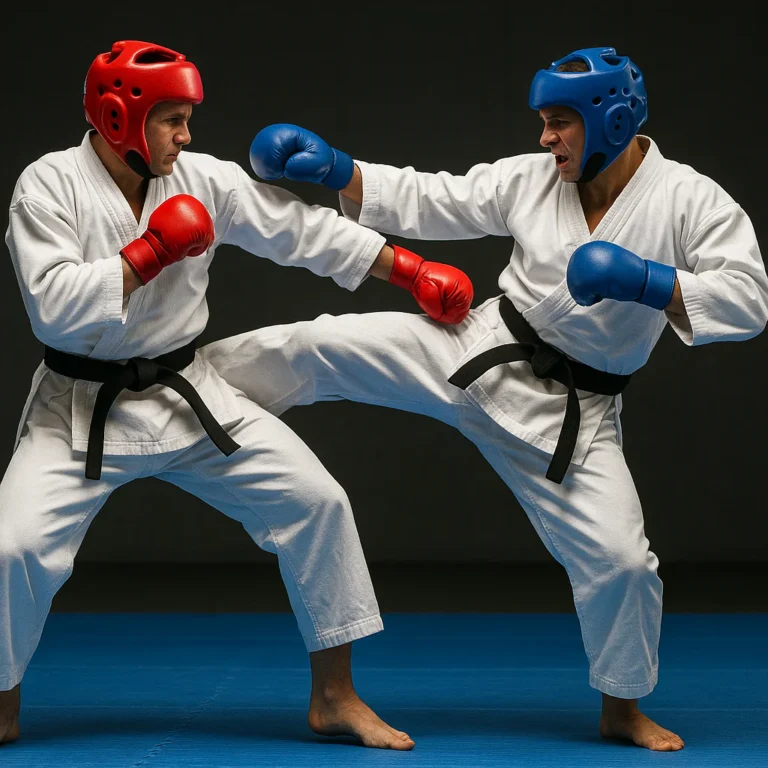
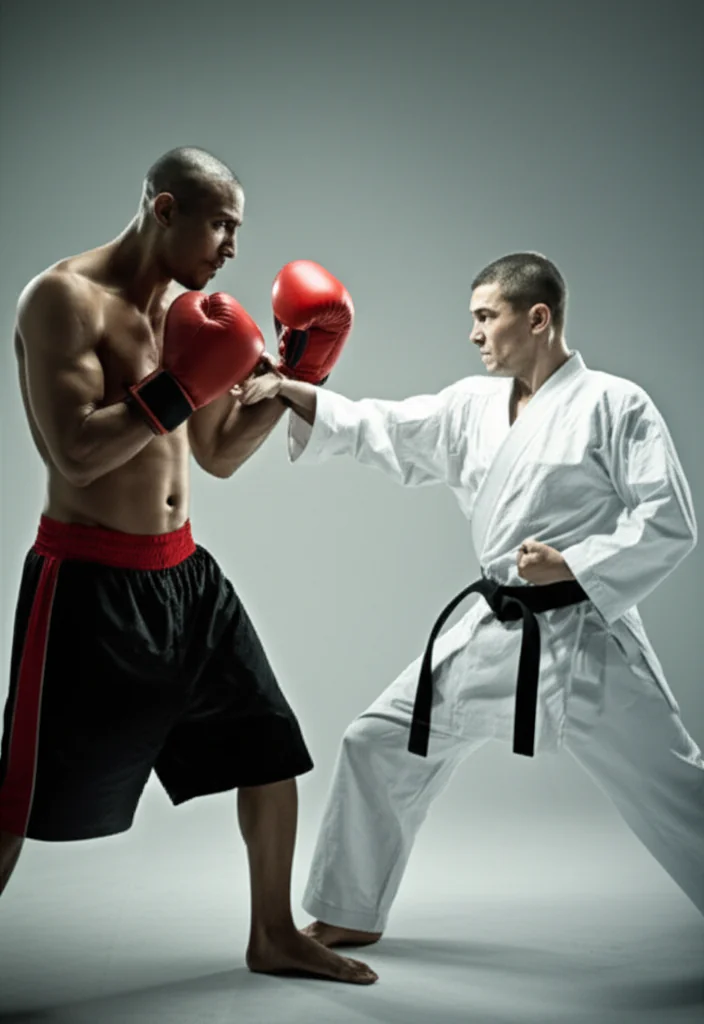
We’ve all heard the harsh truth whispered in dojos and shouted in comment sections: “Karate doesn’t work against wrestlers.” But is that the whole story, or just a half-truth born from a lack of context? At Karate MMA™, we’ve watched traditional karatekas get taken down in seconds, but we’ve also seen Lyoto Machida and Stephen “Wonderboy” Thompson dismantle elite graplers with the very same art. The secret isn’t that Karate is broken; it’s that pure Karate without grappling defense is a sitting duck, while hybrid Karate is a lethal weapon. In this deep dive, we’ll dissect the history, break down the technical clash between linear striking and chaotic grappling, and reveal exactly how a karateka can survive (and thrive) in the modern cage. Spoiler alert: The winner isn’t the style you pick, but the gaps you fill.
Key Takeaways
- Context is King: In a sporting MMA match, a pure karateka is at a severe disadvantage due to a lack of takedown defense; however, in a street self-defense scenario, explosive karate strikes can create a vital escape window.
- The Hybrid Revolution: The most successful fighters today aren’t “pure” anything; they are hybrids who blend Karate’s superior footwork and distance management with Wrestling and BJ to control the fight’s location.
- Distance is Life: Karate’s greatest strength is maintaining range, but its fatal flaw is what happens when that range is breached. Takedown defense is the non-negotiable skill every modern karateka must learn.
- Evolution, Not Extinction: Karate hasn’t died; it has evolved. Styles like Kyokushin and Shotokan have proven lethal in the cage when adapted to include clinch work and ground survival.
Table of Contents
- ⚡️ Quick Tips and Facts
- 🥋 Karate vs MMA: The Ultimate Showdown
- 📜 The Ancient Roots of Empty Hand Combat
- 🥊 How Modern MMA Evolved from the UFC
- 🏆 Karate’s Legacy in Mixed Martial Arts
- 🔥 The Rise of Striking-Only Karate Combat
- 🧠 Technical Breakdown: Striking vs. Grapling
- 🛡️ Can Karate Defeat an MMA Fighter?
- 🔄 Cross-Training: Blending the Best of Both Worlds
- 🏅 Pros and Cons: Karate vs MMA for Self-Defense
- 👟 Essential Gear for Karate and MMA Training
- 📚 Recommended Links
- ❓ Frequently Asked Questions
- 🔗 Reference Links
⚡️ Quick Tips and Facts
Before we dive into the dojo dust and canvas sweat, let’s cut through the noise with some hard-hitting truths straight from the Karate MMA™ team. We’ve seen it all, from the quiet corners of Okinawan dojos to the roaring cages of the UFC.
- The “One Punch” Myth: While a perfectly timed gyaku-zuki (reverse punch) can end a fight, relying on a single strike against a trained grapler is a recipe for disaster. MMA fighters are conditioned to absorb impact and close distance.
- The Grapling Gap: Traditional Karate often lacks takedown defense and ground fighting (ne-waza). If you get taken down, a pure karateka is in deep water without a paddle.
- Distance is King: Karate excels at maintaining range. The moment an MMA fighter gets inside that range, the dynamic shifts violently in their favor.
- Hybrid is the Future: The most dangerous fighters today aren’t “pure” anything. They are hybrids who blend the footwork of Karate with the clinch work of Muay Thai and the takedowns of Wrestling.
- Self-Defense Reality: In a street scenario, situational awareness beats technique every time. However, if forced to fight, Karate’s explosive striking can create the escape window you need.
Want to see how these styles clash in the modern era? Check out our deep dive: Traditional Karate vs MMA: Which Reigns Supreme in 2025? 🥋🥊.
🥋 Karate vs MMA: The Ultimate Showdown
So, you’re standing at the crossroads. On one side, the disciplined, linear, and explosive world of Karate. On the other, the chaotic, adaptive, and all-encompassing arena of Mixed Martial Arts (MA). Who wins?
The answer isn’t as simple as “Karate wins” or “MA wins.” It depends entirely on the context of the fight.
Are we talking about a sporting match with rules, weight classes, and referees? Or a street altercation with no rules, no time limits, and potentially multiple attackers?
The Core Philosophy Clash
Karate is often described as the art of the empty hand (kara-te). Its roots lie in efficiency, precision, and the belief that a single, perfectly placed strike can neutralize a threat. It’s about kime (focus) and zanshin (awareness).
MA, conversely, is the art of everything. Born from the question, “Which martial art is best?”, it evolved to answer: “All of them, together.” It integrates striking, grappling, wrestling, and submissions into a fluid, adaptive system.
The Burning Question: Can a traditional karateka survive the chaos of the cage? Or is the “empty hand” a relic of a bygone era? We’ll answer this by the end of this article, but first, we need to understand where these styles came from.
📜 The Ancient Roots of Empty Hand Combat
To understand where we are going, we must look at where we started. The history of Karate is a tale of secrecy, survival, and cultural fusion.
From Okinawa to the World
Karate didn’t just appear out of thin air. It was born in the Ryukyu Kingdom (modern-day Okinawa), a melting pot of Chinese and Japanese influences.
- The Weapon Ban: Legend has it that when the Satsuma clan invaded Okinawa, they banned weapons. The locals, desperate to defend themselves, refined their empty-hand techniques into a deadly art.
- Chinese Influence: Many Okinawan masters traveled to Fujian, China, studying White Crane Kung Fu and other styles. This fusion created the early forms of Te (hand), which eventually became Karate.
- Gichin Funakoshi: Known as the “Father of Modern Karate,” Funakoshi introduced the art to mainland Japan in the early 20th century. He emphasized character development over fighting, famously stating, “There is no first attack in Karate.”
For a deeper dive into the lineage of these styles, explore our Martial Arts History section.
The Evolution of “Empty Hand”
The term “Karate” originally meant “Chinese Hand” (kara meaning China). It was later changed to “Empty Hand” (kara meaning empty) to reflect the philosophical shift toward internal strength and the idea that the body itself is the weapon.
Did you know? The first U.S. dojo opened in 1945, but it took decades for Karate to gain mainstream traction in the West, often through movies and the 1960s TV show The Karate Kid.
🥊 How Modern MMA Evolved from the UFC
If Karate is the disciplined ancestor, MMA is the evolutionary mutant that ate its siblings and grew stronger.
The “No Rules” Experiment
The modern era of MMA began with the Ultimate Fighting Championship (UFC) in 193. The premise was simple: Let different styles fight to see who is the best.
- The Early Days: There were no weight classes, no time limits, and very few rules. It was a spectacle of Brazillian Jiu-Jitsu (BJ) vs. Wrestling vs. Boxing vs. Karate.
- Royce Gracie: A small man who used BJJ to submit larger opponents, proving that ground fighting was the great equalizer.
- The Shift: As the sport grew, the “no rules” format became unsustainable. The introduction of the Unified Rules of Mixed Martial Arts in 201 brought weight classes, time limits, and banned moves like eye-gouging and fish-hooking.
The Rise of the Hybrid Fighter
Today’s MMA fighters are not specialists; they are complete athletes.
- Wrestling became the base for controlling where the fight takes place.
- Muay Thai and Boxing provided the striking arsenal.
- BJ ensured survival on the ground.
- Karate contributed unique footwork and distance management.
For a breakdown of how these styles merged, check out our Fight Analysis and Breakdowns.
The Twist: While early MMA seemed to bury Karate, the sport’s evolution actually revived it. Fighters like Lyoto Machida and Stephen “Wonderboy” Thompson proved that Karate could be lethal in the cage.
🏆 Karate’s Legacy in Mixed Martial Arts
You might think Karate was left behind in the dust of the MMA revolution. Think again. Karate is the ghost in the machine, influencing the very fabric of modern striking.
The “Karate Kid” Effect
The most famous example is Lyoto Machida. A black belt in Shotokan Karate, Machida dominated the UFC Light Heavyweight division.
- Style: He used a blitzkrieg style, stepping in with lightning-fast punches and kicks, then retreating before the opponent could counter.
- Impact: Machida proved that traditional Karate footwork could neutralize the pressure of wrestlers and boxers.
Modern Karate-Inspired Fighters
- Stephen “Wonderboy” Thompson: A world-class Karateka who uses his unorthodox angles and side-kicks to confuse opponents.
- Georges St-Pierre (GSP): While primarily a wrestler, GSP incorporated Karate’s distance management and kicking techniques into his game.
- Conor McGregor: Though primarily a boxer, McGregor’s stance and lead leg kicks are heavily influenced by Karate and Taekwondo.
Why does this matter? Because it shows that Karate isn’t “dead.” It just needed to adapt.
Karate Techniques in the Cage
| Technique | Traditional Karate Application | MMA Application |
|---|---|---|
| Gyaku-Zuki (Reverse Punch) | Linear, power-focused strike | Used as a counter-punch after a feint |
| Mawashi-Geri (Roundhouse Kick) | High, spinning, or body kick | Low kicks to damage the lead leg |
| Ura-Zuki (Upper Punch) | Close-range, upward strike | Used in the clinch or against a crouching opponent |
| Yori-Ki (Body Movement) | Sliding, pivoting, and distancing | Essential for avoiding takedowns |
For more on specific moves, visit our Karate Techniques category.
🔥 The Rise of Striking-Only Karate Combat
While traditional Karate evolved in the dojo, a new beast emerged: Karate Combat.
The Virtual Arena
Karate Combat is a professional league that aims to bring Karate back to the spotlight, but with a twist. It combines martial arts with video game aesthetics and real-time biometric data.
- The Pit: Fighters compete in a high-tech virtual arena, allowing for global qualifiers and immersive fan experiences.
- Rules: Unlike traditional point sparring, Karate Combat allows for full-contact strikes to the body and head, but no grappling.
- The Goal: To prove that Karate can be a spectator sport that rivals the excitement of MMA.
The Debate: Sport vs. Reality
Critics argue that Karate Combat is just point fighting with more power. Proponents say it’s the purest form of striking available.
- The Pros: It highlights the speed, precision, and beauty of Karate.
- The Cons: It lacks the grit and chaos of a real fight, especially against a grapler.
The Big Question: If Karate Combat is so exciting, why don’t we see it in the UFC? The answer lies in the limitations of striking-only rules. In a real fight, or a full MMA match, the lack of grappling defense is a fatal flaw.
🧠 Technical Breakdown: Striking vs. Grapling
Let’s get technical. How do these styles actually stack up in a fight?
The Striking Advantage (Karate)
- Range Control: Karateka are masters of maintaining distance. They use the front foot to measure range and the rear foot to explode forward.
- Speed: Karate strikes are often faster than boxing punches due to the snap and recoil mechanics.
- Variety: Karate offers a vast array of kicks (high, low, spinning) that are less common in boxing.
The Grapling Advantage (MA)
- Takedowns: If a Karateka cannot keep the distance, a wrestler can shoot in and take them to the ground.
- Ground Control: Once on the ground, a Karateka is at a severe disadvantage. They lack the skills to defend against chokes and joint locks.
- Clinch Work: MMA fighters excel in the clinch, where they can control the opponent’s posture and deliver knees and elbows.
The “Hybrid” Solution
The most successful fighters today are those who blend these styles.
- Step 1: Use Karate footwork to manage distance.
- Step 2: Use Boxing/Muay Thai to strike when the opponent is in range.
- Step 3: Use Wrestling/BJ to defend takedowns and control the fight on the ground.
The Verdict: Pure Karate is a specialized tool. Pure MMA is a Swiss Army Knife. In a fight, the Swiss Army Knife usually wins, but the specialized tool can be deadly in the right hands.
🛡️ Can Karate Defeat an MMA Fighter?
This is the million-dollar question. Can a Karateka beat an MMA fighter?
The Short Answer
Yes, but it’s incredibly difficult.
The Long Answer
For a Karateka to win, they must:
- Maintain Distance: Never let the MMA fighter get close enough to grapple.
- Land a Knockout: Deliver a devastating strike before the fight goes to the ground.
- Defend Takedowns: Have a solid wrestling defense (which most traditional Karatekas lack).
Real-World Examples
- Lyoto Machida: Defeated Randy Couture and Rashad Evans using Karate footwork and counter-striking.
- Stephen Thompson: Has defeated top-tier fighters like Jorge Masvidal and Robert Whittaker using Karate-style movement.
The Limitations
However, against a dedicated wrestler or a BJ specialist, a pure Karateka is likely to lose. The ground game is the great equalizer.
The Twist: The best Karateka in the world today are those who cross-train in wrestling and BJJ. They are no longer “pure” Karateka; they are MA fighters with a Karate base.
🔄 Cross-Training: Blending the Best of Both Worlds
If you want to be a complete fighter, you must cross-train.
The Ideal Mix
- Base: Start with Karate for striking and footwork.
- Add: Wrestling for takedown defense and control.
- Add: BJ for ground survival and submissions.
- Add: Muay Thai for clinch work and elbows/knees.
How to Start
- Find a Gym: Look for a gym that offers MA classes or hybrid training.
- Focus on Fundamentals: Don’t try to learn everything at once. Master the basic strikes and basic takedowns.
- Sparring: Practice live sparring to apply your skills in a realistic setting.
Pro Tip: Don’t be afraid to step out of your comfort zone. The best fighters are those who are willing to learn from their mistakes.
For more on training strategies, check out our Fighter Profiles section.
🏅 Pros and Cons: Karate vs MMA for Self-Defense
When it comes to self-defense, the rules change. There are no referees, no weight classes, and no time limits.
Karate for Self-Defense
| Pros | Cons |
|---|---|
| Explosive Strikes: Can end a fight quickly. | No Grapling: Vulnerable to takedowns. |
| Distance Management: Keeps attackers at bay. | Limited Clinch: Struggles in close quarters. |
| Mental Discipline: Teaches focus and calm. | Sport Focus: Many techniques are too complex for street use. |
MMA for Self-Defense
| Pros | Cons |
|---|---|
| All-Round Skills: Can handle striking, grappling, and ground fighting. | Complexity: Takes longer to master. |
| Realistic Sparring: Trains for real-world scenarios. | Risk of Injury: Harder sparring can lead to injuries. |
| Adaptability: Can adjust to any situation. | Overkill: May use excessive force in minor altercations. |
The Bottom Line: For self-defense, MA is generally superior because it covers all bases. However, a well-trained Karateka with good situational awareness can still be a formidable opponent.
👟 Essential Gear for Karate and MMA Training
Whether you’re training in Karate or MMA, having the right gear is crucial for safety and performance.
Karate Gear
- Gi: A high-quality Karate Gi (e.g., Mizuno, Adidas) for traditional training.
- Sparring Gear: Mouthguard, groin protector, and hand wraps.
- Footwear: Barefoot is traditional, but Karate shoes (e.g., Mizuno) are available for gym use.
MMA Gear
- Gloves: MA gloves (e.g., Venum, Hayabusa) for striking and grappling.
- Shin Guards: Shin guards for sparring.
- Headgear: Headgear for protection during sparring.
- Rash Guard: Rash guard to prevent mat burns and skin infections.
Where to Buy
- Amazon: Search for Karate Gear | Search for MMA Gear
- Brand Official: Mizuno Official | Venum Official
Check Price on:
- Karate Gi: Amazon | Mizuno Official
- MA Gloves: Amazon | Venum Official
🎥 Featured Video: Karate vs MMA Demonstration
To truly understand the difference, you need to see it in action. The video below showcases a Level 3 Kyokushin Karate demonstration by Master Huang Zhongkun, sparring with an MMA practitioner.
- Observation: Notice how the Karateka uses distance and speed to keep the MMA fighter at bay.
- The Clash: Watch how the MMA fighter attempts to close the distance and grapple.
- The Lesson: This demonstration highlights the strengths and weaknesses of both styles.
The Takeaway: Even in a controlled environment, the grapple is the ultimate equalizer. But with the right training, a Karateka can neutralize the threat.
🧩 The Unresolved Mystery: Who Really Wins?
We’ve covered the history, the techniques, the pros and cons, and the real-world examples. But the question remains: Who wins in a real fight?
The answer is it depends.
- If the fight stays standing, a skilled Karateka has a chance.
- If the fight goes to the ground, the MMA fighter wins.
But here’s the twist: The best fighters are those who refuse to let the fight go to the ground. They use their Karate footwork to keep the distance, their striking to hurt the opponent, and their wrestling to defend takedowns.
The Final Thought: The ultimate fighter isn’t a Karateka or an MMA fighter. It’s a hybrid who has mastered all aspects of combat.
Stay tuned for our Conclusion, where we’ll wrap up this epic showdown and give you our final verdict.
Conclusion

We started this journey with a burning question: Can a traditional Karateka defeat an MMA fighter? After dissecting the history, analyzing the techniques, and watching the evolution of both arts, the answer is finally clear.
The Verdict: In a pure, no-holds-bared fight, the MA fighter holds the overwhelming advantage. Why? Because MMA is designed to be the complete combat system. It integrates the striking of Karate, the clinch of Muay Thai, and the grappling of Wrestling and BJJ. If a Karateka cannot maintain distance and lands a knockout blow within the first few seconds, they might win. But if the fight drags on or goes to the ground, the lack of grappling defense in traditional Karate becomes a fatal flaw.
However, this doesn’t mean Karate is obsolete. Far from it.
- Karate is the “Specialist”: It offers unmatched speed, explosive footwork, and distance management that can confuse even the best MMA strikers.
- The Hybrid is the “Champion”: The most dangerous fighters in the world today (like Lyoto Machida and Stephen “Wonderboy” Thompson) are essentially Karateka who learned to wrestle. They took the best of Karate and filled the gaps with MMA skills.
Our Recommendation:
If your goal is self-defense or competition in the cage, start with MMA or a hybrid program that includes Wrestling and BJJ. Do not rely solely on traditional Karate.
If your goal is discipline, fitness, and traditional mastery, Karate is unparalleled.
The Best Path? Cross-train. Find a gym that respects the roots of Karate but embraces the reality of MMA. As we’ve seen, the future of fighting isn’t about choosing a side; it’s about blending the best of both worlds.
Final Thought: The “Empty Hand” isn’t empty anymore. It’s filled with the wisdom of the past and the adaptability of the future. Whether you throw a gyaku-zuki or a rear-naked choke, the true victory lies in continuous learning.
Recommended Links
Ready to start your journey? Whether you need the perfect gear to hit the mats or books to deepen your understanding, here are our top picks.
🥋 Essential Gear & Equipment
- Karate Gi (Uniform):
Mizuno: Search Mizuno Karate Gis on Amazon | Mizuno Official Store
Adidas: Search Adidas Karate Gis on Amazon | Adidas Official - MA Gloves & Sparring Gear:
Venum: Search Venum MMA Gloves on Amazon | Venum Official
Hayabusa: Search Hayabusa MMA Gear on Amazon | Hayabusa Official - Shin Guards & Headgear:
Fairtex: Search Fairtex MMA Gear on Amazon | Fairtex Official
📚 Must-Read Books
- “The Book of Five Rings” by Miyamoto Musashi: A classic on strategy and mindset. Find on Amazon
- “Karate-Do: My Way of Life” by Gichin Funakoshi: The foundational text by the Father of Modern Karate. Find on Amazon
- “The UFC Encyclopedia” by Mark Hatmaker: A comprehensive look at the history and techniques of MMA. Find on Amazon
- “Budo: The Martial Arts of Japan” by Donn F. Draeger: An in-depth historical analysis of Japanese martial arts. Find on Amazon
❓ Frequently Asked Questions
Can a combination of karate and MMA training provide a well-rounded martial arts education?
Absolutely. In fact, it is the gold standard for modern combat sports. Karate provides explosive striking, unorthodox angles, and superior footwork, while MMA training fills the critical gaps in takedown defense, clinch work, and ground fighting. A practitioner who masters both becomes a complete fighter, capable of handling threats at any range.
Are there any styles of karate that are more suited to MMA competition than others?
Yes. Kyokushin and Shotokan have produced the most successful MMA fighters.
- Kyokushin: Known for its full-contact sparring and body conditioning, it prepares fighters for the physicality of the cage.
- Shotokan: Famous for its linear movement and long-range kicking, it offers the footwork necessary to control distance against graplers.
- Wado-Ryu: With its emphasis on evasion and body shifting, it also translates well to avoiding takedowns.
How does the emphasis on forms and katas in karate impact a practitioner’s ability to adapt to MMA fighting?
It depends on how they are trained.
- Negative Impact: If a student only practices static katas without live sparring, they may struggle to apply techniques against a resisting opponent.
- Positive Impact: When katas are broken down into bunkai (application), they teach body mechanics, balance, and timing. Many MMA fighters use kata drills to refine their hip rotation and kicking mechanics.
What are the most effective karate techniques that can be applied in an MMA fight?
- The Side Kick (Yoko Geri): Excellent for stopping takedowns and keeping opponents at bay.
- The Reverse Punch (Gyaku-Zuki): A fast, linear strike that can catch opponents off guard.
- The Front Kick (Mae Geri): Useful for checking kicks and creating distance.
- The Spinning Back Kick: A high-risk, high-reward technique that can end a fight instantly if landed cleanly.
How does the physical conditioning required for karate compare to the conditioning needed for MMA?
Karate conditioning focuses heavily on explosive power, speed, and static strength (holding stances). MA conditioning is more holistic, requiring cardiovascular endurance for 5-minute rounds, core strength for grappling, and anaerobic capacity for explosive bursts. An MMA fighter generally needs a higher overall endurance level due to the continuous nature of the sport.
Can a karate practitioner transition to MMA competition, and what are the challenges they may face?
Yes, many have succeeded. However, the challenges are significant:
- Takedown Defense: Learning to sprawl and defend against wrestlers is the bigest hurdle.
- Ground Game: Mastering BJJ and wrestling from the ground up takes years of dedicated training.
- Clinch Work: Adapting to the Muay Thai clinch and dirty boxing is essential.
- Mindset: Shifting from a “one-punch” mentality to a sustained fight strategy.
Are there any notable MMA fighters who have a background in karate?
Absolutely.
- Lyoto Machida: UFC Light Heavyweight Champion, known for his Shotokan background.
- Stephen “Wonderboy” Thompson: Top welterweight contender, a Kyokushin and Point Karate champion.
- Conor McGregor: While primarily a boxer, his stance and lead leg kicks are heavily influenced by Karate and Taekwondo.
- Chuck Liddell: The “Iceman” utilized Karate and Kickboxing to become a legend.
How does the mental discipline of karate compare to the mental toughness required for MMA?
Karate emphasizes focus, respect, and self-control, often through the repetition of forms and rituals. MA demands adaptability, resilience, and calm under chaos. While both require immense mental fortitude, MA often tests a fighter’s ability to think on their feet in unpredictable, high-pressure situations where the rules are constantly shifting.
What are the advantages of training in karate over MMA for beginners?
- Structure: Karate offers a clear progression through belt ranks and forms.
- Safety: Traditional sparring is often less contact-heavy initially, reducing the risk of early injury.
- Foundation: It builds a strong base in striking mechanics and body awareness before introducing the complexity of grappling.
- Community: Dojos often foster a strong sense of tradition and camaraderie.
Can karate techniques be effectively used in an MMA fight?
Yes, but with caveats. Techniques must be adapted to the rules of MMA. For example, a high roundhouse kick in traditional Karate might leave you open to a takedown in MMA. However, when modified for the cage (e.g., lower kicks, quicker retraction), Karate techniques remain highly effective.
How does karate compare to MMA in terms of self-defense effectiveness?
MA is generally more effective for self-defense because it covers all ranges of combat (striking, clinch, ground). A street fight can quickly go to the ground, where a pure Karateka is vulnerable. However, a well-trained Karateka with good situational awareness can use explosive strikes to create an escape window, which is often the goal in self-defense.
What are the key differences between karate and MMA training methods?
- Karate: Focuses on katas, partner drills, and point sparring. Training is often linear and structured.
- MA: Focuses on live sparring, rolling (ground grappling), and situational drills. Training is dynamic, chaotic, and adaptive.
Can you do karate in MMA?
Yes. Many MMA fighters incorporate Karate into their training. It is not a separate sport in the cage, but a toolkit of techniques and strategies. Fighters like Lyoto Machida have proven that a Karate base can be the foundation of an MMA championship career.
What is better: MMA or Taekwondo?
This depends on your goals.
- Taekwondo: Superior for high kicks, speed, and flexibility. Great for sport sparring and self-defense scenarios involving distance.
- MA: Superior for overall combat readiness, including grapling and ground fighting.
- Verdict: For self-defense and competition, MA is the more complete system. For sport and flexibility, Taekwondo excels.
Is MMA the toughest sport?
Many consider it the toughest. It requires elite-level conditioning in multiple disciplines (striking, wrestling, BJJ), mental resilience to withstand strikes and submissions, and strategic intelligence to adapt in real-time. The combination of physical toll and mental pressure makes it one of the most demanding sports on the planet.
🔗 Reference Links
- UFC Official Website: History of the UFC
- Karate Combat Official Website: The Future of Karate
- Mizuno: Karate Equipment
- Venum: MA Gear
- Hayabusa: MA Training
- Fairtex: Muay Thai & MMA Gear
- Martial Arts Stack Exchange: Does Karate provide defense against wrestlers and MMA fighters?
- MA Fighting: Analysis of Karate in MMA
- International Karate Federation (WKF): Official Rules and History
- Gichin Funakoshi Foundation: The Life of the Father of Modern Karate