Support our educational content for free when you purchase through links on our site. Learn more
🥊 Traditional Karate vs MMA: Who Actually Wins in 2026?

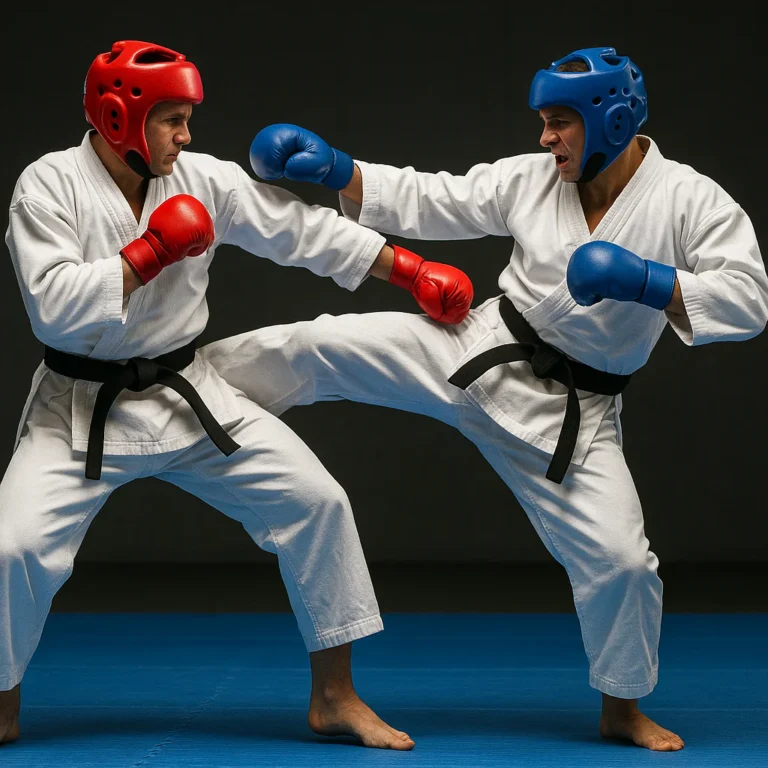
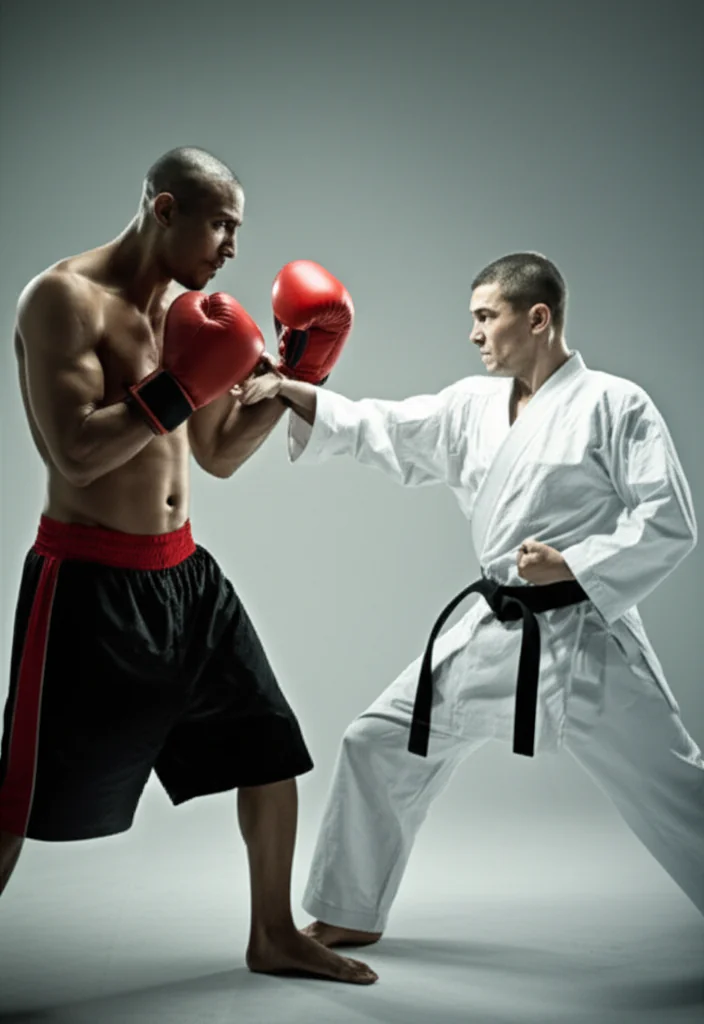
The winner of Traditional Karate vs MMA isn’t a single style, but a hybrid fighter who blends Karate’s lightning-fast distance management with MMA’s relentless grappling pressure. If you want to survive a street fight, you need the vital-point strikes of Karate, but if you want to dominate in the cage, you must master the ground game that traditional dojos often ignore.
We’ve all seen the viral clips where a “master” gets taken down in seconds, leading to the assumption that Karate is obsolete. But remember Lyoto Machida, the UFC champion who used his Shotokan background to outmaneuver elite strikers? He didn’t abandon his roots; he evolved them.
The reality is that Traditional Karate vs MMA is a false dichotomy. One excels at keeping you standing and striking from a distance, while the other ensures you don’t get crushed if the fight hits the floor. The most dangerous fighter in the room is the one who can do both.
Key Takeaways
- ✅ Hybrid is Superior: Pure Traditional Karate lacks ground defense, while pure MMA can struggle with multiple attackers; the ultimate fighter blends both.
- 🥋 Context Matters: Karate shines in stand-up self-defense scenarios, whereas MA dominates in regulated one-one combat.
- 🧠 Mental vs. Physical: Traditional Karate builds character and discipline for a lifetime, while MMA focuses on sport-specific conditioning and immediate adaptability.
- 🏆 Evolution is Key: Modern legends like Stephen “Wonderboy” Thompson prove that traditional styles can thrive in the cage when pressure-tested and adapted.
Table of Contents
- ⚡️ Quick Tips and Facts
- 📜 The Ancient Roots: Traditional Karate History vs. Modern MMA Evolution
- 🥋 1. Striking Mechanics: Point Fighting vs. Full-Contact Pressure Testing
- 🥋 2. Grapling Realities: Why Traditional Karate Often Fails on the Ground
- 🥋 3. Sparring Culture: Pre-Arranged Kata vs. Live Aliveness Drills
- 🥋 4. Rule Sets and Scoring: The Point System vs. The Octagon Clock
- 🥋 5. Training Methodologies: Dojo Discipline vs. Camp Conditioning
- 🥋 6. Self-Defense Efficacy: Street Scenarios vs. Regulated Combat Sports
- 🥋 7. Mental Fortitude: Bushido Spirit vs. Fighter Psychology
- 🥋 8. The Hybrid Path: How Modern Fighters Blend Karate and MMA
- 🏆 9. Top 5 Traditional Karate Styles That Translate Best to MMA
- 🏆 10. 7 Common Myths Debunked About Karate and Mixed Martial Arts
- 📊 Side-by-Side Comparison: Karate Dojo vs. MMA Gym Breakdown
- 💡 Quick Tips and Facts
- 🏁 Conclusion
- 🔗 Recommended Links
- 📚 Reference Links
⚡️ Quick Tips and Facts
Before we dive into the ring of debate, let’s hit the pause button and get the hard truths straight. At Karate MMA™, we’ve seen dojo doors slam and cage lights flicker, and here is what the data and our own sweat-soaked experiences tell you:
- ✅ The Hybrid is King: Pure traditionalists who refuse to spar live often get crushed in a cage. Pure MMA fighters who ignore the “art” often lack the mental fortitude for long-term self-defense. The sweet spot? Adaptability.
- ❌ The “Street Fight” Myth: Traditional Karate isn’t useless on the street, but Kata alone won’t save you if you’ve never felt a real punch to the chin. Conversely, MMA grappling is dangerous on concrete.
- ✅ Speed vs. Power: Traditional Karate emphasizes speed and distance (Mai), while MMA prioritizes pressure and clinch work. Both are vital.
- 📉 The Injury Rate: MMA has a significantly higher rate of acute injury (concussions, broken bones) compared to traditional Karate, where injuries are often chronic or overuse-related.
- 🏆 The Proof is in the Pudding: Look at Lyoto Machida or Stephen “Wonderboy” Thompson. They didn’t abandon Karate; they evolved it.
For a deeper dive into how we blend these worlds at our facility, check out our guide on Karate MMA.
📜 The Ancient Roots: Traditional Karate History vs. Modern MMA Evolution

You can’t understand the fight without knowing the history. It’s like trying to drive a Ferrari without knowing how the engine was invented.
The Birth of the Dojo
Traditional Karate, particularly Shotokan, Goju-Ryu, and Kyokushin, traces its lineage back to the Ryukyu Kingdom (modern-day Okinawa). It was a system born of necessity, often practiced in secret under foreign occupation. The focus was on one-strike, one-kill efficiency.
“There is no style in Karate.” — Gichin Funakoshi
Funakoshi, the father of Shotokan, emphasized character development (Do) over fighting. The goal wasn’t to win a trophy; it was to survive a life-or-death encounter and leave with your honor intact.
The Rise of the Cage
Fast forward to the 190s. The Ultimate Fighting Championship (UFC) was born, initially marketed as a no-holds-bared spectacle to see which style reigned supreme. It was a chaotic mess of styles colliding. What emerged wasn’t a single winner, but a realization: no single style was complete.
MA evolved from a “style vs. style” experiment into a hybrid sport that borows the best from everywhere. It’s the ultimate pressure test. If a technique works in the cage, it stays. If it doesn’t, it gets tossed.
The Conflict:
- Traditionalists argue MMA is just “brawling” designed for entertainment, stripping away the spiritual and self-defense nuances.
- MA Purists argue Traditional Karate is a “dance” that fails when the rules disappear and the opponent tries to choke you.
Who is right? We’ll get to that. But first, let’s look at the mechanics.
🥋 1. Striking Mechanics: Point Fighting vs. Full-Contact Pressure Testing
This is where the rubber meets the road. Or rather, where the glove meets the face.
The Karate Approach: Precision and Distance
In traditional Karate (especially Shotokan and Wado-Ryu), the philosophy is Kime (focus). You strike with maximum power at the exact moment of impact, then immediately retract.
- The Stance: Often deeper, with a focus on linear movement.
- The Target: Vital points (eyes, throat, groin) that are illegal in the cage but essential for self-defense.
- The Logic: “Hit and move.” You don’t want to trade blows; you want to end the fight in one shot.
The MMA Approach: Volume and Pressure
MA striking (derived from Muay Thai, Boxing, and Kickboxing) is about sustained offense.
- The Stance: More squared up to defend takedowns.
- The Target: Legal targets (head, body, legs) with the goal of accumulating damage or setting up a takedown.
- The Logic: “Pressure and volume.” You throw combinations to break the opponent’s guard and create openings for grappling.
The Clash:
A traditional Karateka might throw a lightning-fast Gyaku-zuki (reverse punch) and expect the opponent to freeze. In MMA, that opponent is likely shooting for a double-leg takedown while you’re retracting your hand.
Pro Tip: If you train Karate for MMA, you must learn to keep your hands up and stop retracting so quickly. You need to be comfortable exchanging in the pocket.
🥋 2. Grapling Realities: Why Traditional Karate Often Fails on the Ground
Here is the uncomfortable truth that traditional dojos often skip: Most traditional Karate styles have almost no effective ground game.
The “Stand-Up” Bias
Traditional Karate is designed to keep you on your feet. The curriculum focuses on:
- Takedowns: Often limited to simple sweeps or throws that assume the opponent is standing still.
- Ground Defense: Virtually non-existent. If you go to the ground in a traditional dojo, you’re usually told to “stand up” or the drill stops.
The MMA Reality
In MMA, 60-70% of fights end up on the ground. If you don’t know Brazilian Jiu-Jitsu (BJ) or Wrestling, you are a sitting duck.
- The Scenario: You land a perfect Mawashi-geri (roundhouse kick). The opponent ducks under, grabs your leg, and takes you down.
- The Result: Without grappling skills, you are now in Mount or Back Control, and the fight is over.
The Exception:
Some older styles, like Shintokukai (as mentioned in our research), or Kyokushin (which incorporates some grappling), have a better foundation. But even Kyokushin fighters often struggle against elite BJJ practitioners until they cross-train.
🥋 3. Sparring Culture: Pre-Arranged Kata vs. Live Aliveness Drills
This is the single biggest differentiator between the two worlds.
The Kata Conundrum
Kata are pre-arranged forms. They are the “textbooks” of Karate.
- Pros: They teach balance, breathing, and muscle memory. They are excellent for solo practice and mental discipline.
- Cons: They are pre-arranged. In a real fight, your opponent doesn’t follow the script.
- The Gap: Many traditional practitioners can perform a beautiful Heian Shodan but freeze when someone actually punches them.
The “Aliveness” of MMA
MA training is built on Aliveness.
- Sparring: You spar with a resisting partner who is trying to hurt you.
- Pressure Testing: Techniques are only kept if they work against a fully resisting opponent.
- The Result: MMA fighters develop fight IQ and the ability to adapt under stress.
The Middle Ground:
Modern Karate dojos are starting to incorporate Kumite (sparring) that is more “alive.” However, it rarely reaches the intensity of MMA sparring due to safety rules and the focus on point-scoring.
🥋 4. Rule Sets and Scoring: The Point System vs. The Octagon Clock
Rules shape the fighter. If you train for a specific set of rules, you become a master of that system, but potentially a novice in another.
Traditional Karate Rules (WKF Style)
- Scoring: Points are awarded for clean, controlled strikes to specific targets.
- Stop-and-Go: The referee stops the fight after every point.
- Contact: Light to medium contact (depending on the style).
- Goal: Score 3 points and win.
MMA Rules (UFC/ONE Championship)
- Scoring: Judges score based on damage, control, and aggression.
- Continuous: The fight flows until a submission, KO, or the bell rings.
- Contact: Full contact is allowed (within legal limits).
- Goal: Finish the fight or win on points after 3-5 rounds.
The Problem:
A Karate fighter trained in the “stop-and-go” system often struggles with the continuous flow of MMA. They might pause after landing a kick, waiting for the referee to call “Yame!” (Stop), only to get knocked out.
🥋 5. Training Methodologies: Dojo Discipline vs. Camp Conditioning
How you train determines how you fight.
The Dojo Atmosphere
- Focus: Repetition, discipline, and respect.
- Structure: Warm-up -> Kata -> Basic Techniques -> Sparring -> Cool down.
- Philosophy: “Dojo Kun” (Rules of the Dojo) emphasize character building.
- Physicality: Often less focused on pure conditioning (running, weightlifting) and more on bodyweight exercises and flexibility.
The MMA Camp
- Focus: Sport-specific conditioning and strategy.
- Structure: Wrestling drills -> BJJ -> Striking -> Sparring -> Strength & Conditioning.
- Philosophy: “Win the fight.”
- Physicality: High-intensity interval training (HIT), heavy weightlifting, and specific cardio for 5-round fights.
The Trade-off:
Traditional Karate builds mental resilience and long-term health. MMA builds explosive power and sport-specific endurance.
🥋 6. Self-Defense Efficacy: Street Scenarios vs. Regulated Combat Sports
The million-dollar question: Which wins in a street fight?
The Case for Traditional Karate
- Vital Points: Karate teaches strikes to the eyes, throat, and groin—moves that are illegal in MMA but deadly in a street fight.
- Multiple Attackers: Karate footwork is designed to keep you moving and facing one attacker while avoiding others. MMA grappling is a nightmare with multiple attackers.
- Environment: Karate teaches you to fight on concrete, uneven ground, and in tight spaces.
The Case for MMA
- Realism: MMA sparring simulates the chaos of a real fight better than any other sport.
- Control: If you can grapple, you can control the aggressor without necessarily killing them (unless you choose to).
- Adrenaline Management: MMA fighters are used to the adrenaline dump of a real fight.
The Verdict:
If the fight is one-one and goes to the ground, MA wins.
If the fight involves multiple attackers or weapons, Traditional Karate (with its focus on evasion and vital points) has a distinct advantage.
🥋 7. Mental Fortitude: Bushido Spirit vs. Fighter Psychology
The Bushido Code
Traditional Karate is steeped in Bushido (the way of the warrior).
- Values: Honor, respect, humility, and self-control.
- Mindset: “Win without fighting.” The ultimate victory is avoiding the conflict.
- Longevity: You can practice Karate into your 80s and 90s.
The Fighter’s Mindset
MA is about psychological warfare.
- Values: Agression, confidence, and the will to dominate.
- Mindset: “Break the opponent.”
- Longevity: The career is short. Most fighters retire in their 30s due to physical toll.
The Balance:
The best fighters, like Georges St-Pierre, combine the discipline of the dojo with the agression of the cage.
🥋 8. The Hybrid Path: How Modern Fighters Blend Karate and MMA
This is where the magic happens. The “Karate MMA” style is not a new invention; it’s a re-evolution.
The Lyoto Machida Blueprint
Lyoto Machida is the poster child for this. He took his Shotokan background and added Wrestling and BJ.
- Strategy: He used his Karate footwork to create distance, then struck with precision, and only grappled when necessary.
- Result: He became a UFC Light Heavyweight Champion.
The Stephen “Wonderboy” Thompson Model
Stephen Thompson brought Point Karate to the UFC.
- Strategy: He uses unpredictable angles and rapid-fire kicks that traditional MMA fighters struggle to defend.
- Result: He is one of the most successful strikers in UFC history.
How to Blend:
- Keep the Karate: Use the footwork, the distance management, and the vital point strikes.
- Add the Grapling: Learn BJJ and Wrestling to survive if the fight goes down.
- Pressure Test: Spar with full resistance. No more “stop-and-go.”
🏆 9. Top 5 Traditional Karate Styles That Translate Best to MMA
Not all Karate is created equal. Some styles are more adaptable than others.
| Rank | Style | Key Features | MMA Translation |
|---|---|---|---|
| 1 | Kyokushin | Full-contact, body conditioning, low kicks | Excellent for toughness and leg kicks. |
| 2 | Shotokan | Linear movement, speed, distance | Great for footwork and counter-striking (Machida style). |
| 3 | Wado-Ryu | Evasion, body shifting, joint locks | Good for defensive movement and takedown defense. |
| 4 | Goju-Ryu | Close-range, breathing, grappling basics | Effective for clinch work and close-quarters fighting. |
| 5 | Shintokukai | Old-school, includes throws and joint locks | A “complete” system with grappling roots. |
Why Kyokushin?
Kyokushin is known for full-contact sparring. Practitioners are used to taking hits and delivering them. This makes the transition to MMA much smoother than styles that only do light contact.
Why Shotokan?
Despite the criticism, Shotokan’s distance management is unmatched. When combined with grappling, it becomes a deadly striking system.
🏆 10. 7 Common Myths Debunked About Karate and Mixed Martial Arts
Let’s bust some myths that are floating around the internet.
- Myth: “Karate is useless in a real fight.”
Fact: Karate is highly effective for self-defense if trained with aliveness and pressure testing. - Myth: “MA fighters have no discipline.”
Fact: MMA requires immense discipline, sacrifice, and mental fortitude. - Myth: “Kata is just a dance.”
Fact: Kata is a library of techniques. It’s only useless if you don’t know how to apply it. - Myth: “You can’t learn Karate and MMA at the same time.”
Fact: Many fighters cross-train successfully. It’s about integration, not confusion. - Myth: “MA is just brawling.”
Fact: MMA is a highly technical sport with complex strategies and rules. - Myth: “Traditional Karate is only for old people.”
Fact: Karate can be adapted for any age, but it also produces elite athletes. - Myth: “You need to choose one style.”
Fact: The best fighters are hybrids. They take the best from every art.
📊 Side-by-Side Comparison: Karate Dojo vs. MMA Gym Breakdown
| Feature | Traditional Karate Dojo | MMA Gym |
|---|---|---|
| Primary Focus | Self-defense, Character, Discipline | Sport, Competition, Winning |
| Sparring Style | Point sparring, Stop-and-Go | Continuous, Full-contact |
| Ground Game | Minimal to None | Extensive (BJ, Wrestling) |
| Striking | Linear, Vital Points, Speed | Angular, Volume, Power |
| Equipment | Gi, Gloves (sometimes) | Gloves, Shinguards, Mouthguard |
| Injury Risk | Low to Moderate | High |
| Age Suitability | All ages (0 to 90+) | Mostly teens and adults |
| Cost | Generally Lower | Generally Higher |
| Community | Family-oriented, Hierarchical | Team-oriented, Competitive |
Which is right for you?
- If you want self-defense and character development, start with Karate.
- If you want to compete and test your limits, start with MA.
- If you want both, find a gym that offers hybrid training.
💡 Quick Tips and Facts (Revisited)
Wait, didn’t we do this already? Yes, but let’s add a twist.
- The “One-Punch” Reality: In a street fight, you might get one chance. Karate teaches you to maximize that chance.
- The “Ground” Reality: In a street fight, if you go to the ground, you are vulnerable to weapons. Karate teaches you to stay standing.
- The “Adrenaline” Reality: If you’ve never been punched in the face, you will panic. MMA sparring cures this.
- The “Hybrid” Reality: The best self-defense is a Karate strike followed by a MA takedown if necessary.
Final Thought:
Don’t let the internet trolls tell you what to train. Train what works for your goals.
🏁 Conclusion

So, who wins the battle: Traditional Karate or MA?
The answer isn’t a simple “A” or “B.” It’s a C: Context.
If you are a parent looking for a safe, disciplined activity for your child that builds character and teaches self-defense without the risk of a broken nose, Traditional Karate is the clear winner. The focus on Kata, Bunkai (application), and Bushido creates well-rounded individuals.
If you are an athlete looking to compete in the cage, test your limits, and master the art of combat, MA is the only path. The pressure testing, grapling, and continuous sparring are unmatched.
But here is the secret that the purists and the sport fighters often miss: The best fighter is the one who can adapt.
Lyoto Machida didn’t win because he was a “pure” Karateka. He won because he took his Karate and added grappling. Stephen Thompson didn’t win because he was a “pure” Point Fighter. He won because he learned to pressure test his skills.
The Verdict:
- For Self-Defense: A hybrid approach is best. Learn Karate for striking and distance, but learn BJJ to survive the ground.
- For Sport: MMA is the ultimate test.
- For Life: Traditional Karate offers a path of lifelong learning and character development.
Don’t choose a side. Choose a path. Whether you are stepping into the dojo or the cage, the goal is the same: to become a better version of yourself.
As we said at the beginning, the debate isn’t about which is better. It’s about what works for you.
🔗 Recommended Links
Ready to start your journey? Here are some top picks for gear and resources.
👉 Shop Karate Gear on:
- Karate Gi: Amazon | Walmart | Karate USA Official
- MA Gloves: Amazon | Rebok Official
👉 Shop MMA Gear on:
- MA Shorts: Amazon | Venum Official
- Mouthguards: Amazon | Under Armour Official
Books:
📚 Reference Links
- Shotokan Karate Magazine Issue 109: Read the full issue
- UFC Official Website: UFC.com
- World Karate Federation: WKF.org
- Bleacher Report: Traditional Martial Arts vs MMA: Read the article
- Richmond Sports Club: Richmond Sports Club
FAQ

Are the self-defense techniques taught in traditional Karate still relevant in today’s world, or is MMA a more practical choice?
Both are relevant, but for different scenarios. Traditional Karate excels in stand-up self-defense against multiple attackers or weapons, focusing on vital points and evasion. MMA is more practical for one-one scenarios where the fight might go to the ground. The most effective self-defense system is a hybrid of both.
How does the focus on kata in traditional Karate impact a practitioner’s ability to adapt to MMA-style fighting?
Kata can be a double-edged sword. If practiced as a “dance” without Bunkai (application), it hinders adaptation. However, if practiced with pressure testing and sparring, it builds incredible muscle memory and balance. The key is to apply the techniques, not just perform them.
What are the most significant advantages of training in traditional Karate over MMA?
- Longevity: You can train into old age.
- Character Development: Focus on honor, respect, and discipline.
- Self-Defense: Better preparation for multiple attackers and weapons.
- Lower Injury Risk: Less full-contact sparring reduces acute injuries.
Read more about “🥋 Is Traditional Karate Useful in MMA? The 2026 Truth”
Can a traditional Karate practitioner successfully transition to competing in MMA?
Absolutely. Fighters like Lyoto Machida, Stephen Thompson, and Masao “Tiger” Nakamura have successfully transitioned. The key is to add grappling (BJ/Wrestling) and pressure test your striking.
Read more about “🥋 Karate in Mixed Martial Arts: The Ultimate Guide (2026)”
How does the mental discipline of traditional Karate compare to the physical intensity of MMA?
Karate focuses on mental fortitude, patience, and the “way of the warrior.” MA focuses on physical intensity, aggression, and the will to dominate. The best fighters combine both: the mind of a monk and the body of a warrior.
Read more about “🥋 Integrating Karate into MMA Training: The 2026 Hybrid Blueprint”
Is traditional Karate effective in real-world self-defense situations compared to MMA?
It depends on the situation. For stand-up encounters, Karate is highly effective. For ground encounters, MMA is superior. A well-rounded self-defense practitioner should know both.
Read more about “🥋 15 Karate Techniques That Dominate MMA (2026)”
What are the key differences between traditional Karate and MMA training methods?
- Karate: Focus on Kata, Kihon (basics), and Point Sparring.
- MA: Focus on Live Sparring, Grapling, and Conditioning.
Read more about “🥋 Karate vs. MMA: The Ultimate Training Showdown (2026)”
Is traditional karate effective for self-defense against MMA fighters?
In a one-one fight, an MMA fighter has a significant advantage due to their grappling skills. However, in a street scenario with multiple attackers or weapons, a Karate practitioner might have the upper hand due to their focus on evasion and vital points.
Read more about “🥋 Karate’s Role in Modern MMA: The 7 Fighters Who Proved It Works (2026)”
Can a karate black belt beat an MMA fighter in a real fight?
It’s possible, but unlikely in a one-one scenario if the MMA fighter has grappling skills. The black belt would need to keep the fight standing and use vital point strikes. If the fight goes to the ground, the MMA fighter wins.
Read more about “🥋 Top 10 Karate MMA Videos That Will Redefine Your Fight Game (2026)”
What are the main differences between karate and MMA rules?
- Karate: Stop-and-go, point scoring, limited contact.
- MA: Continuous, judges score based on damage, full contact allowed.
Read more about “🥋 15 Legendary Karate Fighters Who Dominated MMA (2026)”
Why is karate often criticized in MMA competitions?
Karate is often criticized because traditional practitioners fail to pressure test their skills. They rely on Kata and Point Sparring, which don’t translate well to the continuous flow of MMA.
Read more about “🥋 50+ Fresh Karate MMA Terms & Tactics (2026)”
Does karate training help improve MMA performance?
Yes. Karate improves footwork, distance management, and striking precision. Many top MMA fighters use Karate as their primary striking base.
Read more about “🥋 Karate Footwork in MMA: The Secret to Unstoppable Evasion (2026)”
Which martial art is better for street fighting, karate or MMA?
It depends. For stand-up and multiple attackers, Karate is better. For one-one and ground scenarios, MA is better. The best choice is a hybrid approach.
Read more about “🥋 7 Secrets to MMA Success with a Karate Base (2026)”
How long does it take to learn karate compared to MMA?
Karate takes years to master the basics and decades to master the art. MA takes years to become proficient in all aspects (striking, grappling, wrestling). Both are lifelong journeys.
Read more about “🥋 What Are Martial Art Styles? The Ultimate 2026 Guide to 20+ Fighting Systems”