Support our educational content for free when you purchase through links on our site. Learn more
🥋 Karate’s Role in Modern MMA: The 7 Fighters Who Proved It Works (2026)

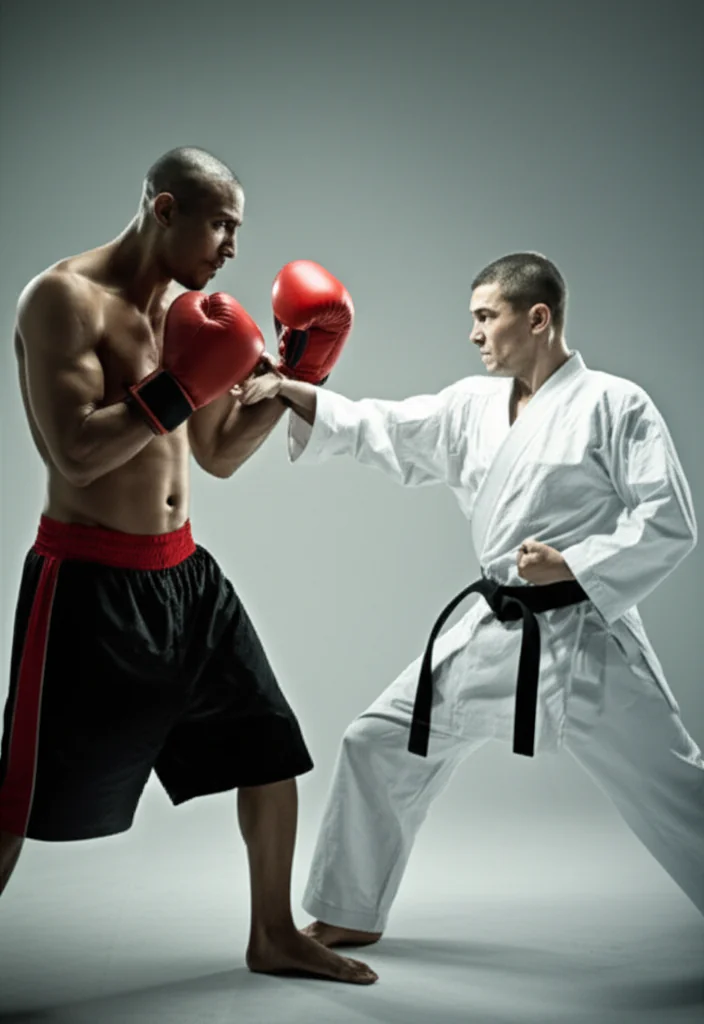
Karate isn’t just a relic of the past; it is a lethal, high-speed weapon that has fundamentally reshaped the landscape of mixed martial arts. From Lyoto Machida’s elusive “Shohei-ryu” to Stephen “Wonderboy” Thompson’s unorthodox angles, Karate’s role in modern MMA has evolved from a misunderstood curiosity into a championship-winning strategy.
Forget the image of a dojo student waiting for a referee to shout “Yame!”; the modern Karateka in the octagon is a master of continuous flow, using explosive linear footwork to dismantle graplers before they can even shoot.
Consider this: three of the most dominant strikers in UFC history—Machida, Thompson, and Michael “Venom” Page—built their entire game plans on traditional Karate principles, proving that distance management is the ultimate equalizer against wrestling-heavy opponents.
Key Takeaways
- ✅ Adaptation is Non-Negotiable: Traditional point-fighting rules must be discarded; success comes from blending Karate’s explosive speed with MMA’s continuous combat flow.
- ✅ Distance is Your Best Defense: The core Karate concept of Mai (fighting distance) allows fighters to control the pace and neutralize takedown attempts without engaging in a brawl.
- ✅ The “Karate Hybrid” Wins: Pure Karate is insufficient, but when fused with wrestling and BJJ, it creates a versatile striker capable of dominating all ranges of the fight.
- ✅ Mental Toughness Matters: The discipline of Zanshin (awareness) and Mushin (no mind) gives Karateka a psychological edge in high-pressure championship rounds.
Table of Contents
- ⚡️ Quick Tips and Facts
- 📜 From Dojo to Octagon: The Evolution of Karate in Modern MMA
- 🥋 The Striking Arsenal: How Traditional Karate Techniques Dominate the Cage
- 🏆 Top 7 Karate-Inspired Fighters Who Redefined MMA
- 🧠 The Mental Game: Why Karateka Have a Psychological Edge
- 🤔 Myth-Busting: Does Karate Actually Work Against Grapplers?
- 🛡️ Defending the Takedown: Karate Footwork vs. Wrestling Pressure
- 🥊 Training Drills: Bridging the Gap Between Point Fighting and Full Contact
- 📊 Karate Styles in the Cage: Kyokushin vs. Shotokan vs. Goju-Ryu
- 👶 Is Karate the Best Starting Point for Aspiring MMA Fighters?
- 🎯 Quick Tips and Facts
- 🏁 Conclusion
- 🔗 Recommended Links
- ❓ FAQ
- 📚 Reference Links
⚡️ Quick Tips and Facts
Before we step onto the mat and dissect the mechanics of the octagon, let’s hit the ground running with some hard-hitting truths about Karate in the modern MMA landscape. We’ve seen too many dojo warriors get knocked out in the first round because they treated the cage like a point-fighting tournament. Here’s the reality check you need:
- ✅ Distance is King: Karateka live by the concept of Mai (fighting distance). In MMA, this is the difference between landing a clean gyaku-zuki (reverse punch) and getting caught in a guillotine.
- ✅ The “Blitz” Works: Fighters like Stephen “Wonderboy” Thompson and Lyoto Machida proved that explosive, linear movement can dismantle graplers who rely on closing the distance.
- ❌ No Point Fighting: If you’re waiting for the referee to say “Yame!” (Stop), you’re already on your back. MMA is continuous; Karate is often stop-start. You must adapt.
- ✅ Footwork is Your Shield: The kiba-dachi (horse stance) is great for stability, but the suri-ashi (sliding footwork) is what keeps you from getting taken down.
- ❌ Don’t Ignore the Grapple: Even the best strikers need to know how to survive on the ground. A pure Karate background without wrestling defense is a one-way ticket to a submission.
For a deeper dive into how we bridge these gaps at our gym, check out our guide on Karate MMA.
📜 From Dojo to Octagon: The Evolution of Karate in Modern MMA
Remember the old days? When you walked into a dojo, the air smelled of tatami mats and old sweat, and the only sound was the rhythmic kiai of students striking pads? Fast forward today, and that same discipline is the backbone of some of the most exciting fights in the UFC.
The journey from the quiet dojos of Okinawa to the roaring crowds of the UFC is a story of adaptation. For decades, traditionalists argued that Karate was a “martial art” for self-defense and character building, not a “combat sport” for the cage. They were right, and they were wrong.
The Great Divide: Tradition vs. Reality
In the early days of MMA, Karate had a terrible reputation. Why? Because early practitioners tried to apply point-fighting rules to a full-contact environment. They’d throw a kick, wait for the stop, and then get eaten alive by a wrestler.
But then, the evolution began. We saw fighters like Lyoto Machida and Stephen “Wonderboy” Thompson take the core principles of Karate—timing, distance, and explosive power—and strip away the rigid rules. They didn’t stop fighting when they landed; they kept moving. They didn’t wait for the referee; they flowed.
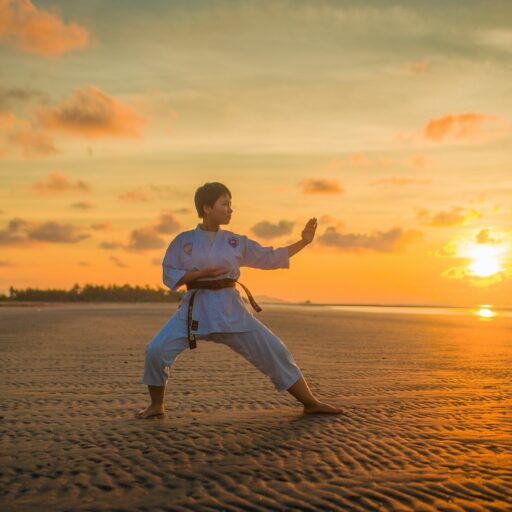
“Kata is movement.” This phrase from the “First Video” perspective we mentioned earlier hits home. The video argues that Okinawan Karate is essentially “The Original MMA,” where the movements of traditional forms (Kata) mirror the chaotic flow of modern cage fighting. It’s not about the style; it’s about the method of training.
The Okinawan Roots
Okinawa was a melting pot. It wasn’t just Karate; it was a blend of Chinese Kung Fu and native wrestling. This hybrid nature is exactly what made it so effective when adapted for MMA. The video we referenced highlights how traditional Kata contains takedowns, joint locks, and sweeps that look suspiciously like modern MMA techniques.
| Era | Perception of Karate in MMA | Key Fighters | Outcome |
|---|---|---|---|
| 190s | “Point Fighting” / Ineffective | Early practitioners | Often defeated by wrestlers |
| 20s | The “Karate Kid” Era | Lyoto Machida | Dominated with distance control |
| 2010s | The “Wonderboy” Revolution | Stephen Thompson | Redefined striking angles |
| 2020s | Integrated Hybrid | Michael “Venom” Page | Blending Karate with Muay Thai |
We’ve seen the shift firsthand at Karate MMA™. Students who used to be afraid of the cage now use their Karate footwork to dictate the pace of the fight. It’s not about abandoning tradition; it’s about evolving it.
🥋 The Striking Arsenal: How Traditional Karate Techniques Dominate the Cage
So, you think a gyaku-zuki is just a punch? Think again. In the hands of a modern MMA fighter, it’s a precision instrument designed to break guards and create openings. Let’s break down the specific techniques that have survived the transition from the dojo to the octagon.
The Reverse Punch (Gyaku-Zuki)
In traditional Karate, this is the bread and butter. In MMA, it’s a counter-striking weapon.
- The Mechanics: Unlike the looping overhand right of a boxer, the gyaku-zuki travels in a straight line. This makes it faster and harder to see.
- The MMA Application: Fighters use it to counter takedown attempts. As the opponent shoots in, the Karateka steps back and fires a straight punch to the chin. It’s the “stop-hit” of the cage.
The Front Kick (Mae Geri)
Forget the high, flashy kicks you see in movies. The MMA Mae Geri is a thrust, not a snap.
- Target: The solar plexus or the lead leg.
- Why it Works: It keeps the opponent at bay. If they try to close the distance, they get kicked in the gut. It’s the ultimate range-finder.
The Side Kick (Yoko Geri)
This is the stoper. When an opponent is charging, a well-placed side kick to the body or knee can halt their momentum instantly.
- The Secret: It’s not about power; it’s about timing. You don’t throw it when they are far away; you throw it when they are just about to enter your range.
The Spinning Back Fist (Ura Mawashi Geri)
Okay, this one is risky. But when it lands? Chaos.
- The Risk: You’re turning your back on the opponent. In MMA, that’s a recipe for a takedown.
- The Reward: If you bait them into a predictable attack, the spinning back fist can end the fight in a split second. We’ve seen it happen more times than we can count.
Pro Tip: Don’t just learn the technique; learn the context. A Mae Geri in a point-fighting match is different from a Mae Geri in a cage where the opponent can grab your leg.
🏆 Top 7 Karate-Inspired Fighters Who Redefined MMA
Who are the legends? Who proved that Karate isn’t just for old men in white gi? Here are the seven fighters who took the art form to the highest level. We’ve numbered these because they represent a specific evolution in the sport.
- Lyoto Machida: The “Dragon.” He didn’t just use Karate; he invented a new style of MMA. His elusive footwork and counter-striking made him a nightmare for opponents. He proved that you could win with defense first.
- Stephen “Wonderboy” Thompson: The “Karate Kid” of the modern era. His ability to control distance and land clean shots from angles no one else sees is unmatched. He’s a master of the suri-ashi (sliding footwork).
- Michael “Venom” Page (MVP): The “Mercenary.” He brought the flash of Karate to the UFC. His spinning kicks and unorthodox angles are a direct result of his Kyokushin background. He’s the poster child for “Karate is cool again.”
- Chuck Liddell: The “Iceman.” While known for his boxing, his early training in Kyokushin Karate gave him the toughness and the ability to take a punch that defined an era.
- Bas Ruten: The “Elvis.” A former kickboxer with a Karate foundation, he was one of the first to show that a striker could grapple effectively. He bridged the gap between striking and ground fighting.
- Georges St-Pierre (GSP): The “Rush.” While primarily a wrestler and striker, GSP incorporated Karate footwork and kicks into his arsenal, making him the most complete fighter of his generation.
- Anderson Silva: The “Spider.” His striking is a mix of Muay Thai and Karate. His use of distance management and the front kick to the body is pure Karate philosophy.
For more on these legends, check out our Fighter Profiles section.
🧠 The Mental Game: Why Karateka Have a Psychological Edge
It’s not just about the fists; it’s about the mind. Karate has always emphasized Zanshin (awareness) and Mushin (no mind). In the chaos of an MMA fight, these concepts are gold.
The Power of Zanshin (Awareness)
In a cage, you can’t afford to be distracted. Zanshin is the state of total awareness. It’s knowing where your opponent is, where their hands are, and where the cage wall is, all at once.
- The Benefit: Karateka are trained to maintain this awareness even after a strike. This prevents them from getting caught off guard by a takedown or a counter.
The Art of Mushin (No Mind)
This is the state of flow. When you’re not thinking about the technique, but just doing it.
- The Benefit: In high-pressure situations, thinking too much leads to hesitation. Mushin allows for instant reaction. It’s the difference between a slow, telegraphed punch and a lightning-fast counter.
Discipline and Resilience
Karate training is grueling. It teaches you to push through pain and fatigue. This mental toughness is crucial in MMA, where fights can go the distance and the last round is often the hardest.
Question: Can you really train your mind to be calm in the face of a 250-pound wrestler charging at you?
Answer: Yes, but only if you train the right way. Traditional dojos often focus on forms, but modern MMA training focuses on pressure testing. We combine the mental discipline of Karate with the physical stress of sparring.
🤔 Myth-Busting: Does Karate Actually Work Against Grapplers?
This is the big question. The internet is full of trolls saying “Karate is useless against BJJ.” Let’s set the record straight.
The Myth: “Karate is Just Point Fighting”
Reality: Modern Karate training in MMA is not point fighting. It’s full-contact, continuous sparring. The techniques are adapted to work in a grappling environment.
The Myth: “Karateka Can’t Grapple”
Reality: While traditional Karate doesn’t focus on ground fighting, modern MMA Karateka cross-train in wrestling and BJJ. They know how to defend takedowns and how to get back to their feet.
The Myth: “Karate is Too Slow”
Reality: Karate is explosive. The linear movements are designed for speed. When combined with MMA footwork, it’s one of the fastest striking styles in the cage.
The Verdict
Karate works against graplers, but only if the fighter has wrestling defense. A pure Karateka without grappling skills will get taken down. A Karateka with wrestling skills is a nightmare for a grapler.
Key Insight: The best fighters don’t rely one style. They blend them. Karate provides the striking, wrestling provides the defense, and BJJ provides the ground game.
🛡️ Defending the Takedown: Karate Footwork vs. Wrestling Pressure
If you can’t stop the takedown, you can’t strike. This is the golden rule of MMA. So, how does Karate footwork help?
The Suri-ashi (Sliding Footwork)
In traditional Karate, suri-ashi is used to maintain balance and move smoothly. In MMA, it’s used to evade takedowns.
- How it Works: Instead of stepping back (which invites a takedown), the Karateka slides laterally or at angle. This keeps the opponent off-balance and makes it hard for them to shoot.
The Kiba-dachi (Horse Stance)
While a static horse stance is a no-no in MMA, the concept of a wide, stable base is crucial.
- The Application: When defending a takedown, a wide stance makes it harder for the opponent to lift you. It’s about rooting yourself to the ground.
The Yori-ashi (Shuffling Step)
This is the shuffling step used to close distance or retreat. In MMA, it’s used to cut off the cage and prevent the opponent from escaping.
Practical Drills
- The Angle Drill: Practice moving at 45-degree angles to evade a simulated takedown.
- The Level Change: Practice dropping your level and shooting for a takedown while maintaining your Karate stance.
- The Sprawl: Combine the Karate stance with a quick sprawl to defend a takedown.
Warning: Don’t just practice these drills in the air. You need live resistance. Find a partner who will actually try to take you down.
🥊 Training Drills: Bridging the Gap Between Point Fighting and Full Contact
So, you’ve got theory. Now, how do you train it? Here are the drills we use at Karate MMA™ to bridge the gap.
Drill 1: The “No-Stop” Sparring
- Goal: Get used to continuous fighting.
- Method: Sparring partners agree to never stop the action, even after a hit. This mimics the flow of an MMA fight.
- Focus: Maintain distance and look for openings without waiting for a referee.
Drill 2: The Takedown Defense Circuit
- Goal: Improve takedown defense.
- Method: Partner shoots for a takedown. You defend using Karate footwork and then immediately counter with a strike.
- Focus: Speed and transition.
Drill 3: The “Kata to Cage” Drill
- Goal: Apply traditional techniques in a modern context.
- Method: Perform a Kata sequence, then immediately transition into a sparring scenario.
- Focus: Adaptability.
Drill 4: The Distance Game
- Goal: Master Mai.
- Method: One partner tries to close the distance, the other tries to keep them at bay using kicks and punches.
- Focus: Timing and range.
Pro Tip: Don’t forget to film your drills. Watching yourself is the best way to spot mistakes.
📊 Karate Styles in the Cage: Kyokushin vs. Shotokan vs. Goju-Ryu
Not all Karate is created equal. Different styles have different strengths and weaknesses in the cage.
| Style | Origin | Key Characteristics | MMA Suitability | Pros | Cons |
|---|---|---|---|---|---|
| Kyokushin | Japan | Full contact, body conditioning, low kicks | High | Toughness, powerful strikes, close-range fighting | Limited head movement, less emphasis on footwork |
| Shotokan | Japan | Linear, long-range, fast punches | Medium | Speed, distance control, explosive power | Static stance, less grappling defense |
| Goju-Ryu | Okinawa | Circular, breathing, close-range | Medium | Close-range power, grappling elements | Slower, less explosive |
| Wado-Ryu | Japan | Evasive, fluid, mixed with Jujutsu | High | Evasion, fluidity, grappling basics | Less power, requires high skill level |
Kyokushin: The Powerhouse
Kyokushin is known for its full-contact sparring. Fighters like Bas Ruten and Andy Hug came from this background. It’s great for developing toughness and power.
Shotokan: The Speedster
Shotokan is all about speed and distance. Fighters like Lyoto Machida and Stephen Thompson use Shotokan principles to control the fight from a distance.
Goju-Ryu: The Close-Range Fighter
Goju-Ryu focuses on close-range fighting and breathing. It’s great for clinch work and body shots.
Wado-Ryu: The Evasive Master
Wado-Ryu is known for its evasive footwork and fluid movements. It’s great for avoiding attacks and counter-striking.
Insight: The best fighters don’t stick to one style. They mix them. A Shotokan fighter might add Kyokushin body conditioning, or a Kyokushin fighter might add Wado-Ryu footwork.
👶 Is Karate the Best Starting Point for Aspiring MMA Fighters?
Should you start with Karate if you want to be an MMA fighter? The answer is yes, but with a caveat.
The Pros
- Discipline: Karate teaches discipline and respect.
- Striking: It provides a solid foundation in striking and footwork.
- Mental Toughness: It builds mental resilience.
The Cons
- Lack of Grapling: Traditional Karate doesn’t teach grapling.
- Point Fighting: Some schools still focus on point fighting instead of full contact.
- Outdated Techniques: Some techniques are not effective in MMA.
The Verdict
Karate is a great starting point, but it’s not enough on its own. You need to cross-train in wrestling and BJJ. If you start with Karate, make sure you find a school that adapts to MMA.
Advice: Don’t wait until you’re a black belt to start grappling. Start now. The sooner you learn to grapple, the better.
🎯 Quick Tips and Facts (Recap)
Let’s wrap up the main body with a quick recap of the most important points:
- ✅ Adapt or Die: Traditional Karate must be adapted for MMA.
- ✅ Distance is Key: Master Mai to control the fight.
- ✅ Grapling is Mandatory: You can’t be a complete fighter without it.
- ✅ Mental Toughness: Zanshin and Mushin are crucial.
- ✅ Cross-Train: Don’t rely one style.
🏁 Conclusion
So, where does this leave us? Is Karate dead in the world of MMA? Absolutely not. In fact, it’s more relevant than ever. The evolution of Karate from the quiet dojos of Okinawa to the roaring crowds of the UFC is a testament to its adaptability and effectiveness.
We’ve seen fighters like Lyoto Machida and Stephen “Wonderboy” Thompson redefine the sport with their Karate-inspired styles. They proved that distance, timing, and explosive power are just as important in the cage as they are in the dojo.
But let’s be clear: Karate alone is not enough. To succeed in modern MMA, you need to blend your Karate with wrestling, BJJ, and Muay Thai. The best fighters are the ones who can adapt and evolve.
At Karate MMA™, we believe in the power of the hybrid. We take the best of Karate and combine it with the best of other martial arts to create a complete fighter. Whether you’re a beginner or a seasoned pro, there’s a place for you in our gym.
Final Thought: The next time you watch a fight, look for the Karate influences. You’ll see them in the footwork, the strikes, and the mindset. Karate isn’t just a martial art; it’s a way of life. And in the world of MMA, it’s a wining way.
🔗 Recommended Links
Ready to take your training to the next level? Here are some must-have resources and products:
- Books:
The Karate Nerd Manifesto by Jesse Enkamp: Amazon
Bunkai: The Hidden Meaning of Karate Kata by John McSweeney: Amazon - Gear:
MA Gloves: Amazon | Walmart | Everlast Official
Shin Guards: Amazon | Walmart | Venum Official
Mouthguards: Amazon | Walmart | Shock Doctor Official
❓ FAQ
Are there any notable MMA fighters who have successfully incorporated Karate into their fighting style?
Yes, absolutely. Lyoto Machida, Stephen “Wonderboy” Thompson, and Michael “Venom” Page are the most prominent examples. They’ve all used Karate principles to dominate the octagon.
How have MMA fighters who come from a Karate background performed in high-level competitions?
They’ve performed exceptionally well. Machida won the UFC Light Heavyweight title, Thompson has challenged for the Welterweight title, and Page has become a fan favorite with his unique style.
What are the key differences between traditional Karate and the Karate used in MMA?
Traditional Karate often focuses on point fighting and forms, while MMA Karate focuses on full-contact sparring, takedown defense, and continuous flow.
Read more about “🥋 50+ Fresh Karate MMA Terms & Tactics (2026)”
How does Karate’s emphasis on discipline and mental toughness benefit MMA fighters?
It helps them stay calm under pressure, maintain focus, and push through fatigue. These mental traits are crucial in high-stakes fights.
Can Karate training alone prepare a fighter for the demands of modern MMA?
No. While it provides a strong striking foundation, it lacks grapling and takedown defense. You need to cross-train in wrestling and BJJ.
Read more about “🥋 Karate vs. MMA: The Ultimate Training Showdown (2026)”
What are the most effective Karate techniques used in MMA competitions today?
The reverse punch (gyaku-zuki), front kick (mae geri), and side kick (yoko geri) are the most effective. They’re used for distance control and counter-striking.
Read more about “🥋 20+ Martial Arts Styles: Your Ultimate Guide”
How has Karate influenced the development of modern MMA fighting styles?
It has introduced unique angles, explosive footwork, and distance management techniques that have become standard in modern MMA.
Read more about “🥋 What Does Karate Literally Mean? The Shocking Truth (2026)”
How effective is traditional karate in modern MMA?
Traditional Karate is effective if adapted. Pure point-fighting Karate is not effective, but adapted Karate is a powerful tool.
Read more about “🥋 7 Karate Evasive Techniques for MMA That Actually Work (2026)”
Which famous MMA fighters have a karate background?
Lyoto Machida, Stephen Thompson, Michael Page, Chuck Liddell, Bas Ruten, Georges St-Pierre, and Anderson Silva all have Karate backgrounds.
Read more about “🥋 7 Secrets to MMA Success with a Karate Base (2026)”
What are the best karate techniques for mixed martial arts?
The reverse punch, front kick, side kick, and spinning back fist are the best. They’re fast, powerful, and hard to see.
Read more about “🥋 5 Karate Defensive Maneuvers That Dominate MMA (2026)”
Why do many modern MMA fighters incorporate karate into their training?
Because it offers unique striking angles, explosive footwork, and mental discipline that other styles don’t provide.
Can a karate black belt win in an MMA fight without wrestling?
Unlikely. Without wrestling defense, a Karate black belt will get taken down and submitted. You need grapling skills to survive.
How has karate evolved to fit the rules of modern MMA?
It has evolved to include full-contact sparring, takedown defense, and continuous flow. The focus has shifted from forms to fighting.
Read more about “🥋 15 Karate Techniques That Dominate MMA (2026)”
What are the limitations of karate in a mixed martial arts context?
The main limitations are lack of grappling, static stances, and point-fighting mentality. These must be addressed to succeed in MMA.
Read more about “5 Hidden Disadvantages of Karate in MMA (2026) 🥋”
📚 Reference Links
- UFC Official Website: UFC.com
- International Karate Federation: WKF
- Jesse Enkamp (Karate Nerd): KarateByJesse.com
- Joe Rogan Experience: Joe Rogan Experience
- Michael “Venom” Page: MVP on Facebook
- Karate MMA™: Karate Techniques | Fighter Profiles | Fight Analysis | MA Training | Karate Belts