Support our educational content for free when you purchase through links on our site. Learn more
🥋 How Martial Arts Build Fitness & Discipline

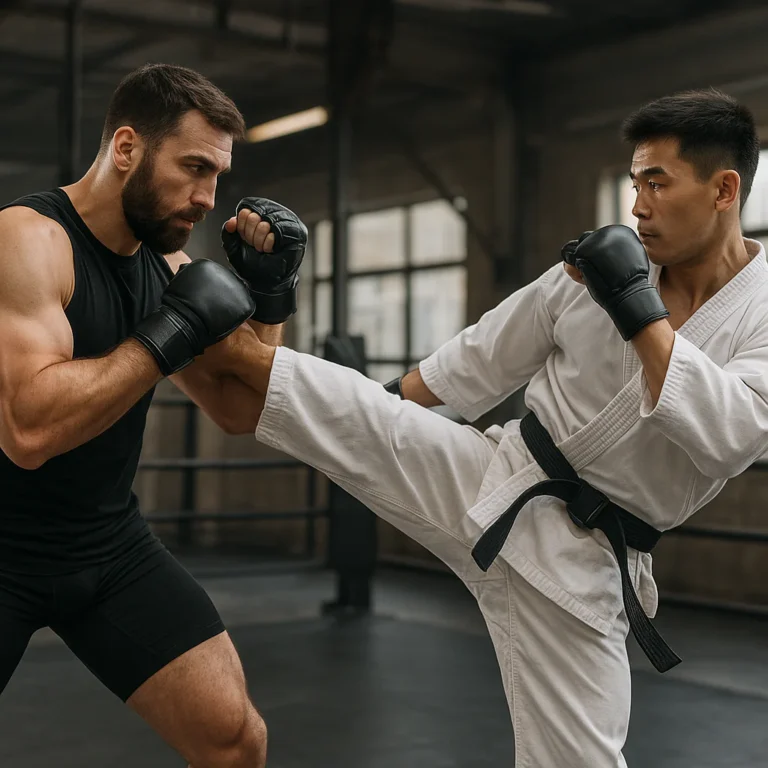
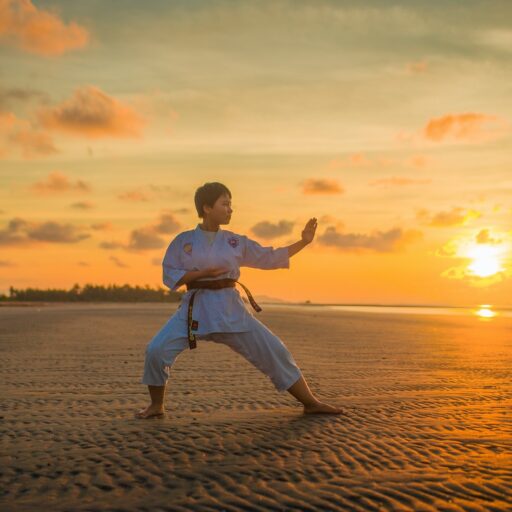
How do martial arts improve physical fitness and mental discipline? They combine cardiovascular training, functional strength, mobility, balance, technical repetition, and pressure-tested decision-making in one structured practice. You improve your body while learning to focus, control emotions, and keep working when a technique refuses to cooperate.
At Karate MMA™, we have watched beginners arrive convinced they are “too unfit” to train, then discover that the class itself becomes their fitness plan. A few weeks later, they are recovering faster between rounds, standing with better balance, and remembering combinations that initially looked like a code written by a mischievous librarian. 🥊
Martial arts can develop cardiovascular endurance, muscular stamina, flexibility, coordination, reaction time, confidence, patience, and self-control. The exact results depend on the style: boxing and Muay Thai tend to emphasize striking endurance, Taekwondo challenges kicking mobility and balance, while Brazilian Jiu-Jitsu develops grapling strength and calm problem-solving.
The biggest benefit is consistency. A workout you enjoy, a class where people know your name, and a skill that keeps offering new challenges are far easier to sustain than exercise built entirely around watching numbers crawl across a screen.
Key Takeaways
- Martial arts train the whole body: Classes can improve cardio, functional strength, flexibility, balance, coordination, agility, and muscular endurance.
- Mental discipline is practiced, not preached: Repetition, belt progression, technical correction, and accountability build focus and perseverance.
- Controlled pressure improves composure: Partner drills and appropriate sparing teach breathing, emotional regulation, timing, and decision-making.
- Different styles produce different benefits: Karate emphasizes precision and structure; Taekwondo develops kicking agility; boxing and Muay Thai build conditioning; grapling arts strengthen problem-solving and body control.
- Consistency beats intensity: Two or three well-coached sessions each week can produce meaningful progress without turning every class into a survival documentary.
- Safety and coaching matter: Choose a school that scales training, supervises contact, respects limitations, and teaches self-defense with restraint rather than aggression.
- The best martial art is one you will attend regularly: Enjoyment, community, progressive goals, and a positive learning environment make fitness sustainable.
Table of Contents
- ⚡️ Quick Tips and Facts
- How martial arts combine cardio, strength, mobility, and discipline
- The short answer: physical fitness and mental resilience in one practice
- 🥋 What Counts as Martial Arts Training?
- Traditional martial arts, combat sports, and self-defense systems
- Karate, Brazilian Jiu-Jitsu, Muay Thai, boxing, judo, and Taekwondo compared
- How martial arts classes work for kids, teens, adults, and older learners
- 📚 The History and Philosophy Behind Martial Arts Discipline
- From traditional dojo training to modern MMA fitness
- Respect, responsibility, humility, and self-control
- How belt ranking and structured progression encourage consistency
- 💪 10 Physical Fitness Benefits of Martial Arts
- 1. Improve cardiovascular endurance and aerobic fitness
- 2. Build functional strength and muscular endurance
- 3. Increase flexibility, mobility, and range of motion
- 4. Develop balance, coordination, and body awareness
- 5. Enhance speed, agility, reaction time, and footwork
- 6. Support healthy weight management and body composition
- 7. Strengthen the core, hips, and lower body
- 8. Improve posture, movement quality, and stability
- 9. Promote bone, joint, and general physical health
- 10. Make exercise more enjoyable and sustainable
- 🧠 10 Mental Discipline and Psychological Benefits
- 1. Build focus and concentration
- 2. Develop self-discipline and consistent habits
- 3. Strengthen confidence and self-esteem
- 4. Improve emotional regulation under pressure
- 5. Reduce stress and support mental wellbeing
- 6. Encourage patience, perseverance, and delayed gratification
- 7. Improve memory, learning, and problem-solving
- 8. Develop resilience after mistakes and setbacks
- 9. Increase mindfulness and mind-body connection
- 10. Create a healthy outlet for energy and frustration
- 🔥 How Martial Arts Improve Physical Fitness Step by Step
- Warm-ups, calisthenics, and conditioning drills
- Technique practice, pad work, bag work, and partner drills
- Sparing, rolling, and interval-style training
- Cooldowns, stretching, breathing, and recovery
- Why martial arts training feels different from a standard gym workout
- 🎯 How Martial Arts Develop Mental Discipline
- Attention, composure, and decision-making under pressure
- Turning long-term goals into small daily wins
- Learning through repetition, correction, and accountability
- Why controlled discomfort can build confidence
- 👧 Martial Arts for Children and Teens
- Age-appropriate fitness, focus, and behavior benefits
- Building confidence without encouraging aggression
- What parents should look for in a positive learning environment
- School performance, social skills, and healthy routines
- 🧑 Martial Arts for Adults and Older Practitioners
- Beginer-friendly training for busy schedules
- Low-impact options and adaptations for different fitness levels
- Training safely with previous injuries or health conditions
- Why adults use martial arts for stress relief and personal growth
- 🥊 Choosing the Right Martial Art for Your Fitness and Discipline Goals
- Karate for technique, coordination, confidence, and structure
- Taekwondo for kicking skills, agility, and flexibility
- Brazilian Jiu-Jitsu for grapling, problem-solving, and composure
- Muay Thai and boxing for conditioning, timing, and mental toughness
- Judo and wrestling for balance, leverage, and functional strength
- MA training for varied conditioning and adaptable skills
- 🏫 Finding a Quality Martial Arts School or Dojo
- Instructor qualifications, coaching style, and safety standards
- Class structure, student-to-instructor ratio, and training intensity
- A respectful, inclusive, and positive learning environment
- Community values, family programs, and student support
- Questions to ask before signing up
- 🛡️ Safety, Injury Prevention, and Responsible Practice
- Common martial arts injuries and how to reduce risk
- Protective equipment, contact rules, and supervised sparing
- Warm-up, technique-first progression, and recovery days
- When to rest, modify training, or consult a healthcare professional
- Why martial arts should teach self-defense rather than aggression
- 🍎 Nutrition, Sleep, and Recovery for Martial Arts Fitness
- Hydration and fueling before and after class
- Protein, carbohydrates, and balanced meals for training
- Sleep, rest days, and avoiding overtraining
- Stretching, mobility work, and active recovery
- 📅 Building a Martial Arts Training Plan
- How often should you train to see results?
- A sample weekly schedule for beginners
- Combining martial arts with strength training and cardio
- Tracking progress beyond belt promotions
- Plateaus, motivation, and staying consistent
- 📊 Measuring Progress in Fitness and Mental Discipline
- Physical markers: endurance, strength, flexibility, and coordination
- Mental markers: focus, confidence, patience, and emotional control
- Fitness tests, training journals, and realistic milestones
- 💬 Common Myths About Martial Arts and Fitness
- Myth: You must already be fit to start
- Myth: Martial arts training always promotes violence
- Myth: Belt rank automatically proves physical ability
- Myth: More intensity always means better results
- Myth: Martial arts can replace every other form of exercise
- ❓ Questions to Ask Before Your First Class
- What should you wear and bring?
- Do you need previous experience or athletic ability?
- How much contact and sparing should beginners expect?
- How can you manage nerves and first-class anxiety?
- 🏆 Conclusion
- 🔗 Recommended Links
- ❔ FAQ
- 📖 Reference Links
⚡️ Quick Tips and Facts
Martial arts improve physical fitness and mental discipline by combining repeated movement, progressive resistance, cardiovascular intervals, technical problem-solving, and accountable practice. You are not merely throwing punches or memorizing kicks. You are teaching your body to move efficiently while teaching your mind to remain calm, attentive, and persistent.
At Karate MMA™, we see the same pattern every week: a new student arrives worried about being “out of shape,” then discovers that fitness improves almost as a side effect of learning something genuinely interesting. The class gives the workout a plot. Much better than staring at a treadmill while wondering whether time has stopped. 🥋
The short answer: physical fitness and mental resilience in one practice
A well-coached martial arts class may include:
- Cardiovascular conditioning: footwork, shadowboxing, pad rounds, sparing, and interval drills
- Strength and muscular endurance: stances, bodyweight exercises, clinch work, takedown practice, and repeated strikes
- Mobility and flexibility: hip rotation, kicking drills, dynamic stretching, and controlled ranges of motion
- Balance and coordination: changing stance, pivoting, blocking, striking, and recovering safely
- Mental discipline: listening, remembering combinations, correcting mistakes, and continuing when fatigue makes every technique feel personally insulting
- Emotional control: breathing, pacing, staying composed, and making decisions under pressure
The World Health Organization recommends regular physical activity because it supports cardiovascular health, muscular function, mental health, and overall well-being. Martial arts can contribute to those goals, but results depend on training frequency, class intensity, recovery, nutrition, and coaching quality.
| Training element | Physical adaptation | Mental skill developed | Typical examples |
|---|---|---|---|
| Footwork and movement | Endurance, agility, balance | Attention and timing | Stance changes, pivots, circle steps |
| Striking combinations | Coordination, speed, muscular endurance | Memory and precision | Jab-cross, reverse punch, kick combinations |
| Forms and kata | Mobility, posture, body control | Concentration and sequencing | Karate kata, Taekwondo pomsae |
| Grapling drills | Functional strength, grip, core stability | Problem-solving and composure | Escapes, positional control, controlled rolling |
| Pad and bag work | Cardiovascular fitness and power | Rhythm and focus | Focus mitts, heavy bag rounds |
| Sparing | Reaction speed and conditioning | Decision-making under pressure | Technical sparing, live drilling |
| Bowing, etiquette, and routines | None directly, but supports consistency | Respect and self-control | Dojo protocols, partner conduct |
How martial arts combine cardio, strength, mobility, and discipline
A typical class moves through several training zones:
- Raise body temperature. Light jogging, skipping, mobility, and dynamic movement prepare the joints and cardiovascular system.
- Rehearse fundamentals. Stances, guards, footwork, strikes, blocks, and defensive movements reinforce safe mechanics.
- Increase complexity. Students link techniques into combinations or respond to a partner’s movement.
- Add controlled intensity. Pad rounds, bag work, conditioning circuits, or sparing challenge the heart and muscles.
- Cool down and reflect. Breathing, stretching, and instructor feedback help students recover and retain lessons.
This layered format explains why martial arts can feel both athletic and educational. A conventional strength workout may isolate a muscle. Martial arts asks your legs, hips, trunk, eyes, hands, and decision-making system to cooperate at the same time.
For technique instruction and movement ideas, explore our Karate Techniques category. For broader conditioning strategies, our MA Training category offers additional training perspectives.
The first mystery: why does a technical class leave you exhausted?
Because the body is solving several problems simultaneously:
- Stabilizing the joints while moving
- Producing force from the floor through the hips and torso
- Decelerating safely after a strike or kick
- Maintaining posture while fatigued
- Processing visual and verbal information
- Adjusting distance and timing
- Recovering between bursts of effort
That combination creates a high neuromuscular demand. The class may not resemble a traditional run, yet your breathing rises because the work is intermittent and full-body.
Research indexed by the National Institutes of Health has examined martial arts and combat sports in relation to physical fitness, balance, cognition, and psychological well-being. The findings vary by style and study design, so we avoid promising that every class produces identical results. A gentle forms class, an intense Muay Thai session, and a technical Brazilian Jiu-Jitsu lesson are all martial arts, but they stress the body differently.
Quick facts worth remembering
- Skill quality matters more than chaos. Random exhaustion is not the same as productive training.
- Fitness improves progressively. Early gains often come from better coordination and efficiency before dramatic changes in muscle size or body weight.
- Mental discipline is trained behavior, not a personality type. You build it by showing up, listening, correcting, and repeating.
- Sparing is not required for every goal. Forms, pad work, partner drills, and conditioning can improve fitness without hard contact.
- Confidence should come from competence and judgment, not bravado.
- A good instructor scales the work. Beginners should not be thrown into advanced contact or punishing conditioning on day one.
- Recovery determines adaptation. Hard sessions without sleep, food, and rest can produce fatigue rather than progress.
🥋 What Counts as Martial Arts Training?
Martial arts training includes organized systems that teach movement, combat skills, physical conditioning, self-control, and often ethical conduct. Some emphasize striking, some grapling, some weapons, and some blend several ranges.
The label alone does not tell you the workout’s intensity. The class design does.
Traditional martial arts, combat sports, and self-defense systems
These categories overlap, but their goals can differ:
| Category | Main emphasis | Common training methods | Fitness profile |
|---|---|---|---|
| Traditional martial arts | Technique, forms, etiquette, personal development | Kata, basics, partner drills | Mobility, coordination, discipline |
| Combat sports | Performance under competitive rules | Sparing, rounds, conditioning, tactical drills | High cardiovascular and muscular demand |
| Self-defense systems | Awareness, avoidance, escape, practical responses | Scenario training, boundary setting, drills | Variable; often emphasizes decision-making |
| Mixed martial arts | Striking, wrestling, grapling, transitions | Pad work, wrestling, rolling, sparing | Broad full-body conditioning |
| Martial arts fitness classes | Exercise through martial arts movements | Shadowboxing, circuits, bag work | Cardio, coordination, calorie expenditure |
A traditional karate class may spend considerable time on stance, breathing, and technical precision. A boxing class may use repeated rounds on mitts and bags. A Brazilian Jiu-Jitsu class may create intense muscular fatigue even when the athletes remain on the ground.
None is automatically superior. The best choice matches your goals, temperament, access, and willingness to attend consistently.
Karate, Brazilian Jiu-Jitsu, Muay Thai, boxing, judo, and Taekwondo compared
| Style | Primary range | Fitness strengths | Mental discipline strengths | Potential drawback |
|---|---|---|---|---|
| Karate | Striking, distance management | Speed, coordination, agility, leg strength | Precision, posture, restraint, repetition | Some schools offer limited live resistance |
| Taekwondo | Kicking and long-range striking | Flexibility, balance, speed, cardiovascular conditioning | Focus, perseverance, memorization | High kicking volume may challenge tight hips or knees |
| Boxing | Punching and footwork | Cardio, shoulder endurance, timing, core rotation | Composure, rhythm, tactical awareness | Repetitive impact if coaching and equipment are poor |
| Muay Thai | Punches, kicks, knees, elbows, clinch | Full-body conditioning, power, endurance | Toughness, pacing, pressure management | Contact intensity can be demanding |
| Brazilian Jiu-Jitsu | Grapling and ground control | Grip, core, hips, isometric strength | Problem-solving, patience, calm under pressure | Joint and neck injuries are possible without safe habits |
| Judo | Throws, grips, pins | Balance, power, coordination, falling skills | Timing, courage, adaptability | Repeated falls require excellent instruction |
| Wrestling | Takedowns and control | Explosive strength, endurance, total-body conditioning | Relentlessness, tactical adjustment | Very physically demanding |
| MMA | All major combat ranges | Comprehensive conditioning | Adaptability and decision-making | Complexity and training load can be high |
Premier Martial Arts describes Taekwondo as a combination of kicking, punching, self-defense, physical fitness, respect, and self-control in its Taekwondo classes overview. That is a useful perspective, but it reflects a program provider’s educational and promotional viewpoint. Treat its benefits as realistic training goals, not guarantees.
How martial arts classes work for kids, teens, adults, and older learners
A responsible program adjusts:
- Instruction speed
- Contact level
- Exercise selection
- Equipment
- Class duration
- Partner matching
- Mobility expectations
- Communication style
For children, the priority should be age-appropriate coordination, confidence, listening, and safe movement. For adults, classes may emphasize stress relief, fitness, technical development, or self-defense. Older adults can benefit from balance, mobility, strength, and social connection, but instructors should modify jumping, falling, and high-impact drills when appropriate.
The American College of Sports Medicine provides broad physical-activity guidance, while medical clearance may be sensible for anyone with cardiovascular symptoms, significant joint problems, uncontrolled health conditions, or a long period of inactivity.
📚 The History and Philosophy Behind Martial Arts Discipline

Martial arts developed across many cultures as systems of combat, physical preparation, military training, sport, and personal cultivation. Karate has roots in Okinawan traditions shaped by Chinese and Japanese influences. Taekwondo developed in Korea. Judo emerged in Japan from older grapling systems. Boxing, wrestling, fencing, and other combat sports have their own histories and rule structures.
That history matters because training culture shapes behavior. A school that values courtesy and control will feel very different from a gym that treats every class like a punishment contest.
From traditional dojo training to modern MMA fitness
Modern martial arts schools often combine:
- Traditional etiquette
- Scientific conditioning
- Sport-specific tactics
- Injury-prevention practices
- Strength and mobility training
- Inclusive class structures
- Self-defense education
This evolution is not automatically a betrayal of tradition. It can be a useful refinement. We still bow, drill fundamentals, and respect the training space, but we also care about evidence-based warm-ups, proper recovery, and keeping beginners healthy enough to return next week.
For historical context and athlete perspectives, visit our Fighter Profiles and Fight Analysis and Breakdowns categories.
Respect, responsibility, humility, and self-control
Many schools teach values such as:
- Respect: treating training partners and instructors properly
- Responsibility: arriving prepared and caring for equipment
- Humility: accepting correction without defensiveness
- Self-control: using skill responsibly
- Perseverance: continuing through manageable difficulty
- Integrity: behaving consistently inside and outside class
The Granite YMCA describes martial arts as emphasizing “concentration, discipline, and respect,” while also highlighting strength, flexibility, coordination, and overall fitness in its martial arts program information.
That message aligns with our experience, with one qualification: values are taught through culture, not slogans. A wall poster cannot compensate for an instructor who humiliates students, encourages reckless contact, or treats beginners as disposable.
How belt ranking and structured progression encourage consistency
A belt system can make progress visible. Students work toward technical milestones rather than relying only on a bathroom scale or a stopwatch.
A healthy ranking system:
- Defines clear technical requirements.
- Gives students manageable goals.
- Rewards consistency and improvement.
- Encourages humility because every level introduces new challenges.
- Provides feedback from instructors.
- Creates a long-term reason to keep attending.
A belt is not a medical fitness test, a fighting guarantee, or a personality certificate. It represents progress within a particular school’s standards. Learn more about ranking structures in our Karate Belts and Rankings category.
💪 10 Physical Fitness Benefits of Martial Arts
1. Improve cardiovascular endurance and aerobic fitness
Martial arts usually alternate between short bursts of high effort and periods of technical recovery. That pattern can challenge the heart and lungs through:
- Shadowboxing rounds
- Footwork intervals
- Pad combinations
- Bag work
- Continuous forms
- Grapling scrambles
- Controlled sparing
- Conditioning circuits
A 2020 review published in the Journal of Sports Medicine and Physical Fitness examined combat-sport conditioning and highlighted the importance of both aerobic and anaerobic energy systems. In plain language, fighters need an engine for sustained activity and a turbocharger for sudden bursts.
Your first visible improvement may not be dramatic weight loss. It may be recovering faster between rounds, breathing more smoothly, and keeping your guard up when your shoulders begin negotiating a labor strike.
2. Build functional strength and muscular endurance
Martial arts strength is usually movement-based rather than machine-isolated. You may develop:
- Leg strength from stances, squats, sprawls, and takedowns
- Hip strength from kicking and changing levels
- Core endurance from bracing during strikes and grapling
- Shoulder endurance from maintaining guard and punching
- Grip strength from gi gripping, clinching, and controlling wrists
- Back strength from posture, pulling, and resisting force
However, martial arts alone may not maximize maximal strength or muscle hypertrophy. If that is your goal, add progressive resistance training using equipment such as Rogue Fitness barbells and racks or TRX suspension trainers, provided you learn proper technique.
Best approach: use martial arts for skill, conditioning, coordination, and functional endurance; use structured strength training when you need measurable increases in lifting strength.
3. Increase flexibility, mobility, and range of motion
Kicks, sprawls, pivots, stances, hip escapes, and defensive movement require usable mobility.
Martial arts may improve:
- Hip flexion and extension
- Ankle mobility
- Thoracic rotation
- Shoulder range of motion
- Hamstring tolerance
- Aductor mobility
- Dynamic balance
The key word is usable. Being able to force your leg high while cold is not the same as controlling that range safely. Good classes use gradual dynamic warm-ups, technical range, and progressive stretching.
Premier Martial Arts specifically identifies stretching and repeated kicking as tools for improving range of motion and supporting kicking mechanics. We agree with the direction, but flexibility gains still depend on frequency, anatomy, recovery, and individual limitations.
4. Develop balance, coordination, and body awareness
A martial artist must control the body while:
- Standing one leg
- Rotating the hips
- Shifting weight
- Changing direction
- Seeing a target
- Protecting the head
- Recovering after a missed technique
That is a coordination puzzle with consequences. If your feet, hips, shoulders, and eyes disagree, the technique becomes a group project nobody prepared for.
Forms, kata, pomsae, and partner drills encourage proprioception, which is your awareness of body position and movement. Balance training is especially relevant for older adults, although all practice should be scaled appropriately. The National Institute on Aging includes balance activities among important components of physical activity for older adults.
5. Enhance speed, agility, reaction time, and footwork
Speed is not simply moving fast. Effective martial arts speed includes:
- Recognizing a cue
- Selecting an appropriate response
- Initiating movement
- Coordinating the technique
- Returning to a safe position
Reaction drills, partner cues, mitt work, and sparing develop this chain. Beginners often believe they are slow when the real issue is uncertainty. As technique becomes familiar, the decision becomes quicker and movement becomes cleaner.
Our coaching rule is simple: accuracy before velocity, posture before power, and control before intensity. Fast mistakes are still mistakes, just with better marketing.
6. Support healthy weight management and body composition
Martial arts can contribute to energy expenditure and weight management by making regular exercise more engaging. The Centers for Disease Control and Prevention notes that physical activity supports health and can help with weight management when paired with appropriate nutrition.
Still, no class can outvote eating patterns indefinitely. Weight change depends on:
- Total energy intake
- Training frequency
- Session intensity
- Sleep
- Stress
- Genetics
- Medication and health conditions
- Long-term adherence
A martial arts class may help because people are often more willing to attend an enjoyable session than a workout they dread. Consistency beats theoretical perfection.
7. Strengthen the core, hips, and lower body
Strikes begin from the floor. Even a hand technique involves stance, ground pressure, hip rotation, trunk control, and recovery.
Core and lower-body demands appear in:
- Horse stances
- Front stances
- Lunges
- Kicks
- Takedown defense
- Bridges
- Hip escapes
- Sprawls
- Clinch positions
- Rotational medicine-ball work
The core is not merely abdominal appearance. It helps transfer force and stabilize the spine while the limbs move. That said, pain is not proof of effective training. Persistent back, hip, or knee pain deserves assessment rather than heroic denial.
8. Improve posture, movement quality, and stability
A strong stance teaches:
- Neutral spinal alignment
- Efficient weight distribution
- Soft knees
- Stable foot contact
- Relaxed shoulders
- Controlled breathing
- Awareness of distance
These qualities can improve general movement, but martial arts instructors are not automatically physical therapists. If you have a diagnosed condition, seek individualized guidance from a qualified healthcare professional.
9. Promote bone, joint, and general physical health
Weight-bearing activity and resistance exercise can support musculoskeletal health. The National Osteoporosis Foundation discusses weight-bearing and muscle-strengthening activities as part of bone-health strategies.
Martial arts vary widely here:
- Forms and stance work: weight-bearing and coordination
- Bag and pad work: impact and upper-body conditioning
- Judo and wrestling: loading, gripping, and falling practice
- Brazilian Jiu-Jitsu: joint loading and isometric strength
- MA: broad physical demand but increased contact exposure
Progressive loading can beneficial; uncontrolled loading can be harmful. The difference is coaching, preparation, technique, and sensible intensity.
10. Make exercise more enjoyable and sustainable
The most underrated fitness benefit is wanting to come back.
Martial arts offer:
- A social training environment
- Skill milestones
- Variety
- Immediate feedback
- A sense of identity
- Friendly challenge
- A clear reason to improve
At Karate MMA™, we have seen students attend through rain, fatigue, and busy schedules because they are curious about the next technique. That curiosity is powerful. The body improves because the mind keeps agreeing to participate.
🧠 10 Mental Discipline and Psychological Benefits
1. Build focus and concentration
Martial arts demand selective attention. You may need to:
- Listen to an instruction
- Watch a partner’s shoulders and hips
- Remember a sequence
- Monitor your breathing
- Maintain stance
- Respond to a cue
- Ignore distractions
The Granite YMCA says martial arts require students to listen carefully, follow routines, and remain focused while performing techniques. That is a practical description of how concentration is trained: not by wishing for focus, but by repeatedly returning attention to the task.
2. Develop self-discipline and consistent habits
Discipline is often misunderstood as feeling motivated every day. In training, discipline means:
- Scheduling practice.
- Arriving even when enthusiasm is low.
- Preparing equipment.
- Paying attention.
- Accepting correction.
- Practicing between classes.
- Resting when rest is the intelligent choice.
A belt promotion can reward the outcome, but discipline is built in ordinary classes where nobody is filming a dramatic montage.
3. Strengthen confidence and self-esteem
Confidence grows when you collect evidence that you can:
- Learn a difficult movement
- Handle manageable discomfort
- Speak up when confused
- Train with different partners
- Recover from mistakes
- Complete a demanding round
- Set and achieve realistic goals
This is earned confidence, not empty praise. It should also include the confidence to avoid fights, leave unsafe situations, and ask for help.
Premier Martial Arts connects progressive skill development with self-confidence and personal growth. That view is reasonable, though outcomes depend heavily on instructor behavior and the student’s experience. A supportive environment builds confidence; humiliation may build compliance, but it rarely builds healthy resilience.
4. Improve emotional regulation under pressure
A training partner may move unexpectedly. You may forget a combination. You may feel tired, embarrassed, or overwhelmed.
The class gives you a controlled setting to practice:
- Slow breathing
- Relaxed shoulders
- Delayed reaction
- Clear communication
- Tactical patience
- Reseting after mistakes
The goal is not to eliminate emotion. The goal is to prevent emotion from driving every decision.
5. Reduce stress and support mental wellbeing
Exercise can support mood and stress management. The American Psychological Association describes physical activity as a useful part of stress-management strategies.
Martial arts add several features that ordinary exercise may not:
- Focused attention
- Rhythmic breathing
- Social connection
- Skill mastery
- Physical release
- Structured boundaries
- A temporary break from screens and work
These benefits are not a substitute for mental-health care. If anxiety, depression, trauma symptoms, or panic are persistent or severe, consult a qualified professional.
6. Encourage patience, perseverance, and delayed gratification
Technical progress is uneven. One week, a hip escape clicks. The next week, it disappears as if it joined witness protection.
Students learn to:
- Repeat basics
- Tolerate slow progress
- Break skills into parts
- Practice without immediate reward
- Continue after imperfect performance
That process develops delayed gratification, a useful skill in education, work, and personal goals.
7. Improve memory, learning, and problem-solving
Martial arts involve several types of learning:
- Procedural memory: remembering how to move
- Spatial memory: understanding distance and position
- Working memory: holding combinations in mind
- Pattern recognition: noticing cues
- Problem-solving: selecting an appropriate response
Forms and combinations challenge memory. Grapling adds decision trees. Sparing adds uncertainty. The brain is not simply storing facts; it is learning to recognize patterns and act.
8. Develop resilience after mistakes and setbacks
A healthy class normalizes mistakes while maintaining standards.
The instructor might ask:
- What caused the error?
- Was the stance too narrow?
- Did the student rush?
- Was the distance wrong?
- Could the breathing improve?
- What smaller drill isolates the problem?
This turns failure into information. The American Psychological Association describes resilience as a process involving adaptation to challenge, not invulnerability.
9. Increase mindfulness and mind-body connection
Mindfulness in martial arts can mean noticing:
- Breathing rhythm
- Muscle tension
- Foot pressure
- Balance
- Distance
- Emotional response
- Attention drifting
A featured karate video presents four traditional mental states:
- Shoshin: beginner’s mind, approaching practice openly
- Mushin: “mind of no mind,” focused presence without unnecessary distraction
- Fudoshin: immovable mind, emotional steadiness under pressure
- Zanshin: continued awareness after an action
You can watch that perspective through the article’s featured video. We appreciate the metaphor, with one practical caveat: these ideas should support clear training behavior, not become mystical substitutes for technical practice. In our dojo, “beginer’s mind” means asking questions, “immovable mind” means breathing when rattled, and “lingering mind” means not admiring your punch while forgetting your defense.
10. Create a healthy outlet for energy and frustration
Pads, bags, footwork, and controlled drills can provide a constructive physical outlet. The crucial word is controlled.
Healthy martial arts training teaches you to:
- Release energy without targeting innocent people
- Separate practice from real-world aggression
- Communicate boundaries
- Stop when instructed
- Protect training partners
- Use skills responsibly
A school that glorifies anger or encourages students to “prove toughness” through reckless contact is waving a large red flag.
🔥 How Martial Arts Improve Physical Fitness Step by Step
Warm-ups, calisthenics, and conditioning drills
A responsible warm-up should prepare the body and the specific demands of the class.
A useful sequence may include:
- General movement: jogging, skipping, or light shadowboxing.
- Joint mobility: ankles, knees, hips, shoulders, and spine.
- Dynamic range: controlled leg swings, lunges, hip rotations, and arm movements.
- Technical rehearsal: low-intensity stances, guards, footwork, and basic strikes.
- Specific activation: partner movement, pad tapping, or grapling entries.
- Gradual intensity: faster combinations or short conditioning rounds.
Common conditioning drills include:
- Push-ups
- Squats
- Lunges
- Planks
- Mountain climbers
- Burpees
- Bear crawls
- Jump rope
- Medicine-ball throws
- Kettlebell movements
Equipment from brands such as Everlast, RDX, and Century Martial Arts can support home practice, but equipment cannot correct poor technique. Get coaching first, then buy the toys. We have all owned a piece of gear that looked heroic in the catalog and mostly collected dust.
Technique practice, pad work, bag work, and partner drills
Technique practice develops physical fitness through repetition with purpose.
Pad work
Pad work can improve:
- Accuracy
- Timing
- Distance
- Combination speed
- Cardiovascular conditioning
- Communication
The holder also trains by reading the striker, maintaining safe positioning, and providing useful targets.
Heavy-bag work
Bag training can build:
- Striking endurance
- Hip rotation
- Trunk stability
- Power mechanics
- Rhythm
But a heavy bag does not move, defend, or provide feedback. It is excellent for certain qualities and useless for others. Do not mistake loud impact for technical mastery.
Partner drills
Partner work adds:
- Distance judgment
- Timing
- Adaptation
- Tactile feedback
- Safe defensive reactions
The best partner is not the person trying to win every drill. It is the person helping both athletes learn.
Sparing, rolling, and interval-style training
Sparing and rolling introduce uncertainty. This can elevate both physical and mental demand, but intensity should be graduated.
A sensible progression might look like:
- Cooperative movement.
- Prearranged responses.
- Limited-target sparing.
- Positional grapling.
- Light technical sparing.
- More open rounds for experienced students.
Beginners do not need hard sparing to gain fitness. Technical rounds can develop conditioning, timing, and composure while reducing unnecessary risk.
The Association of Boxing Comissions and Combative Sports and governing bodies individual sports provide rules and safety frameworks, but standards vary by location. Ask your gym how it handles concussion symptoms, supervision, protective gear, and return-to-training decisions.
Cooldowns, stretching, breathing, and recovery
Cooldowns may include:
- Light movement
- Nasal breathing
- Gentle mobility
- Static stretching
- Hydration
- Instructor feedback
- Training notes
Stretching after class can feel pleasant, but it is not a magic injury shield. Injury risk reduction depends on comprehensive preparation, technical skill, load management, sleep, and medical care when necessary.
Why martial arts training feels different from a standard gym workout
A gym session often allows you to control the environment completely. Martial arts adds:
- A moving target
- A partner
- Timing
- Pressure
- Unpredictability
- Technical consequences
- Social accountability
That makes the workout cognitively demanding. You may finish tired not only because your legs worked, but because your brain spent an hour making decisions.
🎯 How Martial Arts Develop Mental Discipline
Attention, composure, and decision-making under pressure
The training loop is straightforward:
- Observe the situation.
- Identify the cue.
- Select a response.
- Execute with control.
- Recover to a safe position.
- Review what happened.
- Repeat with an adjustment.
This loop develops calm action, not just memorization. In sparing, the perfect technique may not appear. You learn to choose a useful option instead of freezing while searching for a cinematic one.
Turning long-term goals into small daily wins
Long goals become manageable when divided into behaviors:
- Attend two or three classes each week.
- Practice one stance for five minutes.
- Improve one combination.
- Hold guard for another round.
- Perform a cleaner breakfall.
- Ask one technical question.
- Record one lesson after class.
This approach resembles behavior strategies recommended in public-health guidance from the CDC: build regular activity into life rather than waiting for motivation to arrive wearing a cape.
Learning through repetition, correction, and accountability
Repetition works best when it is:
- Accurate enough to reinforce useful mechanics
- Frequent enough to build familiarity
- Varied enough to prevent rigid responses
- Challenging enough to require attention
- Supported by feedback
Mindless repetition can groove errors. That is why quality instruction matters. At Karate MMA™, we often reduce speed, isolate one detail, then rebuild the combination. It feels slower for thirty seconds and saves months of practicing the wrong movement.
Why controlled discomfort can build confidence
Training discomfort can teach you:
- Fatigue is manageable
- Breathing affects performance
- Mistakes are survivable
- You can ask for a pause
- You can continue after resetting
- You have more capacity than you assumed
But controlled discomfort is not the same as pain, fear, or humiliation. Good coaching expands your capacity without gambling with your health.
👧 Martial Arts for Children and Teens
Age-appropriate fitness, focus, and behavior benefits
Children may develop:
- Gross-motor coordination
- Balance
- Agility
- Listening skills
- Body awareness
- Confidence
- Patience
- Turn-taking
- Respect for boundaries
The Granite YMCA presents martial arts as a structured way to build strength, flexibility, coordination, fitness, and mental discipline for beginner and intermediate participants. Its offerings vary by branch and season, which is a reminder that parents should inspect the actual class rather than relying on a generic program label.
Building confidence without encouraging aggression
A strong youth program teaches:
- Avoiding unnecessary conflict
- Using words and seeking adult help
- Respecting personal space
- Following safety instructions
- Controlling techniques
- Stopping immediately on command
- Understanding that skill creates responsibility
A child should leave class feeling more capable and more considerate, not eager to test techniques on classmates at recess.
What parents should look for in a positive learning environment
Look for:
✅ Instructors who explain and demonstrate clearly
✅ Appropriate partner matching
✅ Clean equipment and floors
✅ Clear rules about contact
✅ Permission-based physical corrections
✅ Encouragement without humiliation
✅ A visible safeguarding policy
✅ Progress based on skill and behavior, not attendance alone
✅ Adaptations for different abilities
Watch for:
❌ Excessive yelling used as entertainment
❌ Forced contact or unsafe throws
❌ Public shaming
❌ Promises that martial arts will “fix” every behavioral problem
❌ Pressure to buy unnecessary upgrades
❌ Unclear instructor qualifications
School performance, social skills, and healthy routines
Martial arts may support transferable habits such as listening, persistence, planning, and self-regulation. However, claims that training automatically raises grades should be treated cautiously. Academic outcomes depend on many factors.
A better promise is modest and practical: a structured class can give children repeated opportunities to practice attention, effort, and respectful interaction. Those are useful ingredients for school and home life.
🧑 Martial Arts for Adults and Older Practitioners
Beginner-friendly training for busy schedules
Adults often begin for one of four reasons:
- Fitness
- Stress management
- Self-defense
- A desire to learn something new
A good program can scale the same class through:
- Lower-impact footwork
- Reduced contact
- Shorter rounds
- Technical rather than maximal intensity
- Partner substitutions
- Mobility options
- Extra rest
The best schedule is the one you can repeat. Two moderate sessions every week are more useful than one heroic class followed by ten days of soreness and regret.
Low-impact options and adaptations for different fitness levels
Possible modifications include:
| Training challenge | Lower-impact alternative |
|---|---|
| Knee discomfort during jumping | Step-based footwork |
| Shoulder sensitivity | Reduced punching volume and lighter targets |
| Limited hip mobility | Lower kicks and controlled range |
| Balance concerns | Stable stance and support nearby |
| Back sensitivity | Avoid uncontrolled flexion and twisting |
| Low conditioning | Shorter rounds with longer recovery |
| Fear of contact | Forms, pads, drills, and non-contact classes |
Never hide a limitation from the instructor. A coach cannot modify what they do not know.
Training safely with previous injuries or health conditions
Consult a medical professional when appropriate, especially with:
- Chest pain or unexplained shortness of breath
- Recent surgery
- Uncontrolled hypertension
- Significant joint instability
- Neurological symptoms
- Repeated concussion history
- Severe dizziness
- Acute injury
The American College of Sports Medicine offers guidance on exercise preparticipation screening. Martial arts instructors can modify training, but they do not diagnose injuries.
Why adults use martial arts for stress relief and personal growth
Adults often appreciate that class creates a clean boundary around attention. For an hour, the question is not email, errands, or the meeting that should have been an email. It is whether your rear foot moved before your punch.
That focused simplicity can be restorative. Add social connection, skill progress, and physical exertion, and you get a compelling wellness routine.
🥊 Choosing the Right Martial Art for Your Fitness and Discipline Goals
Karate for technique, coordination, confidence, and structure
Karate can be a strong choice if you value:
- Structured fundamentals
- Striking technique
- Forms and combinations
- Distance management
- Discipline and etiquette
- Progressive belt goals
- Coordination and balance
Ask whether the school includes partner drills and controlled sparing if you want realistic timing. Some programs emphasize traditional forms; others emphasize sport kumite, practical self-defense, or fitness.
Taekwondo for kicking skills, agility, and flexibility
Taekwondo often emphasizes:
- Kicking speed
- Hip mobility
- Balance
- Dynamic footwork
- Forms or pomsae
- Sport sparing
- Discipline and perseverance
Premier Martial Arts describes Taekwondo as a full-body activity supporting cardiovascular fitness, strength, flexibility, coordination, and self-control. The benefits are plausible, but the actual experience depends on the school’s class structure and contact rules.
Brazilian Jiu-Jitsu for grapling, problem-solving, and composure
Brazilian Jiu-Jitsu may suit people who enjoy:
- Close-range technical problem-solving
- Positional learning
- Leverage over brute force
- Controlled rolling
- Grip and core training
- Strategic patience
It can be physically demanding despite limited running. Isometric effort, gripping, bridging, framing, and repeated transitions tax the body in ways beginners often underestimate.
Muay Thai and boxing for conditioning, timing, and mental toughness
Boxing and Muay Thai commonly provide vigorous conditioning through:
- Rounds
- Pad work
- Bags
- Footwork
- Defensive movement
- Partner drills
- Sparing
They suit students who enjoy rhythm, striking, and measurable round-based progress. Verify the gym’s approach to head contact, protective equipment, technical sparing, and beginner supervision.
Judo and wrestling for balance, leverage, and functional strength
Judo and wrestling develop:
- Takedown mechanics
- Grip strength
- Balance disruption
- Explosive movement
- Body control
- Falling skills
- Competitive resilience
They can be excellent for functional fitness, but safe falling instruction is essential. A beginner should not be launched into advanced throws before learning how to land.
MMA training for varied conditioning and adaptable skills
MA combines:
- Boxing
- Kickboxing
- Wrestling
- Brazilian Jiu-Jitsu
- Clinch work
- Ground control
- Transitional movement
It offers broad physical and mental challenges, but the learning curve is steep. Choose a gym that separates fundamentals from advanced sparing and does not treat concussion risk like a character-building exercise.
🏫 Finding a Quality Martial Arts School or Dojo
Instructor qualifications, coaching style, and safety standards
Ask:
- What certifications or lineage does the instructor hold?
- Do instructors maintain current first-aid or CPR training?
- How are beginners introduced to contact?
- What happens after a suspected concussion?
- How are children supervised?
- Are instructors insured?
- How does the school handle harassment or bullying?
- Are trial classes genuinely low pressure?
Credentials matter, but observation matters too. Watch how the instructor speaks to the least experienced student.
Class structure, student-to-instructor ratio, and training intensity
A well-run class usually has:
- A clear opening and warm-up.
- A technical focus.
- Drills with useful feedback.
- Conditioning appropriate to the group.
- A controlled close and cooldown.
Large classes can work with assistant coaches and strong organization. Small classes are not automatically better if the instruction is vague.
A respectful, inclusive, and positive learning environment
The school should welcome different:
- Ages
- Body types
- Fitness levels
- Learning speeds
- Cultural backgrounds
- Gender identities
- Physical abilities
Respect is not softness. It is the foundation that allows challenging training to remain productive.
Community values, family programs, and student support
Community can improve adherence. Students are more likely to attend when they feel recognized and supported.
The Granite YMCA emphasizes caring, honesty, respect, responsibility, and an inclusive environment. We like those values, but we recommend testing the culture in person. Ask current students what happens when someone struggles, asks for a break, or cannot afford optional equipment.
Questions to ask before signing up
- Is the first class appropriate for complete beginners?
- How much contact is included?
- What protective equipment is required?
- Are uniforms mandatory immediately?
- How are belt promotions evaluated?
- Can students pause or modify training?
- Are adults and children separated?
- Are classes available year-round?
- What are the cancellation and membership terms?
- Is financial assistance available?
The Granite YMCA specifically notes that financial assistance is available for its programs. Policies vary by location, so ask directly rather than assuming.
🛡️ Safety, Injury Prevention, and Responsible Practice
Common martial arts injuries and how to reduce risk
Common problems can include:
- Sprains and strains
- Bruises
- Finger and toe injuries
- Shoulder irritation
- Knee pain
- Lower-back strain
- Skin infections in grapling settings
- Concussion and head trauma
Risk reduction includes:
- Learning technique gradually
- Warming up specifically
- Using suitable protective equipment
- Taping or protecting vulnerable areas when appropriate
- Keeping nails trimmed
- Cleaning mats and gear
- Communicating with partners
- Avoiding hard contact when fatigued
- Reporting symptoms promptly
The CDC’s concussion information advises removing an athlete from play when a concussion is suspected and seeking medical evaluation. Do not “tough out” neurological symptoms.
Protective equipment, contact rules, and supervised sparing
Depending on the style, equipment may include:
- Mouthguard
- Boxing gloves
- Shin guards
- Headgear
- Hand wraps
- Groin protection
- Chest protection
- Knee pads
- Elbow pads
- Wrestling or grapling ear protection
Brands such as Hayabusa, Fairtex, Venum, and RDX offer widely used equipment lines. Buy based on fit, intended use, and instructor guidance rather than logo prestige.
Warm-up, technique-first progression, and recovery days
A safe progression moves from:
- Simple to complex
- Slow to fast
- Cooperative to resistant
- Low contact to higher contact
- Short rounds to longer rounds
- Predictable drills to variable situations
If every session is maximal, the program is poorly designed. Adaptation requires stress plus recovery.
When to rest, modify training, or consult a healthcare professional
Stop or modify training for:
- Sharp pain
- Joint instability
- Loss of coordination
- Unusual dizziness
- Chest symptoms
- Severe shortness of breath
- Vision changes
- Confusion
- Persistent headache
- Numbness or weakness
Soreness is not a competition. Tell your instructor and seek medical advice when symptoms are concerning or persistent.
Why martial arts should teach self-defense rather than aggression
Effective self-defense usually begins with:
- Awareness.
- Avoidance.
- De-escalation.
- Creating distance.
- Leaving safely.
- Seeking help.
- Physical action only when necessary and lawful.
Technical ability without judgment creates more risk, not less. Responsible programs emphasize restraint and consequences.
🍎 Nutrition, Sleep, and Recovery for Martial Arts Fitness
Hydration and fueling before and after class
General principles:
- Drink fluids across the day.
- Avoid arriving dehydrated.
- Eat a familiar meal or snack before demanding sessions.
- Replace fluids after heavy sweating.
- Avoid experimenting with new foods before sparing or competition.
The National Athletic Trainers’ Association provides sports-nutrition resources, while individual needs vary by body size, climate, duration, and medical conditions.
Protein, carbohydrates, and balanced meals for training
A balanced diet typically includes:
- Protein for tissue repair
- Carbohydrates for training fuel
- Healthy fats for energy and general health
- Fruits and vegetables for micronutrients
- Fluids and electrolytes when appropriate
Supplements are not required for most recreational students. Food, sleep, and consistency do the heavy lifting.
Sleep, rest days, and avoiding overtraining
Sleep supports:
- Learning and memory
- Muscle recovery
- Hormonal regulation
- Mood
- Reaction time
- Immune function
The National Sleep Foundation provides age-based sleep guidance. If performance declines, irritability rises, resting heart rate feels unusually elevated, and soreness never clears, reduce training and seek advice.
Stretching, mobility work, and active recovery
Recovery options include:
- Walking
- Easy cycling
- Gentle mobility
- Light technical practice
- Breathing exercises
- Massage when appropriate
- Adequate nutrition
- Sleep
Recovery is not laziness. It is where the body turns training stress into adaptation.
📅 Building a Martial Arts Training Plan
How often should you train to see results?
For many beginners:
- Two classes weekly: enough to build familiarity and a habit
- Three classes weekly: often a strong balance of progress and recovery
- Four or more classes weekly: possible for experienced students with good recovery
- Daily hard training: usually unnecessary for recreational goals
The U.S. Department of Health and Human Services Physical Activity Guidelines recommend regular aerobic and muscle-strengthening activity, but martial arts sessions vary. A technical class may not replace every form of strength or aerobic work.
A sample weekly schedule for beginners
| Day | Session |
|---|---|
| Monday | Martial arts fundamentals, 60 minutes |
| Tuesday | Walk, mobility, or rest |
| Wednesday | Strength training, 30–45 minutes |
| Thursday | Martial arts technique and light conditioning |
| Friday | Rest or easy mobility |
| Saturday | Optional forms, bag work, or recreational activity |
| Sunday | Rest |
Adjust based on age, recovery, work, and health. The schedule should leave you eager to train again, not negotiating with stairs.
Combining martial arts with strength training and cardio
A balanced plan may include:
- Two or three martial arts classes
- One or two strength sessions
- One low-intensity aerobic session
- Daily light movement
- At least one genuine rest day
Avoid placing heavy lower-body strength training immediately before an intense kicking, wrestling, or sparing session.
Tracking progress beyond belt promotions
Track:
- Resting recovery between rounds
- Number of technical rounds completed
- Push-up or squat quality
- Flexibility measurements
- Balance time
- Attendance
- Sleep
- Mood
- Confidence under pressure
- Ability to remember combinations
- Reduced unnecessary tension
A journal can reveal progress that the mirror misses.
Plateaus, motivation, and staying consistent
When progress stalls:
- Reduce complexity.
- Review fundamentals.
- Ask for feedback.
- Change the drill, not the goal.
- Add recovery.
- Test one measurable quality.
- Train with a different partner.
- Remember why you began.
At Karate MMA™, some of our best breakthroughs happen after a student stops trying to perform the technique dramatically and starts performing it correctly.
📊 Measuring Progress in Fitness and Mental Discipline
Physical markers: endurance, strength, flexibility, and coordination
Use repeatable tests:
| Quality | Simple measure |
|---|---|
| Endurance | Recovery time after a fixed round |
| Muscular endurance | Quality repetitions in a set time |
| Balance | Single-leg stance with safe supervision |
| Mobility | Controlled range in a consistent movement |
| Coordination | Accuracy of a repeated combination |
| Speed | Time to complete a controlled drill |
| Work capacity | Number of technical rounds without form collapse |
Do not compare raw numbers across different bodies and styles. Compare yourself with your previous baseline.
Mental markers: focus, confidence, patience, and emotional control
Signs of progress may include:
- You listen before reacting.
- You recover faster after mistakes.
- You ask clearer questions.
- You can maintain technique while tired.
- You accept correction without shutting down.
- You recognize when to slow down.
- You remain respectful during competitive drills.
- You make safer decisions under pressure.
These are not easily captured by a belt, but they are often the most valuable outcomes.
Fitness tests, training journals, and realistic milestones
Set goals using a simple structure:
- Specific: attend two classes weekly
- Measurable: complete four technical rounds
- Achievable: use beginner-appropriate intensity
- Relevant: improve endurance or confidence
- Time-bound: reassess after six weeks
Record how you felt, not only what you completed. If the plan repeatedly produces pain or dread, the plan needs modification.
💬 Common Myths About Martial Arts and Fitness
Myth: You must already be fit to start
❌ False. You need only enough health to begin safely, plus a willingness to communicate limitations. A good beginner class scales intensity and teaches fundamentals.
Myth: Martial arts training always promotes violence
❌ False. Responsible training emphasizes restraint, awareness, de-escalation, and self-control. Problems arise when schools glorify aggression or use unsafe contact.
Myth: Belt rank automatically proves physical ability
❌ False. Belt standards differ by school and style. Rank reflects progress within a system, not universal athletic capacity or guaranteed fighting ability.
Myth: More intensity always means better results
❌ False. Intensity without technique, recovery, and progression can increase injury risk. Productive training is challenging and repeatable.
Myth: Martial arts can replace every other form of exercise
❌ Usually false. Martial arts can deliver excellent cardiovascular conditioning, mobility, coordination, and muscular endurance. You may still benefit from dedicated strength training, low-intensity aerobic work, and mobility practice.
❓ Questions to Ask Before Your First Class
What should you wear and bring?
Wear comfortable athletic clothing unless the school requires a uniform. Bring:
- Water
- Towel
- Hair tie if needed
- Clean indoor shoes if permitted
- Any required medical information
- A positive attitude and realistic expectations
Do not buy a complete equipment collection before attending. Ask the instructor what is necessary.
Do you need previous experience or athletic ability?
No. Beginner classes exist precisely because people begin somewhere. Fitness develops through participation. If the class cannot explain how it accommodates beginners, find another one.
How much contact and sparing should beginners expect?
It varies. Many schools begin with:
- Shadow practice
- Pads
- Forms
- Cooperative partner drills
- Positional grapling
- Limited-contact exercises
Ask specifically about head contact, takedowns, live rolling, and how students may opt out or modify drills.
How can you manage nerves and first-class anxiety?
Arrive early, tell the instructor you are new, observe the class, and focus one instruction at a time. Everyone looks awkward while learning. The experienced student who never makes mistakes is usually fictional, heavily edited, or hiding behind the equipment rack.
🏆 Conclusion

Martial arts improve physical fitness by combining cardiovascular intervals, functional strength, mobility, balance, coordination, speed, and movement quality. They develop mental discipline through repetition, attention, progressive goals, correction, controlled pressure, and responsible conduct.
Our confident recommendation is to choose a school where:
✅ Beginners are welcomed and coached carefully
✅ Training includes both technique and appropriate conditioning
✅ Contact is gradual and supervised
✅ Instructors model respect and self-control
✅ Progress is measured by skill, consistency, and behavior
✅ Classes are enjoyable enough to attend regularly
Karate may be your best fit if you want structured striking, precision, forms, coordination, and a clear progression system. Taekwondo may appeal if you enjoy dynamic kicking, flexibility, and agility. Boxing or Muay Thai can deliver vigorous striking conditioning, while Brazilian Jiu-Jitsu, judo, or wrestling offer grapling strength and pressure-tested problem-solving. MMA provides variety, but it demands careful coaching and sensible progression.
The first class may leave you tired. The second may leave you curious. Months later, the real transformation often appears in quieter ways: you breathe before reacting, stand with better balance, recover faster, and trust yourself because you have repeatedly done difficult things with control.
That is the answer to the question we opened with: martial arts work because they train the body and the decision-making mind together. The kick matters. So does the pause before it.
🔗 Recommended Links
For continued training, research, and equipment planning:
- Karate Techniques: Explore Karate Techniques at Karate MMA™
- Martial Arts Training: Read MA Training guides
- Fighter Profiles: Meet notable martial artists
- Fight Analysis: Study Fight Analysis and Breakdowns
- Karate Rankings: Learn about Karate Belts and Rankings
- Taekwondo classes: Premier Martial Arts Taekwondo Classes for Kids and Adults
- Training science: American College of Sports Medicine
- Physical-activity guidance: World Health Organization physical-activity resources
- Sleep guidance: National Sleep Foundation
Recommended books
- The Art of Peace by Morihei Ueshiba
- The Book of Five Rings by Miyamoto Musashi
- Karate-Do: My Way of Life by Gichin Funakoshi
- Championship Fighting by Jack Dempsey
- Judo Formal Techniques by Toshiro Daigo
Training gear mentioned
- Hayabusa protective equipment: Amazon | Hayabusa Official Website
- Fairtex Muay Thai equipment: Amazon | Fairtex Official Website
- Venum fight gear: Amazon | Venum Official Website
- RDX boxing and martial arts gear: Amazon | RDX Official Website
- Everlast boxing equipment: Amazon | Everlast Official Website
- Century Martial Arts equipment: Century Official Website
- Rogue Fitness strength equipment: Amazon | Rogue Official Website
- TRX suspension training: Amazon | TRX Official Website
❔ FAQ

How does consistent martial arts practice contribute to overall health and wellness?
Consistent practice supports wellness through regular physical activity, social connection, skill development, stress management, and improved self-efficacy.
What makes consistency more valuable than occasional intensity?
Two or three manageable sessions each week provide repeated exposure to movement and learning. Occasional maximal sessions may create soreness or injury without establishing a sustainable habit.
Can martial arts replace general exercise?
Martial arts can cover many fitness qualities, but some students still benefit from dedicated strength training, walking, aerobic conditioning, and mobility work.
In what ways does karate build self-confidence and resilience?
Karate builds confidence by providing evidence of progress. Students learn techniques, receive feedback, make mistakes, and gradually handle more complex tasks.
Why is this different from simply receiving encouragement?
Praise feels good, but competence creates durable confidence. Successfully completing a difficult drill or recovering after an error teaches, “I can respond to challenge.”
Can belt promotions alone build resilience?
Not necessarily. Resilience comes from the learning process, not the belt color. A healthy school treats promotion as recognition of progress rather than a substitute for continued effort.
Read more about “Judo: 12 Ways to Forge Your Body & Mind! 🥋”
How do martial arts improve flexibility and balance?
Martial arts use stances, kicks, pivots, controlled transitions, and dynamic mobility drills. These movements challenge joint range, single-leg stability, body awareness, and posture.
How quickly can flexibility improve?
Some people notice mobility changes within weeks, while others need months. Results depend on anatomy, frequency, recovery, and whether the stretching is controlled and consistent.
Can beginners with poor balance participate?
Yes. Instructors can reduce speed, lower the range of kicks, use stable stances, and provide support while coordination develops.
Read more about “🥋 How Karate Builds a Strong Body & Unbreakable Mind (2026)”
What role does discipline play in martial arts practice?
Discipline organizes training behavior. It helps students show up, listen, practice accurately, accept correction, respect partners, and make safe decisions.
Is discipline the same as strict obedience?
No. Healthy discipline includes judgment. A disciplined student should speak up about pain, ask questions, and refuse unsafe conduct.
How does discipline transfer outside the dojo?
Repeated habits may support time management, patience, focus, and perseverance elsewhere, although transfer is more likely when students consciously apply those lessons.
Read more about “🧠 Karate Philosophy & Mental Discipline in MMA: The 2026 Edge”
Can karate help reduce stress and anxiety levels?
Karate may help reduce stress through physical exertion, focused attention, breathing, social support, and a temporary break from daily demands.
Is karate a replacement for therapy?
No. Persistent anxiety, depression, trauma symptoms, panic, or severe distress deserve professional care. Martial arts can complement treatment but should not replace it.
What if sparing increases anxiety?
Choose a school offering forms, pad work, technical partner drills, or gradual contact. Communicate clearly with the instructor and never assume hard sparing is mandatory for every goal.
Read more about “Can Anyone Learn Karate? The Truth About Age & Ability 🥋”
How does martial arts training enhance mental focus and concentration?
Training requires students to remember sequences, listen for instructions, watch movement cues, control breathing, and adjust technique. Attention improves through repeated redirection toward the task.
Why can forms and kata help concentration?
They require sequencing, spatial awareness, rhythm, posture, and technical precision. The student must remember what comes next while controlling what is happening now.
Does sparing improve focus differently?
Yes. Sparing adds uncertainty, forcing students to interpret cues and make decisions while managing fatigue and emotion.
How does karate improve strength, flexibility, and cardiovascular fitness?
Karate develops strength through stances, bodyweight drills, impact practice, and repeated techniques. Flexibility improves through mobility and kicking work. Cardiovascular fitness is challenged by footwork, combinations, pad work, forms, and sparing.
Is karate enough for maximal strength?
Usually not. Add progressive resistance training if maximal strength or muscle growth is a major objective.
Is every karate class equally intense?
No. Class intensity depends on style, instructor, student level, class format, and whether the session emphasizes forms, technique, conditioning, or sparing.
Read more about “🥋 Master Karate Training at Home: The Ultimate 2026 Guide”
Can martial arts help with weight loss and overall physical conditioning?
Yes, martial arts can increase energy expenditure and make exercise enjoyable enough to sustain. Weight loss still depends on overall nutrition, activity, sleep, stress, and health factors.
What should someone prioritize first?
Prioritize regular attendance, manageable intensity, balanced meals, hydration, and sleep. Chasing exhaustion is less useful than building a routine.
Why might body weight stay the same while fitness improves?
Muscle, fluid balance, appetite, and body composition can change independently of scale weight. Track conditioning, measurements, clothing fit, and performance too.
How do martial arts develop mental discipline and emotional control?
Students repeatedly practice attention, breathing, patience, technical correction, and decision-making under controlled pressure. These experiences create opportunities to pause rather than react automatically.
Does martial arts eliminate anger?
No. It can teach students to recognize and manage emotional responses. Anger remains a normal human emotion; responsible behavior determines what happens next.
What instructor behaviors support emotional control?
Calm communication, clear boundaries, progressive intensity, respectful correction, and permission to pause all help students learn regulation.
Read more about “🥋 12 Life-Changing Benefits of Karate for Kids (2026)”
What are the benefits of martial arts training for children and teenagers?
Potential benefits include coordination, balance, fitness, focus, confidence, perseverance, respectful interaction, and self-control.
How should parents evaluate a youth program?
Observe the class. Look for safe contact rules, age-appropriate instruction, positive coaching, clean facilities, safeguarding policies, and instructors who correct without humiliating.
Can martial arts improve school grades?
It may support habits related to attention and perseverance, but academic improvement is not guaranteed. Avoid schools promising automatic behavioral or academic transformation.
Read more about “7 Surprising Benefits of Judo for Kids’ Focus & Character 🥋 (2026)”
How often should you practice martial arts to see improvements in fitness?
Many beginners benefit from two or three sessions per week. Noticeable improvements often appear after several weeks of consistent practice, although timelines vary.
What if you can train only once weekly?
One session is better than none. Add walking, mobility, or simple strength work at home if appropriate, and focus on steady attendance.
How long should a beginner’s class last?
Many classes run around 45–90 minutes, but effective training depends more on structure and intensity than duration.
Read more about “🥋 How Aikido Builds Fitness & Focus (2026)”
Which martial arts are best for building endurance, balance, and coordination?
Different styles emphasize different qualities:
- Boxing and Muay Thai: endurance, rhythm, timing, and footwork
- Taekwondo: kicking balance, flexibility, speed, and agility
- Karate: coordination, precision, stance control, and timing
- Judo and wrestling: balance disruption, grip strength, and whole-body conditioning
- Brazilian Jiu-Jitsu: core strength, grip endurance, body awareness, and problem-solving
- MA: broad conditioning across striking and grapling ranges
The best option is the class you enjoy, can attend consistently, and can practice safely.
Read more about “🥋 10 Martial Arts for Self Defense You Must Master in 2026”
Can martial arts training reduce stress and improve focus?
Yes, it can combine exercise, concentration, social connection, breathing, and skill mastery. Those ingredients may support stress management and attention.
Why might martial arts improve focus more than a repetitive workout?
The student must respond to changing cues and solve movement problems, which keeps attention engaged. However, some people find repetitive aerobic exercise equally effective for stress relief.
What if the class feels overwhelming?
Tell the instructor, reduce intensity, focus one skill, and consider a beginner or non-contact session. Feeling challenged is normal; feeling unsafe is not.
Read more about “What Is Judo Fighting Style? 🥋 Unlocking 12 Key Secrets of The Gentle Way”
Is martial arts training safe for older adults?
It can be, when classes are adapted. Low-impact forms, balance drills, mobility work, and controlled partner exercises may be appropriate. Medical guidance is sensible for health concerns or significant inactivity.
Read more about “🥋 The Ultimate Guide to 20+ Martial Arts Styles (2026)”
Do martial arts improve self-defense ability?
They can improve awareness, movement, confidence, and physical responses. However, no class guarantees safety. Effective self-defense also includes avoidance, de-escalation, escape, and understanding local laws.
Read more about “🥋 Judo vs. Karate: The Real Difference”
What equipment does a beginner actually need?
Usually comfortable clothing, water, and basic hygiene supplies are enough for the first class. Depending on the style, you may later need gloves, hand wraps, a mouthguard, shin guards, or a uniform. Ask the instructor before buying.
Read more about “🥋 What Is the Best Martial Art to Do? 12 Top Styles for 2026”
📖 Reference Links
- World Health Organization: Physical Activity
- Centers for Disease Control and Prevention: Physical Activity
- U.S. Department of Health and Human Services: Physical Activity Guidelines
- American College of Sports Medicine
- American College of Sports Medicine: Preparticipation Screening
- American Psychological Association: Exercise and Stress
- American Psychological Association: Resilience
- National Institute on Aging: Exercise and Physical Activity
- National Sleep Foundation
- National Athletic Trainers’ Association: Nutrition
- CDC Heads Up: Concussion Safety
- Association of Boxing Comissions and Combative Sports
- Premier Martial Arts: Taekwondo Classes for Kids and Adults
- The Granite YMCA: Martial Arts Programs
- Jeontu Taekwondo community announcement on Facebook
- Hayabusa Official Website
- Fairtex Official Website
- Venum Official Website
- RDX Sports Official Website
- Everlast Official Website
- Century Martial Arts Official Website