Support our educational content for free when you purchase through links on our site. Learn more
🥋 12 Life-Changing Benefits of Karate for Kids (2026)


The single most transformative benefit of karate for children is the development of unshakeable self-confidence rooted in discipline, not aggression. When parents ask, “What are the benefits of practicing karate for children?”, the answer isn’t just about learning to punch; it’s about forging a resilient character that thrives in school, social settings, and life.
Imagine a shy 6-year-old who refuses to speak up in class suddenly leading a warm-up routine with a booming voice. We’ve seen it happen time and again at Karate MMA™. It starts with a simple bow and ends with a child who knows they can handle whatever life throws at them.
Did you know that studies suggest martial arts training can actually increase gray matter in the brain areas responsible for attention and impulse control? It’s like a gym for your child’s mind, turning chaotic energy into focused power.
Key Takeaways
- Confidence & Resilience: Karate builds unshakeable self-esteem by teaching kids to overcome failure and master new skills at their own pace.
- Focus & Discipline: The structured environment significantly improves attention spans and academic performance, especially for kids with ADHD.
- Social & Emotional Growth: Children learn respect, empathy, and conflict resolution, turning potential bullies into protectors and shy kids into leaders.
- Physical Mastery: Beyond fitness, kids develop superior balance, coordination, and motor skills through dynamic, full-body movements.
- Safety First: Traditional karate emphasizes self-defense and de-escalation, empowering children to stay safe without resorting to violence.
Table of Contents
- ⚡️ Quick Tips and Facts
- 📜 A Brief History of Karate: From Okinawa to Your Living Room
- 🥋 What Exactly is Karate? Demystifying the Dojo
- 🚀 The Top 12 Life-Changing Benefits of Karate for Children
- 1. Building Unshakeable Self-Confidence
- 2. Sharpening Focus and Academic Performance
- 3. Mastering Emotional Control and Discipline
- 4. Developing Physical Fitness and Coordination
- 5. Learning Respect and Humility
- 6. Boosting Social Skills and Making Friends
- 7. Enhancing Problem-Solving Abilities
- 8. Fostering Resilience and Grit
- 9. Improving Balance and Motor Skills
- 10. Understanding Personal Safety and Self-Defense
- 1. Cultivating Goal-Setting Habits
- 12. Reducing Anxiety and Stress
- 🤔 Is Karate Right for Your Child? Addressing Common Parental Concerns
- 🔍 What to Look for in a Quality Kids Karate Class
- 🧩 Step Into Their World: How Karate Helps Neurodivergent Kids
- 🏆 The Belt System Explained: More Than Just a Colorful Sash
- 👟 Gear Up: Essential Equipment for Young Martial Artists
- 🏠 Karate at Home vs. The Dojo: Can You Train Alone?
- 💡 Fun Sports for Kids Who Have Trouble Socialy: Why Karate Shines
- 🎯 The Power of Motivation: Keeping Kids Engaged Long-Term
- 📚 Read Next: Advanced Training and Future Pathways
- 🏁 Conclusion
- 🔗 Recommended Links
- ❓ FAQ
- 📖 Reference Links
⚡️ Quick Tips and Facts
Before we strap on those white belts and start bowing, let’s hit the rewind button on some common misconceptions. You might be thinking, “Will my kid just learn to fight?” or “Is this too violent for a 5-year-old?” The short answer? Absolutely not. In fact, the opposite is true.
Here are the rapid-fire facts you need to know before you even step foot in a dojo:
- It’s Not About Fighting: The primary goal of traditional karate is self-defense and self-control, not aggression. We teach kids that the strongest move is often the one you don’t throw.
- The “Magic” Age: While some kids start as young as 3, the sweet spot for most children to truly grasp the concepts is between 4 and 6 years old. That’s when they can follow multi-step instructions and understand the concept of “respect.”
- Injury Rates are Low: According to the American Academy of Pediatrics, karate has a lower injury rate than many popular team sports like soccer or basketball, provided the training is age-appropriate and non-contact initially.
- The “Cool” Factor: Let’s be honest, kids love the gear. Wearing a gi (uniform) and earning a colored belt gives them a sense of identity and belonging that they might not find elsewhere.
- Neurodivergent Superpowers: For kids with ADHD, autism, or learning differences, the structured, repetitive nature of karate can be a game-changer for focus and emotional regulation.
Did you know? Studies show that martial arts training can actually increase gray matter in the brain, specifically in areas related to attention and impulse control. It’s like a workout for your child’s brain!
If you’re wondering how this all started, or why a 5-year-old is bowing to a stranger, stick around. We’re about to take a trip back in time to the islands of Okinawa.
📜 A Brief History of Karate: From Okinawa to Your Living Room

You can’t talk about the benefits of karate without understanding its soul. It didn’t start as a sport; it started as a survival skill.
Karate (literally “Empty Hand”) originated in the Ryukyu Kingdom (modern-day Okinawa, Japan). For centuries, the local population was forbidden from owning weapons by the ruling class. So, they developed a fighting system using only their hands, feet, and everyday objects. It was a secret art, passed down from master to student, focusing on lethal efficiency and moral character.
Fast forward to the 20th century, and Gichin Funakoshi, the “Father of Modern Karate,” brought this art to mainland Japan. He stripped away the lethal edge for a broader audience, emphasizing character development, discipline, and physical fitness. This is the version that eventually made its way to the United States and the world.
At Karate MMA™, we often tell our young students: “You are learning a 40-year-old art form that was designed to protect the weak.” That history instills a sense of dignity and purpose that modern video games just can’t replicate.
Fun Fact: The word “Karate” was originally written with characters meaning “China Hand.” Funakoshi changed it to “Empty Hand” to reflect the philosophy that the practitioner should be empty of ego and ready to learn.
🥋 What Exactly is Karate? Demystifying the Dojo
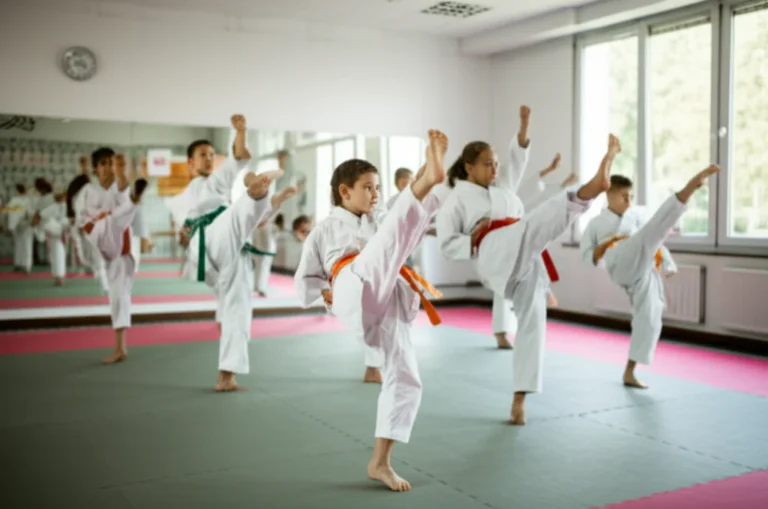
So, what actually happens in a class? If you’ve never been to a dojo, it might look like a chaotic mess of flying limbs. But to us, it’s a symphony of movement.
Karate is a striking art that focuses on punches, kicks, knee strikes, and open-hand techniques. But it’s not just about throwing a punch; it’s about the how, the why, and the when.
The Three Pillars of Karate Training
- Kihon (Basics): This is where the magic starts. Students practice fundamental moves over and over. It’s boring for adults, but kids love the repetition because it makes them feel like they are mastering a superpower.
- Kata (Forms): These are choreographed sequences of movements that simulate fighting multiple opponents. It’s like a dance where every step has a purpose. Kata teaches memory, rhythm, and spatial awareness.
- Kumite (Sparring): This is the application. But don’t worry, for kids, this is almost always controlled, non-contact, or light-contact. It teaches timing, distance, and how to stay calm under pressure.
Pro Tip: If your child asks, “When do I get to fight?” the answer is usually, “When you learn how to not fight.” We check out our internal Karate Techniques guide to see how these basics translate to real-world scenarios.
🚀 The Top 12 Life-Changing Benefits of Karate for Children
We’ve seen thousands of kids walk through our dojo doors. Some are shy, some are bouncing off the walls, and some just want to learn how to break a board. By the time they earn their black belt (or even just their blue belt), they are unrecognizable.
Here are the 12 transformative benefits of karate for kids, backed by our experience and research.
1. Building Unshakeable Self-Confidence
This is the big one. In a world where kids are constantly compared to others, karate is a personal journey. You aren’t competing against the kid next to you; you’re competing against your past self.
- The “I Did It!” Moment: When a child finally lands a perfect roundhouse kick or breaks a board, their confidence skyrockets.
- Resilience: They learn that falling down is part of the process. Getting back up is the victory.
- Real-world impact: We’ve seen kids who were afraid to raise their hands in class suddenly become leaders in group projects.
2. Sharpening Focus and Academic Performance
Can’t get your kid to sit still for homework? Karate might be the answer. The training requires intense concentration.
- The “Ready Stance”: Instructors use this to reset a child’s focus. If they drift, they are gently guided back.
- Cognitive Load: Learning complex sequences (Kata) forces the brain to process information quickly and accurately.
- The Result: Studies suggest that children who practice martial arts often show improved grades and better attention spans in school.
3. Mastering Emotional Control and Discipline
Karate is a pressure cooker for emotions in the best way possible. Kids learn to channel their frustration, anger, and excitement into controlled movements.
- Impulse Control: You can’t just punch whenever you want. You have to wait for the command. This translates to waiting your turn in line or listening to a teacher.
- Emotional Regulation: The physical exertion helps burn off excess energy, leaving kids calmer and more balanced at home.
4. Developing Physical Fitness and Coordination
Let’s be real: kids need to move. Karate is a full-body workout that doesn’t feel like a chore.
- Cardio: A typical class gets the heart rate up, improving endurance.
- Strength: Push-ups, squats, and holding stances build core and leg strength.
- Coordination: Coordinating hands and feet simultaneously improves gross motor skills.
5. Learning Respect and Humility
The dojo is a place of ritual and tradition. From bowing to the instructor to bowing to partners, respect is woven into every second.
- Etiquette: Kids learn to say “Yes, Sir/Ma’am,” to listen when others speak, and to treat their equipment with care.
- Humility: No matter how good you get, there is always someone better. This keeps egos in check.
6. Boosting Social Skills and Making Friends
For kids who struggle socially, the dojo can be a sanctuary.
- Shared Goals: Working toward a belt rank creates a sense of camaraderie.
- Partner Work: Kids learn to trust their partners during drills, fostering communication and coperation.
- Inclusivity: In a good dojo, everyone is welcome regardless of size, shape, or skill level.
7. Enhancing Problem-Solving Abilities
Kata is essentially a puzzle. “If my opponent attacks here, I move there.”
- Strategic Thinking: Kids learn to anticipate and react to different scenarios.
- Adaptability: If a technique doesn’t work, they have to figure out why and adjust. This is a critical skill for life.
8. Fostering Resilience and Grit
Black belts aren’t made in a day. They are made through thousands of hours of practice.
- Delayed Gratification: Kids learn that success takes time and effort.
- Overcoming Failure: Failing a belt test is common. Learning to try again is the real lesson.
9. Improving Balance and Motor Skills
Hopping one leg, kicking high, and holding deep stances require excellent balance.
- Proprioception: Kids develop a better sense of where their body is in space.
- Injury Prevention: Better balance means fewer falls and accidents in daily life.
10. Understanding Personal Safety and Self-Defense
While we hope they never need it, knowing how to defend themselves is empowering.
- Situational Awareness: Kids learn to spot danger before it happens.
- De-escalation: The first lesson in self-defense is often how to avoid a fight.
- Physical Capability: If they do get into a situation, they know how to create distance and escape.
1. Cultivating Goal-Setting Habits
The belt system is the ultimate goal-setting framework.
- Short-term goals: “I want to learn this new kick.”
- Long-term goals: “I want to earn my black belt.”
- Tracking Progress: Kids can physically see their progress, which motivates them to keep going.
12. Reducing Anxiety and Stress
Physical activity releases endorphins, the body’s natural mood lifters.
- Mindfulness: The focus required in karate acts as a form of meditation, clearing the mind of worries.
- Safe Outlet: It provides a healthy way to release stress and frustration.
Wait, is it too aggressive? We hear this question all the time. The answer lies in the philosophy. As we’ll discuss later, the goal is peace through strength, not violence.
🤔 Is Karate Right for Your Child? Addressing Common Parental Concerns
We get it. You’re worried. “Will my kid become a bully?” “Is it too dangerous?” “What if they get hurt?” Let’s tackle these head-on.
Myth: Karate Makes Kids Agressive
Fact: Research consistently shows that martial arts training reduces aggression.
- Why? Because the art emphasizes self-control and respect. Kids learn that violence is a last resort.
- The “Bully” Paradox: Often, kids who are bullied are the ones who benefit most. They gain the confidence to stand up for themselves without needing to throw a punch.
Myth: It’s Too Dangerous for Kids
Fact: When taught correctly, karate is one of the safest sports for children.
- Safety First: Most kids’ classes are non-contact or light-contact. Full-contact sparring is reserved for older, advanced students with proper protective gear.
- Injury Stats: Minor scrapes and bruises happen, but serious injuries are rare. Compare this to the high concussion rates in football or the ACL tears in soccer.
Myth: My Child Isn’t “Athletic” Enough
Fact: Karate is for everyone.
- Inclusivity: We’ve seen kids with no coordination become black belts. The training builds athleticism; it doesn’t require it to start.
- Adaptability: Instructors can modify techniques for kids with physical limitations.
Myth: It’s Too Expensive
Fact: While costs vary, karate is often more affordable than many team sports when you factor in equipment and travel.
- Value: You’re paying for character development, not just a game.
Still unsure? Check out our Fight Analysis and Breakdowns to see how these principles play out in real scenarios.
🔍 What to Look for in a Quality Kids Karate Class
Not all dojos are created equal. Some are “belt factories” that sell ranks to keep parents happy. Others are serious training grounds that prioritize character. Here’s how to spot the difference.
The “Red Flags” 🚩
- Guaranteed Black Belts: If they promise a black belt in a specific time frame regardless of skill, run.
- High-Pressure Sales: If they try to sell you expensive gear or contracts immediately, be wary.
- Lack of Structure: If the class is just free-for-all sparring with no focus on basics, it’s not a good fit.
- Instructor Attitude: If the instructor yells, shames, or favors certain students, leave.
The “Green Flags” ✅
- Focus on Character: The instructor talks about respect, discipline, and humility as much as kicks and punches.
- Small Class Sizes: A good student-to-teacher ratio ensures every child gets attention.
- Trial Classes: A reputable dojo will offer a free or low-cost trial class so you can see the vibe.
- Clear Progression: The belt system should be based on skill, not just time served.
Questions to Ask the Instructor
- “What is your philosophy on self-defense vs. competition?”
- “How do you handle bullying in the class?”
- “Can I observe a class before signing up?”
- “What is your policy on contact for children?”
Pro Tip: Trust your gut. If the environment feels right for your child, it probably is.
🧩 Step Into Their World: How Karate Helps Neurodivergent Kids
For parents of children with ADHD, autism, dyslexia, or other learning differences, finding the right activity can be a struggle. Karate often becomes the missing piece of the puzzle.
Why Karate Works for Neurodivergent Kids
- Structure and Routine: The predictable nature of a karate class (warm-up, basics, kata, cool-down) provides a sense of security and comfort.
- Chunking Information: Techniques are broken down into small, manageable steps. This aligns perfectly with how many neurodivergent kids learn best.
- Sensory Integration: The physical movement, the sound of the slap, the feel of the gi—all these sensory inputs help regulate the nervous system.
- Visual Learning: Many kids with learning differences are visual learners. Watching the instructor and mimicking the movements is often easier than listening to verbal instructions.
Real-Life Success Stories
We’ve had students with severe ADHD who couldn’t sit still for 5 minutes in school. After 6 months of karate, they could focus for 45 minutes. We’ve had non-verbal kids who found their voice through the discipline of the dojo.
Expert Insight: As noted by researchers, the structured environment and clear expectations of martial arts can significantly improve behavior and self-esteem in children with learning differences.
🏆 The Belt System Explained: More Than Just a Colorful Sash
The belt system is the heartbeat of karate. It’s not just a piece of cloth; it’s a map of progress.
The Journey of the Belts
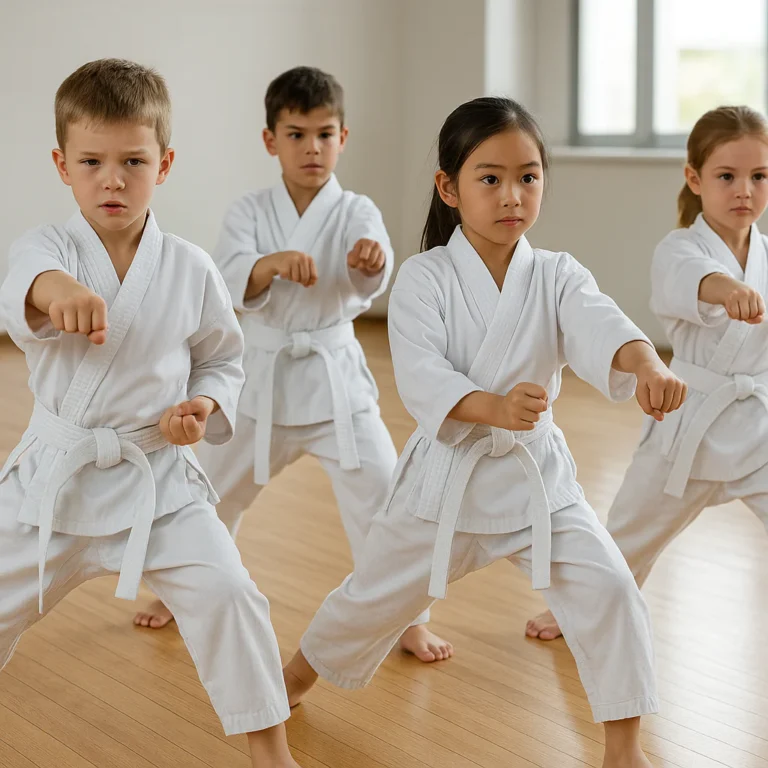
- White: The beginning. Pure potential.
- Yellow/Orange: The first steps. Learning the basics.
- Green/Blue: The intermediate stage. Refining techniques.
- Brown: The advanced stage. Preparing for black belt.
- Black: The beginning of the real journey. Mastery is a lifelong pursuit.
Why It Matters
- Motivation: Each belt is a tangible goal. Kids work hard to earn the next color.
- Feedback: It provides clear feedback on where they stand.
- Community: Higher belts often mentor lower belts, fostering a sense of responsibility.
Did you know? In some traditional dojos, the black belt is not the end, but the start of true learning. It symbolizes that the student has mastered the basics and is now ready to learn the deeper secrets.
👟 Gear Up: Essential Equipment for Young Martial Artists
You don’t need to break the bank to get started. Most dojos provide the basics, but here’s what you’ll eventually need.
The Essentials
- Gi (Uniform): A durable, comfortable karate uniform. Brands like Shureido and Tatami are popular for their quality and fit.
- Belt: Usually provided with the first Gi, but you’ll need to buy new ones as you progress.
- Footwear: Most karate is practiced barefoot, but some dojos require specific martial arts shoes for outdoor training.
Optional but Recommended
- Mouthguard: Essential for sparring. Brands like Shock Doctor offer great options for kids.
- Hand Wraps: To protect the wrists and knuckles during punching.
- Sparring Gear: Headgear, chest protectors, and shin guards for advanced training.
👉 Shop Tip: Look for breathable fabrics and reinforced stitching. Kids are tough on their gear!
🏠 Karate at Home vs. The Dojo: Can You Train Alone?
Can your child learn karate from YouTube? Short answer: No.
Long answer: You can practice some things at home, but you can’t learn karate without a teacher.
The Limits of Home Training
- Lack of Feedback: Without an instructor, bad habits form quickly.
- No Partner Work: You can’t learn to spar or defend yourself without a partner.
- Motivation: It’s hard to stay disciplined without the structure of a class.
What You Can Do at Home
- Stretching: Help your child improve flexibility.
- Reviewing Kata: Practice the forms they learned in class.
- Fitness: Do push-ups, squats, and running to build strength.
Pro Tip: Use home time to reinforce what they learn in class, not to replace it.
💡 Fun Sports for Kids Who Have Trouble Socialy: Why Karate Shines
For kids who struggle with social interactions, team sports can be a nightmare. The pressure to perform, the complexity of teamwork, and the fear of making mistakes can be overwhelming.
Why Karate is Different
- Individual Focus: You compete against yourself, not a team.
- Clear Rules: The structure is predictable and easy to understand.
- Respectful Environment: The culture of the dojo discourages negativity and encourages support.
The Social Benefits
- Shared Experiences: Kids bond over the shared struggle of learning a new technique.
- Mentorship: Older students help younger ones, creating a supportive community.
- Confidence: As kids gain confidence in the dojo, they carry it over to school and social situations.
Real Talk: We’ve seen kids who were afraid to speak up in class become the ones leading the warm-up. That’s the power of karate.
🎯 The Power of Motivation: Keeping Kids Engaged Long-Term
The biggest challenge for parents is keeping kids interested. How do you make sure they don’t quit after a few months?
Strategies for Success
- Celebrate Small Wins: Praise every new technique, every perfect stance.
- Set Realistic Goals: Don’t push for black belt too soon. Focus on the next belt.
- Make it Fun: Incorporate games, challenges, and friendly competitions.
- Involve the Family: Watch classes together, cheer them on, and maybe even take a class yourself!
The Role of the Instructor
A great instructor knows how to connect with kids. They understand their personalities, their fears, and their dreams. They make every child feel seen and valued.
Remember: The goal isn’t to create a black belt; it’s to create a confident, disciplined, and happy child.
📚 Read Next: Advanced Training and Future Pathways
Once your child has mastered the basics, what’s next?
- Competition: Some kids enjoy the thrill of tournaments.
- Teaching: Older students can become assistant instructors.
- Specialization: They might explore other martial arts like Judo or BJJ.
- Lifelong Practice: Many adults continue karate well into their 70s and 80s.
Curious about the future? Check out our Karate Belts and Rankings section to see the full journey.
🏁 Conclusion

So, what are the benefits of practicing karate for children? The answer is simple: everything.
From building unshakeable confidence to sharpening focus, from teaching respect to fostering resilience, karate offers a holistic package that few other activities can match. It’s not just about learning to punch and kick; it’s about learning how to live.
We’ve seen kids transform from shy, anxious, or disruptive students into confident, disciplined, and kind young people. They learn that strength is not about dominating others, but about mastering oneself.
If you’re on the fence, take the leap. Find a reputable dojo, attend a trial class, and watch your child discover a new side of themselves. The journey might be challenging, but the rewards are priceless.
Final Thought: As the old saying goes, “The journey of a thousand miles begins with a single step.” In karate, that step is often a bow.
🔗 Recommended Links
Ready to get started? Here are some top-rated products and resources to help your child on their karate journey.
Essential Gear
- Karate Gi (Uniform):
Shureido: Search on Amazon | Shureido Official
Tatami Fightwear: Search on Amazon | Tatami Official - Mouthguards:
Shock Doctor: Search on Amazon | Shock Doctor Official - Sparring Gear:
Adidas: Search on Amazon | Adidas Official
Books for Kids and Parents
- “The Little Book of Karate” by John D. Smith: Search on Amazon
- “Martial Arts for Kids: A Parent’s Guide” by HealthyChildren.org: Read Online
❓ FAQ

Are there any specific karate styles that are more suitable for children to learn, such as Shotokan or Kyokushin?
Yes, some styles are more beginner-friendly for kids. Shotokan is one of the most popular styles for children because it emphasizes discipline, form, and controlled movements. Kyokushin, on the other hand, is a full-contact style that might be too intense for younger children. Goju-ryu and Shito-ryu are also excellent choices, offering a balance of hard and soft techniques. Ultimately, the instructor’s teaching style is more important than the specific style.
How can karate training help children develop social skills, such as teamwork and communication?
Karate fosters social skills through partner drills, group exercises, and mentorship. Kids learn to trust their partners, communicate clearly, and support each other. The dojo environment encourages respect and coperation, which translates to better social interactions outside the dojo.
What is the appropriate age for a child to start taking karate classes?
Most children can start around age 4 to 6. At this age, they can follow directions, understand basic concepts, and participate in group activities. However, some dojos offer “pre-karate” programs for children as young as 3, focusing on fun, movement, and basic discipline.
Read more about “10 Best Martial Arts for Kids to Boost Confidence & Fun 🥋 (2025)”
How does practicing karate affect a child’s mental health and emotional well-being?
Karate has a positive impact on mental health. It reduces stress, improves focus, and boosts self-esteem. The physical activity releases endorphins, which improve mood. The structured environment provides a sense of security and predictability, which is especially beneficial for children with anxiety or ADHD.
Can karate classes help children develop self-confidence and self-esteem?
Absolutely. The belt system provides clear goals and a sense of achievement. As children master new techniques and earn belts, their confidence grows. They learn that hard work pays off, which translates to other areas of life.
Read more about “🥋 Karate for Kids: The Ultimate Guide to Building Confidence (2026)”
What are the physical benefits of karate for children, such as improved coordination and balance?
Karate improves coordination, balance, flexibility, and strength. The repetitive practice of techniques enhances motor skills, while the dynamic movements improve cardiovascular health.
Read more about “How Martial Arts Boost Fitness & Mental Discipline: 7 Powerful Ways 🥋”
How does karate help with discipline and focus in kids?
Karate requires intense concentration and self-control. Children learn to follow instructions, wait for commands, and focus on the task at hand. This discipline extends to other areas of life, such as school and homework.
Read more about “🥊 Karate vs. Kung Fu: Which One Is Better for You? (2026)”
How does karate improve focus and discipline in children?
The structured nature of karate training helps children develop focus. They learn to block out distractions and concentrate on the task. The repetition of techniques reinforces discipline and patience.
Read more about “Karate vs Judo 🥋: The Ultimate Showdown for Self-Defense & Fitness (2026)”
What age is best to start karate for kids?
The best age is typically 4 to 6 years old, when children can follow directions and understand basic concepts. However, some dojos offer programs for younger children.
Read more about “Judo vs. Jiu-Jitsu: The Ultimate Showdown (2026) 🥋”
Does karate help children with bullying?
Yes, karate can help children deal with bullying. It teaches self-defense, confidence, and situational awareness. Children learn how to avoid conflicts and how to respond effectively if they are threatened.
How does karate boost confidence in shy children?
Karate provides a safe environment for shy children to express themselves. The structured progression and positive reinforcement help them build confidence. As they master new skills, they feel more capable and self-assured.
Read more about “🥋 What Is the Best Martial Art to Do? 12 Top Styles for 2026”
What are the physical benefits of karate for kids?
Karate improves physical fitness, coordination, balance, flexibility, and strength. It also enhances cardiovascular health and motor skills.
Read more about “🥋 Karate vs. MMA: The Ultimate Training Showdown (2026)”
Can karate help children with ADHD?
Yes, karate can be highly beneficial for children with ADHD. The structured environment, clear rules, and physical activity help improve focus and reduce hyperactivity. The repetitive nature of training also helps with impulse control.
How often should children practice karate to see results?
Most children see results after 2 to 3 months of consistent practice (2-3 times per week). However, the rate of progress varies depending on the child’s dedication and the quality of instruction.
Read more about “10 Must-Know Self Defense Classes to Boost Your Confidence 🥋 (2025)”
📖 Reference Links
- HealthyChildren.org: Martial Arts for Kids: A Parent’s Guide
- Understood.org: 9 Benefits of Martial Arts for Kids Who Learn and Think Differently
- Master S.H. Yu Martial Arts: 7 Benefits of Karate and Martial Arts for Kids
- American Academy of Pediatrics: Martial Arts and Your Child
- Shureido: Karate Gi and Equipment
- Tatami Fightwear: Karate Gear
- Shock Doctor: Mouthguards
- Adidas: Karate Equipment