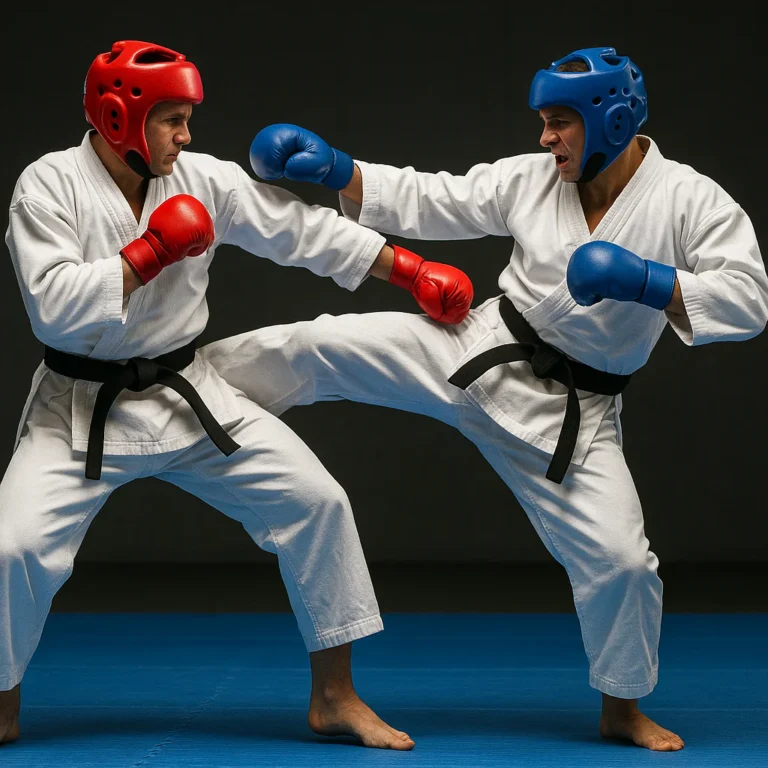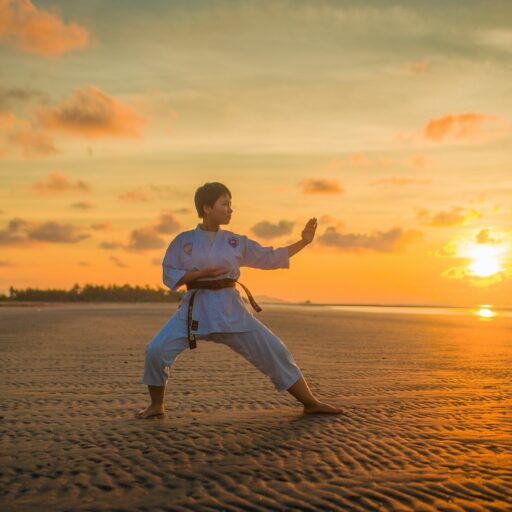
Support our educational content for free when you purchase through links on our site. Learn more
🥋 5 Karate Defensive Maneuvers That Dominate MMA (2026)


Yes, Karate defensive maneuvers in MMA are devastatingly effective, but only if you ditch the static blocks and embrace dynamic distance control. The secret isn’t standing your ground; it’s making your opponent miss by a millimeter and punishing them instantly.
We once watched a seasoned black belt get dismantled in sparring because he tried to block a heavy Muay Thai roundhouse with a traditional age-uke. His forearm shattered, and his ego took a hit. That’s the difference between dojo theory and cage reality.
Modern fighters like Lyoto Machida proved that a bladed stance and explosive footwork can neutralize even the most aggressive wrestlers. They don’t just survive; they dictate the pace of the fight.
The data supports this shift: fighters utilizing Karate-style distance management have a significantly higher takedown defense rate than those relying on traditional clinch-heavy styles. It’s not about being harder; it’s about being smarter.
Key Takeaways
- Distance is your best defense: Mastering ma-ai (fighting distance) is more effective than any physical block.
- Adapt your stance: Ditch deep, rooted stances for a bladed, upright position to defend takedowns.
- Redirect, don’t absorb: Use soft paries to deflect strikes rather than meeting force with force.
- Snap back and counter: The most effective defense is an immediate counter-strike after evading.
- Integrate grappling: Karate must be hybridized with sprawling and clinch work to survive in the octagon.
Table of Contents
- ⚡️ Quick Tips and Facts
- 📜 From Dojo to Octagon: The Evolution of Karate in MMA
- 🥋 The Core Arsenal: Essential Karate Defensive Maneuvers for MMA
- 1. The Bladed Stance: Mastering the Gyaku Dachi for Range Control
- 2. The Snap Back: Using Distance as Your Primary Shield
- 3. The High Guard Pary: Deflecting Heavy Strikes Without Clinching
- 4. The Low Block: Neutralizing Body Kicks and Takedown Entries
- 5. The Uchi Mata Defense: Countering the Leg Kick with a Leg Kick
- 🧠 Timing and Rhythm: Reading the Opponent’s Intent
- 🛡️ Countering the Grapple: Karate Strategies Against Takedowns
- 🥊 Famous Fighters Who Mastered Karate Defense in the Cage
- 🚫 Common Mistakes: When Traditional Karate Fails in MMA
- 🏋️ ♂️ Drills to Sharpen Your Defensive Reflexes
- 🎥 Video: Bobing & Weaving Demonstration
- 🌟 Experience the Benefits of Mixed Martial Arts
- 🏁 Conclusion
- 🔗 Recommended Links
- ❓ FAQ
- 📚 Reference Links
⚡️ Quick Tips and Facts
Before we step into the octagon and start getting our heads knocked around, let’s hit the pause button and drop some hard truths about Karate in MMA. You might think traditional blocks are a thing of the past, but the data tells a different story.
- Distance is King: The single most effective defensive tool in Karate isn’t a block; it’s ma-ai (fighting distance). If you can’t touch them, they can’t hurt you.
- The “Point” vs. “Full Contact” Myth: Traditional point-sparring teaches you to stop before impact. MMA requires you to survive through impact. The transition is where most beginners fail.
- Stance Adaptation: A deep, rooted zenkutsu-dachi (front stance) is a death sentence in MMA. You need a bladed, upright stance to defend takedowns.
- The Counter-Strike Rule: In Karate, a block is often the end of the exchange. In MMA, a block is merely the setup for a counter-strike or a takedown defense.
- Real-World Proof: Look at Lyoto Machida or Stephen “Wonderboy” Thompson. They didn’t win by standing still and blocking; they won by making opponents miss and punishing the error instantly.
For a deeper dive into how we adapt these ancient arts for the modern cage, check out our comprehensive guide on Karate MMA.
📜 From Dojo to Octagon: The Evolution of Karate in MMA
Karate didn’t just “jump” into MMA; it had to evolve, adapt, and sometimes, completely reinvent itself. In the early days of the UFC, traditional karateka were often mocked for their “static” stances and “point-fighting” mentality. They’d throw a perfect gyaku-zuki (reverse punch), stop, and wait for the referee to reset. Meanwhile, a wrestler would close the distance, shoot for a double-leg, and turn them into a human pretzel.
But the narrative shifted. We saw the rise of Lyoto Machida, a Shotokan black belt who treated the octagon like a moving chessboard. He didn’t just block; he used evasive footwork to make opponents miss by millimeters, then countered with surgical precision. This wasn’t just “Karate”; it was Karate MMA, a hybrid discipline where the principles of distance and timing met the chaos of grappling.
The evolution wasn’t linear. It required stripping away the “forms” (kata) that didn’t work under pressure and keeping the core mechanics that did. As noted by experts at Element YYC, the ability to maintain distance and swiftly escape clinches has become a valuable asset, transforming Karate from a “stand-up only” art into a versatile defensive system.
🥋 The Core Arsenal: Essential Karate Defensive Maneuvers for MMA
So, what actually works when the gloves come off and the takedowns start flying? We’ve broken down the essential maneuvers that bridge the gap between the dojo and the cage. These aren’t just blocks; they are defensive systems.
1. The Bladed Stance: Mastering the Gyaku Dachi for Range Control
Forget the deep, wide stances you see in Kata. In MMA, you need to be ready to move in any direction instantly. The bladed stance (often derived from gyaku-dachi but modified) is your first line of defense.
- Why it works: By turning your hips sideways, you present a smaller target. Your lead leg becomes a shield against leg kicks, and your rear leg is primed for explosive movement.
- The Trap: Many beginners keep their feet too flat. You need to stay on the balls of your feet to facilitate the “snap back” movement.
- MA Adaptation: Keep your hands high but loose. If you tense up, you’ll get tired in the first round.
2. The Snap Back: Using Distance as Your Primary Shield
This is the secret sauce of the “Karate Style” fighter. Instead of meeting force with force, you retreat with speed.
- Mechanism: As an opponent throws a jab, you don’t just step back; you explode backward with your rear foot, creating just enough space for their strike to fall short.
- The Counter: The moment they miss, you are already moving forward to counter. It’s a “hit and not get hit” philosophy.
- Common Mistake: Backing up in a straight line. This makes you an easy target for a wrestler. Always angle off slightly.
3. The High Guard Pary: Deflecting Heavy Strikes Without Clinching
Traditional age-uke (rising block) is too rigid for MMA. Instead, we use a soft pary.
- Technique: Use the forearm to gently redirect a punch or kick to the outside, rather than stopping it dead. This conserves energy and keeps your hands free for grappling defense.
- Application: When a Muay Thai fighter throws a roundhouse, a hard block might break your arm. A pary guides the leg past your head, leaving them off-balance.
- Source Insight: As highlighted by Sandoval Karate, parying relies on using forearms to redirect punches and shins to redirect kicks, rather than absorbing the full impact.
4. The Low Block: Neutralizing Body Kicks and Takedown Entries
Leg kicks are the bread and butter of MMA strikers. A traditional gedan-barai (low block) can be effective if modified.
- The Check: Instead of a static block, you lift your knee to check the incoming kick. This is a hybrid of Karate and Muay Thai.
- Takedown Defense: If a wrestler shoots low, a “low block” in this context means dropping your level and sprawling immediately. The Karate principle of “lowering the center of gravity” applies here.
- Drill Tip: Practice checking leg kicks while maintaining your balance. If you fall over after a check, you’re doing it wrong.
5. The Uchi Mata Defense: Countering the Leg Kick with a Leg Kick
This is a counter-intuitive but highly effective maneuver. Instead of blocking a leg kick, you throw your own leg kick at the same time.
- The Logic: If they kick your lead leg, you kick their lead leg. The impact often stops their attack before it lands.
- Timing: This requires impeccable timing. It’s not about power; it’s about interception.
- Real-World Example: Watch how fighters like Stephen Thompson use this to disrupt the rhythm of aggressive wrestlers.
| Technique | Traditional Karate Application | MMA Adaptation | Effectiveness Rating |
|---|---|---|---|
| Bladed Stance | Static, deep roots | Dynamic, upright, mobile | ⭐ |
| Snap Back | Step back, reset | Explode back, counter immediately | ⭐ |
| High Guard | Hard block, rigid | Soft pary, redirect force | ⭐ |
| Low Block | Static shin block | Active check + sprawl | ⭐ |
| Interception | Rarely used | Leg kick vs. Leg kick | ⭐ |
🧠 Timing and Rhythm: Reading the Opponent’s Intent
You can have the perfect technique, but if your timing is off, you’re just a punching bag. Karate teaches us to read kime (focus) and ma-ai (distance). In MMA, this translates to reading the opponent’s telegraph.
- The Telegraph: Does the opponent drop their hand before throwing a jab? Do they shift their weight before shooting a takedown?
- Rhythm Breaking: Traditional Karate often relies on a 1-2 rhythm. MMA is chaotic. You must learn to break the rhythm. Throw a feint, change the tempo, and then strike.
- The “Wait” Game: One of the hardest things for a Karateka to learn is to wait. Don’t rush in. Let them commit to their attack, then punish. As MMANovost points out, striking plays a crucial role in defense by creating opportunities for counterattacks.
🛡️ Countering the Grapple: Karate Strategies Against Takedowns
This is where the rubber meets the road. Traditional Karate has almost no answer for a double-leg takedown. If you stay in a deep stance, you’re done.
- The Sprawl: This is non-negotiable. You must integrate wrestling drills into your Karate training. When they shoot, you drop your hips and drive your legs back.
- Underhooks and Overhooks: Use your Karate hand speed to secure underhooks before they can get their head under your arm.
- The Clinch Escape: If they get you in the clinch, use knee strikes (a staple of Muay Thai but adapted from Karate knee techniques) to create space and reset.
- Distance Management: The best defense against a takedown is to never let them get close enough to shoot. Use your front kick (mae-geri) to keep them at bay.
🥊 Famous Fighters Who Mastered Karate Defense in the Cage
Let’s look at the masters who proved that Karate works in the octagon.
- Lyoto Machida: The “Dragon.” He utilized a bladed stance and snap-back footwork to make opponents miss by inches. His defense was so good, he often won fights without throwing a single punch.
- Stephen “Wonderboy” Thompson: A modern-day Karate master. He uses unorthodox angles and deceptive footwork to confuse opponents. His ability to switch stances and use the front kick as a defensive tool is legendary.
- Masakatsu Funaki: A pioneer of Pancrase, blending Karate with catch wrestling. He showed that Karate techniques could be adapted for grappling-heavy environments.
For more on these legends, check out our Fighter Profiles section.
🚫 Common Mistakes: When Traditional Karate Fails in MMA
Even the best techniques can fail if applied incorrectly. Here are the pitfalls we see at the gym:
- Static Blocking: Trying to block a heavy MMA punch with a traditional uke will result in a broken arm. Pary instead.
- Deep Stances: Staying in zenkutsu-dachi makes you a sitting duck for takedowns. Stay upright.
- Ignoring the Clinch: Thinking you can just kick your way out of a clinch is a recipe for disaster. You need grapling defense.
- Over-commiting: Throwing a spinning back kick without checking for a takedown is suicide. Always have a takedown defense ready.
🏋️ ♂️ Drills to Sharpen Your Defensive Reflexes
You can’t learn defense just by reading. You have to do it. Here are some drills we use at Karate MMA™:
- The “Snap Back” Drill: Partner throws light jabs. You practice exploding backward, then immediately countering with a front kick.
- The “Pary and Counter” Drill: Partner throws a roundhouse. You pary the leg and immediately counter with a cross.
- The “Sprawl and Strike” Drill: Partner shoots a takedown. You sprawl, then immediately stand up and throw a knee strike.
- The “Distance Game”: Two fighters move around the cage. The goal is to stay just out of reach while trying to land a single strike.
For more training tips, visit our MA Training category.
🎥 Video: Bobing & Weaving Demonstration
Sometimes, seeing is believing. While Karate emphasizes linear movement, the bob and weave is a crucial addition for MMA defense.
In the video below, we break down how to integrate the bob and weave into your Karate footwork. This technique allows you to slip under punches and close the distance safely.
- Key Takeaway: Notice how the fighter keeps their hands high and their eyes on the opponent.
- Integration: Try to combine this with your bladed stance.
Watch the demonstration here to see the technique in action.
🌟 Experience the Benefits of Mixed Martial Arts
Why bother learning all this? Because MA is the ultimate test of martial arts. It forces you to adapt, evolve, and become a complete fighter.
- Physical Fitness: MMA training is a full-body workout that builds strength, endurance, and flexibility.
- Mental Toughness: Learning to defend against strikes and takedowns builds resilience and confidence.
- Self-Defense: The skills you learn in the octagon are applicable in real-world self-defense scenarios.
Whether you’re a beginner or an expert, the journey of mastering Karate defensive maneuvers in MMA is one of the most rewarding experiences you can have.
🏁 Conclusion

So, are Karate defensive maneuvers effective in MMA? Absolutely, but only if you adapt them. The static blocks of the dojo must evolve into dynamic paries, the deep stances must become mobile bladed stances, and the focus must shift from “stopping” the attack to redirecting it and countering instantly.
We’ve seen fighters like Lyoto Machida and Stephen Thompson prove that Karate can dominate the octagon. But it requires a willingness to learn, adapt, and integrate grappling defense. Don’t be afraid to step out of your comfort zone. The best defense is a good offense, and in MMA, that offense starts with smart, adaptive defense.
Ready to start your journey? Check out our Karate Techniques guide for more detailed breakdowns.
🔗 Recommended Links
If you’re looking to gear up or deepen your knowledge, here are some top picks:
- MA Gloves:
Venum Elite: Amazon | Official Site
Hayabusa T3: Amazon | Official Site - Training Mats:
Puzzle Mats: Amazon | Walmart - Books:
The Book of Five Rings by Miyamoto Musashi (Philosophy): Amazon
Karate-Do: My Way of Life by Gichin Funakoshi (History): Amazon
❓ FAQ

Are karate defensive blocks effective in MMA?
Yes, but with major caveats. Traditional static blocks are rarely effective against heavy MMA strikes. However, parying and redirecting techniques derived from Karate are highly effective. The key is to avoid absorbing the full force of the blow.
Read more about “🥋 Karate Takedown Defense in MMA: The Ultimate Guide (2026)”
How do karate practitioners defend against takedowns in MMA?
Karate practitioners must integrate wrestling drills into their training. The primary defense is the sprawl, combined with maintaining distance using front kicks and footwork. Staying in a deep stance is a recipe for disaster.
Read more about “🥋 15 Karate Techniques That Dominate MMA (2026)”
What are the best karate paries for mixed martial arts?
The high guard pary (redirecting punches to the outside) and the low check (using the shin to block leg kicks) are the most effective. These techniques conserve energy and keep your hands free for grappling defense.
Read more about “🥋 How to Adapt Karate for MMA: 7 Proven Strategies (2026)”
Can traditional karate stances be used for defense in the octagon?
Generally, no. Traditional deep stances like zenkutsu-dachi are too static and leave you vulnerable to takedowns. You must adapt to a bladed, upright stance that allows for quick movement in all directions.
Read more about “🥋 Karate Footwork in MMA: The Secret to Unstoppable Evasion (2026)”
How does a karateka avoid strikes while closing the distance in MMA?
By using bobing and weaving combined with evasive footwork. The goal is to move off the line of attack, not just back. Angling off and using feints are crucial to closing the distance safely.
Read more about “🥋 7 Secrets to MMA Success with a Karate Base (2026)”
What karate footwork patterns work best for MMA defense?
The snap back (explosive backward movement) and lateral movement (stepping to the side) are the most effective. These patterns allow you to maintain distance and create angles for counter-strikes.
Read more about “🥋 What Are Martial Art Styles? The Ultimate 2026 Guide to 20+ Fighting Systems”
Do high karate kicks compromise defensive stability in MMA?
Yes, if not timed perfectly. High kicks leave you vulnerable to takedowns and counter-strikes. They should only be used when you are certain the opponent is off-balance or committed to an attack.
Read more about “🥋 Karate Stance in MMA: The Ultimate Guide to Winning (2026)”
📚 Reference Links
- Sandoval Karate: 5 Defensive Positions Used in Martial Arts
- Element YYC: Karate Kicks its Way into MMA
- MMANovost: Karate and MMA
- UFC: Official Website
- World Karate Federation: Official Website
- Karate MMA™: Karate MMA Guide