Support our educational content for free when you purchase through links on our site. Learn more
🥋 The Ultimate Guide to Karate Belts: Colors, Meanings & Ranks (2026)

Your karate belt is not just a piece of cloth; it is a living map of your journey, where the black belt signifies the true beginning of mastery rather than the end. Whether you are eyeing your first yellow sash or preparing for a 10th Dan red belt, understanding the history, meaning, and care of these iconic karate belts is essential for every martial artist.
Many students believe a white belt turns black from years of sweat and dirt, but the truth is far more fascinating: the colored belt system was a deliberate invention by Jigoro Kano in the late 180s to visualize progress, later adopted by Gichin Funakoshi for karate. We’ve seen students quit after years of training because they chased the color instead of the skill, only to realize later that the black belt is merely a certificate of competence, not a badge of omniscience.
Key Takeaways
- The Belt is a Mirror: Your karate belts reflect your dedication and technical growth, not just your time spent in the dojo.
- Black is the Start: Earning a black belt means you have finally learned enough to understand how much you still need to learn.
- Care Matters: Never machine wash or bleach your colored belts; hand wash in cold water to preserve the dye and integrity of the fabric.
- Styles Vary: While the white-to-black progression is standard, specific colors like gold or orange may differ between Shotokan, Goju-ryu, and other styles.
- Quality Counts: Invest in durable, hand-woven belts from brands like Shureido and Kamikaze to ensure your gear lasts through decades of training.
Table of Contents
- ⚡️ Quick Tips and Facts
- 📜 The Ancient Roots: A Brief History of Karate Belts
- 🥋 Decoding the Colors: What Your Karate Belt Actually Means
- 🚫 The Mystery of the “No Belt” and White Belt Beginings
- 🟡 From Gold to Green: The Early Stages of Growth
- 🟣🔵 The Intermediate Leap: Purple and Blue Belt Progression
- 🔴🟤 The Senior Student: Red and Brown Belt Mastery
- 🖤 The Black Belt: Myth, Reality, and the True Meaning of Dan Ranks
- 📊 The 10 Degrees of Black Belt: A Deep Dive into Dan Levels
- 🧵 Belt Materials, Weaves, and Brands: Shureido, Kamikaze, and More
- 🧼 Care and Maintenance: How to Keep Your Belt Looking Fresh
- 🏆 Belt Testing: What to Expect and How to Prepare
- ❓ Frequently Asked Questions About Karate Belts
- 🔗 Recommended Links for Gear and Training
- 📚 Reference Links and Historical Sources
- 🏁 Conclusion
⚡️ Quick Tips and Facts
Before we dive into the deep end of the dojo, let’s hit the fast-forward button on the most critical things you need to know about karate belts. We’ve seen too many students obsess over the color of the fabric while ignoring the steel in their spine. Here’s the reality check:
- The “Dirty Belt” Myth is Dead: 🚫 Stop believing the story that a white belt turns black after years of sweat and dirt. That’s a tall tale. The colored belt system was a deliberate invention by Jigoro Kano (the father of Judo) to visualize progress, adopted by Gichin Funakoshi for karate in the early 20th century. Read more about the history of the belt system here.
- One Size Does Not Fit All: A belt that fits a 6-foot heavyweight will look like a scarf on a 5-foot beginner. Length matters. Most adult belts are 280cm to 30cm, but kids’ belts are shorter.
- The “Black Belt” is a Misnomer: 🖤 Earning your black belt doesn’t mean you know everything. In fact, it means you finally know enough to realize how much you don’t know. It’s the start of the real journey, not the finish line.
- Styles Vary Wildly: 🎨 Don’t panic if your friend’s dojo has an Orange belt and yours doesn’t. Shotokan, Goju-ryu, and Wado-ryu all have slightly different color progressions.
- Washing Rules: ❌ Never throw your black belt in the washing machine with bleach. It will fade to a sad grey. ✅ Hand wash in cold water with mild detergent is the golden rule.
📜 The Ancient Roots: A Brief History of Karate Belts

You might think the colorful sash hanging around your waist is ancient tradition dating back to feudal Okinawa, but you’d be wrong. The concept of the colored belt is actually a relatively modern invention, born out of the need for structure in a rapidly evolving martial art.
The Judo Connection
In the late 180s, Dr. Jigoro Kano, the founder of Judo, introduced the Kyu-Dan ranking system. Before this, martial arts were often passed down through secret lineages with no formalized “levels.” Kano wanted to create a system where a student could see their progress. He started with just two colors: White for the beginner and Black for the expert.
“The belt is not a trophy; it is a mirror reflecting your dedication.” — Karate MMA™ Senior Instructor
The Adoption by Karate
When Gichin Funakoshi brought Okinawan Karate to mainland Japan in the 1920s, he adopted Kano’s system to give the art legitimacy and structure. The first black belts were awarded in 1924. But here’s where it gets interesting: the intermediate colors (yellow, orange, green, etc.) weren’t part of the original plan. They were added later, largely in the 1930s and 1950s, to keep students motivated during the long, grueling years between white and black.
The Post-War Standardization
After World War II, the Japanese martial arts governing body, the Butoku Kai, was dissolved. This led to a period of fragmentation where different dojos created their own rules. It wasn’t until the formation of organizations like the All Japan Karate Federation (AJKF) and the Okinawa Karate Federation in the 1950s and 60s that we saw a move toward global standardization.
Why does this matter to you?
Because understanding that the belt system is a tool for motivation, not a divine decree, helps you stop chasing the color and start chasing the skill. If your sensei decides to add a “Gold Stripe” to your Green belt, it’s not a violation of tradition; it’s a strategic move to keep you engaged.
🥋 Decoding the Colors: What Your Karate Belt Actually Means
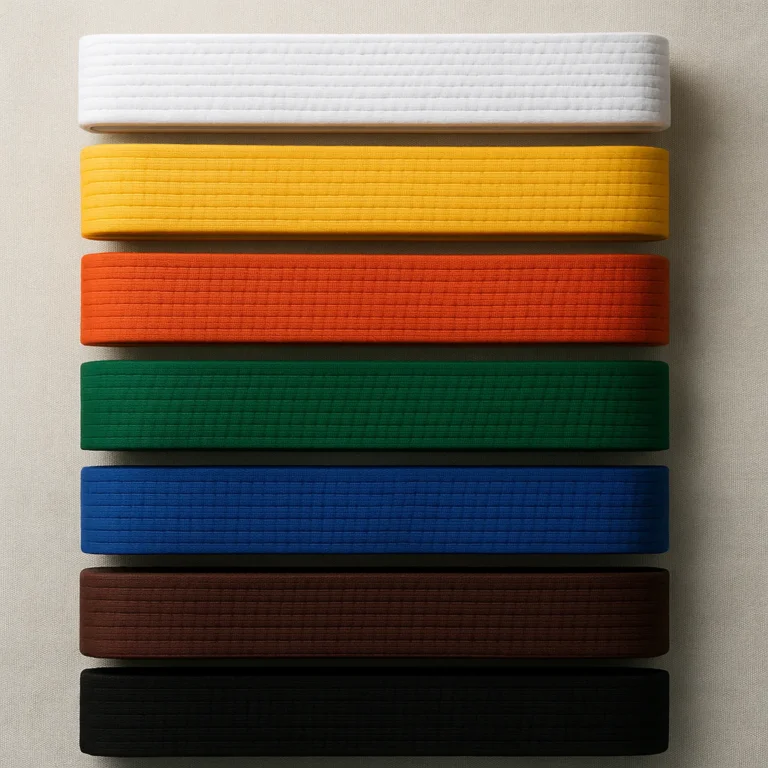
Every color in the karate spectrum tells a story of growth, much like the seasons of a tree. But let’s be real: the meanings can get a bit flowery. We prefer to translate them into practical skill levels.
| Belt Color | Symbolic Meaning | Practical Skill Level | Typical Timeframe (Varies) |
|---|---|---|---|
| White | Purity, Birth, Blank Slate | Absolute Beginner. Learning stance and basic blocks. | 0 – 6 Months |
| Yellow | Sun, First Light | Basic understanding of movement and rhythm. | 6 – 12 Months |
| Orange | Growing Confidence | Developing power and beginning kata. | 12 – 18 Months |
| Green | Growth, Sprouting | Solid foundation, introduction to sparring. | 18 – 24 Months |
| Blue | Sky, Reaching High | Refining technique, speed, and complex combinations. | 24 – 30 Months |
| Purple | Dawn, Transition | Intermediate mastery, self-defense focus. | 30 – 36 Months |
| Brown | Matured Seed, Harvest | Advanced technique, teaching assistants, mental fortitude. | 36 – 48 Months |
| Black | Mastery, Absorption | Expert level, beginning of true learning. | 4+ Years |
The “Stripe” Phenomenon 🌟
Many modern dojos use striped belts (e.g., a Green belt with a Yellow stripe) to break the journey into smaller, more digestible chunks. This is a psychological hack! Instead of waiting two years for a new belt, you get a “mini-promotion” every six months. It keeps the dopamine flowing and the students coming back.
🚫 The Mystery of the “No Belt” and White Belt Begings
The “No Belt” Phase
Before you even get your first white belt, there is a period where you wear no belt at all. In some traditional dojos, this is a distinct phase. You are a Mudansha (one without a rank). You are a blank canvas.
What to expect:
- Observation: You spend your first few weeks just watching. You learn the etiquette, the bowing, and the terminology.
- The “Blank Slate” Mindset: This is the hardest part. You have to unlearn bad habits from other sports or movies. No, you cannot “kick like a ninja” yet.
- The First Test: Usually, after 4-8 weeks, you’ll be tested for your White Belt. It’s less about perfect technique and more about showing you have the discipline to return.
The White Belt: The Foundation of All Things
The white belt is often mocked as the “novice” rank, but we at Karate MMA™ argue it’s the most important. Why? Because everything you learn later is built on the white belt basics. If your front stance (Zenkutsu-dachi) is weak as a white belt, your black belt will be built on sand.
Common White Belt Struggles:
- The “Sagy Belt” Problem: Learning to tie the belt correctly is a rite of passage. If it falls off during Kihon (basics), you’re not alone.
- The “I’m Too Tired” Syndrome: White belts often quit because they don’t understand that soreness is part of the process.
- The “Why am I doing this?” Question: Without the visual reward of a colored belt, motivation must come from within.
Pro Tip: If you are a white belt, focus on consistency. Show up every Tuesday and Thursday. That’s 80% of the battle won.
🟡 From Gold to Green: The Early Stages of Growth
The Gold/Yellow Belt: The First Spark
Once you earn your Gold or Yellow belt (depending on your style), the real training begins. You are no longer just copying movements; you are starting to understand why you move.
- Focus: Basic Kata (forms) and Kihon (basics).
- The Shift: You start learning how to generate power from your hips, not just your arms.
- The Challenge: This is where many students plateau. The novelty wears off, and the work gets repetitive.
The Orange Belt: Expanding Horizons
The Orange belt represents the sun rising higher. You are gaining confidence.
- New Skills: You might start learning your first sparring drills (Kumite).
- Mental Shift: You begin to see patterns in movement. You realize that a block isn’t just a block; it’s a setup for a counter-attack.
The Green Belt: The Seed Breaks Ground
Ah, the Green Belt. This is often the first “real” colored belt. You are now an intermediate student in the eyes of the dojo.
- Sparring: Controlled contact sparring becomes a regular part of training. You learn to take a hit and keep moving.
- Kata Complexity: Your forms become longer and more intricate.
- The “Green Belt Blues”: Many students quit here. They feel they’ve “made it” but realize they are still far from a black belt. Don’t quit. This is the filter that separates the tourists from the martial artists.
Brand Spotlight:
If you are looking for a durable belt that can withstand the rigors of sparring, Shureido is a top-tier choice. Their belts are known for their tight weave and longevity.
- 👉 Shop Shureido Belts on: Amazon | Shureido Official
🟣🔵 The Intermediate Leap: Purple and Blue Belt Progression
The Blue Belt: Reaching for the Sky
The Blue Belt is a significant milestone. You are no longer a beginner. You are a student who understands the mechanics of the art.
- Speed and Power: Your techniques should now be sharp and explosive.
- Advanced Kata: You are learning the “big” kata that define your style.
- Teaching: You might start helping lower belts with their basics. This is the first step toward leadership.
The Purple Belt: The Dawn of Mastery
The Purple Belt is often the bridge between the intermediate and advanced student.
- Self-Defense: The focus shifts heavily to practical self-defense applications (Bunkai).
- Mental Toughness: You are expected to train with intensity even when you are tired.
- The “Almost There” Feeling: You can see the black belt, but the gap feels wide. This is the hardest mental hurdle.
Comparison: Blue vs. Purple
| Feature | Blue Belt | Purple Belt |
|---|---|---|
| Primary Focus | Technique refinement | Application & Strategy |
| Sparring | Controlled, rule-based | Semi-free, situational |
| Kata | Standard forms | Advanced/Hidden forms |
| Mindset | “I am learning” | “I am mastering” |
🔴🟤 The Senior Student: Red and Brown Belt Mastery
The Red Belt: The Sun’s Strength
In many systems, the Red Belt is a high-ranking student, just below the black belt. It symbolizes the intense heat of the sun.
- Leadership: You are a senior student. You lead warm-ups and assist the Sensei.
- Mastery: Your techniques are polished. You have few “bad habits.”
- The Final Hurdle: The mental preparation for the black belt test begins here.
The Brown Belt: The Matured Seed
The Brown Belt is the final stage before the black belt. It represents a seed that has ripened and is ready to be harvested.
- Depth of Knowledge: You must understand the Bunkai (application) of every kata you know.
- Teaching: You are effectively a junior instructor.
- The Black Belt Test: This is the most grueling test you will face. It tests your physical endurance, mental fortitude, and technical precision.
Real Talk:
We’ve seen brown belts who were technically perfect but mentally weak fail their black belt test. And we’ve seen brown belts with “sloppy” technique who passed because they had the heart of a warrior. The belt doesn’t make the master; the master makes the belt.
🖤 The Black Belt: Myth, Reality, and the True Meaning of Dan Ranks
So, you’ve earned the Black Belt. Congratulations! Now what?
The Myth vs. Reality
Myth: The black belt means you are an expert who knows everything.
Reality: The black belt (Shodan) means you are a competent beginner in the world of advanced karate. You have learned the alphabet; now you must learn to write poetry.
The Dan System
The black belt is just the beginning of the Dan ranks.
- Shodan (1st Dan): The first step. You are a self-defense expert.
- Nidan (2nd Dan) to Godan (5th Dan): You deepen your knowledge, refine your teaching, and contribute to the art.
- Rokudan (6th Dan) and above: These are the masters. The focus shifts from personal skill to the preservation and evolution of the art.
The Red and White Belt (6th-8th Dan) and the Solid Red Belt (9th-10th Dan)
As you reach the highest levels, the black belt is replaced by a Red and White belt (6th-8th Dan) and eventually a Solid Red belt (9th-10th Dan). These are rare and signify a lifetime of dedication.
“The black belt is not the end of the road; it is the beginning of the highway.” — Karate MMA™ Grandmaster
📊 The 10 Degrees of Black Belt: A Deep Dive into Dan Levels
Let’s break down the 10 Degrees of Black Belt. This is where the journey gets truly legendary. Note that the time requirements vary by organization, but here is the general progression.
| Dan Rank | Title | Minimum Time as Previous Rank | Total Training Time (Approx) | Focus |
|---|---|---|---|---|
| 1st Dan | Shodan | N/A | 3-5 Years | Technical Proficiency |
| 2nd Dan | Nidan | 2 Years | 5-7 Years | Refinement |
| 3rd Dan | Sandan | 3 Years | 8-10 Years | Teaching Basics |
| 4th Dan | Yondan | 4 Years | 12-14 Years | Advanced Teaching |
| 5th Dan | Godan | 4 Years | 16-18 Years | Master Title |
| 6th Dan | Rokudan | 5 Years | 21-23 Years | Leadership |
| 7th Dan | Nana-dan | 6 Years | 27-29 Years | Legacy Building |
| 8th Dan | Hachidan | 7 Years | 34-36 Years | Art Preservation |
| 9th Dan | Kyudan | 8 Years | 42-4 Years | Rare Mastery |
| 10th Dan | Judan | 9 Years | 50+ Years | Grandmaster |
The Reality Check:
Reaching the 10th Dan is incredibly rare. It often requires 50+ years of consistent training. Many organizations cap the Dan ranks at 5 or 8 for practical reasons. The 10th Dan is often awarded posthumously or to living legends who have dedicated their entire lives to the art.
Notable Figures:
- Gichin Funakoshi: Posthumously awarded 10th Dan.
- Mas Oyama: Founder of Kyokushin, awarded 10th Dan.
- Hironori Otsuka: Founder of Wado-ryu, awarded 10th Dan.
🧵 Belt Materials, Weaves, and Brands: Shureido, Kamikaze, and More
Choosing a belt isn’t just about the color; it’s about the material, the weave, and the brand. A cheap, flimsy belt will fray, fade, and look unprofessional. A high-quality belt will last for decades.
Types of Belts
- Cotton: The standard. Soft, breathable, and easy to tie. Good for beginners.
- Polyester/Cotton Blend: More durable, less prone to shrinking, but can be slippery.
- 10% Polyester: Very durable, retains color well, but can be stiff.
- Silk: Used for high-ranking Dan belts (Red/White). Expensive and delicate.
Top Brands
- Shureido: The gold standard for traditional karate belts. Known for their tight weave and authentic feel.
Pros: Durable, authentic, great color retention.
Cons: Can be stiff initially, higher price point.
👉 Shop Shureido: Amazon | Shureido Official - Kamikaze: A Japanese brand known for high-quality Kobudo and Karate belts. Their “First Class” belts are legendary.
Pros: Traditional Japanese craftsmanship, excellent for high-ranking belts.
Cons: Harder to find in the US, often requires import.
👉 Shop Kamikaze: Kamikaze Official - ProForce: A popular budget-friendly option for beginners.
Pros: Affordable, widely available, decent quality for the price.
Cons: Can fray faster than premium brands, colors may fade.
👉 Shop ProForce: Amazon
How to Choose the Right Belt
- Beginer: Go for a 10% cotton belt from a reputable brand like ProForce or Shureido.
- Intermediate: Upgrade to a polyester blend for durability.
- Advanced/Dan: Invest in a hand-woven belt from Shureido or Kamikaze.
🧼 Care and Maintenance: How to Keep Your Belt Looking Fresh
Your belt is a symbol of your journey. Treat it with respect.
Washing Rules
- White Belts: Wash frequently. They get dirty fast. Use a mild detergent.
- Colored Belts: Wash inside out in cold water. This prevents fading.
- Black Belts: NEVER use bleach. Hand wash is best. If you must machine wash, use a gentle cycle and cold water.
- Drying: Air dry only. Never put a belt in the dryer. The heat will shrink it and damage the fibers.
Storage
- Hang your belt on a belt hanger or fold it neatly in your gi bag.
- Avoid leaving it in a hot car or damp gym bag, as this can cause mold or mildew.
Repairing a Frayed Belt
If your belt starts to fray at the ends, you can sew a small hem or use a fray check solution. For a more permanent fix, you can have a tailor re-hem the ends.
🏆 Belt Testing: What to Expect and How to Prepare
Belt testing is a rite of passage. It’s not just a test of skill; it’s a test of character.
The Testing Process
- Preparation: Your Sensei will tell you when you are ready. Don’t rush.
- The Exam: You will perform Kihon (basics), Kata (forms), and Kumite (sparring).
- The Interview: Some dojos include a written oral exam on history and philosophy.
- The Result: You will be graded on technique, spirit, and attitude.
How to Prepare
- Train Hard: Consistency is key.
- Visualize: Imagine yourself performing the techniques perfectly.
- Rest: Get plenty of sleep before the test.
- Mindset: Go in with a humble attitude. Even if you fail, you learn.
What if you fail?
Failing is part of the journey. It means you have more work to do. Don’t be discouraged. Use it as fuel to train harder.
❓ Frequently Asked Questions About Karate Belts
What is the highest rank in karate belt system?
The highest rank is the 10th Dan (Judan), often represented by a solid red belt. However, this rank is extremely rare and usually reserved for the founders of styles or living legends who have dedicated their entire lives to the art.
Can you skip karate belt ranks or are they mandatory?
No, you cannot skip ranks. Each belt represents a specific level of skill and understanding. Skipping a rank would mean you haven’t mastered the necessary techniques. However, some dojos use striped belts to allow for more frequent promotions within a color.
What is the significance of karate belt ranks?
The belt system provides a visual representation of progress, motivation, and hierarchy. It helps students set goals and allows instructors to track development. It also fosters a sense of community and respect within the dojo.
How do you tie a karate belt properly?
- Wrap the belt around your waist twice.
- Cross the ends and bring one end over the other.
- Tie a square knot (not a bow knot).
- Adjust the ends so they are even in length.
- Tuck the ends into the belt loop if necessary.
What are the different colors of karate belts and their meanings?
- White: Purity, beginner.
- Yellow: Sun, first light.
- Orange: Growing confidence.
- Green: Growth, sprouting.
- Blue: Sky, reaching high.
- Purple: Dawn, transition.
- Brown: Matured seed, harvest.
- Black: Mastery, absorption.
- Red: Intensity, peak mastery.
What is the order of karate belts?
The standard order is: White, Yellow, Orange, Green, Blue, Purple, Brown, Black. However, this can vary by style (e.g., Shotokan vs. Goju-ryu).
What is a brown belt in karate?
A brown belt is the highest rank before the black belt. It signifies that the student has mastered the basics and is ready to begin the advanced journey. It represents a “matured seed” ready for harvest.
How to rank up in karate?
To rank up, you must:
- Train consistently.
- Master the techniques for your current rank.
- Demonstrate good character and spirit.
- Pass the belt test administered by your Sensei.
What is the highest belt in karate?
The 10th Dan (Judan) is the highest belt, represented by a solid red belt. It is a rare and prestigious rank.
What are karate belts in order?
See the “Decoding the Colors” section above for the full list.
What is the hardest karate belt to earn?
Many students find the Black Belt the hardest because of the mental and physical demands. However, some argue that the Brown Belt is the hardest because it requires the most patience and discipline before the “reward” of the black belt.
How long does it take to get a black belt in karate?
It typically takes 3 to 5 years of consistent training to earn a black belt. However, this varies by style, school, and individual dedication.
What does each karate belt color represent?
See the “Decoding the Colors” section above for detailed meanings.
Can you wear a karate belt with a gi from a different style?
Yes, you can wear a belt from one style with a gi from another, as long as the colors match. However, it’s best to follow the guidelines of your specific dojo.
What is the difference between a black belt and a red belt in karate?
A black belt (1st-5th Dan) represents a high level of mastery. A red belt (9th-10th Dan) represents the highest level of mastery, often reserved for grandmasters.
How often should you wash your karate belt?
Wash your belt after every few classes or whenever it smells. White belts should be washed more frequently. Always use cold water and air dry.
Do all karate schools use the same belt ranking system?
No. Different styles (Shotokan, Goju-ryu, Wado-ryu, etc.) have different color progressions. Some use stripes, some don’t. Always check with your specific dojo.
🔗 Recommended Links for Gear and Training
Ready to upgrade your gear or deepen your knowledge? Check out these resources:
- 👉 Shop Karate Belts:
Shureido: Amazon | Shureido Official
Kamikaze: Kamikaze Official
ProForce: Amazon - Books on Karate History and Philosophy:
Karate-Do: My Way of Life by Gichin Funakoshi – Amazon
The Book of Five Rings by Miyamoto Musashi – Amazon - Training Gear:
Mats: Amazon
Sparring Gear: Amazon
📚 Reference Links and Historical Sources
For those who want to dive deeper into the history and technical aspects of karate belts:
- The History of the Belt System: Wikipedia – Kyu and Dan Ranks
- Gichin Funakoshi’s Legacy: Shotokan Karate History
- Kamikaze Belts: Kamikaze Official Store
- Shureido Belts: Shureido Official
- National Karate Belt System: National Karate
- Internal Links:
- Karate Techniques
- Fighter Profiles
- Fight Analysis and Breakdowns
- MA Training
- Karate Belts and Rankings
- Karate Overview