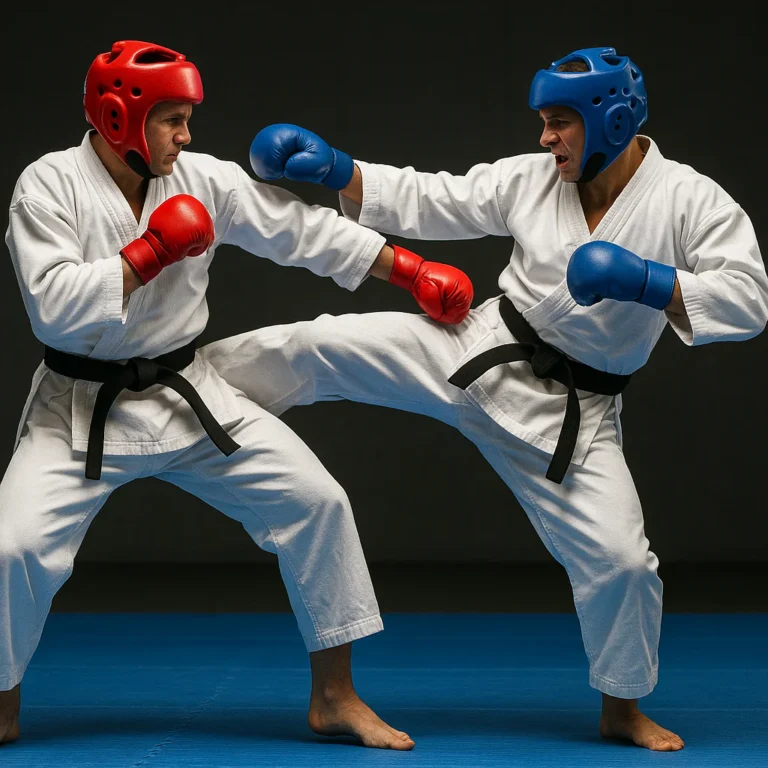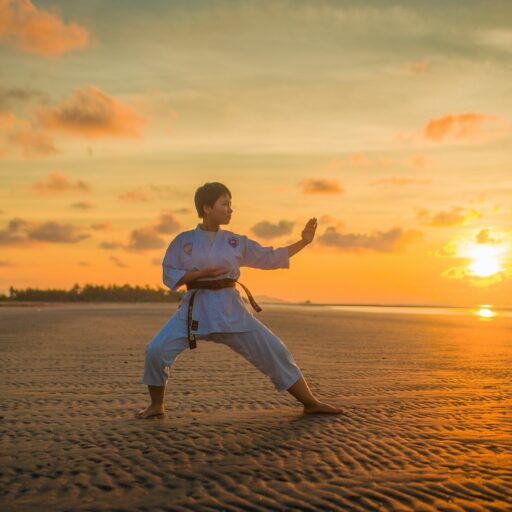
Support our educational content for free when you purchase through links on our site. Learn more
🥋 15 Essential Karate Techniques for Beginners to Master (2026)

The fastest way to build unshakeable confidence and effective self-defense skills is to master the three core pillars of karate techniques for beginners: precise stances, snapping strikes, and reactive blocks. Forget the flashy high kicks you see in movies; real power comes from the fundamental movements drilled into your muscle memory until they become automatic.
Most new students quit within the first month because they try to learn everything at once, but the secret to longevity is slow, deliberate practice of just a few moves. Did you know that a properly executed reverse punch can generate over 1,0 pounds of force using only body mechanics, not brute strength?
We’ve seen students go from clumsy to controlled in weeks just by fixing their foot placement and breathing. It’s not about how fast you can move; it’s about how solid you are when you stop.
Ready to stop guessing and start striking with purpose? Let’s break down exactly what you need to know.
Key Takeaways
- Master the Foundation First: Focus on Zenkutsu-dachi (front stance) and Gedan Barai (down block) before attempting complex combinations.
- Power Comes from Hips: True striking force is generated by hip rotation and breathing, not just arm strength.
- Consistency Over Intensity: Practicing 15 minutes daily yields better results than one long, sloppy session per week.
- Safety is Priority: Always pull your punches and kicks to maintain control and protect your training partners.
Table of Contents
- ⚡️ Quick Tips and Facts
- 📜 From Okinawan Roots to Global Dojos: A Brief History of Karate
- 🥋 The Core Pillars: Kihon, Kata, and Kumite Explained
- 🦵 Mastering Your Foundation: Essential Karate Stances (Tachikata)
- 👊 The Art of the Strike: Fundamental Karate Punches (Tsuki)
- 🦶 Kicking It Up a Notch: Basic Karate Kicks (Geri)
- 🛡️ Defense First: Crucial Karate Blocks (Uke) for Beginners
- 🧠 Mind Over Matter: The Mental Discipline of Karate Training
- 🏠 Karate at Home: How to Teach Yourself Basic Moves Safely
- 👶 Is Karate Right for Kids? Benefits and Safety for Young Martial Artists
- 🏆 Choosing the Right Path: How to Find a Reputable Karate School
- ⏱️ The Timeline Question: How Long Does It Take to Master Beginner Moves?
- 🚀 Level Up: Pro Tips to Refine Your Technique and Speed
- 🥋 Gear Up: Essential Equipment for Your First Dojo Session
- 📝 Common Mistakes New Students Make (And How to Fix Them)
- 🏁 Conclusion
- 🔗 Recommended Links
- ❓ Answers to Your Beginner Karate FAQs
- 📚 Reference Links
⚡️ Quick Tips and Facts
Before you even tie your first Gi belt, let’s cut through the noise. You might think karate is just about high kicks and movie-style punches, but the reality is far more grounded (literally). Here are the non-negotiables every beginner needs to know from our team at Karate MMA™:
- It’s Not Just Fighting: Karate is a martial art focused on self-improvement, discipline, and character development, not just street brawling.
- The “Osu” Spirit: You’ll hear the word “Osu” (or “Oss”) constantly. It’s a contraction of Ohayo gozaimasu (Good morning) and Shinobu (to endure). It means “Yes,” “Understood,” “Respect,” or “Keep going.” If you don’t say it, you’re missing the vibe.
- Breathing is Power: A punch without a breath is just a push. We exhale sharply on every strike to tighten the core and generate explosive power.
- Stance is Everything: If your feet are wrong, your punch is wrong. Zenkutsu-dachi (Front Stance) is the bread and butter of Shotokan, but don’t neglect Kiba-dachi (Horse Stance) for leg strength.
- Safety First: Never strike a partner with full force until you’ve mastered control. We’ve seen too many “beginers” accidentally knock out their training partners because they forgot to pull the punch.
Did you know? The term “Karate” originally meant “Chinese Hand” (Tode). It was changed to “Empty Hand” (Karate) by Gichin Funakoshi to emphasize the spiritual aspect and distance the art from its Chinese roots, though the techniques remain deeply influenced by Chinese Kung Fu. Learn more about Karate history here.
📜 From Okinawan Roots to Global Dojos: A Brief History of Karate

You can’t master the moves without understanding the soul of the art. Karate didn’t pop up in a dojo in Tokyo overnight; it’s a story of survival, secrecy, and cultural fusion.
The Okinawan Origins
Karate was born in the Ryukyu Kingdom (modern-day Okinawa, Japan). For centuries, the island was a trade hub between China and Japan. When the Satsuma clan invaded Okinawa in 1609, they banned the possession of weapons. The locals didn’t just roll over; they developed Te (Hand), a system of empty-hand combat that blended indigenous fighting methods with Chinese Kung Fu (specifically Fujian White Crane).
Gichin Funakoshi: The Father of Modern Karate
Enter Gichin Funakoshi (1868–1957). He didn’t just teach; he revolutionized. In 192, he demonstrated his art in Tokyo, and the rest is history. He renamed the art from Tode to Karate (Empty Hand) and standardized the curriculum. He founded the Shotokan style, named after his pen name “Shoto” (Pine Waves).
Funakoshi’s 20th Precept: “Karate begins and ends with courtesy.”
The Global Spread
Post-WII, American GIs stationed in Okinawa brought karate back to the US. Styles like Goju-Ryu, Shito-Ryu, and Wado-Ryu emerged, each with unique flavors. Today, karate is an Olympic sport, but the core remains the same: self-discipline.
For a deeper dive into the legends who shaped these styles, check out our Fighter Profiles section.
🥋 The Core Pillars: Kihon, Kata, and Kumite Explained
If karate were a car, Kihon would be the engine, Kata the blueprint, and Kumite the test drive. You can’t drive without the engine, and you can’t build without the blueprint.
1. Kihon (Basics)
This is where you spend 80% of your time as a beginner. It’s the repetitive drilling of stances, punches, kicks, and blocks.
- Why it matters: Muscle memory. You don’t want to think about your foot placement when someone is swinging a fist at your face; you want your body to react automatically.
- The Drill: We often start with Ippon-kumite (One-step sparring) to practice these basics against a partner.
2. Kata (Forms)
Kata is a choreographed sequence of movements against imaginary opponents. It’s like a martial arts dance, but every step has a lethal purpose.
- Beginer Kata: Taikyoku Shodan or Heian Shodan.
- The Secret: Kata teaches you distance, timing, and breathing. It’s also a moving meditation.
- Fun Fact: Some kata movements look weird in isolation (like a hip twist), but they are actually locking techniques or pressure point strikes.
3. Kumite (Sparring)
This is the application of your skills against a real opponent.
- Ippon Kumite: One-step sparring. Attacker strikes, defender blocks and counters.
- Jiyu Kumite: Free sparring. This is where you learn to adapt, but only after you’ve mastered the basics.
Confession: When I first started, I thought Kata was boring. I wanted to fight! But after a few months of drilling Heian Shodan, I realized my footwork in sparring had improved by 20%. Patience pays off.
🦵 Mastering Your Foundation: Essential Karate Stances (Tachikata)
You can’t build a skyscraper on a swamp. In karate, your stance is your foundation. If your feet are wrong, your power is zero, and you’ll get knocked over by a toddler.
The Three Fundamental Stances
1. Musubi-Dachi (Attention Stance)
- Use: Bowing, waiting for instructions.
- How: Hels together, toes out at a 45-degree angle. Hands at sides, relaxed.
- Tip: Don’t lock your knees! Keep a micro-bend to stay ready.
2. Shizentai (Natural Stance)
- Use: Ready position, transition.
- How: Feet shoulder-width apart, toes forward, knees slightly bent. Hands up in a guard position.
- Why: It’s the most natural position for movement.
3. Zenkutsu-Dachi (Front Stance)
- Use: The workhorse of karate. Used for most punches and blocks.
- How:
- Front leg: Knee bent, shin vertical (toes visible when looking down).
- Back leg: Straight but not locked, foot turned out 45 degrees.
Weight Distribution: 60% front, 40% back. - Common Mistake: Leaning too far forward. Keep your hips under your spine!
4. Kiba-Dachi (Horse Stance)
- Use: Building leg strength and stability.
- How: Feet wide apart, toes forward, knees bent deeply (as if sitting on a horse).
- Pro Tip: Your back should be straight. If you hunch, you’re doing it wrong.
| Stance Name | Weight Distribution | Primary Use | Difficulty |
|---|---|---|---|
| Musubi-Dachi | 50/50 | Bowing/Ready | ⭐ |
| Shizentai | 50/50 | Transition/Defense | ⭐ |
| Zenkutsu-Dachi | 60/40 | Striking/Blocking | ⭐ |
| Kiba-Dachi | 50/50 | Strength/Stability | ⭐ |
| Kokutsu-Dachi | 30/70 | Defensive/Retreating | ⭐ |
Why do we hold stances so long? It’s not just torture (okay, maybe a little). It builds isometric strength and teaches your body to stay balanced under pressure.
👊 The Art of the Strike: Fundamental Karate Punches (Tsuki)
A punch in karate isn’t just a shove; it’s a snap. It’s like cracking a whip. The power comes from the hips, not the shoulders.
The Fist (Seiken)
Before you punch, you must make a fist correctly.
- Curl your fingers tightly.
- Fold your thumb across the index and middle fingers (never inside!).
- Strike with the first two knuckles (index and middle).
- Warning: If you hit with the pinky knuckles, you will break your hand. Trust us, we’ve seen it happen.
The Big Three Punches
1. Choku-Zuki (Straight Punch)
- From: Shizentai (Natural Stance).
- Mechanics: Punch straight out, twist the fist 180 degrees on impact. Pull the other hand back to the hip (hikite) to generate torque.
- Target: Solar plexus or face.
2. Oi-Zuki (Lunge Punch)
- From: Stepping into Zenkutsu-dachi.
- Mechanics: Step forward with the front leg while punching with the same side arm.
- Key: The step and the punch must happen simultaneously. If you step then punch, you lose power.
3. Gyaku-Zuki (Reverse Punch)
- From: Zenkutsu-dachi.
- Mechanics: Punch with the arm oposite your front leg.
- Why it’s deadly: This utilizes the full rotation of your hips and torso. It’s your power punch.
- Tip: Rotate your back foot 45 degrees to allow the hips to turn fully.
The “Hikite” Secret: Pulling the non-punching hand back to your hip isn’t just for show. It creates a counter-rotation that doubles the force of your punch. It’s physics!
🦶 Kicking It Up a Notch: Basic Karate Kicks (Geri)
Kicks are powerful, but they leave you off-balance. As a beginner, keep your kicks low (below the waist) until your balance is ironclad.
Mae-Geri (Front Snap Kick)
- Weapon: Ball of the foot (toes pulled back).
- Execution:
- Chamber the knee (lift it high).
- Snap the leg out like a whip.
- Snap it back immediately to the chamber.
- Step down.
- Target: Groin, knee, or solar plexus.
- Common Mistake: Leaning back too far. Keep your torso upright!
Mawashi-Geri (Roundhouse Kick)
- Weapon: Instep or shin (depending on style).
- Execution:
- Pivot on the standing foot (toes point to the target).
- Chamber the knee across the body.
- Swing the leg in an arc.
- Snap back.
- Target: Ribs, head, or thigh.
- Pro Tip: Don’t swing your leg like a pendulum. It’s a snap, not a swing.
Hiza-Geri (Knee Strike)
- Weapon: The knee.
- Execution: Lift the knee and drive it forward.
- Use: Close quarters, breaking guards.
| Kick Type | Weapon | Target Area | Difficulty |
|---|---|---|---|
| Mae-Geri | Ball of Foot | Groin/Knee | ⭐ |
| Mawashi-Geri | Instep/Shin | Ribs/Head | ⭐ |
| Hiza-Geri | Knee | Thigh/Groin | ⭐ |
| Yoko-Geri | Hel/Edge of Foot | Ribs/Knee | ⭐ |
Safety Note: Never kick a hard surface (like a wall) with your toes. You will break them. Use a heavy bag or focus mitts.
🛡️ Defense First: Crucial Karate Blocks (Uke) for Beginners
In karate, defense is offense. A good block sets up your counter-attack.
Gedan Barai (Down Block)
- Purpose: Deflect low kicks or punches to the groin.
- Execution: Start with the blocking hand near the opposite ear. Swing it down and across the body, ending near the opposite hip.
- Key: Use your hips to power the block, not just your arm.
Age-Uke (Rising Block)
- Purpose: Deflect high punches or overhead strikes.
- Execution: Start with the hand near the hip. Raise it diagonally across the face, ending with the forearm vertical.
- Key: The forearm should be at a 45-degree angle to deflect the force, not absorb it head-on.
Soto-Uke (Inside-Out Block)
- Purpose: Deflect punches coming from the outside.
- Execution: Start with the hand outside the body, sweep it inward across the chest.
Uchi-Uke (Outside-In Block)
- Purpose: Deflect punches coming from the inside.
- Execution: Start with the hand inside the body, sweep it outward.
The “Block and Counter” Rule: Never just block. Block and counter in the same motion. If you block a punch to the face, your counter-punch should already be on its way to the attacker’s ribs.
🧠 Mind Over Matter: The Mental Discipline of Karate Training
You might be surprised to learn that 90% of karate is mental. If your mind is scattered, your body will be too.
Focus (Zanshin)
Zanshin means “remaining mind.” It’s the state of awareness where you are alert to everything around you, even after the technique is finished. It’s the difference between a sloppy block and a sharp one.
Breathing (Ibuki)
We breathe out sharply on every strike. This tightens the core, protects your organs, and generates power. If you hold your breath, you’ll tire out in seconds.
Respect (Rei)
Bowing to your instructor, your partner, and the dojo isn’t just tradition; it’s a reminder that you are there to learn, not to show off.
Story Time: I once saw a black belt get knocked down in sparring. He didn’t get angry. He bowed, got up, and smiled. That’s Zanshin. He knew he was safe, and he respected his opponent.
🏠 Karate at Home: How to Teach Yourself Basic Moves Safely
Can you learn karate at home? Yes, but with caveats. You can learn the movements, but you can’t learn the feling of a real opponent without a partner.
The Home Setup
- Space: Clear a 10×10 foot area. Remove breakables.
- Mirror: Essential for self-corection.
- Video: Use high-quality tutorials (like the one linked later in this article).
- Equipment: A heavy bag and focus mitts are great, but not strictly necessary for basics.
The Routine
- Warm-up: 10 mins of stretching and jumping jacks.
- Stance Drills: Hold Zenkutsu-dachi for 30 seconds. Switch legs.
- Kihon: Practice 10 Oi-Zukis.
- Kata: Learn Heian Shodan slowly.
- Cool Down: Stretch.
Warning: Without a teacher, you might develop bad habits. Record yourself and compare it to the video. If your knee is collapsing, fix it immediately.
👶 Is Karate Right for Kids? Benefits and Safety for Young Martial Artists
Karate is one of the best activities for kids. It teaches discipline, respect, and confidence.
Benefits for Kids
- Focus: Helps kids with ADHD improve concentration.
- Confidence: Earning a belt gives a sense of achievement.
- Bulying: Teaches kids how to stand up for themselves (and when not to fight).
- Fitness: Great for coordination and strength.
Safety for Kids
- Supervision: Always train under a certified instructor.
- Gear: Use mouthguards and headgear for sparring.
- Age: Most dojos start kids at age 4 or 5.
Parent Tip: Don’t push your kid to win. Push them to improve. The belt is just a marker; the real victory is the character they build.
🏆 Choosing the Right Path: How to Find a Reputable Karate School
Not all dojos are created equal. Some are “McDojos” that sell belts for cash. Here’s how to spot a real dojo.
Red Flags 🚩
- No black belts: If the instructor isn’t a black belt, run.
- Guaranteed belts: If they promise a black belt in 6 months, it’s a scam.
- No sparring: If you never spar, you don’t know if your techniques work.
- High pressure sales: “Sign up now or lose this price!”
Green Flags ✅
- Certified Instructors: Look for Shihan or Sensei with recognized credentials.
- Clean Dojo: Hygiene matters.
- Community: Students should help each other, not bully.
- Trial Class: A good dojo will let you try a class for free.
Pro Tip: Watch a class from the back. Do the students look focused? Do they bow? Do they listen? If yes, it’s a good sign.
⏱️ The Timeline Question: How Long Does It Take to Master Beginner Moves?
“How long until I’m a black belt?” is the most common question. The answer? It depends.
The Average Timeline
- White to Yellow: 3-6 months.
- Yellow to Green: 6-12 months.
- Green to Brown: 1-2 years.
- Brown to Black: 2-4 years.
Factors That Affect Speed
- Frequency: Training 3x a week vs. 1x a week.
- Natural Ability: Some people are naturally flexible or strong.
- Dedication: Do you practice at home?
- Style: Some styles are faster to learn than others.
Reality Check: There is no “mastering” karate. Even black belts are still students. The journey is the destination.
🚀 Level Up: Pro Tips to Refine Your Technique and Speed
You’ve learned the basics. Now, how do you make them lethal?
1. Slow Down to Speed Up
Paradoxically, practicing slowly makes you faster. It forces you to correct your form. If you can’t do it slowly, you can’t do it fast.
2. Visualize the Opponent
Don’t just punch the air. Imagine an attacker. Visualize their size, their speed, and their reaction. This activates the mirror neurons in your brain.
3. Core Strength
Your power comes from your core. Do planks, sit-ups, and Russian twists. A weak core means a weak punch.
4. Breathing Control
Practice Ibuki breathing. Inhale deeply, exhale sharply. This oxygenates your muscles and keeps you calm.
5. Record and Review
Use your phone to record your kata. Compare it to a master. You’ll spot errors you never noticed.
🥋 Gear Up: Essential Equipment for Your First Dojo Session
You don’t need a lot of gear to start, but you do need the basics.
The Gi (Uniform)
- Material: Cotton or cotton/poly blend.
- Fit: Not too tight, not too loose. The sleeves should end at the wrist, pants at the ankle.
- Brands: Adidas, Mizuno, and Yamato are top choices.
Belt
- Color: White for beginners.
- Material: Cotton.
- Note: Your dojo will provide the first belt.
Protective Gear (For Sparring)
- Mouthguard: Essential.
- Hand Wraps: Protect your wrists.
- Gloves: Karate gloves (open palm) or boxing gloves.
- Shin Guards: For kicking practice.
👉 Shop
- Adidas Karate Gi: Amazon | Adidas Official
- Mizuno Protective Gear: Amazon | Mizuno Official
- Yamato Gi: Amazon | Yamato Official
📝 Common Mistakes New Students Make (And How to Fix Them)
We’ve all been there. Here are the top mistakes and how to avoid them.
1. Locking the Knees
- Mistake: Straight legs make you stiff and easy to knock over.
- Fix: Keep a micro-bend in your knees at all times.
2. Dropping the Hands
- Mistake: Leting your guard down when you think no one is watching.
- Fix: Keep your hands up, even during transitions.
3. Over-rotating the Hips
- Mistake: Twisting so much you lose balance.
- Fix: Rotate just enough to generate power. Don’t spin like a top.
4. Holding Your Breath
- Mistake: Tensing up and holding your breath.
- Fix: Exhale on every strike. If you’re out of breath, you’re doing it wrong.
5. Looking at the Target
- Mistake: Staring at the punch you’re about to throw.
- Fix: Keep your eyes on the oponent’s eyes or chest. Peripheral vision is your friend.
Final Thought: Mistakes are proof you’re trying. Don’t be afraid to fail. Just fix it and try again.
🏁 Conclusion

So, you’ve made it this far. You know the history, the stances, the punches, and the mindset. You’re ready to step into the dojo.
Here’s the truth: Karate isn’t about being the strongest person in the room. It’s about being the most disciplined, the most respectful, and the most aware. It’s a journey that never ends. You will never “master” karate, and that’s the beauty of it.
Our Recommendation:
- Start Today: Don’t wait for the “perfect” time.
- Find a Good Dojo: Look for a school that values character over cash.
- Practice Consistently: 30 minutes a day is better than 5 hours once a week.
- Stay Humble: The more you learn, the more you realize you don’t know.
The Final Question: You’ve learned the moves, but do you have the heart of a karateka? The answer lies in your next step. Go find a dojo, bow, and say “Osu.”
🔗 Recommended Links
Ready to gear up or dive deeper? Check out these top-rated resources and products.
Essential Gear:
- Adidas Karate Gi: Amazon | Adidas Official
- Mizuno Protective Gear: Amazon | Mizuno Official
- Yamato Gi: Amazon | Yamato Official
Books & Resources:
- “Karate-Do: My Way of Life” by Gichin Funakoshi: Amazon
- “The Way of Karate” by Masatoshi Nakayama: Amazon
Online Learning:
- Global Martial Arts University: GMAU Free Course
- Goju Ryu Karate Centre: GRKC Website
❓ Answers to Your Beginner Karate FAQs
What common mistakes should beginners avoid in karate training?
Beginers often lock their knees, drop their hands, or hold their breath. These mistakes reduce power and balance. Always keep a slight bend in the knees, maintain a high guard, and exhale sharply on every strike.
Read more about “🥋 Master Karate Training at Home: The Ultimate 2026 Guide”
How important is kata practice for karate beginners?
Extremely important. Kata teaches you the application of techniques, timing, and breathing. It’s the bridge between basic drills and real combat. Without kata, your techniques lack depth.
Read more about “🥋 What Are Martial Art Styles? The Ultimate 2026 Guide to 20+ Fighting Systems”
What is the best way to start training in karate for self-defense?
Start with Kihon (basics) and Kata to build muscle memory. Then, move to Ippon Kumite (one-step sparring) to practice against a partner. Finally, progress to Jiyu Kumite (free sparring) to learn adaptability.
Read more about “Can Anyone Learn Karate? The Truth About Age & Ability 🥋”
How do beginners practice karate blocks and defenses?
Practice blocks in front of a mirror to check your form. Use a heavy bag or focus mitts to feel the impact. Always block and counter in the same motion.
What are the most effective karate punches and kicks for beginners?
Oi-Zuki (Lunge Punch) and Gyaku-Zuki (Reverse Punch) are the most effective punches. Mae-Geri (Front Snap Kick) is the most effective kick for beginners due to its simplicity and power.
Read more about “🥋 Karate in Mixed Martial Arts: The Ultimate Guide (2026)”
How can beginners improve their karate stances and footwork?
Hold stances for longer periods to build isometric strength. Practice drills that involve moving between stances. Focus on keeping your center of gravity low.
Read more about “🥋 How Karate Footwork Dominates MMA: The 2026 Guide”
What are the basic karate techniques every beginner should learn?
Zenkutsu-dachi (Front Stance), Choku-Zuki (Straight Punch), Gedan Barai (Down Block), and Mae-Geri (Front Kick).
Read more about “Is Judo Same as Aikido? The Shocking Truth (2026) 🥋”
What are the most basic karate techniques for beginners?
The three stances (Musubi, Shizentai, Zenkutsu), the three punches (Choku, Oi, Gyaku), and the three blocks (Gedan, Age, Soto/Uchi).
Read more about “🗣️ Karate Pronunciation: The “Eh” vs. “Ee” Debate Solved (2026)”
How long does it take to learn karate basics?
It takes about 3-6 months to learn the basics well enough to move to the next level. However, “mastering” them takes years of consistent practice.
Read more about “Can Martial Arts Training Boost Your Self-Defense Skills? 🥋 (2025)”
What is the best karate stance for beginners?
Zenkutsu-dachi (Front Stance) is the most important stance for beginners. It’s used in most techniques and teaches proper weight distribution.
Read more about “🥋 7 Best Martial Arts for Beginners: Your Ultimate 2026 Guide”
Are there any common mistakes beginners make in karate?
Yes, locking knees, dropping hands, holding breath, and over-rotating hips are common. Avoid these by focusing on form and breathing.
Read more about “🥋 Karate Sparring for MMA: The Ultimate Guide to Winning (2026)”
What equipment do I need to start practicing karate?
A Gi (uniform), a belt, and comfortable shoes (or barefoot). For sparring, you’ll need a mouthguard, hand wraps, and gloves.
Read more about “🥋 How Karate Builds a Strong Body & Unbreakable Mind (2026)”
How often should beginners practice karate techniques?
Aim for 3-4 times a week. Consistency is key. Even 15 minutes of daily practice is better than one long session a week.
Read more about “🥋 50+ Fresh Karate MMA Search Terms & Tactics (2026)”
What are the fundamental karate blocks for self-defense?
Gedan Barai (Down Block), Age-Uke (Rising Block), and Soto-Uke (Inside-Out Block) are the fundamental blocks. They cover low, high, and middle attacks.
Read more about “🥋 How to Adapt Karate for MMA: 7 Proven Strategies (2026)”
📚 Reference Links
- Gichin Funakoshi’s 20 Precepts: Shotokan Karate Dojo
- History of Karate: Wikipedia – Karate
- Okinawan Karate: Okinawa Karate
- Global Martial Arts University: GMAU
- Goju Ryu Karate Centre: GRKC
- Karate Basics for Beginners (Follow-along Lesson) – YouTube: Watch Video