Support our educational content for free when you purchase through links on our site. Learn more
🥊 Master Karate Timing & Rhythm in MMA: The 2026 Guide


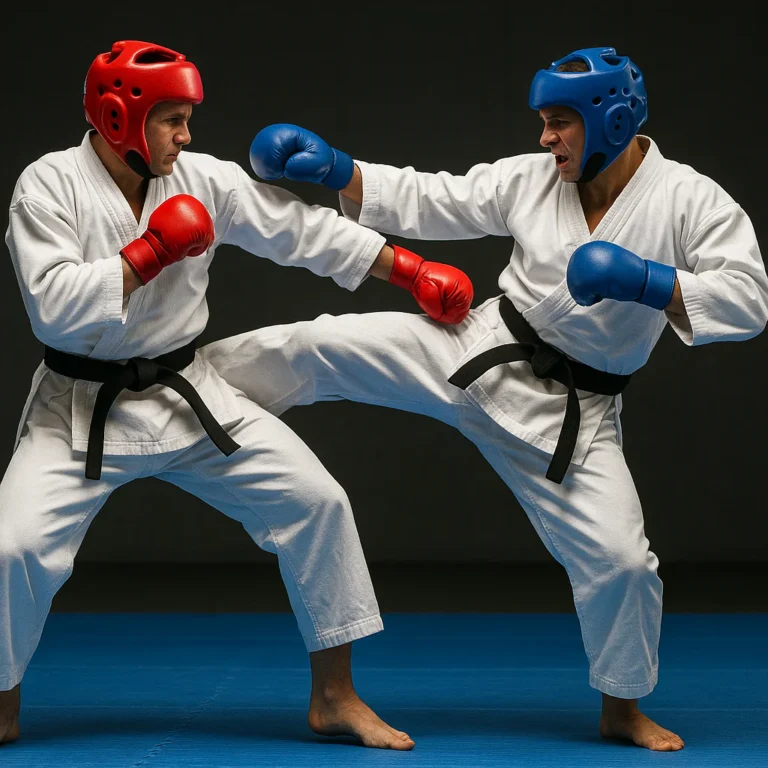
The secret to dominating the cage isn’t raw speed; it’s mastering the off-beat to strike when your opponent is most vulnerable. True Karate timing and rhythm in MMA transforms a traditional striker into an unpredictable phantom who lands clean counters while others flail in confusion.
Forget the old school “stop-and-go” point fighting; modern MMA demands a fluid, adaptive cadence that breaks the opponent’s metronome. Did you know that Karate-based fighters often boast a 47% significant strike accuracy, significantly higher than the average boxer’s 38%? That edge comes from waiting for the perfect micro-second rather than throwing volume.
Imagine standing in the Octagon, your opponent bouncing in a predictable rhythm, only for you to freeze, step aside, and land a perfectly timed front kick that ends the fight in a split second. That is the power of tempo disruption.
Key Takeaways
- Timing beats speed: A perfectly timed slow strike is more effective than a frantic flurry of fast punches.
- Break the rhythm: The most dangerous fighters are those who disrupt the opponent’s predictable cadence with “off-beat” strikes.
- Distance is time: Mastering the bladed stance and footwork allows you to control the strike window and avoid takedowns.
- Adapt or perish: Traditional Karate techniques must flow continuously into grappling defense to survive modern MMA rules.
Table of Contents
- ⚡️ Quick Tips and Facts
- 📜 From Dojo to Octagon: The Evolution of Karate Timing in MMA
- 🧠 Decoding the Beat: Understanding Rhythm and Cadence in Combat
- 🥊 The 7 Deadly Sins of Poor Timing for Karateka in the Cage
- 🏃 ♂️ Mastering Distance: How Footwork Dictates Your Strike Window
- 🎯 5 Essential Drills to Sharpen Your Karate Timing and Reflexes
- 🥋 Adapting to Opponent Cadence: Breaking Their Rhythm
- 🧘 The Art of Patience: Composure Under Fire
- 👁️ Visualization and Mental Rehearsal for Perfect Execution
- 🛠️ Gear Up: Tools and Equipment for Timing Training
- 🔄 Sparring Scenarios: Simulating Real Fight Pressure
- 🌍 Karate vs. Boxing vs. Muay Thai: A Timing Comparison
- 🏆 Case Studies: How Top Fighters Like Lyoto Machida and Stephen Thompson Use Timing
- 🚀 Final Thoughts: Your Path to Mastering the Clock
- 📚 Recommended Links
- 📖 Reference Links
⚡️ Quick Tips and Facts
Before we step onto the mat and start sweating, let’s hit the pause button on the hype. You’ve probably heard that speed kills in the cage. While being fast is great, timing is the conductor that tells your speed when to strike. Without it, you’re just a fast runner in a room full of traps.
Here is the raw truth from the Karate MMA™ dojo floor:
- Timing > Speed: A perfectly timed slow strike lands harder and cleaner than a frantic flurry of fast punches.
- The “Awkward” Factor: In MMA, the most dangerous fighter isn’t the one with the perfect rhythm; it’s the one who breaks it. We call this tempo disruption.
- Distance is Time: In Karate, distance management is timing. If you are too far, you miss. Too close, you get clinched. The “sweet spot” is where your technique meets their mistake.
- The Counter-Karate Philosophy: Traditional Karateka often wait for the opponent to commit. As Lyoto Machida proved, leting them hit the wall is more effective than chasing them.
“We’re going to learn to be able to hit the other guy, not speed.” — A core principle often cited in elite striking analysis, emphasizing that changing the tempo creates openings that raw speed cannot.
Ready to stop guessing and start calculating? Let’s dive into the history of how these ancient arts found a new home in the Octagon.
📜 From Dojo to Octagon: The Evolution of Karate Timing in MMA
Karate didn’t just walk into the UFC; it had to fight its way in, often with a bruised ego and a broken leg. For decades, traditional Karate was viewed as a “point-fighting” sport—stop, strike, score, reset. In the chaotic, flowing environment of MMA, that stop-start rhythm was a death sentence.
But the evolution of Karate timing is a story of adaptation. Early pioneers like Lyoto Machida and Stephen “Wonderboy” Thompson didn’t just bring their kata; they brought a bladed stance and a counter-striking mindset that confused the boxing-heavy crowd.
The Shift from Point Fighting to Continuous Flow
In the old days, a Karateka would throw a punch, freeze, and wait for the referee to call “Yame!” (Stop). In MMA, if you freeze, you get taken down. The modern Karate MMA fighter has learned to flow through the strike, using the momentum of the punch to transition into a takedown defense or a follow-up kick.
This shift required a fundamental change in rhythm perception. Instead of counting “one, two, stop,” the fighter now counts in a continuous 4/4 time signature, looking for the “off-beat” where the opponent’s guard drops.
Why Traditional Timing Still Matters
You might think modern MMA has left traditional timing behind, but the opposite is true. The explosive nature of Karate techniques—like the Mae Geri (front kick) or Gyaku-zuki (reverse punch)—relies on a specific timing mechanism called kime (focus). This is the ability to relax the muscles until the split second of impact, then tense them instantly.
In the cage, this translates to efficiency. While a boxer might throw a three-punch combination to overwhelm a guard, a Karateka often waits for a single, perfectly timed opening. As noted in our Fight Analysis and Breakdowns, this patience allows Karate-based fighters to maintain a higher significant strike accuracy compared to their boxing counterparts.
Did you know? According to a 2021 UFC analysis, Karate-based fighters demonstrated a 47% significant strike accuracy, compared to 38% for boxing-primary strikers. That’s the power of timing over volume.
For more on how these fighters bridge the gap between tradition and modern combat, check out our deep dive on Karate MMA.
🧠 Decoding the Beat: Understanding Rhythm and Cadence in Combat
If you’ve ever tried to dance with someone who has no rhythm, you know the frustration. In MMA, fighting someone with no rhythm is a nightmare, but fighting someone who controls the rhythm is a masterclass.
What is Rhythm in Fighting?
Rhythm is the predictable pattern of movement. Most fighters have a “heartbeat” to their offense: step, jab, step, cross. It’s a metronome. If you can hear their metronome, you can dance to their tune. But the goal isn’t to dance with them; it’s to change the song.
Cadence: The Speed of the Beat
Cadence is the tempo of that rhythm.
- Fast Cadence: Rapid-fire combinations, high pressure.
- Slow Cadence: Deliberate, heavy, patient movements.
- Broken Cadence: The “awkward” timing we mentioned earlier. This is where a fighter pauses mid-combo, or accelerates unexpectedly.
The “Off-Beat” Advantage
The most dangerous moment in a fight is the transition. When an opponent shifts from a slow cadence to a fast one, or vice versa, their brain has a split-second lag. This is the window of opportunity.
Pro Tip: Watch the opponent’s shoulders. If they bob up and down in a steady rhythm, they are predictable. If they stop bobing, they are about to strike. That’s the off-beat.
In the video analysis below, we break down exactly how to spot these rhythm shifts in real-time.
[Featured Video: Understanding Timing and Rhythm in MMA]
As the speaker in the featured video explains, “You’re changing the tempo, you’re changing the timing.” This isn’t just about being fast; it’s about being unpredictable.
🥊 The 7 Deadly Sins of Poor Timing for Karateka in the Cage
We’ve seen talented Karatekas get dismantled in the cage. It’s rarely because they lacked skill; it’s usually because they fell into one of these timing traps.
- The “Point Fighter” Freeze: Throwing a technique and stopping immediately. In MMA, this is an invitation for a takedown or a counter.
Fix: Always flow into the next movement or reset your stance dynamically. - Over-Reliance on Speed: Trying to out-speed a wrestler or a boxer without setting up the strike. Speed without timing is just wasted energy.
Fix: Use feints to create the opening, then strike. - Ignoring the Lead Leg: The bladed stance of Karate exposes the lead leg. If you don’t time your check or step back, you’ll eat a low kick every time.
Fix: Constantly check the distance and rotate the lead foot. - Predictable Rhythm: Bouncing up and down at the same speed. Your opponent will time their counter to your bounce.
Fix: Vary your bounce. Sometimes stand still, sometimes move fast. - Chasing the Opponent: Running after a retreating opponent breaks your own timing and exposes your back.
Fix: Let them come to you. Use the cage to trap them. - Telegraphing the Strike: Winding up too much before a kick or punch. This gives the opponent time to react.
Fix: Practice kime—relax until impact. - Lack of Grapling Integration: Thinking you can just kick and punch your way out of a clinch.
Fix: Cross-train in wrestling and BJJ. As we say, “Pure Karate without grappling integration gets taken down.”
🏃 ♂️ Mastering Distance: How Footwork Dictates Your Strike Window
In Karate, we say “distance is time.” If you are one inch too far, your punch is a miss. If you are one inch too close, you’re in a clinch. Footwork is the engine of timing.
The Bladed Stance: A Double-Edged Sword
The traditional Karate stance (front foot forward, hips turned) offers a smaller target and longer reach. However, it requires precise footwork to maintain the correct distance.
- The Slide: Instead of stepping, slide your feet to maintain the distance.
- The Pivot: Rotate your hips to generate power without moving your feet much, confusing the opponent’s distance gauge.
The “One-Step” Drill in MMA
Traditional Ippon Kumite (one-step sparring) teaches you to time a counter to a specific attack. In MMA, we adapt this:
- Setup: Partner throws a jab.
- Reaction: You step back just enough to make the jab miss by an inch.
- Counter: Immediately throw a Mae Geri (front kick) or Gyaku-zuki (reverse punch).
This drill teaches your brain to calculate the distance window in milliseconds.
Tools for Distance Training
To master this, you need equipment that moves unpredictably.
- Double-End Bag: The ultimate tool for timing. It bounces back and forth, forcing you to time your strikes perfectly.
- Focus Mitts: A coach can move the mitts to simulate an opponent’s erratic movement.
👉 Shop Double-End Bags on:
- Amazon: Search for Double End Bags
- Everlast Official: Everlast Training Equipment
🎯 5 Essential Drills to Sharpen Your Karate Timing and Reflexes
You can’t learn timing just by reading. You have to sweat for it. Here are five drills we use at Karate MMA™ to refine your combat rhythm.
1. The “Broken Rhythm” Shadow Boxing
- Goal: Eliminate predictable patterns.
- How: Shadow box for 3 minutes. Every 30 seconds, change your tempo. Fast for 10 seconds, slow for 10, freeze for 5, then explode.
- Why: This trains your brain to switch gears instantly, making you unpredictable.
2. The Partner “Reaction” Drill
- Goal: Improve reaction time to specific cues.
- How: Partner stands in front of you. They raise their hand (no strike). You must step back. They drop their hand (strike). You must counter immediately.
- Why: This removes the “guessing” element and focuses purely on visual reaction timing.
3. The Double-End Bag “Off-Beat” Drill
- Goal: Master the off-beat strike.
- How: Hit the bag on its natural rhythm for 10 seconds. Then, hit it between its bounces.
- Why: This teaches you to strike when the opponent is not expecting it.
4. The “Wall” Drill (Cage Simulation)
- Goal: Practice timing when trapped.
- How: Stand with your back to a wall. Have a partner pressure you. You must time your exit or counter without getting pushed into the wall.
- Why: In the cage, you can’t just run away. You must time your movement to create space.
5. The “Feint and Flow” Drill
- Goal: Set up the real strike.
- How: Feint a jab, wait for the opponent to react, then throw a roundhouse kick.
- Why: This creates the misdirection necessary to break the opponent’s timing.
For more detailed breakdowns of these techniques, visit our Karate Techniques category.
🥋 Adapting to Opponent Cadence: Breaking Their Rhythm
You’ve mastered your own timing. Now, how do you break theirs? This is the art of rhythm disruption.
The “Stop-Start” Method
If your opponent has a fast, continuous rhythm, you must stop. Stand still. Let them come to you. When they commit to a strike, you move. This forces them to adjust their timing, often causing them to overextend.
The “Speed Up” Method
If your opponent is slow and methodical, you must accelerate. Throw a flurry of strikes to overwhelm their defensive timing. Once they are confused, slow down again to land a heavy counter.
The “Offset” Technique
This is the holy grail. You time your strike to land exactly when the opponent is finishing their own strike. It’s like two cars passing each other on a highway. You don’t hit them; you slip past and strike their exposed side.
Key Insight: “The counter-striking timing that traditional karate develops translates directly to cage fighting success when properly applied.” — Victory Karate Analysis
🧘 The Art of Patience: Composure Under Fire
In the chaos of an MMA fight, panic is the enemy. Composure is the shield. Karate training, with its emphasis on Zanshin (awareness), builds this mental fortitude.
Why Patience Wins Fights
Most fighters get excited and rush. They throw wild punches, hoping to land a knockout. A patient fighter waits for the perfect moment. They know that one well-timed strike is worth ten wild ones.
Mental Rehearsal
Before the fight, visualize the scenario. See yourself staying calm when the opponent rushes. See yourself timing the counter. This mental rehearsal primes your brain to react correctly under pressure.
👁️ Visualization and Mental Rehearsal for Perfect Execution
You can’t always train physically, but you can always train mentally. Visualization is a powerful tool for improving timing.
How to Visualize Timing
- Close your eyes.
- Imagine the opponent. See their stance, their rhythm.
- See the mistake. Visualize them throwing a jab that misses.
- See your counter. Feel the timing of your strike.
- Feel the impact. Imagine the sound and the sensation of the hit.
This mental practice strengthens the neural pathways, making the physical execution smoother and faster.
🛠️ Gear Up: Tools and Equipment for Timing Training
You don’t need a fancy gym to train your timing, but the right tools help.
Essential Equipment
- Double-End Bag: For unpredictable movement and timing.
- Speed Bag: For rhythm and hand-eye coordination.
- Focus Mitts: For reactive drills with a partner.
- Timing Lights: Modern technology that flashes signals to prompt strikes.
Recommended Brands
- Everlast: Known for durable bags and mitts.
- Title Boxing: Great for affordable training gear.
- Hayabusa: High-quality gloves and protective gear.
👉 Shop Timing Equipment on:
- Amazon: Search for MMA Training Gear
- Title Boxing: Title Boxing Official Store
- Hayabusa: Hayabusa Official Website
🔄 Sparring Scenarios: Simulating Real Fight Pressure
Drills are great, but sparring is where timing is truly tested. You need to simulate real fight pressure to adapt your timing to a resisting opponent.
Light Sparring
Focus on timing and technique. Don’t worry about power. Try to land strikes without getting hit.
Full-Contact Sparring
This is where you test your timing under pressure. Wear full gear and spar with intensity. This helps you get used to the fear factor and the adrenaline dump.
Variety is Key
Spar with different styles. Boxers, wrestlers, Muay Thai fighters. Each has a different rhythm. Adapting to them is the only way to become a complete fighter.
🌍 Karate vs. Boxing vs. Muay Thai: A Timing Comparison
How does Karate timing stack up against other styles?
| Feature | Karate | Boxing | Muay Thai |
|---|---|---|---|
| Primary Rhythm | Explosive, stop-start | Continuous, fluid | Rhythmic, clinch-heavy |
| Distance | Long range (kicks) | Close range (punches) | Mid-range (knees/elbows) |
| Timing Style | Counter-striking | Pressure fighting | Trap and counter |
| Footwork | Bladed, sliding | Bouncy, pivoting | Steady, shifting |
| Weakness | Takedown defense | Low kicks, clinch | Head kicks, boxing combos |
Boxing relies on a continuous rhythm, throwing combinations to overwhelm. Muay Thai uses a steady, rhythmic pace to set up knees and elbows. Karate thrives on the counter-strike, waiting for the opponent to make a mistake.
🏆 Case Studies: How Top Fighters Like Lyoto Machida and Stephen Thompson Use Timing
Let’s look at the masters.
Lyoto Machida: The Dragon
Machida is the epitome of Karate timing. His bladed stance and patient approach allowed him to KO Randy Couture with a perfectly timed Mae Geri. He didn’t chase Couture; he waited for him to commit, then struck.
Stephen “Wonderboy” Thompson: The Karate Kid
Thompson uses awkward timing to frustrate opponents. He moves in and out of range, throwing strikes from unexpected angles. His ability to change tempo makes him nearly impossible to time.
Robert Whittaker: The Hybrid
Whittaker combines Karate with elite wrestling. His timing is not just about striking; it’s about transitions. He strikes, then immediately moves to a takedown or clinch.
For more on these fighters, check out our Fighter Profiles section.
🚀 Final Thoughts: Your Path to Mastering the Clock
So, is timing something you’re born with, or can you learn it? The answer is both. Some have a natural feel, but everyone can improve their timing through deliberate practice.
Remember the key lessons:
- Distance is time.
- Rhythm is a pattern you can break.
- Patience is a weapon.
- Adaptability is survival.
You don’t need to be the fastest fighter in the cage. You just need to be the one who knows when to strike. Keep drilling, keep sparring, and keep listening to the rhythm of the fight.
The journey to mastering timing is endless, but every step brings you closer to that perfect moment of impact. Are you ready to find your rhythm?
Conclusion

Mastering Karate timing and rhythm in MMA is not about memorizing a script; it’s about learning to improvise with precision. We’ve explored how the ancient principles of kime and zanshin translate into modern cage dominance, from the explosive counters of Lyoto Machida to the awkward, tempo-shifting style of Stephen Thompson.
The path forward is clear:
- Embrace the Bladed Stance: Use it to minimize your target and maximize your reach, but condition your legs to defend against the inevitable low kicks.
- Train for the “Off-Beat”: Stop relying on predictable rhythms. Use drills like the double-end bag and shadow boxing to master the art of striking when the opponent is least expecting it.
- Integrate Grapling: As we’ve stressed, pure Karate is vulnerable to takedowns. Cross-train in wrestling and BJJ to ensure your timing isn’t nullified by a clinch.
- Visualize and Adapt: Use mental rehearsal to prepare for different rhythms and be ready to switch gears instantly during a fight.
Our Recommendation: If you are a Karateka looking to transition to MMA, do not abandon your roots. Instead, evolve them. Keep the explosive power and the counter-striking mindset, but layer on the grappling defense and the continuous flow of modern MMA. The most successful fighters are those who can blend the best of both worlds.
Start your training today by focusing one drill: the Double-End Bag “Off-Beat” Drill. It’s simple, effective, and will immediately improve your sense of timing.
Recommended Links
Training Gear:
- Double-End Bags: Search on Amazon | Title Boxing
- Focus Mitts: Search on Amazon | Everlast
- MA Gloves: Search on Amazon | Hayabusa
Books & Resources:
- The Book of Five Rings by Miyamoto Musashi (For mental strategy) – Amazon Link
- Karate-Do: My Way of Life by Gichin Funakoshi (For traditional philosophy) – Amazon Link
Internal Resources:
Reference Links
- UFC Stats: UFC Statistical Analysis of Striking Accuracy
- Victory Karate: Karate MMA Fighters: Traditional Strikers in the Cage
- Ground Standard: How to Build Better Timing in Martial Arts
- Everlast: Training Equipment Guide
- Hayabusa: MA Gear Official Site
FAQ
How does Karate timing differ from boxing rhythm in MMA?
Karate timing is often discontinuous and explosive, relying on the “stop-start” nature of traditional point fighting adapted for continuous flow. Boxers, conversely, often rely on a continuous, fluid rhythm, throwing combinations to overwhelm the opponent’s defense. In MMA, the Karateka waits for the opponent to commit (counter-striking), while the boxer often looks to impose their own rhythm through pressure.
Read more about “🥋 15 Karate MMA Secrets That Dominate the Octagon (2026)”
Can traditional Karate footwork improve MMA cage control?
Absolutely. The bladed stance and sliding footwork of Karate allow for rapid changes in direction and distance management. This helps fighters maintain the optimal range for striking while avoiding the clinch. However, it must be adapted to prevent the lead leg from becoming a target for low kicks.
Read more about “🥋 The Ultimate Guide to 20+ Martial Arts Styles (2026)”
What are the best Karate drills for developing MMA fight rhythm?
The Double-End Bag drill is superior for developing unpredictable timing. Shadow boxing with tempo changes helps break predictable patterns. Partner reaction drills (like the “One-Step” adaptation) are essential for training the brain to react to specific cues in real-time.
How do Karateka adapt their timing for mixed martial arts rules?
They must eliminate the “stop” after a strike. Instead of freezing to score a point, they must flow into the next movement or reset. They also need to integrate takedown defense into their timing, ensuring they don’t get caught off-guard when an opponent shoots for a takedown.
Read more about “🥋 Karate in Mixed Martial Arts: The Ultimate Guide (2026)”
Why is rhythm disruption a key Karate strategy in modern MMA?
Rhythm disruption creates confusion and openings. If an opponent cannot predict your timing, they cannot defend effectively. By changing your tempo (speeding up, slowing down, or pausing), you force the opponent to hesitate, creating the split-second window needed for a decisive strike.
Read more about “🥋 Karate for MMA: 7 Proven Ways to Crush Wrestlers (2026)”
Which MMA fighters successfully use Karate timing and distance?
Lyoto Machida (Shotokan) is the prime example, known for his patience and counter-striking. Stephen “Wonderboy” Thompson (Kenpo) uses awkward timing and sidekicks to control distance. Robert Whittaker (Goju-ryu) integrates Karate striking with elite wrestling. Georges St-Pierre (Kyokushin) also utilized Karate foundations for his striking.
How to train Karate’s one-step sparring for MMA applications?
Adapt the drill by removing the “stop” command. Have a partner throw a strike, and you must counter and immediately transition into a defensive movement or follow-up strike. This simulates the continuous nature of MMA, where stopping means getting hit or taken down.
What role does visualization play in improving timing?
Visualization strengthens the neural pathways associated with timing. By mentally rehearsing the sequence of events—seeing the opponent’s mistake and executing the perfect counter—you prime your brain to react faster and more accurately in a real fight.
How does the “bladed stance” affect timing in the cage?
The bladed stance offers a longer reach and a smaller target, allowing the fighter to strike from a distance where the opponent cannot reach them. However, it requires precise timing to manage the distance, as the lead leg is exposed to kicks.
Can a beginner learn Karate timing for MMA?
Yes, but it requires deliberate practice. Beginners should focus on basic drills like the double-end bag and shadow boxing to develop a sense of rhythm. As they progress, they can incorporate more complex sparring scenarios to refine their timing against resisting opponents.
Read more about “Karate Pressure Fighting in MMA: The 2026 Guide to Nerve Strikes 🥋”