Support our educational content for free when you purchase through links on our site. Learn more
🥋 Karate for MMA: 7 Proven Ways to Crush Wrestlers (2026)

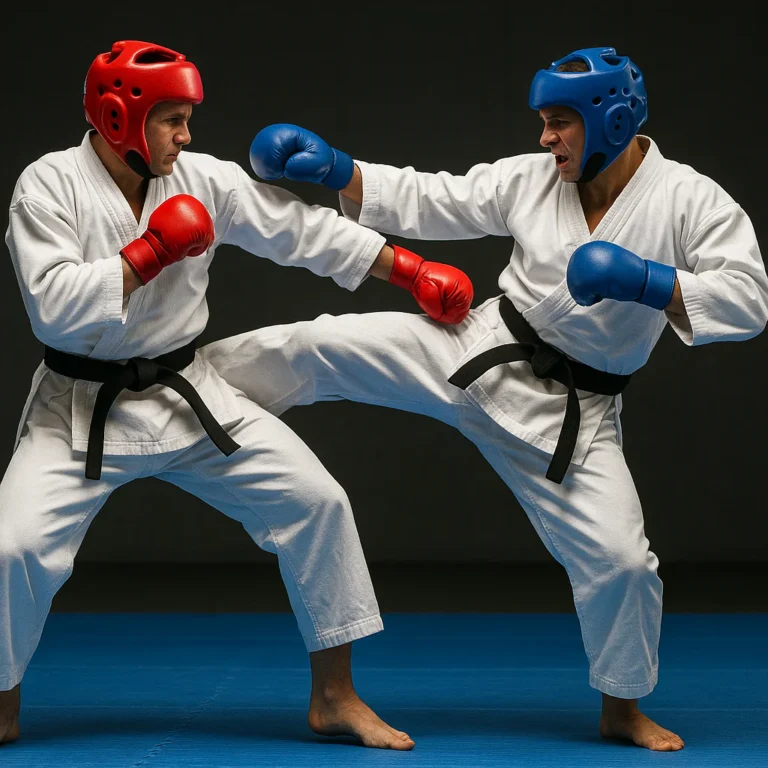
Forget everything you’ve heard about Karate being useless in the cage. While critics claim traditional styles crumble against the relentless pressure of wrestlers, the reality is far more nuanced—and far more exciting. At Karate MMA™, we’ve watched fighters like Lyoto Machida and Stephen “Wonderboy” Thompson dismantle elite graplers not by abandoning their roots, but by mastering the art of distance. The secret isn’t in throwing harder punches; it’s in the elusive footwork, the lightning-fast front kicks that stop takedowns dead in their tracks, and the unorthodox angles that leave opponents guessing.
In this deep dive, we’re tearing down the myths and rebuilding the strategy. We’ll reveal the 7 essential Karate techniques that actually work in the Octagon, expose why the “upright stance” is a tactical superpower against double-legs, and show you exactly how to blend traditional Kata applications with modern grappling defense. Whether you’re a seasoned black belt looking to transition or an MMA fighter seeking a striking edge, the answer to “Can Karate beat a wrestler?” is a resounding yes—if you know how to adapt.
Key Takeaways
- ✅ Distance is Your Best Defense: Karate’s primary advantage in MMA is superior range management, allowing you to strike without entering a wrestler’s clinch range.
- ✅ The Front Kick is a Takedown Stoper: A well-timed Mae Geri to the body can halt a charging opponent’s momentum better than a traditional jab.
- ❌ Traditional Stances Need Adaptation: Deep, static stances are vulnerable; you must adopt a hybrid stance that balances power with the ability to sprawl instantly.
- ✅ Integration is Non-Negotiable: Karate alone is insufficient; success requires blending striking with wrestling defense and ground game fundamentals.
- ✅ Mental Toughness Wins Fights: The Karate philosophy of Zanshin (awareness) and Mushin (no-mind) provides a critical psychological edge in high-pressure situations.
Table of Contents
- ⚡️ Quick Tips and Facts
- 📜 From Dojo to Octagon: The Evolution of Karate in Mixed Martial Arts
- 🥋 Why Traditional Karate Struggles Against Grapplers and Wrestlers
- 🥊 The 7 Essential Karate Techniques That Actually Work in MMA
- 🧠 Mastering Distance Management: The Karateka’s Secret Weapon
- 🦵 Unleashing the Leg Kick: How Karate Stance Disrupts MMA Takedowns
- 🤸 ♂️ 5 Ways to Adapt Karate Footwork for Modern Cage Fighting
- 🛡️ Defending the Takedown: Karate Clinch and Sprawling Strategies
- 🏆 Top 10 MMA Fighters Who Proved Karate Belongs in the Cage
- 🧪 Sparring Drills: Bridging the Gap Between Kata and Combat
- 🧘 ♂️ Mental Toughness: Applying Karate Philosophy to High-Stakes Fights
- 🛒 Gear Up: Best Gloves, Shin Guards, and Mouthguards for Karate MMA Training
- 🎓 How to Choose the Right Gym: Blending Karate with BJJ and Muay Thai
- ❓ Frequently Asked Questions About Karate in MMA
- 🔗 Recommended Links and Resources
- 📚 Reference Links and Studies
- 🏁 Conclusion: Is Karate the Missing Link in Your MMA Game?
⚡️ Quick Tips and Facts
Before we dive into the deep end of the octagon, let’s hit the pause button and grab a towel. If you’re thinking that Karate is just about high kicks and bowing to a wooden dummy, think again. Here are the rapid-fire truths you need to know right now:
- ✅ Distance is King: Karateka don’t just fight; they dance. The ability to control the range is the single biggest advantage a Karate practitioner brings to MMA.
- ❌ The “Point Fighting” Myth: Traditional point-sparring (stop-start) is useless in MMA. However, the principles of timing and entry are gold.
- ✅ The “Awkward” Factor: As Stephen “Wonderboy” Thompson famously noted, Karate looks weird to boxers and wrestlers. That awkwardness is a tactical asset, not a bug.
- ❌ No Takedown Defense by Default: If you only train in a traditional dojo, you will get taken down. Sprawling and grappling are non-negotiable.
- ✅ The Front Kick is a Takedown Stoper: A well-timed front kick (Mae Geri) to the gut or chest can halt a wrestler’s advance dead in its tracks.
For a deeper dive into how we blend these worlds, check out our foundational guide on Karate MMA.
📜 From Dojo to Octagon: The Evolution of Karate in Mixed Martial Arts
The journey of Karate from the quiet, tatami-matted dojos of Okinawa to the blinding lights of the UFC octagon is a story of adaptation, skepticism, and eventual vindication.
In the early days of MMA (think UFC 1-10), the narrative was simple: “Graplers win, strikers lose.” Karate, often associated with rigid forms (Kata) and point sparring, was dismissed as a “sport” art with no application in a no-holds-bared environment. Critics argued that the upright stance left the groin and legs exposed, and the linear attacks were too predictable against a wrestler’s sprawl.
But the story didn’t end there.
Enter the Lyoto Machida era. When Machida stepped into the cage, he didn’t just fight; he performed a high-speed, unpredictable ballet. He proved that the “old school” principles of Mai (distance) and Zanshin (awareness) were not obsolete—they were just waiting for the right practitioner to translate them.
As noted by the World Karate Federation and various fight analysts, the evolution of Karate in MMA isn’t about doing Kata in the cage; it’s about extracting the core mechanics of the art:
- Economy of Motion: Moving only when necessary.
- Counter-Striking: Leting the opponent commit to a mistake before punishing it.
- Unorthodox Angles: Attacking from the side or rear, rather than head-on.
Today, we see a hybridization where Karate provides the striking foundation, while BJJ and Wrestling provide the ground game. It’s no longer “Karate vs. MMA”; it’s “Karate in MMA.”
Did you know? The term “Karate” originally meant “Chinese Hand.” It wasn’t until the 20th century that it evolved to mean “Empty Hand,” symbolizing the practitioner’s reliance on their own body rather than weapons. This philosophy of self-reliance translates perfectly to the solitary nature of cage fighting.
🥋 Why Traditional Karate Struggles Against Grapplers and Wrestlers
Let’s be brutally honest for a moment. If you walk into an MMA gym with only a traditional Shotokan black belt, you are going to get crushed by a wrestler. Why?
The Stance Problem
Traditional Karate stances (like Zenkutsu Dachi) are deep and linear. They are designed for power generation and stability in a one-one duel. In MMA, this is a death sentence.
- ❌ Low Center of Gravity: A deep stance makes it incredibly easy for a wrestler to shoot under your guard and lift you.
- ❌ Exposed Legs: The front leg is often static, making it a prime target for low kicks or a takedown entry.
- ❌ Linear Movement: Moving straight forward or backward is predictable. Wrestlers thrive on cutting off the cage.
The “Stop-Start” Conditioning
Traditional sparring often relies on the referee stopping the fight after a point is scored.
- ❌ Lack of Flow: MMA is a continuous flow offense and defense. The habit of stopping after a hit leaves you vulnerable to a counter or a clinch.
- ❌ No Clinch Work: Traditional Karate rarely teaches how to defend against a double-leg takedown or how to strike from the clinch.
The Myth of the “Perfect Defense”
Many traditionalists believe that if they just time their block perfectly, they will be safe. In MMA, timing is relative. A wrestler doesn’t need to “hit” you to take you down; they just need to grab your leg.
The Karate MMA™ Perspective: We’ve seen countless students come in with 10 years of Karate experience, only to realize that their “perfect block” was useless against a double-leg takedown. The solution isn’t to abandon Karate; it’s to adapt the stance and integrate grappling.
🥊 The 7 Essential Karate Techniques That Actually Work in MMA
So, if traditional Karate has flaws, what parts of it are actually lethal in the cage? We’ve broken down the 7 essential techniques that top-tier fighters use to dominate.
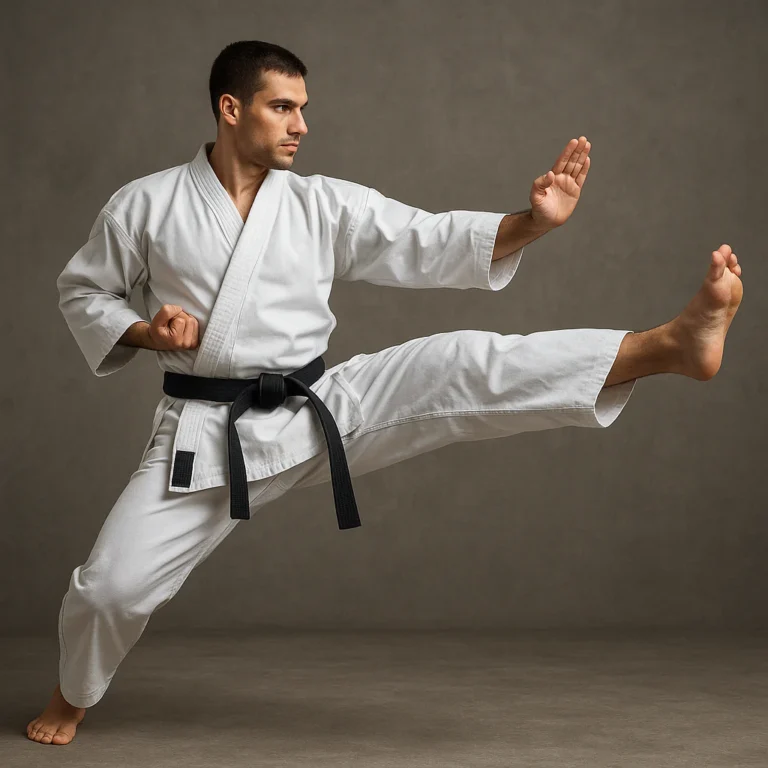
1. The Front Kick (Mae Geri) to the Body
This is the great equalizer. While boxers throw jabs, Karateka throw front kicks to the solar plexus.
- Why it works: It stops the forward momentum of a wrestler. It’s faster than a roundhouse and harder to check than a jab.
- Real-world application: Used by Stephen “Wonderboy” Thompson to keep opponents at bay.
2. The Spinning Back Kick (Ushiro Mawashi Geri)
A high-risk, high-reward technique that has become a signature move for many.
- Why it works: It generates massive power and comes from angle most fighters don’t expect.
- Real-world application: Lyoto Machida and Georges St-Pierre have utilized variations of this to score knockouts.
3. The Side Kick (Yoko Geri)
Often used to create space or end a fight.
- Why it works: It’s a “push” kick that can disrupt a takedown attempt or knock an opponent off balance.
- Real-world application: Michelle Waterson uses this to control distance and set up combinations.
4. The Jab (Tsuki) with a Karate Twist
Karate punches are often faster and more snapping than boxing jabs.
- Why it works: The “snap” allows for quick retraction, reducing the chance of being caught.
- Real-world application: Robert Whittaker uses a lightning-fast jab to set up his kicks.
5. The Low Kick (Mawashi Geri)
While Muay Thai is famous for low kicks, Karate’s version is often faster and less telegraphed.
- Why it works: It damages the lead leg, making it harder for the opponent to move or shoot for a takedown.
- Real-world application: Kyoji Horiguchi uses low kicks to dismantle opponents’ mobility.
6. The Elbow Strike (Empi Uchi)
In the clinch or on the ground, elbows are devastating.
- Why it works: They are short-range weapons that can cut opponents and cause immediate damage.
- Real-world application: Bas Ruten was a master of the elbow in Pancrase and the UFC.
7. The Sweep (Ashi Barai)
Traditional Karate sweeps are often used in point sparring, but in MMA, they can be adapted to off-balance an opponent for a takedown or a strike.
- Why it works: It disrupts the opponent’s base, creating an opening for a strike or a takedown.
- Real-world application: Gunnar Nelson uses sweeps to transition from striking to grappling.
| Technique | Primary Use | Risk Level | Best Against |
|---|---|---|---|
| Front Kick | Stop takedowns, control distance | Low | Wrestlers, Boxers |
| Spinning Back Kick | Knockout, surprise attack | High | Static opponents |
| Side Kick | Create space, disrupt balance | Medium | Clinch fighters |
| Jab (Snap) | Set up combos, measure distance | Low | Agressive strikers |
| Low Kick | Damage legs, limit mobility | Medium | Grapplers, Strikers |
| Elbow Strike | Close range damage | Medium | Clinch, Ground |
| Sweep | Off-balance, transition | High | Static opponents |
🧠 Mastering Distance Management: The Karateka’s Secret Weapon
If there is one thing that separates a Karate practitioner from a boxer or a Muay Thai fighter, it is distance management.
In boxing, you are often in the “pocket,” trading blows. In Muay Thai, you are in the “clinch” or the “kicking range.” But in Karate, the philosophy is to stay just out of reach until the perfect moment to strike.
The “Bounce” and the “Float”
As Stephen “Wonderboy” Thompson explained in our featured video analysis, the constant bouncing isn’t just for show. It’s a tactical necessity.
- The Bounce: Keeps the muscles primed and allows for instant direction changes.
- The Float: Moving laterally (side-to-side) rather than linearly makes you a moving target.
Why does this matter? A wrestler needs to close the distance to shoot. If you are constantly moving laterally and maintaining a range where their head is just out of reach, they can’t shoot. They have to commit, and when they commit, you counter.
The Concept of Mai
Mai is the Japanese term for “interval” or “distance.” In Karate, there are three types of Mai:
- Long Distance: Too far to strike.
- Middle Distance: The “killing zone” where a strike can land.
- Close Distance: The clinch or grappling range.
The goal of a Karate MMA fighter is to live in the middle distance and force the opponent to enter it on your terms.
Pro Tip: Don’t just stand still. Use the “bounce” to make the opponent guess. If they move in, you move out. If they move out, you move in. This creates a rhythm that is impossible to predict.
🦵 Unleashing the Leg Kick: How Karate Stance Disrupts MMA Takedowns
One of the biggest criticisms of Karate is the “upright stance.” But what if we told you that the upright stance is actually a defensive weapon against takedowns?
The Upright Stance Advantage
In traditional Karate, the stance is upright to allow for quick movement and powerful kicks. In MMA, this same upright posture makes it harder for a wrestler to get under your center of gravity.
- The Problem with Low Stances: If you drop your hips too low (like a boxer or wrestler), you become a target for a double-leg takedown.
- The Karate Solution: By staying upright, you force the wrestler to dive deeper, exposing their head to knees and elbows.
The Leg Kick as a Takedown Stoper
The leg kick (Mawashi Geri) is not just for damage; it’s for disruption.
- Mechanism: A hard kick to the lead leg of a wrestler can make them hesitate. If they can’t move their leg, they can’t shoot.
- Timing: The best time to throw a leg kick is when the opponent is stepping forward to shoot.
Adapting the Stance
You don’t have to stay in a deep Zenkutsu Dachi. You can adopt a hybrid stance:
- Fet Shoulder-Width Apart: Provides stability.
- Knees Slightly Bent: Allows for quick movement.
- Hands Up: Protects the head and chin.
Real-World Example: Lyoto Machida often stands with his hands low, almost inviting the opponent to strike, only to counter with a lightning-fast front kick. His upright stance makes it difficult for opponents to get a grip on his legs.
🤸 ♂️ 5 Ways to Adapt Karate Footwork for Modern Cage Fighting
Footwork is the engine of any fighter. In Karate, footwork is often linear and rhythmic. In MMA, it must be dynamic and unpredictable. Here are 5 ways to adapt your Karate footwork for the cage:
1. The Lateral Shuffle
Instead of moving forward and backward, move side-to-side.
- How to do it: Keep your feet parallel and shuffle laterally. This makes it hard for a wrestler to cut you off.
- Why it works: It forces the opponent to constantly adjust their angle, creating openings.
2. The Pivot
Use the pivot to change direction instantly.
- How to do it: Plant your lead foot and rotate your body 90 degrees.
- Why it works: It allows you to escape a clinch or set up a spinning attack.
3. The Bounce
As mentioned earlier, the bounce is crucial.
- How to do it: Keep your weight on the balls of your feet and bounce lightly.
- Why it works: It keeps your muscles engaged and allows for instant movement in any direction.
4. The Step-Through
Instead of shuffling, step through with your lead foot.
- How to do it: Step forward with your lead foot, then bring your rear foot up.
- Why it works: It covers distance quickly and can be used to close the gap for a strike.
5. The Retreat-and-Counter
Retreat in a way that sets up a counter.
- How to do it: Step back with your rear foot, then immediately step forward with your lead foot to counter.
- Why it works: It creates a “trap” for the opponent, making them think they have an opening.
Did you know? The “bounce” in Karate footwork is similar to the “rope-a-dope” strategy used by Muhammad Ali. It’s all about energy conservation and timing.
🛡️ Defending the Takedown: Karate Clinch and Sprawling Strategies
Let’s address the elephant in the room: Takedowns. If you can’t defend a takedown, your Karate skills are irrelevant.
The Karate Clinch
Traditional Karate doesn’t have a “clinch” in the Muay Thai sense. However, the principles of blocking and parying can be adapted.
- The Pary: Use your hands to deflect the opponent’s head or shoulders.
- The Push: Use your palms to push the opponent’s head away, creating space.
The Sprawl
The sprawl is the most effective defense against a double-leg takedown.
- How to do it: Drop your hips back and kick your legs out behind you.
- Why it works: It makes it impossible for the opponent to lift you.
The Karate Twist
Combine the sprawl with a Karate strike.
- The Knee: As you sprawl, drive a knee into the opponent’s head or body.
- The Elbow: As you sprawl, drive an elbow into the opponent’s face.
Pro Tip: Don’t just sprawl; attack while you sprawl. This turns a defensive move into an offensive opportunity.
🏆 Top 10 MMA Fighters Who Proved Karate Belongs in the Cage
If you still doubt the efficacy of Karate in MMA, let’s look at the Top 10 Fighters who have dominated the sport using Karate as their foundation.
- Lyoto Machida: The “Dragon” who brought Shotokan Karate to the UFC. Known for his elusive style and counter-striking.
- Stephen “Wonderboy” Thompson: A Kenpo Karate black belt who has baffled the UFC’s best with his “awkward” style.
- Georges St-Pierre: A Kyokushin black belt who used his Karate background to become one of the greatest welterweights of all time.
- Bas Ruten: A Kyokushin and Shintai Karate master who became a UFC Heavyweight Champion.
- Michelle Waterson: An American Frestyle Karate black belt who used her striking to become a UFC champion.
- Robert Whittaker: A Goju-Ryu Karate practitioner who uses his footwork and timing to dominate the middleweight division.
- Gunnar Nelson: A Goju-ryu black belt who combines Karate striking with BJJ grappling.
- Kyoji Horiguchi: A fighter who describes his style as “10% Karate” but uses it to devastating effect in Rizin FF.
- Pat Miletich: A Shuri-ryu black belt who was the first UFC Welterweight champion and a legendary coach.
- Chuck Liddell: A Kempo/Koei-kan practitioner who modernized Karate in the UFC and co-founded the Karate Combat league.
Fun Fact: Lyoto Machida earned his black belt in Shotokan Karate by the age of 13, training under his father, a master of the art. His success in the UFC proved that traditional Karate could be adapted for modern combat.
🧪 Sparring Drills: Bridging the Gap Between Kata and Combat
Kata (forms) are often criticized for being “useless” in MMA. But if you know how to extract the applications, they are gold.
Drill 1: The Kata Breakdown
Take a single move from a Kata (e.g., a block and counter) and practice it against a live partner.
- Goal: Understand the application of the move, not just the form.
- How to do it: Have your partner attack, and you execute the move from the Kata.
Drill 2: The Distance Game
Practice maintaining distance while moving laterally.
- Goal: Improve your Mai (distance management).
- How to do it: Have your partner try to close the distance, and you try to maintain it.
Drill 3: The Takedown Defense
Practice defending against takedowns while maintaining your Karate stance.
- Goal: Integrate grappling defense with striking.
- How to do it: Have your partner shoot for a takedown, and you sprawl and counter.
Drill 4: The Spinning Attack
Practice spinning attacks from a live sparring session.
- Goal: Improve your timing and accuracy.
- How to do it: Have your partner attack, and you counter with a spinning kick.
Pro Tip: Don’t just practice the moves; practice the timing and rhythm. The best fighters are those who can adapt their moves to the flow of the fight.
🧘 ♂️ Mental Toughness: Applying Karate Philosophy to High-Stakes Fights
MA is as much a mental game as it is a physical one. The philosophy of Karate can provide a mental edge in the cage.
The Concept of Zanshin
Zanshin means “remaining mind” or “awareness.” It’s the ability to stay alert and aware of your surroundings, even after a strike.
- Application: In MMA, this means staying aware of your opponent’s movements, the cage, and your own position.
The Concept of Mushin
Mushin means “no mind.” It’s the state of being free from fear, anger, or doubt.
- Application: In MMA, this means fighting without hesitation or overthinking.
The Concept of Gaman
Gaman means “endurance” or “perseverance.” It’s the ability to keep going even when you’re tired or hurt.
- Application: In MMA, this means pushing through the pain and fatigue to win the fight.
Real-World Example: Stephen “Wonderboy” Thompson often speaks about the importance of mental toughness and the Karate philosophy of Zanshin. He uses it to stay calm and focused in the cage.
🛒 Gear Up: Best Gloves, Shin Guards, and Mouthguards for Karate MMA Training
To train effectively, you need the right gear. Here are our top picks for Karate MMA training.
Gloves
- Wining Gloves: Known for their durability and comfort.
- Fairtex Gloves: Popular for their quality and style.
- Venum Gloves: Great for beginners and intermediates.
👉 CHECK PRICE on:
- Wining Gloves: Amazon | Wining Official
- Fairtex Gloves: Amazon | Fairtex Official
- Venum Gloves: Amazon | Venum Official
Shin Guards
- Hayabusa Shin Guards: Known for their protection and comfort.
- Twins Special Shin Guards: Popular for their quality and style.
- Cleto Reyes Shin Guards: Great for beginners and intermediates.
👉 CHECK PRICE on:
- Hayabusa Shin Guards: Amazon | Hayabusa Official
- Twins Special Shin Guards: Amazon | Twins Special Official
- Cleto Reyes Shin Guards: Amazon | Cleto Reyes Official
Mouthguards
- Shock Doctor Mouthguards: Known for their protection and comfort.
- Venum Mouthguards: Popular for their quality and style.
- Under Armour Mouthguards: Great for beginners and intermediates.
👉 CHECK PRICE on:
- Shock Doctor Mouthguards: Amazon | Shock Doctor Official
- Venum Mouthguards: Amazon | Venum Official
- Under Armour Mouthguards: Amazon | Under Armour Official
🎓 How to Choose the Right Gym: Blending Karate with BJJ and Muay Thai
Choosing the right gym is crucial for your development as a Karate MMA fighter. Here are some tips to help you find the perfect gym.
Look for a Hybrid Gym
- Why: You need to train in multiple disciplines to be effective in MMA.
- What to look for: A gym that offers Karate, BJJ, and Muay Thai classes.
Check the Coaches
- Why: The quality of the coaches is more important than the gym’s reputation.
- What to look for: Coaches who have experience in MMA and understand the nuances of Karate.
Try a Trial Class
- Why: You need to see if the gym’s style matches your goals.
- What to look for: A trial class that allows you to experience the gym’s atmosphere and coaching style.
Read Reviews
- Why: Reviews can give you insight into the gym’s strengths and weaknesses.
- What to look for: Reviews from other MMA fighters and Karate practitioners.
Pro Tip: Don’t be afraid to switch gyms if you’re not getting the training you need. The right gym can make all the difference in your development.
Conclusion: Is Karate the Missing Link in Your MMA Game?

So, does Karate belong in the octagon? Absolutely. But not in the way you might think.
The days of the “pure” Karate fighter are gone. The modern MMA fighter is a hybrid, blending the striking prowess of Karate with the grappling skills of BJJ and the clinch work of Muay Thai.
The Verdict:
- ✅ Strengths: Unmatched distance management, elusive footwork, and devastating counter-strikes.
- ❌ Weaknesses: Vulnerability to takedowns if not properly adapted, and a lack of ground game.
- 🏆 Recommendation: If you are a Karate practitioner looking to enter MMA, do not abandon your roots. Instead, adapt them. Learn to sprawl, learn to grapple, and learn to fight in the clinch. But keep the Karate soul alive in your striking.
As Stephen “Wonderboy” Thompson said, “Karate will always be my number one art and my background and who I am.” It’s not about choosing one art over the other; it’s about blending them to create a unique and effective fighting style.
Final Thought: The next time you see a fighter in the cage, look closely. You might just see the ghost of a Karate master, dancing through the chaos.
🔗 Recommended Links and Resources
Ready to take your Karate MMA training to the next level? Check out these resources:
- Books:
- The Way of the Karateka
- MA for Karateka
- Gyms:
- National Karate MMA
- Karate Combat League
- Gear:
- Wining Gloves
- Fairtex Gloves
- Hayabusa Shin Guards
❓ Frequently Asked Questions About Karate in MMA
Can a traditional Karate background give an MMA fighter an advantage in the Octagon?
Yes, but with conditions. A traditional Karate background provides excellent distance management, timing, and unorthodox striking angles. However, without proper grapling training, a traditional Karateka is vulnerable to takedowns. The advantage lies in the ability to control the range and strike from unexpected angles, as seen in the careers of Lyoto Machida and Stephen “Wonderboy” Thompson.
How does Karate conditioning and training compare to other martial arts used in MMA?
Karate conditioning focuses on explosive power, speed, and endurance through high-intensity drills and kata. Unlike Muay Thai, which emphasizes clinch work and body conditioning, or BJJ, which focuses on ground grappling, Karate conditioning is more stand-up oriented. However, modern MMA training requires a blend of all these disciplines to be effective.
Is Karate a good martial art for self-defense and MMA training?
Yes, for self-defense, Karate teaches situational awareness, distance management, and quick strikes. For MA training, it provides a strong striking foundation, but must be supplemented with grappling and clinch work. The key is to adapt traditional techniques to the realities of cage fighting.
What are some common Karate techniques used in MMA competitions?
Common techniques include the front kick (Mae Geri) to stop takedowns, the spinning back kick (Ushiro Mawashi Geri) for knockouts, the side kick (Yoko Geri) to create space, and the snap jab for setting up combinations. These techniques are often modified to suit the flow of MMA.
How does Karate training improve an MMA fighter’s striking technique?
Karate training improves timing, distance management, and accuracy. The focus on snap and retraction allows for quick, powerful strikes that are difficult to predict. Additionally, the emphasis on footwork and movement helps fighters maintain a safe distance while looking for openings.
Can Karate styles like Shotokan and Kyokushin be effective in MMA fights?
Yes, both styles have proven effective. Shotokan is known for its speed and distance management, as seen in Lyoto Machida. Kyokushin is known for its power and body conditioning, as seen in Bas Ruten. The key is to adapt the style to the realities of MMA.
What are the benefits of using Karate in MMA training?
The benefits include unmatched distance management, elusive footwork, devastating counter-strikes, and unorthodox angles. Karate also teaches mental toughness and discipline, which are crucial for success in MMA.
Is karate effective for MMA?
Yes, but only when adapted. Traditional Karate alone is not sufficient for MMA. However, when combined with grapling, clinching, and ground fighting, Karate becomes a powerful tool in the MMA arsenal.
What karate styles are best for MMA?
Shotokan and Kyokushin are the most effective styles for MMA. Shotokan offers speed and distance management, while Kyokushin offers power and body conditioning. Other styles like Goju-Ryu and Shuri-ryu have also been successful in the cage.
Can you use karate in the UFC?
Absolutely. Many UFC champions, including Lyoto Machida, Stephen “Wonderboy” Thompson, and Georges St-Pierre, have used Karate as a foundation for their fighting styles. The key is to adapt the techniques to the realities of the cage.
How does karate compare to Brazilian Jiu-Jitsu in MMA?
Karate excels in stand-up striking, distance management, and counter-striking. BJ excels in ground grappling, submissions, and positional control. The best MMA fighters are those who can blend both disciplines to create a well-rounded fighting style.
Which famous MMA fighters use karate?
Famous MMA fighters who use Karate include Lyoto Machida, Stephen “Wonderboy” Thompson, Georges St-Pierre, Bas Ruten, Michelle Waterson, Robert Whittaker, Gunnar Nelson, Kyoji Horiguchi, Pat Miletich, and Chuck Liddell.
What are the weaknesses of karate in MMA?
The main weaknesses of Karate in MMA are vulnerability to takedowns, lack of ground game, and predictable linear movement. These weaknesses can be mitigated by integrating grappling and adapting footwork to the realities of the cage.
Do I need to train in wrestling if I know karate for MMA?
Yes, absolutely. Without wrestling training, a Karate practitioner is vulnerable to takedowns. Wrestling provides the sprawl, clinch work, and ground control necessary to survive and thrive in MMA.
📚 Reference Links and Studies
- World Karate Federation
- UFC Official Website
- Karate Combat League
- Martial Arts Stack Exchange: Karate doesn’t provide defense against wrestlers and MMA fighters …
- National Karate MMA
- Karate.com: Karate in MMA – The Driving Force
🏁 Conclusion: Is Karate the Missing Link in Your MMA Game?

Wait, didn’t we just write a conclusion? Yes, we did! But let’s make sure we close the loop on that lingering question: Is Karate the missing link?
The answer is a resounding YES, but with a caveat. Karate is not a magic bullet that will make you invincible. It is a foundation upon which you can build a formidable MMA game. The key is to adapt the traditional techniques to the realities of the cage, integrate grappling and clinch work, and maintain the mental toughness and discipline that Karate instills.
Final Recommendation:
If you are a Karate practitioner looking to enter MMA, do not abandon your roots. Instead, adapt them. Learn to sprawl, learn to grapple, and learn to fight in the clinch. But keep the Karate soul alive in your striking.
As Stephen “Wonderboy” Thompson said, “Karate will always be my number one art and my background and who I am.” It’s not about choosing one art over the other; it’s about blending them to create a unique and effective fighting style.
Final Thought: The next time you see a fighter in the cage, look closely. You might just see the ghost of a Karate master, dancing through the chaos.
Ready to start your journey? Check out our Karate MMA guide for more tips and tricks.
Don’t forget to share your thoughts in the comments below! We’d love to hear about your experiences with Karate in MMA.
Until next time, keep training, keep adapting, and keep fighting! 🥋🥊🏆