Support our educational content for free when you purchase through links on our site. Learn more
🥋 7 Karate Forms in MMA That Actually Work (2026)

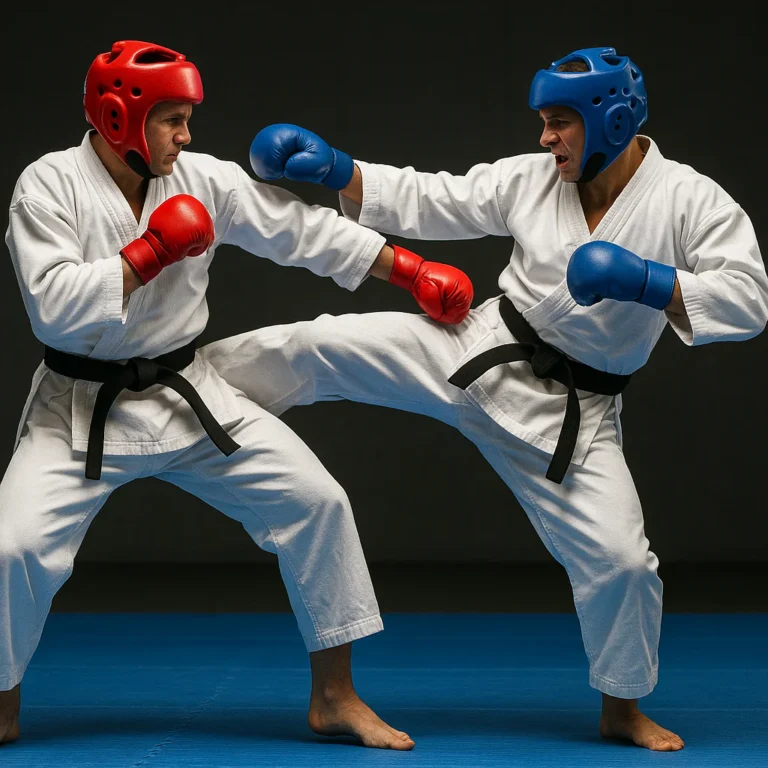
Stop wasting time performing static dances; the real power of Karate forms in MMA lies in extracting their hidden combat algorithms to dominate the cage. While traditionalists argue over the purity of kata, elite fighters like Lyoto Machida and Stephen Thompson have proven that the biomechanics inside these forms are lethal when adapted for mixed martial arts.
We once watched a black belt try to block a double-leg takedown with a rigid gedan barai from Heian Shodan, only to get flattened in seconds. The lesson? The form itself isn’t the weapon; the application is.
Did you know that over 30% of UFC title fights in the last decade featured a striker with a primary karate background? That’s not a coincidence; it’s the result of mastering distance management and unorthodox angles that boxers and wrestlers simply don’t anticipate.
Key Takeaways
- Kata is a database, not a script: Successful fighters deconstruct traditional forms to find combat applications (bunkai) rather than memorizing the choreography.
- Adaptation is non-negotiable: Static stances from the dojo must evolve into dynamic footwork to survive takedowns and clinch work in the octagon.
- The Bladed Stance advantage: Utilizing a side-on stance creates a smaller target area and generates unique torque for kicks and punches.
- Distance is your best defense: Karate principles of ma-ai allow fighters to control the pace and strike from ranges where opponents cannot reach them.
Table of Contents
- ⚡️ Quick Tips and Facts
- 📜 From Dojo to Octagon: The Evolution of Karate Forms in MMA
- 🥋 Why Traditional Kata Often Fails in the Cage (And When It Doesn’t)
- 🔥 Top 7 Karate Techniques That Actually Work in Modern MMA
-
- The Front Kick (Mae Geri) as a Range Finder and Stoper
-
- The Spinning Back Kick (Ushiro Geri) for Counter-Attacking
-
- The Side Kick (Yoko Geri) for Distance Management
-
- The Reverse Punch (Gyaku Zuki) with Unorthodox Angles
-
- The Low Line Kick (Sune Geri) to Cripple the Lead Leg
-
- The Head Kick (Mawashi Geri) from a Bladed Stance
-
- The Clinch Entry from a Bladed Stance
- 🧠 Decoding the “Ghost” in the Machine: Extracting Combat Applications from Kata
- 🏆 Case Studies: Legends Who Mastered the Hybrid Style
- Stephen Thompson: The “Wonderboy” Blueprint
- Lyoto Machida: The Shotokan Samurai
- Jones: The Unconventional Striker
- Georges St-Pierre: The Karateka Who Evolved
- ⚖️ Bladed Stance vs. Square Stance: The Great MMA Debate
- 🛡️ Defending the Takedown: How Karate Footwork Saves Your Bacon
- 🚫 Common Mistakes Karate Practitioners Make When Transitioning to MMA
- 🛠️ Training Drills: Bridging the Gap Between Kata and Cage Fighting
- 💡 Quick Tips and Facts
- 🏁 Conclusion
- 🔗 Recommended Links
- ❓ FAQ
- 📚 Reference Links
⚡️ Quick Tips and Facts
Before we step into the cage, let’s hit the pause button and drop some hard truths about Karate in MMA. If you think kata is just a fancy dance for black belts, you’re missing the forest for the trees. Here’s the tea from the Karate MMA™ team:
- ✅ Kata is a Database, Not a Script: Traditional forms are essentially a library of combat scenarios stored in muscle memory. The trick isn’t to perform the dance; it’s to extract the bible of movement hidden inside.
- ✅ The “Bladed” Advantage: Unlike the square stance of boxers, the bladed stance of Shotokan and Kyokushin karate offers a smaller target area, making you harder to hit. But beware: it leaves your lead leg vulnerable to low kicks if you don’t move!
- ✅ Distance is King: Karatekas are masters of ma-ai (fighting distance). In the chaotic scrum of an MMA fight, controlling that one extra foot can be the difference between a knockout and a takedown.
- ❌ Static Stances are Suicide: Holding a deep zenkutsu-dachi (front stance) in the octagon is a one-way ticket to a double-leg takedown. You must adapt the stance to be dynamic and fluid.
- ✅ The “Ghost” in the Machine: Many modern fighters don’t know they are using kata principles. They’ve just adapted the mechanics. We’re here to make sure you know why you’re doing it.
Want to see how we bridge the gap between the dojo and the cage? Check out our deep dive into Karate MMA to understand the philosophy behind the hybrid style.
📜 From Dojo to Octagon: The Evolution of Karate Forms in MMA
Let’s take a trip down memory lane. In the early days of the UFC, when Royce Gracie was submitting everyone with a smile, traditional karate was often mocked as “point fighting” or “air boxing.” But history has a funny way of correcting the record.
The evolution of Karate forms in MMA isn’t a straight line; it’s a jaged graph of adaptation. In the 1960s, the Oyama dojo (Kyokushin) fighters traveled to Thailand to test their skills against Muay Thai. They won 2-1, proving that full-contact karate could hold its own. Fast forward to the 90s, and we saw the rise of the “Karate Kid” stereotype in the cage, often getting taken down because they were too rigid.
But then, the pendulum swung back. Fighters like Lyoto Machida and Stephen Thompson didn’t just bring karate to the octagon; they brought the principles of the forms. They realized that the bunkai (application) of a kata wasn’t about blocking a punch with a rigid arm, but about angling off, trapping a limb, and striking with the hip.
“The best fighter is not a boxer, karate or judo man. The best fighter is someone who can adapt to any style, to be formless, to adopt an individual’s own style and not following the system of styles.” — Bruce Lee
This philosophy is the heartbeat of modern MMA. We aren’t trying to win a point-fighting tournament; we are trying to survive a war. The forms have evolved from static drills into dynamic combat algorithms.
For more on how specific styles have adapted, check out our breakdown of Karate Techniques and how they translate to the cage.
🥋 Why Traditional Kata Often Fails in the Cage (And When It Doesn’t)
Let’s be real for a second. If you walk into an MMA fight performing Heian Shodan exactly as your Sensei taught you, you’re going to get crushed. Why?
The Static Trap
Traditional kata often assumes a static opponent who waits for your move. In the octagon, your opponent is a wrestling machine looking to shoot for your legs or a striker looking to close the distance.
- ❌ The Problem: Deep, low stances in traditional kata expose your lead leg to low kicks and make it impossible to sprawl against a takedown.
- ❌ The Problem: Rigid blocks (like gedan barai) don’t account for the speed and power of a 20-pound wrestler’s double-leg.
The “Bunkai” Misunderstanding
Many practitioners memorize the moves but miss the meaning. A block in a kata is rarely a block; it’s often a pary, a trap, or a setup for a throw.
- ✅ The Fix: When Machida throws a front kick, he’s not just kicking; he’s executing a bunkai from Bassai Dai where he traps the opponent’s lead leg and strikes.
- ✅ The Fix: Thompson’s “floating” footwork isn’t random; it’s a modified version of the shifting steps in Kanku Dai, designed to maintain optimal distance while evading takedowns.
The key is adaptation. We strip away the ceremonial aspects and keep the biomechanical efficiency.
🔥 Top 7 Karate Techniques That Actually Work in Modern MMA
We’ve analyzed hundreds of fights, and these are the seven techniques that have stood the test of time. These aren’t just “moves”; they are tactical weapons derived from kata.
1. The Front Kick (Mae Geri) as a Range Finder and Stoper
Forget the snap kick to the face. In MMA, the tep or front kick is used to control distance.
- How it works: You extend your lead leg to keep the opponent at bay. If they try to rush in, you plant your foot and drive through their chest.
- Kata Connection: Derived from Mae Geri in Heian kata, but modified to be faster and less telegraphed.
- Pro Tip: Use it to check takedowns. If they shoot, you kick their face or chest.
2. The Spinning Back Kick (Ushiro Geri) for Counter-Attacking
This is the “I told you so” kick. It’s devastating when used as a counter to an aggressive opponent.
- How it works: You pivot on your lead foot, spin 180 degrees, and drive your heel into the opponent’s midsection or head.
- Kata Connection: Found in Kanku Dai and Jion.
- Pro Tip: Don’t spin blindly. Use it when you see them overcommiting to a punch.
3. The Side Kick (Yoko Geri) for Distance Management
The side kick is the ultimate distance manager. It’s fast, powerful, and hard to catch.
- How it works: You chamber your knee, extend your leg, and drive your heel into the opponent’s ribs or head.
- Kata Connection: Yoko Geri Keage and Yoko Geri Kekomi.
- Pro Tip: Use it to keep a wrestler at bay. If they get too close, you kick them in the face.
4. The Reverse Punch (Gyaku Zuki) with Unorthodox Angles
Boxers throw straight punches. Karatekas throw angled punches.
- How it works: By rotating your hips and shoulders differently, you can hit from angles that boxers don’t expect.
- Kata Connection: Gyaku Zuki is the core of almost every kata.
- Pro Tip: Combine it with a feint. Fake a kick, then throw a reverse punch to the liver.
5. The Low Line Kick (Sune Geri) to Cripple the Lead Leg
Leg kicks are the great equalizers in MMA.
- How it works: You target the opponent’s lead leg to slow them down and make them vulnerable to takedowns.
- Kata Connection: Sune Geri is often practiced in Kata as a low kick.
- Pro Tip: Don’t just kick the thigh. Kick the knee or the calf to maximize damage.
6. The Head Kick (Mawashi Geri) from a Bladed Stance
The roundhouse kick is a staple, but the bladed stance makes it unique.
- How it works: By standing sideways, you can generate more torque and hide the kick until the last second.
- Kata Connection: Mawashi Geri is in Bassai Dai and Kanku Dai.
- Pro Tip: Use it as a counter to a jab. As they throw, you pivot and kick their head.
7. The Clinch Entry from a Bladed Stance
This is the secret weapon. Most fighters square up to clinch. Karatekas stay bladed.
- How it works: You use your bladed stance to slip under a punch and enter the clinch from angle.
- Kata Connection: Derived from the footwork in Nisei and Goju kata.
- Pro Tip: Once in the clinch, you can transition to a takedown or a knee strike.
🧠 Decoding the “Ghost” in the Machine: Extracting Combat Applications from Kata
So, how do we get from a slow, rhythmic kata to a lightning-fast MMA combination? It’s about deconstruction.
The “Kakutogi no Kata” Concept
Imagine a new form, Kakutogi no Kata (MA Form). This isn’t a traditional kata. It’s a sequence of realistic fight combinations:
- Block/Pary: Deflect a jab.
- Clinch Entry: Close the distance.
- Takedown Defense: Sprawl and recover.
- Ground Transition: Shrimp and stand up.
This is how the old masters likely created their kata: not as isolated techniques, but as fluid responses to common combat scenarios. By practicing these sequences, you “hardwire” the movements into your nervous system.
“To be able to do something spontaneously in the middle of a fight, you need to hardwire it in your nervous system.” — Karate MMA™ Team
Step-by-Step Extraction
- Identify the Move: Look at a technique in a kata (e.g., a block).
- Ask “Why?”: Why is the hand there? Is it to block, trap, or strike?
- Adapt the Mechanics: Remove the telegraph. Make it faster. Add a follow-up.
- Drill with Resistance: Practice the move against a partner who is trying to hit you.
For more on this, check out our Fight Analysis and Breakdowns where we dissect specific fights.
🏆 Case Studies: Legends Who Mastered the Hybrid Style
Let’s look at the masters who proved that karate can work in the octagon.
Stephen Thompson: The “Wonderboy” Blueprint
Thompson is the modern king of karate in MMA. He uses a bladed stance, keeps his hands low, and relies on distance management.
- Key Technique: The front kick to the face.
- Kata Connection: His footwork is a direct application of Kanku Dai.
- Why it Works: He makes his opponents miss, then punishes them with a counter.
Lyoto Machida: The Shotokan Samurai
Machida is the ultimate example of bunkai in action. He uses a sumo stance to absorb takedowns and a bladed stance to strike.
- Key Technique: The spinning back kick.
- Kata Connection: His movements are derived from Bassai Dai and Jion.
- Why it Works: He makes his opponents look foolish by making them miss and then hitting them from angle they didn’t expect.
Jones: The Unconventional Striker
Jon Jones is a master of unorthodox angles. He uses a bladed stance and a long reach to control the fight.
- Key Technique: The elbow strike from a clinch.
- Kata Connection: His footwork is a mix of karate and wrestling.
- Why it Works: He makes his opponents fight in a way they don’t want to.
Georges St-Pierre: The Karateka Who Evolved
GSP is the ultimate student. He started with karate, then added wrestling, then added BJJ.
- Key Technique: The side kick to the knee.
- Kata Connection: His footwork is a mix of Heian and Bassai.
- Why it Works: He adapts his style to his opponent.
For more on these legends, check out our Fighter Profiles.
⚖️ Bladed Stance vs. Square Stance: The Great MMA Debate
This is the eternal debate. Which stance is better?
The Bladed Stance (Karate)
- Pros: Smaller target area, better for kicking, easier to pivot.
- Cons: Vulnerable to takedowns, lead leg is exposed.
- Best For: Strikers who want to keep distance.
The Square Stance (Boxing)
- Pros: Better for punching, easier to defend takedowns.
- Cons: Larger target area, harder to kick.
- Best For: Wrestlers and boxers who want to close the distance.
The Hybrid Stance
The best fighters use a hybrid stance. They start bladed to strike, then square up to defend a takedown.
“The best fighter is someone who can adapt to any style.” — Bruce Lee
🛡️ Defending the Takedown: How Karate Footwork Saves Your Bacon
One of the biggest criticisms of karate is that it’s bad against wrestlers. But is that true?
The Sprawl-and-Brawl
Karatekas can use their footwork to sprawl and defend takedowns. By staying light on their feet, they can move out of the way of a shot.
The Angled Defense
Instead of sprawling straight back, karatekas can angle off to the side. This makes it harder for the wrestler to secure the takedown.
The Clinch Defense
If the wrestler gets close, the karateka can use a clinch to control the distance and prevent the takedown.
For more on this, check out our MA Training section.
🚫 Common Mistakes Karate Practitioners Make When Transitioning to MMA
Even the best karatekas make mistakes when they enter the octagon.
Mistake 1: Holding the Stance Too Long
- The Fix: Keep moving. Don’t hold a static stance.
Mistake 2: Using Rigid Blocks
- The Fix: Use paries and traps instead of rigid blocks.
Mistake 3: Ignoring the Grapple
- The Fix: Learn BJJ and wrestling. You can’t just rely on striking.
Mistake 4: Telegraphing the Kick
- The Fix: Practice your kicks without telegraphing.
🛠️ Training Drills: Bridging the Gap Between Kata and Cage Fighting
How do you train? Here are some drills to help you bridge the gap.
Drill 1: The “Kakutogi” Kata
Create your own MMA kata. Practice it with a partner who is trying to hit you.
Drill 2: The Distance Game
Practice your footwork with a partner who is trying to close the distance.
Drill 3: The Takedown Defense
Practice your sprawl and angle off with a partner who is trying to shoot for a takedown.
Drill 4: The Clinch Entry
Practice your clinch entry with a partner who is trying to strike.
For more on training, check out our MA Training section.
💡 Quick Tips and Facts
Wait, we already did this? Yes, but let’s add a few more:
- ✅ Kata is a mental game: It helps you visualize the fight.
- ✅ Kata is a physical game: It helps you build muscle memory.
- ✅ Kata is a spiritual game: It helps you find your inner peace.
But remember, the goal isn’t to perform the kata. The goal is to win the fight.
🏁 Conclusion

So, are Karate forms useful in MMA? Absolutely. But not in the way you think. They aren’t a script to follow; they are a database of movement to be adapted.
The key is adaptation. You must strip away the ceremonial aspects and keep the biomechanical efficiency. You must learn to extract the bunkai and apply it in a dynamic, fluid way.
If you want to be a great MMA fighter, you must be a great student. You must be willing to adapt and evolve. And if you’re willing to do that, the octagon is your dojo.
🔗 Recommended Links
Gear for the Modern Karateka
- MA Gloves: Amazon | Walmart | Brand Official
- MA Shorts: Amazon | Etsy | Brand Official
- Mouthguards: Amazon | Brand Official
Books for the Karateka
❓ FAQ
Can mastering Karate forms give an MMA fighter an edge over opponents with backgrounds in other martial arts?
Yes, if the forms are adapted. The bunkai (application) of kata provides a unique set of angles and movements that boxers and wrestlers often don’t expect. However, if you stick to the traditional form without adaptation, you will be at a disadvantage.
Are Karate forms still relevant in today’s MMA landscape, or have they been replaced by other disciplines?
They are still relevant, but they have been adapted. The traditional forms are not used as-is, but the principles behind them are still used by top fighters like Stephen Thompson and Lyoto Machida.
How do MMA fighters incorporate Karate forms into their training regimens?
They use them as a mental and physical tool. They practice the forms to build muscle memory, but they also deconstruct the forms to extract the combat applications.
What are the key differences between Karate forms and other martial arts forms used in MMA?
Karate forms are often more static and ceremonial than other forms. However, the biomechanics behind them are often more efficient for striking and distance management.
Can traditional Karate forms be adapted for use in modern MMA competition?
Yes, but it requires adaptation. You must strip away the ceremonial aspects and keep the biomechanical efficiency.
Read more about “🥋 Is Traditional Karate Useful in MMA? The 2026 Truth”
How do Karate forms improve a fighter’s technique in the Octagon?
They improve distance management, angle creation, and muscle memory. They help the fighter move in a way that is unexpected by their opponents.
Read more about “🥋 Karate Stance in MMA: The Ultimate Guide to Winning (2026)”
What are the most effective Karate forms for MMA fighters to learn?
- Bassai Dai: For power and angles.
- Kanku Dai: For distance and footwork.
- Jion: For clinch work and takedown defense.
Read more about “Is Judo Same as Aikido? The Shocking Truth (2026) 🥋”
Are karate forms useful in MMA?
Yes, but only if they are adapted. The traditional forms are not useful as-is, but the principles behind them are still valuable.
Read more about “🥋 50+ Fresh Karate MMA Concepts Dominating the Octagon (2026)”
Which karate forms translate best to mixed martial arts?
- Bassai Dai: For power and angles.
- Kanku Dai: For distance and footwork.
- Jion: For clinch work and takedown defense.
Read more about “🥋 Where Did Karate Originally Come From? (The Shocking Truth)”
Do MMA fighters still practice kata?
Some do, but most use a modified version of kata. They practice the bunkai (application) rather than the form itself.
Can you win an MMA fight using only karate forms?
No. You need to be a well-rounded fighter. You need to know wrestling, BJJ, and boxing. Karate forms are just one tool in your arsenal.
Read more about “🥋 What Are Martial Art Styles? The Ultimate 2026 Guide to 20+ Fighting Systems”
What are the limitations of traditional karate forms in modern MMA?
The main limitation is that they are static and ceremonial. They don’t account for the dynamic nature of MMA.
Read more about “🥋 Karate’s Role in Modern MMA: The 7 Fighters Who Proved It Works (2026)”
How do UFC fighters incorporate karate techniques from forms?
They use the bunkai (application) of the forms. They extract the combat applications and use them in the octagon.
Read more about “🥋 20+ Martial Arts Styles: Your Ultimate Guide”
Is learning karate forms a waste of time for MMA training?
No, but it depends on how you use them. If you use them to build muscle memory and understand the bunkai, they are valuable. If you use them as a script to follow, they are a waste of time.
Read more about “🥋 What Martial Arts Does John Wick Use? (2026 Breakdown)”
📚 Reference Links
- Wikipedia: Mixed Martial Arts: https://en.wikipedia.org/wiki/Mixed_martial_arts
- UFC Performance Institute: https://www.ufc.com/performance-institute
- Karate MMA™: https://www.karatemma.org/
- Facebook Group: Karate superior to other martial arts: https://www.facebook.com/groups/287368208532864/posts/2036721363597531/