Support our educational content for free when you purchase through links on our site. Learn more
🥋 7 Karate Distance Management Drills for MMA (2026)

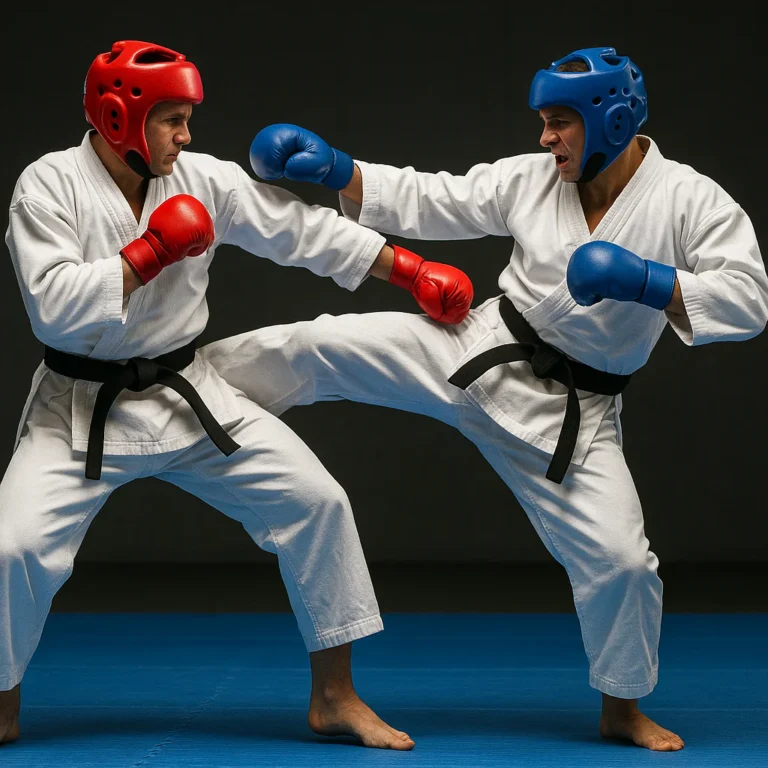
Mastering the invisible wall between you and your opponent is the single most effective way to neutralize wrestlers and dominate the octagon. Our proven Karate distance management drills for MMA transform static dojo movements into dynamic, fight-ending tools that keep you safe while you strike.
Forget the old myth that Karate is useless against graplers; the truth is that distance is the ultimate defense. When you control the space, a wrestler cannot shoot, and a boxer cannot land a clean counter.
We once watched a student with a black belt in Shotokan get completely dismantled in sparring because he stood still, waiting for the “perfect” moment. The moment he started moving laterally and managing his Mai (distance), he suddenly became untouchable.
Did you know that Lyoto Machida, a former UFC Light Heavyweight Champion, built his entire legacy on refusing to let opponents enter his striking range? He didn’t just dodge; he dictated the geometry of the fight.
Key Takeaways
- Control the Space: Effective Karate distance management drills for MMA rely on maintaining One-and-a-Half Distance to strike safely while staying out of grappling range.
- Dynamic Movement: Static stances are a liability; lateral shuffling and bladed footwork are essential to evade takedowns and reset the fight.
- The Tep is King: The front push kick (Tep) is the most reliable tool for stopping a wrestler’s forward momentum before they can close the gap.
- Adapt or Lose: Traditional Karate must be modified with cage awareness and clinch evasion to survive the chaos of modern mixed martial arts.
Table of Contents
- ⚡️ Quick Tips and Facts
- 📜 From Dojo to Octagon: The Evolution of Karate Distance Control
- 📏 The Invisible Wall: Mastering the Concept of Mai in Mixed Martial Arts
- 🥋 7 Essential Karate Distance Management Drills for MMA Fighters
- 1. The Phantom Step: Drilling the Back-Step Jab
- 2. The Kicking Range Trap: Practicing Tep and Front Kick Entries
- 3. The Clinch Evasion: Drilling the Pivot Away from Grapplers
- 4. The Snap-Kick Counter: Timing the Withdrawal
- 5. The Lateral Shuffle: Breaking the Takedown Angle
- 6. The Feint-and-Fly: Disrupting Opponent Rhythm
- 7. The Wall Drill: Simulating Cage Pressure
- 🧠 Why Karate Fighters Dominate the Range: The Science of Mai
- 🛡️ Countering the Grapple: How Distance Management Stops the Takedown
- 🥊 Real-World Case Studies: Lyoto Machida, Stephen Thompson, and Cyborg
- 🚫 Common Mistakes: When “Karate Kid” Logic Fails in the Cage
- 🏋️ ♂️ Conditioning for Range: Building the Legs to Maintain Distance
- 🧩 Integrating Karate Footwork with Boxing and Muay Thai
- 🎯 Conclusion: Mastering the Space Between Strikes
- 🔗 Recommended Links
- ❓ FAQ: Your Burning Questions on Karate Distance Drills
- 📚 Reference Links
⚡️ Quick Tips and Facts
Before we throw a single punch or step into the ring, let’s cut through the noise with some hard-hitting truths about distance management. If you think Karate is just about high kicks and bowing, you’re missing the entire point of why fighters like Lyoto Machida and Stephen “Wonderboy” Thompson dominate the octagon.
- The Golden Rule: The single most important skill in combat sports isn’t how hard you hit, but how far you stand. As the experts say, “Hit and not get hit” is the only metric that matters.
- The Three Zones: We don’t just have “close” and “far.” We have Single Distance (boxing range), One-and-a-Half Distance (kicking range), and Double Distance (safety zone against takedowns).
- The Myth Buster: Contrary to the old internet debate that “Karate doesn’t work against wrestlers,” distance management is actually the ultimate anti-grapling tool. If you never let them get close, they can’t shoot.
- The Secret Weapon: It’s not just footwork; it’s Zanshin—a relaxed state of alertness that lets you react before your opponent even commits.
Want to see this in action? Check out our breakdown of how these concepts translate to real fights in our Fight Analysis and Breakdowns section.
📜 From Dojo to Octagon: The Evolution of Karate Distance Control
Let’s take a trip down memory lane. In the traditional dojo, Mai (the Japanese concept of distance) was static. You stood in a line, you stepped forward, you struck, you stepped back. It was a dance of precision, but it was predictable.
Fast forward to the modern MMA cage, and that static dance becomes a death sentence if you don’t adapt. The evolution of Karate in MMA wasn’t about throwing away tradition; it was about dynamic adaptation.
“The greatest fighters aren’t the ones who hit the hardest; they are the ones who control the space the hardest.”
We’ve seen this shift firsthand at Karate MMA™. When we first started integrating Karate into our MMA curriculum, we noticed a common issue: students were trying to replicate the linear, deep stances of Shotokan against a wrestler who was constantly bouncing and shooting. It didn’t work. The deep stance made them slow to retreat.
The breakthrough came when we realized that Mai in the octagon isn’t a fixed point; it’s a fluid bubble. You expand it to strike, and you contract it to defend. This evolution is what separates the “Karate Kid” from the UFC Champion.
For a deeper dive into how traditional techniques morph into modern weapons, read our guide on Karate Techniques.
📏 The Invisible Wall: Mastering the Concept of Mai in Mixed Martial Arts
So, what exactly is this “invisible wall” we keep talking about? In Japanese martial arts, it’s called Mai. In English, we might call it “range,” but that feels too mechanical. Mai is the living, breathing space between you and your opponent.
The Three Levels of Distance
To master this, you need to visualize three distinct zones. If you can’t identify which zone you’re in, you’re already losing.
| Distance Level | Description | Primary Weapon | Best For |
|---|---|---|---|
| Single Distance | Punching range. You can touch your opponent with a fist. | Jab, Cross, Hook | Boxing exchanges, clinch entries |
| One-and-a-Half Distance | Kicking range. You can hit with a front kick or side kick without stepping. | Front Kick, Side Kick, Tep | Stopping takedowns, scoring points |
| Double Distance | Safety zone. You are just out of reach, forcing the opponent to commit to a step. | Feints, Lateral movement | Reseting the fight, avoiding takedowns |
Why does this matter?
Most MMA fighters fight in Single Distance by default. They trade punches. A Karate practitioner, however, lives in One-and-a-Half Distance. They strike from the edge of the opponent’s range, land, and retreat before the opponent can counter.
This concept is the core of the Machida System. As Chinzo Machida explains in his training volumes, controlling this distance allows you to fight without taking damage. It’s not about being passive; it’s about being elusive.
“If you are in the wrong distance, your best punch is useless. If you are in the right distance, even a tap can end the fight.”
🥋 7 Essential Karate Distance Management Drills for MMA Fighters
Okay, enough theory. Let’s get sweaty. Here are the 7 drills we use at Karate MMA™ to turn your footwork into a weapon. These aren’t just “drills”; they are survival mechanisms.
1. The Phantom Step: Drilling the Back-Step Jab
This is the bread and butter of the Karate MMA style. The goal is to strike while retreating, maintaining the One-and-a-Half Distance.
- The Setup: Stand in a bladed stance (like a boxer, but with your lead foot slightly more forward).
- The Action: Throw a jab. As the fist extends, simultaneously step back with your lead foot.
- The Key: Your hand and foot must move as one unit. If you step first, you’re late. If you punch first, you’re stuck.
- The Result: You land the hit, and you are instantly out of range of their counter.
2. The Kicking Range Trap: Practicing Tep and Front Kick Entries
The Tep (front push kick) is the ultimate distance controller. It’s not just a kick; it’s a measuring tape.
- The Drill: Have a partner advance slowly. Every time they step, you throw a Tep to their midsection or lead leg.
- The Twist: Don’t just kick and drop. Kick, snap the leg back, and immediately pivot to a new angle.
- Why it works: It stops the opponent’s forward momentum and keeps them at Double Distance.
3. The Clinch Evasion: Drilling the Pivot Away from Grapplers
Wrestlers love the clinch. Karate hates it. This drill teaches you to break the clinch without getting taken down.
- The Scenario: Partner shoots for a double leg or grabs your collar.
- The Move: Instead of pulling back (which invites the takedown), pivot 90 degrees to the outside of their lead leg.
- The Follow-up: As you pivot, throw a rear knee or a back elbow to create space, then reset to One-and-a-Half Distance.
4. The Snap-Kick Counter: Timing the Withdrawal
This is about interception. You aren’t waiting for them to finish their move; you’re stopping it before it starts.
- The Drill: Partner throws a slow jab. You step in slightly and throw a front kick to their chest, stopping their forward motion.
- The Timing: The kick must land exactly as their weight shifts forward.
- The Lesson: This teaches you to read the weight shift of your opponent, not just their hands.
5. The Lateral Shuffle: Breaking the Takedown Angle
Wrestlers attack in a straight line. You must move laterally.
- The Drill: Place a cone on the floor. Partner tries to shoot for your legs. You must shuffle side-to-side, keeping the cone between you and them.
- The Technique: Use small, quick steps. Do not cross your feet. Keep your hips low but ready to explode.
- The Goal: Force the wrestler to reset, wasting their energy and momentum.
6. The Feint-and-Fly: Disrupting Opponent Rhythm
If you move predictably, you get caught. Feints are the key to breaking their rhythm.
- The Drill: Feint a jab. When the opponent flinches or raises their guard, fly in with a side kick to the body.
- The Nuance: The feint must look real. Use your eyes, your shoulders, and your lead foot.
- The Benefit: This creates Kuzushi (off-balancing) before you even land a strike.
7. The Wall Drill: Simulating Cage Pressure
The cage changes everything. You can’t just back up forever.
- The Drill: Stand with your back against a wall (or cage). Partner pressures you. You must use lateral movement and angle changes to stay in the “pocket” without getting trapped.
- The Challenge: If you hit the wall, you lose.
- The Lesson: This teaches you to manage distance in a confined space, a critical skill for MMA.
For more on how to integrate these into your routine, check out our MA Training category.
🧠 Why Karate Fighters Dominate the Range: The Science of Mai
Why do Karate fighters seem to float around the octagon while others stumble? It’s not magic; it’s biomechanics.
Traditional Karate emphasizes bladed stances and linear movement. In MMA, this translates to a smaller target area and faster lateral movement. When you stand sideways, you present less surface area to a wrestler’s double-leg shot.
Furthermore, the concept of Zanshin (awareness) allows Karate practitioners to sense the intent of an attack before it happens. While a boxer might react to a punch, a Karateka reacts to the shoulder dip or the weight shift.
This proactive awareness is what Chinzo Machida calls “relaxed alertness.” It’s the difference between reacting (slow) and intercepting (fast).
“You don’t wait for the strike to come to you. You meet it in the middle of the space.”
This is why fighters like Stephen Thompson can stand still and still land clean shots. They aren’t guessing; they are calculating the distance in real-time.
🛡️ Countering the Grapple: How Distance Management Stops the Takedown
Let’s address the elephant in the room: Wrestlers.
The old saying “Karate doesn’t work against wrestlers” is only true if you stand still. If you master distance management, a wrestler is helpless.
The Mechanics of the Stop
- The Tep: A well-timed front kick to the chest or hip stops the wrestler’s forward drive. It’s like hitting a wall.
- The Angle: By moving laterally, you force the wrestler to turn, exposing their back and making the shot difficult.
- The Reset: Once the shot is stopped, you immediately reset to Double Distance, forcing the wrestler to start over.
The Result: The wrestler burns energy, gets frustrated, and eventually makes a mistake. That’s when you strike.
🥊 Real-World Case Studies: Lyoto Machida, Stephen Thompson, and Cyborg
Let’s look at the masters.
Lyoto Machida: The Dragon
Machida is the poster child for Karate in MMA. His style is pure Sumi-Goshi (side kick) and Yama-Zuki (mountain punch) adapted for the cage.
- Strategy: He stays at One-and-a-Half Distance, waiting for opponents to overcommit.
- Result: He became a UFC Light Heavyweight Champion by making opponents miss and countering with surgical precision.
Stephen “Wonderboy” Thompson: The Karate Kid
Thompson brings a unique blend of Point Karate and Boxing.
- Strategy: He uses lateral movement and feints to create openings. He rarely stands still.
- Result: He has dominated top contenders by controlling the pace and range of the fight.
Cris Cyborg: The Destroyer
Even in women’s MMA, Cyborg uses Karate distance control to devastating effect.
- Strategy: She uses her reach and front kicks to keep opponents at bay, then explodes with power.
- Result: She has dominated the featherweight division for years.
For more profiles on these legends, visit our Fighter Profiles section.
🚫 Common Mistakes: When “Karate Kid” Logic Fails in the Cage
Even the best can fall into traps. Here are the deadly sins of Karate in MMA:
- ❌ Static Stances: Standing too deep or too still. In the dojo, this is good. In the cage, it’s a target.
- ❌ Ignoring the Clinch: Thinking you can just kick forever. If you get caught in the clinch, you must have a plan to escape.
- ❌ Over-Reliance on Kicks: Kicking is great, but if you don’t mix in punches, you become predictable.
- ❌ Forgetting the Cage: Moving backward into the fence. Always have an exit strategy.
🏋️ ♂️ Conditioning for Range: Building the Legs to Maintain Distance
Distance management is exhausting. It requires explosive leg strength and incredible cardiovascular endurance.
- Plyometrics: Jump squats and box jumps to build explosive power for the lateral shuffle.
- Shadow Boxing: Practice your footwork for 5-minute rounds, focusing on constant movement.
- Sparring: Nothing beats real pressure. Spar with partners who try to take you down to test your distance control.
🧩 Integrating Karate Footwork with Boxing and Muay Thai
Pure Karate is great, but hybrid is better.
- Boxing: Use the jab to set up your kicks. The jab draws the guard, the kick hits the body.
- Muay Thai: Use the clinch to set up your knees, then use Karate footwork to escape.
- The Blend: The best fighters don’t stick to one style. They flow between them.
For more on blending styles, check out our Karate Belts and Rankings to see how different belts emphasize different aspects of the art.
🎯 Conclusion: Mastering the Space Between Strikes

So, we’ve covered the theory, the drills, the science, and the real-world examples. But here’s the question we left hanging at the start: Can you really master distance in a chaotic fight?
The answer is yes, but only if you stop thinking of distance as a fixed point and start seeing it as a dynamic tool. It’s the space you control, the weapon you wield, and the shield that protects you.
Whether you’re a beginner trying to understand the basics or a seasoned fighter looking to refine your Zanshin, the key is practice. Practice the Phantom Step, master the Tep, and learn to pivot away from danger.
The next time you step into the cage, remember: The winner isn’t the one who hits the hardest. It’s the one who controls the space.
🔗 Recommended Links
Ready to take your training to the next level? Here are the tools and resources we recommend:
👉 CHECK PRICE on:
- Machida Karate System Training: Warior Collective | Amazon
- Focus Mitts for Distance Drills: Amazon | Walmart
- Heavy Bag for Kicking Practice: Amazon | Everlast Official
- MA Gloves for Sparring: Amazon | Venum Official
Books to Read:
- The Book of Five Rings by Miyamoto Musashi (for strategic mindset) – Amazon
- Karate-Do: My Way of Life by Gichin Funakoshi (for traditional roots) – Amazon
❓ FAQ: Your Burning Questions on Karate Distance Drills

How do karate distance management drills improve MMA striking?
Karate drills teach you to measure the distance precisely. By practicing the One-and-a-Half Distance, you learn to strike from the edge of your opponent’s range, ensuring your hits land while their counters fall short. This improves your accuracy and efficiency.
Read more about “🥋 50+ Fresh Karate MMA Search Terms & Techniques (2026)”
What are the best karate footwork drills for controlling MMA range?
The Phantom Step (back-step jab) and the Lateral Shuffle are the most effective. They allow you to maintain distance while striking and to evade takedowns by moving off the line of attack.
Can karate distance control techniques work against graplers in MMA?
Absolutely. The Tep (front kick) and lateral movement are specifically designed to stop a wrestler’s forward momentum. By keeping them at Double Distance, you prevent them from ever getting into a position to shoot.
Read more about “🥋 Karate’s Role in Modern MMA: The 7 Fighters Who Proved It Works (2026)”
How to adapt traditional karate mai for modern MMA fighting?
Traditional Mai is static; modern Mai is dynamic. You must adapt by adding lateral movement, angle changes, and cage awareness. The goal is to keep the space fluid, not fixed.
Read more about “🥊 Traditional Karate vs MMA: Who Actually Wins in 2026?”
Which karate drills help maintain optimal striking distance in the octagon?
The Wall Drill and the Feint-and-Fly are excellent for this. They simulate the pressure of the cage and teach you to maintain distance even when an opponent is aggressive.
Do karate practitioners struggle with distance management in mixed martial arts?
Some do, especially if they rely too heavily on static stances or linear movement. However, with proper training in dynamic footwork and clinch evasion, these struggles can be overcome.
Read more about “🥋 7 Karate Evasive Techniques for MMA That Actually Work (2026)”
How does karate’s stepping technique enhance MMA cage fighting distance?
Karate’s bladed stance and quick, small steps allow for rapid changes in direction. This makes it difficult for opponents to predict your movement, allowing you to control the pace and space of the fight.