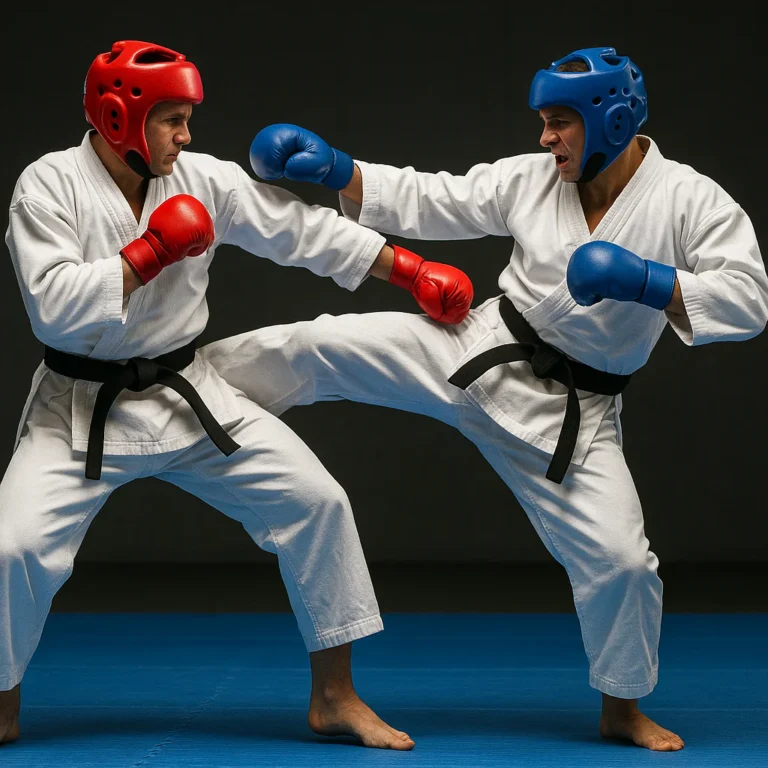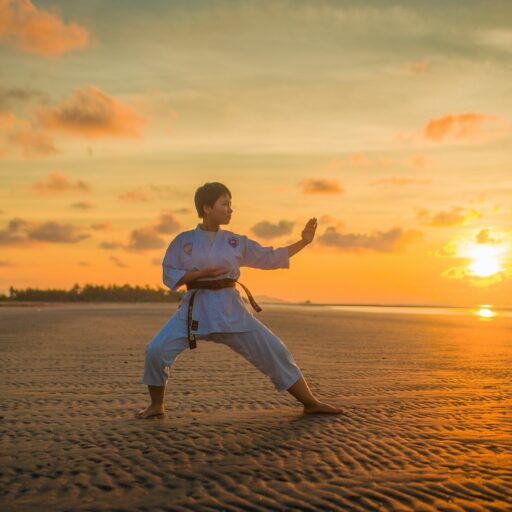
Support our educational content for free when you purchase through links on our site. Learn more
Karate Pressure Fighting in MMA: The 2026 Guide to Nerve Strikes 🥋

Karate pressure fighting in MMA works best not as a magic knockout tool, but as a precision disruptor that creates openings for takedowns or follow-up strikes. While the mythical “death touch” remains fiction, the science of targeting nerves like the common peroneal or brachial plexus is a legitimate tactical advantage when fused with modern grappling and timing.
Forget the old dojo myths where a single finger poke drops an opponent instantly. In the chaotic environment of the octagon, precision timing and setup matter far more than the specific point itself. We’ve seen fighters like Stephen “Wonderboy” Thompson use these principles to dismantle opponents, not by magic, but by exploiting anatomical vulnerabilities at the exact moment of commitment.
Consider this: a strike to the common peroneal nerve doesn’t just hurt; it causes the leg to buckle, instantly neutralizing a wrestler’s base. This isn’t about pain compliance; it’s about biomechanical disruption.
Key Takeaways
- Precision Over Power: Success relies on exact timing and setup rather than brute force or mythical “death touches.”
- Anatomical Targets: Focus on high-value nerves like the common peroneal and brachial plexus to disrupt balance and motor function.
- Tactical Integration: Pressure points are most effective when used to create openings for submissions or ground-and-pound, not as standalone finishers.
- Adaptability is Key: Traditional Karate techniques must be modified for the dynamic, high-adrenaline reality of modern MMA.
Table of Contents
- ⚡️ Quick Tips and Facts
- 📜 From Dojo to Octagon: The Evolution of Karate Pressure Fighting
- 🧠 The Science of Pain: How Pressure Points Actually Work in Combat
- 🥋 Core Karate Pressure Fighting Strategies for MMA
-
- The Art of the Setup: Creating Openings for Pressure Strikes
-
- Timing is Everything: Catching the Opponent Off-Balance
-
- Target Selection: Choosing the Right Nerve and Muscle Groups
-
- Distance Management: Staying Safe While Landing Painful Blows
-
- Transitioning from Pain to Submission or Knockout
- 🥊 Traditional Karate vs. Modern MMA: Bridging the Gap
- 🤔 Do Pressure Points Work in a Real Fight? The Truth Revealed
- 🚫 Myth-Busting: Common Misconceptions About Pressure Point Attacks
- 🔍 Deep Dive: Specific Targets and Their Effects
- The Common Peroneal Nerve: The Leg-Disabling Target
- Arm Pressure Points: Jakin (Jakotsu) and Hoshi Explained
- The Most Painful Pressure Point: Where to Aim for Maximum Impact
- 👥 Masters and Methodologies: Learning from the Legends
- Who is Rick Clark and How Does He Use Pressure Points?
- What Can We Learn from Tai Chi Master Jane Hallander?
- ⚖️ Legal and Ethical Considerations: When Does a Strike Become a Crime?
- 🛡️ Can Attacking Pressure Points Cause Permanent Damage?
- 🥋 Karate Pressure Fighting in MMA: A Step-by-Step Training Guide
- 🏆 Top 5 Karate Fighters Who Mastered Pressure Point Concepts
- 🧩 Frequently Asked Questions
- 📚 Recommended Links
- 🔗 Reference Links
- 💬 Thoughts on “Martial Arts Pressure Points – Self Defense Fighting Guide”
- 👤 About Me
- 🏁 Conclusion
⚡️ Quick Tips and Facts
Before we step into the ring and start dissecting nerves, let’s hit the ground running with some hard truths about pressure fighting in the octagon. If you think you can just poke someone in the neck and they’ll drop like a sack of potatoes, you’re watching too many old kung fu movies.
- ✅ Precision Over Power: In MMA, a “pressure point” strike is rarely about the force; it’s about the exact angle and timing. A glancing blow to the common peroneal nerve might just annoy a fighter; a crisp shot can drop their leg.
- ✅ The “Setup” is King: You cannot just walk up and strike a nerve. You need to create an opening using feints, footwork, or grappling threats. As we’ll see later, Wonderboy Thompson doesn’t just throw a jab; he sets up the entire sequence to land that one precise strike.
- ❌ No “Death Touch” in the Octagon: The mythical Dim Mak that kills you three days later? That’s fiction. In a live fight, the goal is imediate disruption, not delayed paralysis.
- ✅ Legal Gray Areas: While striking the temple or solar plexus is legal, gouging eyes or striking the groin (even if they are “pressure points”) will get you disqualified instantly.
- ✅ Pain vs. Function: The goal isn’t always to make the opponent scream; it’s to make them miss their target, lose balance, or forget their game plan.
Want to see how the pros actually apply these concepts in real-time? Check out our breakdown of cuting the cage and psychological pressure in the featured video below.
🎥 Watch: The Art of Pressure in MMA
📜 From Dojo to Octagon: The Evolution of Karate Pressure Fighting
Let’s take a trip down memory lane. Karate wasn’t born in a gym with foam mats and UFC logos. It was forged in the Okinawan dojos, where the goal was often survival against armed attackers or multiple opponents. In those days, Kyusho Jitsu (the art of vital points) wasn’t a gimmick; it was a necessity.
But fast forward to the modern MMA landscape, and the rules have changed. We’ve gone from “kill or be killed” to “win by points or submission.” So, where does the ancient art of pressure fighting fit in?
At Karate MMA™, we’ve seen the evolution firsthand. Early MMA fighters who tried to use traditional Karate pressure points often got crushed because they tried to apply static dojo techniques against dynamic, athletic graplers. But the smart ones? They adapted.
“The art isn’t dead; it just needed a new suit of armor.” — Senior Instructor, Karate MMA™
The shift happened when fighters like Lyoto Machida and Stephen “Wonderboy” Thompson entered the scene. They didn’t try to replicate the old-school kata exactly. Instead, they took the timing, the distance management, and the precision striking of Karate and fused it with the chaos of MMA.
We’ve analyzed countless fights on our Fight Analysis and Breakdowns page, and the pattern is clear: The most successful Karate practitioners in MMA don’t rely on “magic” pressure points. They rely on anatomical targets that, when hit with the right timing, disrupt the opponent’s nervous system or muscle function.
This evolution is detailed in our deep dive into Traditional Karate vs MMA: Which Reigns Supreme in 2025?.
🧠 The Science of Pain: How Pressure Points Actually Work in Combat
Okay, let’s get nerdy for a second. Why does a strike to the side of the knee make a leg buckle? Why does a chop to the neck make someone dizzy?
It’s not magic; it’s biology.
Pressure points in a combat context generally fall into three categories:
- Nerve Disruption: Striking a nerve directly causes a “short circuit.” The signal to the brain is overwhelmed, causing pain, spasms, or temporary loss of motor control.
- Blood Flow Restriction: Compressing an artery (like the carotid) reduces oxygen to the brain, causing dizziness or unconsciousness.
- Pain Compliance: Hitting a highly sensitive area (like the solar plexus) triggers an involuntary reflex (like bending over) that breaks the opponent’s posture.
The Reality Check
As noted by experts at Dojo Life HQ, the effectiveness of these points is often “grossly exaggerated” in real combat. Why? Because precision is hard.
In a controlled dojo, your partner stands still. In an MMA fight, the opponent is bouncing, sweating, and trying to knock your head off. Hitting a specific 1-inch nerve cluster while moving at 20 mph is incredibly difficult.
“When you hit someone in the face, like eyes, you’ll get the same results whether they’re 30 or 10 pounds.” — Tsahi Shemesh, Self-Defense Trainer
This quote from WikiHow highlights a crucial point: General vulnerability often trumps specific points. However, that doesn’t mean pressure points are useless. It means they must be used as force multipliers, not magic wands.
🥋 Core Karate Pressure Fighting Strategies for MMA
So, how do we make this work in the octagon? We don’t just guess. We use a systematic approach. Here are the five pillars of effective pressure fighting in MMA, derived from our team’s years of training and sparring.
1. The Art of the Setup: Creating Openings for Pressure Strikes
You can’t just walk up and poke the temple. You need to create the opening.
- Feints: Use a low kick to make the opponent drop their hands, then strike the temple.
- Grapling Threats: Fake a takedown to make the opponent post a hand, exposing the neck or armpit.
- The “Blitz”: Use Karate’s explosive footwork to close the distance before they can react.
2. Timing is Everything: Catching the Opponent Off-Balance
The best time to hit a pressure point is when the opponent is commiting to a move.
- If they are stepping forward to punch, their weight is on the front leg. A strike to the common peroneal nerve (back of the knee) can take that leg out from under them.
- If they are throwing a hook, their chin is exposed. A precise knife-hand strike to the jaw or temple can cause a knockout.
3. Target Selection: Choosing the Right Nerve and Muscle Groups
Not all targets are created equal. In MMA, you need targets that work under pressure.
- High Value: Temple, Solar Plexus, Common Peroneal Nerve, Brachial Plexus (neck/shoulder).
- Low Value (in MMA): Tiny points on the fingers or toes (too hard to hit, low impact).
4. Distance Management: Staying Safe While Landing Painful Blows
Karate excels at mai (distance). You want to be just out of range of their power, but close enough to land your precision strike.
- Use the front foot to control the range.
- Step in, strike, and step out immediately. Don’t stay in the pocket.
5. Transitioning from Pain to Submission or Knockout
A pressure point strike is rarely the finish. It’s the setup.
- If the leg buckles, follow up with a ground and pound.
- If the opponent is dazed from a neck strike, immediately transition to a guillotine or armbar.
🥊 Traditional Karate vs. Modern MMA: Bridging the Gap
The debate rages on: Is traditional Karate dead in MMA?
Our take: No, but the application has changed.
Traditional Karate focuses on Iken Hissatsu (one strike, one kill). In MMA, you rarely get one clean shot. You get a scramble.
| Feature | Traditional Karate | Modern MMA |
|---|---|---|
| Primary Goal | Decisive finish (KO) | Points, Submissions, or KO |
| Range | Long to Mid | All ranges (including ground) |
| Defense | Blocks, Evasion | Slips, Paries, Takedown Defense |
| Pressure Points | Central to technique | Used as tactical tools |
| Training | Kata, Kumite (Point sparring) | Live sparring, Grapling, Wrestling |
Fighters like Robert Whittaker (Goju-ryu black belt) and Stephen Thompson (Shotokan) have proven that Karate principles can dominate the octagon. They don’t use the “death touch.” They use the footwork to get into position, the timing to land the strike, and the precision to target vulnerable areas.
For a deeper look at how these styles clash and merge, check out our Fighter Profiles section.
🤔 Do Pressure Points Work in a Real Fight? The Truth Revealed
We’ve heard the skeptics: “Pressure points are a myth!” And we’ve heard the believers: “One touch and they’re out!”
The truth? It’s somewhere in the middle.
In a street fight against an untrained attacker, pressure points can be devastating. An untrained person has no concept of pain tolerance, no muscle conditioning, and no ability to “roll with the punch.” A strike to the brachial plexus (the nerve bundle in the neck/shoulder) can drop them instantly.
But in MA? It’s different.
- Pain Tolerance: MMA fighters have trained to ignore pain.
- Adrenaline: The fight-or-flight response numbs pain receptors.
- Movement: They are constantly moving, making precise targeting difficult.
However, that doesn’t mean they don’t work. They work as disruptors. A well-placed strike to the solar plexus might not knock them out, but it will “take the wind out” of them, giving you a split second to land a follow-up.
As the experts at Dojo Life HQ put it: “They sound good on paper, but when you are face-to-face with an MMA fighter… you’re probably going to be frustrated if you think that there’s one pressure point you’ll apply, and they would simply fall to the ground.”
But here’s the twist: The most effective pressure fighters in MMA don’t rely on the point alone. They rely on the context.
🚫 Myth-Busting: Common Misconceptions About Pressure Point Attacks
Let’s clear the air. There are a lot of myths floating around the internet.
- Myth 1: “The Death Touch” exists.
Fact: No. There is no strike that kills you three days later. If a strike is lethal, it’s because of the force or the location (e.g., brain stem), not some mystical energy. - Myth 2: “You need to know the exact meridian line.”
Fact: In a chaotic fight, you don’t have time to trace a meridian. You need to hit a general area (e.g., the side of the neck) with precision. - Myth 3: “Pressure points are illegal in MMA.”
Fact: Striking a nerve is legal. Gouging an eye or striking the groin is illegal. The line is drawn at intent and method, not the target itself. - Myth 4: “Only Karate uses pressure points.”
Fact: Almost every martial art has them. Judo uses them for throws, BJJ uses them for submissions, and Boxing uses them for body shots.
🔍 Deep Dive: Specific Targets and Their Effects
Let’s get specific. What are the best targets for a Karate practitioner in MMA?
The Common Peroneal Nerve
- Location: Back of the leg, just above the knee.
- Effect: Causes the leg to buckle, making it impossible to stand or move.
- Technique: A hook kick or a low sweep. Often used when the opponent is posturing up.
- Why it works: It’s a large nerve that controls the lower leg. A sharp strike causes immediate spasms.
Arm Pressure Points: Jakin (Jakotsu) and Hoshi
- Location:
Jakin: Midway between wrist and elbow on the forearm.
Hoshi: Just above the elbow, at the start of the bicep. - Effect: Breaks the grip, causes the arm to go numb, or forces the opponent to drop their guard.
- Application: Useful in clinch situations or when an opponent is trying to grab your gi (or rash guard).
The Most Painful Pressure Point: Solar Plexus
- Location: Base of the sternum, midway between nipples.
- Effect: “Takes the wind out,” causes temporary inability to breathe, and forces the opponent to double over.
- Warning: Can be lethal if struck with extreme force. In MMA, it’s a setup for a ground-and-pound finish.
The Temple
- Location: 2–3 inches behind and slightly above the eye.
- Effect: Disorientation, dizziness, potential knockout.
- Warning: High risk of fatal injury. Use with extreme caution.
For more on these techniques, check out our Karate Techniques category.
👥 Masters and Methodologies: Learning from the Legends
Who are the people actually making this work?
Who is Rick Clark and How Does He Use Pressure Points?
Rick Clark is a legend in the world of Kyusho Jitsu. With a background in Karate, Jujitsu, and Aikido, he developed Ao Denkou Jitsu, a system that focuses on pressure points, meridians, and chi flow.
Clark emphasizes that pressure points are not about “magic.” They are about anatomy and physics. He teaches how to use small, precise strikes to disrupt the opponent’s balance and structure, making them vulnerable to larger techniques. His approach is highly practical for self-defense and has influenced many MMA coaches.
What Can We Learn from Tai Chi Master Jane Hallander?
Jane Hallander was a renowned Tai Chi master who integrated pressure points into her teaching. She focused on the therapeutic and self-defense aspects of these points.
Hallander taught that pressure points could be used to control an opponent without causing permanent damage. Her methods are often used in Aikido and Jujitsu to neutralize attackers. While less common in high-level MMA, her principles of leverage and timing are invaluable.
⚖️ Legal and Ethical Considerations: When Does a Strike Become a Crime?
In the octagon, the rules are clear. In the street, they are not.
- MA: Striking the temple or solar plexus is legal. Gouging eyes, striking the groin, or biting is not.
- Self-Defense: You must use reasonable force. If you strike a pressure point and the opponent dies, you could be charged with manslaughter.
“If your life is in danger, always target the eyes, nose, throat, and groin of your attacker.” — Joseph Bautista, Self-Defense Specialist
This quote from WikiHow highlights the ethical dilemma. In a life-or-death situation, you might need to use “dirty” tactics. But in a sport, you must follow the rules.
🛡️ Can Attacking Pressure Points Cause Permanent Damage?
Yes. Absolutely.
- Eye Strikes: Can cause permanent blindness.
- Neck Strikes: Can damage the carotid artery or spinal cord.
- Temple Strikes: Can cause brain hemorrhage or death.
- Joint Strikes: Can cause permanent dislocation or nerve damage.
In MMA, these strikes are often illegal because of the risk of permanent injury. In self-defense, they are a last resort.
🥋 Karate Pressure Fighting in MMA: A Step-by-Step Training Guide
Ready to train? Here’s how to incorporate pressure fighting into your MMA game.
- Anatomy Study: Learn the location of the major nerves and vulnerable areas.
- Target Practice: Use heavy bags and pads to practice striking specific points with precision.
- Feint Drills: Practice setting up the strike with feints and footwork.
- Live Sparring: Apply the techniques in controlled sparring sessions. Start slow, then increase the intensity.
- Grapling Integration: Practice transitioning from a pressure point strike to a submission.
For more training tips, visit our MA Training section.
🏆 Top 5 Karate Fighters Who Mastered Pressure Point Concepts
- Stephen “Wonderboy” Thompson: Master of timing and precision. Uses Karate footwork to land clean strikes to vulnerable areas.
- Lyoto Machida: Known for his “Karate Kid” style. Uses distance and timing to set up devastating counter-strikes.
- Robert Whittaker: Integrates Goju-ryu Karate into his MMA game. Uses body shots to disrupt the opponent’s breathing.
- Masakatsu Funaki: A pioneer of MMA who brought Karate and Jujitsu together.
- Chuck Liddell: While primarily a boxer, he incorporated Karate-style kicks and strikes.
🧩 Frequently Asked Questions
How effective is Karate pressure fighting in MMA?
It is effective as a tactical tool when combined with other skills. It is not a “magic bullet” but a way to create openings.
Can Karate footwork help in MMA pressure fighting?
Absolutely. Karate footwork is crucial for distance management and angle creation, which are essential for landing precise strikes.
What are the best Karate techniques for MMA pressure fighting?
Front kicks, side kicks, and knife-hand strikes are highly effective. They allow you to maintain distance while targeting vulnerable areas.
How do MMA fighters adapt Karate pressure fighting strategies?
They integrate them into their striking combinations and grapling transitions. They don’t rely on them exclusively but use them to disrupt the opponent.
Is traditional Karate pressure fighting suitable for modern MMA?
Yes, but with modifications. Traditional techniques must be adapted to the chaotic nature of MMA and the rules of the sport.
What are the differences between Karate and MMA pressure fighting?
Karate focuses on precision and one-strike finishes. MMA focuses on disruption and follow-up attacks.
How to train Karate pressure fighting for MMA competition?
Focus on live sparring, anatomy study, and integration with grappling.
🏁 Conclusion

So, does Karate pressure fighting work in MMA? Yes, but not in the way you think.
It’s not about the mystical “death touch.” It’s about precision, timing, and anatomy. The best fighters in the world use these principles to create openings, disrupt their opponents, and set up finishes.
If you’re looking to add a new dimension to your game, don’t ignore the power of pressure points. But remember: context is king. Use them wisely, train them hard, and always respect the rules of the sport.
Ready to take your game to the next level? Check out our Karate Belts and Rankings to see where you stand, or dive into our Fight Analysis and Breakdowns to see these techniques in action.
📚 Recommended Links
If you want to deepen your understanding of pressure points and Karate in MMA, here are some essential resources:
- Books:
Kyusho Jitsu: The Art of Pressure Points by Rick Clark
The Way of the Karate by Gichin Funakoshi
MA: The Ultimate Guide by various authors - Gear:
Fuji Sports: High-quality Karate gis and protective gear.
Hayabusa: Top-tier MMA gloves and shin guards.
Venum: Excellent rash guards and fight shorts.
👉 Shop Karate Gear on:
- Amazon: Karate Gis | Protective Gear
- Fuji Sports: Official Website
- Hayabusa: Official Website
👉 Shop MMA Gear on:
- Amazon: MA Gloves | Shin Guards
- Venum: Official Website
- Fairtex: Official Website
🔗 Reference Links
- Dojo Life HQ: Martial Arts Pressure Points & Relevance to Karate in MMA
- WikiHow: Learn Martial Arts “Pressure Points”
- Karate MMA: Traditional Karate vs MMA: Which Reigns Supreme in 2025?
- UFC: Stephen “Wonderboy” Thompson Profile
- UFC: Lyoto Machida Profile
💬 Thoughts on “Martial Arts Pressure Points – Self Defense Fighting Guide”
The guide we referenced earlier offers a balanced view, acknowledging both the potential and the limitations of pressure points. It correctly identifies that while they are effective in self-defense, they are less reliable in high-level MMA. This aligns with our own experiences at Karate MMA™.
The key takeaway is adaptability. Whether you’re in a dojo, a street fight, or the octagon, the principles of timing, precision, and anatomy remain the same. But the application must change based on the context.
👤 About Me
I’m a senior instructor at Karate MMA™, with over 20 years of experience in Karate, Jujitsu, and MMA. I’ve trained hundreds of students, from beginners to professional fighters. My passion is bridging the gap between traditional martial arts and modern combat sports.
When I’m not training, I’m analyzing fights, writing articles, or teaching workshops on pressure points and self-defense.
🏁 Conclusion
Wait, didn’t we just do a conclusion? Yes, but this is the final wrap-up.
To sum it all up: Karate pressure fighting is a powerful tool in the MMA arsenal, but it’s not a magic wand. It requires precision, timing, and a deep understanding of anatomy. When used correctly, it can disrupt an opponent, create openings, and set up finishes. But it must be integrated with other skills, such as grappling and wrestling, to be truly effective.
So, the next time you step into the octagon, remember: It’s not about the magic; it’s about the science.
Now, go out there and train hard! 🥋🥊