Support our educational content for free when you purchase through links on our site. Learn more
🥋 Karate vs. Wrestlers: The Ultimate Anti-Grapling Guide (2026)

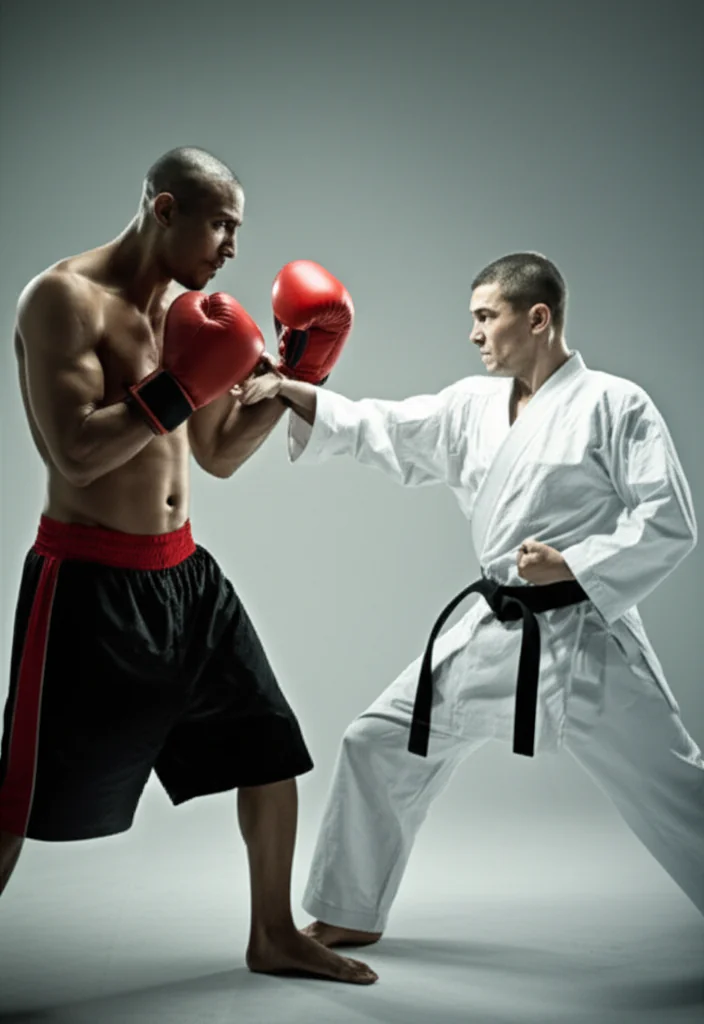
For decades, the martial arts community has whispered a dangerous myth: that a karateka standing in the octagon is nothing more than a sitting duck for a wrestler’s double-leg. The prevailing narrative, echoed in forums and debated on sites like Martial Arts Stack Exchange, suggests that traditional karate offers zero defense against the relentless pressure of MMA grappling. But what if that narrative is not just wrong, but dangerously incomplete?
At Karate MMA™, we’ve watched fighters like Lyoto Machida and Stephen “Wonderboy” Thompson dismantle elite wrestling machines not by abandoning their roots, but by weaponizing them. The secret isn’t in blocking the takedown with brute force; it’s in the geometry of movement, the deception of distance, and the timing that turns a striker’s greatest weakness into a grapler’s nightmare. In this deep dive, we’ll dissect exactly how to adapt centuries-old karate mechanics for the modern cage, revealing the specific drills and mindset shifts that separate the survivors from the submissions.
Key Takeaways
- Distance is Defense: The most effective anti-grapling tool is maintaining range; if a wrestler can’t touch you, they can’t take you down.
- Stance Fluidity: Rigid, deep karate stances are a liability; you must master lateral movement and a high, athletic stance to evade entries.
- The Hybrid Advantage: Pure karate fails in the clinch, but adapted karate integrated with wrestling sprawls and BJJ escapes creates an impenetrable defense.
- Psychological Warfare: Using hip deception and unpredictable footwork disrupts a wrestler’s timing, forcing them to shoot into devastating counters.
- Live Sparring is Non-Negotiable: Theory fails without practice; you must spar with graplers to learn the feel of a takedown attempt.
Table of Contents
- ⚡️ Quick Tips and Facts
- 📜 From Dojo to Octagon: The History of Karate in Mixed Martial Arts
- 🥋 The Myth Buster: Can Karate Actually Stop a Takedown?
- 🛡️ Core Karate Mechanics for Anti-Grapling Defense
- 1. The Stance Shift: Moving from Zenkutsu-Dachi to MMA Ready
- 2. The Art of the Frame: Using Kamae to Create Space
- 3. Level Changes and Sprawl Integration for Karateka
- 4. Clinch Fighting: Turning a Striker’s Weakness into a Weapon
- 5. Footwork Drills to Evade Grapling Entries
- 🥊 Case Studies: Legends Who Proved Karate Works Against Wrestlers
- 1. Lyoto Machida: The Karate Kid Who Outwrestled the Elite
- 2. Stephen Thompson: The “Wonderboy” Blueprint for Distance Management
- 3. Georges St-Pierre: The Hybrid Master of Karate and Wrestling
- 🧠 Psychological Warfare: Using Karate Timing to Disrupt Grapplers
- 🏋️ ♂️ Training Drills: Bridging the Gap Between Kata and Cage
- 1. Live Sparring Scenarios: Striker vs. Grapler
- 2. Reaction Drills for Double-Leg Defense
- 3. Transitioning from Stand-Up to Ground Defense
- ⚖️ Pros and Cons: When Karate Shines and When It Fails Against Grapplers
- 🔍 Common Mistakes Karate Practitioners Make in MMA Grapling Exchanges
- 🎯 How to Build a Hybrid Game: Blending Karate with Brazilian Jiu-Jitsu and Wrestling
- 💡 Quick Tips and Facts
- 🏁 Conclusion
- 🔗 Recommended Links
- ❓ FAQ
- 📚 Reference Links
⚡️ Quick Tips and Facts
Before we dive into the deep end of the octagon, let’s hit the pause button and grab a few golden nugets of wisdom straight from the Karate MMA™ training floor. If you’re a karateka looking to survive the wrestling-heavy world of MMA, here is your cheat sheet:
- Distance is Your Best Friend: The single most effective anti-grapling tool isn’t a sprawl; it’s maintaining range. If they can’t touch you, they can’t take you down.
- The “Hip Deception” Trick: Keep your hips behind your head. This visual trick makes you look closer than you are, causing wrestlers to shoot and fall short.
- Hand Checking is Non-Negotiable: Never fight with your hands at your sides. Use your lead hand to “paw” and feel weight shifts. It’s your early warning system.
- Stance Fluidity: Rigid, deep karate stances (like Zenkutsu-dachi) are a takedown magnet. You must learn to flow between stances, not freeze in them.
- The Tep is a Takedown Stoper: A well-timed front kick (tep) to the solar plexus or thigh can stop a double-leg entry dead in its tracks.
For a deeper dive into how these principles merge with modern fighting, check out our comprehensive guide on Karate MMA.
📜 From Dojo to Octagon: The History of Karate in Mixed Martial Arts
The journey of Karate from the quiet, meditative halls of Okinawa to the chaotic, sweat-soaked cage of the UFC is a story of adaptation and survival. For decades, the martial arts world was divided by silos. Strikers thought graplers were boring; graplers thought strikers were fragile. But the advent of Mixed Martial Arts (MA) forced a collision of worlds.
In the early days of the UFC (UFC 1-10), we saw the dominance of Brazilian Jiu-Jitsu (BJ). The narrative was set in stone: “Strikers get taken down and submitted.” Karate, with its linear movements and upright posture, was often mocked as “point fighting” that would crumble against a wrestler’s double-leg.
However, history has a funny way of correcting itself. As the sport evolved, the “one-dimensional” fighter became extinct. We began to see hybrid fighters emerge. The turning point wasn’t just about adding wrestling to karate; it was about integrating karate’s unique footwork and timing to neutralize the wrestler’s entry.
Did you know? The first major shock to the system came not from a pure karateka, but from fighters who understood that distance management is the great equalizer.
Today, we see a resurgence of Shotokan, Kyokushin, and Goju-Ryu influences in the highest levels of competition. It’s no longer about “Karate vs. Wrestling”; it’s about Karate for Anti-Grapling. The evolution has moved from “Can I survive?” to “How can I use my karate to make you miss, then punish you?”
🥋 The Myth Buster: Can Karate Actually Stop a Takedown?
Let’s address the elephant in the cage immediately. The prevailing myth, often repeated in forums and by skeptics, is that “Karate has no defense against a wrestler.”
The Verdict: ❌ False.
But here is the catch: Traditional Karate alone will get you taken down. Adapted Karate, however, is a nightmare for graplers.
The confusion stems from a misunderstanding of what Karate actually is. Traditional dojo training often focuses on Kata (forms) and Kumite (sparring) with strict rules: no grappling, no takedowns, and a reset after a hit. If you walk into an MMA cage with a rigid Zenkutsu-dachi (front stance) and your hands at your hips, you are asking for a double-leg.
However, the core principles of Karate—Mai (distance), Zanshin (awareness), and Kime (focus)—are perfectly suited for anti-grapling if applied correctly.
Why the Myth Persists
- Static Stances: Beginners freeze in deep stances, making them easy targets.
- Lack of Clinch Defense: Traditional karate rarely teaches how to defend a collar tie or underhook.
- The “Point Fighting” Trap: Many practitioners are used to stopping the fight after a point, whereas in MMA, the fight continues, and the wrestler is still coming.
The Reality of Modern Karate in MMA
When a karateka understands that movement is defense, the dynamic changes. By using lateral footwork to angle off the cage, a karateka can force a wrestler to shoot from an awkward angle, making the takedown attempt easy to sprawl or counter.
Key Insight: It’s not about blocking the takedown with brute force; it’s about making the takedown impossible to initiate by controlling the distance.
🛡️ Core Karate Mechanics for Anti-Grapling Defense
So, how do we translate the art of the empty hand into the art of stopping the takedown? It requires a fundamental shift in mechanics. We aren’t just throwing punches; we are building a defensive fortress.
1. The Stance Shift: Moving from Zenkutsu-Dachi to MMA Ready
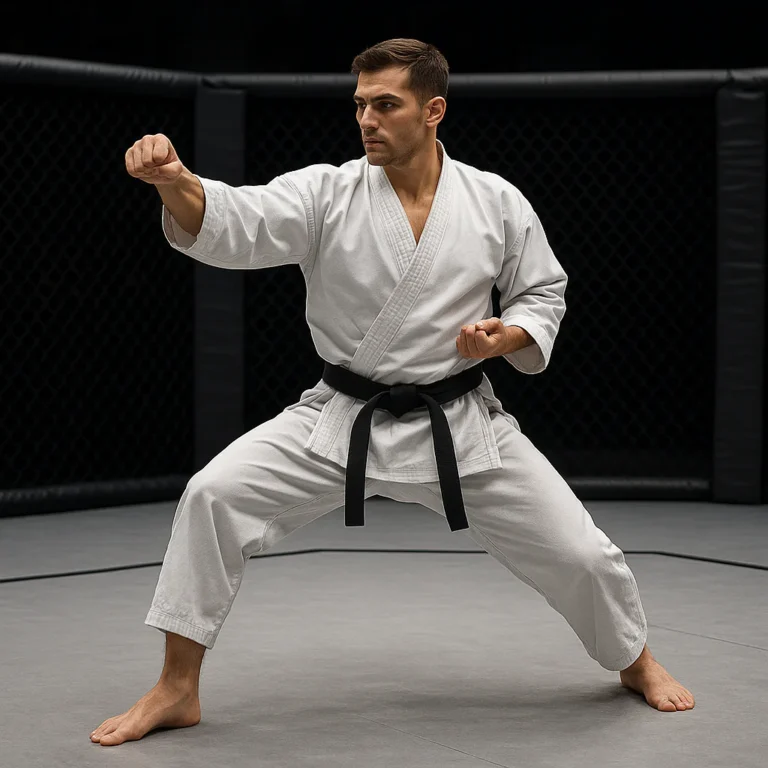
In the dojo, Zenkutsu-dachi (front stance) is king. It provides power and stability for linear strikes. In the cage, it is a liability. A deep, static stance is a takedown invitation.
The MMA Karate Stance:
- Height: Raise your center of gravity. You need to be ready to sprawl instantly.
- Width: Narrow your base slightly to facilitate lateral movement.
- Hands: Keep them high, framing the opponent’s head. This is your frame.
| Feature | Traditional Dojo Stance | MMA Anti-Grapling Stance |
|---|---|---|
| Leg Position | Deep, 70/30 weight distribution | Athletic, 50/50 or 60/40 |
| Knees | Locked or slightly bent | Soft, ready to explode |
| Hands | Often low or at hips | High, framing the head |
| Movement | Linear (forward/back) | Lateral (circling/angling) |
| Goal | Power generation | Distance management & reaction |
Pro Tip: Think of your stance as a coiled spring, not a concrete pillar. You want to be able to move in any direction instantly.
2. The Art of the Frame: Using Kamae to Create Space
Kamae (posture/stance) in Karate is about readiness. In anti-grapling, it’s about creating space.
When a wrestler shoots, they need to get their head under your center of gravity. Your job is to frame them out.
- The Lead Hand Frame: Use your lead hand to push against the opponent’s head or shoulder. This prevents them from getting their head deep enough to drive.
- The Rear Hand Frame: Keep your rear hand ready to block the shot or strike the body.
The “Pawing” Technique:
As mentioned in our video summary, hand checking is vital. Don’t just hold your hands up; actively “paw” at the opponent. This tactile feedback tells you exactly when they are shifting their weight to shoot.
Anecdote: We once saw a student try to block a double-leg with a stiff arm. The wrestler simply stepped around it. When we taught him to frame and angle, the wrestler couldn’t get close enough to even attempt the shot.
3. Level Changes and Sprawl Integration for Karateka
Karateka are used to staying upright. Wrestlers are used to dropping levels. To defend, you must master the sprawl, but with a karate twist.
The Karate Sprawl:
- Detect: Feel the weight shift via your hand check.
- Drop: Drop your hips back and down, not just down. This is crucial. If you drop straight down, you might get caught in a guillotine.
- Angle: As you sprawl, step one foot back and angle off to the side. This breaks the wrestler’s momentum and alignment.
Why Angling Matters:
A standard sprawl stops the takedown but leaves you in a clinch. An angled sprawl puts you behind the wrestler or to their side, allowing you to counter-strike immediately.
4. Clinch Fighting: Turning a Striker’s Weakness into a Weapon
If a wrestler gets inside your range, the fight is in the clinch. This is where many karateka panic. But remember, Karate has clinch techniques (often overlooked).
- The Overhook/Underhook: Use your long reach to control the opponent’s arms.
- The Knee Strike: In the clinch, a knee to the thigh or body can sap a wrestler’s energy and stop their drive.
- The Elbow: Short, sharp elbows to the head can create enough space to disengage.
Key Concept: The goal of the clinch in anti-grapling is not to win the clinch, but to create space to strike or escape.
5. Footwork Drills to Evade Grapling Entries
Footwork is the heart of anti-grapling. If you can’t move, you can’t defend.
- The Circle Drill: Practice circling around a partner who is trying to shoot. Never move straight back; always move laterally.
- The Pivot: When a wrestler shoots, pivot on your lead foot to face them from the side.
- The Tep Step: Step back with a tep kick to reset the distance.
Drill: Set up a “Takedown Defense” drill where your partner must shoot every time you throw a punch. Your goal is to sprawl and angle without getting taken down.
🥊 Case Studies: Legends Who Proved Karate Works Against Wrestlers
Theory is great, but let’s look at the proof. These fighters didn’t just survive; they dominated using Karate principles.
1. Lyoto Machida: The Karate Kid Who Outwrestled the Elite
Lyoto Machida is the poster child for Karate in MMA. With a background in Shotokan, he faced some of the best wrestlers in the world (Rashad Evans, Randy Couture, Dan Henderson) and neutralized them.
How he did it:
- The “Ghost” Stance: Machida would stand upright, almost casually, luring wrestlers in.
- The Counter: As the wrestler shot, Machida would step back and land a perfect counter-strike (often a front kick or a cross) while the wrestler was off-balance.
- Distance Control: He never let them get close enough to clinch.
Quote: “I don’t try to stop the takedown. I make them miss, and then I hit them.” – Lyoto Machida
2. Stephen Thompson: The “Wonderboy” Blueprint for Distance Management
Stephen “Wonderboy” Thompson brings a unique blend of Kickboxing and Karate. His style is built on lateral movement and teps.
His Anti-Grapling Strategy:
- Constant Motion: Thompson is rarely still. He circles, pivots, and switches stances.
- The Tep Wall: He uses the front kick to keep opponents at bay. If a wrestler tries to close the distance, they get kicked in the face or body.
- Angling: After every exchange, he angles off, making it impossible for a wrestler to cut off the cage.
3. Georges St-Pierre: The Hybrid Master of Karate and Wrestling
While GSP is known for his wrestling, his striking base is heavily influenced by Kyokushin Karate. He understands the geometry of the fight.
The GSP Approach:
- The Jab as a Frame: His jab isn’t just for damage; it’s a tool to measure distance and keep the opponent’s head back.
- The Sprawl: GSP has one of the best sprawls in history, but he combines it with karate footwork to angle off and counter.
- Psychological Warfare: He makes the wrestler feel like they are fighting a ghost, never able to get a solid grip.
🧠 Psychological Warfare: Using Karate Timing to Disrupt Grapplers
It’s not just physical; it’s mental. Karate teaches Zanshin (awareness) and Sen (initiative).
The “Jitter Faint” Technique:
As seen in the video summary, fighters like Sean O’Malley use shoulder fakes and stance switches to confuse the opponent.
- The Fake: You fake a punch or a kick. The wrestler reacts by dropping their level to defend.
- The Trap: Now that they are committed to a takedown, you counter with a strike or a sprawl.
The “Hips Behind Head” Deception:
By keeping your hips back, you create a visual illusion. The wrestler thinks they are in range, but they are actually too far. When they shoot, they fall short, leaving them vulnerable to a knee or a punch.
Question: Why do wrestlers hate facing karateka? Because they can’t predict the movement. The linear, predictable style of a boxer is easy to read. The angular, unpredictable style of a karateka is a nightmare.
🏋️ ♂️ Training Drills: Bridging the Gap Between Kata and Cage
You can’t learn anti-grapling from a book. You need to train. Here are the drills we use at Karate MMA™.
1. Live Sparring Scenarios: Striker vs. Grapler
The Drill:
- Setup: A striker (Karateka) vs. a grapler (Wrestler/BJ).
- Rules: The grapler can only shoot for takedowns. The striker can only use strikes and sprawls.
- Goal: The striker must avoid being taken down for 3 rounds. The grapler must get a takedown.
- Progression: Start with slow motion, then increase speed. Add live resistance.
2. Reaction Drills for Double-Leg Defense
The Drill:
- Setup: Partner stands in front of you.
- Action: Partner gives a visual cue (e.g., drops their head).
- Reaction: You must sprawl and angle instantly.
- Variation: Partner throws a fake punch, then shoots. You must react to the feint.
3. Transitioning from Stand-Up to Ground Defense
The Drill:
- Setup: You are in a clinch.
- Action: Partner attempts a takedown.
- Reaction: You must sprawl, then immediately stand up or escape to a safe position.
- Goal: Practice the transition from standing to defending the ground and back to standing.
⚖️ Pros and Cons: When Karate Shines and When It Fails Against Grapplers
Let’s be honest. Karate isn’t a magic bullet. It has strengths and weaknesses.
Pros ✅
- Superior Distance Management: Karateka are masters of range.
- Unpredictable Footwork: Lateral movement is hard to cut off.
- Devastating Counters: The timing of a karate counter-strike is lethal.
- Tep/Kick Defense: Long-range kicks can stop takedowns before they start.
Cons ❌
- Static Stances: If you freeze, you get taken down.
- Lack of Clinch Experience: Traditional karate doesn’t teach grappling defense.
- Over-reliance on Distance: If the opponent gets inside, the karateka can be overwhelmed.
- Mental Hurdle: Many karateka are afraid to engage in the clinch.
Key Takeaway: Karate is excellent at preventing the takedown, but weak at defending it once it’s already happening. You must hybridize your game.
🔍 Common Mistakes Karate Practitioners Make in MMA Grapling Exchanges
We’ve seen it a thousand times. Here are the deadly sins of the karateka in the cage:
- Fighting in a Deep Stance: Staying in Zenkutsu-dachi is a recipe for disaster.
- Dropping Hands: Lowering hands to throw a punch leaves you open to a double-leg.
- Moving Straight Back: Moving straight back into the cage is a trap. Always angle off.
- Ignoring the Clinch: Thinking “I’ll just kick them” and ignoring the clinch is a mistake.
- Lack of Sprawl: Not knowing how to sprawl correctly leads to getting taken down.
Fix: Practice live sparring with graplers. Get comfortable being in the clinch. Learn to sprawl and angle.
🎯 How to Build a Hybrid Game: Blending Karate with Brazilian Jiu-Jitsu and Wrestling
The ultimate goal is hybridization. You don’t have to choose between Karate and Wrestling. You can have both.
The Blueprint:
- Base: Keep your Karate striking and footwork as your foundation.
- Add Wrestling: Learn the sprawl, the single-leg, and the double-leg.
- Add BJJ: Learn the guard, the escape, and the submission.
- Integrate: Practice transitioning from striking to wrestling to BJJ seamlessly.
Recommended Training:
- Striking: Karate, Kickboxing.
- Wrestling: Frestyle, Greco-Roman.
- Grapling: Brazilian Jiu-Jitsu, Judo.
Final Thought: The best fighters are not specialists; they are generalists with a specialty. Be a Karateka who can wrestle. Be a Wrestler who can strike.
🏁 Conclusion
So, does Karate provide defense against wrestlers and MMA fighters? Absolutely. But not in the way you might think.
The myth that “Karate is useless against grappling” is a relic of the past. The reality is that adapted Karate, with its emphasis on distance, timing, and footwork, is one of the most effective tools for anti-grapling in MMA.
The Verdict:
- Traditional Karate (Dojo Style): ❌ Ineffective against modern MMA grappling.
- Adapted Karate (MA Style): ✅ Highly Effective for preventing takedowns.
Our Recommendation:
If you are a karateka looking to enter MMA, do not abandon your roots. Instead, evolve them.
- Master the Sprawl: Learn to drop your hips and angle off.
- Refine Your Footwork: Move laterally, never straight back.
- Integrate Grapling: Learn the basics of wrestling and BJJ.
- Train Live: Sparring with graplers is non-negotiable.
The future of MMA belongs to the hybrid fighter. The Karateka who can strike, sprawl, and submit is the most dangerous fighter in the cage.
Final Question: Are you ready to leave the dojo and step into the octagon? The answer lies in your training.
🔗 Recommended Links
Ready to upgrade your gear or deepen your knowledge? Here are our top picks for products and resources that support your journey from Karate to MMA.
👉 Shop Karate Gear on:
- Adidas Karate Uniforms: Amazon | Adidas Official
- Hayabusa MMA Gloves: Amazon | Hayabusa Official
- Venum Fight Shorts: Amazon | Venum Official
Recommended Books:
- “The Book of Five Rings” by Miyamoto Musashi: Amazon – For strategic mindset.
- “Budo Renshu” by Gichin Funakoshi: Amazon – For traditional Karate philosophy.
- “Gracie Jiu-Jitsu: The Ultimate Guide to the Art of Submission” by Rorion Gracie: Amazon – For grappling fundamentals.
❓ FAQ

Is karate effective against grappling in MMA?
Yes, but with conditions. Traditional Karate, as practiced in a dojo, is not designed for grappling. However, adapted Karate that incorporates distance management, lateral footwork, and sprawl techniques is highly effective at preventing takedowns. Fighters like Lyoto Machida and Stephen Thompson have proven that Karate principles can neutralize elite wrestlers.
Read more about “What is MMA in Karate? 7 Legends Who Proved It Works 🥋”
Can a karate practitioner survive a takedown in MMA?
Yes, if they train specifically for it. Survival depends on anticipation and reaction. A karateka must learn to detect the takedown early (via hand checking), sprawl correctly, and angle off to escape. Without this specific training, a traditional karateka is vulnerable.
Read more about “🥋 Can Karate & MMA Combine for Self-Defense? (2026)”
What karate techniques work best against wrestlers in MMA?
- The Tep (Front Kick): Stops the entry by keeping the opponent at bay.
- Lateral Footwork: Prevents the opponent from cutting off the cage.
- Hand Checking: Provides tactile feedback to detect weight shifts.
- The “Hips Behind Head” Stance: Creates a visual deception that causes the wrestler to shoot short.
Read more about “🥋 How Karate Training Supercharges MMA Striking (7 Secrets)”
How do you defend takedowns using traditional karate stances?
You don’t use traditional stances directly. You must modify them.
- Raise your center of gravity.
- Narrow your base for better mobility.
- Keep your hands high to frame the opponent’s head.
- Stay fluid and ready to move in any direction.
Read more about “Mastering the Karate Stance in MMA: 10 Game-Changing Insights 🥋 (2025)”
Does Shotokan karate help with MMA ground fighting?
Not directly. Shotokan focuses on striking and standing techniques. It does not teach ground fighting. However, the discipline, timing, and footwork learned in Shotokan can be adapted to improve your stand-up defense, which prevents you from ending up on the ground in the first place.
Read more about “🥋 How Karate Footwork Dominates MMA: The 2026 Guide”
What are the limitations of karate in MMA grappling exchanges?
- Lack of Clinch Defense: Traditional karate rarely teaches how to defend underhooks or collar ties.
- Static Stances: Deep, linear stances are easy targets for takedowns.
- Mental Hurdles: Many karateka are unaccustomed to the chaos of grappling.
- Ground Game: Karate provides no tools for fighting on the ground.
Which MMA fighters successfully use karate to avoid takedowns?
- Lyoto Machida: The master of distance and counter-striking.
- Stephen Thompson: Expert in lateral movement and teps.
- Georges St-Pierre: Hybridized Karate with elite wrestling.
- Jack Della Maddalena: Uses constant movement and hand checking to nullify wrestling.
Read more about “Is Judo Better Than Jiu-Jitsu? 🥋 The Ultimate 2026 Showdown”
📚 Reference Links
For further reading and verification, we recommend the following reputable sources:
- UFC Official Website: UFC.com – For fight stats and analysis.
- Sherdog: Sherdog.com – For comprehensive fighter profiles and records.
- Martial Arts Stack Exchange: Karate doesn’t provide defense against wrestlers and MMA fighters. Or does it? – A discussion on the effectiveness of Karate against grappling.
- International Karate Federation (WKF): wfk.org – For traditional Karate rules and techniques.
- USA Wrestling: usawrestling.org – For wrestling fundamentals and drills.
- Brazilian Jiu-Jitsu Federation (IBJJF): ibjjf.com – For BJJ rules and techniques.
Internal Links: