Support our educational content for free when you purchase through links on our site. Learn more
🥋 How Karate Training Supercharges MMA Striking (7 Secrets)

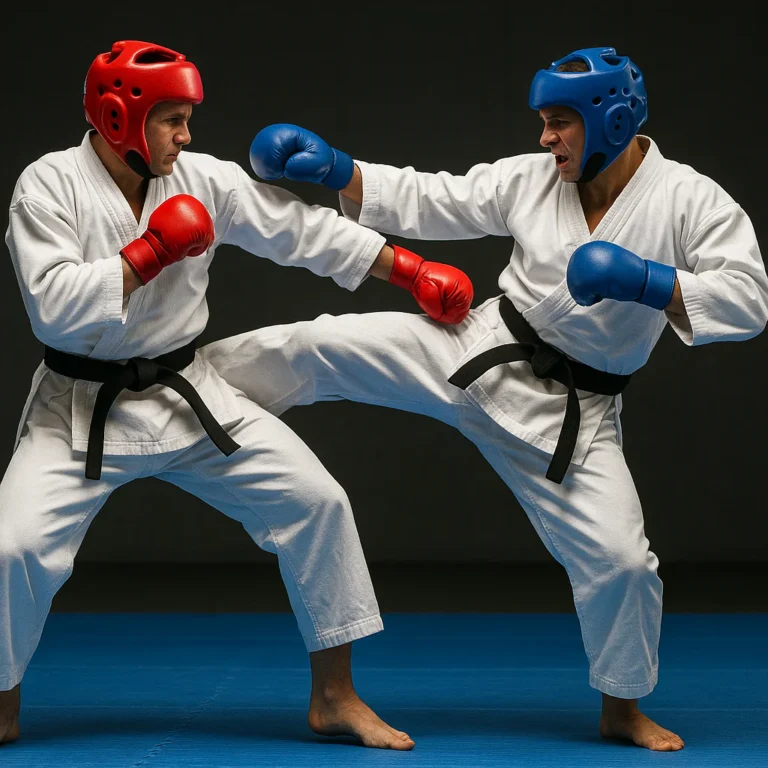
Ever watched a fighter step into the octagon with a bladed stance, hands low, and suddenly vanish from their opponent’s radar only to reappear with a devastating front kick? That isn’t magic; it’s the ancient art of Karate meeting the brutal reality of Mixed Martial Arts. At Karate MMA™, we’ve spent years dissecting why traditional dojos are now the secret weapon for some of the world’s most dangerous strikers. The answer lies not in copying old forms, but in adapting the explosive timing, unconventional angles, and psychological warfare of Karate to the chaotic flow of the cage.
You might be wondering if those “point-fighting” drills you learned as a kid have any place in a sport where takedowns are just as lethal as punches. The short answer is: yes, but with a twist. We’ll reveal exactly how legends like Lyoto Machida and Stephen “Wonderboy” Thompson turned “useless” traditional techniques into championship gold. Spoiler alert: it involves mastering the art of the one-count strike and using distance like a chess grandmaster. By the end of this guide, you’ll understand why the front kick is the most underrated tool in modern MMA and how to avoid the common traps that turn a Karateka into a punching bag.
Key Takeaways
- Explosive Power via “Snap”: Karate teaches a unique relax-to-tense mechanism that generates more power with less telegraphing than traditional boxing or Muay Thai.
- Distance is Defense: The Karate concept of ma-ai (fighting distance) allows fighters to control the pace, evade takedowns, and strike from angles opponents can’t predict.
- The Front Kick Revolution: The Mae Geri (front kick) has evolved from a basic technique into a primary tool for stopping takedowns and managing range in the octagon.
- Adaptation is Critical: Traditional point-sparring must be modified for continuous flow and live pressure to be effective in MMA; rigid stances can be a liability without proper integration.
- 7 Proven Techniques: We break down the top 7 Karate techniques that are currently dominating the sport, from the deceptive hook kick to the bladed cat stance.
Table of Contents
- ⚡️ Quick Tips and Facts
- 📜 From Dojo to Octagon: The Evolution of Karate in MMA
- 🥋 Why Karate Striking is a Game-Changer for Mixed Martial Arts
- 👣 Mastering Distance and Timing: The Karate Advantage
- 🥊 Unconventional Angles and Footwork: Breaking the MMA Mold
- 🦵 The Art of the Front Kick: Karate’s Secret Weapon in the Cage
- 🧠 Psychological Warfare: How Karate Mindset Disrupts Opponents
- 🔥 Top 7 Karate Techniques That Dominate Modern MMA Striking
- 🏆 Case Studies: Legends Who Proved Karate Works in the Octagon
- 🚫 Common Mistakes When Translating Traditional Karate to MMA
- 🤝 Integrating Karate with Wrestling and Grapling
- 🎯 How to Choose the Right Karate Style for Your MMA Journey
- 🏋️ ♂️ Training Drills to Bridge the Gap Between Dojo and Cage
- 📚 Recommended Links
- ❓ FAQ: Your Burning Questions About Karate in MMA Answered
- 📖 Reference Links
⚡️ Quick Tips and Facts
Before we dive into the deep end of the octagon, let’s hit the pause button and grab a few golden nugets of wisdom straight from the Karate MMA™ dojo floor. If you think Karate is just about bowing to a wall and shouting “Kiai,” you’re in for a massive surprise.
Here is the lowdown on why Karate is secretly the Swiss Army Knife of MMA striking:
- ✅ The “Snap” Factor: Unlike the “push” style of boxing, Karate teaches you to relax until the split second of impact, then snap your fist or foot. This generates explosive power without telegraphing your move.
- ✅ Distance is King: Karateka (Karate practitioners) are obsessed with ma-ai (fighting distance). In MMA, where a takedown is always lurking, controlling that space is the difference between a KO and a double-leg.
- ✅ Unorthodox Angles: While boxers move in straight lines, Karate teaches lateral movement and angular attacks. This makes you a nightmare to predict and even harder to clinch.
- ✅ The Front Kick (Tep): Often dismissed as “boring,” the Karate front kick is arguably the most effective tool for managing distance and setting up takedowns in modern MMA.
- ❌ The “Point Fighting” Trap: Traditional point-sparring (stop-and-go) can be a liability if you don’t adapt to continuous pressure. We’ll show you how to fix this later!
Did you know? The legendary Lyoto Machida, a Shotokan Karate black belt, used his Karate background to become the UFC Light Heavyweight Champion, proving that “old school” works in the “new school.”
If you’re ready to bridge the gap between the dojo and the cage, you’ve come to the right place. At Karate MMA™, we’ve seen fighters transform their game by integrating these ancient principles. Want to see how it all started? Let’s rewind the tape.
📜 From Dojo to Octagon: The Evolution of Karate in MMA
The journey of Karate in Mixed Martial Arts is a tale of misunderstanding, adaptation, and ultimate triumph. For decades, traditional martial artists were told their arts were “useless” in a real fight. The rise of the UFC in the 90s seemed to confirm this, as graplers dominated the early stages.
But the tide turned.
The Early Skepticism
In the early days of MMA, the prevailing wisdom was that striking arts without grappling were doomed. Traditional Karate, with its rigid stances and point-sparring rules, looked comical against wrestlers and Muay Thai practitioners. Critics pointed to the lack of live, full-contact sparring in traditional dojos as a fatal flaw. As noted by Union Martial Arts, traditional forms like Kata are “not practical for real-world self-defense scenarios” without significant adaptation [1].
The Turning Point: The “Karate Kid” Effect
However, a new generation of fighters began to emerge who didn’t just do Karate; they evolved it. Fighters like Lyoto Machida, Stephen “Wonderboy” Thompson, and Georges St-Pierre (who integrated Karate footwork into his eclectic style) proved that the principles of Karate were gold, even if the traditional application needed a makeover.
They took the footwork, the timing, and the unconventional angles of Karate and fused them with the pressure and continuous flow of MMA.
The Modern Synthesis
Today, Karate is no longer seen as a relic. It is a strategic asset. Modern MMA fighters use Karate to:
- Disrupt Rhythm: Break the opponent’s timing with sudden, explosive bursts.
- Control Range: Use long-range kicks to keep graplers at bay.
- Create Openings: Use feints and angular movement to set up takedowns or heavy strikes.
Fun Fact: Georges St-Pierre’s famous “switch kick” and his ability to slip punches while moving backward are direct descendants of his Karate training.
For a deeper dive into how specific fighters have mastered this blend, check out our breakdown of Fight Analysis and Breakdowns or explore the profiles of Fighter Profiles who have made the transition.
🥋 Why Karate Striking is a Game-Changer for Mixed Martial Arts
So, why does Karate specifically stand out in the chaotic environment of an MMA fight? It comes down to efficiency and surprise.
The Psychology of the “Unseen” Strike
In boxing, you expect a jab, a cross, a hook. In Muay Thai, you expect a tep, a roundhouse, a clinch. But when a fighter steps out with a Karate stance (often bladed, with hands lower), the opponent’s brain has to re-calibrate.
- The Bladed Stance: By turning your body sideways, you present a smaller target. This is crucial in MMA where a single takedown can end the fight.
- The Lower Hands: While boxers keep hands high, Karateka often keep hands lower to lure the opponent in, then explode with a counter. This is risky, but when timed perfectly, it’s devastating.
The “Snap” vs. The “Push”
As highlighted by Pacific Wave Jiu-Jitsu, the concept of “snap” is a fine motor skill derived from Karate that is often missing in other striking arts [2].
- Gross Motor Skills: Most striking relies on pushing the opponent or shoving the punch.
- Fine Motor Skills (Snap): Karate teaches you to stay relaxed, move the limb, and tense only at impact. This creates a “whip-like” effect, generating more power with less telegraphing.
Quote from the experts: “To use ‘snap’, you keep your body relaxed throughout range of motion of the strike, then tensing your body and/or twisting the striking surface right at the moment of impact.” [2]
This mechanic allows MMA fighters to throw strikes that look like they have no power, only to knock an opponent out cold.
The Distance Management Masterclass
Karate is obsessed with ma-ai (distance). In MMA, where the fight can go to the ground in a split second, controlling the distance is life or death.
- Long Range: Karate fighters are comfortable fighting at the end of their reach, using kicks to keep opponents away.
- Mid Range: They use quick, linear footwork to enter and exit before a clinch can be established.
If you want to master these concepts, our guide on Karate Techniques breaks down the mechanics in detail.
👣 Mastering Distance and Timing: The Karate Advantage
“Distance is the most important thing in fighting.” — Unknown Karate Master
In MMA, distance isn’t just about how far you are from your opponent; it’s about when you are there. Karate provides a unique toolkit for mastering this.
The Art of the “Step-Through”
Unlike the shuffling footwork of boxers, Karate emphasizes linear, explosive steps.
- The Lead Step: You step forward with your lead foot, closing the distance instantly.
- The Rear Step: You step back with your rear foot to create space, often while throwing a counter.
This movement is dynamic. As Coach Andy Aspinall notes in his training philosophy, “If your hands are not moving, your feet should be moving. If your feet are not moving, your hands should be moving” [Video Summary]. This constant motion makes you a moving target, difficult to hit and impossible to pin down.
Timing: The “One-Count”
Karate teaches the one-count strike. Instead of throwing combinations (jab-cross-hook), a Karate fighter waits for the perfect moment to land a single, devastating strike.
- Why it works in MMA: It conserves energy and catches opponents off guard.
- The Trap: If you rely only on the one-count, you might get overwhelmed by a flurry of boxing combinations. The key is adaptation.
Visualizing the Gap
Imagine your opponent is throwing a jab. A boxer might slip and counter. A Karateka might step back just out of range, let the jab miss, and immediately counter with a reverse punch or a front kick.
Pro Tip: Practice this in front of a mirror. Watch your retraction speed. If you don’t pull your hand back fast enough, you’ll get caught in a clinch.
For more on how to refine your timing, check out our Fight Analysis and Breakdowns where we dissect famous fights.
🥊 Unconventional Angles and Footwork: Breaking the MMA Mold
Boxing is linear. Muay Thai is circular. Karate is angular.
The Bladed Stance (Neko Ashi Dachi)
The traditional Karate stance is bladed, meaning your body is turned sideways.
- ✅ Benefit: Reduces your target area by 30-40%.
- ✅ Benefit: Makes it harder for opponents to land body shots.
- ❌ Drawback: Can leave you vulnerable to leg kicks if you don’t check them.
- ❌ Drawback: Can make it harder to generate power on hooks if you don’t pivot correctly.
The “Switch” and the “Hop”
Karate fighters often use hops and switches to change their stance and angle instantly.
- The Switch: Switching from orthodox to southpaw (or vice versa) mid-fight can confuse an opponent’s defense.
- The Hop: A small hop allows you to reset your balance and change your angle of attack.
Lateral Movement
While boxers move forward and back, Karateka move side-to-side. This is crucial in MMA to avoid the center line, where most takedowns are initiated. By moving laterally, you force the opponent to turn, exposing their back or side.
Did you know? Stephen “Wonderboy” Thompson is famous for his “dancing” footwork, which is pure Karate. He uses lateral movement to make opponents miss, then counters with pinpoint accuracy.
🦵 The Art of the Front Kick: Karate’s Secret Weapon in the Cage
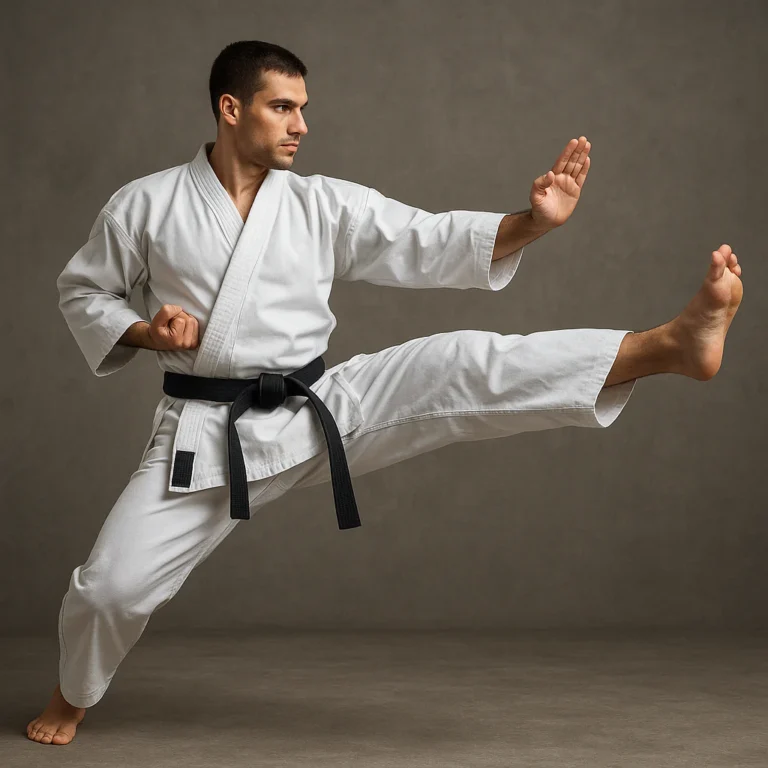
If there is one Karate technique that has revolutionized MMA, it is the Front Kick (Mae Geri).
Why the Front Kick?
In traditional Karate, the front kick is often used to the midsection or face. In MMA, it has evolved into a multi-purpose tool:
- The Tep: Used to keep graplers at bay.
- The Body Kick: Used to damage the ribs and liver.
- The Face Kick: Used to finish the fight.
The Mechanics of the MMA Front Kick
Unlike the high, snapping front kick of point sparring, the MMA front kick is often lower and more compact.
- Step 1: Lift the knee (chambering).
- Step 2: Extend the leg explosively.
- Step 3: Snap the foot back immediately to avoid being caught.
The “Check” and the “Counter”
One of the most effective uses of the front kick is to check an opponent’s takedown attempt. By kicking the opponent’s lead leg or hip, you disrupt their balance and prevent them from shooting.
Real-World Example: Look at how Jon Jones uses his front kick to control distance and set up his takedowns. It’s a masterclass in Karate application.
For a detailed breakdown of this technique, visit our Karate Techniques section.
🧠 Psychological Warfare: How Karate Mindset Disrupts Opponents
MA is as much a mental game as it is a physical one. Karate brings a unique psychological edge.
The “Zanshin” (Awareness)
In Karate, Zanshin means “remaining mind” or total awareness. It’s the state of being alert and ready for anything. In MMA, this translates to situational awareness.
- Reading the Opponent: A Karate-trained fighter is often better at reading subtle cues (shoulder movement, eye direction) because they are trained to anticipate attacks.
- Staying Calm: The meditative aspects of Karate help fighters stay calm under pressure, preventing panic when a takedown is attempted.
The “Unpredictable” Factor
Because Karate techniques are so different from boxing or Muay Thai, opponents often don’t know how to defend against them.
- The “Weird” Stance: Makes it hard for opponents to gauge distance.
- The “Weird” Kicks: Unconventional angles can bypass traditional defenses.
Quote: “It’s no good going to a gym for ten years and just fighting every day… perfect practice makes perfect.” — Coach Andy Aspinall [Video Summary]. This mindset of deliberate practice is deeply rooted in Karate philosophy.
🔥 Top 7 Karate Techniques That Dominate Modern MMA Striking
Let’s get specific. Here are the top 7 Karate techniques that are currently dominating the octagon:
- Mae Geri (Front Kick): The ultimate distance manager. Used to stop takedowns and damage the body.
- Gyaku Zuki (Reverse Punch): A linear, explosive punch that generates power from the hips.
- Mawashi Geri (Roundhouse Kick): While common in other arts, the Karate version is often thrown with a snap and from a bladed stance.
- Ura Mawashi Geri (Hook Kick): A deceptive kick that comes from the outside, often catching opponents off guard.
- Kizami Zuki (Jab): A quick, snapping jab used to set up combinations or disrupt rhythm.
- Shuto Uke (Knife Hand Block): Used to deflect strikes and create openings for counters.
- Neko Ashi Dachi (Cat Stance): A bladed stance that minimizes the target area and allows for quick movement.
| Technique | Primary Use in MMA | Difficulty Level | Effectiveness |
|---|---|---|---|
| Mae Geri | Distance Control / Takedown Defense | Low | ⭐ |
| Gyaku Zuki | Power Punching / Countering | Medium | ⭐ |
| Mawashi Geri | Body / Head Damage | Medium | ⭐ |
| Ura Mawashi Geri | Deception / Finisher | High | ⭐ |
| Kizami Zuki | Rhythm Disruption | Low | ⭐ |
| Shuto Uke | Defense / Counter Setup | Medium | ⭐ |
| Neko Ashi Dachi | Stance / Movement | Medium | ⭐ |
Note: Effectiveness depends on adaptation. A traditional Karate technique used without MMA context can be dangerous.
For more on these techniques, explore our Karate Techniques category.
🏆 Case Studies: Legends Who Proved Karate Works in the Octagon
Theory is great, but results are better. Let’s look at the legends who brought Karate to the mainstream.
Lyoto Machida: The Dragon
- Style: Shotokan Karate (Black Belt).
- Achievement: UFC Light Heavyweight Champion.
- Key Strategy: Used a bladed stance, explosive counters, and the “one-count” strike. He made opponents look foolish by making them miss and countering with precision.
- Legacy: Proved that Karate could be the primary style in MMA.
Stephen “Wonderboy” Thompson: The Karate Kid
- Style: Point Karate (World Champion).
- Achievement: UFC Welterweight Title Challenger.
- Key Strategy: Unorthodox footwork, lateral movement, and the “switch kick.” He uses his Karate background to control the pace and distance of the fight.
- Legacy: Showed that point fighting can be adapted for MMA with the right adjustments.
Georges St-Pierre: The Hybrid
- Style: Karate (Black Belt) + Wrestling + Jiu-Jitsu.
- Achievement: Two-division UFC Champion.
- Key Strategy: Integrated Karate footwork and timing into a well-rounded game. His ability to slip punches and counter with kicks is legendary.
- Legacy: Demonstrated the power of hybridization.
Want to know more? Check out our Fighter Profiles for in-depth analyses of these legends.
🚫 Common Mistakes When Translating Traditional Karate to MMA
Even the best Karate techniques can fail if applied incorrectly. Here are the common pitfalls to avoid:
1. The “Point Fighting” Trap
- Mistake: Stopping after every strike (common in traditional point sparring).
- Consequence: In MMA, stopping gives the opponent time to counter or shoot for a takedown.
- Fix: Practice continuous flow sparring. Throw combinations and keep moving.
2. The High Stance
- Mistake: Keeping hands too high or too low without purpose.
- Consequence: High hands slow down your movement; low hands leave you open to punches.
- Fix: Find a balanced stance that allows for both defense and offense.
3. Ignoring the Clinch
- Mistake: Focusing only on striking and ignoring the clinch.
- Consequence: Getting taken down or controlled in the clinch.
- Fix: Integrate clinch defense and takedown defense into your Karate training.
4. Over-reliance on Kicks
- Mistake: Throwing too many high kicks without checking for takedowns.
- Consequence: Getting caught in a takedown or leg kick.
- Fix: Use kicks strategically and always be ready to defend.
Pro Tip: “Perfect practice makes perfect.” Don’t just spar; analyze your mistakes and correct them.
🤝 Integrating Karate with Wrestling and Grapling
Karate is a striking art, but MMA requires grapling. How do you integrate the two?
The “Strike-to-Takedown” Flow
- Concept: Use your Karate strikes to set up takedowns.
- Example: Throw a front kick to the body, then immediately shoot for a double-leg takedown.
- Why it works: The opponent is focused on defending the strike, leaving them open to the takedown.
The “Takedown-to-Strike” Flow
- Concept: Use your grappling skills to set up strikes.
- Example: Defend a takedown, then counter with a knee or elbow.
- Why it works: The opponent is off-balance, making them an easy target.
The Importance of “Ground and Pound”
- Concept: Even on the ground, Karate principles apply.
- Example: Use snap and timing to deliver effective strikes from the top position.
- Why it works: It maximizes damage and controls the pace of the fight.
Did you know? Many MMA fighters now train in Karate and Wrestling simultaneously to create a well-rounded skill set.
🎯 How to Choose the Right Karate Style for Your MMA Journey
Not all Karate styles are created equal. Here’s a guide to help you choose the right one for your MMA journey.
Shotokan Karate
- Focus: Linear movements, deep stances, powerful strikes.
- Best For: Fighters who want to master distance and power.
- Pros: Strong fundamentals, explosive power.
- Cons: Can be rigid, requires adaptation for MMA.
Kyokushin Karate
- Focus: Full-contact sparring, body conditioning, low kicks.
- Best For: Fighters who want durability and pressure.
- Pros: Toughens the body, realistic sparring.
- Cons: Less focus on head movement, can be too aggressive.
Wado-Ryu Karate
- Focus: Evasion, fluidity, blending with the opponent.
- Best For: Fighters who want agility and timing.
- Pros: Excellent footwork, defensive skills.
- Cons: Less emphasis on power.
Goju-Ryu Karate
- Focus: Close-range fighting, breathing, internal power.
- Best For: Fighters who want close-quarters skills.
- Pros: Strong clinch work, internal power.
- Cons: Less focus on long-range striking.
Recommendation: If you’re new to MMA, start with Shotokan or Wado-Ryu for their focus on distance and footwork. If you want to get tough, try Kyokushin.
For more on Karate styles and rankings, visit our Karate Belts and Rankings section.
🏋️ ♂️ Training Drills to Bridge the Gap Between Dojo and Cage
Ready to start training? Here are some drills to help you bridge the gap.
1. The “Shadow Boxing” Drill
- Goal: Improve footwork and timing.
- How: Practice in front of a mirror. Focus on dynamic movement and feinting.
- Tip: “If your hands are not moving, your feet should be moving.”
2. The “Heavy Bag” Drill
- Goal: Build power and muscle memory.
- How: Perform high-intensity intervals (1 minute on, 1 minute off). Focus on snap and retraction.
- Tip: Start with 5 rounds, work up to 14.
3. The “Partner Sparring” Drill
- Goal: Apply techniques under pressure.
- How: Spar with partners of varying skill levels. Focus on distance and timing.
- Tip: Don’t just fight; analyze your mistakes.
4. The “Takedown Defense” Drill
- Goal: Defend against takedowns.
- How: Practice defending takedowns while throwing strikes.
- Tip: Use your front kick to keep the opponent at bay.
Pro Tip: Consistency is key. “Every day I am getting better and better.”
For more training tips, check out our Karate and MMA News section.
Conclusion

So, does Karate training improve MMA striking skills? Absolutely. But it’s not as simple as just copying what you see in the dojo. The key lies in adaptation.
Karate provides a unique toolkit of distance management, unconventional angles, and explosive power that can give any MMA fighter a significant edge. However, these tools must be refined and integrated with grappling and continuous sparring to be effective in the octagon.
From the snap of a reverse punch to the lateral movement of a bladed stance, Karate offers a strategic depth that is often overlooked. As we’ve seen with legends like Lyoto Machida and Stephen Thompson, the fusion of traditional Karate with modern MMA is not just possible—it’s dominant.
Final Thought: Don’t just train hard; train smart. Embrace the principles of Karate, but never stop evolving. After all, “perfect practice makes perfect.”
If you’re ready to take your game to the next level, remember that the journey starts with a single step. Or in this case, a single snap.
📚 Recommended Links
Ready to gear up? Here are some top-rated products and resources to help you on your Karate MMA journey.
Essential Gear for Karate MMA Training
- MA Gloves:
Venum Elite: Amazon | Official Site
Hayabusa T3: Amazon | Official Site - MA Shorts:
Venum Challenger: Amazon | Official Site
Hayabusa: Amazon | Official Site - Mouthguards:
Opro Silver: Amazon | Official Site
Books and Resources
- “The Karate Kid” (Book Series): Amazon
- “MA for Dummies”: Amazon
- “Shotokan Karate: The Definitive Guide”: Amazon
❓ FAQ: Your Burning Questions About Karate in MMA Answered

Can Karate footwork enhance MMA movement?
Yes. Karate footwork is designed for speed, agility, and angular movement. This allows MMA fighters to evade takedowns and create striking angles that are difficult for opponents to predict. The bladed stance and lateral movement are particularly effective in the octagon.
Does Karate kicking technique translate to MMA?
Yes, with adaptation. Traditional Karate kicks are often high and snapping. In MMA, these kicks must be lower, faster, and more compact to avoid being caught. The front kick (Mae Geri) is the most effective Karate kick in MMA, used for distance control and takedown defense.
Read more about “15+ MMA Fighters With a Karate Background (2026) 🥋”
How does Karate timing help in MMA striking?
Karate emphasizes timing and rhythm. The concept of ma-ai (distance) and the one-count strike allow fighters to land devastating blows with minimal telegraphing. This is crucial in MMA, where a single mistake can lead to a takedown or a knockout.
Read more about “🥋 15 Karate Techniques That Dominate MMA (2026)”
Are Karate strikes effective in mixed martial arts?
Absolutely. When adapted correctly, Karate strikes are highly effective. The snap technique generates explosive power, and the unconventional angles make them difficult to defend against. Fighters like Lyoto Machida and Stephen Thompson have proven this in the octagon.
Read more about “5 Hidden Disadvantages of Karate in MMA (2026) 🥋”
What Karate techniques are banned in MMA?
None. All traditional Karate techniques are legal in MMA, provided they are executed within the rules. However, some techniques (like high kicks to the head) may be riskier due to the threat of takedowns.
Read more about “Judo vs. Jiu-Jitsu: The Ultimate Showdown (2026) 🥋”
How do MMA fighters incorporate Karate into their training?
MA fighters incorporate Karate by adapting traditional techniques for the octagon. This includes modifying stances, focusing on continuous flow sparring, and integrating grapling and takedown defense. Many fighters also use Karate drills to improve footwork, timing, and power.
Read more about “Can a Karate Fighter Transition to MMA? 7 Legends Who Did It 🥋”
Does traditional Karate sparring prepare you for MMA?
Partially. Traditional Karate sparring (point fighting) can help develop timing and distance, but it lacks the pressure and continuous flow of MMA. To be effective, traditional Karate sparring must be supplemented with live sparring, grapling, and takedown defense training.
Need more answers? Check out our Fight Analysis and Breakdowns for detailed insights.
Read more about “🥋 Karate vs. MMA: The Ultimate Training Showdown (2026)”
📖 Reference Links
- Union Martial Arts: Karate and Taekwondo vs MMA Classes
- Pacific Wave Jiu-Jitsu: The Difference Between Fine Gross Motor Striking Skills
- Groundswell MMA: Adult MMA Programs
- UFC: Lyoto Machida Profile
- UFC: Stephen Thompson Profile
- UFC: Georges St-Pierre Profile
- Shotokan Karate Federation: Official Site
- Kyokushin Karate Organization: Official Site
Note: All links are provided for informational purposes. Always consult with a qualified instructor before starting any new training program.