Support our educational content for free when you purchase through links on our site. Learn more
Traditional Karate vs MMA: Which Reigns Supreme in 2025? 🥋🥊

Ever wondered if the ancient art of Traditional Karate can hold its own against the relentless, full-contact world of MMA? Or if the flashy, brutal techniques of MMA overshadow the disciplined precision of Karate? You’re not alone. At Karate MMA™, we’ve seen countless debates, epic sparring sessions, and eye-opening moments that challenge everything you thought you knew about these two martial arts giants.
Did you know that fighters like UFC champion Lyoto Machida have built their careers by blending Karate’s timing and footwork with MMA’s grappling and power? Stick around, because later we’ll reveal how this hybrid approach might just be the secret weapon you never expected. Plus, we’ll break down the striking, grappling, self-defense effectiveness, and even the gear you’ll need to start your own journey—whether you choose the traditional path or the modern cage.
Key Takeaways
- Traditional Karate excels in discipline, precision striking, and character development, making it ideal for those seeking mental focus and a lifelong journey.
- MMA offers a comprehensive combat system, blending striking, wrestling, and grappling, perfect for practical self-defense and high-intensity competition.
- Karate’s unique footwork and timing can enhance MMA striking, as proven by top fighters like Stephen “Wonderboy” Thompson.
- Grappling remains MMA’s critical advantage, exposing a blind spot in most traditional Karate styles.
- Combining both arts creates a versatile, well-rounded martial artist capable of adapting to any fight scenario.
- Essential gear varies: traditional Karate requires a quality gi and protective pads, while MMA demands gloves, shin guards, and rash guards from trusted brands like Fuji Sports, Hayabusa, and Venum.
Ready to gear up?
- Shop Karate Gi and belts: Fuji Sports | Tokaido
- Explore MMA gloves and protective gear: Hayabusa | Venum | Fairtex
Table of Contents
- ⚡️ Quick Tips and Facts
- Unpacking the Roots: The Rich History of Traditional Karate and the Rise of Modern MMA
- Beyond the Gi and Gloves: Core Philosophies and Training Methodologies
- The Ultimate Showdown: Comparing Techniques and Combat Systems in Traditional Karate vs. MMA
- Real-World Readiness: Self-Defense Effectiveness and Practical Application
- The Competitive Arena: Tournaments, Octagons, and Sporting Glory
- Beyond the Blows: Holistic Benefits for Mind, Body, and Spirit
- Gearing Up for Battle: Essential Equipment for Your Martial Arts Journey
- Choosing Your Path: Which Martial Art is Right for Your Journey? 🤔
- The Hybrid Warrior: Can You Train Both Traditional Karate and MMA? 🥋🤼
- Myth Busting: Separating Fact from Fiction in the Martial Arts World
- Our Karate MMA™ Team’s Take: Personal Anecdotes and Expert Insights
- Conclusion: The Ultimate Verdict on Traditional Karate vs. MMA
- Recommended Links
- FAQ: Your Burning Questions Answered 🔥
- Reference Links: Dive Deeper into the Martial Arts World
Here at Karate MMA™, we’ve spent decades with our feet on the dojo mat and our hands wrapped for the cage. We’ve heard all the arguments, the “my dad can beat up your dad” of the martial arts world. Is the ancient discipline of Karate an outdated art form, or is it a deadly weapon hiding in plain sight? Is MMA the pinnacle of combat sports, or just a brutal free-for-all?
Grab a seat. Let’s settle this.
⚡️ Quick Tips and Facts
In a hurry? Here’s the lightning-fast breakdown of Traditional Karate vs. MMA.
| Feature | Traditional Karate 🥋 | Mixed Martial Arts (MMA) 🥊 |
|---|---|---|
| Primary Focus | Striking (punches, kicks), forms (kata), self-defense philosophy. | A blend of striking, wrestling, and submission grappling. |
| Core Principle | Discipline, character development, perfection of technique. | Versatility, adaptability, and combat effectiveness under pressure. |
| Sparring Style | Often point-based or light/semi-contact (kumite). Full contact is less common. | Full contact, continuous sparring that simulates a real fight. |
| Ground Fighting | ✅ Limited to non-existent in most traditional styles. | ❌ A core and essential component of the sport. |
| Self-Defense | ✅ Excellent for creating distance and single, powerful strikes. | ❌ Comprehensive, covering striking, clinching, and ground scenarios. |
| Great For… | Building focus, discipline, physical coordination, and respect for tradition. | Getting in incredible shape, learning to fight in all ranges, competition. |
| Key Figures | Gichin Funakoshi, Mas Oyama, Hironori Ōtsuka. | Royce Gracie, Conor McGregor, Amanda Nunes. |
Unpacking the Roots: The Rich History of Traditional Karate and the Rise of Modern MMA
You can’t understand the fight without understanding the fighters’ origins. The story of Karate and MMA is a tale of ancient tradition meeting modern evolution.
The Ancient Path: Tracing Traditional Karate’s Origins and Philosophy
Karate, meaning “empty hand,” has a history as rich and complex as any ancient art. Its journey begins in the Ryukyu Kingdom, now Okinawa, Japan. Faced with a weapons ban by ruling clans, the Okinawans developed a system of self-defense using their bodies as weapons. This system, called “Te” (hand), blended with Chinese martial arts (Kenpō) to become the foundation of what we now call Karate.
Pioneers like Gichin Funakoshi, the founder of Shotokan Karate, were instrumental in introducing this Okinawan art to mainland Japan in the early 20th century. Funakoshi emphasized that the ultimate aim of karate lies not in victory or defeat, but in the perfection of the character of its participants. This philosophy is the bedrock of traditional karate. It’s not just about fighting; it’s about building a better you. You can explore more about this fascinating journey in our Martial Arts History section.
From Dojo to Octagon: The Explosive Evolution of Mixed Martial Arts
MMA, on the other hand, is the rebellious teenager of the martial arts world. While the concept of “no-holds-barred” fighting has existed for centuries (think Greek Pankration), modern MMA exploded into public consciousness with the first Ultimate Fighting Championship (UFC) in 1993.
The goal was simple: to answer the age-old question, “Which martial art is the best?” A skinny Brazilian jiu-jitsu practitioner named Royce Gracie shocked the world by submitting larger, stronger opponents from different disciplines, proving that a fight almost always ends up on the ground. This event was the “Big Bang” of modern MMA. It forced strikers to learn grappling, and grapplers to learn striking, creating the well-rounded athletes we see today. It’s a sport born from a question, constantly evolving to find the most effective answer.
Beyond the Gi and Gloves: Core Philosophies and Training Methodologies
So, one is about perfecting character, the other about winning a fight. Is it really that simple? Not quite.
The Way of the Empty Hand: Traditional Karate’s Discipline and Character Development
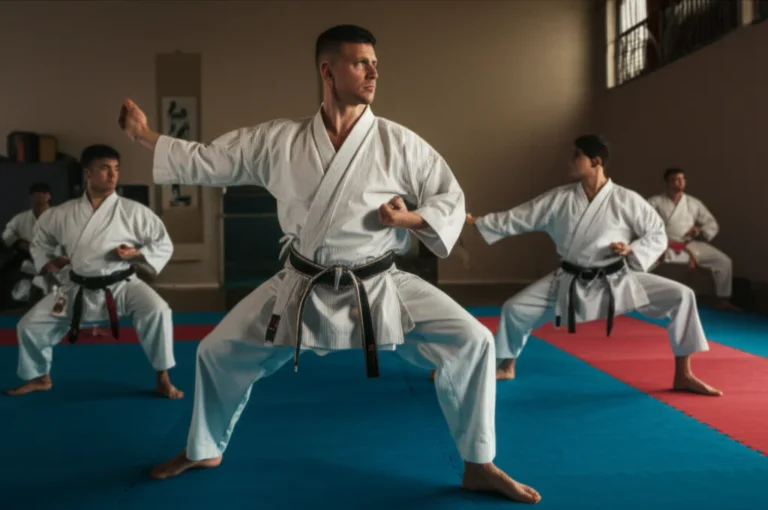
Walk into a traditional karate dojo, and the first thing you’ll notice is the structure. The bowing, the crisp white gi, the call-and-response in Japanese—it’s all part of the package. Training is built on three pillars:
- Kihon (Basics): The relentless repetition of stances, blocks, punches, and kicks. This builds muscle memory until the movements are second nature.
- Kata (Forms): Pre-arranged sequences of movements against imaginary opponents. Kata is the library of karate, preserving techniques and teaching flow, power, and focus.
- Kumite (Sparring): The application of techniques against a partner. In traditional dojos, this is often highly controlled to prevent injury and emphasize technique over brute force.
The goal is to forge a strong spirit through a disciplined body. It’s a marathon, not a sprint.
The Art of Adaptation: MMA’s Focus on Versatility and Combat Effectiveness
An MMA gym is a different beast altogether. It’s often loud, sweaty, and buzzing with energy. The philosophy is one of pragmatism and pressure testing. If a technique doesn’t work against a resisting opponent, it’s discarded.
Training is typically broken down into the core disciplines:
- Striking: Boxing, Muay Thai, and yes, even Karate provide the stand-up arsenal.
- Wrestling: The key to dictating where the fight takes place—on the feet or on the mat.
- Submission Grappling: Brazilian Jiu-Jitsu (BJJ) is the king here, focusing on chokes and joint locks to finish the fight without throwing a single punch on the ground.
The entire training methodology is geared towards one thing: integration. How do you throw a punch without getting taken down? How do you get back to your feet when a wrestler puts you on your back? MMA is the science of solving these chaotic questions in real-time.
The Ultimate Showdown: Comparing Techniques and Combat Systems in Traditional Karate vs. MMA
Alright, let’s get to the nitty-gritty. If a Karateka and an MMA fighter squared off, what would it look like? We break it down in our Fight Analysis and Breakdowns all the time, but here’s the cheat sheet.
1. Striking Prowess: Karate’s Precision vs. MMA’s Power and Range
Karate striking is built on a foundation of linear power and blitzing attacks. Think of a coiled spring. Karateka often fight from a longer range, using explosive footwork to close the distance, deliver a powerful, precise strike (like a reverse punch or a front kick), and get out. The stance is typically more bladed.
MMA striking is a melting pot. It incorporates the powerful round kicks and clinch work of Muay Thai, the head movement and footwork of boxing, and the unorthodox angles of… well, Karate! Fighters like Stephen “Wonderboy” Thompson have used their Karate base to become some of the most elusive and dangerous strikers in the UFC.
| Aspect | Traditional Karate | MMA |
|---|---|---|
| Stance | Longer, often bladed (sideways) stance. | More squared-up, balanced stance to defend takedowns. |
| Power Source | Hip rotation, linear drive from the ground up. | A mix of linear and rotational power, adapted for gloves. |
| Key Strikes | Reverse punch (gyaku-zuki), front kick (mae-geri), side kick (yoko-geri). | Jab, cross, hook, leg kicks, head kicks, knees, elbows. |
| Advantage | ✅ Speed, surprise, and distance management. | ✅ Variety, combinations, and power in close quarters. |
2. The Grappling Game: Where Traditional Karate Meets the Ground (or Doesn’t!)
This is the elephant in the room. Traditional Karate has a massive blind spot: grappling. While some older Okinawan styles contain throws and joint locks, most modern, sport-focused Karate completely neglects ground fighting. A pure Karateka who is taken down by a skilled wrestler or BJJ practitioner is, to put it bluntly, a fish out of water.
MMA, as we know, was built on the back of grappling. The ability to fight on the ground is not just a skill; it’s a necessity. From takedowns to submissions, controlling an opponent on the mat is often the clearest path to victory.
✅ Karate: Focuses on staying on its feet. Its defense against grappling is to maintain distance.
❌ MMA: Treats the ground as just another place to fight, with a deep well of techniques for control and finishing.
3. Clinch and Control: The Unsung Heroes of MMA’s Stand-Up
The “in-between” range—too close to kick, too close to punch freely—is the clinch. MMA fighters, heavily influenced by Muay Thai, are masters of this domain. They use the clinch to control their opponent’s posture, land devastating knees and elbows, or set up takedowns.
Traditional Karate generally avoids the clinch. The rules of point sparring often reset the action when fighters get tied up, so it’s an undeveloped area of the art.
4. Defensive Strategies: Blocking, Evasion, and Takedown Defense
Karate defense relies on hard, angular blocks and evasive footwork. The idea is to deflect an attack and create an opening for a counter. You can see some of these beautiful, efficient movements in our Karate Techniques library.
MMA defense has to account for a lot more. An MMA fighter must defend punches, kicks, knees, elbows, and takedowns. This leads to a higher guard (to protect the head from punches) and a lower, more squared stance (to defend the legs from takedowns). The famous “sprawl” is a quintessential MMA defensive move that simply doesn’t exist in Karate’s playbook.
Real-World Readiness: Self-Defense Effectiveness and Practical Application
So, the million-dollar question: which one will save you in a dark alley?
Karate’s Street Smarts: When Traditional Techniques Shine (and When They Don’t) 🥋
The core principle of Karate for self-defense is “Ikken Hissatsu”—to annihilate the opponent with a single blow. In a real-world confrontation where there are no rules and your goal is to escape, this is a powerful concept.
Where Karate shines:
- Distance Management: Keeping an aggressor at bay.
- Powerful Single Strikes: A well-placed front kick to the gut or a palm heel to the chin can end a confrontation quickly.
- Awareness: Traditional training emphasizes zanshin, or a state of relaxed awareness, which is crucial for avoiding trouble in the first place.
Where Karate falls short:
- Multiple Attackers: The “one-hit, one-kill” philosophy can be difficult to apply against a group.
- The Clinch/Grapple: Most street fights get messy and close. If someone grabs you and you don’t know how to grapple, your Karate striking becomes nearly useless.
- Lack of Pressure Testing: If your dojo only practices light, non-continuous sparring, you may not be prepared for the adrenaline and chaos of a real attack.
MMA in the Wild: Adapting Cage Skills for Real-Life Scenarios 🥊
MMA training is, by its nature, a fantastic preparation for the unpredictability of a real fight.
Where MMA shines:
- All Ranges Covered: Whether the fight is at a distance, in a clinch, or on the ground, an MMA practitioner has tools to use.
- Pressure Tested: MMA fighters are used to full-contact sparring. They know how to take a punch and keep thinking clearly under duress.
- Grappling Control: The ability to control someone on the ground is arguably the single most important skill in a one-on-one, unarmed confrontation.
Where MMA can be problematic:
- Sport vs. Street: MMA has rules (no eye pokes, no groin strikes, etc.). A street fight has none. Training with sport-specific habits can create dangerous blind spots.
- Going to the Ground: While dominant in a one-on-one fight, going to the ground in a street fight is extremely dangerous. You risk being stomped by the attacker’s friends or hitting your head on the concrete. The goal should always be to get back to your feet and escape.
Bridging the Gap: Can Traditional Karate Enhance Your MMA Game?
Absolutely! This is the core of our philosophy at Karate MMA™. The unorthodox timing, explosive footwork, and unique kicking angles of Karate can be a superpower when integrated into an MMA framework. Just look at the Fighter Profiles of champions like Lyoto “The Dragon” Machida and the aforementioned “Wonderboy.” They built their entire careers on using a Karate base to confuse and dominate opponents trained in more conventional striking arts.
The key is to take the principles of Karate—the distance, the timing, the precision—and pressure test them in a modern MMA sparring environment.
The Competitive Arena: Tournaments, Octagons, and Sporting Glory
The competitive side of these arts couldn’t be more different.
The Elegance of Kumite: Traditional Karate Competitions and Rules
Karate competition is often a high-speed game of tag. In point-sparring kumite, the goal is to land a clean, controlled technique on a scoring area. The referee yells “Yame!” (stop), awards a point, and resets the fighters. It’s about showcasing superior technique and timing.
Then you have full-contact Karate, like Kyokushin, which is a different animal entirely. Fighters exchange full-power blows, often without hand protection, but typically with no punches to the head. It’s a brutal test of conditioning and spirit.
The Thrill of the Fight: Major MMA Promotions (UFC, Bellator) and Their Stars
MMA competition is the closest thing modern society has to gladiatorial combat. Promotions like the UFC and Bellator MMA are global phenomena. The ruleset allows for a wide range of techniques, and the goal is to win by knockout, submission, or a judge’s decision. It’s a raw, unfiltered test of a fighter’s skill, heart, and strategy. You can follow all the latest action in our Karate and MMA News section.
Beyond the Blows: Holistic Benefits for Mind, Body, and Spirit
Not everyone trains to be a champion or a street enforcer. For most of us, martial arts is about personal growth.
Cultivating Discipline: The Mental Fortitude and Focus of Traditional Karate
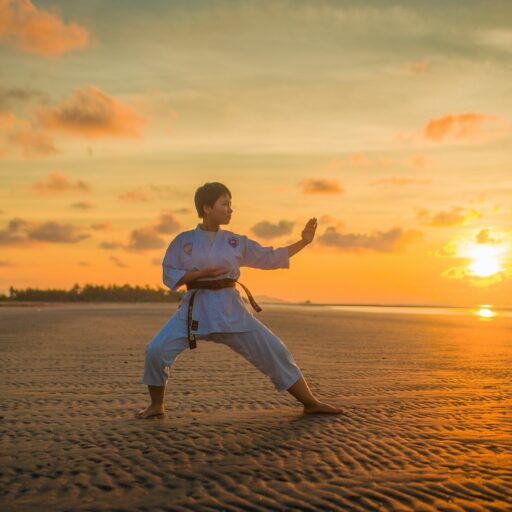
Karate is a moving meditation. The focus required to perfect a kata or hold a deep stance for minutes on end builds incredible mental fortitude. It teaches:
- Patience: You won’t master it in a day, a month, or even a year.
- Respect: For your instructors, your partners, and the art itself.
- Humility: There’s always more to learn.
As the popular martial arts blog Sensei Ando puts it in a dialogue between the two arts, the goal of TMA is “wisdom.” We believe that’s a beautiful way to frame it.
Peak Performance: The Physical Demands and Rewards of MMA Training
MMA training is one of the most intense workouts on the planet. It’s a full-body crucible that forges:
- Cardiovascular Endurance: From wrestling rounds to pad work.
- Functional Strength: The kind of strength that moves other human beings, not just weights.
- Explosive Power: For strikes and takedowns.
- Flexibility and Mobility: Essential for grappling and high kicks.
If your primary goal is to get into phenomenal physical shape while learning a practical skill, MMA is hard to beat.
Gearing Up for Battle: Essential Equipment for Your Martial Arts Journey
You can’t just show up in your street clothes. Here’s what you’ll need to get started.
The Traditionalist’s Toolkit: Gi, Belts, and Dojo Essentials
For Karate, the uniform (gi) is paramount. It promotes unity and removes vanity from the dojo.
- The Gi: A Karate gi is typically lighter than a Judo gi. Brands like Fuji Sports and Tokaido are legendary for their quality and durability. A good gi feels crisp and moves with you.
- The Belt (Obi): This signifies your rank and holds your gi closed. It’s a symbol of your journey and hard work.
- Protective Gear: For kumite, you’ll need foam hand pads, foot/shin guards, and a mouthguard.
👉 Shop for Karate Gear on:
- Fuji Sports Gi: Amazon | Fuji Sports Official Website
- Tokaido Gi: Amazon | Tokaido Official Website
The Modern Warrior’s Kit: Gloves, Shin Guards, and Protective Gear
MMA requires a bit more gear to keep you and your partners safe during intense training.
- MMA Gloves: Smaller, 4-7oz gloves with open fingers for grappling.
- Boxing Gloves: Larger, 12-16oz gloves for sparring and bag work.
- Shin Guards: Essential for checking and throwing kicks.
- Mouthguard: Non-negotiable. Protect your teeth.
- Rash Guard & Spats/Shorts: Moisture-wicking apparel to wear under your gi or for no-gi grappling.
Top-tier brands like Hayabusa, Venum, and Fairtex are trusted by pro fighters worldwide.
👉 Shop for MMA Gear on:
- Hayabusa T3 Boxing Gloves: Amazon | Hayabusa Official Website
- Venum Challenger MMA Gloves: Amazon | Venum Official Website
- Fairtex Shin Guards: Amazon | Fairtex Official Website
Choosing Your Path: Which Martial Art is Right for Your Journey? 🤔
So, after all that, which path should you walk? The ancient way of the empty hand, or the modern path of the mixed artist?
Your Goals, Your Game: Deciding Between Traditional Karate and MMA
The best martial art is the one that aligns with your personal goals. There is no single right answer.
| Your Goal | Traditional Karate is a Great Fit If… | MMA is a Great Fit If… |
|---|---|---|
| Self-Defense | You want to learn to end a fight quickly with powerful strikes and escape. | You want a comprehensive system for all ranges of a one-on-one fight. |
| Fitness | You want to improve flexibility, coordination, and body control. | You want an intense, full-body workout that builds strength and cardio. |
| Competition | You enjoy a strategic, technique-focused sport. | You thrive under pressure and want to test yourself in a full-contact environment. |
| Discipline/Mindset | You seek mental focus, patience, and a connection to tradition. | You value pragmatism, adaptability, and problem-solving under duress. |
| Community | You appreciate a formal, structured environment with clear hierarchies. | You enjoy a more informal, team-oriented, and collaborative atmosphere. |
Considering Your Commitment: Time, Effort, and Lifestyle Fit
Karate is a lifelong journey. Progress is measured in years, not months. The path to a black belt is long and demands consistency and dedication to fine details.
MMA can show you practical results faster in terms of raw fighting ability, but the risk of injury in training is statistically higher due to the full-contact nature. The physical toll is significant and requires a serious commitment to strength, conditioning, and recovery.
Ultimately, the best thing you can do is try a class! Most gyms and dojos offer a free trial. Feel the vibe, meet the instructors, and see which one calls to you.
The Hybrid Warrior: Can You Train Both Traditional Karate and MMA? 🥋🤼
This is the question that gets us most excited. Can you be both the disciplined traditionalist and the adaptable modern warrior? The answer is a resounding YES!
Crossover Athletes: Success Stories and Synergies in Combat Sports
We’ve already mentioned them, but it bears repeating: fighters like Lyoto Machida and Stephen Thompson are living proof that a traditional karate base can be a huge asset in MMA. Their success comes from not just doing karate in a cage, but integrating its principles with wrestling and jiu-jitsu.
Another great example is UFC champion Robert Whittaker, who holds a black belt in Goju-ryu Karate. He uses the blitzing footwork and powerful straight punches learned in the dojo to set up his devastating knockout power in the octagon.
Integrating Styles: Tips for a Balanced Martial Arts Practice
If you want to walk both paths, here’s our advice:
- Build a Strong Base: Start with one and get proficient. Trying to learn everything at once is a recipe for being mediocre at everything. Many find success by building a solid base in Karate first, then adding grappling later.
- Be an Open-Minded Student: Leave your ego at the door. When you’re in the BJJ class, be a BJJ student. When you’re in the dojo, be a karateka. Don’t be the guy trying to tell the wrestling coach how a horse stance would be better.
- Find the Connections: Look for how the arts complement each other. How can your karate footwork help you avoid a takedown? How can your understanding of wrestling help you close the distance for a karate-style blitz?
- Pressure Test Everything: The ultimate test is live sparring. See what works, what doesn’t, and adapt. This is the core of the MMA philosophy, and it can supercharge your traditional training.
Myth Busting: Separating Fact from Fiction in the Martial Arts World
The “TMA vs. MMA” debate is full of myths and stereotypes. Let’s bust a few.
❌ The ‘Ineffective’ Karate Myth: Debunking Misconceptions
The idea that “Karate doesn’t work” is a common refrain, born from watching point-sparring and the early UFCs. This is simply not true.
The problem isn’t the art; it’s often the training methodology. A karateka who never spars with full intent, never gets hit, and never defends against a resisting opponent will, of course, be ineffective. But a karateka from a hard-training, full-contact dojo is a dangerous opponent for anyone. The techniques themselves—the straight punches, the powerful kicks, the angular blocks—are biomechanically sound and devastating when applied correctly.
✅ The ‘Brutal’ MMA Misconception: Understanding Modern Combat Sports
Many people see MMA as a lawless, bloody brawl. The dialogue in the Sensei Ando article captures this, with the TMA side calling MMA a sport for “high school dropouts” that gives “permanent brain damage.”
While the sport is undeniably tough and injuries happen, modern MMA is a highly regulated sport with a strong emphasis on fighter safety. There are referees, doctors, weight classes, and a long list of fouls. In many ways, a sanctioned MMA bout is safer than an old-school boxing match due to the variety of ways a fight can end without sustained head trauma (i.e., submissions). The community is filled with intelligent, dedicated, and respectful athletes—not the thugs some imagine.
Our Karate MMA™ Team’s Take: Personal Anecdotes and Expert Insights
We live and breathe this stuff. Our co-founder, Sensei Mike, has a story he loves to tell. He earned his second-degree black belt in Shotokan Karate and was rightfully proud of his skills. He could break boards, his kata was sharp, and his reverse punch was lightning-fast.
One day, a friend invited him to a Brazilian Jiu-Jitsu gym. Mike thought, “No problem. I’ll just keep him at a distance with my kicks.” The sparring round started. The BJJ blue belt didn’t even try to strike. He simply ducked under a punch, grabbed Mike’s legs, and in three seconds, Mike was on his back, utterly helpless. He was controlled, toyed with, and submitted five times in five minutes without his opponent ever throwing a punch.
He wasn’t angry. He was enlightened. He saw the massive hole in his game. That humbling experience wasn’t a defeat for Karate; it was a revelation. It’s the reason he, and all of us here, are so passionate about a hybrid approach. Karate gave him the discipline and striking foundation. MMA gave him the understanding of what happens when a fight gets real. Together, they made him a complete martial artist.
Conclusion: The Ultimate Verdict on Traditional Karate vs. MMA
After walking through the rich history, philosophies, techniques, and real-world applications of both Traditional Karate and MMA, what’s the bottom line? Which martial art reigns supreme?
Here’s the truth: there is no one-size-fits-all answer. Each art offers unique strengths and weaknesses, and your choice depends heavily on your personal goals, lifestyle, and what you want to get out of your martial arts journey.
-
Traditional Karate shines as a path of discipline, character development, and precise striking. It’s a lifelong journey that builds mental focus, respect, and a deep connection to martial arts heritage. For those seeking self-improvement, mental fortitude, and a striking art with philosophical depth, Karate is a powerful choice.
-
MMA is the ultimate test of combat effectiveness, blending striking, wrestling, and grappling into a comprehensive system. If your goal is practical self-defense, competition, or peak physical conditioning, MMA offers a pragmatic and intense training environment.
But—and here’s the kicker—combining the two can create a martial artist who is both disciplined and adaptable, traditional and modern, precise and versatile. Our own Karate MMA™ team lives this hybrid philosophy, and we’ve seen firsthand how Karate’s timing and precision can elevate MMA striking, while MMA’s grappling fills in Karate’s blind spots.
Remember Sensei Mike’s story? That humbling moment when he realized the limits of pure Karate in a grappling scenario? It’s a lesson for all of us: no art is perfect alone, but together they can be unstoppable.
So, whether you choose the timeless way of Karate, the dynamic world of MMA, or the best of both, commit fully, train smart, and respect the journey. The martial arts world is vast, and there’s room for everyone to grow, learn, and thrive.
Recommended Links
Ready to gear up or dive deeper? Here are some top-quality products and books to fuel your martial arts journey:
Karate Gear:
- Fuji Sports Karate Gi: Amazon | Fuji Sports Official Website
- Tokaido Karate Gi: Amazon | Tokaido Official Website
MMA Gear:
- Hayabusa T3 Boxing Gloves: Amazon | Hayabusa Official Website
- Venum Challenger MMA Gloves: Amazon | Venum Official Website
- Fairtex Shin Guards: Amazon | Fairtex Official Website
Books:
- The Essence of Okinawan Karate-Do by Shoshin Nagamine — A deep dive into Karate’s roots and philosophy. Amazon
- The Fighter’s Mind: Inside the Mental Game by Sam Sheridan — Insights into the mindset of fighters across disciplines. Amazon
- Mixed Martial Arts: The Book of Knowledge by BJ Penn and Glen Cordoza — A comprehensive guide to MMA training and techniques. Amazon
FAQ: Your Burning Questions Answered 🔥
What are the key differences between traditional Karate and MMA training methods?
Traditional Karate emphasizes repetitive drilling of basic techniques, kata practice, and controlled sparring to perfect form and mental discipline. MMA training integrates multiple disciplines—striking, wrestling, and grappling—with full-contact sparring to simulate real fight conditions. Karate focuses on precision and character development, while MMA prioritizes adaptability and practical combat effectiveness.
Is traditional Karate effective in real-world self-defense situations compared to MMA?
Traditional Karate can be highly effective when practiced with realistic sparring and pressure testing, especially for striking and distance management. However, MMA’s comprehensive approach, including grappling and ground fighting, generally offers broader self-defense tools for unpredictable real-world encounters. The best defense often combines both.
How does the mental discipline of traditional Karate compare to the physical intensity of MMA?
Karate cultivates patience, focus, and respect through structured training and philosophical teachings. MMA demands intense physical conditioning and mental toughness to endure full-contact sparring and competition stress. Both develop resilience but through different pathways—Karate through meditative repetition, MMA through physical challenge and adaptability.
Can a traditional Karate practitioner successfully transition to competing in MMA?
Yes! Many fighters have successfully transitioned by supplementing their Karate striking with wrestling and Brazilian Jiu-Jitsu. The key is embracing the learning curve, adapting to full-contact sparring, and integrating new skills without losing the precision and timing Karate provides.
What are the most significant advantages of training in traditional Karate over MMA?
Traditional Karate offers a structured path for personal growth, emphasizing respect, discipline, and mental clarity. Its focus on kata preserves historical techniques and teaches body mechanics deeply. It’s also generally lower-impact, making it accessible for a wider age range and lifestyle.
How does the focus on kata in traditional Karate impact a practitioner’s ability to adapt to MMA-style fighting?
Kata develops muscle memory, balance, and technique precision, which can enhance striking and movement in MMA. However, since kata involves solo practice against imaginary opponents, it lacks the unpredictability of live sparring. MMA fighters must supplement kata with dynamic training to adapt effectively.
Are the self-defense techniques taught in traditional Karate still relevant in today’s world, or is MMA a more practical choice?
Traditional Karate techniques remain relevant, especially for striking and situational awareness. However, MMA’s inclusion of grappling and ground fighting addresses gaps in traditional systems, making it more practical for the chaotic nature of modern self-defense scenarios. Combining both offers the best preparedness.
How do injury risks compare between traditional Karate and MMA training?
Traditional Karate, especially in non-full-contact styles, generally has a lower injury risk due to controlled sparring and emphasis on technique over force. MMA’s full-contact training and diverse techniques increase injury risk, requiring careful coaching, protective gear, and recovery protocols.
Can traditional Karate training improve an MMA fighter’s striking skills?
Absolutely! Karate’s emphasis on timing, precision, and unique footwork can give MMA fighters an edge in striking. Fighters like Stephen Thompson and Lyoto Machida have demonstrated how Karate techniques can be devastating when adapted to MMA’s dynamic environment.
Reference Links: Dive Deeper into the Martial Arts World
- Ultimate Fighting Championship (UFC)
- Bellator MMA
- Fuji Sports Karate Gear
- Hayabusa Fight Gear
- Venum MMA Equipment
- Fairtex Official Website
- The Effectiveness of Traditional Karate vs Mixed Martial Arts: A Comprehensive Look
- Sensei Ando’s TMA vs MMA Debate
We hope this deep dive has helped you navigate the exciting crossroads of Traditional Karate and MMA. Whether you choose the path of the ancient warrior, the modern fighter, or a blend of both, remember: the true victory lies in the journey itself. 🥋🥊