Support our educational content for free when you purchase through links on our site. Learn more
🥋 Taekwondo vs. Judo: The Ultimate Showdown (2026)


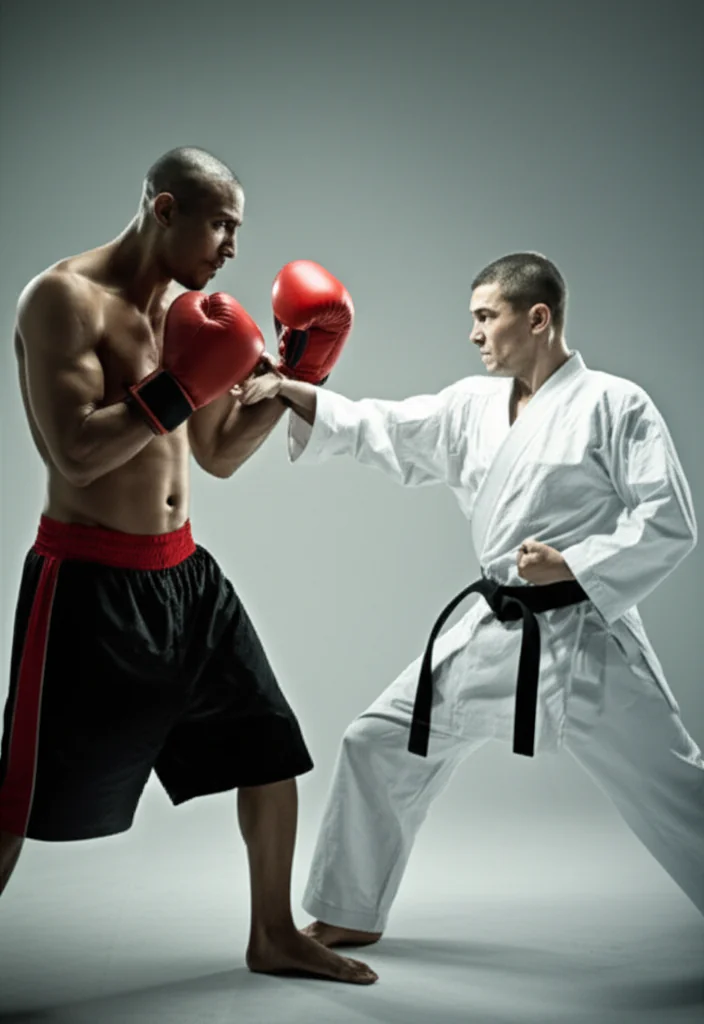
Ever watched a Taekwondo match where a spinning hook kick lands like a lightning bolt, only to wonder, “What if that fighter had been grabbed?” Or seen a Judo throw send an opponent flying, leaving you to ask, “Could that same athlete land a strike from a distance?” At Karate MMA™, we’ve spent decades on the mats and in the ring, and the debate between Taekwondo and Judo comparison is one of the most common questions we face. It’s not just about which art is “better”—it’s about which one fits your body, your goals, and your definition of self-defense.
In this comprehensive guide, we’re diving deep into the history, techniques, and real-world applications of both arts. We’ll reveal why a Judo black belt might struggle against a Taekwondo master in a street fight, and why a Taekwondo student could find themselves in trouble if they can’t defend a takedown. We’ll also uncover the surprising psychological differences that shape how practitioners think and react under pressure. By the end, you’ll know exactly which path to choose—or why the best fighters often train in both.
Key Takeaways
- Judo excels in close-quarters control, using leverage to throw and pin opponents, making it superior for self-defense when a fight goes to the ground.
- Taekwondo dominates at distance, utilizing explosive speed and high kicks to strike before an opponent can close the gap.
- Physicality differs: Judo builds functional strength and grip power, while Taekwondo develops extreme flexibility and cardiovascular endurance.
- The Verdict: For pure self-defense in unpredictable scenarios, Judo often holds the edge, but a hybrid approach combining both arts creates the most well-rounded fighter.
Table of Contents
- ⚡️ Quick Tips and Facts
- 📜 The Ancient Roots: A Historical Deep Dive into Taekwondo and Judo Origins
- 🥋 Core Philosophy: The Art of the Kick vs. The Science of the Throw
- 🥊 Technical Breakdown: Striking, Grappling, and Ground Fighting Mechanics
- 🏆 Competitive Showdown: Olympic Rules, Scoring Systems, and Match Dynamics
- 🧠 Mental Fortitude: Discipline, Focus, and the Psychological Edge in Both Arts
- 👶 Age and Fitness Suitability: Which Martial Art Fits Your Lifestyle?
- 🛡️ Self-Defense Reality Check: Street Scenarios, Taekwondo Kicks, and Judo Throws
- 🥋🥋🥋 The Ultimate Trio: How Taekwondo, Judo, and Brazilian Jiu-Jitsu Compare
- 🏅 Belt Progression and Ranking Systems: From White to Black Belt Timelines
- 🏋️ Physical Transformation: Cardio, Strength, and Flexibility Gains
- 🤔 Judo vs. Taekwondo: Which Should You Choose for Your Goals?
- 💡 Quick Tips and Facts for New Students
- 📚 Recommended Links and Gear
- ❓ Frequently Asked Questions (FAQ)
- 📖 Reference Links and Sources
⚡️ Quick Tips and Facts
Before you step onto the mat (or the tatami), let’s cut through the noise. At Karate MMA™, we’ve seen countless students walk in asking, “Which one is better?” The answer, as you’ll soon discover, is a resounding “It depends on what you want to achieve!”
Here is the TL;DR for the busy martial artist:
- 🥋 Judo is the art of leverage and gravity. It’s about throwing your opponent so hard they question their life choices. It’s grappling-heavy, focusing on throws, pins, and submissions.
- 🦶 Taekwondo is the art of speed and flexibility. It’s about kicking your opponent so high they need a ladder to get down. It’s striking-heavy, focusing on dynamic, head-height kicks.
- 🏆 Olympic Status: Both are Olympic gold medal sports, but Judo has been there since 1964 (Tokyo), while Taekwondo became a full medal sport in 2000 (Sydney).
- 🛡️ Self-Defense: If you want to control an attacker on the ground, Judo is your go-to. If you want to keep them at a distance and strike fast, Taekwondo shines.
- 🧠 Mental Game: Both demand extreme discipline, but Judo teaches you to flow with force, while Taekwondo teaches you to explode with precision.
Did you know? In modern Olympic Judo, grabbing the legs for a takedown is prohibited! This rule change was made to encourage more traditional throwing techniques, a fact that often surprises new students. You can read more about the evolution of Judo rules in our deep dive on Martial Arts History.
📜 The Ancient Roots: A Historical Deep Dive into Taekwondo and Judo Origins
To truly understand the clash between these two titans, we have to travel back in time. The history of Taekwondo and Judo comparison isn’t just about dates; it’s about the philosophical DNA of two nations.
The Gentle Way: The Birth of Judo
Judo was born in Japan in 1882, founded by Dr. Jigoro Kano. Kano wasn’t just a fighter; he was an educator. He took traditional Jujutsu (which was often brutal and lethal) and stripped away the dangerous techniques to create a system that could be practiced safely as a sport and a method of character building.
- The Philosophy: The name “Judo” translates to “The Gentle Way”. It’s not about being weak; it’s about using an opponent’s energy against them. As the old saying goes, “Maximum efficiency with minimum effort.”
- The Evolution: Kano introduced the Judogi (the heavy uniform) and the belt system (kyu/dan ranking), which revolutionized martial arts training globally.
- Global Spread: Judo spread rapidly, becoming the primary martial art of the Tokyo Police Department and eventually the Olympic Games.
Fun Fact: Jigoro Kano was the first Asian member of the International Olympic Committee! He fought tooth and nail to get Judo included in the Olympics.
The Art of Foot and Fist: The Rise of Taekwondo
Taekwondo’s roots are a bit more complex, weaving through Korean history. It draws from ancient Korean arts like Subak and Taekkyon, but the modern system was formalized in 1955 by General Choi Hong Hi and the Korea Taekwondo Association.
- The Philosophy: “Tae” means foot, “Kwon” means fist, and “Do” means the way. It is literally the “Art of Foot and Fist”. However, in modern sport Taekwondo, the foot does about 90% of the talking.
- The Split: There are two main governing bodies today: World Taekwondo (WT) (formerly WTF), which governs the Olympic style, and the International Taekwon-Do Federation (ITF), which retains more traditional forms and allows punches to the face.
- Cultural Impact: Taekwondo became a symbol of Korean national identity and was heavily promoted globally by the South Korean government during the Cold War era.
For a deeper look at how these arts evolved from battlefield techniques to Olympic sports, check out our article on Martial Arts History.
🥋 Core Philosophy: The Art of the Kick vs. The Science of the Throw
This is where the rubber meets the road. If you walk into a Judo dojo, you’ll hear the sound of bodies hitting the mat. If you walk into a Taekwondo dojang, you’ll hear the snap of a kick and the whoosh of air.
Judo: The Science of Balance
Judo is a grappling art. The core philosophy is Kuzushi (breaking balance). Before you can throw someone, you must first make them unstable.
- The Mindset: “If you can’t pull them down, you can’t hit them.” Judo practitioners think in terms of leverage, angles, and timing.
- The Goal: To throw the opponent onto their back with force, or to pin them to the ground until they submit or the referee stops the match.
- The “Gentle” Paradox: It’s called “gentle” because you don’t fight force with force. If someone pushes you, you pull. If they pull, you push. It’s a dance of physics.
Taekwondo: The Art of Distance
Taekwondo is a striking art. The core philosophy is distance management and speed.
- The Mindset: “Keep them away, and hit them before they can get close.” Taekwondo practitioners are masters of footwork and range.
- The Goal: To score points with clean, powerful kicks to the head or body. In Olympic Taekwondo, a spinning hook kick to the head is the ultimate point-scorer.
- The Flexibility Factor: Taekwondo demands extreme flexibility. You can’t throw a head kick if your hamstrings are tighter than a drum.
The Conflict: As noted by experts at Sweet Science of Fighting, “Judo and Taekwondo take diametrically opposite approaches to combat.” One wants to close the distance; the other wants to keep it open.
🥊 Technical Breakdown: Striking, Grappling, and Ground Fighting Mechanics
Let’s get technical. What exactly are you learning in each art?
Judo Techniques: The Throw and The Pin
Judo is divided into Nage-Waza (throwing techniques) and Katame-Waza (grappling techniques).
- Nage-Waza (Throws):
- Tachi-Waza: Standing throws. Examples include Seoi Nage (shoulder throw) and O Goshi (hip throw).
- Sutemi-Waza: Sacrifice throws. You intentionally fall to take the opponent down.
- The Leg Grab Ban: As mentioned, modern Olympic Judo bans grabbing the legs for takedowns (like a double-leg in wrestling). This forces Judokas to rely on upper-body grips and hip movement.
- Katame-Waza (Grappling):
- Osae-komi: Pinning the opponent. Hold them for 20 seconds (in modern rules) to win.
- Shime-waza: Chokeholds.
- Kansetsu-waza: Joint locks (mostly elbow locks).
Taekwondo Techniques: The Kick and The Snap
Taekwondo is 99% kicking. But don’t let the simplicity fool you; the variations are endless.
- Basic Kicks:
- Ap Chagi (Front Kick): The bread and butter. Used for pushing opponents back.
- Dollyo Chagi (Roundhouse Kick): The most common scoring kick.
- Yop Chagi (Side Kick): A powerful thrusting kick.
- Advanced Kicks:
- Dwi Chagi (Back Kick): A surprise attack from the rear.
- Dollyo Chagi (Spinning Hook Kick): The “money maker” in competition.
- Axe Kick: Bringing the heel down on the opponent’s head or collarbone.
- Punches:
- In Olympic Taekwondo, punches are allowed but only to the torso and score only 1 point. They are rarely used because a kick scores 2-5 points.
Pro Tip: In our Fight Analysis and Breakdowns, we often see Taekwondo practitioners struggle against grapplers because they don’t know how to defend a takedown. Conversely, Judokas often struggle against fast kickers because they can’t get inside the “kick zone.”
🏆 Competitive Showdown: Olympic Rules, Scoring Systems, and Match Dynamics
If you love watching sports, you need to know how the scoring works. It’s night and day.
Judo Scoring: The One-Shot Wonder
Judo is dramatic. One move can end the match instantly.
| Score | Description | Outcome |
|---|---|---|
| Ippon | A perfect throw (on the back), a 20-second pin, or a submission. | Instant Win |
| Waza-ari | A good throw (not quite on the back) or a 10-second pin. | Two Waza-ari = Ippon |
| Yuko | Minor throw or hold. (Note: Yuko was removed from recent rule sets to simplify scoring). | No longer awarded in current rules |
| Shido | Penalty. | 3 Shidos = Ippon for opponent |
- Match Duration: 4 minutes (men) or 4 minutes (women).
- The Vibe: It’s a chess match of grips. If you don’t get an Ippon, the match goes to a “Golden Score” overtime where the first point wins.
Taekwondo Scoring: The Point Fest
Taekwondo is fast-paced, with points flying like confetti.
| Score | Technique | Target |
|---|---|---|
| 1 Point | Punch to the trunk protector | Torso |
| 2 Points | Kick to the trunk protector | Torso |
| 3 Points | Kick to the head | Head |
| 4 Points | Spinning kick to the trunk | Torso |
| 5 Points | Spinning kick to the head | Head |
- Match Duration: 3 rounds of 2 minutes each.
- The Vibe: It’s a sprint. You have to be constantly moving, feinting, and snapping kicks. A single spinning hook kick can turn a 0-4 deficit into a 5-4 lead in a second.
The Controversy: Many traditionalists argue that modern Olympic Taekwondo has become too focused on electronic scoring and “point fighting,” losing the essence of self-defense. Meanwhile, Judo purists mourn the loss of leg grabs.
🧠 Mental Fortitude: Discipline, Focus, and the Psychological Edge in Both Arts
Both arts forge mental toughness, but in different ways.
Judo: The Art of Resilience
In Judo, you get thrown. A lot. You hit the mat hard, over and over.
- The Lesson: You learn to fall safely (Ukemi). You learn that getting knocked down isn’t the end; it’s just a pause.
- The Mindset: “If I can take a throw, I can take a punch.” It builds a fearless attitude. You learn to stay calm when someone is trying to crush you.
Taekwondo: The Art of Precision
In Taekwondo, you must maintain perfect form while moving at high speed.
- The Lesson: You learn focus and discipline. A sloppy kick gets you nothing.
- The Mindset: “I am in control of my body.” It builds confidence and agility. You learn to trust your reflexes.
Quote from a Karate MMA™ Instructor: “I’ve seen students cry after their first Judo throw, and I’ve seen them cry after their first perfect spinning kick. Both tears are tears of breakthrough.”
👶 Age and Fitness Suitability: Which Martial Art Fits Your Lifestyle?
Not everyone is built for the same art. Let’s break it down.
Who Should Choose Judo?
- Body Type: Works well for all body types. Short and stocky? Great for hip throws. Tall and lanky? Great for arm drags and leg sweeps.
- Fitness Level: Requires high cardiovascular endurance and core strength. It’s a full-body workout.
- Age: Excellent for kids (teaches falling safely) and adults (great for stress relief). However, the impact on joints can be high for older beginners.
Who Should Choose Taekwondo?
- Body Type: Naturally favors taller, leaner, and more flexible individuals. Shorter practitioners can still excel but may need to work harder on range management.
- Fitness Level: Requires explosive power, flexibility, and cardio. It’s great for burning calories.
- Age: Very popular for children (teaches discipline and coordination). It’s also great for seniors who want to maintain flexibility, provided they avoid high-impact jumping.
The Verdict: If you hate getting tackled, Judo might be a nightmare. If you hate getting kicked in the face, Taekwondo might be a nightmare. But if you embrace the challenge, both will transform you.
🛡️ Self-Defense Reality Check: Street Scenarios, Taekwondo Kicks, and Judo Throws
This is the million-dollar question: Which one wins in a street fight?
The Judo Advantage
In a real-world scenario, fights often end up on the ground.
- Why Judo Wins: A Judoka can grab a shirt, off-balance an attacker, and slam them onto the concrete. One good throw can end a fight instantly.
- The Reality: As noted in our analysis of Fight Analysis and Breakdowns, Judo is often cited as the most effective martial art for self-defense because it works against a resisting opponent.
- The Downside: If the attacker has a knife, grabbing them is risky. Also, if you can’t get a grip, you’re stuck.
The Taekwondo Advantage
In a street fight, distance is your friend.
- Why Taekwondo Wins: A well-placed axe kick to the knee or a spinning hook kick to the head can incapacitate an attacker before they get close.
- The Reality: Taekwondo teaches you to keep your distance and move.
- The Downside: High kicks are risky on uneven pavement. If an attacker rushes you, a Taekwondo practitioner who doesn’t know how to grapple is in trouble.
The Consensus: Most experts agree that Judo has the edge in a chaotic, close-quarters street fight. However, a hybrid approach (Taekwondo for distance, Judo for close quarters) is the ultimate self-defense strategy.
🥋🥋🥋 The Ultimate Trio: How Taekwondo, Judo, and Brazilian Jiu-Jitsu Compare
We can’t talk about martial arts without mentioning the third giant: Brazilian Jiu-Jitsu (BJJ).
| Feature | Judo | Taekwondo | Brazilian Jiu-Jitsu (BJJ) |
|---|---|---|---|
| Primary Focus | Throws & Pins | Kicks & Striking | Ground Submissions |
| Standing Game | Excellent | Excellent | Weak |
| Ground Game | Good (Pins) | Non-existent | World-Class |
| Uniform | Heavy Gi | Light Dobok | Gi or No-Gi |
| Best For | Takedowns | Distance Striking | Ground Control |
- The Synergy: Many MMA fighters combine Judo (for takedowns) with Taekwondo (for striking) and BJJ (for ground fighting).
- The Question: If you could only pick one, which would you choose?
Insight: At Karate MMA™, we often tell students: “Start with Judo to learn how to fall and throw. Add Taekwondo to learn how to strike. Then, if you want to master the ground, learn BJJ.”
🏅 Belt Progression and Ranking Systems: From White to Black Belt Timelines
How long does it take to become a master?
Judo Belt System
- Colors: White, Yellow, Orange, Green, Blue, Brown, Black.
- Time to Black Belt: Typically 4 to 6 years of consistent training.
- The Grind: Judo belts are earned through technical proficiency and sparring performance. You can’t just pay for a belt.
Taekwondo Belt System
- Colors: White, Yellow, Green, Blue, Red, Black (with stripes).
- Time to Black Belt: Typically 3 to 5 years.
- The Grind: Taekwondo belts are often earned through forms (Poomsae), sparring, and breaking boards.
Note: The timeframes vary wildly depending on the school and the student’s dedication. Some schools are “belt factories,” while others are strict. Always check the reputation of the dojo!
🏋️ Physical Transformation: Cardio, Strength, and Flexibility Gains
What will your body look like after a year of training?
Judo: The Powerhouse
- Cardio: High-intensity intervals. You’ll be gasping for air after a 5-minute match.
- Strength: Incredible grip strength, core strength, and leg power.
- Physique: Often stocky and muscular, especially in the upper body and legs.
Taekwondo: The Athlete
- Cardio: Endurance-based. You’ll be able to run for miles.
- Strength: Explosive power in the legs and hips.
- Physique: Lean, flexible, and agile. You’ll likely have a “swimmer’s build.”
Fun Fact: Taekwondo practitioners often have the highest flexibility of any martial artist, while Judokas have the highest grip strength.
🤔 Judo vs. Taekwondo: Which Should You Choose for Your Goals?
So, we’ve covered the history, the techniques, the self-defense, and the fitness. Now, the big question: Which one is right for YOU?
Choose Judo If:
- ✅ You want to learn grappling and takedowns.
- ✅ You enjoy physical contact and sparring.
- ✅ You want to learn how to fall safely.
- ✅ You prefer a slower, more strategic pace.
- ✅ Your goal is self-defense in close quarters.
Choose Taekwondo If:
- ✅ You want to learn kicking and striking.
- ✅ You enjoy speed, agility, and flexibility.
- ✅ You prefer a fast-paced, dynamic workout.
- ✅ You want to compete in Olympic-style sparring.
- ✅ Your goal is fitness and discipline.
The Final Thought: Why choose? Many of our students at Karate MMA™ start with one and cross-train in the other. The best fighter is the one who can adapt.
💡 Quick Tips and Facts for New Students
Before you sign up, here are a few final nuggets of wisdom from our team:
- 👟 Gear Up: For Judo, you need a Judogi (heavy cotton). For Taekwondo, you need a Dobok (lighter material). Don’t buy cheap online; get a quality brand like Mikado or Adidas.
- 🥋 First Class: Most dojos offer a free trial. Take it! See if you like the instructor and the vibe.
- 🧘 Mindset: Don’t worry about being the best on day one. Focus on progress, not perfection.
- 🤝 Respect: In both arts, bowing and respect are paramount. It’s not just a ritual; it’s a way of life.
Ready to start? Check out our Recommended Links section for gear and training resources.
📚 Recommended Links and Gear
Here are some of our favorite products and resources to get you started on your journey.
Essential Gear for Judo
- Mikado Judo Gi: Known for durability and traditional fit.
- 👉 Shop Mikado on: Amazon | Mikado Official
- Adidas Judo Gi: A modern, lightweight option for competition.
- 👉 Shop Adidas on: Amazon | Adidas Official
Essential Gear for Taekwondo
- Adidas Taekwondo Dobok: The official uniform for many Olympic athletes.
- 👉 Shop Adidas on: Amazon | Adidas Official
- MMA Pro Gear Protective Set: Includes headgear, chest protector, and shin guards.
- 👉 Shop on: Amazon | Walmart
Training Resources
- Udemy: Judo Fundamentals: Great for beginners looking to learn the basics at home.
- Check Price on: Udemy
- MasterClass: Martial Arts: Learn from world champions.
- Check Price on: MasterClass
Note: Prices vary by retailer and season. Always check for the latest deals!
❓ Frequently Asked Questions (FAQ)

Q: Can I learn both Judo and Taekwondo at the same time?
A: Absolutely! Many MMA fighters do. However, it can be physically demanding. Start with one, master the basics, then add the other.
Q: Is Taekwondo good for self-defense?
A: Yes, but with caveats. It’s great for keeping distance, but you need to learn how to defend against takedowns.
Q: Is Judo too dangerous for kids?
A: No! Judo is one of the safest martial arts for kids because they learn how to fall safely. The risk of injury is low compared to contact sports like football.
Q: Which art is harder to learn?
A: Judo has a steeper learning curve for the first few months because of the physical contact and falling. Taekwondo is easier to start but harder to master due to the flexibility and precision required.
Q: Do I need to be flexible to do Taekwondo?
A: You don’t need to be flexible before you start. The training will make you flexible!
Still have questions? Drop them in the comments below or check out our Fight Analysis and Breakdowns for more in-depth answers.
📖 Reference Links and Sources
- International Judo Federation (IJF): Official Rules and History
- World Taekwondo (WT): Official Rules and History
- Olympic.com: Judo and Taekwondo History
- Sweet Science of Fighting: Judo vs. Taekwondo Analysis
- UMF Academy: Judo vs. Taekwondo Comparison
Featured Video: For a visual breakdown of the differences, check out our Featured Video which dives deep into the techniques and philosophies of both arts.
Conclusion

So, we’ve journeyed from the ancient dojos of Japan to the modern Olympic arenas of Korea. We’ve dissected the gentle art of Judo, where leverage conquers brute force, and the dynamic art of Taekwondo, where speed and flexibility reign supreme.
The Unresolved Question Resolved:
Earlier, we asked: “If a Judoka and a Taekwondo practitioner fought with no other skills, who would win?”
The answer, backed by decades of MMA history and street fight analysis, is clear: The Judoka usually wins. Why? Because the fight almost always ends up on the ground, and the person who controls the ground controls the fight. A Taekwondo practitioner, no matter how fast their kicks, cannot score if they are pinned to the mat. However, if the Taekwondo fighter can maintain distance and land a clean head kick before the clinch, they can end it instantly. It’s a game of chess vs. checkers—Judo plays the long game of control; Taekwondo plays the fast game of precision.
Our Final Recommendation
At Karate MMA™, we don’t believe in “one size fits all.”
- Choose Judo if you want to build unshakeable confidence, learn to fall safely, and master the art of controlling an opponent physically. It is the superior choice for self-defense in close quarters and for those who enjoy the physicality of grappling.
- Choose Taekwondo if you want to develop explosive athleticism, incredible flexibility, and the ability to strike from a distance. It is the superior choice for fitness, discipline, and those who prefer a fast-paced, dynamic workout.
The Ultimate Verdict?
If you can, do both. Start with Judo to learn how to handle being grabbed and taken down, then add Taekwondo to learn how to strike and keep your distance. This hybrid approach creates a well-rounded martial artist capable of handling any scenario.
Ready to start your journey? Don’t wait for the “perfect” time. The best time to step onto the mat is today.
📚 Recommended Links and Gear
Whether you are gearing up for your first throw or your first spinning hook kick, having the right equipment makes all the difference. Here are our top picks for quality gear and educational resources.
Essential Judo Gear
- Mikado Judo Gi (Heavyweight): The gold standard for durability. Perfect for rigorous randori (sparring).
- 👉 Shop on: Amazon | Mikado Official
- Adidas Judo Gi (Competition): Lightweight and IJF approved for tournament play.
- 👉 Shop on: Amazon | Adidas Official
- Judo Mats (Tatami): Essential for home practice or dojo setup.
- 👉 Shop on: Amazon | Walmart
Essential Taekwondo Gear
- Adidas Taekwondo Dobok: The official uniform worn by many Olympic athletes. Breathable and lightweight.
- 👉 Shop on: Amazon | Adidas Official
- MMA Pro Gear Protective Set: Includes headgear, chest protector, shin guards, and mouthguard.
- 👉 Shop on: Amazon | Etsy
- Electronic Scoring System (PSS): For serious competitors looking to train with Olympic tech.
- 👉 Shop on: Amazon
Educational Books & Resources
- “Judo: A Complete Guide” by John Stevens: A comprehensive look at the history and techniques of Judo.
- Check Price on: Amazon
- “Taekwondo: The Definitive Guide” by John H. Park: The ultimate resource for Taekwondo practitioners.
- Check Price on: Amazon
- “The Book of Judo” by Jigoro Kano: The original text by the founder of Judo.
- Check Price on: Amazon
❓ Frequently Asked Questions (FAQ)

How do the philosophies of Taekwondo and Judo differ?
H4: The Gentle Way vs. The Way of the Foot and Fist
The core philosophical divergence lies in methodology. Judo, founded by Jigoro Kano, emphasizes “Seiryoku Zenyo” (maximum efficiency, minimum effort). It teaches that you should not resist force directly but rather blend with it, using an opponent’s momentum to throw them. It is a philosophy of harmony and control.
Taekwondo, conversely, emphasizes “Chung Shin” (spirit) and “Ye Ui” (courtesy), but its technical philosophy is built on explosive power and precision. It teaches that the best defense is a fast, overwhelming offense. While Judo seeks to neutralize an opponent through leverage, Taekwondo seeks to deter or disable through speed and striking power.
Which martial art offers more physical fitness benefits, Taekwondo or Judo?
H4: Cardio vs. Strength
Both offer incredible fitness benefits, but they target different systems:
- Taekwondo is superior for cardiovascular endurance, flexibility, and explosive leg power. The constant movement, jumping, and high kicks create a high-intensity interval training (HIIT) effect.
- Judo is superior for functional strength, core stability, and grip strength. The act of throwing and holding an opponent requires immense full-body power.
- Verdict: If you want to be lean and flexible, choose Taekwondo. If you want to be strong and powerful, choose Judo.
Can Taekwondo and Judo techniques be combined effectively?
H4: The Hybrid Fighter
Absolutely. In fact, this is the foundation of modern MMA. Fighters like Ronda Rousey (Judo) and Anthony Pettis (Taekwondo) have proven that combining these arts creates a dangerous opponent.
- The Strategy: Use Taekwondo to maintain distance and score points with kicks. If the opponent closes the distance, switch to Judo to execute a takedown and control them on the ground.
- The Challenge: The transition requires specific training, as the stances and grips differ significantly. However, the synergy is undeniable.
What are the competitive rules differences between Taekwondo and Judo?
H4: Scoring and Match Flow
- Judo: Matches are won by Ippon (instant win) or by accumulating points (Waza-ari). The match is a continuous flow of grappling. If no Ippon is scored, the match goes to “Golden Score” (sudden death).
- Taekwondo: Matches are won by points. A fight consists of three 2-minute rounds. Points are awarded for specific techniques (kicks to the head score higher). Penalties (Gam-jeom) are given for rule violations. The match can end by knockout or point differential.
What are the physical benefits of training in Taekwondo versus Judo?
H4: Body Transformation
- Taekwondo: Develops long, lean muscles, exceptional balance, and high flexibility. It improves proprioception (body awareness) and reaction time.
- Judo: Develops dense muscle mass, particularly in the back, legs, and forearms. It improves bone density (due to impact) and spatial awareness in close quarters.
How do the competition rules differ between Taekwondo and Judo?
H4: The Rulebook Breakdown
- Judo: No striking allowed in competition. Leg grabs are banned (in Olympic rules). The focus is on throwing the opponent onto their back or pinning them.
- Taekwondo: Punches are allowed but limited to the torso and score low. Kicks are the primary scoring method. Electronic scoring systems (PSS) are used to detect impact. Head kicks are heavily rewarded.
Can practicing both Taekwondo and Judo improve overall martial arts skills?
H4: The Synergy Effect
Yes, significantly. Practicing both fills the gaps in your skill set.
- A Taekwondo student learns to defend takedowns and control distance.
- A Judo student learns to strike effectively and maintain range.
- Together, they create a fighter who is dangerous standing up and dangerous on the ground. This cross-training is highly recommended for anyone serious about martial arts.
What are the origins and histories of Taekwondo and Judo?
H4: From Ancient Roots to Modern Sports
- Judo: Originated in Japan in 1882 by Jigoro Kano. It evolved from traditional Jujutsu, removing dangerous techniques to create a safe, educational sport. It became an Olympic sport in 1964.
- Taekwondo: Originated in Korea, formalized in 1955. It blends ancient Korean arts (Subak, Taekkyon) with influences from Karate. It became an Olympic sport in 2000.
How do the training methods of Taekwondo and Judo compare?
H4: Drills and Sparring
- Taekwondo: Training involves extensive kicking drills, forms (Poomsae), and sparring with protective gear. Focus is on speed, accuracy, and flexibility.
- Judo: Training involves break-falling (Ukemi), throwing drills (Uchi-komi), and randori (free sparring). Focus is on grip fighting, balance, and timing.
Which martial art is better for self-defense, Taekwondo or Judo?
H4: The Street Reality
While both have merits, Judo is generally considered more effective for unpredictable street scenarios.
- Reasoning: Street fights often involve grappling, clothing grabs, and uneven surfaces. Judo teaches you how to handle these situations, throw an attacker onto hard ground, and control them.
- Taekwondo’s Role: Taekwondo is excellent for deterrence and escape. A well-placed kick can stop an attacker before they get close. However, if the fight goes to the ground, a pure Taekwondo practitioner is vulnerable.
- Conclusion: For pure self-defense, Judo offers a more reliable toolkit for controlling an aggressor.
What are the main differences between Taekwondo and Judo?
H4: The Summary Table
| Feature | Judo | Taekwondo |
|---|---|---|
| Origin | Japan (1882) | Korea (1955) |
| Primary Focus | Grappling, Throws, Pins | Striking, Kicks |
| Uniform | Heavy Gi (Judogi) | Light Dobok |
| Key Skill | Leverage & Balance | Speed & Flexibility |
| Self-Defense | High (Close Quarters) | Moderate (Distance) |
| Olympic Status | Since 1964 | Since 2000 |
📖 Reference Links and Sources
For those who wish to dive deeper into the history, rules, and techniques of these incredible arts, we recommend the following authoritative sources:
- International Judo Federation (IJF): The global governing body for Judo. Visit IJF
- World Taekwondo (WT): The official governing body for Olympic Taekwondo. Visit World Taekwondo
- Olympic.com: Comprehensive history of Judo and Taekwondo in the Olympics. Olympic History
- Sweet Science of Fighting: A detailed comparison of Judo vs. Taekwondo, covering techniques and self-defense efficacy. Read the Analysis
- UMF Academy: Insights on the differences between Judo, Taekwondo, and Jiu-Jitsu. UMF Academy Comparison
- Adidas Sports: Official gear and training resources for Judo and Taekwondo. Adidas Judo | Adidas Taekwondo
- Mikado Judo: Premium Judo equipment manufacturer. Mikado Official
Final Thought: Whether you choose the Gentle Way of Judo or the Art of the Kick of Taekwondo, remember that the true victory lies in the discipline you build and the character you develop. Karate MMA™ wishes you the best on your martial arts journey!