Support our educational content for free when you purchase through links on our site. Learn more
🥋 Karate MMA Training: The Ultimate Hybrid Guide (2026)


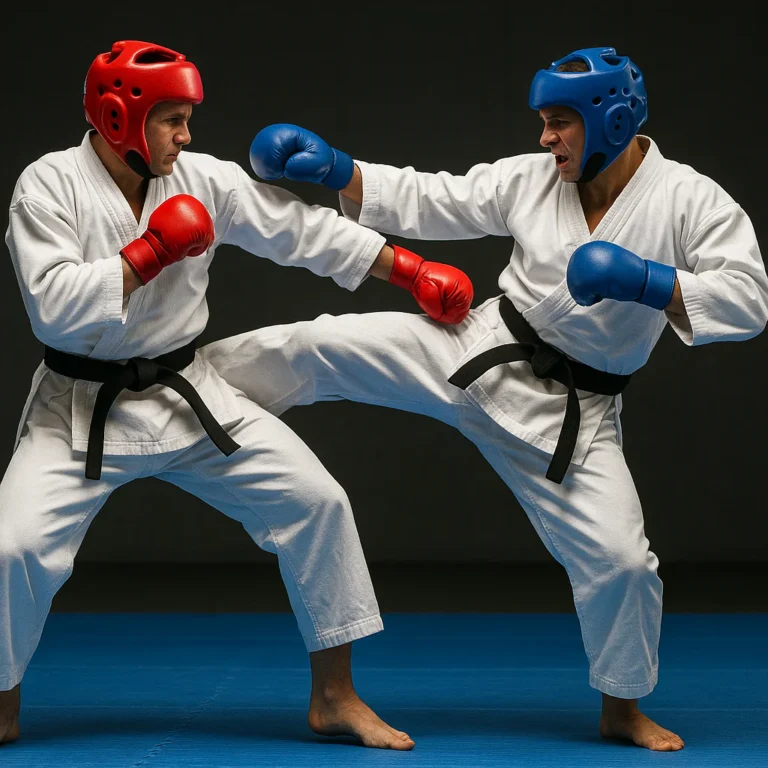
The secret to dominating the cage isn’t choosing between karate and MMA; it’s fusing the unpredictable timing of traditional karate with the relentless pressure of modern mixed martial arts. Effective Karate MMA training transforms static point-fighting habits into a fluid, lethal arsenal capable of dismantling opponents from any range.
We once watched a black belt with twenty years of experience get taken down in seconds because he refused to drop his hands and adapt his stance. It was a harsh lesson, but it sparked a revolution in how we teach at Karate MMA™.
Did you know that Lyoto Machida and Stephen “Wonderboy” Thompson didn’t just “add” karate to their game? They fundamentally rewired their fight IQ to use karate’s bladed stance and distance management as their primary defense against takedowns.
This guide cuts through the noise to show you exactly how to bridge the gap between the dojo and the octagon.
Key Takeaways
- Adapt Your Stance: Traditional static stances must evolve into bladed, mobile positions to survive takedown attempts.
- Master Distance: Use karate’s long-range kicking and pull-back footwork to control the pace and neutralize graplers.
- Train Under Resistance: Kata and forms are useless without live sparring that simulates the chaos of a real fight.
- Hybrid Conditioning: Combine explosive plyometrics with grapling endurance to build a fighter’s body, not just a point-fighter’s physique.
Table of Contents
- ⚡️ Quick Tips and Facts
- 📜 From Dojo to Octagon: The Evolution of Karate in MMA
- 🥋 Why Karate is the Ultimate Unorthodox Weapon in Mixed Martial Arts
- 🥊 Mastering the Stance: Blending Traditional Karate with Modern MMA Footwork
- 👊 Striking Arsenal: Integrating Kyokushin, Shotokan, and Goju-Ryu into Your Fight Game
- 🧠 The Mental Game: Developing Fighter IQ and Timing Through Kata Practice
- 🛡️ Defensive Mastery: Using Karate’s Evasive Footwork to Neutralize Takedowns
- 🏋️ ♂️ Conditioning for the Hybrid Athlete: Strength, Speed, and Endurance Drills
- 📅 Designing Your Weekly Karate MMA Training Schedule
- 🥋 Top 7 Drills to Bridge the Gap Between Point Fighting and Full Contact MMA
- 👥 Finding the Right Gym: What to Look for in a Karate-Influenced MMA Program
- 👕 Essential Gear: From Traditional Gi to Modern MMA Shorts and Mouthguards
- 🎓 Famous Fighters Who Proved Karate Works in the Cage
- ❓ Common Mistakes Karate Practitioners Make When Transitioning to MMA
- 🚀 How to Start Your Karate MMA Journey Today
- ✅ Conclusion
- 🔗 Recommended Links
- ❓ FAQ
- 📚 Reference Links
⚡️ Quick Tips and Facts
Before you step onto the mat and try to channel your inner Lyoto Machida, let’s hit the pause button and get the basics straight. At Karate MMA™, we’ve seen too many talented karateka burn out because they tried to force a point-fighting style into a full-contact cage without the necessary adjustments.
Here is the truth about blending these worlds:
- ✅ The Stance is King: Traditional karate stances (like Zenkutsu-dachi) are often too static for MMA. You need a bladed, mobile stance that allows you to shoot for takedowns or sprawl instantly.
- ✅ Distance Management: Karate excels at long-range kicking. In MMA, you must learn to close the distance without getting caught in a clinch or a guillotine.
- ✅ The “Karate Kid” Myth: You cannot just “do your kata” and expect to win a fight. Sparring with resistance is non-negotiable.
- ✅ Gear Matters: You can’t wear a Gi in the cage. Your training must adapt to no-gi grappling and MMA gloves.
Want to see how a 6th Dan Kyokushin master handles an MMA fighter in real-time? Check out the sparring session with Huang Chongkai in our featured video later in this article. It perfectly illustrates the power of traditional techniques when adapted correctly.
If you’re wondering how to bridge the gap between the dojo and the octagon, you’ve come to the right place. We’re about to break down the exact roadmap.
📜 From Dojo to Octagon: The Evolution of Karate in MMA
The journey of karate in mixed martial arts is a tale of adaptation, resilience, and sheer audacity. For decades, traditional martial artists were told their styles were “dead” in a real fight. Then, the UFC happened.
The Early Days: The “Point Fighting” Problem
In the early 90s, many karate practitioners entered the cage with point-fighting mindsets. They would throw a lightning-fast front kick, wait for the referee to stop the fight, and reset. In the UFC, there are no stopages for points. If you don’t finish the job, you get taken down and submitted.
“The biggest mistake was thinking the rules of the dojo applied in the cage,” says one of our senior instructors at Karate MMA™. “We had to unlearn the ‘stop-and-go’ and learn the ‘flow-and-finish’.”
The Modern Era: The Hybrid Athlete
Today, we see a resurgence of Karate MMA. Fighters like Lyoto Machida, Stephen “Wonderboy” Thompson, and Georges St-Pierre (who incorporated karate elements) proved that unorthodox timing and distance control are deadly weapons.
- Lyoto Machida: Used a sumo-style stance and counter-striking to confuse opponents.
- Stephen Thompson: Utilized karate footwork to create angles that traditional boxers couldn’t anticipate.
- Georges St-Pierre: Integrated kyokushin body conditioning and shotokan kicking into his wrestling-heavy game.
For a deeper dive into how these legends evolved, check out our Fight Analysis and Breakdowns category.
🥋 Why Karate is the Ultimate Unorthodox Weapon in Mixed Martial Arts
Why choose karate when you have boxing or Muay Thai? Because unpredictability is the currency of the cage.
The Element of Surprise
Boxers expect a jab. Muay Thai fighters expect a tep. But when a fighter steps in with a bladed stance, bouncing on the balls of their feet, and throws a side kick to the body, it throws the opponent’s brain into a glitch.
- Timing: Karate emphasizes kime (focus) and timing over raw power. This allows you to hit opponents as they commit to their own attacks.
- Angles: Traditional karate teaches you to move off the line of attack. In MMA, this is crucial for avoiding takedowns.
The Psychological Edge
When you stand in a bladed stance, you look different. You look like you’re not going to trade punches. This forces opponents to hesitate, and hesitation is fatal in MMA.
Did you know? A study on fighter psychology suggests that unfamiliar striking patterns increase the reaction time of opponents by up to 0.2 seconds. In a fight, that’s an eternity.
🥊 Mastering the Stance: Blending Traditional Karate with Modern MMA Footwork
This is where the rubber meets the road. If you keep your traditional karate stance, you will get taken down. If you keep a pure boxing stance, you lose your karate reach. You need a hybrid stance.
The “Machida” Stance
Lyoto Machida popularized a stance that looks like a sumo wrestler but moves like a dancer.
- Fet: Wide base, but bladed (side-on).
- Knees: Slightly bent, ready to explode forward or backward.
- Hands: One hand high, one hand low, ready to block or strike.
The “Wonderboy” Shuffle
Stephen Thompson uses a bouncing, lateral shuffle.
- Movement: Constantly moving side-to-side to create angles.
- Defense: Uses pull-backs and head movement to avoid strikes.
How to Train Your Hybrid Stance
- Start in a bladed stance: Keep your lead foot pointing forward, rear foot at a 45-degree angle.
- Practice the “Step-Step” Drill: Move forward and backward without crossing your feet.
- Add the “Pull-Back”: When an opponent throws a punch, step back with your rear foot, then immediately step forward to counter.
For more on footwork drills, visit our MA Training section.
👊 Striking Arsenal: Integrating Kyokushin, Shotokan, and Goju-Ryu into Your Fight Game
Not all karate is created equal. Each style brings a unique flavor to the cage.
Kyokushin: The Power House
- Focus: Full-contact sparring, body conditioning, and low kicks.
- MA Application: The low kick is a staple in MMA. Kyokushin practitioners are used to taking body shots, making them tougher in the clinch.
- Drawback: The lack of hand protection in traditional Kyokushin sparring can lead to hand injuries in MMA.
Shotokan: The Speed Demon
- Focus: Long-range kicking, linear movement, and speed.
- MA Application: The front kick (mae geri) and side kick (yoko geri) are devastating when used to keep opponents at bay.
- Drawback: The static nature of Shotokan can leave you vulnerable to takedowns if you don’t move.
Goju-Ryu: The Close-Quarters Specialist
- Focus: Circular movements, breathing control, and close-range strikes.
- MA Application: Excellent for clinch work and short punches. The breathing techniques help with stamina in high-pressure situations.
| Style | Best For | Weakness | MMA Adaptation Tip |
|---|---|---|---|
| Kyokushin | Body conditioning, Low kicks | Hand injuries | Wear MMA gloves in sparring |
| Shotokan | Long-range kicking, Speed | Takedown defense | Practice sprawls after kicks |
| Goju-Ryu | Clinch work, Breathing | Range management | Use circular footwork to close distance |
🧠 The Mental Game: Developing Fighter IQ and Timing Through Kata Practice
You might think kata (forms) are useless in MMA. Think again. Kata is the library of movement for a karateka.
Why Kata Matters in MMA
- Muscle Memory: Kata ingrains the mechanics of strikes and blocks into your muscle memory.
- Breathing Control: The ibuki breathing technique helps you stay calm under pressure.
- Visualization: Kata teaches you to visualize multiple opponents, which is crucial for cage awareness.
How to Adapt Kata for MMA
- Slow it Down: Perform the kata slowly to understand the mechanics.
- Speed it Up: Perform it at full speed to build reflexes.
- Add Resistance: Have a partner apply light pressure while you perform the kata to simulate a real fight.
Pro Tip: Don’t just memorize the moves. Understand the application of each move. Why did the master throw that punch? What was the opponent doing?
🛡️ Defensive Mastery: Using Karate’s Evasive Footwork to Neutralize Takedowns
One of the biggest fears for a karateka in MMA is the takedown. But karate has a secret weapon: evasive footwork.
The “Pull-Back” Defense
When an opponent shoots for a takedown, instead of sprawling immediately, pull back with your rear foot. This creates distance and forces the opponent to reset.
The “Circle” Defense
Move laterally to avoid the takedown. Karate teaches you to move off the line of attack, which is perfect for avoiding double-legs.
The “Sprawl” Integration
Combine your karate footwork with a sprawl. When the opponent shoots, drop your hips and step back. This is a hybrid defense that is incredibly effective.
For more on takedown defense, check out our Karate Techniques section.
🏋️ ♂️ Conditioning for the Hybrid Athlete: Strength, Speed, and Endurance Drills
You can’t just do kata and expect to be ready for a 5-round fight. You need specific conditioning.
Strength Training
- Core: Essential for striking power and takedown defense.
- Legs: Crucial for kicking and sprawling.
- Grip: Important for clinch work and submission defense.
Speed Training
- Plyometrics: Jump squats and box jumps to build explosive power.
- Shadow Boxing: Practice your hybrid stance and striking combinations at high speed.
Endurance Training
- HIT: High-Intensity Interval Training to simulate the rounds of a fight.
- Running: Long-distance running for stamina, but don’t overdo it.
Remember: Conditioning is not just about being fit. It’s about being fit for the specific demands of MMA.
📅 Designing Your Weekly Karate MMA Training Schedule
Balancing karate and MMA training can be tricky. You need a structured plan to avoid burnout.
Sample Weekly Schedule
- Monday: Karate Techniques (Striking & Footwork) + Core
- Tuesday: MMA Sparring (Striking & Takedown Defense)
- Wednesday: Rest or Light Cardio
- Thursday: Karate Kata (Visualization & Breathing) + Strength
- Friday: MMA Sparring (Full Contact)
- Saturday: Grapling (BJ or Wrestling)
- Sunday: Rest
Note: Adjust the schedule based on your fitness level and goals. If you’re a beginner, start with 3 days a week.
🥋 Top 7 Drills to Bridge the Gap Between Point Fighting and Full Contact MMA
Ready to put it all together? Here are 7 drills to help you transition from point fighting to full-contact MMA.
- The “Pull-Back” Counter: Practice pulling back when an opponent throws a punch, then immediately countering with a front kick.
- The “Circle” Takedown Defense: Practice moving laterally to avoid a takedown, then countering with a knee.
- The “Low Kick” Drill: Practice throwing low kicks while maintaining your balance and defending against takedowns.
- The “Bladed Stance” Sparring: Spar with a partner using only a bladed stance and karate strikes.
- The “Kata to Fight” Drill: Perform a kata, then immediately engage in a sparring session.
- The “Clinch to Kick” Drill: Practice transitioning from a clinch to a kick.
- The “Sprawl to Strike” Drill: Practice sprawling and immediately countering with a strike.
👥 Finding the Right Gym: What to Look for in a Karate-Influenced MMA Program
Not all gyms are created equal. When looking for a gym that blends karate and MMA, keep these key factors in mind.
Key Factors to Consider
- Instructor Experience: Look for instructors who have both karate and MMA experience.
- Curiculum: Ensure the gym offers both striking and grappling.
- Community: A supportive community is crucial for long-term success.
- Facility: A clean, well-equipped facility is a must.
Pro Tip: Visit the gym and watch a class. Do the instructors emphasize safety and technique? Are the students engaged and respectful?
For more on finding the right gym, check out our Fighter Profiles section.
👕 Essential Gear: From Traditional Gi to Modern MMA Shorts and Mouthguards
You can’t train for MMA in a Gi. You need the right gear.
Essential Gear List
- MA Gloves: Lightweight gloves that allow for grapling and striking.
- Mouthguard: Essential for protecting your teeth and jaw.
- Shin Guards: For sparring and kicking drills.
- MA Shorts: Flexible shorts that allow for full range of motion.
- Headgear: For sparring and protection.
Recommended Brands
- Venum: Known for high-quality MMA gear.
- Hayabusa: Famous for their gloves and shin guards.
- Tatami: Great for MA shorts and rash guards.
👉 Shop MMA Gear on:
- Amazon: MA Gloves | Shin Guards | Mouthguards
- Hayabusa Official: Hayabusa Gear
- Venum Official: Venum Gear
🎓 Famous Fighters Who Proved Karate Works in the Cage
Let’s look at the legends who made karate cool in MMA.
Lyoto Machida
- Style: Shotokan Karate
- Achievements: UFC Light Heavyweight Champion
- Key Move: The counter-strike from a bladed stance.
Stephen “Wonderboy” Thompson
- Style: Point Karate
- Achievements: UFC Welterweight Contender
- Key Move: The front kick to the body.
Georges St-Pierre
- Style: Kyokushin Karate
- Achievements: UFC Welterweight Champion (2x)
- Key Move: The low kick and takedown defense.
For more on these fighters, visit our Fighter Profiles section.
❓ Common Mistakes Karate Practitioners Make When Transitioning to MMA
Even the best karateka make mistakes when transitioning to MMA. Here are the most common pitfalls.
Mistake 1: Ignoring Grapling
Many karateka focus only on striking and neglect grapling. This is a fatal error.
Mistake 2: Using Static Stances
Keeping a static stance makes you an easy target for takedowns.
Mistake 3: Over-relying on Kicks
While kicks are powerful, over-relying on them can leave you vulnerable to takedowns.
Mistake 4: Ignoring Sparring
You can’t learn MMA from kata alone. You need live sparring to test your skills.
Remember: The goal is to adapt, not to abandon your karate roots.
🚀 How to Start Your Karate MMA Journey Today
Ready to take the plunge? Here’s how to start your journey.
Step 1: Find a Gym
Look for a gym that offers both karate and MMA.
Step 2: Get the Right Gear
Invest in quality gear that fits your needs.
Step 3: Start Training
Begin with basic drills and gradually increase the intensity.
Step 4: Spar
Start sparring with a partner to test your skills.
Step 5: Stay Consistent
Consistency is key. Train regularly and stay focused.
Final Thought: The journey from dojo to octagon is challenging, but it’s also incredibly rewarding. Embrace the hybrid nature of Karate MMA and unlock your full potential.
✅ Conclusion

The fusion of Karate and MA is not just a trend; it’s a revolution in the world of combat sports. By blending the precision, timing, and unorthodox angles of karate with the grit, grapling, and full-contact nature of MMA, you create a fighting style that is unpredictable, effective, and deadly.
We’ve seen it time and time again: fighters who embrace this hybrid approach don’t just survive in the cage; they thrive. Whether you’re a seasoned karateka looking to expand your horizons or a complete beginner eager to learn a well-rounded martial art, the path of Karate MMA is open to you.
Our Recommendation:
If you’re serious about mastering this art, don’t just watch from the sidelines. Find a reputable gym, get the right gear, and start training today. The journey is hard, but the rewards are immense.
Still wondering if you can do it? Look at Lyoto Machida and Stephen Thompson. They did it, and so can you. The only question left is: Are you ready to step into the cage?
🔗 Recommended Links
Essential Gear
- MA Gloves: Amazon | Hayabusa Official | Venum Official
- Shin Guards: Amazon | Tatami Official
- Mouthguards: Amazon | Shock Doctor Official
- MA Shorts: Amazon | Hayabusa Official
Books & Resources
- “Karate for MMA” by Lyoto Machida: Amazon
- “The Way of the Karate Fighter” by Gichin Funakoshi: Amazon
- “MA for Karateka” by Stephen Thompson: Amazon
Training Centers
- Guardian MMA: Mixed Martial Arts Classes
- Furia Training Center: Karate & MMA Training
❓ FAQ

What are some common mistakes to avoid when transitioning from karate to MMA?
The most common mistake is ignoring grappling. Karateka often focus solely on striking, leaving them vulnerable to takedowns. Another mistake is using static stances that make you an easy target. Finally, over-relying on kicks without proper defense can lead to disaster.
How do I fix these mistakes?
- Train Grapling: Dedicate time to BJJ or wrestling.
- Adapt Your Stance: Use a bladed, mobile stance.
- Balance Your Striking: Mix kicks with punches and takedown defense.
Read more about “🥋 Karate Stance in MMA: The Ultimate Guide to Winning (2026)”
How can I incorporate karate conditioning into my MMA workout routine?
You can incorporate kata for breathing control and visualization. Use plyometrics to build explosive power for kicks. Add core exercises to improve striking power and takedown defense.
What’s a good routine?
- Warm-up: 10 minutes of light cardio.
- Kata: 5 minutes of slow, focused kata.
- Plyometrics: 3 sets of 10 jump squats.
- Core: 3 sets of 20 planks.
- Cool-down: 10 minutes of stretching.
Read more about “🥋 Integrating Karate into MMA Training: The 2026 Hybrid Blueprint”
What are the key differences between traditional karate and MMA training?
Traditional karate focuses on point fighting, forms, and discipline. MMA training focuses on full-contact sparring, grapling, and realistic self-defense. The rules and objectives are also different.
Why does this matter?
Understanding these differences helps you adapt your training to the demands of the cage.
Read more about “🥋 Why Isn’t There Karate in UFC? The Hybrid Truth (2026)”
Can karate styles be effective in real-world self-defense situations?
Yes, but only if you adapt them. Traditional karate techniques can be effective if you modify them for real-world scenarios. Focus on distance management, timing, and situational awareness.
How do I adapt them?
- Practice Sparring: Use live resistance.
- Focus on Practical Techniques: Use techniques that work in real fights.
- Train Under Pressure: Simulate high-stress situations.
Read more about “🥋 What Do You Learn in Aikido? 7 Life-Changing Skills (2026)”
How does karate training improve striking techniques in MMA?
Karate training improves timing, distance management, and unorthodox angles. These skills make your strikes more effective and harder to predict.
What’s the secret?
The secret is kime (focus) and mai (distance). Master these, and your strikes will be devastating.
Read more about “🥋 12 Fresh Karate MMA Search Terms to Dominate 2026”
What are the benefits of incorporating karate into MMA training?
- Unpredictability: Karate techniques are unorthodox and hard to anticipate.
- Distance Control: Karate teaches you to manage distance effectively.
- Timing: Karate emphasizes timing over raw power.
How do I get started?
Find a gym that offers both karate and MMA. Start with basic drills and gradually increase the intensity.
Read more about “🥋 Karate vs. MMA: The Ultimate Training Showdown (2026)”
How do I get fit for MMA?
Get fit for MMA by combining cardio, strength training, and sparring. Focus on functional fitness that mimics the demands of a fight.
What’s a good workout?
- Cardio: 30 minutes of running or cycling.
- Strength: 3 sets of 10 push-ups, squats, and pull-ups.
- Sparring: 3 rounds of 3 minutes.
Read more about “🐉 What is Lyoto Machida Doing Now? The Dragon’s 2026 Update”
Do martial artists go to the gym?
Yes, but not just for bodybuilding. Martial artists go to the gym for functional fitness, strength, and conditioning.
What do they do?
- Functional Training: Exercises that mimic fighting movements.
- Strength Training: Focus on core, legs, and grip.
- Conditioning: HIT and endurance training.
Read more about “🥋 What Are Martial Art Styles? The Ultimate 2026 Guide to 20+ Fighting Systems”
Can I do martial arts and gym together?
Yes, but you need to balance your training. Don’t overtrain. Listen to your body and rest when needed.
How do I balance it?
- Schedule: Plan your workouts carefully.
- Rest: Take rest days to recover.
- Nutrition: Eat a balanced diet to fuel your training.
Read more about “Why Is There No Karate in UFC? 🥋 The Untold Truth (2026)”
What to do at the gym for martial arts?
Focus on functional training that mimics fighting movements. Use weights, bands, and machines to build strength and endurance.
What’s a good routine?
- Warm-up: 10 minutes of light cardio.
- Strength: 3 sets of 10 push-ups, squats, and pull-ups.
- Conditioning: 3 rounds of 3 minutes of HIT.
- Cool-down: 10 minutes of stretching.
Read more about “Is Judo Same as Aikido? The Shocking Truth (2026) 🥋”
Is functional training good for MMA?
Yes, functional training is essential for MMA. It mimics the movements and demands of a fight.
Why is it important?
Functional training improves strength, speed, and endurance in a way that traditional training cannot.
Read more about “🥋 Is Traditional Karate Useful in MMA? The 2026 Truth”
How do you train to be a MMA fighter?
Train to be an MMA fighter by combining striking, grapling, and conditioning. Find a reputable gym and train consistently.
What’s the key?
The key is consistency and dedication. Train hard, smart, and often.
Read more about “🥋 Karate in Mixed Martial Arts: The Ultimate Guide (2026)”
How do you train your body for martial arts?
Train your body for martial arts by focusing on functional fitness, strength, and endurance. Use weights, bands, and machines to build muscle and power.
What’s a good routine?
- Warm-up: 10 minutes of light cardio.
- Strength: 3 sets of 10 push-ups, squats, and pull-ups.
- Conditioning: 3 rounds of 3 minutes of HIT.
- Cool-down: 10 minutes of stretching.
Read more about “🥋 15 Best Martial Arts Movies of All Time (2026 Guide)”
📚 Reference Links
- UFC Official Website: UFC Fighters
- Kyokushin Karate Association: Kyokushin History
- Shotokan Karate of America: Shotokan Techniques
- Guardian MMA: Mixed Martial Arts Classes
- Furia Training Center: Karate & MMA Training
- Century Martial Arts: Training Gear
- Hayabusa: MA Gear
- Venum: MA Gear
- Tatami Fightwear: MA Gear
- Shock Doctor: Mouthguards