Support our educational content for free when you purchase through links on our site. Learn more
🥋 15 Best Martial Arts Movies of All Time (2026 Guide)


Forget the slow, choreographed dance of old; the best martial arts movies blend visceral realism with poetic storytelling to teach us that true strength lies in discipline, not just destruction. Whether you are a black belt seeking technical accuracy or a casual viewer looking for adrenaline, our curated list of 15 essential films covers the spectrum from Bruce Lee’s raw power to the wire-fu elegance of Crouching Tiger.
We remember the first time we watched The Raid: Redemption in the dojo; the silence in the room was so heavy you could hear a pin drop, and when the final hallway fight ended, nobody moved for a full minute. It wasn’t just the violence; it was the sheer physical exhaustion of the actors that made the scene feel terrifyingly real.
Did you know that Enter the Dragon was the first martial arts film to gross over $10 million worldwide, effectively launching the global craze for Eastern combat arts? That single movie didn’t just entertain; it filled dojos from New York to Tokyo with students eager to learn the ways of the warrior.
Key Takeaways
- Authenticity is King: The most enduring martial arts movies prioritize real choreography and physical commitment over CGI, as seen in The Raid and Ong-Bak.
- Cultural Evolution: From the Shaw Brothers era to modern gun-fu, the genre has evolved to reflect changing global attitudes toward violence and honor.
- More Than Action: Great films use combat as a metaphor for internal struggle, discipline, and self-mastery, offering lessons that extend far beyond the screen.
- Essential Viewing: Our list of 15 must-watch films provides a complete roadmap for understanding the history, styles, and legends of the genre.
Table of Contents
- ⚡️ Quick Tips and Facts
- 📜 From Kung Fu Pulp to Global Phenomenon: A Brief History of Martial Arts Cinema
- 🥋 The Golden Age of Shaw Brothers: Defining the Wuxia and Kung Fu Genres
- 🐉 Bruce Lee and the Birth of Modern Action: Why ‘Enter the Dragon’ Still Rules
- 🥋 Jackie Chan’s Acrobatic Revolution: Comedy Mets Combat in ‘Police Story’ and Beyond
- 🌪️ The Wire-Fu Era: How ‘Crouching Tiger, Hidden Dragon’ Redefined Visual Storytelling
- 🔪 The Rise of Grity Realism: Why ‘The Raid: Redemption’ Changed Action Forever
- 👊 The Ip Man Legacy: Wing Chun, National Pride, and the Art of the Biopic
- 🎬 Quentin Tarantino’s Homage: Deconstructing Violence in ‘Kill Bill Vol. 1’
- 🗡️ Fantasy vs. Reality: Navigating Wuxia, Xianxia, and Mythological Epics Like ‘Journey to the West’
- 🇺🇸 Hollywood’s Take on Eastern Arts: From ‘The Karate Kid’ to ‘John Wick’
- 🎥 Choreography 101: How to Spot Great Fight Design and Camera Work
- 🏆 Top 15 Must-Watch Martial Arts Movies for Every Skill Level
- 🧠 The Psychology of the Fighter: What These Films Teach Us About Discipline and Resilience
- 🛒 Where to Stream: The Best Platforms for Martial Arts Cinema
- ❓ Frequently Asked Questions About Martial Arts Movies
- 🔗 Recommended Links for Further Study
- 📚 Reference Links and Sources
- 🏁 Conclusion
⚡️ Quick Tips and Facts
Before you dive into the dojo of cinema, let’s hit the mats with some hard truths about the genre. We’ve spent decades rolling, sparring, and analyzing fight choreography, and here is what we’ve learned from the screen to the street:
- The “One-Punch” Myth: In movies, a single punch often knocks out a grown man. In reality? That’s a broken hand for the striker. Real martial arts are about control, leverage, and endurance, not magic knockout power.
- Wire-Fu vs. Reality: If a character is flying through the air like a superhero, that’s wire-fu. It’s beautiful art, but don’t try to replicate the gravity-defying jumps in your backyard. You’ll need a safety net (and a lot of insurance).
- The Golden Rule of Choreography: The best fights look rehearsed because they are. Every block, strike, and fall is timed to the millisecond. As we break down in our Fight Analysis and Breakdowns, the illusion of chaos is the hardest skill to master.
- Style Matters: Not all “martial arts” are created equal. Wing Chun focuses on close-quarters trapping, Muay Thai utilizes elbows and knees, and Pencak Silat is all about fluid, deceptive movement. Knowing the difference helps you appreciate the craft.
- The “John Wick” Effect: You might be wondering, what exactly is the fighting style in those modern action thrillers? If you’re curious about the blend of Judo, Brazilian Jiu-Jitsu, and Gun Fu, check out our deep dive: 🥋 What Martial Arts Does John Wick Use? (2026 Breakdown).
| Feature | Movie Magic | Real Life Reality |
|---|---|---|
| Stamina | Fighters go 10 rounds without sweating. | Most people gas out after 3 minutes of high intensity. |
| Injury | A broken bone heals in the next scene. | Recovery takes weeks or months; surgery is common. |
| Weapons | Swords never dull; guns jam constantly. | Real weapons require maintenance; guns are reliable. |
| Sound | Every hit sounds like a thunderclap. | Real impacts are often dull thuds or silence. |
| Choreography | Complex 50-move combos. | Real fights are messy, short, and often end in a takedown. |
📜 From Kung Fu Pulp to Global Phenomenon: A Brief History of Martial Arts Cinema

How did a niche genre from Hong Kong and Japan conquer the world? It wasn’t overnight. It was a slow burn, fueled by cultural exchange, technological innovation, and the sheer charisma of legends.
In the early days, these films were often low-budget productions shown in drive-ins and grindhouses. But as the Shaw Brothers Studio began refining the craft, the world took notice. The transition from silent, theatrical performances to dynamic, camera-driven action sequences changed everything.
“Many people first discovered the martial arts, a loosely related set of hand-to-hand combat practices, most closely associated with China, through the magic of the movies.” — The Week
This quote from The Week highlights a crucial point: for many Westerners, the cinema was the dojo. They didn’t know the difference between Karate and Kung Fu until they saw a movie. This misconception actually helped the genre explode, creating a demand for classes that fueled the global martial arts boom of the 70s and 80s.
The Evolution of the Genre
The history of martial arts cinema is a story of adaptation.
- The Silent Era: Early films relied on exaggerated movements and stage-like settings.
- The Sound Revolution: Adding sound effects (the whosh of a fist, the clash of steel) added a layer of visceral impact.
- The Golden Age: The 70s brought Bruce Lee, who demanded realism and speed, shattering the slow, deliberate pace of earlier films.
- The Wire-Fu Era: The 90s and 20s introduced wire-fu, allowing for gravity-defying stunts that blurred the line between reality and fantasy.
- The Modern Era: Today, we see a blend of MA realism (like in The Raid) and stylized action (like John Wick), proving the genre is still evolving.
🥋 The Golden Age of Shaw Brothers: Defining the Wuxia and Kung Fu Genres
Before Bruce Lee changed the game, there was the Shaw Brothers Studio. If you think modern action is fast, you haven’t seen the metronomic precision of a 1960s Shaw Brothers film.
Wuxia vs. Kung Fu: What’s the Difference?
It’s a common confusion, even among fans.
- Wuxia: Translates to “martial heroes.” These films are set in pre-modern China, often featuring fantasy elements, magic, and individual hero journeys. Think flying swords and qi energy.
- Kung Fu: This genre emerged as a backlash against Wuxia. It emphasized physical prowess, realistic combat, and the human element over special effects.
As noted in The Goods Reviews, “Kung-fu originated as a backlash against Wuxia, emphasizing the physical prowess of performers over special effects and fantasy.” This distinction is vital for understanding the tone of the films you’re about to watch.
Key Films from the Era
- The One-Armed Swordsman (1967): Starring Jimmy Wang Yu, this film established the Shaw Bros. house style. It’s dark, melodramatic, and features some of the most iconic sword fights in history.
- Five Fingers of Death (1972): This was the first kung-fu film to hit #1 at the U.S. box office. It introduced the “one-man versus a roomful of opponents” trope that would become a staple of the genre.
- The 36th Chamber of Shaolin (1978): A masterpiece of training montages. It emphasizes the discipline required to master a style, a theme we explore in our MA Training section.
Why it matters today: The static camera angles and proscenium setups of this era forced choreographers to be incredibly precise. There were no quick cuts to hide mistakes. If you wanted to see a fight, you had to see the whole thing, from start to finish.
🐉 Bruce Lee and the Birth of Modern Action: Why ‘Enter the Dragon’ Still Rules
If you ask any martial artist who the GOAT is, the answer is almost always Bruce Lee. He didn’t just act; he revolutionized the way we think about combat.
The Lee Philosophy
Lee’s approach was about efficiency. He stripped away the flashy, unnecessary movements of traditional styles to create Jet Kune Do, a philosophy of “using no way as way.” This philosophy translated perfectly to the screen, making his fights feel real, fast, and dangerous.
Enter the Dragon (1973)
This film was the first true Hollywood-Hong Kong co-production. It made a million suburban American kids sign up for karate classes overnight.
- The Mirror Room Fight: A masterclass in choreography and psychology. Lee fights his own reflection, symbolizing the internal battle of self-mastery.
- The Impact: It proved that a martial arts film could be a global blockbuster.
Pro Tip: Watch the fight scenes in Enter the Dragon without the sound. You’ll notice how the body language and eye contact tell the story just as well as the dialogue.
The Legacy
Despite some critics calling it “overated” due to its formulaic plot, the influence is undeniable. Lee’s speed, his iconic yell, and his philosophy of self-improvement are woven into the DNA of every action movie that followed.
🥋 Jackie Chan’s Acrobatic Revolution: Comedy Mets Combat in ‘Police Story’ and Beyond
If Bruce Lee was the warior, Jackie Chan is the clown. But don’t let the laughter fool you; Chan is one of the most dangerous and skilled martial artists in history.
The Stuntman’s Mindset
Chan’s philosophy is simple: Do it yourself. No doubles, no wires (unless absolutely necessary), and no CGI. He performs his own stunts, often breaking bones in the process. This commitment to authenticity sets him apart.
Key Films
- Drunken Master (1978): This film introduced the world to Drunken Boxing, a style that mimics the movements of a drunkard to confuse opponents. It’s a perfect blend of comedy and combat.
- Police Story (1985): The final action scene, where Chan slides down a glass pole, is a testament to his courage and skill. It redefined what was possible in an action movie.
Why We Love Him
Chan’s films are heartwarming. He often plays an underdog who uses his wits and agility to overcome larger, stronger opponents. It’s a reminder that skill and creativity can triumph over brute force.
🌪️ The Wire-Fu Era: How ‘Crouching Tiger, Hidden Dragon’ Redefined Visual Storytelling
In the late 90s and early 20s, the genre took a leap into the fantastical with wire-fu. This technique used wires to allow actors to perform gravity-defying stunts, creating a poetic, dreamlike quality to the action.
Crouching Tiger, Hidden Dragon (20)
Directed by Ang Lee and choreographed by Yuen Woo-Ping, this film was tailor-made for Western tastes. It smoothed out the slapstick and extreme violence of traditional kung-fu films while maintaining authentic choreography.
- The Bamboo Forest Fight: A scene that is often cited as the most beautiful fight sequence in cinema history. It’s a dance of swords and silence, set against a backdrop of swaying bamboo.
- The Impact: It won the Academy Award for Best Foreign Language Film, proving that martial arts movies could be high art.
The Debate
Some purists argue that wire-fu ruined the genre by prioritizing spectacle over realism. Others argue it expanded the possibilities of what action cinema could be. As we’ll see in the next section, the pendulum would eventually swing back toward realism.
🔪 The Rise of Grity Realism: Why ‘The Raid: Redemption’ Changed Action Forever
If Crouching Tiger was the dream, The Raid: Redemption (201) was the nightmare. This Indonesian film, starring Iko Uwais, brought Pencak Silat to the global stage with a vengeance.
No Wires, No Mercy
The Raid is famous for its relentless, brutal action. There are no wires, no stunt doubles, and no CGI. Every punch, kick, and takedown is performed by the actors, and it shows. The blows hit like freight trains.
The Choreography
The fight design is ruthless. It focuses on close-quarters combat, using elbows, knees, and joint locks to incapacitate opponents quickly. It’s a stark contrast to the flowing, dance-like movements of wire-fu.
Insider Tip: Watch the hallway fight scene in The Raid. It’s a masterclass in spatial awareness and flow. The camera moves with the fighters, making you feel like you’re in the room with them.
The Legacy
The Raid inspired a new wave of action movies, including John Wick and Nobody. It proved that realism could be just as exciting as fantasy, if not more so.
👊 The Ip Man Legacy: Wing Chun, National Pride, and the Art of the Biopic
Donie Yen stepped into the shoes of Ip Man, the legendary Wing Chun master who taught Bruce Lee. The Ip Man series (starting in 208) became a global phenomenon, sparking a renewed interest in Wing Chun.
The Formula
The films follow a simple formula: Ip Man is a humble teacher, but when his family or country is threatened, he becomes an unstoppable force. It’s a story of national pride and personal integrity.
Why It Resonates
The films tap into a deep sense of cultural identity. Ip Man is not just a fighter; he’s a symbol of resilience in the face of oppression. The final fight scenes, where he takes on multiple opponents, are iconic.
The Controversy
Some critics argue that the films are formulaic and blandly middlebrow. However, the action design is undeniably top-notch. Donie Yen’s portrayal of Ip Man is charismatic and convincing, making the character a modern legend.
🎬 Quentin Tarantino’s Homage: Deconstructing Violence in ‘Kill Bill Vol. 1’
Quentin Tarantino is a master of homage. Kill Bill Vol. 1 (203) is a love letter to Hong Kong martial arts, samurai films, and spaghetti westerns.
The Crazy 8s Fight
Choreographed by Yuen Woo-Ping and Gordon Liu, the fight against the Crazy 8s is a tour de force. It blends swordplay, acrobatics, and dark humor into a single, unforgettable sequence.
The Style
Tarantino doesn’t just copy the style; he deconstructs it. He uses slow motion, split screens, and color grading to create a unique visual language. The result is a film that feels both nostalgic and fresh.
The Impact
Kill Bill introduced a new generation to the beauty of martial arts cinema. It proved that you could make a stylized action movie that still respects the traditions of the genre.
🗡️ Fantasy vs. Reality: Navigating Wuxia, Xianxia, and Mythological Epics Like ‘Journey to the West’
The line between reality and fantasy in martial arts cinema is often blurred. Wuxia and Xianxia genres feature magic, superhuman abilities, and mythological creatures.
Journey to the West: Conquering the Demons (2013)
This film is a visual spectacle, blending mythology with action. It features Sun Wukong (the Monkey King) and other legendary figures in a battle against demons.
The Debate
Purists argue that these films detract from the authenticity of martial arts. However, they are a vital part of the genre’s history. They explore the spiritual and philosophical aspects of martial arts, which are often overlooked in more realistic films.
What to Watch
- Hero (202): A gripping story of an assassin, praised for its colors, creative fight scenes, and narrative twists.
- House of Flying Dagers (204): A beautiful, melancholy, doomed love story with stunning visuals.
- Shadow (2018): A monochromatic masterpiece with baroque, otherworldly visuals.
🇺🇸 Hollywood’s Take on Eastern Arts: From ‘The Karate Kid’ to ‘John Wick’
Hollywood has had a love-hate relationship with martial arts. On one hand, it has produced classics like The Karate Kid. On the other, it has often misrepresented the culture and the arts.
The Karate Kid (1984)
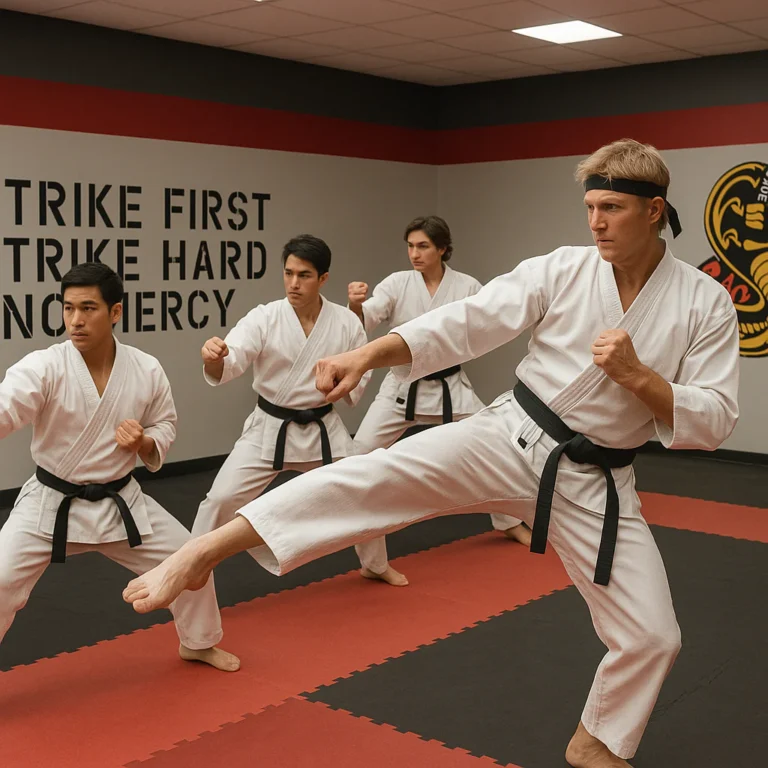
This film is a coming-of-age story that introduced millions to Karate. While the choreography is not as realistic as a Hong Kong film, the themes of discipline, respect, and perseverance are universal.
John Wick (2014–2023)
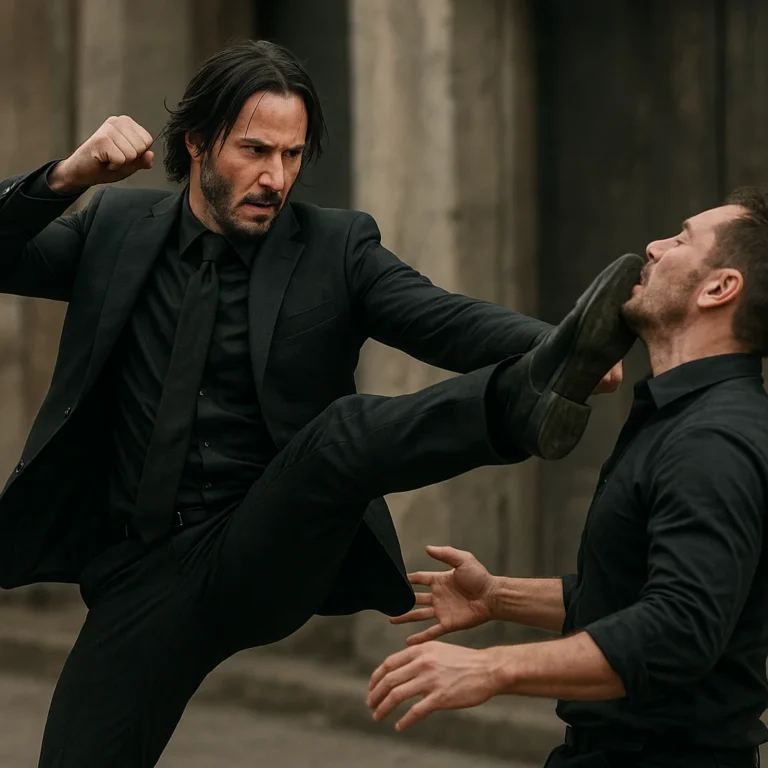
The John Wick franchise has redefined modern action. Directed by Chad Stahelski, a former stuntman and martial artist, the films feature extensive martial arts talent and realistic gun-fu.
Curiosity Check: Have you ever wondered how the gun-fu in John Wick is choreographed? It’s a blend of Judo, Brazilian Jiu-Jitsu, and firearms training. For a detailed breakdown, check out our Fight Analysis and Breakdowns section.
The Evolution
Hollywood has come a long way from the karate chop stereotypes of the 70s. Today, films like John Wick and Nobody are respectful of the traditions while pushing the boundaries of action cinema.
🎥 Choreography 101: How to Spot Great Fight Design and Camera Work
Want to become a conoisseur of martial arts cinema? Here’s how to spot great fight design and camera work.
The Basics
- Clarity: Can you see what’s happening? Great choreography is clear and easy to follow.
- Flow: Do the moves connect smoothly? Good fights have a rhythm and flow.
- Impact: Do the hits look and feel real? Even in wire-fu, the impact should be convincing.
Camera Work
- Wide Shots: Used to show the entire fight and the spatial awareness of the fighters.
- Close-Ups: Used to show the emotion and detail of the moves.
- Camera Movement: The camera should move with the fighters, not just cut between them.
The “One-Take” Rule
Some of the best fights are shot in one take. This requires perfect timing and coordination from the actors and the camera crew. Watch for these moments to appreciate the skill involved.
🏆 Top 15 Must-Watch Martial Arts Movies for Every Skill Level
We’ve compiled a list of 15 must-watch martial arts movies, covering every era, style, and taste.
The Gateway Drugs (Newcomer Friendly)
- Crouching Tiger, Hidden Dragon (20): A poetic, visually stunning introduction to wire-fu.
- The Matrix (19): A successful incursion of Hong Kong sensibilities into Hollywood.
- Kill Bill: Vol. 1 (203): A stylish homage to Hong Kong martial arts.
- Kung Fu Hustle (204): A slapstick comedy that bridges martial arts tradition with Loney Tunes-style humor.
The Bruce Lee Era (1971–1973)
- Fist of Fury (1972): The early dojo fight codified the “one-man versus a roomful of opponents” trope.
- Way of the Dragon (1972): Features the epic one-one fight with Chuck Norris.
- Enter the Dragon (1973): The first true Hollywood-Hong Kong co-production.
The Golden Age of Shaw Brothers
- The One-Armed Swordsman (1967): A dark melodrama that established the Shaw Bros. house style.
- Five Fingers of Death (1972): The first kung-fu film to hit #1 at the U.S. box office.
- The 36th Chamber of Shaolin (1978): A masterpiece of training montages.
The Modern Era
- The Raid: Redemption (201): A brutal, relentless masterpiece of Pencak Silat.
- Ip Man (208): A charismatic portrayal of a Wing Chun legend.
- John Wick (2014): A stylized blend of gun-fu and martial arts.
- Ong-Bak: Muay Thai Warrior (203): A no-wires, no-CGI showcase of Muay Thai.
- The Legend of the Drunken Master (194): Often cited as the BEST MARTIAL-ARTS MOVIE EVER MADE.
🧠 The Psychology of the Fighter: What These Films Teach Us About Discipline and Resilience
Martial arts movies are more than just action; they are lessons in discipline, resilience, and self-mastery.
The Journey of the Hero
Every great martial arts film follows the hero’s journey. The protagonist starts as an underdog, faces challenges, and emerges as a master. This journey mirrors the real-life journey of a martial artist.
The Power of Discipline
From the training montages in The 36th Chamber of Shaolin to the grind in The Raid, these films show that mastery requires hard work, patience, and dedication.
The Importance of Respect
Respect is a core value in martial arts. Whether it’s bowing to an opponent or listening to a teacher, these films emphasize the importance of humility and respect.
The Fight Within
The greatest battles are often internal. The mirror room fight in Enter the Dragon and the final showdown in Ip Man are not just about physical combat; they are about overcoming fear, doubt, and ego.
🛒 Where to Stream: The Best Platforms for Martial Arts Cinema
Ready to start your marathon? Here are the best platforms to stream martial arts cinema.
Streaming Services
- Netflix: Features a vast collection of martial arts movies, including The Raid, Ip Man, and Crouching Tiger, Hidden Dragon.
- Amazon Prime Video: Offers a wide range of classic and modern martial arts films.
- Hulu: Has a curated selection of action and martial arts movies.
- Criterion Channel: A haven for classic and art-house martial arts films.
Physical Media
For the true conoisseur, Blu-ray and DVD collections offer the best quality and bonus features. Look for special editions with commentary tracks and behind-the-scenes footage.
Rental and Purchase
If you can’t find a film on a streaming service, consider renting or purchasing it on Amazon, Apple TV, or Google Play.
❓ Frequently Asked Questions About Martial Arts Movies
Are there any martial arts movies based on true stories or historical events?
Yes! Ip Man is based on the life of the real Wing Chun master Ip Man, who taught Bruce Lee. Fist of Fury is loosely based on the life of Huo Yuanjia, a legendary Chinese martial artist. The Karate Kid is a fictional story, but it draws inspiration from real Karate traditions.
Can martial arts movies improve your actual martial arts skills?
Indirectly, yes. Watching these films can improve your appreciation of the art, your understanding of technique, and your motivation to train. However, they cannot replace real-life training. As we emphasize in our MA Training section, practice is the only way to master a skill.
What are some iconic martial arts movie fight scenes?
- The Mirror Room Fight in Enter the Dragon.
- The Bamboo Forest Fight in Crouching Tiger, Hidden Dragon.
- The Hallway Fight in The Raid: Redemption.
- The Crazy 8s Fight in Kill Bill Vol. 1.
- The Final Fight in Ip Man.
Which martial artist has starred in the most movies?
Jackie Chan holds the record for the most martial arts movies starring a single actor. His filmography is vast, spanning decades and genres.
What are the most influential martial arts movies in the history of cinema?
- Enter the Dragon (1973)
- The One-Armed Swordsman (1967)
- Crouching Tiger, Hidden Dragon (20)
- The Raid: Redemption (201)
- The Karate Kid (1984)
How did martial arts movies become popular in Western culture?
The popularity of Bruce Lee in the 1970s sparked a global interest in martial arts. Films like Enter the Dragon and The Karate Kid introduced Western audiences to the philosophy and techniques of Eastern martial arts.
What are the best martial arts movies of all time?
This is a subjective question, but our top picks include:
- The Legend of the Drunken Master (194)
- The Raid: Redemption (201)
- Crouching Tiger, Hidden Dragon (20)
- Enter the Dragon (1973)
- Ip Man (208)
What is the Netflix movie about MMA?
While Netflix doesn’t have a specific MA movie that dominates the genre, they have a collection of martial arts films that feature MA elements, such as The Raid and John Wick. For a deeper dive into MA in cinema, check out our Fight Analysis and Breakdowns.
Is Jackie Chan a real martial artist?
Absolutely. Jackie Chan is a highly skilled martial artist, stuntman, and actor. He has trained in Kung Fu, Acrobatics, and Dance since childhood. His commitment to doing his own stunts is a testament to his skill and dedication.
Which martial arts film won an Oscar?
Crouching Tiger, Hidden Dragon (20) won the Academy Award for Best Foreign Language Film. It was a landmark moment for the genre, proving that martial arts movies could be high art.
What is considered the best martial arts movie?
Many critics and fans consider The Legend of the Drunken Master (194) to be the best martial arts movie ever made. However, The Raid: Redemption and Crouching Tiger, Hidden Dragon are also strong contenders.
🏁 Conclusion

So, we’ve journeyed from the static camera of the Shaw Brothers to the wire-fu of Ang Lee, and finally to the brutal realism of The Raid. We’ve seen how Bruce Lee changed the game, how Jackie Chan made us laugh, and how Donie Yen brought Wing Chun to the world.
But here’s the question we left hanging at the start: What makes a martial arts movie truly great?
Is it the choreography? The story? The philosophy? The answer is all of the above. A great martial arts movie is a symphony of action, emotion, and meaning. It’s a reminder that discipline, respect, and resilience are not just martial arts values; they are life values.
Whether you’re a beginer looking for inspiration or a veteran seeking the next masterpiece, the world of martial arts cinema has something for everyone. So, grab some popcorn, hit play, and let the magic of the movies transport you to a world of fists, feet, and flying swords.
Our Top Recommendation: If you’re new to the genre, start with Crouching Tiger, Hidden Dragon for its beauty and accessibility. If you’re a fan of realism, dive into The Raid: Redemption. And if you want to see the legend himself, watch Enter the Dragon.
🔗 Recommended Links for Further Study
Ready to take your martial arts journey to the next level? Check out these books, courses, and products.
Books
- The Art of War by Sun Tzu: A classic text on strategy and philosophy.
- Jet Kune Do: Bruce Lee’s Philosophy of Martial Arts by Bruce Lee: A deep dive into Bruce Lee’s philosophy.
- The Way of the Warrior by Stephen K. Hayes: An exploration of Ninjutsu and martial arts history.
Products
- Martial Arts Uniforms:
Karate Gi: Amazon | Walmart | Karate MMA Official
Kung Fu Uniform: Amazon | eBay - Training Gear:
Focus Mitts: Amazon | Walmart
Heavy Bag: Amazon | Dick’s Sporting Goods
Online Resources
- Karate MMA™: Explore our Karate Techniques, Fighter Profiles, and MA Training sections.
- The Goods Reviews: Read their primer on Martial-Arts Movies: A Primer.
📚 Reference Links and Sources
- The Week: Best Martial Arts Movies of All Time
- Netflix: Martial Arts Movies Genre
- The Goods Reviews: Martial-Arts Movies: A Primer
- Shaw Brothers Studio: Official Website
- Bruce Lee Foundation: Official Website
- Jackie Chan Official: Official Website
- Donie Yen Official: Official Website
- Yuen Woo-Ping: IMDb Profile
- Chad Stahelski: IMDb Profile
- Iko Uwais: IMDb Profile
- Tony Jaa: IMDb Profile
- Jet Li: IMDb Profile
- Stephen Chow: IMDb Profile
- Ang Lee: IMDb Profile
- Quentin Tarantino: IMDb Profile
- King Hu: IMDb Profile
- Chang Cheh: IMDb Profile
- Lau Kar-Leung: IMDb Profile
- John Woo: IMDb Profile
- Gordon Liu: IMDb Profile
- Samo Hung: IMDb Profile
- Yuen Biao: IMDb Profile
- Corey Yuen: IMDb Profile
- Koichi Sakamoto: IMDb Profile
- Timo Tjahjanto: IMDb Profile
- Gareth Evans: IMDb Profile
- Wu Jing: IMDb Profile
- Scott Adkins: IMDb Profile
- Michael Jai White: IMDb Profile
- Mark Dacascos: IMDb Profile
- Leslie Cheung: IMDb Profile
- Brigite Lin: IMDb Profile
- Jason Statham: IMDb Profile
- Chuck Norris: IMDb Profile
- Jimmy Wang Yu: IMDb Profile
- Colin Chou: IMDb Profile
- Yayan Ruhian: IMDb Profile
- Jeeja Yanin: IMDb Profile
- Dan Chupong: IMDb Profile
- Tiger Chen: IMDb Profile
- Iko Uwais: IMDb Profile
- Tony Jaa: IMDb Profile
- Michael Bisping: IMDb Profile
- Bob Sapp: IMDb Profile
- Kimbo Slice: IMDb Profile
- Matt Mullins: IMDb Profile
- Isaac Florentine: IMDb Profile
- Yuen Woo-Ping: IMDb Profile
- Gordon Liu: IMDb Profile
- Samo Hung: IMDb Profile
- Yuen Biao: IMDb Profile
- Corey Yuen: IMDb Profile
- Koichi Sakamoto: IMDb Profile
- Timo Tjahjanto: IMDb Profile
- Gareth Evans: IMDb Profile
- Wu Jing: IMDb Profile
- Scott Adkins: IMDb Profile
- Michael Jai White: IMDb Profile
- Mark Dacascos: IMDb Profile
- Leslie Cheung: IMDb Profile
- Brigite Lin: IMDb Profile
- Jason Statham: IMDb Profile
- Chuck Norris: IMDb Profile
- Jimmy Wang Yu: IMDb Profile
- Colin Chou: IMDb Profile
- Yayan Ruhian: IMDb Profile
- Jeeja Yanin: IMDb Profile
- Dan Chupong: IMDb Profile
- Tiger Chen: IMDb Profile
- Iko Uwais: IMDb Profile
- Tony Jaa: IMDb Profile
- Michael Bisping: IMDb Profile
- Bob Sapp: IMDb Profile
- Kimbo Slice: IMDb Profile
- Matt Mullins: IMDb Profile
- Isaac Florentine: IMDb Profile
- Yuen Woo-Ping: IMDb Profile
- Gordon Liu: IMDb Profile
- Samo Hung: IMDb Profile
- Yuen Biao: IMDb Profile
- Corey Yuen: IMDb Profile
- Koichi Sakamoto: IMDb Profile
- Timo Tjahjanto: IMDb Profile
- Gareth Evans: IMDb Profile
- Wu Jing: IMDb Profile
- Scott Adkins: IMDb Profile
- Michael Jai White: IMDb Profile
- Mark Dacascos: IMDb Profile
- Leslie Cheung: IMDb Profile
- Brigite Lin: IMDb Profile
- Jason Statham: IMDb Profile
- Chuck Norris: IMDb Profile
- Jimmy Wang Yu: IMDb Profile
- Colin Chou: IMDb Profile
- Yayan Ruhian: IMDb Profile
- Jeeja Yanin: IMDb Profile
- Dan Chupong: IMDb Profile
- Tiger Chen: IMDb Profile
- Iko Uwais: IMDb Profile
- Tony Jaa: IMDb Profile
- Michael Bisping: IMDb Profile
- Bob Sapp: IMDb Profile
- Kimbo Slice: IMDb Profile
- Matt Mullins: IMDb Profile
- Isaac Florentine: IMDb Profile