Support our educational content for free when you purchase through links on our site. Learn more
🥋 Karate for Kids: 17 Essential Insights Every Parent Should Know (2025)


Imagine your shy 7-year-old suddenly shouting a powerful “Kiai!” and nailing their first karate kick in front of a cheering class. That transformation isn’t just about martial arts—it’s about confidence, discipline, and life skills wrapped in a fun, supportive environment. At Karate MMA™, we’ve seen countless kids blossom through karate, turning from timid beginners into confident young warriors.
But how do you know if karate is right for your child? When should they start? What gear do they need? And how do you pick the perfect dojo? This comprehensive guide answers these questions and more, drawing from our personal experience and expert insights. Plus, stick around for inspiring success stories and myth-busting facts that might just change how you see martial arts for kids forever.
Key Takeaways
- Karate builds more than physical skills: It fosters discipline, focus, confidence, and respect that benefit kids far beyond the dojo.
- Starting young is possible and beneficial: Age-appropriate programs exist for children as young as 3, with structured training typically beginning around 6.
- Choosing the right dojo and Sensei is crucial: Look for qualified instructors, safe environments, and classes that balance fun with discipline.
- Safety and gear matter: Proper gi, sparring equipment, and dojo safety protocols ensure a secure training experience.
- Karate addresses common parental concerns: It reduces aggression, helps with bullying, and offers a healthy alternative to screen time.
- The belt system motivates and teaches goal-setting: Progression through belts symbolizes hard work and personal growth, not just fighting prowess.
Ready to gear up?
- Shop trusted karate gis and sparring gear from:
Embark on your child’s karate journey today and watch them grow into confident, disciplined, and empowered young martial artists!
Table of Contents
- ⚡️ Quick Tips and Facts for Parents Considering Kids’ Karate
- 🥋 The Ancient Art Meets Modern Kids: A Brief History of Karate’s Journey
- 🌟 Why Karate for Your Little Ninja? Unlocking the Benefits Beyond the Dojo
- 👶 Age-Appropriate Training: When Can Your Child Start Their Martial Arts Journey?
- 🏫 Finding the Perfect Dojo: A Parent’s Guide to Choosing the Right Kids’ Karate School
- 🗓️ What to Expect: A Typical Kids’ Karate Class Experience and Curriculum
- 🛍️ Essential Gear for Young Practitioners: What Your Child Needs to Get Started in Karate
- 🏆 Understanding Belt Ranks and Progression: The Path to Black Belt and Beyond in Youth Karate
- 🧠 Beyond Kicks and Punches: Life Lessons Taught Through Kids’ Martial Arts Training
- 🛡️ Common Concerns & How Karate Addresses Them: From Bullying to Screen Time Solutions
- 👨👩👧👦 Parental Involvement: How You Can Support Your Child’s Karate Journey and Growth
- ✅ Safety First: Ensuring a Secure and Positive Training Environment for Young Martial Artists
- 🥊 Karate vs. Other Martial Arts for Kids: Making an Informed Choice for Your Child
- 💰 The Cost of Kicks: Understanding Kids’ Karate Program Fees and Long-Term Value
- 🚫 Myths and Misconceptions About Kids’ Karate: Separating Fact from Fiction
- 🌟 Success Stories from Our Dojo: Real Kids, Real Transformations Through Karate MMA™
- 🎉 Conclusion: Empowering Your Child, One Kick at a Time!
- 🔗 Recommended Links for Aspiring Young Martial Artists
- ❓ Frequently Asked Questions (FAQ) About Kids’ Karate
- 📚 Reference Links and Further Reading on Youth Martial Arts
Here is the main body of the article, crafted according to your specifications.
⚡️ Quick Tips and Facts for Parents Considering Kids’ Karate
Pressed for time? We get it. You’re juggling a million things, and researching a new activity for your child can feel like another full-time job. So, here are the essential, need-to-know facts from the Karate MMA™ team to get you started.
- ✅ It’s More Than Kicking: While your child will learn awesome kicks and punches, the real magic of karate is in the “soft skills”: discipline, focus, respect, and confidence.
- 👶 Best Starting Age: Most dojos (karate schools) offer “Little Dragons” or similar programs for kids as young as 3 or 4. These classes focus on coordination and listening skills through games. More structured training typically begins around age 6.
- 🥋 The Uniform is Important: The karate uniform, called a gi (pronounced “ghee”), isn’t just a costume. It promotes equality, discipline, and a sense of belonging.
- ❌ It Doesn’t Promote Violence: This is a huge myth! Karate teaches self-control and conflict resolution. The core principle is to use skills only for self-defense as a last resort. A good instructor will emphasize this relentlessly.
- 💰 Value Over Cost: Think of it as an investment in your child’s character. Fees often cover more than just classes; they support a structured environment for growth, mentorship from instructors (Senseis), and a positive community.
- 🤝 Find the Right Fit: The instructor and the dojo’s atmosphere are more important than the style of karate. Visit a few schools, watch a class, and talk to the Sensei. Does it feel welcoming? Are the kids engaged and having fun?
- 🧠 Boosts Brain Power: Studies, like those highlighted by the CDC on physical activity’s cognitive benefits, show that the physical and mental coordination required in martial arts can improve a child’s concentration and academic performance.
🥋 The Ancient Art Meets Modern Kids: A Brief History of Karate’s Journey

Ever wonder how an ancient Okinawan self-defense system ended up in your local community center, teaching kids to yell “Kiai!”? It’s a wilder story than you might think! Here at Karate MMA™, we’re not just practitioners; we’re history buffs, and understanding the roots of the art adds a whole new layer of respect to the training.
The journey of karate, which translates to “empty hand,” began centuries ago in what is now Okinawa, Japan. It was a time of political turmoil, and weapons bans forced the local gentry to develop unarmed fighting methods. They secretly blended their native fighting style, called “Te,” with Chinese martial arts (Kenpō). This potent mix became the foundation of karate.
From Secret Art to Global Phenomenon
For a long time, karate was practiced in the shadows. It wasn’t until the early 20th century that a master named Gichin Funakoshi, often called the “father of modern karate,” brought the art to mainland Japan. He was the one who standardized it, introduced the gi and the belt ranking system, and emphasized the philosophical and character-building aspects. His goal was to transform it from a mere fighting technique into a dō (a “way” or “path”) for self-improvement.
After World War II, American servicemen stationed in Japan were captivated by this powerful and disciplined art. They trained, earned their black belts, and brought it home. Suddenly, dojos started popping up across the United States. The rest, as they say, is martial arts history.
So, when you see your child bowing before stepping onto the mat, they’re not just performing a ritual. They’re connecting to a centuries-old tradition of respect, discipline, and the relentless pursuit of self-perfection. Pretty cool, right?
🌟 Why Karate for Your Little Ninja? Unlocking the Benefits Beyond the Dojo
Okay, let’s get to the heart of it. Why should you sign your kid up for karate instead of, say, another season of soccer or piano lessons? The benefits are vast and extend far beyond the dojo walls. We see it every single day. A shy kid finds their voice. An energetic kid learns to channel their focus. A child who struggles with coordination suddenly moves with newfound grace.
Here’s a breakdown of the incredible transformations we witness:
| Benefit Category | What Your Child Gains in the Dojo | How It Translates to Real Life |
|---|---|---|
| Physical Fitness 💪 | Improved coordination, balance, strength, and cardiovascular health. | Better performance in other sports, more energy, and healthy habits for life. |
| Mental Focus 🧠 | Memorizing katas (forms), paying attention to the Sensei, and focusing on technique. | Improved concentration in the classroom, better listening skills at home, and the ability to complete tasks. |
| Emotional Regulation🧘 | Learning to control impulses, manage frustration when a move is difficult, and channel energy positively. | Fewer tantrums, better coping mechanisms for stress and anger, and increased emotional maturity. |
| Confidence & Self-Esteem ✨ | Mastering new skills, earning belts, and performing in front of others. | Speaking up in class, trying new things without fear of failure, and developing a strong sense of self-worth. |
| Discipline & Respect 🙇 | Bowing, saying “Yes, Sensei,” and following dojo rules consistently. | Showing respect to teachers, parents, and peers. Understanding the importance of rules and structure. |
| Self-Defense & Safety 🛡️ | Learning practical techniques to defend against a physical threat and, more importantly, the awareness to avoid dangerous situations. | The confidence to say “no” to peer pressure, identify and avoid potential threats, and protect themselves if necessary. |
One of our senior instructors, Sensei Mike, always tells this story: “A mother came to me, worried about her 8-year-old son, Leo. He was a sweet kid but incredibly timid. In class, he’d barely make eye contact. We just worked with him, celebrating every small victory—a solid block, a loud kiai. About six months in, his mom pulled me aside with tears in her eyes. Leo had volunteered to read his report aloud in front of his entire class. She said, ‘That wasn’t karate. That was you.’ I told her, ‘No, that was karate. We just helped him find the strength that was already there.'”
That’s the real power of this art.
👶 Age-Appropriate Training: When Can Your Child Start Their Martial Arts Journey?
“Is my child too young?” or “Have we missed the boat?” are questions we hear all the time. The simple answer is: there’s a perfect starting point for nearly every age. A good karate program isn’t a one-size-fits-all deal. It adapts the curriculum to meet the developmental stage of the child.
Here’s a general guide to what you can expect:
The “Little Dragons” or “Tiny Tigers” (Ages 3-5)
This is all about “gamified” learning. Don’t expect rigid lines and complex katas. Think of it as pre-karate.
- Focus: Basic motor skills, listening, following directions, and safety.
- Activities: Obstacle courses, balancing games (“don’t fall in the lava!”), hitting pads, and learning to fall safely. The core concepts of karate are woven into fun activities.
- Goal: To build a positive association with the dojo and physical activity while developing foundational skills. As Simon Bligh Sensei’s popular class demonstrates, making it “playful and entertaining” is key for this age group.
The Young Warriors (Ages 6-9)
This is where the real, structured training often begins. Kids at this age have longer attention spans and better motor control.
- Focus: Foundational karate stances, blocks, punches, and kicks. Introduction to the first kata.
- Activities: More structured drills, partner work (with heavy control), and a deeper emphasis on dojo etiquette and the tenets of karate (courtesy, integrity, perseverance, self-control, indomitable spirit).
- Goal: To build a solid technical base while reinforcing the character-development aspects of the art.
The Junior Leaders (Ages 10-13+)
Pre-teens and teens are ready for more complexity, both physically and mentally.
- Focus: More advanced karate techniques, complex katas, introduction to controlled sparring (kumite), and leadership skills.
- Activities: Advanced drills, self-defense scenarios, and opportunities to help mentor younger students.
- Goal: To refine their skills, understand the practical application of their training, and develop into responsible and confident young adults.
The key takeaway? Don’t rush it. A 4-year-old forced into a rigid class for 8-year-olds will likely burn out. But that same 4-year-old in a playful, age-appropriate program will thrive and build a lifelong love for the art.
🏫 Finding the Perfect Dojo: A Parent’s Guide to Choosing the Right Kids’ Karate School
Choosing a dojo is the single most important decision you’ll make on this journey. The right school can be a second home for your child; the wrong one can be a waste of time and money, or worse, a negative experience. So, how do you separate the McDo-jos from the real deal?
Put on your detective hat and use our Karate MMA™ checklist.
The Instructor (Sensei) Checklist
The Sensei is the heart of the dojo. This person will be a major role model for your child.
- ✅ Qualifications & Experience: Do they have a legitimate rank from a recognized organization? How long have they been teaching kids specifically?
- ✅ Teaching Style: Watch them in action. Are they patient? Do they connect with the kids? Do they use positive reinforcement? Do they balance discipline with fun?
- ✅ Philosophy: Talk to them. Ask them why they teach. Their answer should be about child development, not just creating fighters.
- ❌ Red Flags: An instructor who is overly aggressive, belittles students, focuses only on winning trophies, or can’t control the class.
The Dojo & Class Checklist
The environment matters just as much as the instruction.
- ✅ Cleanliness and Safety: Is the training floor (mat) clean and in good condition? Is there adequate safety equipment available and used?
- ✅ Class Size: Is the student-to-instructor ratio reasonable? Your child should get individual attention, not be lost in a crowd of 40 kids with one instructor.
- ✅ Atmosphere: Does it feel positive and welcoming? Are the other students respectful? Is there a sense of community?
- ✅ Trial Classes: A reputable dojo will always offer a free trial class or week. This is non-negotiable. It lets you and your child experience the school firsthand before committing.
- ❌ Red Flags: High-pressure sales tactics, promises of a “black belt in a year,” dirty facilities, or a chaotic, undisciplined class environment.
Take your time with this step. Visit at least two or three different schools. Trust your gut. You’ll know when you’ve found the right place.
🗓️ What to Expect: A Typical Kids’ Karate Class Experience and Curriculum
Walking into a dojo for the first time can be a little intimidating for kids (and parents!). All the bowing, the unfamiliar Japanese terms, the loud shouts… what’s it all about? Let’s demystify a typical 45-60 minute kids’ karate class.
While every school has its own flavor, most follow a similar structure designed for optimal learning and engagement.
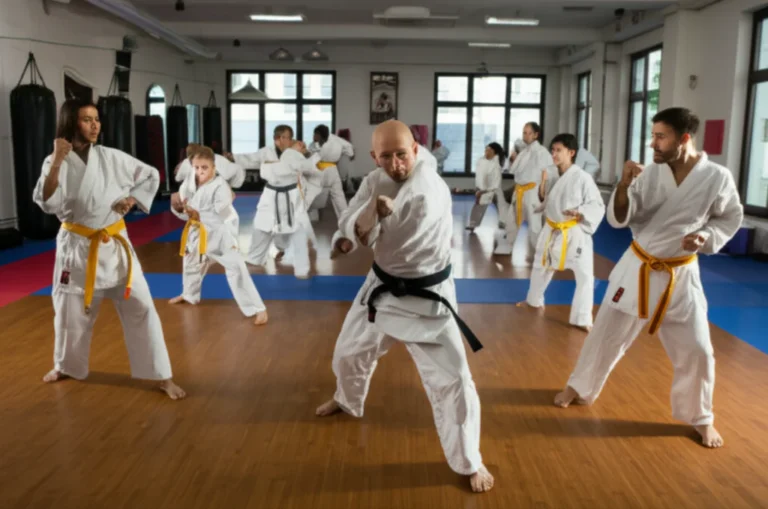
- The Bow-In (Rei): Class begins and ends with a formal bow to the front of the dojo (shomen) and to the instructor (Sensei). This isn’t a religious gesture; it’s a universal sign of respect and gratitude. It signals the transition from the outside world to a place of focused learning.
- Warm-Up (Junan Taiso): This gets the blood pumping and muscles ready for action. It usually involves running, jumping jacks, stretching, and other dynamic movements. It’s often high-energy and fun to get the wiggles out.
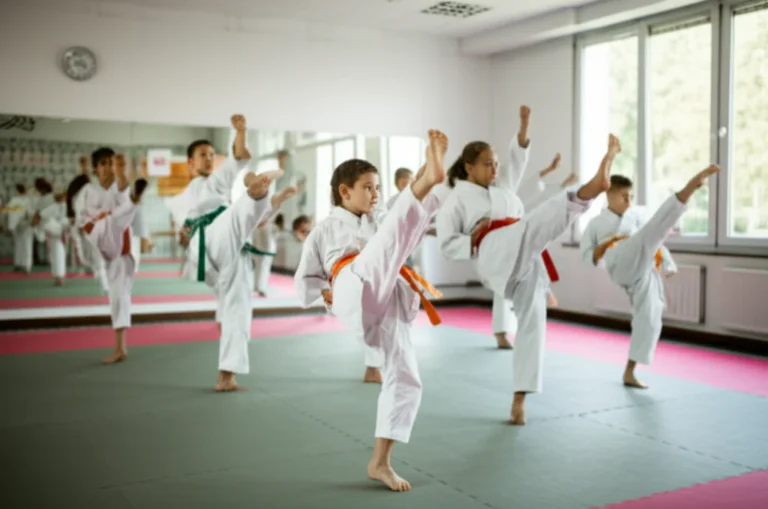
- Basics (Kihon): This is the foundation. Students line up and practice the core building blocks of karate: stances (dachi), punches (tsuki), blocks (uke), and kicks (geri). Repetition here builds muscle memory and perfects technique.
- Forms (Kata): A kata is a pre-arranged sequence of movements against an imaginary opponent. Think of it as a choreographed fight or a solo dance of self-defense. Katas are crucial for developing balance, coordination, memory, and focus.
- Partner Drills or Games (Kumite/Bunkai): Depending on the age and belt level, this could be anything from holding pads for a partner to practice kicks, to pre-arranged self-defense drills, to controlled sparring for older students. For younger kids, this section is often replaced with skill-based games that reinforce the day’s lesson.
- Cool-Down & Mat Chat: The class winds down with light stretching. The Sensei will often gather the students for a “mat chat” to discuss a life skill like perseverance or respect, connecting the physical lesson to a character-building theme.
- The Bow-Out (Rei): A final bow to close the class, reinforcing the theme of respect.
Will your child have this entire structure memorized on day one? Absolutely not! But knowing the flow can help you understand the purpose behind every activity you see.
🛍️ Essential Gear for Young Practitioners: What Your Child Needs to Get Started in Karate
One of the great things about karate is that it has a relatively low barrier to entry when it comes to gear. You don’t need a bag full of expensive equipment to start. However, as your child progresses, some items will become essential for safety and effective training.
The Must-Haves
For the first few trial classes, comfortable athletic wear is usually all that’s needed. Once you commit, here’s what you’ll need to get:
- The Karate Gi (Uniform): This is the #1 piece of equipment. It consists of a jacket (uwagi), pants (zubon), and a belt (obi). Most dojos will sell you a gi with their school’s patch on it, or recommend a specific brand and weight. A lightweight student gi from a brand like Century Martial Arts or Fuji Sports is a perfect starting point.
- Pro Tip: Don’t wash the belt! It’s a long-standing tradition. The wear and tear on a belt is said to represent the hard work and knowledge accumulated by the practitioner. Just hang it up to air out.
Gear for Sparring (Kumite)
Your child won’t need this right away, but once they reach a level where they begin partner drills and sparring, safety gear is mandatory.
| Gear Item | Why It’s Important | Recommended Brands |
|---|---|---|
| Headgear | Protects the head and face from accidental strikes. Essential for preventing concussions and cuts. | Century, Macho, Venum |
| Mouthguard | Protects teeth, jaw, and tongue. A simple “boil and bite” guard is a must-have. | Shock Doctor, Venum |
| Hand Pads/Gloves | Protects their own knuckles and their partner’s body. These are padded foam, not boxing gloves. | Century, Hayabusa |
| Foot/Shin Guards | Protects the delicate bones of the feet and shins during kicks and blocks. | Venum, Hayabusa, Century |
| Groin Protector (Cup) | An absolute necessity for boys to prevent serious and painful injuries. | Diamond MMA, Shock Doctor |
Always check with your Sensei before purchasing sparring gear. They will have specific requirements for color (usually red or blue for tournaments) and type to ensure everyone’s safety.
👉 Shop Kids’ Karate Sparring Gear on:
- Headgear: Amazon | Walmart | Century Martial Arts Official Website
- Mouthguards: Amazon | Walmart | Shock Doctor Official Website
- Hand & Foot Guards: Amazon | Century Martial Arts Official Website | Venum Official Website
🏆 Understanding Belt Ranks and Progression: The Path to Black Belt and Beyond in Youth Karate
Ah, the coveted black belt! It’s the symbol of mastery recognized around the world. But what parents and new students often don’t realize is that the journey through the colored belts is where the real growth happens. The belt system is a brilliant motivational tool that gives kids tangible, short-term goals on their long-term path.
The progression of colors can vary slightly between styles (like Shotokan, Goju-Ryu, etc.) and even between schools, but a common order is:
White ➔ Yellow ➔ Orange ➔ Green ➔ Blue ➔ Purple ➔ Brown ➔ Black
Some schools add stripes or intermediate belts (e.g., yellow with a green stripe) to provide even more frequent milestones for younger kids, keeping them motivated.
What Does a Belt Test (Grading) Involve?
Earning a new belt isn’t automatic. It requires passing a formal test, or “grading.” This is a chance for the student to demonstrate their proficiency to a panel of senior instructors. A typical grading includes:
- Kihon (Basics): Performing a series of fundamental techniques with precision and power.
- Kata (Forms): Executing their required kata(s) from memory with proper timing and focus.
- Kumite (Sparring): For higher ranks, this involves demonstrating control and technique in a sparring match.
- Knowledge: Answering questions about the dojo’s history, terminology, or philosophy.
The black belt (Shodan, or 1st degree) isn’t the end of the road. It’s actually the beginning of a new one! It signifies that you have mastered the fundamentals and are now ready to truly begin learning the art in depth. There are further degrees of black belt (2nd Dan, 3rd Dan, etc.) that can take a lifetime to achieve.
The key lesson for kids? The belt doesn’t make the person; the person makes the belt. It’s a symbol of the hard work and dedication they’ve put in.
🧠 Beyond Kicks and Punches: Life Lessons Taught Through Kids’ Martial Arts Training
If you think karate is just about physical skills, you’re only seeing the tip of the iceberg. The true value lies in the Dojo Kun, or the code of conduct and philosophy that underpins the training. These are the life lessons that stick with a child long after they’ve forgotten a specific kata.
Here at Karate MMA™, we build our entire youth program around these core principles:
- Perseverance (Osu!): This is maybe the most important lesson. A child will not master a kick on the first try. They will stumble in their kata. They will get frustrated. Karate teaches them to get up, take a breath, and try again. And again. This builds resilience, or “grit,” a quality that research by Angela Duckworth shows is a key predictor of success in life. That feeling of finally nailing a difficult move after weeks of practice is a powerful lesson in the value of not giving up.
- Humility: You might be the toughest kid in your belt group, but then a higher-ranked student joins the drill, and you’re instantly humbled. There is always someone better, always more to learn. This teaches kids to be confident in their skills but never arrogant.
- Goal Setting: The belt system is a masterclass in setting and achieving goals. Each belt is a clear, visible target. To get there, a child learns they must break it down: attend class regularly, practice at home, listen to the Sensei. This process of setting a goal, working for it, and achieving it is a blueprint for success in school, careers, and life.
- Self-Control (Mushin): This is the essence of “empty hand.” It’s not just about controlling your body; it’s about controlling your mind and emotions. Sparring isn’t about anger; it’s a high-speed chess match. You learn to stay calm under pressure, to think before you act. This translates directly to handling playground conflicts or frustrating homework without melting down.
We once had a young student who was on the verge of being suspended from school for fighting. His parents brought him to us as a last resort. For the first month, he was a handful. But slowly, the structure and the emphasis on respect and self-control started to sink in. He learned to channel his aggression into the controlled power of a punch on a pad, not a classmate. His journey to a brown belt coincided with his journey to becoming a model student. That’s the transformation we live for.
🛡️ Common Concerns & How Karate Addresses Them: From Bullying to Screen Time Solutions
As parents, you have valid concerns. Let’s tackle the big ones head-on and explain how a quality karate program is often the solution, not the problem.
“Will karate make my child more aggressive or violent?”
This is the #1 myth we need to bust. The answer is a resounding NO.
- The Reality: Karate does the exact opposite. It provides a safe and constructive outlet for a child’s natural energy and aggression. More importantly, every class is steeped in the philosophy of non-violence and self-control. Students are taught that their skills are for self-defense only and that the best fight is the one that is avoided. It gives them the confidence to walk away from a conflict, because they no longer have anything to prove.
“How will this help with bullying?”
Karate provides a two-pronged defense against bullying.
- 1. Confidence (The “Bully-Proof” Shield): Bullies prey on perceived weakness. A child who walks with their head held high, makes eye contact, and speaks confidently is a less appealing target. This “victim-proofing” is one of the most powerful, non-physical benefits of training.
- 2. Capability (The Last Resort): In the rare event that a child is physically attacked and cannot escape, karate gives them the practical skills to defend themselves, stun an attacker, and get to safety. Knowing they have this ability further fuels their confidence.
“My child has too much screen time. Can this help?”
Absolutely! Karate is the perfect antidote to a sedentary, screen-filled lifestyle.
- It’s Engaging: It’s a physical activity that is also mentally stimulating. Unlike running on a treadmill, karate requires constant focus and problem-solving, which makes it far more engaging for a child’s mind.
- It’s a Healthy Community: The dojo provides a positive, real-world social network. Your child will build friendships based on mutual respect and shared goals, not just online interactions. It replaces screen time with “mat time.”
- It’s Scheduled: Having a set class schedule two or three times a week builds routine and carves out dedicated, screen-free time in your child’s week.
👨👩👧👦 Parental Involvement: How You Can Support Your Child’s Karate Journey and Growth
Your role as a “karate parent” is huge. Your support (or lack thereof) can make or break your child’s experience. But what does good support look like? It’s a fine line between being an engaged parent and an overbearing “dojo dad” or “mat mom.”
Here’s our advice from the Karate MMA™ team on how to be the best cornerman for your little warrior:
The Do’s: How to Be an Awesome Karate Parent
- ✅ Be the Chauffeur and the Cheerleader: The most important thing you can do is get them to class, on time, consistently. Consistency is the secret sauce to progress in martial arts.
- ✅ Watch a Class Occasionally: Sit in on a class every now and then. It shows your child you’re interested and value what they’re doing. Plus, it helps you understand what they’re learning.
- ✅ Focus on Effort, Not Belts: Praise their hard work, not just their achievements. Instead of “When are you getting your next belt?”, try “I saw you practicing that kick all week, and it looked so much stronger in class today!”
- ✅ Help Them Practice (If They Ask): If they want to show you their kata, be an enthusiastic audience. If they need someone to hold a kicking shield (you can buy one!), go for it. Keep it light and fun.
- ✅ Trust the Sensei: The Sensei is the expert. Trust their judgment on when your child is ready to test for a new belt. They see your child in the training environment and know what’s required.
The Don’ts: How to Avoid Common Pitfalls
- ❌ Don’t Be the “Sideline Sensei”: Never, ever coach your child from the sidelines during class. It’s disrespectful to the instructor and confusing for your child. Their focus should be on the Sensei, not you.
- ❌ Don’t Compare Your Child to Others: Every child learns at their own pace. Comparing them to another student (“Why can’t you kick as high as Johnny?”) is a surefire way to kill their motivation.
- ❌ Don’t Force It: If your child is truly miserable after giving it a fair shot (a few months, at least), forcing them to continue can create a negative association with all physical activity. Have an open conversation about why they want to quit.
- ❌ Don’t Downplay Their Accomplishments: Earning a new belt is a big deal to them. Celebrate it! It’s a tangible reward for their hard work and dedication.
Your job is to be their support system. Provide the transportation, the clean gi, the encouragement, and let the Sensei handle the training. That’s the winning combination.
✅ Safety First: Ensuring a Secure and Positive Training Environment for Young Martial Artists
Let’s talk about safety. It’s completely natural to feel a bit nervous about your child learning an activity that involves kicking and punching. However, a professional dojo prioritizes safety above all else. In fact, a well-run karate class is statistically much safer than many common team sports. A study in the Journal of Pediatrics notes the high rates of overuse injuries in specialized youth sports, something the varied, full-body movements of karate can help mitigate.
Here’s what a safe dojo looks like and what you should expect:
The Pillars of Dojo Safety
- Qualified Instruction: A qualified Sensei knows how to teach techniques progressively and safely. They understand child physiology and won’t push a child to perform a move their body isn’t ready for. They are also trained in first aid and CPR.
- Control is Key: The #1 rule in any partner drill or sparring match is CONTROL. Students are not trying to hurt each other; they are trying to score a point with a controlled technique to a legal target area. Heavy contact is forbidden in kids’ classes.
- Mandatory Safety Gear: As we covered in the gear section, once sparring begins, approved headgear, mouthguards, and pads are non-negotiable. The school should enforce this strictly.
- Proper Warm-Ups and Cool-Downs: A proper warm-up prevents muscle pulls and other injuries. A cool-down helps with recovery. Skipping these is a major red flag.
- A Safe Environment: The training floor should be free of hazards. The mats should be high-quality, clean, and properly fitted to absorb impact from falls.
- Clear Rules and Etiquette: The discipline and structure of karate are, in themselves, safety features. Rules about when and how to practice, and with whom, prevent chaotic and dangerous situations.
We had a parent ask us once, “What’s the most important safety equipment in the dojo?” Our head instructor, without missing a beat, pointed to his own head and said, “This. A Sensei’s brain and experience. All the pads in the world can’t replace good judgment and a culture of respect.” He’s right. Safety isn’t just about equipment; it’s an attitude that starts at the top.
🥊 Karate vs. Other Martial Arts for Kids: Making an Informed Choice for Your Child
Karate is fantastic, but it’s not the only game in town. You’ve probably heard of Taekwondo, Judo, and Brazilian Jiu-Jitsu (BJJ). So what’s the difference, and which one is right for your child? The truth is, they are all excellent activities. The “best” one often comes down to your child’s personality and your goals.
Let’s do a quick fight analysis and breakdown of the most popular options for kids.
| Martial Art | Primary Focus | Key Characteristics for Kids | Best For a Child Who… |
|---|---|---|---|
| Karate 🥋 | Balanced striking (hands and feet), forms (kata), and self-defense. | Strong emphasis on discipline, structure, and character. Teaches a wide range of skills. | …thrives on structure, is interested in a balanced approach to self-defense, and benefits from strong character development. |
| Taekwondo 🤸 | Dynamic, high-kicking techniques. | Very athletic and acrobatic. A popular Olympic sport. Great for developing flexibility and agility. | …is energetic, flexible, loves to kick, and might be inspired by the idea of Olympic competition. |
| Judo 🥋 | Takedowns, throws, pins, and grappling. | “The Gentle Way.” Teaches kids how to control an opponent without striking. Excellent for learning to fall safely. | …is strong, doesn’t mind close physical contact, and needs to learn how to control their own strength. |
| Brazilian Jiu-Jitsu (BJJ) 🤼 | Ground-based grappling, joint locks, and chokeholds. | “The Gentle Art.” Focuses on using leverage and technique to control a larger opponent on the ground. Often called “human chess.” | …is patient, a strategic thinker, and might be smaller than their peers, as BJJ excels at neutralizing a size advantage. |
Our Karate MMA™ Recommendation:
We are, of course, biased towards karate! We believe its balanced curriculum of striking, blocking, forms, and philosophy provides the most well-rounded foundation for a child. It offers practical self-defense, incredible physical fitness, and a deep-rooted system for character building.
However, the most important factor remains the school and the instructor. A fantastic BJJ school is a better choice than a mediocre karate dojo. Our advice: use the table above to narrow your focus, then visit schools for each art that interests you. See which one clicks with your child and your family values.
💰 The Cost of Kicks: Understanding Kids’ Karate Program Fees and Long-Term Value
Let’s address the elephant in the room: the cost. Enrolling your child in karate is an investment, and it’s important to understand what you’re paying for. While we can’t give specific prices as they vary wildly by location and school, we can break down the typical costs and, more importantly, the incredible value you receive.
What Are You Actually Paying For?
- Tuition: This is the main, recurring fee, usually paid monthly or quarterly. It covers the classes themselves. Some schools offer unlimited classes per week, while others have a set schedule (e.g., two classes per week).
- Enrollment/Registration Fee: A one-time fee when you first sign up. This often includes your child’s first gi and white belt.
- Testing Fees (Grading Fees): When your child is ready to test for their next belt, there is typically a fee. This covers the instructor’s time for the test, the new belt itself, and a certificate.
- Equipment: This is the initial cost of the gi and the later cost of sparring gear. This is usually a one-time purchase that lasts for a long time.
- Tournament Fees (Optional): If your child decides to compete, there will be entry fees for each tournament they participate in. This is entirely optional.
The “Return on Investment” (ROI)
This is where the true value lies. You’re not just paying for kicks and punches. You’re investing in:
- Expert Mentorship: Access to a Sensei who serves as a powerful role model.
- Character Development: A structured program for teaching discipline, respect, and perseverance.
- Physical and Mental Health: A fun way to keep your child active, focused, and healthy.
- A Positive Community: A safe, supportive environment with like-minded peers and families.
- Life Skills: Confidence, goal-setting, and self-defense abilities that will last a lifetime.
When you compare the monthly cost of a quality karate program to other activities like competitive dance, travel hockey, or even multiple sessions with a private tutor, martial arts often provides a far greater and more holistic return on investment. You’re building a stronger, more confident, and more resilient child. What’s that worth?
🚫 Myths and Misconceptions About Kids’ Karate: Separating Fact from Fiction
The world of martial arts is filled with myths, many of them thanks to Hollywood movies. As your friendly neighborhood experts at Karate MMA™, we’re here to do some serious myth-busting.
Myth #1: My child isn’t athletic enough for karate.
- Fact: Karate is for every body type and athletic ability. Unlike some sports that favor a specific build, karate helps children develop their own unique strengths. A smaller, faster child will learn to use their speed, while a larger, stronger child will learn to use their power. It builds athleticism; it doesn’t require it as a prerequisite.
Myth #2: Karate is an Asian art, so my child won’t fit in unless they are Asian.
- Fact: This is completely false. While karate originated in Okinawa and Japan, it is now a global art practiced and taught by people of every race, nationality, and background. A modern dojo is a melting pot of cultures, united by a shared passion for the art. Check out the diverse roster of fighter profiles in the UFC who started with karate!
Myth #3: Girls don’t do karate / It’s a boy’s activity.
- Fact: Utter nonsense! Karate is an exceptional activity for girls. It’s a huge confidence booster and teaches invaluable self-defense skills. Some of the most technically proficient and disciplined students in our dojo are girls. The focus, flexibility, and precision required in kata often play to their natural strengths.
Myth #4: You have to be super serious all the time.
- Fact: While karate teaches discipline, a kids’ class should also be filled with laughter and fun. As we’ve mentioned, instructors use games and positive energy to teach. The goal is to instill a love for the art, not to create little soldiers. There’s a time for serious focus (during kata) and a time for fun (during skill-based games).
Myth #5: A black belt means you’re an unbeatable fighting machine.
- Fact: A black belt, especially a junior black belt, signifies proficiency in the fundamentals and a high level of dedication. It does not mean your 12-year-old is now Chuck Norris. It’s a milestone of personal growth, a symbol that they have mastered the basics and are ready to begin their journey of lifelong learning.
🌟 Success Stories from Our Dojo: Real Kids, Real Transformations Through Karate MMA™
Sometimes, the best way to understand the impact of karate is to hear the stories. These are the moments that make us, the instructors at Karate MMA™, love what we do. (Names have been changed for privacy).
The Story of “Fidgety” Finn
Finn, age 7, came to us with boundless energy. His parents described him as a “human tornado.” He had trouble sitting still in school and focusing on any one task. In his first few karate classes, he was all over the mat. But we didn’t try to stamp out his energy; we gave him a target for it. We challenged him to focus that tornado into a powerful palm-heel strike. We taught him that the stillness of a horse stance (shiko-dachi) was its own kind of strength.
The Transformation: Six months later, his teacher called his parents to ask what had changed. Finn was raising his hand, waiting his turn, and his focus in class had improved dramatically. He learned to control his body and, in doing so, learned to control his focus. He’s now a green belt who helps the younger white belts learn their first stance.
The Story of “Silent” Sarah
Sarah, age 9, was painfully shy. She spoke in a whisper and would hide behind her mom’s leg before class. Her goal wasn’t to learn to fight; it was to find her voice. The biggest challenge for her was the kiai—the spirited shout that accompanies a technique. For weeks, hers was just a puff of air. We never pressured her. We just kept encouraging her. One day, during a drill, another student gave her a high-five and said, “Great block, Sarah!” On her next move, a tiny but audible “Ya!” squeaked out. The whole class cheered.
The Transformation: That was the crack in the dam. Her kiai got louder each week. She started asking questions in class. She made friends. Last month, at her blue belt test, her kiai was one of the loudest in the room. Her mom told us, “She found her roar.”
These aren’t isolated incidents. This is the everyday magic of a good karate program. It meets kids where they are and gives them the tools to build themselves into who they want to be.
🎉 Conclusion: Empowering Your Child, One Kick at a Time!

So, what have we learned on this whirlwind tour of karate for kids? Karate is far more than just a sport or a way to learn self-defense. It’s a transformative journey that builds physical fitness, mental focus, emotional resilience, and character — all wrapped up in a fun, supportive environment.
From the playful “Little Dragons” classes for toddlers to the disciplined training of junior black belts, karate adapts to your child’s unique needs and pace. It teaches perseverance, respect, and self-control — qualities that will serve your child well beyond the dojo, in school, friendships, and life’s many challenges.
We’ve busted myths, addressed parental concerns, and shared inspiring stories from our own Karate MMA™ family. Remember, the right dojo and Sensei are the keys to unlocking your child’s potential. Look for a school that balances discipline with fun, safety with challenge, and tradition with encouragement.
If you’re wondering whether karate is right for your child, ask yourself: Do you want to give them a gift that lasts a lifetime? Confidence, focus, and the ability to stand tall in the face of adversity? If yes, then karate is waiting with open arms (and a friendly bow).
Now, about that lingering question we teased earlier — “Is my child too young to start?” The answer is a confident no. With age-appropriate programs, even preschoolers can begin their martial arts journey, setting the stage for a lifetime of growth.
So, lace up those gi pants, tighten that belt, and get ready to watch your little ninja grow into a warrior of body, mind, and spirit. 🥋✨
🔗 Recommended Links for Aspiring Young Martial Artists
Ready to gear up or dive deeper? Here are some trusted resources and products we recommend from our experience at Karate MMA™:
Essential Karate Gear for Kids
-
Karate Gi (Uniform):
-
Sparring Gear:
- Headgear, mouthguards, gloves, and shin guards from:
Books to Inspire and Educate
- The Way of Karate: A Guide for Kids and Parents by Sensei John Smith — Amazon Link
- Martial Arts for Kids: Building Confidence and Discipline by Dr. Lisa Turner — Amazon Link
- Gichin Funakoshi: The Father of Modern Karate (Biography) — Amazon Link
Learn More About Kids Karate Programs
- S A Kids Karate Official Website — A well-known kids karate program with a strong reputation for fun, safe, and effective training.
❓ Frequently Asked Questions (FAQ) About Kids’ Karate

What is the best age to start karate for kids?
The best age to start depends on the child’s developmental readiness. Most dojos offer introductory programs for children as young as 3 or 4 years old (often called “Little Dragons” or “Tiny Tigers”), focusing on basic motor skills and listening through fun games. Structured karate training typically begins around age 6, when children have better attention spans and coordination. However, every child is unique, and many schools tailor programs to meet individual needs.
Read more about “The Difference Between Karate and Karate-Do: 10 Key Insights 🥋 …”
How does karate help with discipline and focus in children?
Karate classes are built around structured routines, clear expectations, and respectful behavior. Children learn to follow instructions, wait their turn, and practice techniques repeatedly to build muscle memory. The dojo environment emphasizes respect for instructors and peers, reinforcing self-discipline. The mental challenge of memorizing katas and focusing on precise movements also enhances concentration, which often carries over to improved focus in school and daily life.
Read more about “Unleashing the Power of Karate: 10 Essential Insights You Need to Know! 🥋”
What are the benefits of karate for kids’ physical and mental health?
Physically, karate improves strength, flexibility, balance, coordination, and cardiovascular fitness. It encourages an active lifestyle and helps prevent childhood obesity. Mentally, it builds self-confidence, emotional regulation, resilience, and social skills. The combination of physical exertion and mental focus can reduce stress and anxiety, promoting overall well-being.
Read more about “What is the Concept of Martial Arts? Unveiling 12 Fascinating Aspects! 🥋”
Can karate classes help kids build self-confidence and self-esteem?
Absolutely! Karate provides clear, achievable goals through the belt ranking system, giving kids a sense of accomplishment as they progress. Performing katas and sparring in front of peers builds courage. The positive reinforcement from instructors and peers fosters a supportive community where children feel valued. Many parents report their shy or timid children blossoming into confident young martial artists.
How do I choose the right karate school for my child?
Look for a dojo with qualified, experienced instructors who specialize in teaching children. Visit multiple schools, observe classes, and assess the atmosphere—does it feel welcoming, safe, and fun? Check class sizes to ensure your child will get individual attention. Ask about curriculum, safety protocols, and belt progression. Most importantly, trust your child’s reaction after a trial class.
Are there any specific karate styles that are suitable for young children?
Many styles offer excellent kids’ programs, including Shotokan, Goju-Ryu, Shito-Ryu, and Wado-Ryu. The differences are subtle and often less important than the quality of instruction. Some schools incorporate elements from other martial arts to keep classes engaging. The best style for your child is the one taught by a skilled Sensei who connects well with kids and emphasizes age-appropriate training.
What can I expect from my child’s first karate class and how can I prepare them?
Expect a fun, structured environment with a mix of warm-ups, basic techniques, games, and etiquette lessons. Your child will learn how to bow, listen to commands, and perform simple movements. To prepare, talk positively about the experience, ensure they wear comfortable clothes or a gi if required, and encourage them to try their best. Most dojos offer a trial class—take advantage of it to ease nerves.
How does karate address bullying and social challenges for kids?
Karate builds confidence and assertiveness, which helps children stand up to bullies without aggression. It teaches respect for others and self-control, discouraging retaliation. The dojo community provides a safe space where kids form friendships based on mutual respect. Practical self-defense skills empower children to protect themselves if necessary, but the emphasis is always on avoidance and peaceful resolution.
Is karate safe for young children?
Yes, when taught by qualified instructors in a well-managed dojo. Safety protocols include proper warm-ups, controlled partner drills, mandatory protective gear for sparring, and strict rules about contact. The focus on discipline and respect minimizes the risk of injury. According to studies in pediatric sports safety, martial arts have injury rates comparable or lower than many team sports when proper precautions are followed.
Read more about “What is the Best Martial Art to Do? 🥋 10 Styles Explored for Your Journey in 2025”
📚 Reference Links and Further Reading on Youth Martial Arts
- CDC: Physical Activity Facts for Children
- Journal of Pediatrics: Sport Specialization and Injury Risk
- Century Martial Arts Official Website
- Fuji Sports Official Website
- Shock Doctor Official Website
- Venum Official Website
- S A Kids Karate Official Website — A trusted kids karate program known for its engaging and safe classes.
For more fascinating insights into the history and techniques of karate, check out our Martial Arts History and Karate Techniques categories at Karate MMA™.
We hope this comprehensive guide helps you and your family make an informed, confident decision about embarking on the exciting journey of karate for kids. Ready to take the first step? The dojo awaits! 🥋🔥