Support our educational content for free when you purchase through links on our site. Learn more
How Many Martial Art Styles Are There? Discover 180+ Unique Arts in 2025 🥋

Ever wondered just how many martial art styles exist worldwide? Spoiler alert: the number is far beyond what most expect! From ancient stick-fighting tribes in Africa to the dazzling kicks of Taekwondo and the ground mastery of Brazilian Jiu-Jitsu, the martial arts universe is a sprawling, ever-evolving tapestry of combat knowledge. In this article, we’ll take you on a whirlwind global tour, breaking down over 180+ documented styles, exploring their origins, philosophies, and what makes each uniquely powerful.
Did you know that Karate alone boasts more than 75 substyles? Or that some obscure village wrestling traditions have never even been formally recorded? Stick around as we unravel the fascinating history, categorize styles by focus (striking, grappling, weapons, and more), and share insider tips from our expert team at Karate MMA™ on how to choose the perfect style for you. Ready to stop counting and start training? Let’s dive in!
Key Takeaways
- There are thousands of martial art styles worldwide, but over 180 are widely recognized and documented.
- Martial arts vary by region, technique, and philosophy, from striking arts like Muay Thai to grappling arts like Judo and weapon-based systems like Kendo.
- The number of styles is constantly growing due to hybrid systems, cultural evolution, and new training methods.
- Choosing the right martial art depends on your goals—whether fitness, self-defense, competition, or cultural immersion.
- Our experts recommend a balanced approach: combine striking, grappling, and self-defense for the most comprehensive skill set.
Curious about which styles dominate each continent? Or how to spot the best martial art for your lifestyle? Keep reading for the full breakdown!
Table of Contents
- ⚡️ Quick Tips and Facts: Unraveling the Martial Arts Maze
- The Ancient Roots of Combat: Tracing Martial Arts History and Evolution
- Defining “Martial Art Style”: What Truly Counts?
- The Global Tapestry of Combat: Exploring Martial Arts Across Continents
- Asia: The Cradle of Countless Styles and Ancient Wisdom
- Europe: From Gladiators to Modern Combat Sports and Self-Defense
- Africa: Indigenous Fighting Traditions and Rhythmic Combat Forms
- The Americas: Blending Traditions and Forging New Paths in Combat
- Oceania: Unique Island Combat Forms and Warrior Prowess
- Beyond the Punch: Categorizing Martial Arts by Primary Focus
- Striking Arts: The Art of the Knockout and Precision Strikes 🥊
- Grappling Arts: The Science of Control, Throws, and Submission 🥋
- Weapon-Based Arts: Mastering the Blade, Staff, and Projectiles ⚔️
- Self-Defense Systems: Practicality for Real-World Threats and Survival 🛡️
- Mind-Body Arts: Cultivating Inner Strength, Discipline, and Flow 🧘
- The Ever-Evolving Landscape: New Styles, Hybrid Systems, and Modern MMA
- Why So Many? The Factors Driving Martial Arts Diversity and Innovation
- Choosing Your Path: Finding the Right Martial Art for Your Goals and Spirit
- The Uncountable Styles: Why a Precise Number is Elusive and Ever-Growing
- Conclusion: The Endless Journey of Martial Arts Discovery
- Recommended Links: Dive Deeper into the World of Combat
- FAQ: Your Burning Questions About Martial Arts Styles Answered 🔥
- Reference Links: Our Sources and Further Reading
⚡️ Quick Tips and Facts: Unraveling the Martial Arts Maze
- There is NO single official list.
Wikipedia’s List of martial arts freely admits “new styles appear every month,” so any hard number is outdated the moment it’s printed. - “Style” vs. “System” vs. “Sport” – three different conversations. A style is a flavour (Shotokan Karate), a system is the syllabus (JKA curriculum), a sport is the rule-set (WKF Olympic Kumite).
- 180+ documented styles are already broken down for you in our sister article How Many Martial Arts Are There? Discover 180+ Styles & Their Unique Benefits 2024 🥋 – bookmark it, you’ll need it later.
- Karate alone has 75+ substyles; Kung Fu has 400+ family lineages. If you count every village wrestling dance, the global total races past 3 000.
- ✅ Quick filter: Ask “Does it have a recognised federation, a rule-set, and a belt/sash ladder?” If yes, it’s probably a countable style.
- ❌ Don’t trust random Reddit threads claiming “exactly 1 123 styles.” Most can’t name 50 without Google.
Pro tip from Sensei Luis at Karate MMA™:
“I tell newbies to pick three complementary arts—one striker, one grappler, one weapon. Once you can flow between them, you stop counting styles and start counting solutions.”
The Ancient Roots of Combat: Tracing Martial Arts History and Evolution

Long before Instagram tutorials, our ancestors were already arguing over whose head-lock looked cooler. Archaeological murals in Egypt (British Museum) show stick-fighting scenes dated 2 000 BCE. Meanwhile, Chinese wrestling texts from the Xia dynasty (2070 BCE) describe “Jiao-Di” competitions where competitors butted each other with deer antlers—ancient MMA head-gear, anyone?
Fast-forward to 648 BCE: Pankration debuts at the Greek Olympics. Think UFC without referees. Fighters could eye-gouge and finger-break; only biting was off-limits. The Spartans loved it so much they added it to military training. (World History Encyclopedia)
Why does history matter? Because every “new” hybrid you see today—Jeet Kune Do, Sambo, Krav Maga—follows the same recipe:
- Take local combat needs (war, self-defence, sport).
- Add cultural spice (music, ritual, religion).
- Simmer under political pressure (occupation, colonisation, peace treaties).
- Serve hot with a fresh name.
Karate case file: Okinawan farmers fused Chinese White Crane with indigenous Te while under samurai weapon bans. Result? Empty-hand strikes strong enough to punch through sugar-cane. You can deep-dive into this evolution in our Martial Arts History archive.
Defining “Martial Art Style”: What Truly Counts?
Ask ten black belts, get eleven opinions. Here’s the Karate MMA™ house definition we use when updating our database:
| Criterion | Must-Have Example | Grey Area |
|---|---|---|
| Codified syllabus | Curriculum document or kata catalogue | “My uncle’s bar-fight tricks” |
| Transmission lineage | Named teacher → student chain | YouTube self-taught playlist |
| Identity markers | Uniform, belt, language, salute | Cross-fit with gloves |
| Competitive or combat testing | Sport rule-set or battlefield record | LARP foam-sword routine |
Still fuzzy? The Black Belt Wiki puts it bluntly: “There are thousands… variations, regional differences and evolution make an exact number impossible.” So relax—aim for usefulness, not mathematics.
The Global Tapestry of Combat: Exploring Martial Arts Across Continents
Asia: The Cradle of Countless Styles and Ancient Wisdom
East Asian Powerhouses: Kung Fu, Karate, Taekwondo, and Beyond
- Kung Fu – 400+ substyles. Wing Chun favours centre-line theory; Shaolin spins staff like helicopter blades.
- Karate – 75+ substyles. Shotokan loves long stances; Goju-Ryu breathes like a dragon.
- Taekwondo – 2 Olympic sub-disciplines: Kyorugi (full-contact) & Poomsae (forms).
- Tang Soo Do – Korea’s “middle child” blending Shotokan kicks with native Subak.
Sensei Luis anecdote:
“In 1998 I walked into a tiny Okinawan dojo. The sensei spoke zero English, yet taught me Naihanchin kata by stepping on my feet to correct stance width. Pain = universal translator.”
Southeast Asian Savvy: Muay Thai, Silat, Arnis, and More
- Muay Thai – 8 weapons: fists, elbows, knees, shins. Shin conditioning = kicking banana trees (or today, Fairtex heavy bags).
- Silat – Indonesia’s 700+ styles include Pencak Silat (dance-like) & Harimau (tiger ground-fighting).
- Arnis/Eskrima/Kali – Philippines’ national sport. Double-stick drills improve ambidextrous knife defence.
South Asian Secrets: Kalaripayattu, Gatka, and Ancient Indian Arts
- Kalaripayattu – arguably the oldest living art (1 500 BCE). Massage techniques regenerate micro-tears faster—ancient recovery science.
- Gatka – Sikh sword dance turned sport. Competitors spin five-foot bamboo staves at lightning speed.
Europe: From Gladiators to Modern Combat Sports and Self-Defence
Historical European Martial Arts (HEMA): Swords, Shields, and Scholarly Revival
- Longsword – German Liechtenauer tradition vs Italian Fiore flowery diagrams.
- Rapier – 1 kg of steel, 1 000 ways to skewer.
- Pugilism – London Prize Ring rules (1743) allowed head-butts and eye-gouging—talk about “stand-and-bang”.
Modern European Innovations: Sambo, Krav Maga, and Practical Systems
- Sambo – USSR’s answer to Judo + folk wrestling. Fedor Emelianenko used it to maul giants.
- Krav Maga – Imi Lichtenfeld’s street-tested Israeli system, but refined in Bratislava before 1940.
- Systema – Russian military flavour; looks like slow-motion until you realise the guy’s disrupting your breathing.
Africa: Indigenous Fighting Traditions and Rhythmic Combat Forms
Ancient African Arts: Wrestling, Stick Fighting, and Cultural Expressions
- Senegalese Laamb – allows punching while wrestling. Think Greco-Roman with uppercuts.
- Nguni stick fighting – South Africa’s Zulu version: two sticks, one shield, no shoes, lots of bruises.
- Tahtib – Egyptian “pole dancing” for warriors; 1.2 m bamboo rod twirled to Nubian drums.
The Americas: Blending Traditions and Forging New Paths in Combat
North American Innovations: MMA, Jeet Kune Do, and Hybrid Systems
- 10th Planet Jiu-Jitsu – Eddie Bravo’s no-gi system with rubber guard and twister.
- American Kenpo – Ed Parker’s rapid-fire 5-count strike sequences.
- Collegiate Wrestling – the silent base of UFC champions; 90 % of MMA title fights end with wrestler on top.
South American Savvy: Brazilian Jiu-Jitsu, Capoeira, and Indigenous Arts
- Brazilian Jiu-Jitsu – Helio Gracie’s 135 lb frame vs 200 lb opponents = leverage > ego.
- Capoeira – disguised as dance because slavery laws forbade fight training. Today’s berimbau rhythm still dictates game speed.
- Luta Livre – BJJ’s poor cousin (no gi, no politics). Produced leg-lock monsters like Rousimar Palhares.
Oceania: Unique Island Combat Forms and Warrior Prowess
Pacific Island Prowess: Mau Rakau, Lua, and Traditional Warrior Arts
- Mau Rakau – Maori taiaha (wooden spear) spins faster than Conor McGregor’s left hand.
- Hawaiian Lua – bone-breaking, joint-snapping; originally taught only to royal bodyguards.
- Fijian Veivatuloa – coconut-fiber armour + shark-tooth clubs—ancient anti-bully fashion.
Beyond the Punch: Categorizing Martial Arts by Primary Focus
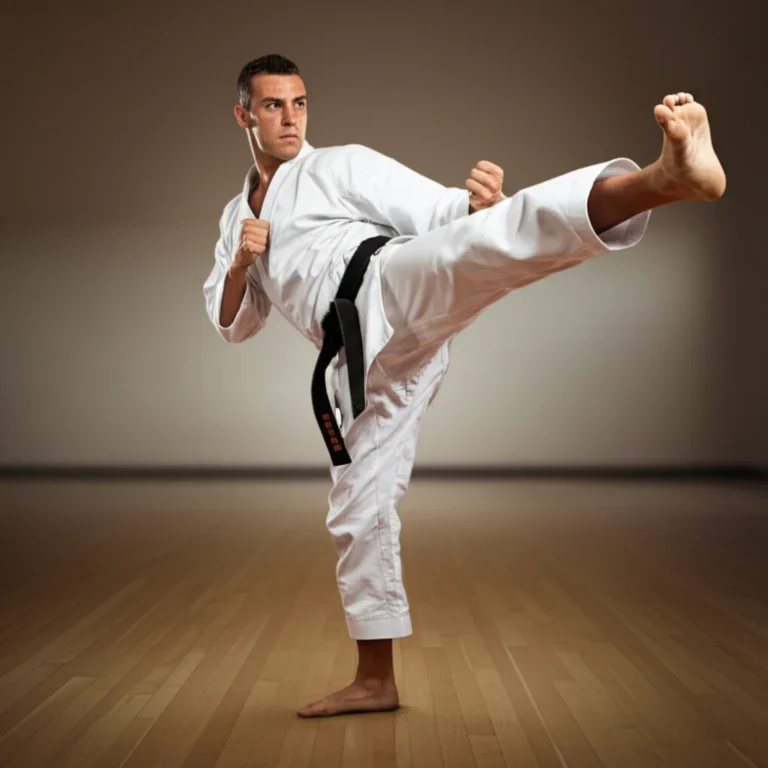
1. Striking Arts: The Art of the Knockout and Precision Strikes 🥊
| Style | Signature Move | Power Source |
|---|---|---|
| Boxing | Overhand right | Hip rotation |
| Karate | Gyaku-tsuki | Hip + snap |
| Taekwondo | 360 roundhouse | Centrifugal whip |
| Muay Thai | Jumping knee | Gravity + hips |
Training cheat-sheet:
- Heavy bag 3× weekly for bone density.
- Focus mitts for accuracy.
- Shin conditioning = roll glass bottle + Tiger Balm.
✅ Fairtex Muay Thai bag on: Amazon | Fairtex Official
✅ Twins Focus Mitts on: Amazon | Twins Official
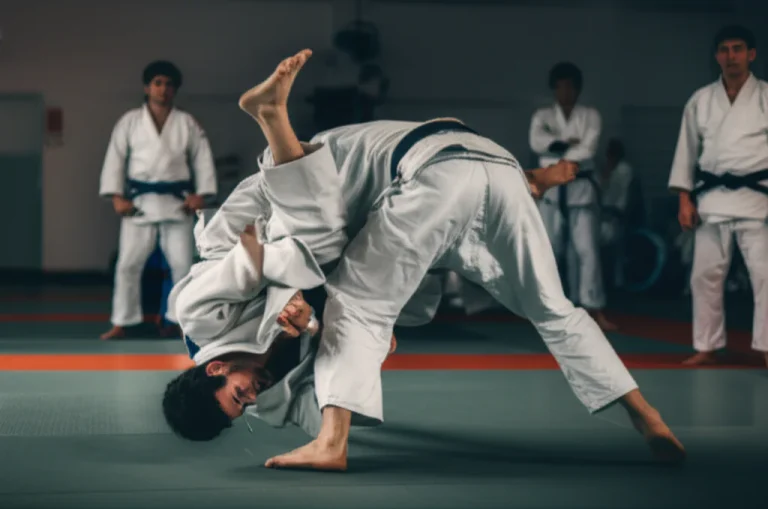
2. Grappling Arts: The Science of Control, Throws, and Submission 🥋
| Style | Win Condition | Favourite Chain |
|---|---|---|
| Judo | Ippon throw | Sleeve → collar → uchi-mata |
| BJJ | Submission | Guard → triangle → armbar |
| Wrestling | Pin | Double-leg → cradle → half-nelson |
| Sambo | Total victory throw | Belt grip → suplex → leg-lock |
White-belt confession:
“I thought shrimping was seafood cuisine—turns out it’s the hip-escape that saves your ribs.”
3. Weapon-Based Arts: Mastering the Blade, Staff, and Projectiles ⚔️
- Kendo – bamboo sword, armour like Darth Vader cosplay.
- Arnis – double-stick heaven; Dan Inosanto still demos at 86.
- Kyudo – Japanese archery; one arrow, one breath, one lifetime.
✅ Cold Steel Training Katana on: Amazon | Cold Steel Official
✅ Ronin Kendo Shinai on: Amazon | Ronin Official
4. Self-Defense Systems: Practicality for Real-World Threats and Survival 🛡️
- Krav Maga – 360° defence vs knife; burst, wrap, control.
- SPEAR System – Tony Blauer’s startle-flinch conversion.
- Wen-Do – Canada’s women-only program since 1972.
Street reality check:
“Most bar ‘boxers’ throw haymakers. Krav’s vertical punch lands first—biology beats ego.”
5. Mind-Body Arts: Cultivating Inner Strength, Discipline, and Flow 🧘
- Tai Chi – slow-motion moving meditation; Harvard study shows fall reduction in seniors by 45 %.
- Aikido – blend, don’t clash; wrist-lock feels like hugging a cactus.
- Systema breathing – Russian special-forces use four-count inhale / four-count exhale under 180 bpm heart-rate.
The Ever-Evolving Landscape: New Styles, Hybrid Systems, and Modern MMA
Featured video: Need the 30 000 ft view in 12 minutes flat? The Paint Explainer’s clip above (#featured-video) crams every major family into a single lunch-break watch—perfect before you scroll further.
Hybrid timeline:
- 1900 Bartitsu (UK) – cane-sword + jujutsu.
- 1967 Jeet Kune Do – Bruce Lee’s philosophical middle finger to tradition.
- 1993 UFC – style vs style laboratory.
- 2020 Combat Jiu-Jitsu – Eddie Bravo adds open-palm strikes to BJJ. Expect slap-jiu-jitsu memes.
Why So Many? The Factors Driving Martial Arts Diversity and Innovation
- Geography – islanders favour knife or stick (limited metal).
- Politics – occupied nations hide arts in dance (Capoeira).
- Technology – YouTube births micro-styles overnight.
- Commerce – more belts = more student retention.
- Individual genius – one charismatic instructor can branch off and rebrand.
Choosing Your Path: Finding the Right Martial Art for Your Goals and Spirit
Goal matrix:
| Goal | Top Pick | Backup |
|---|---|---|
| Cardio blast | Muay Thai | Boxing |
| Gentle rehab | Tai Chi | Aikido |
| Street defence | Krav Maga | Judo |
| Sport competition | BJJ | Taekwondo |
| Cultural immersion | Kendo | Kalaripayattu |
Starter checklist:
✅ Visit three schools.
✅ Ask about injury rate and insurance.
✅ Google the instructor’s competition record—trophies aren’t everything, but zero fight footage is a red flag.
✅ Trial week under 50 $ is industry norm; walk away if they demand 12-month upfront contracts.
The Uncountable Styles: Why a Precise Number is Elusive and Ever-Growing
Remember the Wikipedia warning? “Many distinct styles… introduced by individuals or gyms.” Add folk wrestling villages that never wrote a syllabus, plus online certificate courses minting “Grandmasters” after a weekend Zoom. Black Belt Wiki flatly states “thousands,” while Gymdesk details 16 major ones. The truth: the number is asymptotic—it approaches infinity as human creativity and marketing budgets increase.
Bottom line: Stop counting, start training. The mat humbles faster than any spreadsheet.
Conclusion: The Endless Journey of Martial Arts Discovery

So, how many martial art styles are there? The short answer: more than you can count on your fingers, toes, and probably a few extra limbs. From ancient stick-fighting tribes in Africa to the high-flying kicks of Taekwondo, from the fluid dance-fight of Capoeira to the brutal clinches of Muay Thai, martial arts are as diverse as humanity itself.
Our journey through history, continents, and categories reveals that the number is not fixed but ever-evolving—a living, breathing ecosystem of combat knowledge. The key takeaway? Instead of obsessing over the exact count, focus on what resonates with your spirit and goals. Whether you want to build discipline, master self-defense, compete, or simply get fit, there’s a style (or three) waiting for you.
At Karate MMA™, we recommend starting with a well-rounded approach—a striking art like Karate or Muay Thai, a grappling art like Brazilian Jiu-Jitsu or Judo, and a self-defense system such as Krav Maga. This combo covers the broadest spectrum of real-world scenarios and keeps your training fresh and exciting.
Remember Sensei Luis’s advice:
“Martial arts are not about counting styles but counting solutions. Find your flow, and the rest will follow.”
Now that you know the vast landscape, are you ready to pick your path and start training? The mats await!
Recommended Links: Dive Deeper and Gear Up 🥋
👉 Shop Training Gear and Equipment:
- Fairtex Muay Thai Heavy Bag: Amazon | Fairtex Official
- Twins Focus Mitts: Amazon | Twins Official
- Cold Steel Training Katana: Amazon | Cold Steel Official
- Ronin Kendo Shinai: Amazon | Ronin Official
Must-Read Books on Martial Arts History and Styles:
- The Book of Five Rings by Miyamoto Musashi — timeless wisdom on strategy and combat. Amazon
- Martial Arts of the World: An Encyclopedia of History and Innovation by Thomas A. Green — comprehensive global overview. Amazon
- Brazilian Jiu-Jitsu: Theory and Technique by Renzo Gracie & Royler Gracie — BJJ fundamentals from legends. Amazon
- Muay Thai Unleashed by Erich Krauss & Glen Cordoza — deep dive into the art of eight limbs. Amazon
FAQ: Your Burning Questions About Martial Arts Styles Answered 🔥

How many Chinese martial arts are there?
China is home to hundreds of martial arts styles, often collectively called Kung Fu or Wushu. Estimates range from 300 to over 400 distinct styles, including famous ones like Shaolin, Wing Chun, Tai Chi, and Bagua Zhang. Many styles are family or region-specific, passed down through generations, which makes exact counting difficult. The diversity is a reflection of China’s vast geography and rich cultural history. For a detailed breakdown, check out our Martial Arts History series.
Read more about “75 Must-Know Martial Arts Styles to Master in 2025 🥋”
How many martial art styles are there in the world?
There are thousands of martial art styles worldwide, ranging from widely practiced systems like Karate and Brazilian Jiu-Jitsu to obscure folk wrestling styles practiced in isolated villages. The number is constantly growing due to new hybrid systems and evolving schools. Reliable sources like Black Belt Wiki and Wikipedia agree that an exact number is impossible but estimate it to be in the thousands.
Read more about “Does Karate Really Mean “Empty Hand”? 🥋 Unveiling the Truth (2025)”
What are the most popular martial art styles worldwide?
The most popular styles, based on global practitioners and competition presence, include:
- Karate (especially Shotokan and Goju-Ryu)
- Taekwondo (Olympic sport)
- Brazilian Jiu-Jitsu (MMA staple)
- Muay Thai (striking powerhouse)
- Judo (Olympic grappling)
- Krav Maga (practical self-defense)
Popularity varies by region and purpose—fitness, sport, self-defense, or cultural practice.
Read more about “Karate Unleashed: The Ultimate Guide to Mastery in 2025 🥋”
How do martial art styles differ from each other?
Martial arts differ primarily in:
- Techniques: Striking, grappling, weapons, or a mix.
- Philosophy: Some emphasize harmony (Aikido), others aggression (Muay Thai).
- Training methods: Forms/kata, sparring, drills, meditation.
- Cultural context: Rituals, uniforms, ranking systems.
- Application: Sport, self-defense, military, or spiritual growth.
Read more about “What Is the Difference Between Karate, Taekwondo, and Kung Fu? 🥋🐉🥊 (2025)”
Which martial art is best for self-defense?
Krav Maga tops the list for practical self-defense due to its focus on real-world scenarios, quick neutralization, and weapon defense. However, Brazilian Jiu-Jitsu is invaluable for ground control, and Muay Thai excels in striking. The best self-defense system often combines elements from multiple styles.
Read more about “What Is This Karate? 🥋 Unlocking Its Secrets in 2025”
How many traditional martial arts originated in Asia?
Asia is the birthplace of the majority of traditional martial arts, with hundreds originating across China, Japan, Korea, India, Southeast Asia, and Central Asia. Examples include Karate, Kung Fu, Taekwondo, Kalaripayattu, Silat, and Jujutsu. Asia’s rich history of warfare, philosophy, and culture fostered this diversity.
What are the benefits of practicing different martial art styles?
Practicing multiple styles offers:
- Physical diversity: Improved strength, flexibility, endurance.
- Technical versatility: Striking, grappling, weapons skills.
- Mental growth: Discipline, confidence, stress relief.
- Cultural appreciation: Understanding different philosophies and traditions.
- Self-defense adaptability: Handling varied threats and environments.
Read more about “How Does Karate Boost Fitness & Mental Discipline? 7 Surprising Ways 🥋”
How has karate influenced other martial arts?
Karate’s emphasis on structured forms (kata), disciplined striking, and belt ranking has influenced many modern martial arts worldwide, including Taekwondo, Kickboxing, and even MMA striking systems. Its global spread post-WWII helped standardize martial arts training and popularize Eastern combat arts in the West.
Read more about “Is Karate Japanese or Chinese? The Surprising Truth Revealed 🥋 (2025)”
What martial art styles are best for beginners?
For beginners, styles with clear curricula and beginner-friendly training include:
- Karate: Structured belt system, basic strikes and blocks.
- Judo: Focus on throws and falls, good for body awareness.
- Tai Chi: Slow movements, excellent for balance and health.
- Brazilian Jiu-Jitsu: Progressive sparring, great for practical self-defense.
Choosing a style also depends on personal goals and physical condition.
Read more about “Martial Arts Mastery: 10 Must-Know Facts & Styles for 2025 🥋”
Reference Links: Our Sources and Further Reading
- List of martial arts – Wikipedia
- Martial Arts Styles – Black Belt Wiki
- 16 Different Types of Martial Arts Styles | Gymdesk
- Fairtex Official Website
- Twins Special Official Website
- Cold Steel Official Website
- Ronin Katana Official Website
- Karate MMA™ Martial Arts History
- Karate MMA™ Karate Techniques
- Karate MMA™ Fighter Profiles
- Karate MMA™ Fight Analysis and Breakdowns
- Karate MMA™ Karate and MMA News