Support our educational content for free when you purchase through links on our site. Learn more
How Does Judo Training Boost Your Self-Defense & Safety? 🥋 (2026)


Imagine being caught off guard on a dimly lit street, an aggressor closing in fast. What if you could rely on a skill set that lets you use their own strength against them, turning the tables in seconds? That’s the power of judo—a martial art that’s often overshadowed by flashy strikes but quietly dominates when it comes to real-world self-defense and personal safety.
In this article, we’ll unpack how judo training sharpens your balance, builds mental toughness, and equips you with practical throws and joint locks that work in everyday scenarios. Plus, we’ll bust common myths, share expert tips from our Karate MMA™ team, and reveal why combining judo with other martial arts can make you an unstoppable force. Curious how judo’s centuries-old techniques translate to modern safety? Stick around — you’ll be surprised by what you learn!
Key Takeaways
- Judo’s core techniques—throws, joint locks, and pins—are highly effective for neutralizing threats without excessive force.
- Training improves physical attributes like balance, coordination, and flexibility, essential for real-life confrontations.
- Mental benefits include increased confidence, situational awareness, and calmness under pressure.
- Judo is accessible to all ages and fitness levels, making it a versatile choice for personal safety.
- Combining judo with striking arts like karate enhances your overall self-defense capability.
Ready to transform your personal safety with judo? Let’s dive in!
Table of Contents
- ⚡️ Quick Tips and Facts About Judo and Self-Defense
- 🥋 The Origins and Evolution of Judo: From Sport to Self-Defense Powerhouse
- 💪 How Judo Training Builds Real-World Self-Defense Skills
- 🛡️ Judo vs. Other Martial Arts: Which is Best for Self-Defense?
- 🏋️ ♂️ Physical and Psychological Benefits of Judo for Personal Safety
- 🎯 Practical Self-Defense Scenarios Where Judo Shines
- 🧰 Essential Judo Gear and Training Equipment for Self-Defense
- 📅 How to Find the Right Judo Classes for Self-Defense Training
- 💡 Tips from Our Karate MMA™ Experts: Maximizing Judo for Personal Safety
- 🔍 Common Myths About Judo and Self-Defense Debunked
- 🧠 The Psychology of Judo: Confidence and Calm Under Pressure
- 📈 Success Stories: Real-Life Examples of Judo in Self-Defense
- 🚀 Advanced Judo Techniques to Enhance Your Self-Defense Arsenal
- 🔗 Recommended Links for Further Judo and Self-Defense Learning
- ❓ Frequently Asked Questions About Judo and Personal Safety
- 📚 Reference Links and Credible Sources on Judo and Self-Defense
- 🏁 Conclusion: Why Judo is a Smart Choice for Self-Defense and Personal Safety
Quick Tips and Facts About Judo and Self-Defense
Judo, a martial art derived from Jujitsu, is renowned for its emphasis on using holds and leverage to unbalance opponents, making it an effective discipline for self-defense and personal safety. At Karate MMA™, our experts highlight the following quick tips and facts about judo:
- Improves balance, flexibility, and coordination: Judo training is not just about throwing and grappling; it also significantly enhances your overall physical fitness.
- Suitable for all ages: Whether you’re 5 or 50, judo can be adapted to suit your needs, making it a great activity for the whole family.
- Enhances mental discipline: Judo is as much about mental toughness as it is about physical strength, teaching you focus, discipline, and calm under pressure.
For more insights into the history and evolution of judo, visit our Martial Arts History section. To learn more about judo specifically, check out our detailed article on judo.
The Origins and Evolution of Judo: From Sport to Self-Defense Powerhouse
Introduction to Judo’s History
Judo, created by Jigoro Kano in 1882, was initially designed as a physical, mental, and moral pedagogy in Japan. It was derived from Jujitsu, focusing on the most efficient methods of using an opponent’s energy against them. Over time, judo evolved into a competitive sport while maintaining its roots in self-defense.
Key Milestones in Judo’s Evolution
- Early Development (1880s-1900s): Judo was initially taught at the Kodokan Institute in Tokyo, emphasizing maximum efficiency with minimum effort.
- Global Spread (1900s-1950s): Judo began to spread globally, with the first international competitions emerging.
- Olympic Inclusion (1960s): Judo was included in the Olympic Games, further popularizing the sport worldwide.
How Judo Training Builds Real-World Self-Defense Skills
1. Mastering Balance and Body Control for Personal Safety
Judo training starts with ukemi, the art of falling safely, which is crucial for self-defense. By mastering balance and body control, practitioners can effectively use their opponents’ momentum against them.
2. Effective Throws and Takedowns to Neutralize Threats
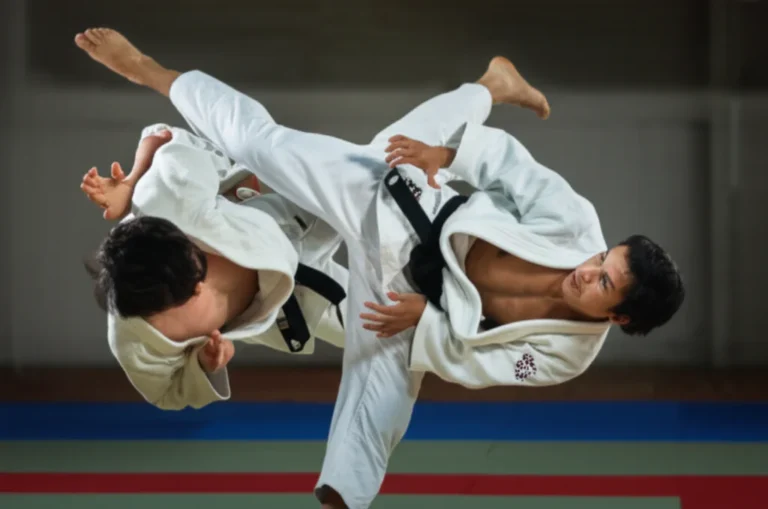
Judo is famous for its throws and takedowns, designed to quickly and safely neutralize threats. These techniques, when mastered, can be incredibly effective in real-world self-defense scenarios.
3. Joint Locks and Pins: Controlling Without Excessive Force
Judo also teaches joint locks and pins, which allow practitioners to control opponents without resorting to strikes, making it a more humane approach to self-defense.
4. Situational Awareness and Mental Toughness
Beyond physical techniques, judo training enhances situational awareness and mental toughness, critical components of effective self-defense. Practitioners learn to stay calm under pressure and make quick, rational decisions.
Judo vs. Other Martial Arts: Which is Best for Self-Defense?
When comparing judo to other martial arts like Karate, Taekwondo, or Brazilian Jiu-Jitsu, each has its strengths and weaknesses in the context of self-defense. Judo stands out for its focus on grappling, throws, and ground fighting, making it highly effective in close-range situations. However, the best martial art for self-defense is one that combines physical techniques with mental preparation and strategic thinking.
Physical and Psychological Benefits of Judo for Personal Safety
Physical Benefits
- Improved Strength and Flexibility: Judo training enhances muscular strength and flexibility.
- Better Coordination and Balance: Practitioners develop excellent balance and coordination.
Psychological Benefits
- Increased Confidence: Mastering judo techniques boosts self-confidence.
- Enhanced Mental Discipline: Judo training fosters mental toughness and discipline.
Practical Self-Defense Scenarios Where Judo Shines
Judo is particularly effective in scenarios where you’re grabbed, held, or thrown to the ground. Its emphasis on ground fighting and submission holds makes it an excellent choice for self-defense against larger or stronger opponents.
Essential Judo Gear and Training Equipment for Self-Defense
- Judo Gi: The traditional uniform for judo training, designed for comfort and durability.
- Mat: A good quality mat is essential for safe training, especially for throws and falls.
How to Find the Right Judo Classes for Self-Defense Training
When looking for judo classes, consider the following:
- Experience of the Instructor: A qualified instructor with a focus on self-defense is crucial.
- Safety Record: Ensure the dojo prioritizes safety and has a good record of preventing injuries.
Tips from Our Karate MMA™ Experts: Maximizing Judo for Personal Safety
Our experts at Karate MMA™ recommend combining judo with other martial arts disciplines for a well-rounded self-defense skill set. Visit our Karate Techniques section for more insights into how different martial arts can complement judo training.
Common Myths About Judo and Self-Defense Debunked
- Myth: Judo is only for young, athletic individuals.
- Reality: Judo can be adapted for all ages and fitness levels, focusing on technique over brute strength.
The Psychology of Judo: Confidence and Calm Under Pressure
Judo training has a profound impact on mental health, fostering confidence, discipline, and the ability to remain calm under pressure. These psychological benefits are just as important as the physical skills learned through judo.
Success Stories: Real-Life Examples of Judo in Self-Defense
There are numerous accounts of individuals successfully using judo techniques in real-life self-defense situations. These stories highlight the effectiveness of judo as a practical self-defense system.
Advanced Judo Techniques to Enhance Your Self-Defense Arsenal
For those looking to advance their judo skills, techniques such as Kansetsu-waza (joint locks) and Shime-waza (strangles) can significantly enhance your self-defense capabilities. However, these should only be learned under the guidance of an experienced instructor.
Recommended Links for Further Judo and Self-Defense Learning
To deepen your understanding of judo and self-defense, we recommend exploring the following resources:
- International Judo Federation
- USA Judo
- For a comprehensive approach to martial arts and self-defense, visit the Karate MMA™ website.
Frequently Asked Questions About Judo and Personal Safety
Q: Is Judo Effective for Self-Defense?
A: Yes, judo is highly effective for self-defense due to its focus on grappling, throws, and ground fighting.
Q: Can Anyone Learn Judo?
A: Yes, judo can be learned by anyone, regardless of age or initial fitness level, as it emphasizes technique over strength.
Q: How Long Does it Take to Become Proficient in Judo for Self-Defense?
A: Proficiency in judo for self-defense can be achieved with consistent training over several months to a few years, depending on the individual’s dedication and natural ability.
Reference Links and Credible Sources on Judo and Self-Defense
For further reading and credible sources on judo and self-defense, consider the following:
Remember, the key to mastering judo for self-defense is consistent practice, patience, and dedication. Combine physical training with mental preparation for a comprehensive approach to personal safety.
Conclusion: Why Judo is a Smart Choice for Self-Defense and Personal Safety

After diving deep into the world of judo and its impact on self-defense and personal safety, it’s clear why this martial art remains a top choice for practitioners worldwide. Judo’s unique blend of physical techniques, mental discipline, and practical application makes it a powerful tool for anyone serious about protecting themselves.
✅ Positives:
- Teaches effective throws, joint locks, and pins that neutralize threats without excessive force.
- Enhances balance, coordination, and body control, which are vital in real-world confrontations.
- Builds mental toughness, situational awareness, and confidence—key psychological assets in any self-defense scenario.
- Adaptable to all ages and fitness levels, making it accessible and inclusive.
- Emphasizes safety through training in falling techniques, reducing injury risk.
❌ Negatives:
- Less emphasis on striking techniques compared to arts like Karate or Muay Thai, so combining judo with striking arts can be beneficial.
- Some advanced techniques require careful instruction to avoid injury or misuse.
At Karate MMA™, we confidently recommend judo as a foundational martial art for self-defense. It equips you with practical skills and a mindset that can keep you safe in unpredictable situations. Plus, when paired with complementary disciplines like Karate or Brazilian Jiu-Jitsu, you get a well-rounded, formidable self-defense arsenal.
Remember that mastering judo is a journey—consistent training and mental preparation are your best allies. So, are you ready to step onto the mat and transform your personal safety? Your journey starts now!
Recommended Links for Further Judo and Self-Defense Learning
Ready to gear up or deepen your knowledge? Here are some top products and resources to help you on your judo and self-defense journey:
-
Judo Gi (Uniform):
-
Training Mats:
-
Books on Judo and Self-Defense:
- Kodokan Judo by Jigoro Kano — Amazon Link
- Judo for Self-Defense and Competition by Katsuhiko Kashiwazaki — Amazon Link
- The Essence of Judo by Kyuzo Mifune — Amazon Link
-
Martial Arts Training Programs:
- Explore comprehensive martial arts training including judo, karate, and MMA at Karate MMA™.
Frequently Asked Questions About Judo and Personal Safety
What are the key self-defense techniques learned in judo training?
Judo equips you with several core techniques essential for self-defense:
- Throws (Nage-waza): Techniques like O Goshi (hip throw) and Seoi Nage (shoulder throw) allow you to unbalance and safely bring down an attacker.
- Joint Locks (Kansetsu-waza): Control and submission moves targeting joints, mainly the elbow, to immobilize an opponent without striking.
- Pins (Osaekomi-waza): Holding techniques that restrain an attacker on the ground.
- Ukemi (Breakfall techniques): Learning how to fall safely reduces injury risk during confrontations or accidental falls.
These techniques focus on using leverage and the attacker’s force against them, making them effective regardless of size or strength differences.
How does judo improve situational awareness for personal safety?
Judo training goes beyond physical moves; it cultivates mental alertness and situational awareness by:
- Teaching you to read an opponent’s balance and intentions through body language.
- Encouraging quick decision-making under pressure during randori (sparring) sessions.
- Developing calmness and focus through repetitive practice and controlled environments, which translates to real-life scenarios where staying composed is critical.
This heightened awareness often helps practitioners avoid dangerous situations before they escalate.
Can judo training increase confidence in real-life self-defense scenarios?
Absolutely! Confidence is one of the most significant benefits of judo training. Our Karate MMA™ team has seen beginners transform into confident practitioners who:
- Trust their ability to handle physical confrontations.
- Feel empowered knowing they have practical skills to protect themselves.
- Exhibit improved posture and assertiveness, which often deters potential attackers.
Confidence built on solid technique and mental preparation is a game-changer in personal safety.
How does judo compare to karate for self-defense purposes?
Both judo and karate offer valuable self-defense skills but differ in approach:
- Judo focuses on grappling, throws, and ground control, making it highly effective in close-quarters and when an attacker grabs you.
- Karate emphasizes striking techniques—punches, kicks, and blocks—ideal for maintaining distance and delivering quick incapacitating blows.
At Karate MMA™, we recommend cross-training in both to cover a broader range of scenarios. Check out our Karate Techniques for more on striking arts.
What role does physical conditioning in judo play in personal safety?
Physical conditioning in judo is crucial because:
- It improves strength, endurance, and flexibility, enabling you to execute techniques effectively.
- Enhances balance and coordination, reducing the risk of being easily overpowered or thrown.
- Builds resilience and injury prevention through ukemi training, which teaches safe falling.
A well-conditioned body is more capable of handling the physical demands of self-defense.
How can beginners use judo skills effectively in a self-defense situation?
Beginners should focus on:
- Mastering basic throws and breakfalls to protect themselves and safely control an attacker.
- Practicing awareness and avoidance strategies learned during training.
- Using simple joint locks or pins to control an aggressor without escalating violence.
- Staying calm and remembering that self-defense is about escaping safely, not winning a fight.
Regular practice and scenario-based training build the muscle memory necessary for effective use under stress.
Are there specific judo moves that are best for defending against common attacks?
Yes! Some highly practical judo techniques include:
- O Goshi (Hip Throw): Effective when grabbed from the front or side.
- Kuzure Kesa Gatame (Modified Scarf Hold): A pinning technique useful for controlling an attacker on the ground.
- Juji Gatame (Cross Arm Lock): A joint lock that can incapacitate an opponent quickly.
- Tai Otoshi (Body Drop Throw): Great for redirecting an attacker’s momentum.
These moves are staples in judo self-defense training and can be adapted to various real-life situations.
Reference Links and Credible Sources on Judo and Self-Defense
- International Judo Federation (IJF) – Official governing body for judo worldwide.
- USA Judo – National governing body for judo in the United States.
- National Geographic: Judo Overview – Comprehensive article on judo’s history and techniques.
- Britannica: Judo – Authoritative encyclopedia entry on judo.
- Countryside YMCA Judo Program – Example of a community judo program emphasizing self-defense.
- Corporate Krav Maga: Using Verbal Judo – Insights on combining communication and physical judo skills for personal safety.
- Team Plus One Martial Arts West Hartford CT – Local martial arts school offering judo and self-defense classes.
For more on martial arts history and techniques, visit our Karate MMA™ Martial Arts History and Karate Techniques sections.