Support our educational content for free when you purchase through links on our site. Learn more
19 Disciplines of Martial Arts You Need to Know in 2025 🥋

Martial arts are more than just punches and kicks—they’re a gateway to discipline, culture, and self-mastery. Did you know there are dozens of distinct martial arts styles worldwide, each with its own philosophy, techniques, and history? From the explosive strikes of Muay Thai to the graceful flow of Tai Chi, the diversity is staggering—and that’s just scratching the surface!
In this ultimate guide, we’ll take you on a whirlwind tour through 19 essential martial arts disciplines, revealing what makes each unique and how to choose the perfect one for your goals. Curious about which art builds mental focus? Or which one’s the best for real-world self-defense? Stick around, because we’re unpacking all that and more, with insider tips from the experts at Karate MMA™.
Key Takeaways
- Martial arts encompass a vast range of disciplines, from striking and grappling to weapons and internal arts.
- Choosing the right martial art depends on your goals, body type, and personality—there’s no one-size-fits-all.
- Cross-training and exploring multiple styles can create a well-rounded fighter and practitioner.
- Safety, proper instruction, and mindset are crucial for a fulfilling martial arts journey.
- Martial arts offer benefits beyond fighting: mental resilience, fitness, community, and lifelong learning.
Ready to find your perfect martial arts match? Dive into our detailed breakdown of the 19 disciplines and start your journey today!
Table of Contents
- 🥋 Unpacking the Essence: What Exactly ARE Martial Arts?
- ⚡️ Quick Tips and Facts: Your Martial Arts Cheat Sheet!
- 📜 A Journey Through Time: The Rich History and Evolution of Martial Arts
- 🥊 The Grand Arena: Exploring Diverse Disciplines of Martial Arts
- Striking Sensations: Arts Focused on Kicks, Punches, and Strikes
- Grappling Gurus: Arts Focused on Throws, Submissions, and Groundwork
- Weapons Wizards: Arts Integrating Tools and Blades
- Holistic & Hybrid Heroes: Arts Blending Multiple Elements
- 🧘 Tai Chi: Moving Meditation and Internal Power
- 🤸 Capoeira: The Afro-Brazilian Art of Dance, Acrobatics, and Fight
- 🛡️ Hapkido: The Korean Art of Coordinated Power
- 🇮🇱 Krav Maga: Practical Self-Defense for the Real World
- 🧠 Jeet Kune Do: Bruce Lee’s Philosophy of Intercepting Fist
- 🇲🇾 Silat: The Fluid and Powerful Arts of Southeast Asia
- 🤔 Finding Your Fight Style: How to Choose the Perfect Martial Art for YOU
- 🌟 Beyond the Mat: The Transformative Benefits of Martial Arts Training
- 🚧 Training Smart: Safety, Injury Prevention, and Longevity in Martial Arts
- 🏆 The Competitive Edge: Martial Arts in Sport and Performance
- 👨👩👧👦 Martial Arts for All Ages: From Little Ninjas to Seasoned Sages
- 💡 Mastering the Mindset: The Philosophy and Ethics of a Martial Artist
- ✅ Conclusion: Your Journey Begins Now!
- 🔗 Recommended Links for Further Exploration
- ❓ Frequently Asked Questions (FAQ) About Martial Arts
- 📚 Reference Links & Sources
Here is the main body of the article, crafted by the experts at Karate MMA™.
🥋 Unpacking the Essence: What Exactly ARE Martial Arts?
So, you’ve typed “disciplines of martial arts” into your search bar. Maybe you’ve just watched an old Bruce Lee movie, or perhaps you’re looking for a new fitness obsession that doesn’t involve a treadmill. Whatever the reason, you’ve landed in the right dojo! Here at Karate MMA™, we live and breathe this stuff.
At its core, martial arts are codified systems of combat. But honestly, that’s like calling a supercar “a way to get from A to B.” It’s a massive understatement! These arts are a blend of tradition, physical prowess, mental discipline, and, in many cases, a deep philosophical journey. They are practiced for a whole host of reasons: self-defense, competition, physical and spiritual development, and preserving cultural heritage.
Think of it as a language spoken through movement. Some dialects are sharp and percussive, like the powerful kicks of Taekwondo. Others are fluid and conversational, like the flowing motions of Tai Chi. Each discipline tells a story, a history of a people and their need to protect, overcome, and perfect themselves. It’s about so much more than just fighting; as the great Bruce Lee viewed it, it’s an art form for expressing the human body.
⚡️ Quick Tips and Facts: Your Martial Arts Cheat Sheet!
Pressed for time? Here’s the lowdown on the world of martial arts.
- 🌍 Global Phenomenon: Hundreds of millions of people practice martial arts worldwide. There are an estimated 70 million Taekwondo practitioners and 50 million in Karate alone!
- 🤼 The Oldest Sport: Wrestling is considered the oldest combat sport, with depictions dating back to ancient Mesopotamia around 3000 BC.
- 🥋 Not Just for Kids: While many start young, it’s never too late to begin your martial arts journey. The benefits for adults—stress relief, fitness, and self-defense—are immense.
- 🤔 “Best” is Subjective: There is no single “best” martial art. The right one for you depends entirely on your personal goals, physical abilities, and what you find enjoyable.
- 📜 Rich History: Many martial arts have deep historical roots, evolving from ancient battlefield techniques to the refined systems we see today. The term “martial arts” itself is a translation of the Sino-Japanese word bu-gei (武芸), meaning “martial arts.”
- ✅ Safety First: While there’s a risk of injury in any physical activity, it’s minimized through proper training, qualified instructors, and using the right protective gear.
📜 A Journey Through Time: The Rich History and Evolution of Martial Arts

To truly understand the disciplines of martial arts, you have to appreciate where they came from. This isn’t just a collection of fighting styles; it’s a tapestry woven through human history. Check out our deep dives into Martial Arts History for more!
The story of formalized combat systems is as old as civilization itself. We see evidence of wrestling in ancient Egyptian art and boxing in Sumerian reliefs from the 3rd millennium BC. However, many of the Asian martial arts we recognize today trace their lineage back through a fascinating exchange of cultures.
Legend often points to an Indian monk named Bodhidharma, who is said to have traveled to the Shaolin Temple in China around the 5th century AD. He introduced a series of exercises to the monks to improve their physical and mental fortitude, which many believe laid the groundwork for what would become Shaolin Kung Fu. From these roots, a thousand flowers bloomed.
- In China: Martial arts flourished, especially during the Warring States period, leading to a vast array of styles collectively known as Wushu or Kung Fu.
- In Japan: These influences, combined with native combat systems used by the Samurai, evolved into arts like Jujutsu. In the late 19th and early 20th centuries, masters like Jigoro Kano systematized these older arts, creating modern forms like Judo with a focus on personal development, or “budo” (the martial way).
- In Korea: Styles like Taekkyeon, with its emphasis on high kicks, laid the foundation for modern Taekwondo in the 1950s.
- Across the Globe: Meanwhile, Europe had its own rich traditions of swordsmanship and folk wrestling. Many of these have been reconstructed today as Historical European Martial Arts (HEMA).
The 20th century, particularly after World War II, saw an explosion of interest in the West. Soldiers returning from Asia brought back knowledge of Judo and Karate. Then, the “chopsocky” cinema wave of the 60s and 70s, spearheaded by the legendary Bruce Lee, turned martial arts into a global cultural phenomenon. This set the stage for the modern era of hybrid arts and the sport of Mixed Martial Arts (MMA).
🥊 The Grand Arena: Exploring Diverse Disciplines of Martial Arts
Alright, let’s get to the main event! What are the different flavors of martial arts, and what makes each one unique? We’ve broken them down into broad categories, but remember, there’s a ton of overlap. Many arts are a beautiful mix of striking, grappling, and more.
Striking Sensations: Arts Focused on Kicks, Punches, and Strikes
These are the arts that often come to mind first—dynamic, powerful, and visually spectacular. They teach you to use your limbs as weapons with precision and force.
1. 💥 Karate: The Way of the Empty Hand
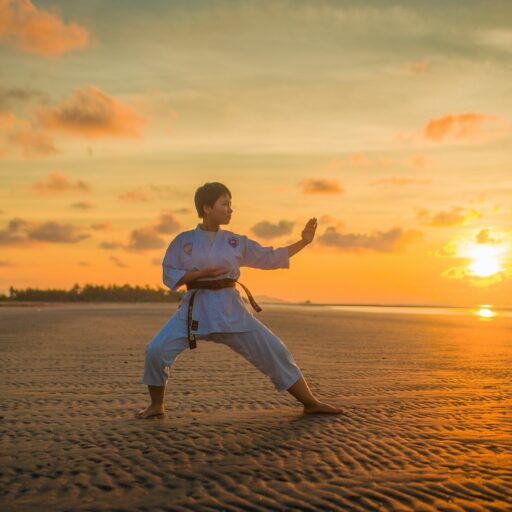
As our name suggests, we have a soft spot for Karate. Originating in Okinawa, Japan, Karate (meaning “empty hand”) is a striking art that utilizes punches, kicks, knee strikes, and open-hand techniques. It’s built on a foundation of strong stances, powerful blocks, and crisp, linear movements.
- What to Expect: Training is structured around the “three K’s”: Kihon (basics), Kata (forms), and Kumite (sparring). You’ll spend a lot of time perfecting your posture, balance, and power generation. The philosophy emphasizes self-improvement, discipline, and respect.
- Who is it for? ✅ Anyone looking for a structured path to self-defense, discipline, and physical fitness. It’s fantastic for building focus and confidence.
- Our Take: One of our senseis, a 5th Dan black belt, always says, “Karate isn’t about learning to fight; it’s about learning not to fight.” The confidence it builds often means you can walk away from a confrontation. Explore our Karate Techniques section to learn more.
2. 🌪️ Taekwondo: Kicking High and Fast
If you love the idea of spectacular, high-flying kicks, Taekwondo might be your calling. This Korean martial art is famous for its emphasis on dynamic kicking techniques, including head-height kicks, jumping kicks, and spinning kicks. It became an official Olympic sport in 2000.
- What to Expect: A typical class involves forms (pumsae), board-breaking, and sparring. The sparring is often fast-paced and point-based, rewarding agility and speed.
- Who is it for? ✅ People who are flexible (or want to be!) and enjoy a fast-paced, athletic, and sport-oriented martial art.
- Drawback? ❌ Some critics argue that the sport-focused rules can sometimes detract from its real-world self-defense application.
3. 🦵 Muay Thai: The Art of Eight Limbs
Welcome to the devastating art of Muay Thai! Hailing from Thailand, this discipline is known as the “Art of Eight Limbs” because it uses punches, kicks, elbows, and knee strikes. It’s a brutal and incredibly effective striking art, honed for warfare.
- What to Expect: Get ready to sweat! Training is famously intense, involving heavy bag work, pad drills with a partner, and a lot of conditioning to toughen the body, especially the shins. The clinch (a form of stand-up grappling) is also a key component.
- Who is it for? ✅ Those seeking a high-intensity workout and one of the most effective stand-up fighting systems in the world. It’s a cornerstone of modern MMA.
- Our Take: We once had a Muay Thai champion visit our dojo for a seminar. The power he generated from his hips in a simple roundhouse kick was a thing of beauty and terror. It’s a true testament to conditioning.
4. 👊 Kickboxing: Fusion of Power and Precision
Kickboxing is a broad term for a hybrid martial art that combines the punches of Western boxing with the kicks of arts like Karate and Muay Thai. It’s a modern combat sport that has various rule sets, from Japanese Kickboxing (which allows knees) to American Kickboxing (which is typically above the waist only).
- What to Expect: A fantastic cardiovascular workout. You’ll learn footwork, head movement, and how to throw powerful combinations of punches and kicks. Training often involves shadowboxing, bag work, and sparring.
- Who is it for? ✅ Anyone looking for a practical, fitness-oriented striking art without the more traditional or ritualistic elements of older systems.
5. 🐉 Kung Fu: The Mastery of Skill and Effort
Kung Fu (or Gung Fu) is an umbrella term for the hundreds of distinct Chinese martial arts that have developed over the centuries. Styles can vary dramatically, from the acrobatic, sweeping movements of Northern styles to the more grounded, close-range systems of the South. Many styles are inspired by the movements of animals, like the Tiger, Crane, or Monkey.
- What to Expect: This depends entirely on the style! But generally, it involves a deep focus on forms (taolu), conditioning, and application of techniques. It “requires discipline, patience, and years of dedicated practice to develop proficiency.”
- Who is it for? ✅ Those who appreciate history, complexity, and a deep, lifelong path of study. There’s a style of Kung Fu for almost every body type and personality.
6. 🕊️ Wing Chun: Efficiency in Close Quarters
A famous Southern Chinese style of Kung Fu, Wing Chun was legendary martial artist Ip Man’s art and the first one Bruce Lee learned. It’s known for its efficiency, simultaneous blocking and striking, and focus on the centerline theory.
- What to Expect: Training focuses on close-range combat. You’ll learn to use rapid-fire punches and low kicks. A key training tool is the Muk Yan Jong, or wooden dummy, used to practice techniques. A unique partner drill called Chi Sao (sticking hands) develops incredible sensitivity and reflexes.
- Who is it for? ✅ People who want a highly practical, scientific approach to close-range self-defense that doesn’t rely on size or strength.
Grappling Gurus: Arts Focused on Throws, Submissions, and Groundwork
What happens when the fight gets up close and personal? Grappling arts teach you to control an opponent through throws, joint locks, chokes, and dominant positioning, often without throwing a single punch.
7. 🥋 Judo: The Gentle Way of Throws
Founded by Jigoro Kano in the late 19th century, Judo translates to “the gentle way.” The core principle is “maximum efficiency, minimum effort.” Instead of meeting force with force, a Judoka (Judo practitioner) uses an opponent’s momentum against them to execute powerful throws and takedowns. Once on the ground, the fight continues with pins and submission holds.
- What to Expect: You will learn how to fall safely (ukemi)—a skill for life! Training is very hands-on, involving repetitive practice of throws (nage-waza) and live sparring (randori).
- Who is it for? ✅ Excellent for all ages. It’s an Olympic sport that builds incredible balance, strength, and confidence, and it’s “less reliant on the coordination of striking and kicks.”
8. 🤼 Brazilian Jiu-Jitsu (BJJ): The Art of the Human Chess Match
BJJ is a descendant of Judo, brought to Brazil by Mitsuyo Maeda and famously refined by the Gracie family. Its primary focus is on ground fighting and submission holds. The core idea is that a smaller, weaker person can successfully defend against a bigger, stronger assailant by using leverage and proper technique, most notably by taking the fight to the ground.
- What to Expect: A lot of time spent on the mat! You’ll learn joint locks (like armbars) and chokeholds. Live rolling (sparring) is a central part of every class, making it a fantastic workout and a constant puzzle to solve. As one source notes, “It can be trained safely with full contact sparring virtually every session.”
- Who is it for? ✅ Anyone who loves problem-solving and wants an incredibly effective ground-based self-defense system. It’s considered one of the hardest martial arts to learn due to its technical depth.
- Our Take: Many of us at Karate MMA™ cross-train in BJJ. It completely changes your perspective on a fight. We’ve seen a 130-pound practitioner completely control a 200-pound opponent on the ground. It’s humbling and eye-opening.
9. 🪢 Traditional Jiu-Jitsu: Roots of Self-Defense
Also known as Japanese Jujutsu, this is the parent art from which Judo and BJJ evolved. Developed by the samurai of feudal Japan for close-quarters combat on the battlefield, it’s a comprehensive system.
- What to Expect: A broader curriculum than its modern offshoots. It “utilizes throws, joint locks, pins and immobilizations, as well as strangleholds,” and often includes some striking techniques as well.
- Who is it for? ✅ History buffs and those who want a more traditional, all-encompassing self-defense system that covers standing and ground situations.
10. 🤝 Aikido: Harmonizing Energy and Movement
Aikido is a truly unique Japanese martial art developed by Morihei Ueshiba. Its philosophy is one of peace and harmony. The goal is not to destroy an attacker but to neutralize their aggression by blending with their motion and redirecting their energy, using joint locks and throws to control them without causing serious injury.
- What to Expect: Fluid, circular movements. You’ll spend a lot of time as both the attacker (uke) and the defender (nage), learning to move and fall gracefully. There is typically no competitive sparring.
- Who is it for? ✅ Individuals more interested in the philosophical and self-development aspects of martial arts than in pure combat sport.
11. 🇷🇺 Sambo: Russia’s Combat Sport and Self-Defense System
Developed in the Soviet Union in the early 20th century, Sambo is a hybrid system that translates to “self-defense without weapons.” It merges the most effective techniques from Judo, wrestling, and various folk styles. There are two main branches: Sport Sambo (similar to Judo but with more leg locks) and Combat Sambo (which includes punches, kicks, and knees).
- What to Expect: An aggressive, wrestling-heavy style with a huge arsenal of takedowns and leg submissions. Combat Sambo is a complete fighting system.
- Who is it for? ✅ Wrestlers, Judoka, or anyone looking for a rugged, no-nonsense grappling art with a strong competitive scene. Many top MMA fighters, like Khabib Nurmagomedov, have a Sambo background. You can learn more about fighters like him in our Fighter Profiles.
Weapons Wizards: Arts Integrating Tools and Blades
While many arts have weapon components, these disciplines place them at the forefront of their training.
12. ⚔️ Kendo: The Way of the Sword
Kendo, “the way of the sword,” is a modern Japanese martial art descended from traditional swordsmanship (kenjutsu). Practitioners wear protective armor (bogu) and use bamboo swords (shinai) to strike specific targets on their opponent’s body.
- What to Expect: A focus on discipline, spirit, and precision. A key element is the kiai, a powerful shout that accompanies a strike, demonstrating fighting spirit.
- Who is it for? ✅ Those drawn to the history and discipline of the samurai, who enjoy a highly structured and respectful competitive environment.
13. 🇵🇭 Eskrima/Arnis: Filipino Stick and Blade Fighting
The Filipino Martial Arts (FMA) are renowned for their highly sophisticated weapon-based systems. Using rattan sticks, knives, and swords, practitioners learn intricate patterns of angles, footwork, and fluid strikes.
- What to Expect: You’ll likely start with a single stick, then progress to double stick, stick and dagger, and empty-hand techniques. The principles learned with the weapon translate directly to unarmed combat.
- Who is it for? ✅ Anyone who wants to develop incredible coordination, timing, and reflexes. It’s a highly practical and adaptable system.
Holistic & Hybrid Heroes: Arts Blending Multiple Elements
These disciplines defy easy categorization, blending striking, grappling, philosophy, and even dance into unique and effective systems.
14. 🧘 Tai Chi: Moving Meditation and Internal Power
Often practiced for its health benefits, Tai Chi is a Chinese “internal” martial art. Its slow, graceful movements are a form of moving meditation, promoting balance, flexibility, and inner peace. But don’t be fooled—hidden within these gentle forms are effective martial applications.
- What to Expect: Practicing slow, fluid sequences of movements called “forms.” The focus is on mindfulness, deep breathing, and cultivating internal energy (qi). It is “accessible to individuals of varying fitness levels and ages.”
- Who is it for? ✅ People of all ages, especially those looking for a low-impact way to improve health, reduce stress, and enhance balance.
15. 🤸 Capoeira: The Afro-Brazilian Art of Dance, Acrobatics, and Fight
Capoeira is a breathtaking blend of martial arts, dance, and music. It was developed by enslaved Africans in Brazil as a way to disguise their combat training. The result is a beautiful and deceptive art form.
- What to Expect: A game, or jogo, played inside a circle of people called a roda. Two practitioners exchange fluid, acrobatic movements, kicks, and sweeps, all set to the rhythm of traditional instruments like the berimbau.
- Who is it for? ✅ Creative, athletic individuals who love music, movement, and a strong sense of community.
16. 🛡️ Hapkido: The Korean Art of Coordinated Power
Hapkido is a comprehensive Korean martial art that uses joint locks, throws, and strikes to control an opponent. It emphasizes circular motion and using an attacker’s energy against them, similar to Aikido, but it also incorporates a wider range of powerful kicks and hand strikes.
- What to Expect: A diverse curriculum that includes throws, pressure points, kicks, strikes, and weapon disarms.
- Who is it for? ✅ Someone looking for a well-rounded self-defense system that covers a variety of situations.
17. 🇮🇱 Krav Maga: Practical Self-Defense for the Real World
Developed for the Israeli Defense Forces, Krav Maga is not a sport or a traditional art; it’s a pure self-defense system. The philosophy is simple: neutralize threats as quickly and efficiently as possible.
- What to Expect: Training focuses on real-world scenarios, often under stress. Techniques include simultaneous attack and defense, targeting vulnerable areas (like the eyes and groin), and defending against common weapons.
- Who is it for? ✅ Anyone whose primary goal is to learn practical, no-nonsense self-defense for modern-day threats.
18. 🧠 Jeet Kune Do: Bruce Lee’s Philosophy of Intercepting Fist
More of a philosophy than a style, Jeet Kune Do (JKD) was developed by the one and only Bruce Lee. His core concept was to “absorb what is useful, discard what is useless, and add what is specifically your own.” JKD incorporates elements from Wing Chun, boxing, fencing, and more, emphasizing simplicity, directness, and efficiency.
- What to Expect: Training that encourages adaptability and finding what works for you. Key principles include “the way of the intercepting fist,” which means stopping an attack before it fully launches.
- Who is it for? ✅ Free-thinkers and martial artists who want to understand the principles behind combat rather than just memorizing techniques.
19. 🇲🇾 Silat: The Fluid and Powerful Arts of Southeast Asia
Silat is another umbrella term, this time for the indigenous martial arts of Southeast Asia (Malaysia, Indonesia, etc.). These arts are known for their fluid, dance-like movements that can explode into devastatingly effective strikes, takedowns, and weapon techniques.
- What to Expect: A huge variety depending on the specific system. Many styles emphasize low stances, off-balancing, and the use of traditional weapons like the keris (a distinctive dagger).
- Who is it for? ✅ Those who appreciate fluid, deceptive movement and want to explore a rich and diverse cultural art form.
🤔 Finding Your Fight Style: How to Choose the Perfect Martial Art for YOU
Feeling overwhelmed? Don’t be! Finding the right martial art is a personal journey. The “best” art is the one that you’ll stick with. As one source wisely puts it, “It’s important to choose a martial art that resonates with personal goals, capabilities, and values.” Here’s how we at Karate MMA™ recommend you break it down.
🎯 Defining Your Goals: Why Do You Want to Train?
Be honest with yourself. What’s your primary motivation?
- For Self-Defense: You might lean towards systems like Krav Maga, Wing Chun, or Brazilian Jiu-Jitsu, which are renowned for their practical applications.
- For Fitness: Muay Thai and Kickboxing offer some of the most intense workouts you’ll ever experience. You’ll be in the best shape of your life.
- For Competition: If you dream of testing your skills, look into arts with strong sport scenes like Judo, BJJ, Taekwondo, or Sambo.
- For Discipline & Mental Focus: Highly structured, traditional arts like Karate, Kendo, or Kung Fu are excellent for building mental fortitude.
- For Health & Well-being: If you’re looking for a low-impact practice to improve balance and reduce stress, Tai Chi or Aikido could be a perfect fit.
💪 Assessing Your Strengths & Limitations: What Fits Your Body and Mind?
Consider your current physical condition and personality.
- Are you naturally flexible and athletic? Taekwondo or Capoeira might feel natural.
- Do you prefer a more analytical, problem-solving approach? The “human chess” of BJJ might be for you.
- Are you looking for something that doesn’t rely on brute strength? Judo, Aikido, and Wing Chun all emphasize leverage and technique over power.
- Do you have previous injuries? A low-impact art like Tai Chi might be a safer starting point than a high-impact art like Muay Thai.
🏫 The Dojo Dilemma: Finding the Right School and Instructor
This is the most critical step. A great instructor in a “lesser” art is infinitely better than a poor instructor in a “perfect” art.
- Do Your Research: Look up schools in your area. Read reviews. Check out their websites and social media to get a feel for their culture.
- Attend a Trial Class: Almost every reputable school offers a free trial class. This is non-negotiable. Pay attention to the atmosphere. Is it welcoming? Are the senior students helpful? Is the instructor patient and clear?
- Watch Out for Red Flags: Be wary of schools that pressure you into long-term contracts immediately, promise you a black belt in a year, or discourage questions. These are often signs of a “McDojo” or “belt factory.”
🗓️ Trial and Error: Don’t Be Afraid to Explore!
Don’t feel like you have to commit to the first art you try. Maybe you start with Karate and realize you’re more drawn to the grappling of Judo. That’s perfectly fine! The journey is about discovery. Many of the best martial artists are well-versed in multiple disciplines.
🌟 Beyond the Mat: The Transformative Benefits of Martial Arts Training
Why do we dedicate our lives to this? Because the lessons learned in the dojo extend far beyond its walls. Training in martial arts can fundamentally change your life for the better.
🧠 Mental Fortitude & Discipline
Martial arts training forges a strong mind. You learn perseverance by pushing through a tough conditioning drill, focus by memorizing a complex kata, and humility by tapping out in BJJ. As noted in the insightful video, The African Way of Martial Arts, these practices cultivate discipline, focus, and self-control, making you a “peacemaker… slow to anger… and discerning.” This mental resilience is a superpower in today’s chaotic world.
🏋️ Physical Fitness & Health
Forget boring gym routines. Martial arts provide a holistic workout that improves:
- Cardiovascular Endurance: From sparring rounds to fast-paced drills.
- Strength: Especially functional, core strength.
- Flexibility: Essential for high kicks and fluid grappling.
- Balance & Coordination: You’ll develop a new awareness of your body in space.
🛡️ Practical Self-Defense Skills
This is an obvious one, but it’s worth stating clearly. Knowing you have the ability to protect yourself and your loved ones brings a profound sense of confidence and peace of mind. It’s not about looking for trouble; it’s about having the tools to end it if it finds you.
🤝 Community & Camaraderie
When you join a good martial arts school, you’re not just joining a gym; you’re joining a community. You’ll train with people from all walks of life, united by a common goal. Your training partners will push you, support you, and become some of your closest friends.
🚧 Training Smart: Safety, Injury Prevention, and Longevity in Martial Arts
Let’s be real: martial arts involve physical contact, and with that comes a risk of injury. But don’t let that scare you off! The goal is to train for a lifetime, not just for a few years. Here’s how to stay safe on the mats.
- Listen to Your Body: This is rule number one. If something hurts, stop. There’s a difference between the discomfort of a hard workout and the sharp pain of an injury.
- Leave Your Ego at the Door: This is especially true in grappling arts. Tap early and tap often. There’s no shame in it. The only goal is to learn and come back to train tomorrow.
- Invest in Quality Gear: Using the right protective equipment is crucial. Don’t skimp on safety.
- Gloves: For striking arts, you’ll need good boxing or MMA gloves. Brands like Hayabusa and Venum are top-tier.
- Mouthguard: Absolutely essential for any kind of sparring. A custom-fit one from your dentist is best, but boil-and-bite options from brands like Shock Doctor are a must-have.
- Headgear & Shin Guards: For full-contact sparring, these are non-negotiable.
- Gi/Uniform: For arts like Judo, BJJ, and Karate, a proper uniform is required. Brands like Fuji and Tatami Fightwear are excellent for grappling gis.
👉 Shop for Essential Protective Gear on:
-
Sparring Gloves: Amazon | Venum Official Website
-
BJJ Gis: Amazon | Fuji Sports Official Website
-
Warm-Up and Cool-Down: Never skip them! A proper warm-up prepares your body for the stress of training, and a cool-down helps with recovery and flexibility.
🏆 The Competitive Edge: Martial Arts in Sport and Performance
For many, competition is the ultimate test of skill. It sharpens your techniques, tests your composure under pressure, and provides a clear goal for your training. Martial arts have crossed over into the sporting world in a big way, from the Olympics to the global stage of MMA.
There are many forms of competition:
- Point Sparring: Common in Karate and Taekwondo, where the goal is to score clean “touches” on an opponent.
- Full-Contact: Seen in Muay Thai, Kickboxing, and Combat Sambo, where the goal is to win by knockout or decision.
- Grappling Tournaments: Judo and BJJ competitions where you win by throws, pins, or submissions.
- Forms (Kata/Pumsae): Competitions where individuals or teams are judged on their performance of choreographed patterns.
The rise of Mixed Martial Arts (MMA), popularized by organizations like the UFC, has been a game-changer. It answered the age-old question of “which style is best?” by proving that a blend of disciplines is most effective. A modern MMA fighter needs to be proficient in striking (like Muay Thai), wrestling, and submissions (like BJJ). For in-depth analysis of these contests, check out our Fight Analysis and Breakdowns.
👨👩👧👦 Martial Arts for All Ages: From Little Ninjas to Seasoned Sages
Is there a right age to start martial arts? The answer is a resounding NO!
- For Children (Ages 4-6+): Martial arts are incredible for kids. Classes for young children focus on foundational movements, discipline, and respect in a fun, game-like environment. It teaches them coordination, focus, and self-control.
- For Teens: It’s a fantastic outlet for energy, a great way to build confidence during a challenging time of life, and provides a positive peer group.
- For Adults: It’s never too late to start! Many people begin their journey in their 30s, 40s, 50s, and beyond. Training is adaptable to your fitness level, and the benefits of stress relief, fitness, and learning a new skill are invaluable.
💡 Mastering the Mindset: The Philosophy and Ethics of a Martial Artist
This might be the most important section of all. True martial arts mastery isn’t about collecting belts or trophies; it’s about embodying a certain mindset. It’s about the “do” in Judo or Karate-do—the “way” or path of self-improvement.
As Professor PLO Lumumba eloquently states in the video The African Way of Martial Arts, martial arts are “the avenue through which we discover ourselves through introspection.” The goal is to achieve harmony between mind and body. This is why many traditional arts emphasize meditation and philosophy just as much as physical technique.
A true martial artist embodies principles like:
- Respect: For your instructors, your training partners, and yourself.
- Humility: Recognizing that there is always more to learn.
- Self-Control: Knowing when to use your skills and, more importantly, when not to. The ultimate goal is to be a peacemaker.
- Perseverance: Pushing through challenges, both on and off the mat.
As Bruce Lee’s philosophy suggests, it’s about consistent practice. “Fear a man who practices one kick 10,000 times, than a person who practices 10,000 kicks one time.” This dedication to perfecting one’s craft is the heart of the martial artist’s journey. It’s a path that never truly ends.
✅ Conclusion: Your Journey Begins Now!

Wow, what a whirlwind tour through the fascinating world of martial arts disciplines! From the explosive strikes of Karate and Muay Thai to the graceful flow of Tai Chi and the strategic grappling of Brazilian Jiu-Jitsu, each martial art offers a unique path to physical mastery, mental resilience, and personal growth.
Remember the question we teased earlier: Which martial art is the best for you? The answer is — it depends! Your goals, body, personality, and lifestyle will guide you to the perfect fit. Whether you want to build confidence, get in shape, compete, or simply find a mindful practice, there’s a martial art waiting for you.
At Karate MMA™, we encourage you to explore, try different styles, and embrace the journey. The beauty of martial arts is that it’s not just about fighting — it’s about becoming the best version of yourself. So, lace up your gloves, tie your belt, and step onto the mat. Your adventure starts now!
🔗 Recommended Links for Further Exploration
Ready to gear up or dive deeper? Here are some trusted products and books to get you started:
Essential Gear for Martial Arts Training
- Hayabusa T3 Boxing Gloves: Amazon | Hayabusa Official Website
- Venum Challenger Mouthguard: Amazon | Venum Official Website
- Fuji BJJ Gi: Amazon | Fuji Sports Official Website
- Tatami Fightwear BJJ Gi: Amazon | Tatami Fightwear Official Website
Recommended Books for Martial Arts Enthusiasts
- The Book of Five Rings by Miyamoto Musashi — A classic on strategy and martial philosophy. Amazon
- Tao of Jeet Kune Do by Bruce Lee — The philosophical foundation of JKD. Amazon
- Brazilian Jiu-Jitsu: Theory and Technique by Renzo Gracie and Royler Gracie — A comprehensive guide to BJJ. Amazon
- Muay Thai Basics by Christoph Delp — Perfect for beginners wanting to learn Muay Thai fundamentals. Amazon
❓ Frequently Asked Questions (FAQ) About Martial Arts

What are the main disciplines of martial arts?
Martial arts can be broadly categorized into striking arts (like Karate, Muay Thai, Taekwondo), grappling arts (such as Judo, Brazilian Jiu-Jitsu, Aikido), weapons-based arts (Kendo, Eskrima), and hybrid or holistic systems (Jeet Kune Do, Krav Maga, Capoeira). Each discipline emphasizes different techniques and philosophies, but all share the goal of developing effective combat skills alongside mental and physical growth.
Read more about “75 Must-Know Martial Arts Styles to Master in 2025 🥋”
How do karate and other martial arts differ in their training methods?
Karate training typically focuses on kihon (basic techniques), kata (pre-arranged forms), and kumite (sparring), emphasizing linear strikes, blocks, and powerful stances. Other arts, like Brazilian Jiu-Jitsu, prioritize live sparring and positional drills on the ground, while Taekwondo emphasizes dynamic kicking and Olympic-style sparring. Training methods vary based on the art’s goals—traditional arts often include ritual and formality, whereas modern systems may focus on practical application and conditioning.
Which martial arts discipline is best for self-defense?
For practical self-defense, disciplines like Krav Maga, Brazilian Jiu-Jitsu, Muay Thai, and Wing Chun are highly effective. Krav Maga is designed specifically for real-world scenarios, focusing on quick neutralization of threats. BJJ excels in ground defense, while Muay Thai offers powerful striking techniques. Wing Chun’s close-range efficiency makes it ideal for confined spaces. Ultimately, cross-training in striking and grappling provides the most comprehensive self-defense skill set.
Read more about “10 Must-Know Self Defense Classes to Boost Your Confidence 🥋 (2025)”
What are the benefits of practicing multiple martial arts disciplines?
Practicing multiple disciplines, often called cross-training, broadens your skill set, making you a more versatile martial artist. For example, combining Karate’s striking with Brazilian Jiu-Jitsu’s grappling covers both stand-up and ground fighting. It also enhances adaptability, fitness, and understanding of combat principles. Many MMA fighters adopt this approach to prepare for any situation.
How does discipline in martial arts improve mental focus?
Martial arts training requires consistent practice, attention to detail, and respect for hierarchy and tradition. This cultivates self-discipline, which sharpens mental focus and emotional control. Learning complex techniques and forms challenges the brain’s memory and coordination, improving concentration. The meditative aspects of arts like Tai Chi further enhance mindfulness and stress management.
Read more about “Master Karate Training: 10 Proven Techniques & Gear for 2025 🥋”
What are the key techniques taught in karate compared to other martial arts?
Karate emphasizes linear punches (tsuki), powerful kicks (geri), blocks (uke), and open-hand strikes. It also includes kata—formalized sequences that teach technique, rhythm, and breathing. Compared to Muay Thai’s clinch and elbow strikes or BJJ’s submissions and ground control, Karate focuses more on stand-up striking with an emphasis on precision and power.
Read more about “Who Is the Father of Martial Arts? 🥋 6 Legends Who Shaped the Fight (2025)”
How do traditional and modern martial arts disciplines vary?
Traditional martial arts often include a strong philosophical or spiritual component, formalized etiquette, and a focus on kata or forms. They preserve cultural heritage and emphasize personal development alongside combat skills. Modern martial arts, such as MMA or Krav Maga, prioritize practical effectiveness, often blending techniques from multiple arts and focusing on real-world application and sport competition.
Additional FAQs
What is the typical progression system in martial arts?
Most martial arts use a belt ranking system to signify progression, starting from white belt (beginner) to black belt (expert), with various colored belts in between. Testing usually involves demonstrating techniques, forms, and sparring ability.
Can martial arts training help with stress relief?
Absolutely! The physical activity combined with mental focus and breathing exercises helps reduce stress hormones and promotes a sense of calm and well-being.
How important is cross-training in martial arts?
Cross-training is increasingly important, especially for competitive fighters. It helps cover weaknesses and prepares practitioners for diverse situations.
📚 Reference Links & Sources
- Martial Arts – Wikipedia
- Gymdesk: Different Types of Martial Arts
- World History Encyclopedia: Wrestling
- Shaolin Temple – Britannica
- UFC Official Website
- Hayabusa Fight Gear
- Venum Official Website
- Fuji Sports
- Tatami Fightwear
- Karate MMA™ – Karate Techniques
- Karate MMA™ – Fighter Profiles
- Karate MMA™ – Fight Analysis and Breakdowns
- Karate MMA™ – Martial Arts History
- Karate MMA™ – Karate and MMA News
We hope this comprehensive guide lights your path on the martial arts journey. Remember, every master was once a beginner — so step onto the mat and start your story today! 🥋🔥


