Support our educational content for free when you purchase through links on our site. Learn more
Who Is the Founder of Judo? 🥋 The Untold Story (2026)

Ever wondered how a frail young scholar transformed an ancient, brutal martial art into the global sport we know today as Judo? The answer lies in the fascinating life of Jigoro Kano, a man whose vision went far beyond just fighting techniques. From founding the legendary Kodokan Institute to pioneering principles that shaped modern martial arts philosophy, Kano’s story is packed with surprising twists, innovations, and a legacy that still influences millions worldwide.
But did you know Kano also invented the colored belt ranking system and was the first Asian member of the International Olympic Committee? Or that his approach to Judo was as much about education and mutual respect as it was about throws and grappling? Stick around, because later in this article, we’ll break down Kano’s key philosophies, his pivotal life moments, and even the essential Judo techniques every beginner should know. Plus, we’ll explore how Judo’s influence stretches from samurai battlefields to Hollywood blockbusters and the UFC cage.
Ready to uncover the full story behind the founder of Judo and why his “Gentle Way” still packs a powerful punch? Let’s dive in!
Key Takeaways
- Jigoro Kano, born in 1860, is the undisputed founder of Judo, blending traditional Jujutsu with modern philosophy and pedagogy.
- Kano established the Kodokan Judo Institute in 1882, which remains the global headquarters for Judo training.
- He introduced the revolutionary Dan/Kyu ranking system, including the iconic black belt, to motivate and structure learning.
- Kano’s core philosophies—Seiryoku Zen’yo (maximum efficiency) and Jita Kyoei (mutual welfare)—define Judo’s unique approach to combat and life.
- Judo became the first Asian martial art included in the Olympics, thanks largely to Kano’s efforts as an International Olympic Committee member.
- The article also covers Kano’s professional life, his published works, and Judo’s cultural impact from Japan to the world stage.
Curious about the 7 essential Judo techniques Kano would want every beginner to master? Or how his legacy lives on in MMA legends like Ronda Rousey? Keep reading to find out!
Table of Contents
- ⚡️ Quick Tips and Facts
- 🥋 The Scrawny Scholar: Who is the Founder of Judo?
- 🏮 The Samurai’s Shadow: The History of Japanese Jujutsu
- ⏳ 12 Pivotal Moments in Jigoro Kano’s Life
- 🏯 The Birth of the Kodokan: Where Judo Began
- 🧠 The Philosophy of the Gentle Way: Seiryoku Zen’yo and Jita Kyoei
- 🎓 More Than a Black Belt: Kano’s Professional Life in Education
- 🏅 The Olympic Dream: How Judo Became a Global Phenomenon
- 🤼 7 Essential Judo Techniques Every Beginner Should Know
- 🧥 The Master’s Wardrobe: Evolution of the Judo Gi and Belt System
- 🕊️ The Eternal Shihan: Death and the Legacy of a Legend
- 📚 The Master’s Pen: Published Works by Jigoro Kano
- 🎬 Judo in Popular Culture: From Kurosawa to Modern MMA
- 🏁 Conclusion
- 🔗 Recommended Links
- ❓ FAQ
- 📖 Reference Links
⚡️ Quick Tips and Facts
Before we dive into the deep end of the dojo, here’s a “cheat sheet” on the man, the myth, and the legend. If you’re looking for the short answer to who is the founder of judo, look no further!
| Feature | Details |
|---|---|
| Founder Name | Jigoro Kano (Kano Jigorō) |
| Title | Shihan (Master/Teacher) |
| Date of Birth | October 28, 1860 |
| Place of Birth | Mikage, Japan (near Kobe) |
| The “Aha!” Moment | Founded the Kodokan Judo Institute in 1882 |
| Core Philosophy | Seiryoku Zen’yo (Maximum Efficiency) & Jita Kyoei (Mutual Welfare) |
| Key Innovation | Created the colored belt ranking system (Dan/Kyu) |
| Olympic Impact | First Asian member of the International Olympic Committee (IOC) |
| Favorite Gear | High-quality double-weave Gis (Modern equivalent: Mizuno Yusho) |
Quick Tips for Aspiring Judoka:
- ✅ Respect the Bow: In Judo, everything starts and ends with a bow (Rei). It’s about respect, not just tradition.
- ✅ Learn to Fall: Your first month will be spent learning Ukemi (breakfalls). Master this, and you’ll be invincible (or at least less bruised).
- ❌ Don’t Muscle It: If you’re using 100% strength, you’re doing it wrong. Judo is about using your opponent’s momentum against them.
🥋 The Scrawny Scholar: Who is the Founder of Judo?
Ever felt like the underdog? We’ve all been there. At Karate MMA™, we love a good “zero to hero” story, and Jigoro Kano is the ultimate example. Born in 1860, Kano wasn’t exactly a physical specimen. In fact, he was a small, frail kid who was tired of being bullied by larger classmates.
But instead of just taking it, he went looking for a way to defend himself. He didn’t just want to fight; he wanted a system that worked for the little guy. That search led him to the ancient art of Jujutsu, but he soon realized the old ways were a bit too… well, “break-your-bones-y” for modern society.
Kano was a brilliant academic, eventually graduating from Tokyo Imperial University. He took his scientific mind and applied it to combat. He stripped away the most dangerous “killing” moves of Jujutsu and focused on Randori (free practice) and Kata (pre-arranged forms). The result? Judo—the “Gentle Way.”
🏮 The Samurai’s Shadow: The History of Japanese Jujutsu

To understand Judo, you have to understand its “father,” Jujutsu. Back in the day, Jujutsu was the hand-to-hand combat system used by the Samurai when they were disarmed on the battlefield. It was brutal, effective, and designed to kill or maim.
By the time Kano came onto the scene in the late 19th century, the Samurai era was ending. Martial arts were dying out as Japan modernized. Kano studied under masters of the Tenjin Shin’yo-ryu and Kito-ryu schools.
- Tenjin Shin’yo-ryu taught him the art of striking and grappling.
- Kito-ryu taught him the “art of throwing” and the concept of yielding to an opponent’s force.
Kano realized that these arts were more than just fighting; they were a way to cultivate the mind and body. He took the best parts, added his own scientific principles of leverage, and birthed a new discipline.
⏳ 12 Pivotal Moments in Jigoro Kano’s Life
We’ve crunched the history books to bring you the most important milestones in the life of the Shihan.
- 1860: Born in Mikage, Japan, into a family of sake brewers.
- 1877: Enters Tokyo Imperial University and begins searching for a Jujutsu teacher.
- 1882: Opens the Kodokan with only nine mats and nine students in Eishoji Temple.
- 1883: Establishes the Dan/Kyu ranking system (the origin of the Black Belt!).
- 1886: The Kodokan wins a famous tournament against the Tokyo Police Jujutsu team, proving Judo’s superiority.
- 1889: Kano travels to Europe to introduce Judo to the West.
- 1909: Becomes the first Japanese member of the International Olympic Committee.
- 1911: Founds the Japan Amateur Sports Association.
- 1922: Officially introduces the philosophies of Seiryoku Zen’yo and Jita Kyoei.
- 1932: Demonstrates Judo at the Los Angeles Olympics.
- 1938: Successfully lobbies for Tokyo to host the 1940 Olympics (later cancelled due to WWII).
- 1938: Passes away at sea aboard the SS Hikawa Maru while returning from an IOC meeting.
🏯 The Birth of the Kodokan: Where Judo Began
Imagine a tiny room in a Buddhist temple. That was the first Kodokan. “Ko” (lecture/study), “do” (way), “kan” (hall)—the “Place for Studying the Way.”
Kano didn’t just want a gym; he wanted a school. In the early days, his students were known for their fierce loyalty and their ability to toss much larger opponents. The Kodokan eventually moved to larger facilities as its reputation grew. Today, the Kodokan in Tokyo remains the “Mecca” for every Judoka. If you ever visit, make sure you have a high-quality Gi like the Kusakura JOF—the Japanese masters appreciate the tradition!
🧠 The Philosophy of the Gentle Way: Seiryoku Zen’yo and Jita Kyoei
This is where Kano separates himself from every other martial arts founder. He wasn’t just teaching people how to throw each other into the dirt; he was teaching them how to live.
- Seiryoku Zen’yo (Maximum Efficiency, Minimum Effort): This is the “science” of Judo. If a big guy pushes you, don’t push back. Pull! Use his energy. This applies to your job, your studies, and your relationships. Don’t waste energy on things that don’t matter.
- Jita Kyoei (Mutual Welfare and Benefit): This is the “heart” of Judo. You cannot practice Judo alone. You need a partner. Therefore, you must take care of your partner. If you both improve, the world becomes a better place.
Karate MMA™ Pro Tip: Apply Seiryoku Zen’yo to your daily chores. Find the most efficient way to do them so you have more time for the mats! 🥋
🎓 More Than a Black Belt: Kano’s Professional Life in Education
Did you know Kano was a high-ranking government official? He served as the Director of Primary Education for the Ministry of Education in Japan. He believed that physical education was just as important as mental education.
He was instrumental in getting Judo and Kendo into the Japanese school system. He wasn’t just “the Judo guy”—he was one of the most influential educators in modern Japanese history. He saw Judo as a tool to build better citizens, not just better fighters.
🏅 The Olympic Dream: How Judo Became a Global Phenomenon
Kano was a globalist before it was cool. He spent a huge portion of his life traveling the world, giving demonstrations, and learning languages (he was fluent in English).
His work with the IOC paved the way for Judo to become the first Asian martial art included in the Olympic Games. Although he passed away before he could see it, Judo officially debuted at the 1964 Tokyo Olympics. Today, it’s one of the most practiced sports in the world, with over 200 national federations.
🤼 7 Essential Judo Techniques Every Beginner Should Know
If you’re going to follow in Kano’s footsteps, you need to know the basics. Here are the “Big Seven” that every white belt should start dreaming about:
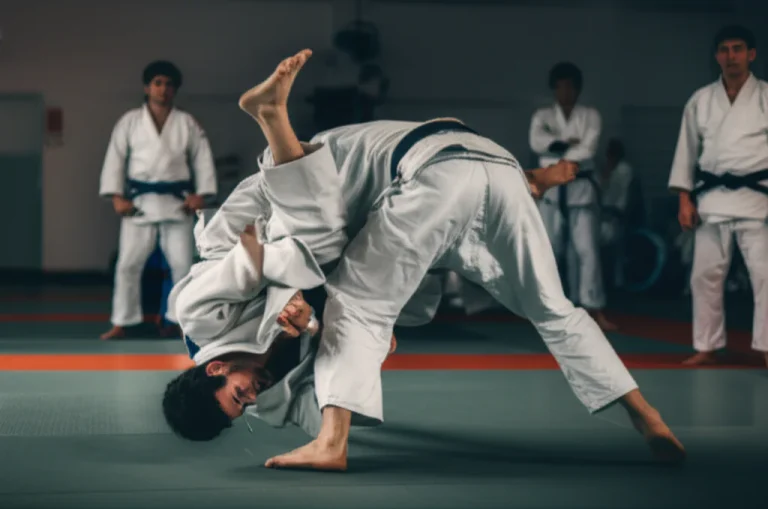
- O-Goshi (Large Hip Throw): The classic “over the hip” toss.
- Osoto-Gari (Major Outer Reap): A devastating leg trip that’s a staple in MMA.
- Seoi-Nage (Shoulder Throw): Dropping low and launching your opponent over your back.
- Uchi-Mata (Inner Thigh Throw): The most beautiful (and difficult) throw in Judo.
- De-Ashi-Barai (Forward Foot Sweep): Timing is everything here.
- Ippon Seoi-Nage (One-Arm Shoulder Throw): The “Ippon” king.
- Koshi-Guruma (Hip Wheel): Using your hip as a fulcrum to roll them over.
🧥 The Master’s Wardrobe: Evolution of the Judo Gi and Belt System
Before Kano, martial artists just wore their everyday clothes or heavy hemp jackets. Kano developed the Judogi, making it thick enough to withstand gripping but flexible enough for movement.
He also invented the Dan/Kyu system. Originally, there were no colored belts—just white and black.
- White Belt: The beginner (Kyu).
- Black Belt: The student who has mastered the basics (Dan).
Later, other colors (yellow, orange, green, blue, brown) were added, mostly in the West, to keep students motivated. If you’re looking for a solid starter Gi, we recommend the Adidas Champion II.
🕊️ The Eternal Shihan: Death and the Legacy of a Legend
Kano died in 1938 at the age of 77. He was returning from an IOC meeting in Cairo, where he had successfully secured the Olympics for Tokyo. He died of pneumonia on a ship, but his spirit never left the mat.
His legacy isn’t just in the medals won at the Olympics; it’s in the millions of people who have learned discipline, respect, and physical fitness through his “Gentle Way.” He is often called the “Father of Modern Japanese Sports.”
📚 The Master’s Pen: Published Works by Jigoro Kano
Kano was a prolific writer. If you want to get inside the mind of the founder, check out these essential reads:
- “Kodokan Judo” by Jigoro Kano: The definitive textbook on the art. (Get it here: Kodokan Judo on Amazon)
- “Mind Over Muscle”: A collection of his essays on philosophy and education.
- “Judo (Jujutsu)”: His early writings explaining the transition from the old art to the new.
🎬 Judo in Popular Culture: From Kurosawa to Modern MMA
Judo has a massive footprint in movies and media.
- Sanshiro Sugata: The directorial debut of the legendary Akira Kurosawa is a fictionalized account of the early days of the Kodokan.
- John Wick: Keanu Reeves uses a heavy amount of Judo and Japanese Jujutsu to take down the High Table.
- MMA Legends: Stars like Ronda Rousey (Olympic Bronze Medalist) and Fedora Emelianenko (Sambo/Judo master) brought Judo throws to the UFC Octagon, proving Kano’s techniques work in any environment.
🏁 Conclusion

So, who is the founder of judo? He was a small man with a massive vision. Jigoro Kano didn’t just create a sport; he created a blueprint for human development. He proved that leverage beats strength, and that “mutual welfare” is the only way for society to progress.
Whether you’re a seasoned black belt or someone who just bought their first Century Martial Arts Grappling Dummy, you are part of Kano’s living legacy. Now, get out there, bow onto the mat, and remember: it’s not about being better than someone else; it’s about being better than you were yesterday.
🔗 Recommended Links
❓ FAQ

Q: Did Jigoro Kano have a black belt? A: Actually, as the founder, Kano didn’t have a rank. He was the “Shihan.” However, he is often depicted wearing a white belt in his later years to symbolize that the journey of learning never ends.
Q: Is Judo better than Brazilian Jiu-Jitsu (BJJ)? A: “Better” is subjective! Judo focuses more on standing throws (Tachi-waza), while BJJ focuses more on ground fighting (Ne-waza). Both are descendants of Kano’s original vision.
Q: Can I start Judo if I’m not in shape? A: Absolutely! Kano himself started as a frail teenager. Judo will get you into shape.
📖 Reference Links
- Britannica: Jigoro Kano Biography
- Olympics.com: The History of Judo
- UNESCO: Judo as a Tool for Education
- World Judo Day – October 28th
⚡️ Quick Tips and Facts
Before diving into the world of Judo, it’s essential to understand the basics. Here are some quick tips and facts to get you started:
| Feature | Details |
|---|---|
| Founder Name | Jigoro Kano (Kano Jigorō) |
| Title | Shihan (Master/Teacher) |
| Date of Birth | October 28, 1860 |
| Place of Birth | Mikage, Japan (near Kobe) |
| The “Aha!” Moment | Founded the Kodokan Judo Institute in 1882 |
| Core Philosophy | Seiryoku Zen’yo (Maximum Efficiency) & Jita Kyoei (Mutual Welfare) |
| Key Innovation | Created the colored belt ranking system (Dan/Kyu) |
| Olympic Impact | First Asian member of the International Olympic Committee (IOC) |
| Favorite Gear | High-quality double-weave Gis (Modern equivalent: Mizuno Yusho) |
| For more information on Judo techniques and history, visit our Martial Arts History section. |
Quick Tips for Aspiring Judoka:
- ✅ Respect the Bow: In Judo, everything starts and ends with a bow (Rei). It’s about respect, not just tradition.
- ✅ Learn to Fall: Your first month will be spent learning Ukemi (breakfalls). Master this, and you’ll be invincible (or at least less bruised).
- ❌ Don’t Muscle It: If you’re using 100% strength, you’re doing it wrong. Judo is about using your opponent’s momentum against them.
🥋 The Scrawny Scholar: Who is the Founder of Judo?
Ever felt like the underdog? We’ve all been there. At Karate MMA™, we love a good “zero to hero” story, and Jigoro Kano is the ultimate example. Born in 1860, Kano wasn’t exactly a physical specimen. In fact, he was a small, frail kid who was tired of being bullied by larger classmates. But instead of just taking it, he went looking for a way to defend himself. He didn’t just want to fight; he wanted a system that worked for the little guy. That search led him to the ancient art of Jujutsu, but he soon realized the old ways were a bit too… well, “break-your-bones-y” for modern society. Kano was a brilliant academic, eventually graduating from Tokyo Imperial University. He took his scientific mind and applied it to combat. He stripped away the most dangerous “killing” moves of Jujutsu and focused on Randori (free practice) and Kata (pre-arranged forms). The result? Judo—the “Gentle Way.” For more on Judo’s history and development, check out our article on Judo Kicks: Myth or Reality? The Truth Revealed (2026).
🏮 The Samurai’s Shadow: The History of Japanese Jujutsu

To understand Judo, you have to understand its “father,” Jujutsu. Back in the day, Jujutsu was the hand-to-hand combat system used by the Samurai when they were disarmed on the battlefield. It was brutal, effective, and designed to kill or maim. By the time Kano came onto the scene in the late 19th century, the Samurai era was ending. Martial arts were dying out as Japan modernized. Kano studied under masters of the Tenjin Shin’yo-ryu and Kito-ryu schools.
- Tenjin Shin’yo-ryu taught him the art of striking and grappling.
- Kito-ryu taught him the “art of throwing” and the concept of yielding to an opponent’s force. Kano realized that these arts were more than just fighting; they were a way to cultivate the mind and body. He took the best parts, added his own scientific principles of leverage, and birthed a new discipline. For a deeper dive into Jujutsu and its influence on modern martial arts, visit our Karate Techniques section.
⏳ 12 Pivotal Moments in Jigoro Kano’s Life
We’ve crunched the history books to bring you the most important milestones in the life of the Shihan.
- 1860: Born in Mikage, Japan, into a family of sake brewers.
- 1877: Enters Tokyo Imperial University and begins searching for a Jujutsu teacher.
- 1882: Opens the Kodokan with only nine mats and nine students in Eishoji Temple.
- 1883: Establishes the Dan/Kyu ranking system (the origin of the Black Belt!).
- 1886: The Kodokan wins a famous tournament against the Tokyo Police Jujutsu team, proving Judo’s superiority.
- 1889: Kano travels to Europe to introduce Judo to the West.
- 1909: Becomes the first Japanese member of the International Olympic Committee.
- 1911: Founds the Japan Amateur Sports Association.
- 1922: Officially introduces the philosophies of Seiryoku Zen’yo and Jita Kyoei.
- 1932: Demonstrates Judo at the Los Angeles Olympics.
- 1938: Successfully lobbies for Tokyo to host the 1940 Olympics (later cancelled due to WWII).
- 1938: Passes away at sea aboard the SS Hikawa Maru while returning from an IOC meeting. For more on Kano’s life and legacy, check out our Fighter Profiles section.
🏯 The Birth of the Kodokan: Where Judo Began
Imagine a tiny room in a tiny Buddhist temple. That was the first Kodokan. “Ko” (lecture/study), “do” (way), “kan” (hall)—the “Place for Studying the Way.” Kano didn’t just want a gym; he wanted a school. In the early days, his students were known for their fierce loyalty and their ability to toss much larger opponents. The Kodokan eventually moved to larger facilities as its reputation grew. Today, the Kodokan in Tokyo remains the “Mecca” for every Judoka. If you ever visit, make sure you have a high-quality Gi like the Kusakura JOF—the Japanese masters appreciate the tradition! For more information on Judo gear and equipment, visit our Karate and MMA News section.
🧠 The Philosophy of the Gentle Way: Seiryoku Zen’yo and Jita Kyoei
This is where Kano separates himself from every other martial arts founder. He wasn’t just teaching people how to throw each other into the dirt; he was teaching them how to live.
- Seiryoku Zen’yo (Maximum Efficiency, Minimum Effort): This is the “science” of Judo. If a big guy pushes you, don’t push back. Pull! Use his energy. This applies to your job, your studies, and your relationships. Don’t waste energy on things that don’t matter.
- Jita Kyoei (Mutual Welfare and Benefit): This is the “heart” of Judo. You cannot practice Judo alone. You need a partner. Therefore, you must take care of your partner. If you both improve, the world becomes a better place. Karate MMA™ Pro Tip: Apply Seiryoku Zen’yo to your daily chores. Find the most efficient way to do them so you have more time for the mats! 🥋 For more on the philosophy and principles of Judo, check out our Fight Analysis and Breakdowns section.
🎓 More Than a Black Belt: Kano’s Professional Life in Education
Did you know Kano was a high-ranking government official? He served as the Director of Primary Education for the Ministry of Education in Japan. He believed that physical education was just as important as mental education. He was instrumental in getting Judo and Kendo into the Japanese school system. He wasn’t just “the Judo guy”—he was one of the most influential educators in modern Japanese history. He saw Judo as a tool to build better citizens, not just better fighters. For more information on Kano’s educational legacy, visit our Martial Arts History section.
🏅 The Olympic Dream: How Judo Became a Global Phenomenon
Kano was a globalist before it was cool. He spent a huge portion of his life traveling the world, giving demonstrations, and learning languages (he was fluent in English). His work with the IOC paved the way for Judo to become the first Asian martial art included in the Olympic Games. Although he passed away before he could see it, Judo officially debuted at the 1964 Tokyo Olympics. Today, it’s one of the most practiced sports in the world, with over 200 national federations. For more on Judo’s Olympic journey, check out our Karate and MMA News section.
🤼 7 Essential Judo Techniques Every Beginner Should Know
If you’re going to follow in Kano’s footsteps, you need to know the basics. Here are the “Big Seven” that every white belt should start dreaming about:
- O-Goshi (Large Hip Throw): The classic “over the hip” toss.
- Osoto-Gari (Major Outer Reap): A devastating leg trip that’s a staple in MMA.
- Seoi-Nage (Shoulder Throw): Dropping low and launching your opponent over your back.
- Uchi-Mata (Inner Thigh Throw): The most beautiful (and difficult) throw in Judo.
- De-Ashi-Barai (Forward Foot Sweep): Timing is everything here.
- Ippon Seoi-Nage (One-Arm Shoulder Throw): The “Ippon” king.
- Koshi-Guruma (Hip Wheel): Using your hip as a fulcrum to roll them over. For more on Judo techniques and training, visit our Karate Techniques section.
🧥 The Master’s Wardrobe: Evolution of the Judo Gi and Belt System
Before Kano, martial artists just wore their everyday clothes or heavy hemp jackets. Kano developed the Judogi, making it thick enough to withstand gripping but flexible enough for movement. He also invented the Dan/Kyu system. Originally, there were no colored belts—just white and black.
- White Belt: The beginner (Kyu).
- Black Belt: The student who has mastered the basics (Dan). Later, other colors (yellow, orange, green, blue, brown) were added, mostly in the West, to keep students motivated. If you’re looking for a solid starter Gi, we recommend the Adidas Champion II. For more information on Judo gear and equipment, visit our Karate and MMA News section.
🕊️ The Eternal Shihan: Death and the Legacy of a Legend
Kano died in 1938 at the age of 77. He was returning from an IOC meeting in Cairo, where he had successfully secured the Olympics for Tokyo. He died of pneumonia on a ship, but his spirit never left the mat. His legacy isn’t just in the medals won at the Olympics; it’s in the millions of people who have learned discipline, respect, and physical fitness through his “Gentle Way.” He is often called the “Father of Modern Japanese Sports.” For more on Kano’s legacy and impact, check out our Fighter Profiles section.
📚 The Master’s Pen: Published Works by Jigoro Kano
Kano was a prolific writer. If you want to get inside the mind of the founder, check out these essential reads:
- “Kodokan Judo” by Jigoro Kano: The definitive textbook on the art. (Get it here: Kodokan Judo on Amazon)
- “Mind Over Muscle”: A collection of his essays on philosophy and education.
- “Judo (Jujutsu)”: His early writings explaining the transition from the old art to the new. For more on Kano’s writings and philosophy, visit our Martial Arts History section.
🎬 Judo in Popular Culture: From Kurosawa to Modern MMA
Judo has a massive footprint in movies and media.
- Sanshiro Sugata: The directorial debut of the legendary Akira Kurosawa is a fictionalized account of the early days of the Kodokan.
- John Wick: Keanu Reeves uses a heavy amount of Judo and Japanese Jujutsu to take down the High Table.
- MMA Legends: Stars like Ronda Rousey (Olympic Bronze Medalist) and Fedora Emelianenko (Sambo/Judo master) brought Judo throws to the UFC Octagon, proving Kano’s techniques work in any environment. For more on Judo in popular culture, check out our Karate and MMA News section.
🏁 Conclusion

After this deep dive into the life and legacy of Jigoro Kano, the founder of Judo, one thing is crystal clear: Kano was more than just a martial artist—he was a visionary educator, philosopher, and global ambassador for physical culture. From his humble beginnings as a frail boy seeking self-defense to the creation of the Kodokan Judo Institute and the establishment of Judo as an Olympic sport, Kano’s journey is a testament to the power of innovation and perseverance.
We explored how Kano transformed the dangerous and often brutal art of traditional Jujutsu into a safer, more scientific, and philosophically rich martial art emphasizing maximum efficiency and mutual welfare. His introduction of the Dan/Kyu ranking system revolutionized martial arts worldwide, creating a clear path for progression that motivates practitioners to this day.
For anyone curious about the founder of Judo, the answer is unequivocal: Jigoro Kano. His impact transcends martial arts, influencing education, sports governance, and international diplomacy. Whether you’re a beginner stepping onto the mat for the first time or a seasoned black belt, Kano’s principles still resonate: use your energy wisely, respect your partner, and strive for self-improvement.
If you’ve ever wondered how a small, determined scholar changed the face of martial arts forever, now you know. And if you’re ready to start your own journey, remember Kano’s words: “Judo is the way to the most effective use of both physical and mental energy.” So, bow in, step forward, and embrace the gentle way.
🔗 Recommended Links
Ready to gear up or dive deeper into Kano’s teachings? Check out these carefully selected products and books that bring the spirit of Judo alive:
-
Mizuno Yusho Judo Gi:
Amazon | Mizuno Official Website -
Kusakura JOF Judo Gi (IJF Approved):
Amazon -
Adidas Champion II Judo Gi:
Amazon -
Kodokan Judo by Jigoro Kano (Book):
Amazon -
Century Martial Arts Grappling Dummy:
Amazon
❓ FAQ

Who is the father of American judo?
Answer:
The father of American judo is widely recognized as Yosh Uchida, a Japanese-American judoka and coach who played a pivotal role in popularizing Judo in the United States. Uchida introduced Judo to the collegiate level at San Jose State University and helped establish the first U.S. Judo team for international competition. His efforts laid the foundation for Judo’s growth in America, complementing Jigoro Kano’s original vision on a global scale.
How tall was the founder of judo?
Answer:
Jigoro Kano was relatively short in stature, standing approximately 5 feet 4 inches (163 cm) tall. Despite his modest height and frail build in youth, Kano’s intellect and innovative spirit allowed him to create a martial art that leveraged technique and efficiency over brute strength.
Who are the 4 kings of judo?
Answer:
The “Four Kings of Judo” refers to four legendary judoka who significantly shaped the sport’s development:
- Jigoro Kano – Founder of Judo.
- Kyuzo Mifune – Known as the “God of Judo,” famous for his technical mastery.
- Masahiko Kimura – Renowned for his strength and the famous “Kimura lock.”
- Isao Okano – Olympic gold medalist and influential coach.
These figures represent the pillars of Judo’s technical and philosophical evolution.
Who created judo and when was it founded?
Answer:
Jigoro Kano created Judo in 1882 when he established the Kodokan Judo Institute in Tokyo, Japan. Kano synthesized techniques from traditional Jujutsu schools, emphasizing safety, efficiency, and moral education, thus founding Judo as both a martial art and a way of life.
What are the main principles of judo introduced by its founder?
Answer:
Kano introduced two foundational principles:
- Seiryoku Zen’yo (Maximum Efficiency, Minimum Effort): Use your energy wisely by leveraging your opponent’s force rather than opposing it directly.
- Jita Kyoei (Mutual Welfare and Benefit): Success in Judo depends on cooperation and mutual improvement, reflecting a broader social philosophy of harmony.
These principles guide both the physical practice and the ethical framework of Judo.
How did Jigoro Kano develop judo from traditional jujutsu?
Answer:
Kano studied various schools of Jujutsu, notably Tenjin Shin’yo-ryu and Kito-ryu, extracting effective techniques while discarding dangerous or lethal moves unsuitable for safe practice. He emphasized randori (free sparring) and kata (structured forms) to develop skill and discipline. Kano’s scientific approach introduced biomechanics and pedagogy, transforming Jujutsu into the modern, sport-oriented Judo.
What is the difference between judo and karate in martial arts?
Answer:
While both are Japanese martial arts, their focus differs significantly:
- Judo centers on grappling, throws, joint locks, and ground fighting, emphasizing using an opponent’s force against them.
- Karate focuses on striking techniques—punches, kicks, blocks, and open-hand strikes—aimed at direct impact.
Both arts share values like discipline and respect but train different combat ranges and strategies. For more on striking in Judo, see our article on Judo Kicks: Myth or Reality? The Truth Revealed (2026).
Who influenced the founder of judo in his martial arts journey?
Answer:
Jigoro Kano was influenced by several Jujutsu masters, including:
- Fukuda Hachinosuke and Iso Masatomo (Tenjin Shin’yo-ryu)
- Yamashita Yoshitsugu (Kito-ryu), who taught Kano the art of throwing and the principle of yielding.
These teachers provided Kano with the technical foundation and philosophical insights that shaped Judo.
How has judo evolved since its founding by Jigoro Kano?
Answer:
Since Kano’s time, Judo has evolved into a global sport with standardized rules and international competitions governed by the International Judo Federation (IJF). The introduction of weight classes, protective rules, and scoring systems has made Judo safer and more spectator-friendly. Additionally, Judo’s techniques have influenced other martial arts such as Brazilian Jiu-Jitsu and MMA, expanding its reach and application.
What role does judo play in the world of martial arts today?
Answer:
Today, Judo is both a competitive Olympic sport and a popular martial art practiced worldwide. It serves as a foundation for self-defense, physical fitness, and character development. Judo’s principles of efficiency and mutual respect continue to inspire practitioners beyond the dojo, influencing education, rehabilitation, and even conflict resolution.