Support our educational content for free when you purchase through links on our site. Learn more
Does Karate Really Mean “Empty Hand”? 🥋 Unveiling the Truth (2025)

Have you ever paused mid-punch and wondered, “Does karate actually mean ‘empty hand’?” It’s a question that sounds simple but unravels a fascinating story of history, philosophy, and cultural evolution. At Karate MMA™, we’ve trained thousands of martial artists who discovered that karate’s meaning goes far beyond just fighting without weapons. From its origins as “Chinese hand” to the profound spiritual concept of an “empty mind,” the phrase “empty hand” carries layers of meaning that every karateka should know.
In this article, we’ll take you on an epic journey—from the dusty Okinawan dojos where karate was born, through the political shifts that changed its name, to the deep philosophy that transforms karate into a way of life. Plus, we’ll break down the practical side of karate training and explore how the “empty hand” is anything but empty when it comes to power and purpose. Ready to punch through the myths and discover the real karate? Let’s dive in!
Key Takeaways
- Karate literally means “empty hand” (空手), but this refers both to unarmed combat and a philosophical state of mental clarity and freedom from ego.
- The art was originally called Tōde (“Chinese hand”), reflecting its Chinese martial arts roots before being renamed for political and spiritual reasons.
- “Empty hand” symbolizes a mind free of fear and distraction, enabling instinctive, fluid movement in combat.
- Karate training blends physical fundamentals (kihon), forms (kata), and sparring (kumite), all rooted in the “empty hand” concept.
- The name change to “karate” marked its evolution from a fighting technique to a lifelong path of self-improvement and character development.
- Karate is a global phenomenon practiced by millions, with diverse styles emphasizing different aspects of the art.
- Beyond self-defense, karate offers mental discipline, confidence, and holistic wellness—making it much more than just a martial art.
Curious about how “empty hand” became the heart of karate’s identity? Or how this concept shapes your training and mindset? Stick with us—your journey into the true meaning of karate starts here!
Table of Contents
- ⚡️ Quick Tips and Facts
- Unpacking the Mystery: The True Meaning of “Karate” and “Empty Hand”
- A Journey Through Time: The Rich History and Evolution of Karate-Do
- More Than Just Fists: The Profound Philosophy Behind “Empty Hand”
- The Art of Empty Hands: What Does Karate Practice Actually Involve?
- Beyond the Dojo: Karate as Self-Defense and Sport
- The Many Faces of Karate: Exploring Diverse Styles and Their Philosophies
- The Path to Mastery: Understanding the Dan Rank System in Karate
- Common Misconceptions About Karate: Separating Fact from Fiction
- Why Choose Karate? The Myriad Benefits of Training
- Getting Started: Your First Steps into the World of Karate
- Karate’s Global Impact: From Okinawa to Pop Culture
- Conclusion: The Enduring Legacy of the “Empty Hand”
- Recommended Links: Dive Deeper into the World of Karate
- FAQ: Your Burning Questions Answered
- Reference Links: Our Sources and Further Reading
Body
⚡️ Quick Tips and Facts
Hey everyone, it’s your expert team at Karate MMA™! So, you’re wondering if “karate” really means “empty hand”? Let’s cut to the chase. The short answer is a resounding YES! But hold on, there’s so much more to this story than a simple translation. Think of it like an iceberg; the part you see is just the beginning. We’re about to dive deep into the fascinating world behind those two simple words.
Before we get into the nitty-gritty, here are some lightning-fast facts to get you warmed up:
| Quick Fact 🥋 – |
|---|
| Literal Meaning: “Karate” (空手) is composed of two Japanese characters: “kara” (空), meaning “empty,” and “te” (手), meaning “hand.” – |
| Original Name: Before it was “empty hand,” karate was written with characters (唐手) that meant “Chinese hand” or “Tang hand,” acknowledging its roots in Chinese martial arts. – |
| Philosophical Meaning: The “empty” in karate also refers to a state of mind—being free from fear, anger, and ego, allowing for pure, reactive movement. It’s about purging oneself of selfish thoughts. – |
| The “Do” in Karate-Do: The suffix “-dō” (道) means “way” or “path.” Adding it to “karate” transforms it from a mere fighting system (jutsu) into Karate-dō, “the way of the empty hand”—a path of self-development. – |
| Global Practice: Karate is practiced by millions worldwide. Web Japan claims 50 million practitioners, while the World Karate Federation estimates the number to be around 100 million. – |
Unpacking the Mystery: The True Meaning of “Karate” and “Empty Hand”
Alright, let’s get down to business. You’ve heard “karate means empty hand,” and you’re not wrong. But have you ever wondered why? It wasn’t always called that. The story behind the name is a fantastic blend of history, politics, and philosophy. To truly understand this art, you need to know its full story, which we explore in our article What Is This Karate? 🥋 Unlocking Its Secrets in 2025.
Originally, the art we know as karate, which developed in the Ryukyu Kingdom (modern-day Okinawa, Japan), was called Tōde (唐手). The character “Tō” (唐) referred to the Tang Dynasty of China, and “de” (手) is the Okinawan reading of the character for “hand” (te in Japanese). So, it literally meant “Chinese Hand” or “Tang Hand.” This name was a nod to the significant influence of Chinese martial arts, which began making their way to Okinawa as early as the 14th century.
So, what prompted the change? In the early 20th century, as Okinawan masters like the legendary Gichin Funakoshi introduced the art to mainland Japan, tensions between Japan and China were rising. To make the art more palatable and distinctly Japanese, Funakoshi and other masters made a pivotal change. They replaced the character for “China/Tang” (唐) with a homophone—a character with the same pronunciation but a different meaning: “kara” (空), meaning “empty.”
This wasn’t just a political move; it was a philosophical masterstroke. The change was officially adopted by Okinawan masters in 1936, cementing the art’s new identity as Karate (空手), or “Empty Hand.”
Beyond the Literal: What “Empty Hand” Truly Implies
Here at Karate MMA™, we teach that “empty hand” has a dual meaning.
-
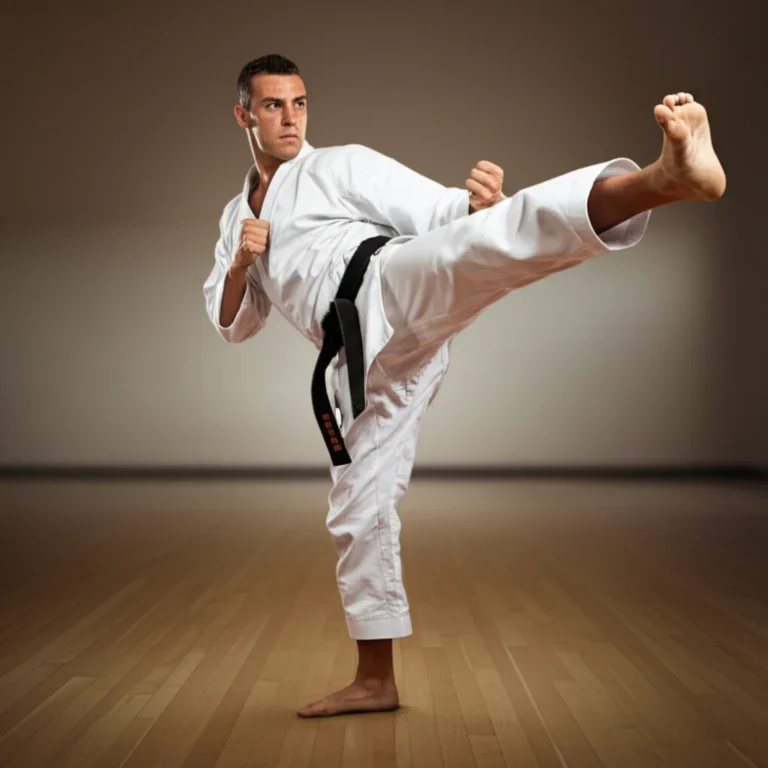
✅ The Physical: First, and most obviously, it signifies a method of self-defense without weapons. This was particularly important in Okinawan history, where weapon bans were imposed at various times, forcing the development of potent unarmed combat systems. Practitioners learn to use their entire body—fists, feet, elbows, knees—as a weapon.
-
✅ The Philosophical: This is where it gets deep. The “empty” also relates to the Zen Buddhist concept of mushin, or “no mind.” It’s about emptying the mind of fear, anger, ego, and distraction. Gichin Funakoshi himself taught that the “kara” in Karate-do meant “to purge, empty, oneself of evil and selfish thoughts.” A practitioner with an “empty” mind can react instinctively and flow with the rhythm of combat, unburdened by hesitation. It’s a state of being fully present and aware.
As author AVIS Viswanathan puts it, a practitioner who understands they came empty-handed and will leave empty-handed has “nothing to lose and cannot be defeated or robbed.” This mindset is the key to unlocking true inner peace and strength.
A Journey Through Time: The Rich History and Evolution of Karate-Do
To truly appreciate the “empty hand,” you have to walk back in time. The story of karate isn’t just about fighting techniques; it’s a tale of cultural exchange, political oppression, and the relentless human spirit. It’s a key part of Martial Arts History.
From Okinawa to the World: The Birth of a Martial Art
Karate’s cradle is the Ryukyu Kingdom, a chain of islands that is now Okinawa, Japan. For centuries, it was a bustling trade hub, a cultural melting pot connecting Japan, China, and Southeast Asia. This is where the magic began.
The native Okinawan fighting style was known as Te (or Ti), meaning “hand.” When trade relations with Ming Dynasty China were established in the late 1300s, Chinese envoys, merchants, and families brought their martial arts, known as Kenpō, to the islands. The Okinawans, ever the innovators, blended these Chinese systems with their indigenous Te, creating a powerful new hybrid: Tōde (“Chinese Hand”).
A pivotal moment came in 1609 when the Satsuma clan from Japan invaded and imposed a strict weapons ban. This prohibition forced the Okinawan nobles (the Pechin class) to perfect their unarmed combat skills in secret, turning everyday farming tools into weapons (the art of Kobudō) and refining their empty-hand techniques for survival.
The “Tode” to “Karate”: A Name Change with Profound Meaning
For centuries, this potent art was honed in the villages of Shuri, Naha, and Tomari, leading to distinct styles known as Shuri-te, Naha-te, and Tomari-te. But it remained largely an Okinawan secret until the early 20th century.
Enter Gichin Funakoshi, the man widely regarded as the “father of modern karate.” A schoolteacher and master of Shuri-te, Funakoshi was chosen to demonstrate Tōde in mainland Japan in 1922. He saw the potential for the art to become a vehicle for physical fitness, character development, and spiritual growth.
To help it gain acceptance in Japan, he undertook several key modernizations:
- Name Change: As we discussed, he championed the change from “Chinese Hand” to “Empty Hand.”
- Systematization: He simplified and standardized the kata (forms) to make them easier to teach in schools and universities.
- Adoption of “-dō”: He added the suffix “-dō” (道), meaning “the way” or “path.” This elevated Karate-jutsu (the art/technique of the empty hand) to Karate-dō (the way of the empty hand), framing it as a lifelong discipline for perfecting one’s character.
- Uniforms and Ranks: He adopted the keikogi (uniform) and the kyu/dan belt ranking system from Judo to create a structured learning path.
Funakoshi’s efforts were a massive success. Karate spread throughout Japan and, after World War II, to the rest of the world, largely through U.S. servicemen stationed in Okinawa.
More Than Just Fists: The Profound Philosophy Behind “Empty Hand”
So, we’ve established that “empty hand” means fighting without weapons. But if you think that’s all there is to it, you’re missing the soul of the art. At Karate MMA™, we believe the philosophical side is what transforms a series of movements into a way of life.
Mind, Body, Spirit: The Holistic Approach of Karate
Karate-dō is not just about physical prowess; it’s a holistic discipline that seeks to unify mind, body, and spirit. Funakoshi himself said, “The ultimate aim of karate lies not in victory or defeat, but in the perfection of the character of its participants.”
This philosophy is woven into every aspect of training:
- Rei (Respect): Every class begins and ends with a bow. This isn’t just a formality; it’s a constant reminder of humility, respect for your instructors, your partners, and the dojo itself.
- Dojo Kun (Dojo Oath): Many traditional dojos recite a set of principles, reinforcing the ethical and moral responsibilities of a karateka. These often include seeking perfection of character, being faithful, endeavoring to excel, respecting others, and refraining from violent behavior.
- Mushin (No Mind): As mentioned, this is the state of an “empty” mind. It’s about acting and reacting without the interference of conscious thought, fear, or ego. It’s a state of pure flow that can only be achieved through countless hours of dedicated practice.
Self-Discipline and Inner Strength: Cultivating the “Empty Mind”
The rigorous physical training in karate is a crucible for forging mental and spiritual strength. When you push your body to its limits, you are forced to confront your own weaknesses, fears, and self-doubt.
- Overcoming Adversity: Holding a deep stance for what feels like an eternity, pushing through one more kata when you’re exhausted—these challenges build resilience. You learn that your perceived limits are often just in your head.
- Focus and Concentration: Executing a complex kata requires immense focus. This ability to concentrate translates directly to other areas of your life, from school and work to personal relationships.
- The True Opponent: As Shotokan master Tsutomu Ohshima said, “In traditional karate-do, we always keep in mind that the true opponent is oneself.” The daily battle in the dojo is not against your partner, but against your own laziness, impatience, and ego.
Ultimately, the “way of the empty hand” is about emptying yourself of the negative to make room for the positive: confidence, composure, humility, and an unshakeable inner peace.
The Art of Empty Hands: What Does Karate Practice Actually Involve?
So you’re fired up about the philosophy, but what do you actually do in a karate class? Let’s pull back the curtain. Traditional karate training is famously structured around what we call the “Three K’s”: Kihon, Kata, and Kumite. These three pillars work together to build a complete martial artist.
Kihon (Fundamentals): Building Your Foundation
Kihon (基本) means “basics” or “fundamentals,” and it is the absolute bedrock of your training. Think of it as learning the alphabet before you try to write a novel. Without strong kihon, your karate will crumble. This is where you spend hours upon hours drilling:
- Stances (Dachi): Learning how to stand with stability and power.
- Punches (Tsuki): Executing a proper fist and generating force from your entire body.
- Blocks (Uke): Deflecting attacks with precision and structure.
- Kicks (Keri): Developing balance, flexibility, and powerful leg strikes.
Practicing kihon repeatedly builds muscle memory, allowing you to execute techniques without conscious thought—essential for self-defense.
Kata (Forms): The Dance of Combat
Kata (型) literally means “form.” These are pre-arranged sequences of movements that simulate a fight against multiple imaginary opponents. If kihon is the alphabet, kata are the words and sentences.
Each kata is a library of techniques, containing a complete system of fighting. Practicing kata helps develop:
- Coordination and Balance: Flowing from one technique to the next.
- Rhythm and Timing: Understanding the cadence of combat.
- Focus: Memorizing and perfecting dozens of movements in a precise sequence.
As you can see in the training session in our featured video, young students are drilling fundamental strikes with an instructor. This repetitive practice is key to mastering the building blocks that are later assembled into complex kata.
Kumite (Sparring): Putting It All Together
Kumite (組手) means “meeting of hands” or, more simply, sparring. This is where you apply the techniques learned in kihon and kata against a live, resisting partner. It’s the ultimate test of your skills.
Kumite training progresses in stages:
- Pre-arranged Sparring: You and your partner practice specific attack and defense sequences. This builds timing and distance control in a safe environment.
- Free Sparring (Jiyu Kumite): This is more dynamic and unpredictable, where you can use any technique you’ve learned. Control is paramount; the goal is to score a point, not to injure your partner.
Bunkai: Unlocking the Secrets of Kata
This is the “Aha!” moment for many students. Bunkai is the analysis and application of kata movements for real-world self-defense. You take a sequence from a kata and, with a partner, break it down to understand its practical meaning. A simple-looking block and punch in a kata might actually be a joint lock, a throw, and a finishing strike. Exploring bunkai is like being a detective, uncovering the hidden combat secrets left by the masters of old. It’s one of the most fascinating aspects of studying Karate Techniques.
Beyond the Dojo: Karate as Self-Defense and Sport
Is karate just a traditional art form, or does it have a place in the modern world? Absolutely! The “empty hand” is incredibly versatile, serving as both a practical self-defense system and a dynamic international sport.
Real-World Readiness: Practical Self-Defense Applications
Let’s be clear: the primary purpose of karate has always been self-protection. The techniques are designed to be brutally effective in neutralizing a threat as quickly as possible.
- Effective Strikes: Karate teaches you to strike vulnerable targets with precision and power, using your hands, feet, elbows, and knees.
- Situational Awareness: Training, especially kumite, hones your reflexes and ability to manage distance. You learn to read an opponent’s movements and react instantly.
- Confidence and Composure: Studies have shown that simply carrying yourself with the confidence gained from martial arts training can make you a less likely target for an attacker. You learn to stay calm under pressure, which is crucial in a dangerous situation.
Olympic Dreams: Karate’s Rise as a Global Sport
Karate’s journey to the world’s biggest sporting stage was a long one, but it finally made its Olympic debut at the Tokyo 2020 Games. This was a monumental moment for the karate community worldwide!
The Olympic competition featured two disciplines:
- Kata: Athletes were judged on their solo performance of forms, showcasing their power, speed, balance, and technical precision.
- Kumite: Competitors engaged in point-based sparring in three different weight classes. The focus was on controlled, explosive techniques delivered to scoring areas.
While karate was not included in the 2024 Paris Games, its appearance in Tokyo brought incredible exposure to the art. The thrilling matches provided a fantastic platform for Fight Analysis and Breakdowns and introduced millions of new fans to the beauty and excitement of sport karate.
The Many Faces of Karate: Exploring Diverse Styles and Their Philosophies
One of the coolest things about karate is that it’s not a single, monolithic art. Over the last century, it has branched out into dozens of different styles, or ryu. Each was shaped by a founding master’s unique philosophy and technical focus. While there are countless variations, it’s generally accepted that there are four major styles in Japan: Shotokan, Goju-ryu, Wado-ryu, and Shito-ryu.
Let’s meet some of the family!
1. Shotokan: The Tiger’s Roar 🐅
Founded by Gichin Funakoshi, Shotokan is the most widely practiced style in the world. It’s known for its deep, strong stances and powerful, linear techniques. The philosophy emphasizes character development, and its motto is “Seek perfection of character.”
2. Goju-ryu: Hard and Soft, Like the Ocean 🌊
Founded by Chojun Miyagi, Goju-ryu translates to “hard-soft style.” It blends hard, linear attacks with soft, circular blocking and controlling techniques. Goju-ryu places a heavy emphasis on breathing exercises (ibuki) and close-range combat.
3. Wado-ryu: The Way of Peace and Harmony 🕊️
Founded by Hironori Otsuka, Wado-ryu means “way of harmony.” Otsuka was a master of Shindo Yoshin-ryu Jujutsu, and he blended its principles with Funakoshi’s karate. Wado-ryu emphasizes evasion, body shifting (tai sabaki), and using an opponent’s momentum against them.
4. Kyokushin: The Ultimate Truth and Full Contact Power 💪
Founded by Masutatsu “Mas” Oyama, Kyokushin translates to “the ultimate truth.” This is not your grandfather’s karate! Kyokushin is famous for its intense, full-contact sparring (knockdown karate) and brutal conditioning. It’s a style that truly tests a practitioner’s spirit and physical toughness. Famous karateka and MMA fighter Georges St-Pierre has a background in Kyokushin.
5. Uechi-ryu: The Iron Body Tradition 🛡️
Founded by Kanbun Uechi, this Okinawan style is based on three Chinese animal systems: the Tiger, Dragon, and Crane. Uechi-ryu is known for its unique open-handed techniques, circular blocks, and intense body conditioning designed to withstand powerful blows.
6. Shito-ryu: The Fusion of Masters 🥋
Founded by Kenwa Mabuni, Shito-ryu is a blend of the hard, linear techniques of Shuri-te and the soft, circular movements of Naha-te. As a result, it has one of the largest numbers of kata of any style, making it a comprehensive library of Okinawan karate.
7. Shorin-ryu: The Pine Forest Way 🌳
Shorin-ryu is one of the major Okinawan styles, descending from the Shuri-te tradition. It emphasizes quick, fluid movements and natural stances. It’s known for its speed and agility, focusing on getting in and out quickly.
The Path to Mastery: Understanding the Dan Rank System in Karate
The colored belts in karate are more than just a way to hold your gi closed! They represent a student’s journey and progress. The ranking system was adopted from Judo by Gichin Funakoshi to provide a structured path for students. The system is broadly divided into two categories: Kyu grades (colored belts) and Dan grades (black belts).
From White Belt to Black Belt: A Journey of Dedication
Students begin as mukyu (no rank) and wear a white belt. As they learn and demonstrate proficiency, they advance through the Kyu (級) ranks, which literally means “class” or “level.” The belt colors vary between styles and organizations, but a common progression is:
- White (10th Kyu)
- Yellow
- Orange
- Green
- Blue
- Purple
- Brown (3rd, 2nd, and 1st Kyu)
Each new belt represents a deeper understanding of the fundamentals and the learning of more complex kata and kumite drills.
Beyond Black: The Nuances of Dan Ranks
Achieving a black belt is a huge milestone, but as we always say at the dojo, it’s not the end; it’s the beginning. The black belt, or Shodan (初段), means “first step” or “first degree.” It signifies that you have mastered the basics and are now ready to begin your true journey in karate.
From there, practitioners can advance through the Dan (段) ranks, which means “step” or “grade.”
- 1st to 5th Dan: These ranks are typically achieved through continued training, technical refinement, and teaching.
- 6th to 10th Dan: These higher ranks are often awarded for extraordinary contributions to the art of karate over a lifetime, such as through leadership, research, or developing the style. High-ranking masters may wear a red-and-white striped belt or a solid red belt.
Common Misconceptions About Karate: Separating Fact from Fiction
Thanks to Hollywood movies and pop culture, karate is surrounded by a lot of myths. Let’s bust a few of the most common ones we hear all the time.
❌ Is it Just Kicking and Punching?
This is a big one. While striking is a huge part of karate, it’s far from the whole story. Depending on the style, training also includes blocks, open-hand techniques (like knife-hands), joint locks, throws, restraints, and vital point strikes. True karate is a complete self-defense system.
✅ Is it Only for Self-Defense?
While self-defense is its root, karate is so much more. It’s a fantastic form of physical exercise that improves strength, flexibility, and cardiovascular health. It’s a mental discipline that builds focus and resilience. And it’s a “dō,” a way of life for character development.
❌ Does it Promote Violence?
Absolutely not. This is perhaps the most damaging misconception. The core philosophy of karate is about self-control, respect, and avoiding conflict. One of Funakoshi’s most famous principles is, “There is no first attack in karate.” The skills are to be used only as a last resort when you or someone else is in danger. The discipline learned in the dojo actually leads to more restraint and self-control in daily life.
Why Choose Karate? The Myriad Benefits of Training
Thinking about tying on a white belt? Here at Karate MMA™, we’ve seen firsthand how training can transform lives. The benefits go far beyond the dojo walls.
Physical Fitness: Strength, Flexibility, and Endurance
Forget the boring gym routine! Karate is a full-body workout that engages nearly every muscle.
- Cardio: The dynamic nature of kihon, kata, and kumite provides an excellent aerobic workout, strengthening your heart and lungs.
- Strength: Repetitive techniques and deep stances build functional strength and muscle tone throughout your body.
- Flexibility & Coordination: The wide range of movements, especially kicks and complex stances, dramatically improves flexibility and body coordination.
Mental Fortitude: Focus, Discipline, and Resilience
The mental benefits are just as profound as the physical ones.
- Improved Focus: Memorizing kata and reacting in kumite requires intense concentration, which sharpens your mind.
- Stress Relief: A tough training session is one of the best ways to burn off stress and clear your head. The focus on breathing and meditation helps calm the mind.
- Mental Toughness: Karate teaches you to push past discomfort and persevere when you’re tired. This builds resilience that helps you face any challenge in life.
Character Development: Respect, Humility, and Confidence
This is the heart of Karate-dō.
- Discipline & Respect: The structured environment of the dojo, with its etiquette and rules, instills a deep sense of self-discipline and respect for others.
- Confidence: As your skills improve, so does your self-confidence. Knowing you have the ability to defend yourself is incredibly empowering.
- Humility: No matter how good you get, there is always more to learn. The path of karate teaches you to be a humble and lifelong student.
Getting Started: Your First Steps into the World of Karate
Ready to start your own journey of the “empty hand”? Taking that first step can be intimidating, but we’re here to make it easy.
Finding the Right Dojo: What to Look For
This is the most important decision you’ll make. A good dojo is more than just a place to train; it’s a community.
- Observe a Class: Before you sign up, ask if you can watch a class. Pay attention to the atmosphere. Is it welcoming? Do the students seem respectful and focused?
- Talk to the Instructor (Sensei): A good sensei should be knowledgeable, patient, and passionate about teaching. Ask about their lineage, teaching philosophy, and what they expect from students.
- Check the Focus: Does the school focus on what you’re interested in? Some are more sport-oriented, while others focus on traditional kata and self-defense. Find one that aligns with your goals.
Essential Gear: What You’ll Need
The great thing about karate is that you don’t need much to start.
- Comfortable Clothing: For your first few classes, loose-fitting workout clothes are perfectly fine.
- The Gi: Eventually, you’ll need a karate gi (uniform). Most schools can help you order one. They are typically white and made of durable cotton. Brands like Tokaido and Shureido are renowned for their high-quality traditional gis.
- An Open Mind: This is the most important piece of equipment! Come ready to learn, listen, and challenge yourself.
👉 Shop for your first Karate Gi:
- Tokaido: Amazon | Tokaido Official Website
- Shureido: eBay | Shureido Official Website
Embracing the Journey: Tips for Beginners
- Be Patient: You won’t be a black belt overnight. Mastery takes years of consistent practice. Enjoy the process.
- Ask Questions: Don’t be afraid to ask your sensei or senior students for help. They want you to succeed!
- Practice at Home: Even 10-15 minutes of practicing your stances or a new kata at home can make a huge difference.
- Listen to Your Body: You’ll be sore in places you didn’t know you had muscles. That’s normal! But learn the difference between muscle soreness and injury. Don’t be afraid to take a rest day.
Karate’s Global Impact: From Okinawa to Pop Culture
From a secretive Okinawan art to a global phenomenon, karate’s influence is undeniable. It has punched and kicked its way into the heart of popular culture, shaping movies, TV shows, and inspiring millions. Stay up to date with the latest happenings with Karate and MMA News.
Hollywood’s Influence: Karate in Film and Media
For many people in the West, their first introduction to karate was on the silver screen.
- Bruce Lee: Though he developed his own art of Jeet Kune Do, Bruce Lee’s explosive films like Enter the Dragon ignited a worldwide martial arts craze in the 1970s and featured many karate elements.
- The Karate Kid (1984): This iconic film brought karate into the mainstream like never before. The story of Daniel LaRusso and his wise sensei, Mr. Miyagi, taught a generation about the discipline, philosophy, and “wax on, wax off” heart of karate.
- Cobra Kai: The hugely popular sequel series on Netflix has reignited interest in karate, introducing the classic rivalry to a new generation and exploring the complexities of different dojo philosophies.
- Other Appearances: From James Bond films to action stars like Jean-Claude Van Damme in Bloodsport, karate’s dynamic action has been a staple of pop culture for decades.
Worldwide Community: The Global Reach of Karate
Today, karate is practiced in over 140 countries by an estimated 50 to 100 million people. This incredible growth is a testament to its universal appeal. It transcends language and culture, offering a shared path of self-improvement. Whether you’re training in a dojo in Tokyo, a community center in Brazil, or a gym in the United States, you are part of a global family united by the principles of the “empty hand.”
Conclusion: The Enduring Legacy of the “Empty Hand”

So, does karate mean “empty hand”? Absolutely—and yet, as we’ve uncovered together, it’s so much more than just a literal translation. From its roots as “Chinese hand” to the profound philosophical shift that redefined it as the “way of the empty hand,” karate embodies a rich tapestry of history, culture, and spiritual insight.
At Karate MMA™, we’ve seen firsthand how this art transforms lives—not just through powerful strikes and elegant forms, but through the cultivation of character, discipline, and inner peace. The “empty hand” is a symbol of readiness, humility, and freedom from fear. It teaches us that the greatest weapon is a mind free of distractions, and the greatest victory is mastery over oneself.
Whether you’re drawn to karate for self-defense, physical fitness, mental resilience, or spiritual growth, embracing the “empty hand” means embarking on a lifelong journey of discovery. It’s a path that challenges you, humbles you, and ultimately empowers you.
If you’ve ever wondered what karate truly means, now you know: it’s not just about fighting without weapons—it’s about fighting with an open heart and an empty mind.
Ready to take your first step? Your dojo awaits!
Recommended Links: Dive Deeper into the World of Karate
Looking to gear up or deepen your knowledge? Here are some trusted resources and gear we recommend:
-
Tokaido Karate Gi:
Amazon | Tokaido Official Website -
Shureido Karate Gi:
eBay | Shureido Official Website -
Books to Deepen Your Understanding:
-
Karate Organizations and Resources:
FAQ: Your Burning Questions Answered

What does karate mean in Apex?
Karate in the context of Apex Legends or other gaming environments usually refers to the martial art style or a melee combat technique inspired by karate. However, in the traditional martial arts sense, karate means “empty hand,” emphasizing unarmed combat. The gaming usage borrows the term to evoke the idea of hand-to-hand fighting skills.
What is the real meaning of the term karate recognized internationally as empty hand?
The internationally recognized meaning of karate is “empty hand” (空手). This reflects both the literal practice of fighting without weapons and the deeper philosophical concept of an empty mind free from fear and ego. The term was officially adopted in the 1930s to replace the earlier “Chinese hand” (唐手), emphasizing a uniquely Japanese identity and spiritual path.
What means empty hand in Japanese?
In Japanese, “empty hand” is written as 空手 and pronounced karate. The character 空 (kara) means “empty,” and 手 (te) means “hand.” Together, they signify fighting with no weapons, but also imply a state of mental emptiness or readiness.
Read more about “Master Martial Arts Pronunciation: 15 Must-Know Terms (2025) 🥋”
What is the origin of the word karate?
Karate originated in Okinawa, Japan, evolving from indigenous fighting methods called Te and influenced heavily by Chinese martial arts. Initially called Tōde (唐手), meaning “Chinese hand,” the name was changed to Karate (空手) in the early 20th century to reflect both political sensitivities and a philosophical shift toward the “empty hand.”
Read more about “What Is This Karate? 🥋 Unlocking Its Secrets in 2025”
How does karate differ from other martial arts?
Karate is primarily a striking art focusing on punches, kicks, blocks, and open-hand techniques. It emphasizes kata (forms), kihon (basics), and kumite (sparring). Unlike grappling arts like judo or Brazilian jiu-jitsu, karate focuses on distance, timing, and powerful, precise strikes. Its philosophical emphasis on character development and mental discipline also sets it apart.
Read more about “What Is the Difference Between Karate, Taekwondo, and Kung Fu? 🥋🐉🥊 (2025)”
What does the term “karate-do” mean?
“Karate-do” (空手道) means “the way of the empty hand.” The suffix “-do” (道) means “way” or “path,” indicating that karate is not just a fighting system but a lifelong journey of self-improvement and spiritual growth.
Read more about “The Untold Karate History: 7 Secrets Every Martial Artist Must Know 🥋 (2025)”
Is karate practiced with weapons or only empty hands?
Traditional karate is primarily an empty-hand martial art. However, many Okinawan karate practitioners also study Kobudō, the art of traditional Okinawan weapons such as the bo staff, sai, tonfa, and nunchaku. While karate itself focuses on unarmed techniques, weapons training is often complementary.
How has the meaning of karate evolved over time?
Karate evolved from a practical self-defense system called Tōde (“Chinese hand”) to a refined martial art and spiritual discipline known as Karate-do (“way of the empty hand”). The meaning shifted from a focus on technique and combat to include philosophy, character development, and mental clarity.
Read more about “19 Disciplines of Martial Arts You Need to Know in 2025 🥋”
What are the basic techniques taught in karate?
Basic karate techniques include:
- Stances (Dachi): Foundational postures for balance and power.
- Strikes (Tsuki): Punches and hand strikes.
- Blocks (Uke): Defensive maneuvers to deflect attacks.
- Kicks (Keri): Various leg strikes.
- Kata: Pre-arranged sequences combining these techniques. These fundamentals build the foundation for effective self-defense and advanced training.
Read more about “Judo Uncovered: 12 Essential Insights Every Martial Artist Needs 🥋 (2025)”
Can karate be used effectively for self-defense?
Yes, karate is highly effective for self-defense. Its techniques focus on quick, powerful strikes to vulnerable areas, situational awareness, and controlling distance. The mental discipline developed through training also helps practitioners stay calm and make smart decisions under pressure.
Read more about “Can Martial Arts Training Boost Your Self-Defense Skills? 🥋 (2025)”
Reference Links: Our Sources and Further Reading
- Wikipedia: Karate — Comprehensive overview of karate’s history, meaning, and practice.
- AVIS Viswanathan: The Way of the Empty Hand: A Spiritual Awakening from Karate — Insightful philosophical perspective on karate.
- World Karate Federation: WKF Official Site — Governing body for sport karate worldwide.
- Tokaido: Official Website — Renowned karate gi manufacturer.
- Shureido: Official Website — Traditional Okinawan karate gi maker.
- Medium: Karate-Do: The Official Sport of the Gaian Way | by Erik Assadourian — Thought-provoking article on karate’s spiritual and global significance.
Ready to embrace the way of the empty hand? Whether you’re a beginner or a seasoned fighter, karate offers a path that sharpens your body, mind, and spirit. Stay curious, stay humble, and keep training hard! 🥋🔥