Support our educational content for free when you purchase through links on our site. Learn more
Brazilian Jiu Jitsu Uncovered: 21 Reasons It Will Change You 🥋 (2026)


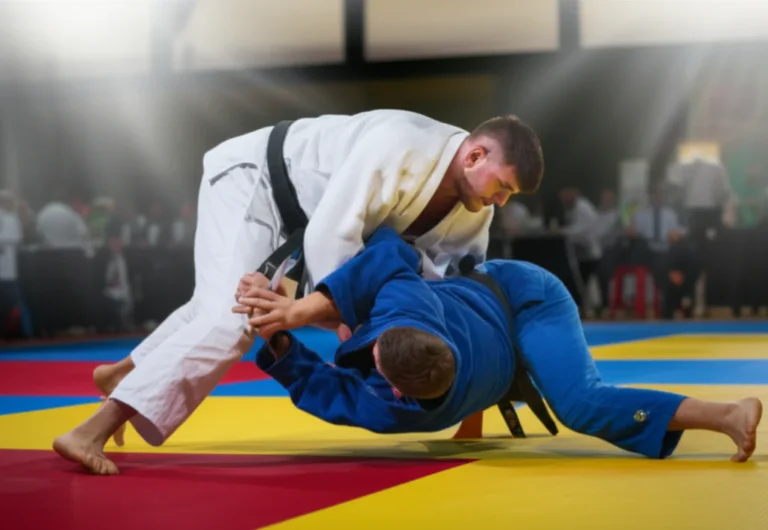
If you think Brazilian Jiu Jitsu (BJJ) is just about choking people in pajamas, think again. This “Gentle Art” is a mind-bending, ego-clipping, sweat-drenched journey that transforms not only your body but your entire outlook on life. From its samurai-inspired roots to the modern-day global phenomenon, BJJ teaches you how to outsmart opponents twice your size using technique, patience, and a little bit of human chess.
In this comprehensive guide, we’ll take you through everything you need to know—from the foundational positions and submissions to the intense mental game that makes BJJ so addictive. Curious why it takes an average of 10 years to earn a black belt? Or how a 120-pound accountant can tap out a 220-pound wrestler? Stick around, because the answers might just surprise you.
Key Takeaways
- Brazilian Jiu Jitsu is a grappling art focused on leverage and technique, not brute strength.
- The belt system is rigorous, with an average of 10 years to black belt, emphasizing mastery over speed.
- BJJ’s core positions and submissions form a complex “human chess” game that rewards strategy and patience.
- Training builds not only physical fitness but mental toughness, humility, and community.
- Major federations like IBJJF and ADCC host prestigious tournaments that showcase the best in the world.
- Whether you train Gi or No-Gi, quality gear like Fuji Gis and Hayabusa rash guards enhance your experience.
Ready to tap into the world of Brazilian Jiu Jitsu? Let’s roll!
Welcome to the mats, future human-pretzel! We are the expert team at Karate MMA™, and today we’re diving deep into the “Gentle Art” that has taken the world by storm. Whether you’re looking to defend yourself, get in the best shape of your life, or just find a way to legally choke your friends, Brazilian Jiu Jitsu (BJJ) is the answer.
Is it really “human chess,” or just sweaty cuddling with consequences? Let’s find out. 🥋
Table of Contents
- ⚡️ Quick Tips and Facts
- 📜 The Gentle Art’s Roots: From Samurai to the Streets of Rio
- 🥋 The BJJ Philosophy: Why Size Doesn’t Matter (Much)
- 🤼 ♂️ Style of Fighting: The Chess Match on the Mats
- 📍 Master the Map: Primary Ground Positions You Need to Know
- 🦴 Snap, Sleep, or Tap: The Art of Submissions
- 👕 Gi vs. No-Gi: Choosing Your Armor
- 🎓 The Long Road to Black: Grading and the Belt System
- ⚖️ Weight Classes and the Absolute Division
- 🏆 The Arena: Major Federations and Prestigious Tournaments
- 🤕 Staying on the Mats: Health Considerations and Injury Prevention
- 🌟 Legends of the Mat: Notable Fighters Who Changed the Game
- 🥊 BJJ vs. The World: How It Compares to Other Martial Arts
- 🎒 The Essential BJJ Gear Guide: What’s in Our Gym Bag?
- 🧠 The Mental Game: Why BJJ is “Human Chess”
- 21 Reasons Why BJJ is the Ultimate Ego-Clipping Sport
- 🏁 Conclusion
- 🔗 Recommended Links
- ❓ FAQ: Everything You’re Too Afraid to Ask Your Professor
- 📚 Reference Links
⚡️ Quick Tips and Facts
Before we get into the nitty-gritty, here is a “cheat sheet” for your first day at the academy.
| Feature | Detail |
|---|---|
| The Golden Rule | Tap early, tap often. Your ego is your biggest enemy. |
| Hygiene | Trim your nails! 💅 No one wants a “tiger scratch” during a roll. |
| Laundry | Wash your Gi immediately after every class. Staph is real. 🧼 |
| First Goal | Survival. Don’t worry about winning; just try to breathe. |
| The “Warm-up” | Usually involves “shrimping” across the mat like a frantic crustacean. |
| Fact | BJJ was popularized globally by Royce Gracie in UFC 1 (1993). |
| Fact | It takes an average of 10 years to earn a Black Belt. |
📜 The Gentle Art’s Roots: From Samurai to the Streets of Rio
The history of Brazilian Jiu Jitsu is a wild ride involving Japanese immigrants, circus challenges, and a very skinny man named Helio.
It all started with Mitsuyo Maeda, a Japanese Judoka who traveled the world proving the effectiveness of ground fighting. He eventually landed in Brazil, where he taught the son of a local businessman, Carlos Gracie. Carlos then taught his brothers, but it was the youngest, Helio Gracie, who truly revolutionized the art.
Helio was physically frail, so he adapted the traditional Japanese techniques to rely on leverage and timing rather than brute strength. This evolution turned “Jiu Jitsu” into “Brazilian Jiu Jitsu.” The Gracies became famous for the “Gracie Challenge,” inviting practitioners of any style to fight them in “Vale Tudo” (anything goes) matches. Spoiler alert: The Gracies usually won.
🥋 The BJJ Philosophy: Why Size Doesn’t Matter (Much)
We’ve all seen the movies where the little guy beats the giant. In BJJ, that’s not just a trope; it’s the business model. The core philosophy is that a smaller, weaker person can successfully defend themselves against a bigger, stronger assailant by using proper technique and leverage.
✅ Efficiency: Using the least amount of energy for the maximum result. ✅ Patience: Waiting for your opponent to make a mistake. ❌ Brute Force: Relying on muscle will only get you tired (and probably submitted).
🤼 ♂️ Style of Fighting: The Chess Match on the Mats
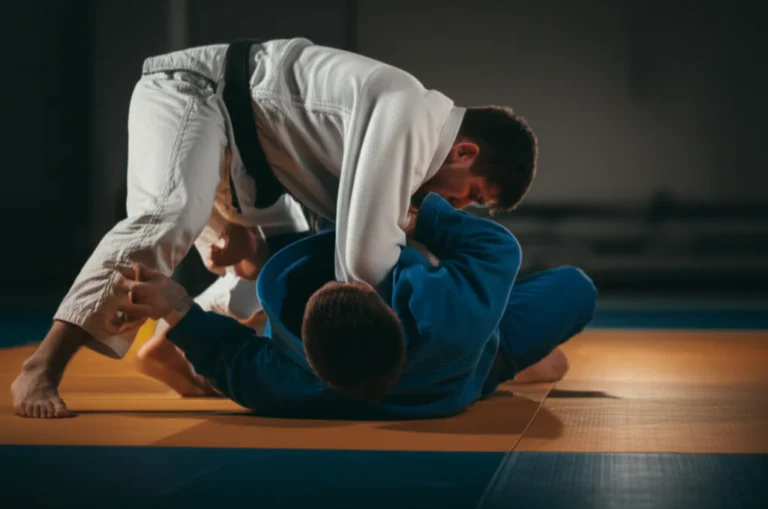
BJJ is almost entirely focused on grappling and ground fighting. Unlike Karate or Muay Thai, there is no striking (punches or kicks). Instead, the goal is to take the opponent to the ground, neutralize their strength, and apply a submission.
We like to call it “Human Chess.” Every move has a counter-move. If you move your arm here, I move my leg there. It’s a constant battle of positional dominance before the final “checkmate” (the submission).
📍 Master the Map: Primary Ground Positions You Need to Know
In BJJ, position is everything. We follow the mantra: Position before Submission.
- The Guard: You are on your back, using your legs to control the opponent. This is BJJ’s “secret weapon.”
- Side Control: You are on top, perpendicular to your opponent, pinning them to the mat.
- Full Mount: You are sitting on the opponent’s chest. This is a very dominant (and claustrophobic) position.
- The Back (Rear Mount): The “King of Positions.” You are behind the opponent with your legs hooked around them. Game over.
🦴 Snap, Sleep, or Tap: The Art of Submissions
This is where the “Gentle Art” gets a bit spicy. Submissions fall into two main categories:
- Joint Locks: Hyperextending or twisting a joint (like the Armbar or Kimura).
- Chokes/Strangles: Restricting blood flow to the brain (like the Rear Naked Choke or Triangle Choke).
Pro Tip: When you feel the pressure, tap the mat, your opponent, or yourself three times. It means “I give up, please don’t break me.”
👕 Gi vs. No-Gi: Choosing Your Armor
You’ll see two types of practitioners at the gym: those in heavy pajamas (the Gi) and those in spandex (No-Gi).
- The Gi: A thick cotton uniform. You can grab the collar, sleeves, and pants. It’s slower, more technical, and involves a lot of “friction.” We recommend starting here to learn the fundamentals.
- No-Gi: You wear a rash guard and grappling shorts. Since there are no grips, it’s much faster, sweatier, and relies more on athleticism and “overhooks/underhooks.”
Brand Recommendation: For a high-quality Gi that lasts, we love the Fuji All Around Gi (https://www.amazon.com/fuji-around-bjj-gi/s?k=fuji+all+around+bjj+gi). For No-Gi, Hayabusa makes the best rash guards in the game.
🎓 The Long Road to Black: Grading and the Belt System
BJJ has one of the most rigorous grading systems in martial arts. You can’t buy a belt here; you have to bleed for it.
- ⚪ White Belt: The “survival” phase. You are the nail.
- 🔵 Blue Belt: You’ve learned the basics. This is where most people quit (don’t be that person!).
- 💜 Purple Belt: The “technician” phase. You start developing your own “game.”
- 🤎 Brown Belt: You are a dangerous specialist.
- ⚫ Black Belt: You’ve mastered the fundamentals. Now the real learning begins.
⚖️ Weight Classes and the Absolute Division
In competition, you are usually matched by weight and belt level. However, BJJ is famous for the “Absolute Division” (Open Class), where a 140lb featherweight can go up against a 250lb ultra-heavyweight. It’s the ultimate test of the “technique over strength” theory.
🏆 The Arena: Major Federations and Prestigious Tournaments
If you want to test your mettle, these are the organizations that matter:
- IBJJF (International Brazilian Jiu-Jitsu Federation): The gold standard for Gi competition.
- ADCC (Abu Dhabi Combat Club): The “Olympics” of No-Gi grappling.
- AJP (Abu Dhabi Jiu Jitsu Pro): A massive global circuit with huge cash prizes.
🤕 Staying on the Mats: Health Considerations and Injury Prevention
Let’s be real: BJJ is hard on the body. You’re going to get bruised, and your fingers might start looking like ginger roots.
✅ Warm up properly: Don’t skip the shrimping! ✅ Tap early: Most injuries happen because someone was too proud to tap to an armbar. ✅ Strength & Conditioning: A strong body protects your joints. ❌ Training with “Spazzy” White Belts: Avoid the guy who thinks he’s in the UFC finals during a light drill.
🌟 Legends of the Mat: Notable Fighters Who Changed the Game
- Rickson Gracie: Often considered the greatest of all time. Legend says he never lost a match.
- Marcelo Garcia: The “GOAT” of middleweights, known for his incredible guillotine and X-guard.
- Gordon Ryan: The current king of No-Gi. Love him or hate him, his technical dominance is undeniable.
- Roger Gracie: The man who proved that basic fundamentals (like the cross-collar choke) work on everyone.
🥊 BJJ vs. The World: How It Compares to Other Martial Arts
| Martial Art | Focus | BJJ’s Advantage |
|---|---|---|
| Wrestling | Takedowns/Control | BJJ has a much deeper “finishing” (submission) game from the bottom. |
| Judo | Throws/Stand-up | BJJ focuses more on what happens after the throw. |
| Karate/Boxing | Striking | 90% of fights end up on the ground; BJJ is the king of that domain. |
🎒 The Essential BJJ Gear Guide: What’s in Our Gym Bag?
We never leave for the academy without these essentials:
- A Solid Gi: The Sanabul Essentials V.2 (https://www.amazon.com/Sanabul-Essentials-Version-Preshrunk-Brazilian/dp/B00P9W4FS4?tag=bestbrands0a9-20) is a fantastic budget-friendly entry point.
- Mouthguard: Protect those pearly whites! We recommend Shock Doctor.
- Finger Tape: For those of us who like to play “Spider Guard.” Johnson & Johnson Coach Tape is the industry standard.
- Defense Soap: To keep the “mat funk” (ringworm/staph) away. (https://www.amazon.com/Defense-Soap-Bar-100-Therapeutic-Essential/dp/B00120V6OC?tag=bestbrands0a9-20)
🧠 The Mental Game: Why BJJ is “Human Chess”
BJJ forces you to solve complex physical problems while someone is trying to sit on your face. It builds a level of mental toughness and problem-solving that carries over into your professional and personal life. You learn to stay calm in high-pressure situations. If you can handle a 220lb man trying to choke you, that Tuesday morning meeting with your boss seems like a breeze.
21 Reasons Why BJJ is the Ultimate Ego-Clipping Sport
Since a competing article mentioned BJJ is “ego-clipping,” we decided to give you 21 reasons why that’s actually its best feature:
- The “First Day” Reality Check: You will get beaten by a 120lb accountant.
- The Sweat Factor: You will share sweat with strangers. It’s humbling.
- The Tap: Admitting defeat 10 times in 30 minutes is good for the soul.
- No Hiding: You can’t “fake” being good at BJJ.
- The Pajama Factor: It’s hard to feel like a tough guy in a Gi.
- The “Shrimp”: Doing the warm-up makes you look like a bug on its back.
- The Blue Belt Blues: Realizing how much you don’t know.
- The “Old Man” Strength: Getting schooled by a 60-year-old black belt.
- The Silence: When you’re being smothered, you can’t talk your way out.
- The Laundry: You are now a professional laundromat.
- The Cauliflower Ear: A badge of honor that looks like a deformity.
- The “Spaz” Phase: Realizing you were the dangerous one all along.
- The Guard Pass: That moment of helplessness when someone clears your legs.
- The “Invisible” Power: Feeling weight that isn’t there.
- The Community: Everyone is equal on the mats.
- The Problem Solving: Your brain works harder than your biceps.
- The Resilience: Learning to lose and come back the next day.
- The Honesty: The mats never lie.
- The Focus: You can’t think about your bills while in a triangle choke.
- The Evolution: You are a different person every year you train.
- The Friendship: Nothing bonds people like trying to strangle each other.
🏁 Conclusion

Brazilian Jiu Jitsu is more than just a sport; it’s a lifestyle that demands discipline, humility, and a lot of laundry detergent. It will clip your ego, break your pride, and then build you back up into a more confident, capable version of yourself.
So, are you ready to stop watching from the sidelines and start rolling? The mats are waiting, and trust us, the “human chess” match is the most addictive game you’ll ever play. See you at the academy! 🥋✨
🔗 Recommended Links
❓ FAQ

Q: Am I too old to start BJJ? A: Absolutely not! We’ve seen people start in their 50s and 60s. Just listen to your body and pick a gym with a “hobbyist” friendly vibe.
Q: Do I need to be in shape to start? A: No. BJJ will get you in shape. Don’t wait to “get fit” before joining; the best BJJ cardio is doing BJJ.
Q: How often should I train? A: For beginners, 2-3 times a week is the “sweet spot” for progress without burning out or getting injured.
Q: Is BJJ effective for self-defense? A: Yes. Most real-world altercations end up in a clinch or on the ground, which is exactly where BJJ practitioners excel.
📚 Reference Links
- The History of the Gracie Family
- The Science of Grappling – Mayo Clinic Health System
- Understanding the BJJ Belt System – FloGrappling
⚡️ Quick Tips and Facts
| Feature | Detail |
|---|---|
| The Golden Rule | Tap early, tap often. Your ego is your biggest enemy. |
| Hygiene | Trim your nails! 💅 No one wants a “tiger scratch” during a roll. |
| Laundry | Wash your Gi immediately after every class. Staph is real. 🧼 |
| First Goal | Survival. Don’t worry about winning; just try to breathe. |
| The “Warm-up” | Usually involves “shrimping” across the mat like a frantic crustacean. |
| Fact | BJJ was popularized globally by Royce Gracie in UFC 1 (1993). |
| Fact | It takes an average of 10 years to earn a Black Belt. |
📜 The Gentle Art’s Roots: From Samurai to the Streets of Rio
The history of Brazilian Jiu Jitsu is a wild ride involving Japanese immigrants, circus challenges, and a very skinny man named Helio.
It all started with Mitsuyo Maeda, a Japanese Judoka who traveled the world proving the effectiveness of ground fighting. He eventually landed in Brazil, where he taught the son of a local businessman, Carlos Gracie. Carlos then taught his brothers, but it was the youngest, Helio Gracie, who truly revolutionized the art.
Helio was physically frail, so he adapted the traditional Japanese techniques to rely on leverage and timing rather than brute strength. This evolution turned “Jiu Jitsu” into “Brazilian Jiu Jitsu.” The Gracies became famous for the “Gracie Challenge,” inviting practitioners of any style to fight them in “Vale Tudo” (anything goes) matches. Spoiler alert: The Gracies usually won.
🥋 The BJJ Philosophy: Why Size Doesn’t Matter (Much)
We’ve all seen the movies where the little guy beats the giant. In BJJ, that’s not just a trope; it’s the business model. The core philosophy is that a smaller, weaker person can successfully defend themselves against a bigger, stronger assailant by using proper technique and leverage.
✅ Efficiency: Using the least amount of energy for the maximum result. ✅ Patience: Waiting for your opponent to make a mistake. ❌ Brute Force: Relying on muscle will only get you tired (and probably submitted).
🤼 ♂️ Style of Fighting: The Chess Match on the Mats
BJJ is almost entirely focused on grappling and ground fighting. Unlike Karate or Muay Thai, there is no striking (punches or kicks). Instead, the goal is to take the opponent to the ground, neutralize their strength, and apply a submission.
We like to call it “Human Chess.” Every move has a counter-move. If you move your arm here, I move my leg there. It’s a constant battle of positional dominance before the final “checkmate” (the submission).
📍 Master the Map: Primary Ground Positions You Need to Know
In BJJ, position is everything. We follow the mantra: Position before Submission.
- The Guard: You are on your back, using your legs to control the opponent. This is BJJ’s “secret weapon.”
- Side Control: You are on top, perpendicular to your opponent, pinning them to the mat.
- Full Mount: You are sitting on the opponent’s chest. This is a very dominant (and claustrophobic) position.
- The Back (Rear Mount): The “King of Positions.” You are behind the opponent with your legs hooked around them. Game over.
🦴 Snap, Sleep, or Tap: The Art of Submissions
This is where the “Gentle Art” gets a bit spicy. Submissions fall into two main categories:
- Joint Locks: Hyperextending or twisting a joint (like the Armbar or Kimura).
- Chokes/Strangles: Restricting blood flow to the brain (like the Rear Naked Choke or Triangle Choke).
Pro Tip: When you feel the pressure, tap the mat, your opponent, or yourself three times. It means “I give up, please don’t break me.”
👕 Gi vs. No-Gi: Choosing Your Armor
You’ll see two types of practitioners at the gym: those in heavy pajamas (the Gi) and those in spandex (No-Gi).
- The Gi: A thick cotton uniform. You can grab the collar, sleeves, and pants. It’s slower, more technical, and involves a lot of “friction.” We recommend starting here to learn the fundamentals.
- No-Gi: You wear a rash guard and grappling shorts. Since there are no grips, it’s much faster, sweatier, and relies more on athleticism and “overhooks/underhooks.”
Brand Recommendation: For a high-quality Gi that lasts, we love the Fuji All Around Gi (https://www.amazon.com/fuji-around-bjj-gi/s?k=fuji+all+around+bjj+gi). For No-Gi, Hayabusa makes the best rash guards in the game.
🎓 The Long Road to Black: Grading and the Belt System
BJJ has one of the most rigorous grading systems in martial arts. You can’t buy a belt here; you have to bleed for it.
- ⚪ White Belt: The “survival” phase. You are the nail.
- 🔵 Blue Belt: You’ve learned the basics. This is where most people quit (don’t be that person!).
- 💜 Purple Belt: The “technician” phase. You start developing your own “game.”
- 🤎 Brown Belt: You are a dangerous specialist.
- ⚫ Black Belt: You’ve mastered the fundamentals. Now the real learning begins.
⚖️ Weight Classes and the Absolute Division
In competition, you are usually matched by weight and belt level. However, BJJ is famous for the “Absolute Division” (Open Class), where a 140lb featherweight can go up against a 250lb ultra-heavyweight. It’s the ultimate test of the “technique over strength” theory.
🏆 The Arena: Major Federations and Prestigious Tournaments
If you want to test your mettle, these are the organizations that matter:
- IBJJF (International Brazilian Jiu-Jitsu Federation): The gold standard for Gi competition.
- ADCC (Abu Dhabi Combat Club): The “Olympics” of No-Gi grappling.
- AJP (Abu Dhabi Jiu Jitsu Pro): A massive global circuit with huge cash prizes.
🤕 Staying on the Mats: Health Considerations and Injury Prevention
Let’s be real: BJJ is hard on the body. You’re going to get bruised, and your fingers might start looking like ginger roots.
✅ Warm up properly: Don’t skip the shrimping! ✅ Tap early: Most injuries happen because someone was too proud to tap to an armbar. ✅ Strength & Conditioning: A strong body protects your joints. ❌ Training with “Spazzy” White Belts: Avoid the guy who thinks he’s in the UFC finals during a light drill.
🌟 Legends of the Mat: Notable Fighters Who Changed the Game
- Rickson Gracie: Often considered the greatest of all time. Legend says he never lost a match.
- Marcelo Garcia: The “GOAT” of middleweights, known for his incredible guillotine and X-guard.
- Gordon Ryan: The current king of No-Gi. Love him or hate him, his technical dominance is undeniable.
- Roger Gracie: The man who proved that basic fundamentals (like the cross-collar choke) work on everyone.
🥊 BJJ vs. The World: How It Compares to Other Martial Arts
| Martial Art | Focus | BJJ’s Advantage |
|---|---|---|
| Wrestling | Takedowns/Control | BJJ has a much deeper “finishing” (submission) game from the bottom. |
| Judo | Throws/Stand-up | BJJ focuses more on what happens after the throw. |
| Karate/Boxing | Striking | 90% of fights end up on the ground; BJJ is the king of that domain. |
🎒 The Essential BJJ Gear Guide: What’s in Our Gym Bag?
We never leave for the academy without these essentials:
- A Solid Gi: The Sanabul Essentials V.2 (https://www.amazon.com/Sanabul-Essentials-Version-Preshrunk-Brazilian/dp/B00P9W4FS4?tag=bestbrands0a9-20) is a fantastic budget-friendly entry point.
- Mouthguard: Protect those pearly whites! We recommend Shock Doctor.
- Finger Tape: For those of us who like to play “Spider Guard.” Johnson & Johnson Coach Tape is the industry standard.
- Defense Soap: To keep the “mat funk” (ringworm/staph) away. (https://www.amazon.com/Defense-Soap-Bar-100-Therapeutic-Essential/dp/B00120V6OC?tag=bestbrands0a9-20)
🧠 The Mental Game: Why BJJ is “Human Chess”
BJJ forces you to solve complex physical problems while someone is trying to sit on your face. It builds a level of mental toughness and problem-solving that carries over into your professional and personal life. You learn to stay calm in high-pressure situations. If you can handle a 220lb man trying to choke you, that Tuesday morning meeting with your boss seems like a breeze.
21 Reasons Why BJJ is the Ultimate Ego-Clipping Sport
Since a competing article mentioned BJJ is “ego-clipping,” we decided to give you 21 reasons why that’s actually its best feature:
- The “First Day” Reality Check: You will get beaten by a 120lb accountant.
- The Sweat Factor: You will share sweat with strangers. It’s humbling.
- The Tap: Admitting defeat 10 times in 30 minutes is good for the soul.
- No Hiding: You can’t “fake” being good at BJJ.
- The Pajama Factor: It’s hard to feel like a tough guy in a Gi.
- The “Shrimp”: Doing the warm-up makes you look like a bug on its back.
- The Blue Belt Blues: Realizing how much you don’t know.
- The “Old Man” strength: Getting schooled by a 60-year-old black belt.
- The Silence: When you’re being smothered, you can’t talk your way out.
- The Laundry: You are now a professional laundromat.
- The Cauliflower Ear: A badge of honor that looks like a deformity.
- The “Spaz” Phase: Realizing you were the dangerous one all along.
- The Guard Pass: That moment of helplessness when someone clears your legs.
- The “Invisible” Power: Feeling weight that isn’t there.
- The Community: Everyone is equal on the mats.
- The Problem Solving: Your brain works harder than your biceps.
- The Resilience: Learning to lose and come back the next day.
- The Honesty: The mats never lie.
- The Focus: You can’t think about your bills while in a triangle choke.
- The Evolution: You are a different person every year you train.
- The Friendship: Nothing bonds people like trying to strangle each other.
🏁 Conclusion

Brazilian Jiu Jitsu is not just a martial art; it’s a transformative journey that challenges your body, mind, and ego. From the moment you step on the mats, you’ll experience the humbling reality of being tapped by someone half your size, the thrill of mastering complex submissions, and the camaraderie that only comes from shared struggle.
We’ve explored the rich history of BJJ, its core philosophy of leverage over strength, the essential positions and submissions, and the vibrant competitive scene. We also unpacked the mental toughness it builds and why it’s famously called the ultimate ego-clipping sport.
If you’re wondering whether to start training, our answer is a resounding YES. The benefits—self-defense skills, fitness, mental resilience, and community—are well worth the sweat and occasional bruises. And if you’re considering gear, the Fuji All Around Gi and Sanabul Essentials V.2 are excellent starting points, balancing durability, comfort, and price.
Remember the golden rule: tap early, tap often. Your ego will take a hit, but your confidence and skill will soar.
So, are you ready to roll? The mats are calling. 🥋
🔗 Recommended Links
Shop BJJ Gear and Essentials
-
Fuji All Around Gi:
Amazon | Fuji Official Website -
Sanabul Essentials V.2 Gi:
Amazon | Sanabul Official Website -
Hayabusa Rash Guards (No-Gi):
Amazon | Hayabusa Official Website -
Shock Doctor Mouthguard:
Amazon -
Johnson & Johnson Coach Tape:
Amazon -
Defense Soap Bar:
Amazon
Recommended Books on Brazilian Jiu Jitsu
-
Jiu-Jitsu University by Saulo Ribeiro
Amazon -
Mastering Jujitsu by Renzo Gracie and John Danaher
Amazon -
The Gracie Diet by Rorion Gracie (for lifestyle insights)
Amazon
❓ FAQ

Is Brazilian Jiu Jitsu effective for real-life combat situations?
Absolutely! BJJ’s focus on ground control and submissions makes it highly effective in real-world self-defense scenarios where fights often end up on the ground. The art teaches you how to neutralize larger opponents by using leverage and technique rather than brute strength. According to Renzo Gracie Academy, BJJ is designed to empower practitioners of all sizes to defend themselves effectively.
What are the common techniques used in Brazilian Jiu Jitsu?
The core techniques include:
- Guard positions: Closed guard, open guard, half guard, butterfly guard.
- Sweeps: Techniques to reverse positions from guard.
- Passes: Moving past the opponent’s guard to dominant positions.
- Submissions: Joint locks (armbar, kimura, heel hook) and chokes (rear naked choke, guillotine, triangle choke).
- Escapes: Techniques to get out of bad positions like mount or side control.
These techniques are practiced through drilling and live sparring (“rolling”) to develop timing and reflexes.
How long does it take to earn a black belt in Brazilian Jiu Jitsu compared to Karate?
BJJ is known for its rigorous and lengthy belt progression. On average, it takes around 10 years of consistent training to earn a black belt, reflecting the art’s complexity and depth. In contrast, Karate black belts can be earned in as little as 3-5 years depending on the style and school. The longer timeline in BJJ is partly due to the extensive sparring and live resistance training required to demonstrate proficiency.
For more on belt systems, check out our Karate Belts and Rankings section.
What are the benefits of training Brazilian Jiu Jitsu for beginners?
Beginners gain:
- Improved fitness: Cardiovascular, strength, and flexibility.
- Self-defense skills: Practical techniques effective against bigger opponents.
- Mental toughness: Problem-solving under pressure and humility.
- Community: Supportive environment fostering friendships.
- Stress relief: Physical exertion and focus help reduce anxiety.
Our team at Karate MMA™ has seen beginners transform physically and mentally within months of consistent training.
Can Brazilian Jiu Jitsu be combined with other martial arts like Karate?
Yes! Many practitioners combine BJJ with striking arts like Karate to develop a well-rounded skill set. Karate provides striking, distance control, and explosive power, while BJJ covers grappling and ground fighting. This combination is especially popular in MMA training.
For insights on Karate techniques and how they complement grappling, visit our Karate Techniques page.
How does Brazilian Jiu Jitsu improve self-defense skills compared to other martial arts?
BJJ’s emphasis on ground fighting fills a critical gap in many striking arts. Since most street fights end up grappling or on the ground, knowing how to control and submit an opponent there is invaluable. Unlike some martial arts that focus on stand-up striking or forms, BJJ’s live sparring trains you to handle resistance and unpredictability, making it highly practical.
What are the main differences between Brazilian Jiu Jitsu and Karate?
| Aspect | Brazilian Jiu Jitsu | Karate |
|---|---|---|
| Focus | Grappling, ground fighting, submissions | Striking: punches, kicks, blocks |
| Training | Live sparring (“rolling”) is central | Kata (forms), drills, and sparring |
| Self-defense | Ground control and submissions | Stand-up striking and blocking |
| Belt progression | Longer, more rigorous (avg. 10 years) | Generally faster (3-5 years) |
| Physical demands | Cardiovascular endurance, flexibility | Speed, power, coordination |
Both arts complement each other well, and many martial artists cross-train.
What are the health benefits of practicing Brazilian Jiu Jitsu regularly?
Regular BJJ training improves:
- Cardiovascular health and endurance
- Muscular strength and flexibility
- Coordination and balance
- Mental health: stress reduction, confidence, focus
- Injury resilience through body awareness
A study by the Mayo Clinic Health System highlights that grappling arts like BJJ have lower injury rates than striking arts and MMA, making it a relatively safe way to get fit and learn self-defense (source).
What are the best Brazilian Jiu Jitsu techniques for beginners?
Beginners should focus on:
- Closed guard control and basic sweeps
- Basic escapes from mount and side control
- Fundamental submissions: Rear naked choke, armbar from guard, triangle choke
- Positional drills: Maintaining mount, side control, and back control
Mastering these basics builds a solid foundation before moving to advanced techniques.
How does Brazilian Jiu Jitsu rank in terms of popularity among martial arts worldwide?
BJJ has seen explosive growth globally, especially after the early UFC events in the 1990s showcased its effectiveness. It’s now practiced by millions worldwide, with thousands of academies and major tournaments like the IBJJF World Championship drawing international competitors. According to BJJ Heroes, BJJ ranks among the top grappling arts and continues to grow rapidly.
📚 Reference Links
- Brazilian Jiu-Jitsu – Wikipedia
- Renzo Gracie Academy – What is Brazilian Jiu Jitsu?
- The Guardian – Brazilian jiu-jitsu: ‘A soul-destroying, ego-clipping sport that’s sunk deep into my veins’
- International Brazilian Jiu-Jitsu Federation (IBJJF)
- Mayo Clinic Health System – The Science of Grappling
- BJJ Heroes – Fighter Profiles and History
- Fuji BJJ Official Website
- Sanabul Official Website
- Hayabusa Official Website