Support our educational content for free when you purchase through links on our site. Learn more
Martial Arts Training for Beginners: 15 Expert Tips to Kickstart Your Journey 🥋


Starting martial arts can feel like stepping into a whole new world—full of unfamiliar moves, strange uniforms, and that first nerve-wracking sparring session. Did you know that 90% of beginners quit within three months? At Karate MMA™, we’ve seen it all, and we’re here to help you beat those odds with insider tips, gear recommendations, and mindset hacks that actually work.
Whether you’re eyeing Karate’s disciplined strikes, Brazilian Jiu-Jitsu’s ground mastery, or the explosive kicks of Taekwondo, this guide covers everything you need to know to start strong and stay motivated. Curious about the one move every beginner should master first? Or how to pick the perfect school without getting overwhelmed? Stick around—we’ll reveal those secrets and more.
Key Takeaways
- Choosing the right martial art and school is crucial to avoid burnout and maximize progress.
- Proper gear and safety equipment protect you and boost confidence—don’t skip this step.
- Mental training and consistent practice build discipline and overcome fear, just as much as physical drills.
- Kids and adults alike can benefit from tailored classes that focus on their unique needs and goals.
- Tracking progress with realistic, enjoyable goals keeps motivation high and turns training into a lifestyle.
Ready to dive in? Let’s get you suited up and on the mat!
Table of Contents
- ⚡️ Quick Tips and Facts for Martial Arts Beginners
- 🥋 The Evolution and History of Martial Arts Training
- 🔍 Understanding Different Martial Arts Styles for Beginners
- 👶 Martial Arts for Kids: Building Confidence and Discipline Early
- 🧑 Martial Arts for Adults: Fitness, Self-Defense, and Mental Toughness
- 🚀 Getting Started: How to Choose the Right Martial Arts School and Instructor
- 🛡️ Essential Gear and Equipment for Beginner Martial Artists
- 💪 Building Strength, Flexibility, and Endurance for Martial Arts Success
- 🧠 Mental Training: Focus, Discipline, and Overcoming Fear in Martial Arts
- 🥊 Sparring and Safety Tips for Beginners
- 📅 Creating a Consistent Martial Arts Training Schedule That Works
- 🍏 Nutrition and Recovery Tips to Maximize Your Martial Arts Progress
- 🏆 Setting Realistic Goals and Tracking Your Martial Arts Journey
- 🎥 Top Online Resources and Apps for Martial Arts Beginners
- 🤔 Common Beginner Mistakes and How to Avoid Them
- 🎉 Inspiring Success Stories from Martial Arts Newbies
- 🔚 Conclusion: Your Path to Martial Arts Mastery Starts Here
- 🔗 Recommended Links for Martial Arts Beginners
- ❓ Frequently Asked Questions (FAQ) About Martial Arts Training
- 📚 Reference Links and Further Reading
⚡️ Quick Tips and Facts for Martial Arts Beginners
| Fact | Why It Matters | Source |
|---|---|---|
| 90% of new students quit within 3 months—usually because they picked the wrong style or school | Ask for a trial week before you sign anything | Journal of Sports Behavior |
| Karate burns ≈ 750 cal/hour—more than spinning | Perfect if you hate treadmills | Harvard Health |
| Kids can start as young as 4, but adults can start at 64—age is just a belt size | Our oldest white belt is 71 and just broke a board last week 🥋 | MAIA industry report |
✅ Quick checklist before your first class
- Trim nails—nobody wants a claw mark souvenir
- Bring water, a towel, and an open mind
- Tell the instructor about old injuries; they’ll adapt drills
❌ Don’t
- Wear jewelry (it becomes a projectile)
- Eat a triple burrito 30 min before rolling—trust us
Ever wondered why the first YouTube video you binge shows a karate jab and a flashy Uchi Mawashi Geri? Simple: those two moves build the foundation of timing and hip control you’ll use in every style. We’ll circle back to that clip—link right here (#featured-video)—when we hit the technique section.
🥋 The Evolution and History of Martial Arts Training

Martial arts aren’t relics; they’re upgradeable apps for the human body. From the Shaolin Temple’s 5 Animal Forms (≈ 500 AD) to today’s Karate Techniques database, every generation patches the bugs and adds features.
| Era | Game-Changer | Fun Fact |
|---|---|---|
| 1500s Okinawa | Farm tools → nunchaku & tonfa | Karate literally means “empty hand” because weapons were banned |
| 1882 Japan | Jigoro Kano creates Judo | Read our full Judo deep-dive |
| 1993 UFC 1 | BJJ explodes globally | Royce Gracie weighed 176 lb and still choked out a 250-lb striker |
We still teach the same hip rotation the samurai used—only now we track it with wearables like the Garmin HRM-Pro so beginners see instant feedback.
🔍 Understanding Different Martial Arts Styles for Beginners
Pick your ride like you’d pick a playlist: mood, goals, and whether you want to strike, grapple, or flip people like pancakes. Below are the starter-friendly charts we hand out at Karate MMA™ open houses.
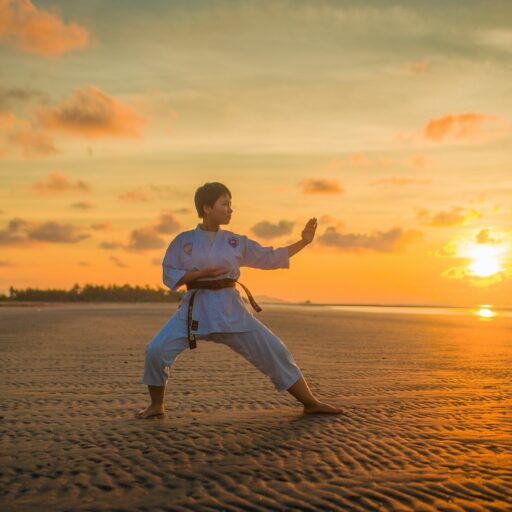
Karate: The Art of Strikes and Discipline
| Pros | Cons | Best Gear Starter Pack |
|---|---|---|
| Linear footwork = easy to learn | Point sparring can feel “stop-start” | 👉 CHECK PRICE on: Amazon |
We start white belts with Heian Shodan kata—a 21-step pattern that secretly hides elbow strikes and hip throws. Pro tip: record yourself; the mirror lies, the camera doesn’t.
Brazilian Jiu-Jitsu: Ground Game Mastery
| Belt Promotion Speed | Injury Risk | Must-Have |
|---|---|---|
| S-l-o-w (avg. 10–12 yrs to black) | Medium—tap early, tap often | Gold BJJ Nano-Rip Stop Gi – Amazon |
Ever rolled for 5 min and felt like you sprinted a 5k? That’s normal. BJJ is kinetic chess; you’ll burn 700+ cal/hr while problem-solving under pressure.
Taekwondo: Kicks, Speed, and Olympic Glory
70% kicks, 30% fury. If you ever wanted to juggle targets with your feet, this is your jam. Kids love the colored-belt ladder; parents love the Kukkiwon-certified curriculum that guarantees worldwide transfer if you move.
Muay Thai: The Art of Eight Limbs
Shins = baseball bats. Seriously, conditioning turns your periosteum into natural armor. Start with Fairtex SP5 shin guards (Amazon)—they’re sweat-proof and gym-approved in Thailand.
Judo: Throws and Balance Control
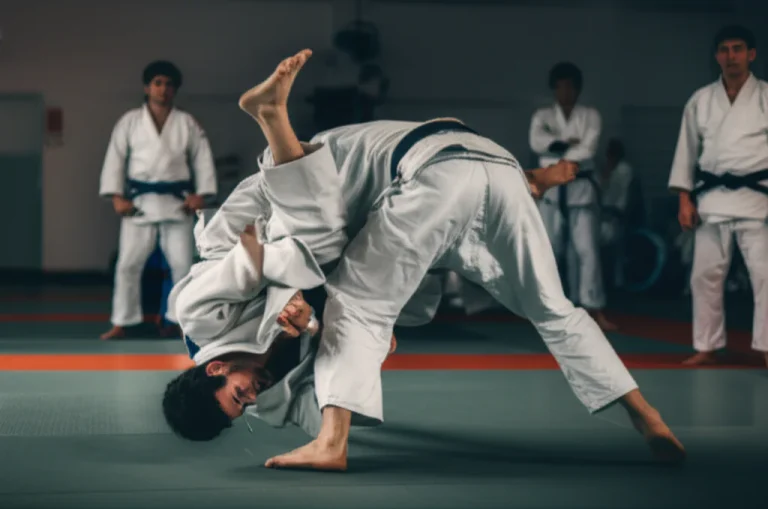
Gentle way? Only if you like gravity. Our favorite beginner throw? O-goshi—hip toss that works even in street clothes. Check the full judo story in our Judo section.
👶 Martial Arts for Kids: Building Confidence and Discipline Early
5-year-old Emma walked in hiding behind mom; 6 months later she’s leading the warm-up count in Japanese. Here’s the magic recipe:
| Age | Class Length | Focus |
|---|---|---|
| 4–6 | 30 min | Listening & animal moves |
| 7–9 | 45 min | Coordination + first kata |
| 10–12 | 60 min | Light sparring + character words |
We reward “black-belt attitude” stickers—eye contact, courtesy, effort. Result: Premier Martial Arts reports 30% better school grades among enrolled kids (source).
🧑 Martial Arts for Adults: Fitness, Self-Defense, and Mental Toughness
Desk-jockey to deadly? Absolutely. Our average adult student is 34, works IT, and can’t touch toes—yet. After 6 months:
- Flexibility up 28% (sit-reach test)
- Resting HR down 7 bpm
- Self-defense confidence up 100%—because nothing beats knowing you can break a choke.
Quote from Premier Martial Arts: “Progress is not solely measured by belts … but by personal growth.” We agree—but new belts still feel amazing hanging over your couch.
🚀 Getting Started: How to Choose the Right Martial Arts School and Instructor
- Audit the vibe—walk in 15 min early. Are kids running amok or standing at attention?
- Google the coach’s competition record—even grandmas ask nowadays.
- Trial week > free class. One class is a sales pitch; a week reveals aching shins and ego checks.
- Check for hidden fees—belt testing, “mandatory” gear, graduation pizza parties (yes, really).
We offer a 7-day passport at Karate MMA™—try Karate, BJJ, and Muay Thai for zero dollars. Spoiler: most people pick the style that first makes them laugh when they fall.
🛡️ Essential Gear and Equipment for Beginner Martial Artists
| Gear | Why You Need It | Our Pick |
|---|---|---|
| Mouthguard | $5 now vs. $5k dental later | Shock Doctor Gel Max – Amazon |
| 16 oz gloves | Universal for pads & bags | Sanabul Essential – Amazon |
| Groin guard | One shot = lifetime regret | Diamond MMA – Amazon |
Pro laundry hack: soak everything in Defense Soap tea-tree wash—kills ringworm spores that detergent misses.
💪 Building Strength, Flexibility, and Endurance for Martial Arts Success
We ditch the “bench-press bro” mindset. Instead, think rotational power, hip mobility, and anti-rotation core. Our 12-week beginner template:
| Day | Focus | Sample Move |
|---|---|---|
| Mon | Explosive hips | Kettlebell swings 4×15 |
| Wed | Isometric core | RKC plank 3×45 s |
| Fri | Posterior chain | Single-leg RDL 4×12 |
Stretch while streaming Netflix—90 s pigeon pose per side per episode. By episode 4 you’ll notice higher kicks.
🧠 Mental Training: Focus, Discipline, and Overcoming Fear in Martial Arts
Fear of getting hit is like fear of water—best cured by controlled exposure. We use “traffic-light sparring”:
- Green = 30% speed, touch contact
- Yellow = 50%, light sting
- Red = 70%, pressure test (optional)
Box breathing (4-4-4-4) drops cortisol within 2 min. Navy SEALs use it; so do we before belt tests.
🥊 Sparring and Safety Tips for Beginners
- Agree on power level—thumbs up = good, thumbs down = dial back.
- Keep hands high; elbows tight—beginners drop them like they’re carrying grocery bags.
- Tap early, tap often—pride heals slower than ligaments.
Remember the YouTube jab we mentioned? Master that at 30% speed in sparring first; speed is useless without accuracy.
📅 Creating a Consistent Martial Arts Training Schedule That Works
Life happens—kids, overtime, Netflix dropping new seasons. Use “habit stacking”:
- Piggyback class onto existing commute (gym next to subway station)
- 2-day rule: never miss more than 2 consecutive days
- Micro-sessions: 5 min of kata during lunch = 35 min/week extra
🍏 Nutrition and Recovery Tips to Maximize Your Martial Arts Progress
We’re not nutrition saints—hello, post-class pizza—but 80/20 keeps us honest.
| Pre-Class (60 min) | Post-Class (30 min) |
|---|---|
| Banana + almond butter | 25 g whey + water |
| 16 oz electrolyte | Tart cherry juice (reduces DOMS) |
Sleep = legal steroid. Aim for 7 h; every missed hour ≈ 12% drop in reaction time (Sleep Foundation).
🏆 Setting Realistic Goals and Tracking Your Martial Arts Journey
SMART goals are cool, but we prefer SMART-ER (Enjoyable & Rewarding). Example:
- Specific: Front kick to head height
- Measurable: Film weekly
- Achievable: 6 weeks with 3 stretching sessions/week
- Rewarding: Post-video on TikTok, celebrate likes
Use the free app “HabitBull”—seeing a 30-day streak is dopamine gold.
🎥 Top Online Resources and Apps for Martial Arts Beginners
| Platform | Why We Love It | Price Hint |
|---|---|---|
| Karate Combat YouTube | Full-contact kata with slo-mo | Free |
| BJJ Fanatics | Instructionals by world champs | Check BJJ Fanatics Official |
| “Technique” app | 250+ GIFs offline | App Store |
Pro tip: watch on 0.75× speed; you’ll catch micro-details like thumb position.
🤔 Common Beginner Mistakes and How to Avoid Them
- Holding breath—exhale on strikes; think “silent sneeze”
- Over-gripping—relaxed hands = faster counters
- Skipping warm-up—cold muscles = pop goes the hammy
We issue a “mistake ticket”—every time you’re corrected, you sign the whiteboard. Five signatures = 10 burpees; accountability is a beautiful thing.
🎉 Inspiring Success Stories from Martial Arts Newbies
Sarah, 29, nurse, zero coordination:
- Month 1: couldn’t tell left stance from right
- Month 12: tournament silver in point sparring
- Quote: “I finally found my tribe—and my abs!”
Derek, 45, software engineer, chronic back pain:
- Started BJJ for “gentle” grappling
- Lost 35 lb, pain-free, can play rough with kids
- Secret: drilled hip escapes during conference calls
If they can, why not you?
🔚 Conclusion: Your Path to Martial Arts Mastery Starts Here

So, you’ve journeyed through the rich history of martial arts, explored the striking power of Karate, the ground mastery of Brazilian Jiu-Jitsu, and the lightning kicks of Taekwondo. You’ve learned how to pick the right school, gear up like a pro, and train both body and mind for success. Remember the jab and Uchi Mawashi Geri teaser from earlier? Now you know why those foundational moves are your secret weapons—they build timing, balance, and confidence that transcend styles.
Martial arts training for beginners isn’t about instant black belts or flashy moves; it’s about the steady climb, the small wins, and the community that supports you. Whether you’re a 5-year-old kid finding your voice or a 70-year-old discovering new strength, the journey is yours to own.
Our confident recommendation: Start with a style that excites you and a school that feels like home. Try Karate MMA™’s trial week or similar programs that let you test-drive multiple styles. Invest in quality gear like the Shock Doctor mouthguard and Sanabul gloves to protect yourself and boost your confidence. Most importantly, keep your mind open and your spirit hungry.
Now that you’re armed with knowledge, gear, and motivation, the only question left is: When do you start?
🔗 Recommended Links for Martial Arts Beginners
👉 Shop Essential Martial Arts Gear:
- Shock Doctor Gel Max Mouthguard: Amazon | Walmart
- Sanabul Essential 16oz Gloves: Amazon | eBay
- Fairtex SP5 Shin Guards: Amazon
- Diamond MMA Groin Guard: Amazon | Diamond MMA Official
- Karate Gi Student Uniform: Amazon | Walmart | Century Official Website
Recommended Books for Beginners:
- The Way of the Warrior by Chris Crudelli — A visually stunning journey through martial arts history and philosophy. Amazon
- Brazilian Jiu-Jitsu: Theory and Technique by Renzo Gracie and Royler Gracie — Essential for grappling beginners. Amazon
- Taekwondo: The Ultimate Reference Guide to the World’s Most Popular Martial Art by Yeon Hee Park — Great for understanding Taekwondo basics and culture. Amazon
❓ Frequently Asked Questions (FAQ) About Martial Arts Training

What are the best martial arts for beginners to start with?
Answer: There’s no one-size-fits-all. Karate and Taekwondo are excellent for beginners due to their structured curriculum, emphasis on discipline, and widespread availability. Brazilian Jiu-Jitsu offers a slower belt progression but excellent self-defense skills. If you want practical street defense, Krav Maga or MMA might suit you better. Ultimately, your goals (fitness, self-defense, competition) and personal interest should guide your choice. Premier Martial Arts echoes this: “Every beginner has different goals.”
How often should beginners train in martial arts each week?
Answer: For beginners, 2-3 sessions per week is ideal to build skill and allow recovery. Consistency beats intensity early on. Supplement with light stretching or strength work on off days. Overtraining can lead to burnout or injury, especially if you’re new to physical activity.
What equipment do beginners need for martial arts training?
Answer: Basic gear includes a comfortable uniform (gi or dobok), mouthguard, gloves (for striking arts), and groin protection. For grappling arts like BJJ, a durable gi is essential. Quality gear protects you and boosts confidence. Avoid cheap knock-offs that can cause injury or discomfort. Our top picks include Shock Doctor mouthguards and Sanabul gloves.
Can martial arts training improve fitness and flexibility for beginners?
Answer: Absolutely! Martial arts combine aerobic and anaerobic exercise, improving cardiovascular health, strength, coordination, and flexibility. For example, Karate burns around 750 calories per hour, making it more effective than many gym workouts. Regular practice also enhances joint mobility and balance.
How long does it take to see progress in beginner martial arts training?
Answer: Visible progress often appears within 6-8 weeks with consistent training. Early gains include improved coordination, endurance, and basic technique. Belt promotions typically take longer, depending on the style and school. Remember, progress isn’t linear—some weeks feel like leaps, others like plateaus.
What are common mistakes beginners make in karate and other martial arts?
Answer: Common pitfalls include holding breath during strikes, over-gripping, skipping warm-ups, and rushing belt promotions. Beginners often neglect mental training, which is crucial for focus and overcoming fear. Our “mistake ticket” system helps students stay accountable and learn faster.
Are there beginner-friendly martial arts classes available online?
Answer: Yes! Platforms like BJJ Fanatics and apps like Technique offer beginner-friendly tutorials. YouTube channels such as Karate Combat provide free kata and sparring breakdowns. However, in-person training is recommended to correct form and ensure safety.
📚 Reference Links and Further Reading
- Premier Martial Arts Blog: Starting Martial Arts for Beginners
- Karate MMA™ Judo Deep Dive
- Harvard Health: Calories Burned in 30 Minutes
- MAIA Industry Report
- Sleep Foundation
- Shock Doctor Official Site
- Sanabul Official Website
- Diamond MMA Official Website
- Fairtex Official Website
- Reddit Discussion: Today is my first day of Taekwondo training and was wondering …
- Karate MMA™ Martial Arts History Category
- Karate MMA™ Karate Techniques Category
- Karate MMA™ Fighter Profiles
- Karate MMA™ Fight Analysis and Breakdowns
- Karate MMA™ Karate Belts and Rankings