Support our educational content for free when you purchase through links on our site. Learn more
Is Kyokushin Karate Effective in MMA? 🥋 The Ultimate Breakdown (2026)


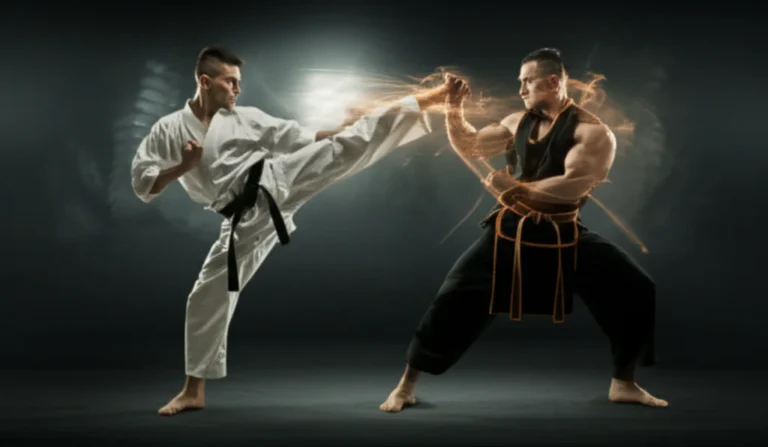
Ever wondered if the legendary Kyokushin Karate style, famous for its iron body conditioning and thunderous leg kicks, can hold its own inside the unforgiving cage of MMA? Spoiler alert: it’s not just effective—it’s a secret weapon when integrated properly. But here’s the kicker (pun intended): Kyokushin’s traditional rules forbid punches to the head, which means fighters must adapt significantly to survive the brutal world of mixed martial arts.
In this article, we’ll unpack the 7 key reasons why Kyokushin Karate techniques shine in MMA, reveal the strengths and glaring gaps of the style, and share insider tips from our Karate MMA™ experts on how to blend Kyokushin’s power with grappling and boxing to become a complete fighter. Plus, we’ll spotlight MMA legends like Georges St-Pierre and Bas Rutten who built their striking foundations on Kyokushin principles. Curious how a style born from fighting bulls barehanded translates to the Octagon? Keep reading—you’ll be surprised.
Key Takeaways
- Kyokushin Karate excels in powerful leg kicks, body conditioning, and mental toughness, making it a formidable striking base for MMA.
- Traditional Kyokushin lacks head-punch defense and grappling, so cross-training in wrestling and Brazilian Jiu-Jitsu is essential for MMA success.
- Top MMA fighters like Georges St-Pierre and Bas Rutten have successfully integrated Kyokushin techniques into their gameplans.
- The “Osu!” spirit of perseverance and full-contact training builds unmatched resilience and durability inside the cage.
- To maximize effectiveness, adapt your guard, combine kicks with takedown defense, and blend Kyokushin striking with other martial arts.
Ready to learn how to turn Kyokushin Karate into an MMA powerhouse? Let’s dive in!
Table of Contents
- ⚡️ Quick Tips and Facts About Kyokushin Karate in MMA
- 🥋 The Origins and Evolution of Kyokushin Karate: A Martial Arts Powerhouse
- 🥊 What Makes Kyokushin Karate Unique in the MMA World?
- 💥 7 Reasons Why Kyokushin Karate Techniques Are Effective in MMA
- 🛡️ Kyokushin Karate’s Strengths and Limitations in MMA Fighting
- 👊 Top MMA Fighters Who Use Kyokushin Karate and Their Success Stories
- ⚔️ How to Integrate Kyokushin Karate Into Your MMA Training Regimen
- 🥇 Kyokushin Karate vs. Other Martial Arts in MMA: A Comparative Breakdown
- 🧠 Mental Toughness and Discipline: Kyokushin’s Secret Weapons in MMA
- 🔍 Common Misconceptions About Kyokushin Karate in MMA
- 🎯 Quick Tips to Maximize Kyokushin Karate’s Effectiveness in MMA
- 🧰 Essential Gear and Brands for Kyokushin Karate Practitioners in MMA
- 📚 Recommended Resources and Training Camps for Kyokushin Karate in MMA
- 📝 Conclusion: Is Kyokushin Karate Effective in MMA? Our Final Verdict
- 🔗 Recommended Links for Further Exploration
- ❓ Frequently Asked Questions About Kyokushin Karate and MMA
- 📑 Reference Links and Credible Sources
⚡️ Quick Tips and Facts About Kyokushin Karate in MMA
Before we dive into the deep end of the dojo, let’s get the “too long; didn’t read” version out of the way. If you’re wondering if Karate MMA is a match made in heaven or a recipe for a knockout, here’s the lowdown.
| Feature | Kyokushin Karate Impact in MMA |
|---|---|
| Striking Power | ✅ Extremely High (Known for “One Strike, One Kill” philosophy) |
| Conditioning | ✅ Elite (Body hardening is a core pillar) |
| Leg Kicks | ✅ Legendary (The “Low Kick” is a Kyokushin staple) |
| Head Punch Defense | ❌ Weak (Traditional rules forbid punches to the face) |
| Grappling | ❌ Non-existent (Requires cross-training in BJJ or Wrestling) |
| Famous Practitioners | Georges St-Pierre, Bas Rutten, Lyoto Machida |
- The “Iron Body”: Kyokushin practitioners are famous for their ability to absorb soul-crushing body shots.
- The Achilles Heel: Because traditional Kyokushin tournaments don’t allow punches to the face, practitioners often have a “blind spot” for head movement and high-guard boxing.
- The Brazilian Kick: That weird, question-mark kick that catches everyone off guard? Yeah, that’s a Kyokushin specialty.
🥋 The Origins and Evolution of Kyokushin Karate: A Martial Arts Powerhouse
To understand why Kyokushin is the “bad boy” of the karate world, we have to look at its founder, Masutatsu “Mas” Oyama. This wasn’t your typical “wax on, wax off” kind of guy. Oyama wanted a style that was “The Ultimate Truth” (which is what Kyokushinkai actually means).
In the early days of Martial Arts History, Oyama was famous for fighting bulls with his bare hands. Yes, you read that right. Bulls. He reportedly fought 52 of them, chopping the horns off some with a single shuto (knife-hand) strike. While we don’t recommend trying that at your local farm, it set the tone for a style built on raw power and full-contact reality.
Kyokushin evolved as a reaction against “point-fighting” styles. Oyama felt that if you didn’t actually hit the person, you weren’t really fighting. This philosophy of Full Contact is exactly why it’s such a potent base for modern MMA. It’s not about looking pretty; it’s about who is left standing when the dust settles.
🥊 What Makes Kyokushin Karate Unique in the MMA World?
What sets a Kyokushin fighter apart in the Octagon? It’s the “Kyokushin Spirit.” In the world of Fight Analysis and Breakdowns, we often see fighters who crumble under pressure. A Kyokushin practitioner is trained to walk through fire.
The Bare-Knuckle Tradition
Traditional Kyokushin is fought bare-knuckle, but without strikes to the head. This creates a unique “pocket” fighting style where two humans stand chest-to-chest and blast each other with everything they’ve got. When you transition this to MMA, you get a fighter who is incredibly comfortable in the “phone booth” and has a terrifyingly high pain tolerance.
The “Iron” Conditioning
We’ve all seen it: a fighter takes a liver shot and folds like a lawn chair. Kyokushin guys? They eat those for breakfast. The training involves “body hardening” where students take turns striking each other’s limbs and torsos to desensitize the nerves.
💥 7 Reasons Why Kyokushin Karate Techniques Are Effective in MMA
Is it effective? You bet your black belt it is. Here are seven reasons why Kyokushin Karate Techniques are a nightmare for MMA opponents:
- The Low Kick (Gedan Mawashi Geri): Kyokushin fighters pioneered the heavy, “baseball bat” style leg kick that can deaden a thigh in seconds.
- The Liver Shot: Their close-range punching (Shita Tsuki) is specifically designed to find the gaps in the ribs.
- Distance Management: Like most karate styles, they understand the “Ma-ai” (engagement distance) better than pure boxers.
- The “Question Mark” Kick: A deceptive high kick that starts like a front kick but whips over the guard.
- Knee Strikes: Their clinch knees are devastatingly powerful and often overlooked.
- Unmatched Durability: They are the “tanks” of the striking world.
- Mental Fortitude: The concept of Osu! means to persevere under pressure—a vital trait in the deep rounds of a fight.
Speaking of effectiveness, we have to mention a fascinating sparring session (our #featured-video) between Huang Chongkai, a 6th Dan Kyokushin Master, and an MMA practitioner. The master demonstrated how those powerful kicks can bypass even a solid MMA guard. At one point, a high kick landed so cleanly it led to a “倒地?” (Knocked down?) moment. Even though the MMA fighter was stunned, the respect shown afterward highlights the discipline this style instills.
🛡️ Kyokushin Karate’s Strengths and Limitations in MMA Fighting
Let’s be real: no single martial art is “perfect” for MMA. If it were, we’d all just be doing that one thing. Kyokushin has some glaring holes that need plugging.
The Good, The Bad, and The Ugly
| Strength | Why it Works | Limitation | Why it’s a Risk |
|---|---|---|---|
| Body Conditioning | You can’t be easily TKO’d by body shots. | Head Defense | Traditional stance leaves the chin exposed to hooks. |
| Kicking Variety | Unpredictable angles (Spinning back kicks, etc.) | Grappling | No answer for a double-leg takedown. |
| Pressure | Constant forward movement breaks opponents. | Hand Speed | Punches are often “heavy” rather than “snappy.” |
As noted in various Sherdog Forums, many fans argue that while Kyokushin provides the “armor,” you still need the “sword” of boxing and the “shield” of wrestling to survive in the UFC.
👊 Top MMA Fighters Who Use Kyokushin Karate and Their Success Stories
If you need proof, look at the legends. We’ve covered many of these in our Fighter Profiles.
- Georges St-Pierre (GSP): The GOAT himself. GSP started in Kyokushin, and you can see it in his “superman punch” and his incredible timing. He used the discipline of karate to master every other facet of the game.
- Bas Rutten: “El Guapo” is a Kyokushin black belt whose liver shots are the stuff of nightmares. He famously used his karate base to dominate the early days of Pancrase and the UFC.
- Lyoto Machida: While primarily Shotokan, Machida has trained extensively with Kyokushin practitioners to add power to his elusive style.
- Uriah Hall: Known for some of the most viral spinning-kick knockouts in UFC history, Hall’s background is rooted in the hard-hitting world of Kyokushin.
According to Karate.com, the “strategic, disciplined striking base” of karate is often the secret sauce for champions.
⚔️ How to Integrate Kyokushin Karate Into Your MMA Training Regimen
So, you want to add some Kyokushin “oomph” to your game? You can’t just put on a gi and hope for the best. You need a plan.
Step 1: Fix the Guard
In Kyokushin, the hands are often low because there’s no threat of a head punch. In MMA, that’s a one-way ticket to the shadow realm. Keep your hands up.
Step 2: Combine Kicks with Takedown Defense
Kyokushin kicks are powerful but can leave you open to being taken down. You must learn to “reset” your stance quickly.
Step 3: The “Pocket” Boxing
Use your Kyokushin body-punching skills, but integrate them with head movement. Think of yourself as a “Karate-Boxer.”
🥇 Kyokushin Karate vs. Other Martial Arts in MMA: A Comparative Breakdown
How does it stack up against the “Big Three” (Muay Thai, Wrestling, BJJ)?
- Vs. Muay Thai: Muay Thai has better clinching and elbows, but Kyokushin often has more “explosive” and “unorthodox” kicking angles. Muay Thai is “rhythmic,” while Kyokushin is “relentless.”
- Vs. Shotokan: Shotokan is about “in-and-out” speed. Kyokushin is about “staying in and smashing.” In MMA, Kyokushin fighters usually have better durability.
🧠 Mental Toughness and Discipline: Kyokushin’s Secret Weapons in MMA
We often talk about the physical, but the mental side is where Kyokushin shines. The “100-man kumite” (fighting 100 people in a row) is the ultimate test of the human spirit. While you won’t do that in an MMA gym, that “never quit” attitude is what helps a fighter survive a grueling five-round title fight.
This discipline is a recurring theme in Karate and MMA News, where we see traditional martial artists often having longer, more consistent careers due to their lifestyle choices.
🔍 Common Misconceptions About Kyokushin Karate in MMA
Let’s bust some myths! 👊
- “Karate doesn’t work in a real fight.” ❌ Tell that to the guy who just got his ribs cracked by a Kyokushin roundhouse.
- “Kyokushin fighters can’t punch to the head.” ❌ They can, they just don’t do it in their specific tournament format. Most Kyokushin dojos incorporate “face-punch” training for those interested in MMA.
- “It’s too stiff.” ❌ While it looks “stiff” compared to Muay Thai, it’s actually about “grounded power.”
🎯 Quick Tips to Maximize Kyokushin Karate’s Effectiveness in MMA
- Tip 1: Cross-train in BJJ immediately. You can’t kick if you’re on your back.
- Tip 2: Use the “Brazilian Kick” to exploit the high guard of boxers.
- Tip 3: Focus on “low-to-high” combinations.
- Tip 4: Don’t forget the “Osu!” spirit, but don’t let it make you stubborn. If a technique isn’t working, adapt!
🧰 Essential Gear and Brands for Kyokushin Karate Practitioners in MMA
If you’re going to train like a Kyokushin warrior, you need gear that won’t fall apart after one session. Here’s our expert rating on the best gear for transitioning from the dojo to the cage.
Karate MMA™ Gear Rating Table
| Brand | Durability | Comfort | Protection | Overall Rating |
|---|---|---|---|---|
| Hayabusa T3 Gloves | 10/10 | 9/10 | 10/10 | 9.7/10 |
| Venum Elite Shin Guards | 9/10 | 10/10 | 9/10 | 9.3/10 |
| Isami Kyokushin Karate Gi | 10/10 | 8/10 | N/A | 9.0/10 |
| Fairtex Muay Thai Shorts | 9/10 | 10/10 | N/A | 9.5/10 |
Detailed Analysis
Hayabusa T3 Gloves: These are the gold standard for anyone coming from a karate background. The wrist support is unparalleled, which is crucial if you’re used to hitting things without much padding. 👉 CHECK PRICE on: Amazon | Hayabusa Official
Venum Elite Shin Guards: Kyokushin involves a lot of shin-on-shin contact. These guards offer the protection you need while staying light enough for those fast karate kicks. 👉 Shop Venum on: Amazon | Walmart | Venum Official
Isami Kyokushin Gi: If you’re doing traditional training, Isami is the “Rolls Royce” of Gis. Made in Japan and built to last a lifetime. 👉 Shop Isami on: Amazon | Etsy
📚 Recommended Resources and Training Camps for Kyokushin Karate in MMA
Want to train like the pros? Here are some spots and resources we highly recommend:
- Tristar Gym (Montreal): Home of GSP and Firas Zahabi. They understand the “Karate to MMA” pipeline better than anyone.
- Kyokushin-kan International: For those who want to learn the most “MMA-ready” version of Kyokushin, including some grappling and face strikes.
- The “Bas Rutten’s Big Book of Combat”: A must-read for anyone wanting to see how karate translates to the street and the cage.
Check out these resources:
📝 Conclusion: Is Kyokushin Karate Effective in MMA? Our Final Verdict

After stepping through the dojo doors and into the cage, it’s clear: Kyokushin Karate is a powerful and effective striking base for MMA, but it’s not a standalone system. Its full-contact training, devastating leg kicks, and iron-clad conditioning make it a formidable weapon in the hands of a well-rounded fighter. The mental toughness and resilience instilled through Kyokushin’s rigorous regimen are invaluable assets in the unforgiving world of MMA.
However, the style’s traditional limitations—especially the lack of head punches in competition and absence of grappling techniques—mean that any serious MMA fighter must cross-train extensively. Fighters like Georges St-Pierre and Bas Rutten show us how Kyokushin’s striking foundation can be integrated seamlessly with wrestling, Brazilian Jiu-Jitsu, and boxing to create champions.
So, if you’re a martial artist or MMA enthusiast wondering whether to add Kyokushin Karate to your arsenal, the answer is a confident YES—but with a caveat: embrace it as a powerful striking base, not the entire toolkit. Train hard, cross-train harder, and embody the Osu! spirit of perseverance.
🔗 Recommended Links for Further Exploration
Ready to gear up and train like a Kyokushin MMA warrior? Check these out:
-
Hayabusa T3 Gloves:
Amazon | Hayabusa Official Website -
Venum Elite Shin Guards:
Amazon | Walmart | Venum Official Website -
Bas Rutten Training Materials:
Amazon -
Kyokushin Training Equipment:
eBay
❓ Frequently Asked Questions About Kyokushin Karate and MMA
What is the most effective striking martial art in MMA?
Muay Thai and boxing are often considered the most effective striking arts in MMA due to their comprehensive striking arsenal and clinch work. However, Kyokushin Karate offers unique advantages in terms of powerful leg kicks, body conditioning, and mental toughness, making it a highly effective striking base when combined with other disciplines.
Is Muay Thai or Kyokushin better?
Both arts have their strengths:
- Muay Thai excels in clinch work, elbows, knees, and a rhythmic striking flow.
- Kyokushin emphasizes powerful low kicks, body conditioning, and full-contact sparring.
For MMA, Muay Thai is often more immediately applicable, but Kyokushin’s conditioning and kicking techniques provide a valuable edge when integrated properly.
Does Kyokushin work in a real fight?
✅ Yes, Kyokushin works in real fights, especially in stand-up exchanges. Its full-contact training builds resilience and powerful strikes. However, without grappling or head-punch defense training, it’s incomplete for real-world self-defense or MMA competition.
How does Kyokushin karate compare to other martial arts in MMA?
Kyokushin is unique for its hard conditioning and powerful leg kicks, but it lacks grappling and head-punch techniques found in boxing, Muay Thai, or Brazilian Jiu-Jitsu. It’s best viewed as a specialized striking art that complements other MMA disciplines.
What are the strengths of Kyokushin karate in mixed martial arts competition?
- Devastating low and mid-level kicks that can cripple opponents.
- Exceptional body conditioning and pain tolerance.
- Mental toughness and perseverance (the Osu! spirit).
- Close-range powerful punches and knees.
Can Kyokushin karate techniques be adapted for MMA fighting?
✅ Absolutely! Many fighters adapt Kyokushin’s kicks and body strikes while modifying their guard and adding head punches and grappling defense. Cross-training in wrestling and BJJ is essential to cover the gaps.
Which MMA fighters have a background in Kyokushin karate?
- Georges St-Pierre
- Bas Rutten
- Lyoto Machida (Shotokan with Kyokushin influence)
- Uriah Hall
- Rose Namajunas (karate and taekwondo black belts)
These fighters demonstrate how Kyokushin’s striking foundation can lead to MMA success.
Is Kyokushin karate effective for self-defense outside the ring?
Kyokushin’s conditioning and powerful strikes are effective for self-defense, but its lack of grappling and head-strike defense means it should be supplemented with other skills for real-world scenarios.
How does Kyokushin karate training improve striking skills in MMA?
Kyokushin training develops:
- Powerful, precise kicks and punches
- Exceptional body conditioning to absorb strikes
- Mental resilience to endure tough fights
- Unique kicking angles and timing that can surprise opponents
What are the limitations of Kyokushin karate in modern MMA bouts?
- No training in ground fighting or submissions.
- Limited head punch defense due to traditional rules.
- Punching techniques tend to be heavy but slower compared to boxing.
- Requires significant cross-training for MMA success.
📑 Reference Links and Credible Sources
- Kyokushin Karate and MMA Effectiveness – Facebook Kyokushin Group
- Karate in MMA: The Driving Force – Karate.com
- Would Kyokushin Karate Work in Street Fight? | Sherdog Forums
- Hayabusa Official Website
- Venum Official Website
- International Brazilian Jiu-Jitsu Federation (IBJJF)
- Tristar Gym Official Site
- Bas Rutten Official YouTube Channel
Ready to take your striking to the next level? Remember, Kyokushin Karate is a powerful foundation, but the MMA cage demands a full toolbox. Train smart, train hard, and keep that Osu! spirit alive! 👊🔥